
23 Vintage Passion Flower Drawings And Botanical Illustrations
These vintage passion flower drawings are full of wonderfully intricate petals, curling tendrils, and dramatic botanical detail. If you love antique botanical prints, tropical flowers, and quirky natural history art, this collection is packed with beautiful inspiration. Perfect for printable wall art, decoupage, junk journals, collage, and flower-themed crafts.
Passion flowers are not just stunning, beautiful flowers, but the plants also produce some of the most delicious fruits. Personally, passion fruit is one of my favourite flavours. They are also important host plants for butterflies; many species lay their eggs on their leaves.
The genus is also known as Passiflora, and there are over 500 different species of the flowering vines. The majority of the species are found in South and Central America. Though some are found in the US, Southeast Asia, and Oceania. However, due to its beautiful flowers and tasty fruit, the plant has been cultivated as an ornamental in Europe.
Passion flowers have historically been used as a herbal medicine for anxiety and insomnia. I have a friend who has suffered from insomnia for years and has tried many traditional medicines; the only thing she found that worked was a sleep tea, the main ingredient of which is passion flowers.
Passion Flowers And Christ
For Christians, the "Passion" in "passion flower" refers to Jesus' passion. Spanish Christian missionaries adopted the unique physical structures of this plant, particularly the numbers of its various flower parts, as symbols of the crucifixion of Christ.
- The corona represents the crown of thorns.
- The stigmas represent the nails used in the Crucifixion.
- The stamens represent the five wounds, and the five sepals and five petals represent 10 of the apostles, excluding Judas.
- The chalice-shaped ovary with its receptacle represents the Holy Grail.
- And the blue and white colours of many of the species' flowers represent heaven and purity.
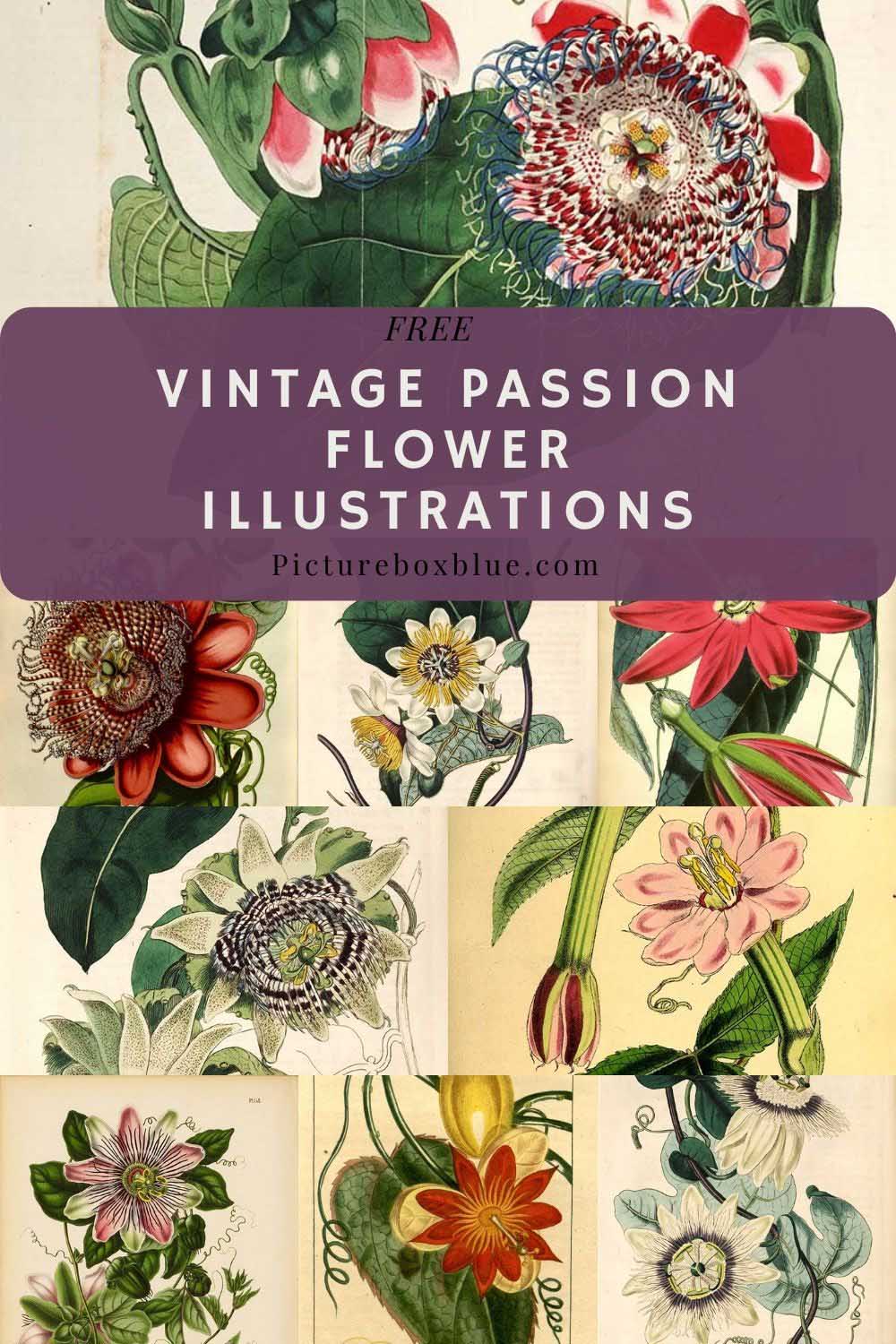
The Passion Flower Prints
All of the following passion flower images are from 18th and 19th-century botany books and magazines, which means they are in the Public Domain.
To download a particular passion flower botanical illustration, click on the title above the flower. A higher-resolution image will open in a new window in your browser. If you right-click that image, you will have the option to save it to your device.
Flower Prints 1-12
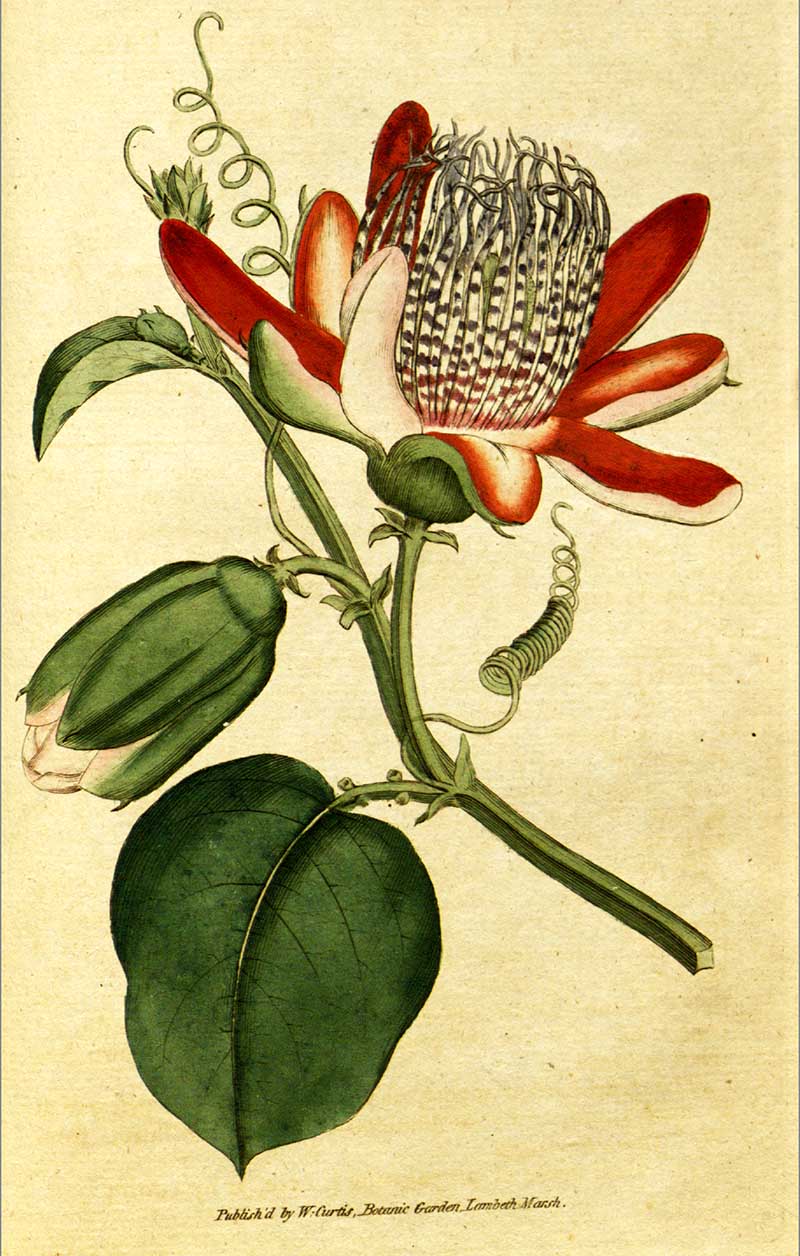
This passion flower is colloquially known as "red star" due to its appearance. It is native to the Amazon area of South America and bears an edible passion fruit.
This passion flower drawing is by the English botanist William Curtis and appeared in The Botanical Magazine, Volume 2 (1788).
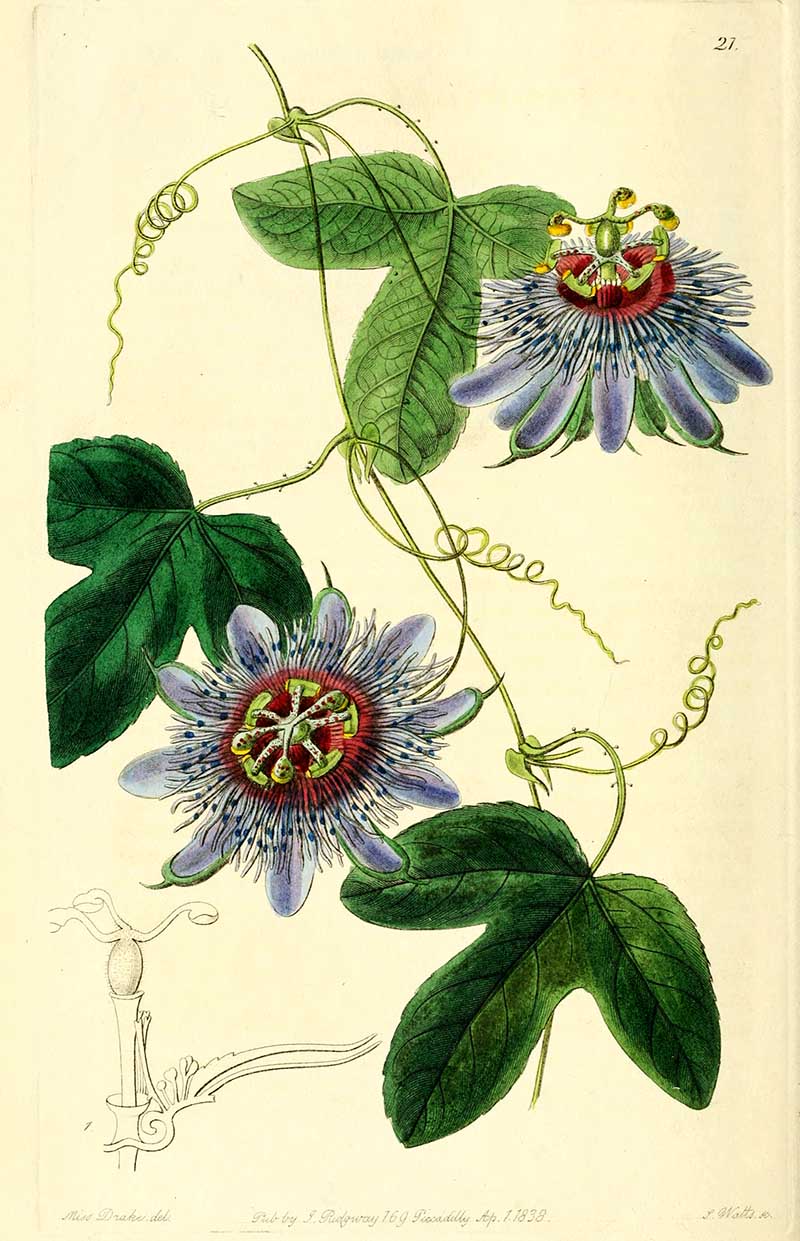
This passion flower is also known as "lavender lady" due to its colour. It is another plant native to South America. The botanical illustration of the flower is from Edwards' botanical register, 1838.
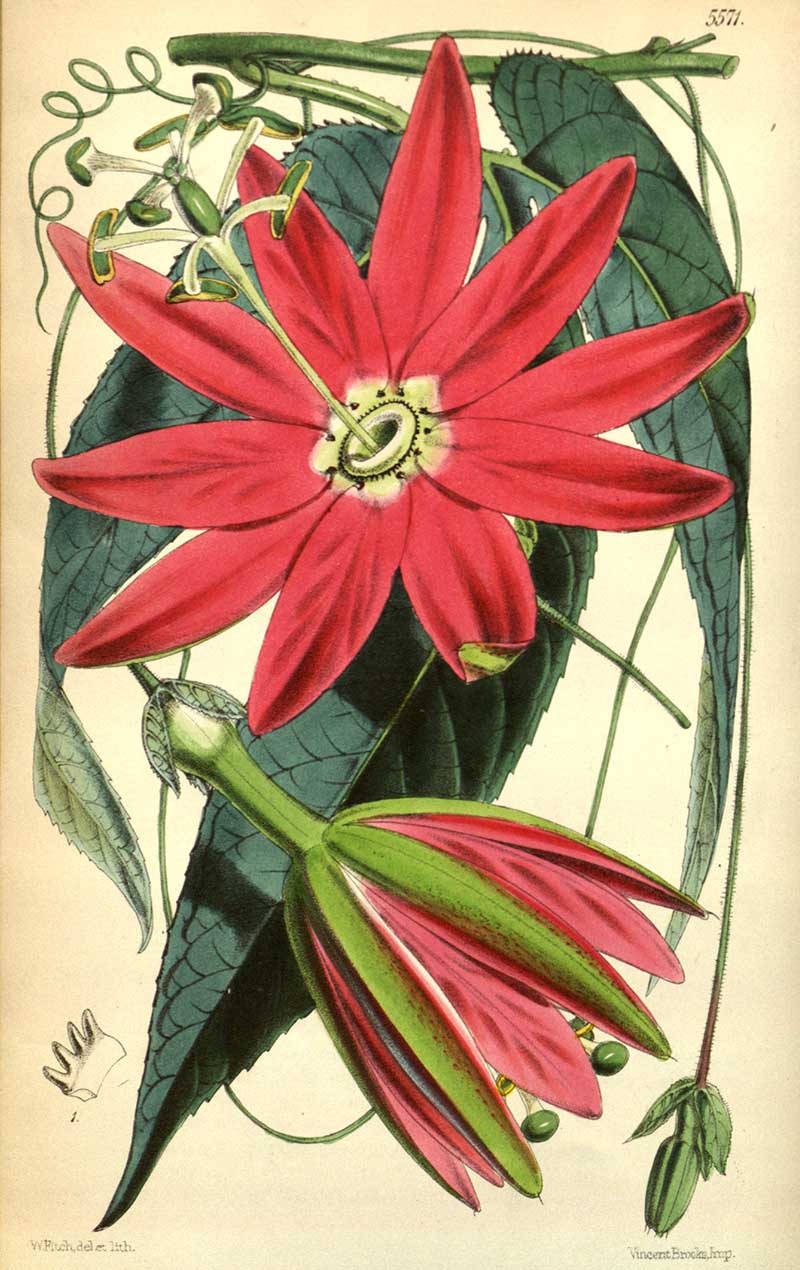
This passion fruit flower is native to Colombia. And the illustration is from the Botanical Magazine 92 (1866).
4. Blue Passion Flower Drawing
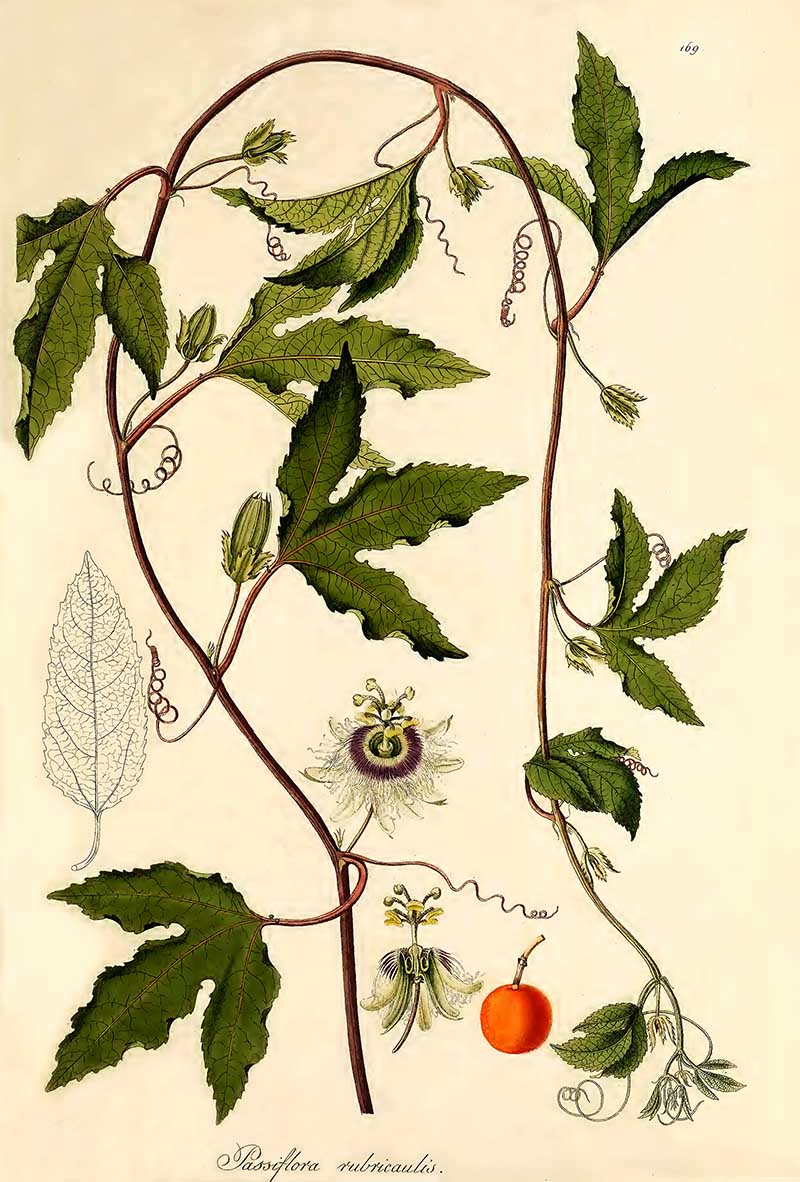
Also known as the common passion flower, it's native to South America. The fruit of the plant is orange and rather bland.
This passion flower botanical drawing is from the book "American Flora V.1 " 1855
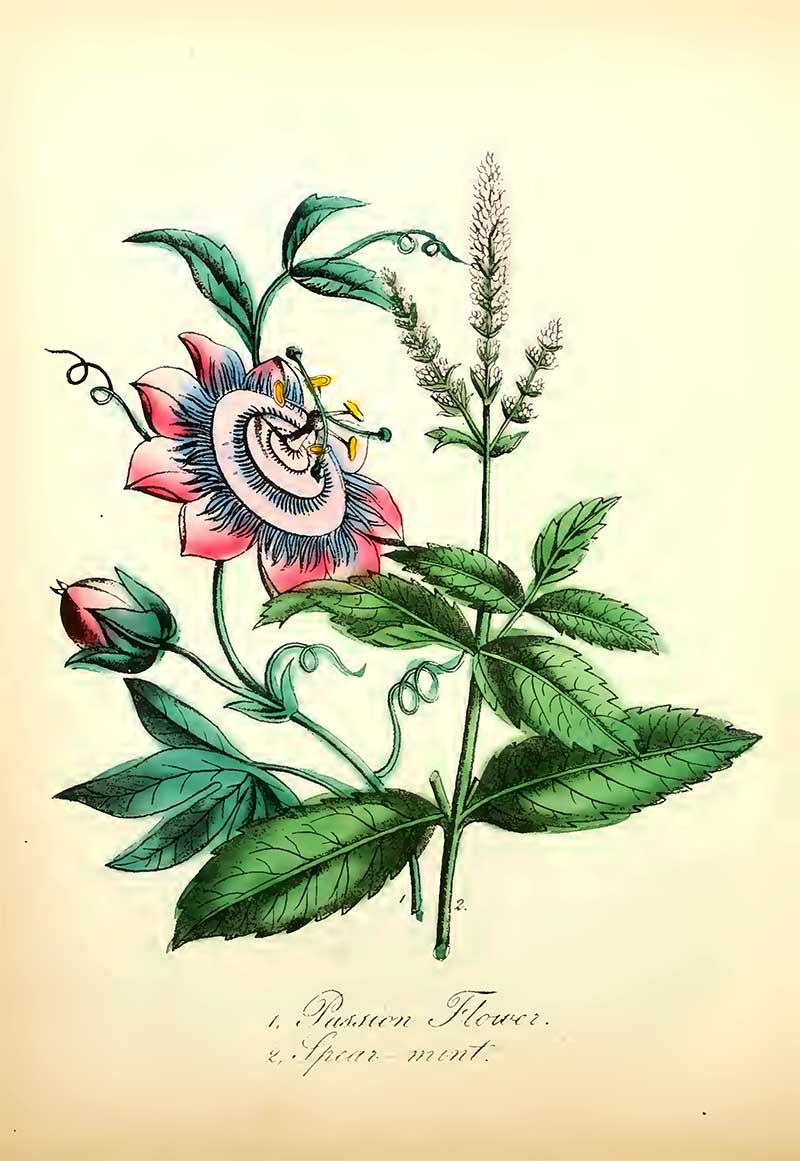
Passiflora Ciliata (fringed passion flower) is another passion flower botanical illustration from"Curtis's Botanical Magazine" V.8 (1874).
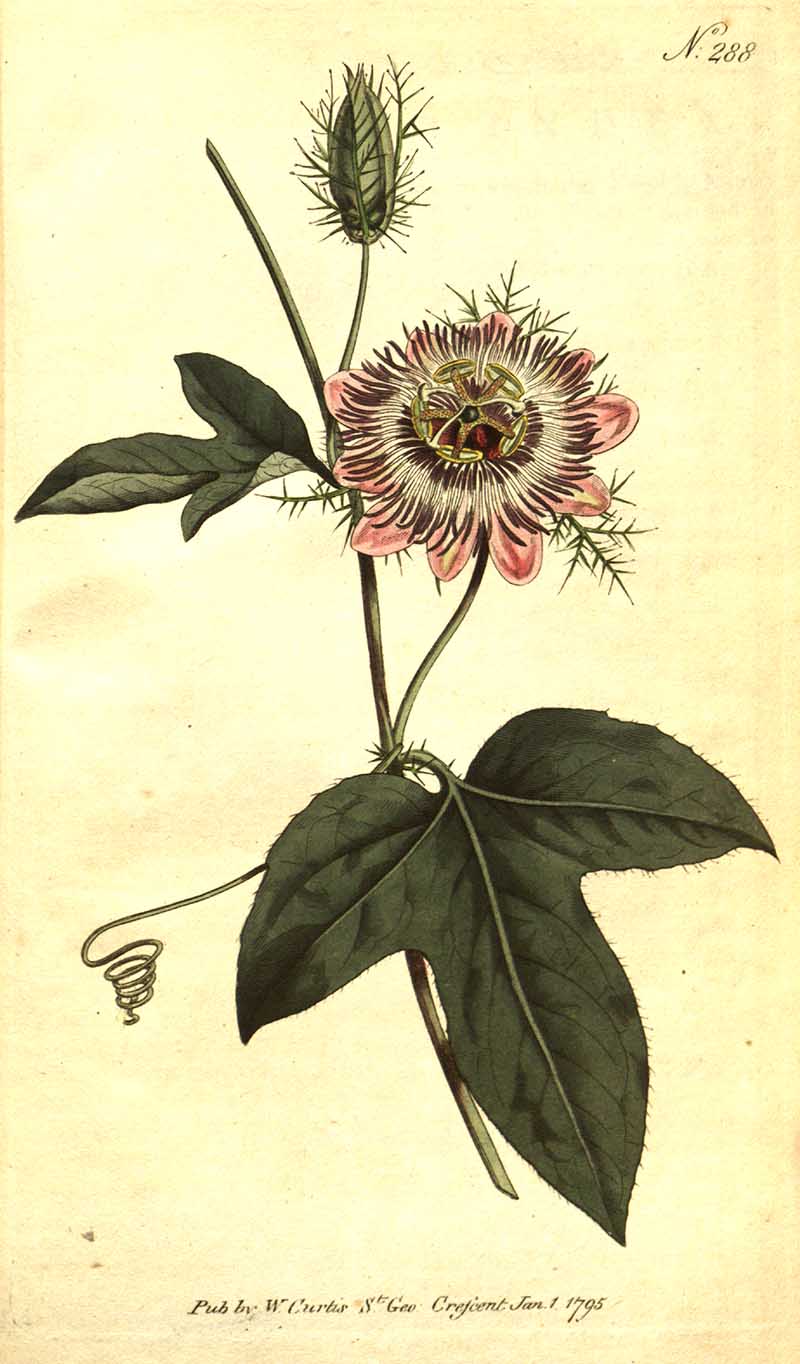
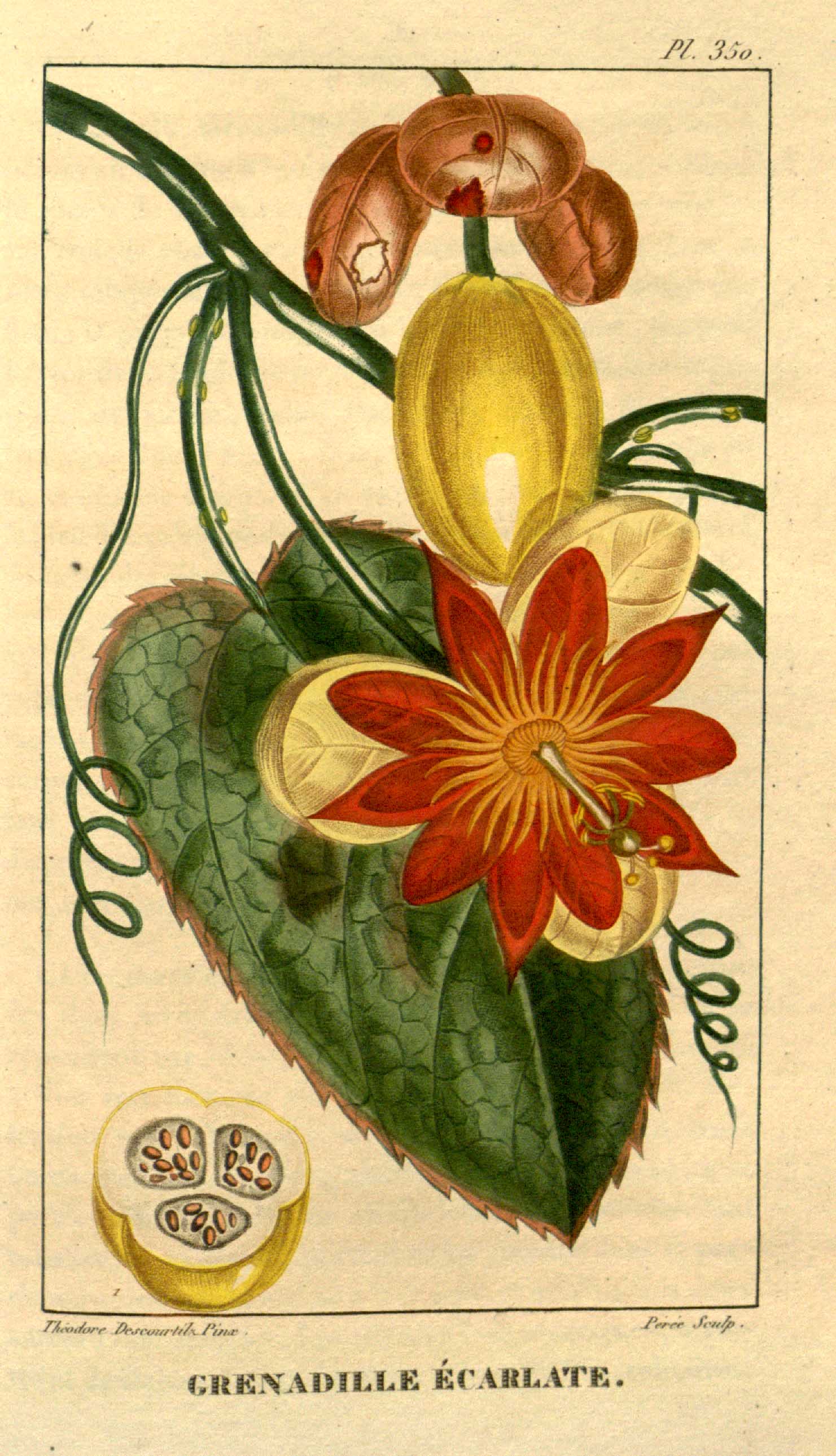
From the book "Flore pittoresque et médicale des Antilles, ou Histoire naturelle des plantes usuelles" by Michel Étienne Descourtilz.
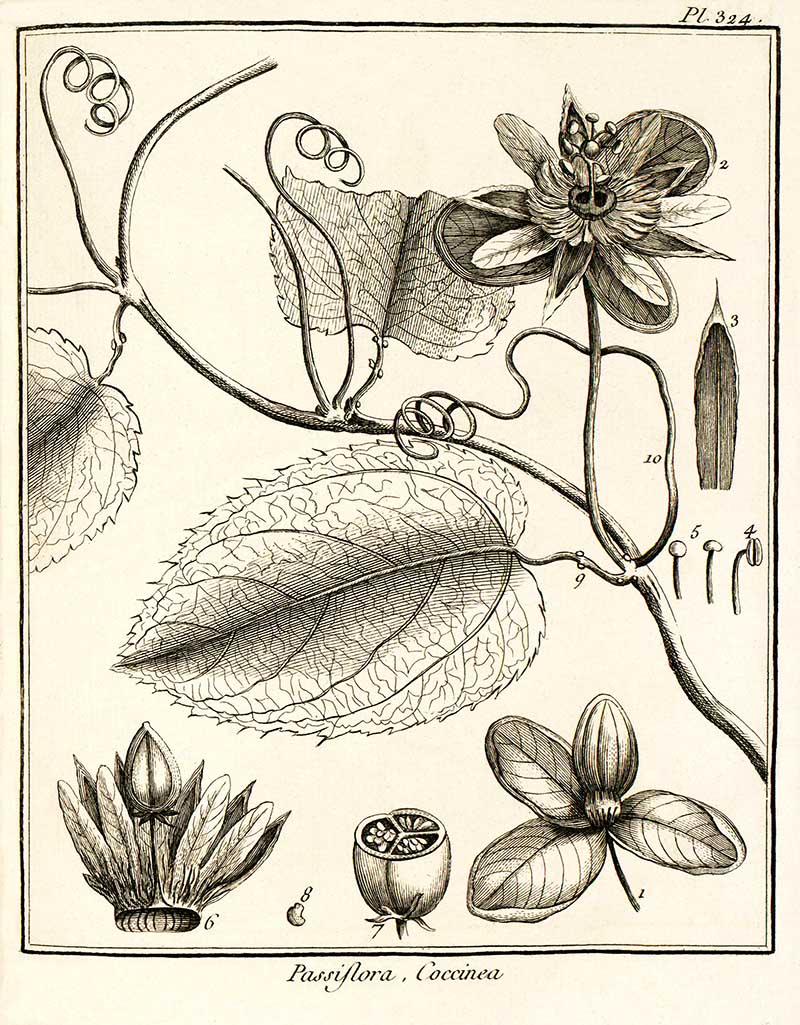
7. Black and White Passiflora coccinea Aublet
A black and white drawing of a passion flower by Aublet, Jean-Baptiste-Christ (1775).
A yellow passionfruit illustration by Joseph Franz von Jacquin (1844).
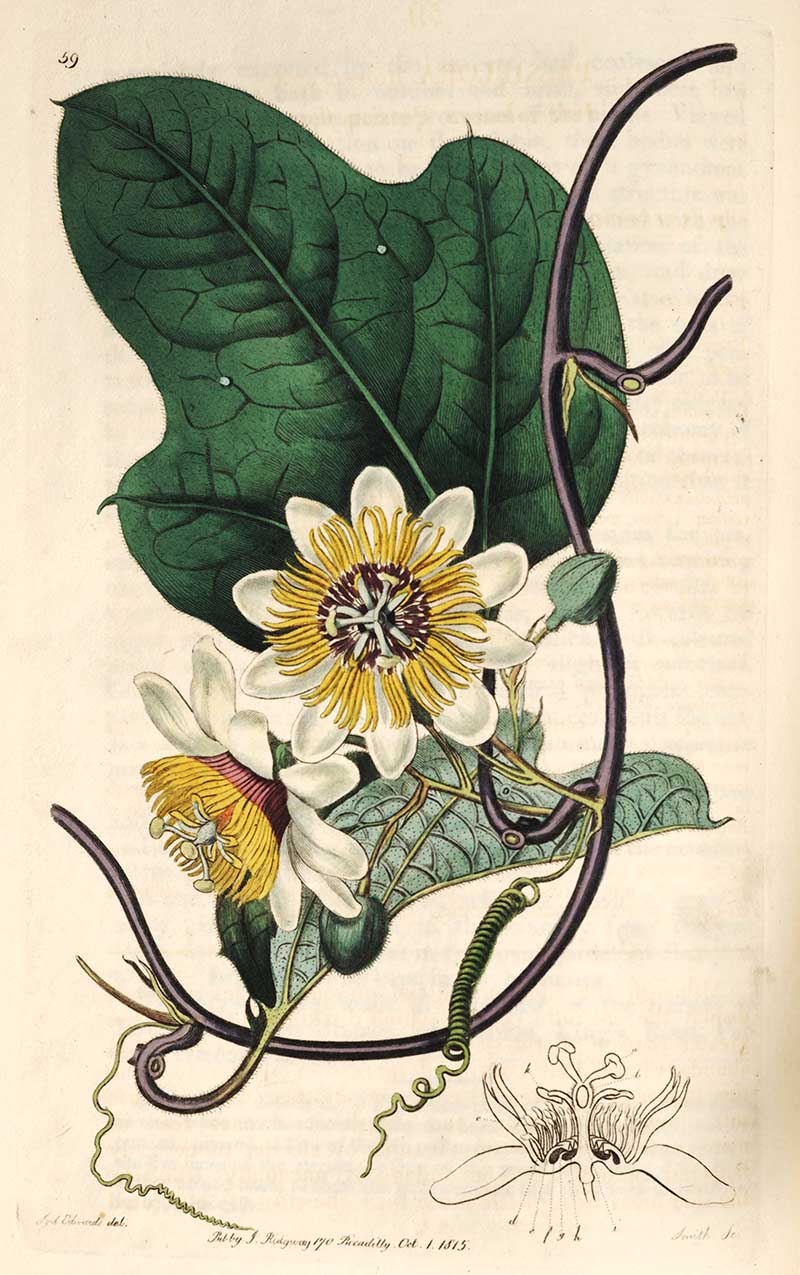
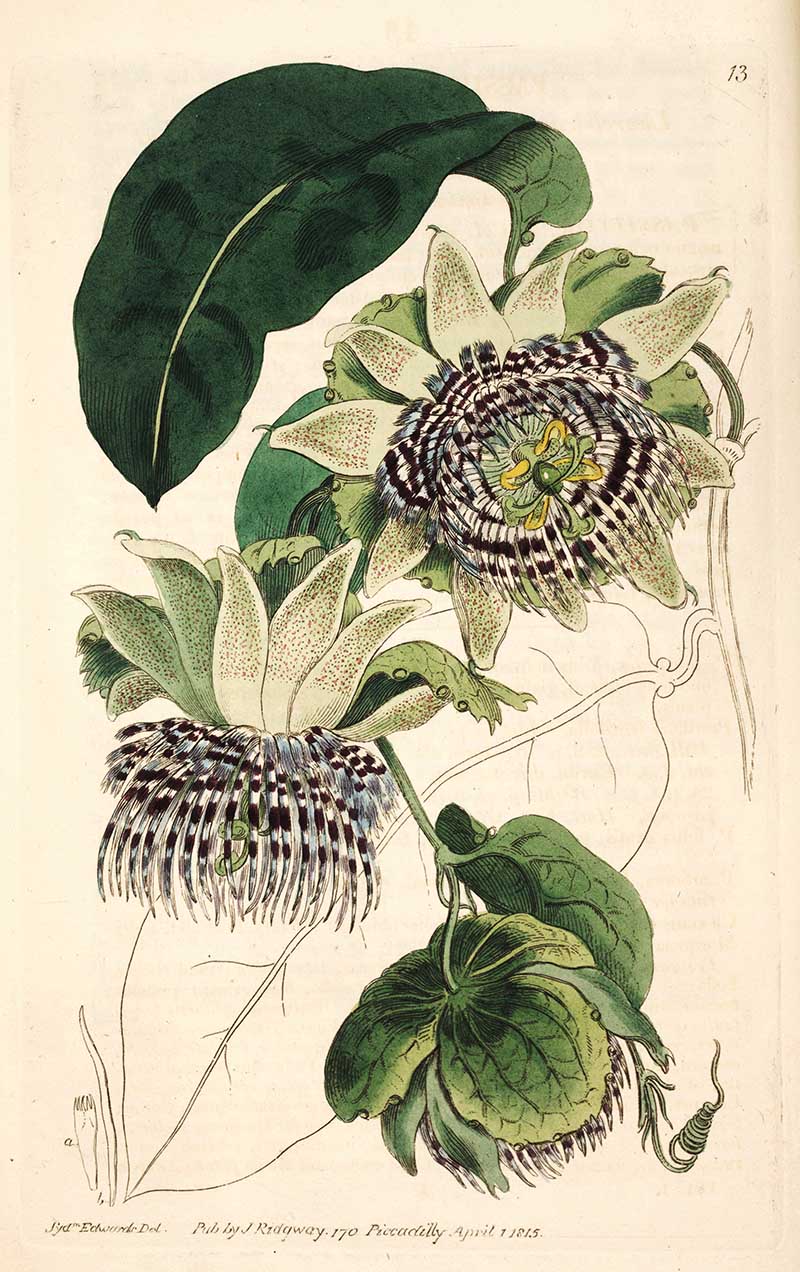
The silky Passion Flower is native to Central and South America, and cultivated as a garden plant in India. The illustration is from the 1815 edition of The Botanical Register by Sydenham Edwards.
Purple Passion flower drawing by Joseph Franz Jacquin, 1844. Also known as the maypop, it is one of the hardiest species of passionflower, and it is found both as a wildflower in the southern United States and in cultivation for its fruit and striking bluish-purple blooms.
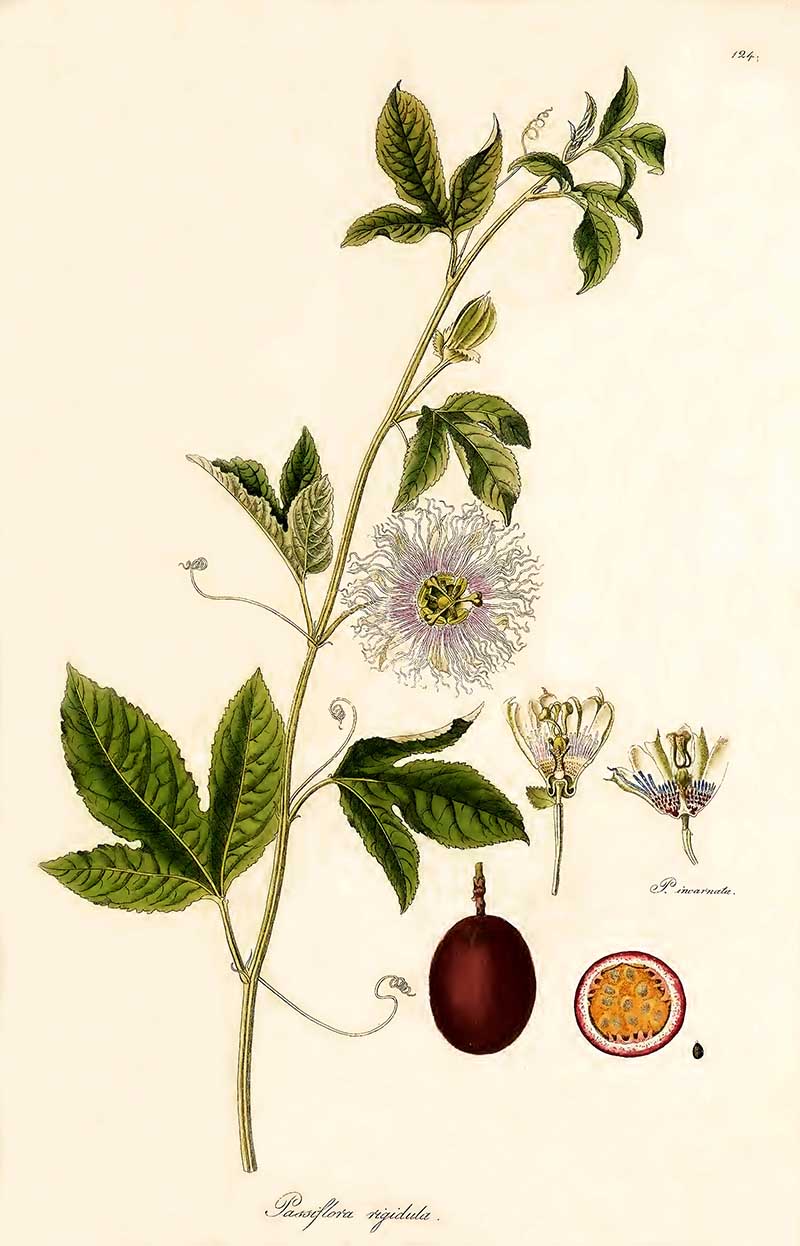
A beautifully exotic, pink Passion Flower. A very large passion flower with unusual, double, star-shaped flowers.
From the 1873 edition of "The Florist and Pomologist". You can find more pomological illustrations here.
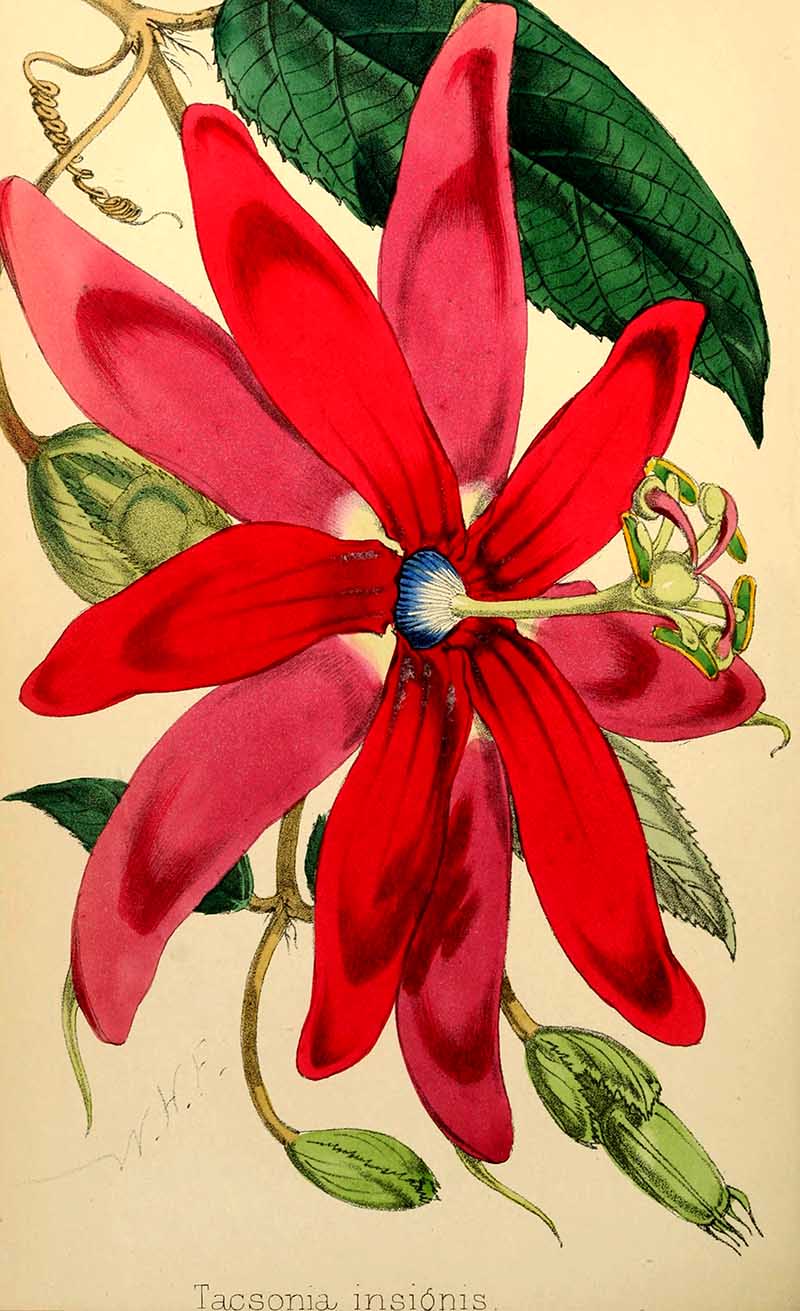
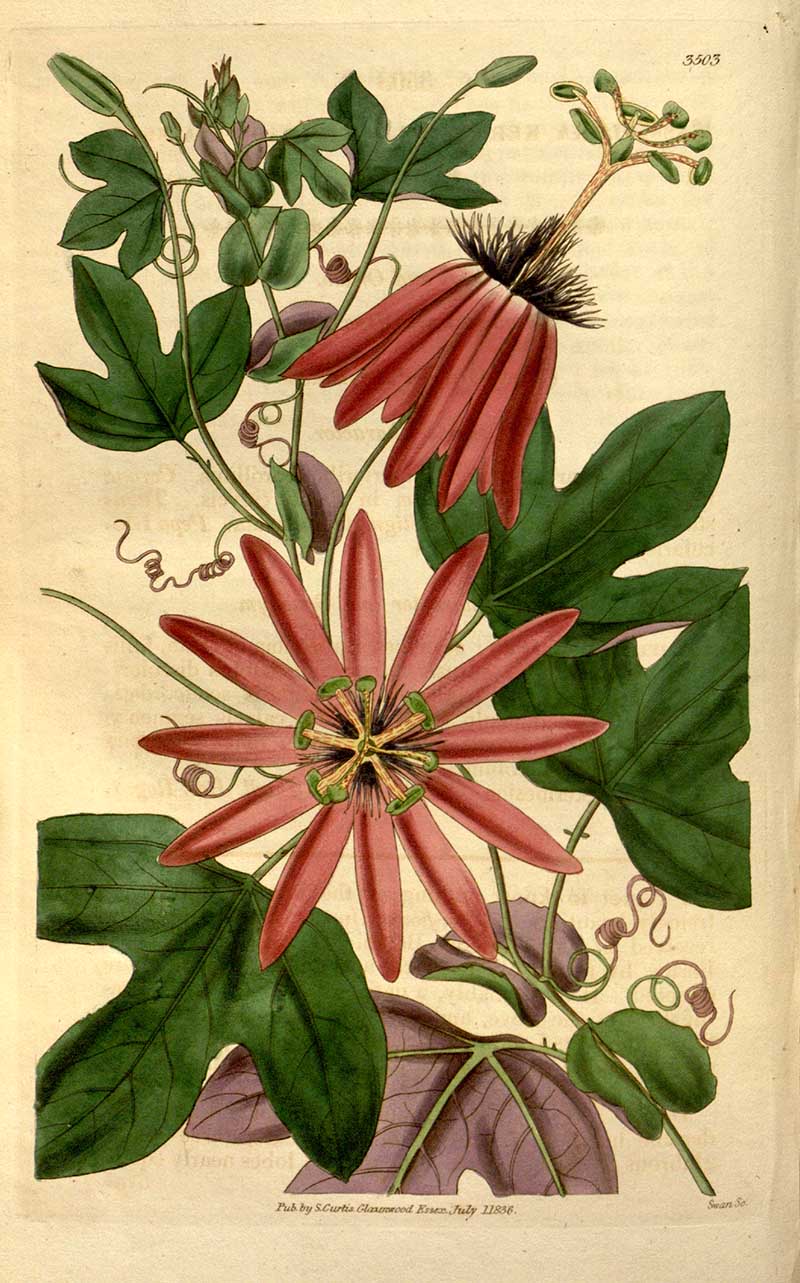
Another passion flower drawing from Curtis's botanical magazine (1836). This species is a native of Brazil and is cultivated as an ornamental plant.
Flower Prints 13-23
13. Water Lemon (Jamaican Honeysuckle, Passiflora laurifolia)
Another Passion flower illustration from the Botanical Register (1815), Edwards, Sydenham.
The plant is native to the tropical Americas. The fruit has an excellent, mild, perfumed taste, without the tartness of the common Passionfruit.
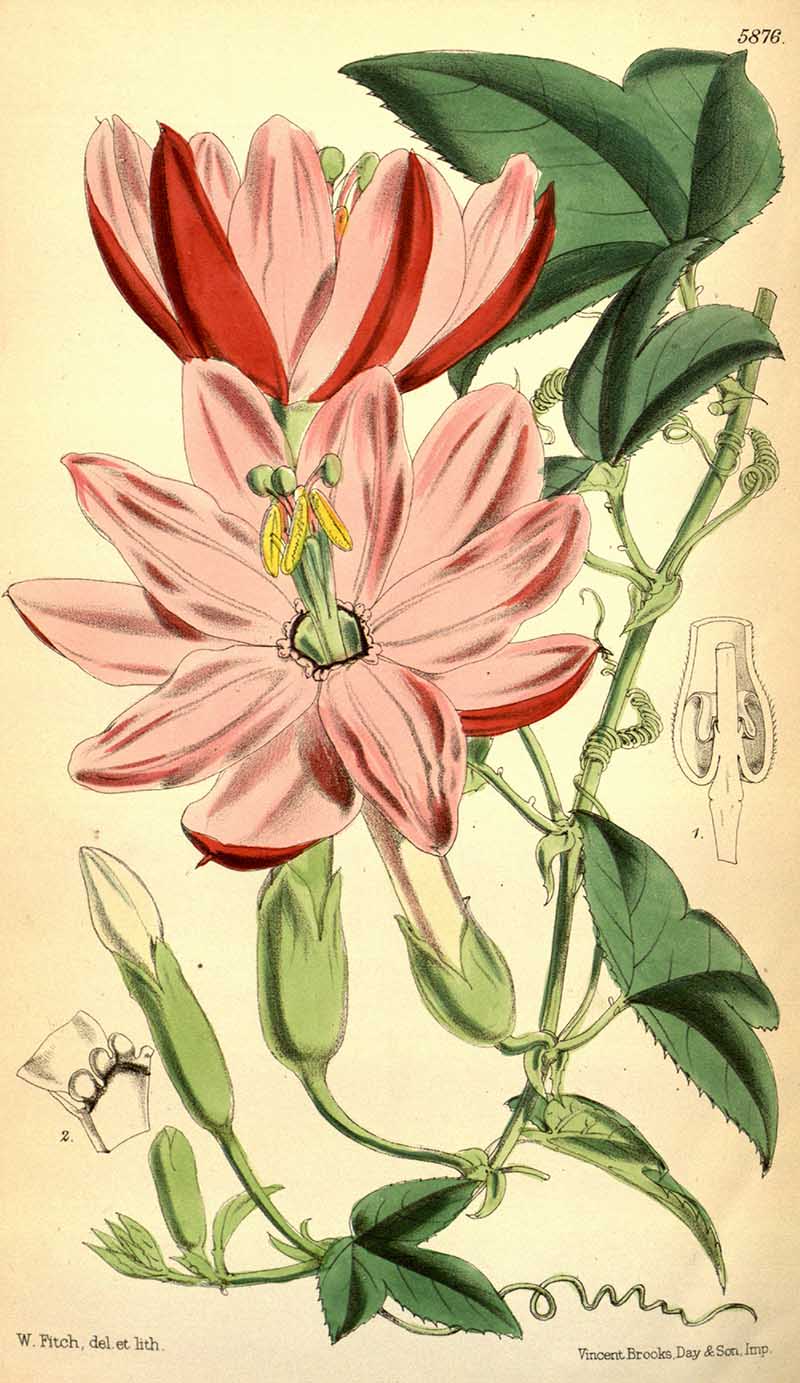
A passion flower native to South America. The plant is pollinated by the Sword-billed hummingbird. This bird is found throughout the northern Andes and is identified by its extremely large beak, which is longer than its entire body.
Another illustration from Curtis's Botanical Magazine.
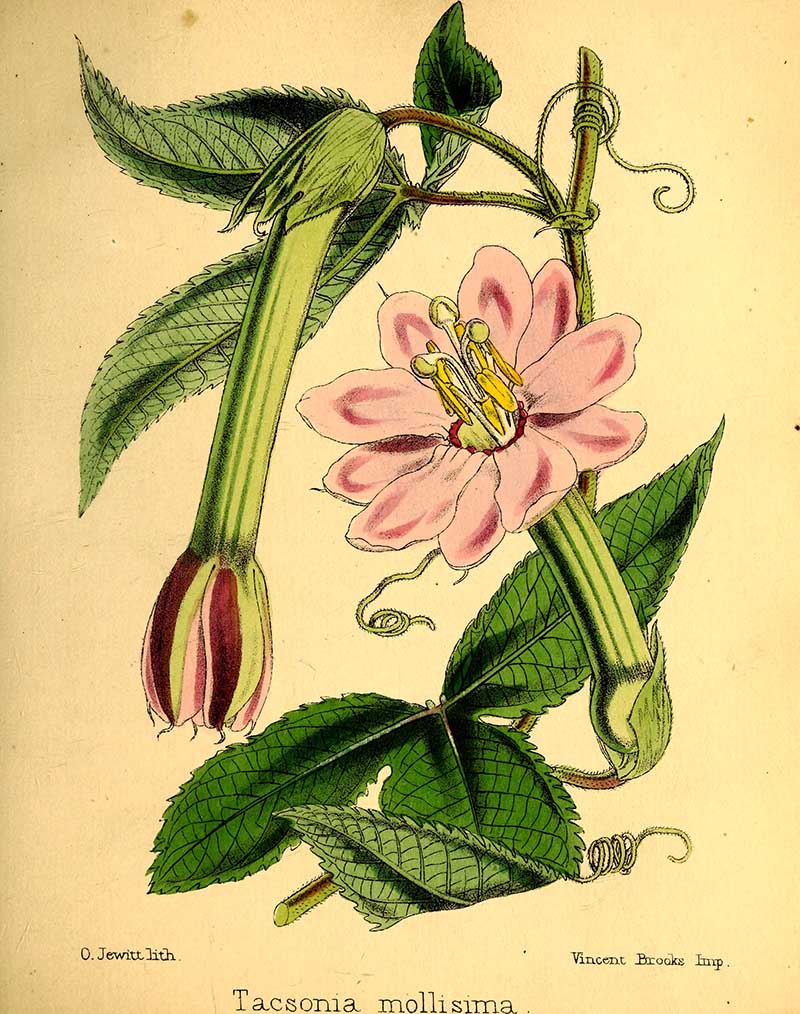
Also known as "Soft Leaf Passion Flower". A banana passionfruit is native to the Andean valleys, it is commonly cultivated and its fruit is sold in local markets.
The passion fruit botanical illustration is from " Popular greenhouse botany; containing a familiar and technical description of a selection of the exotic plants introduced into the greenhouse", by Agnus Catlow (1857).
Another passion flower by Joseph Franz Jacquin, 1844.
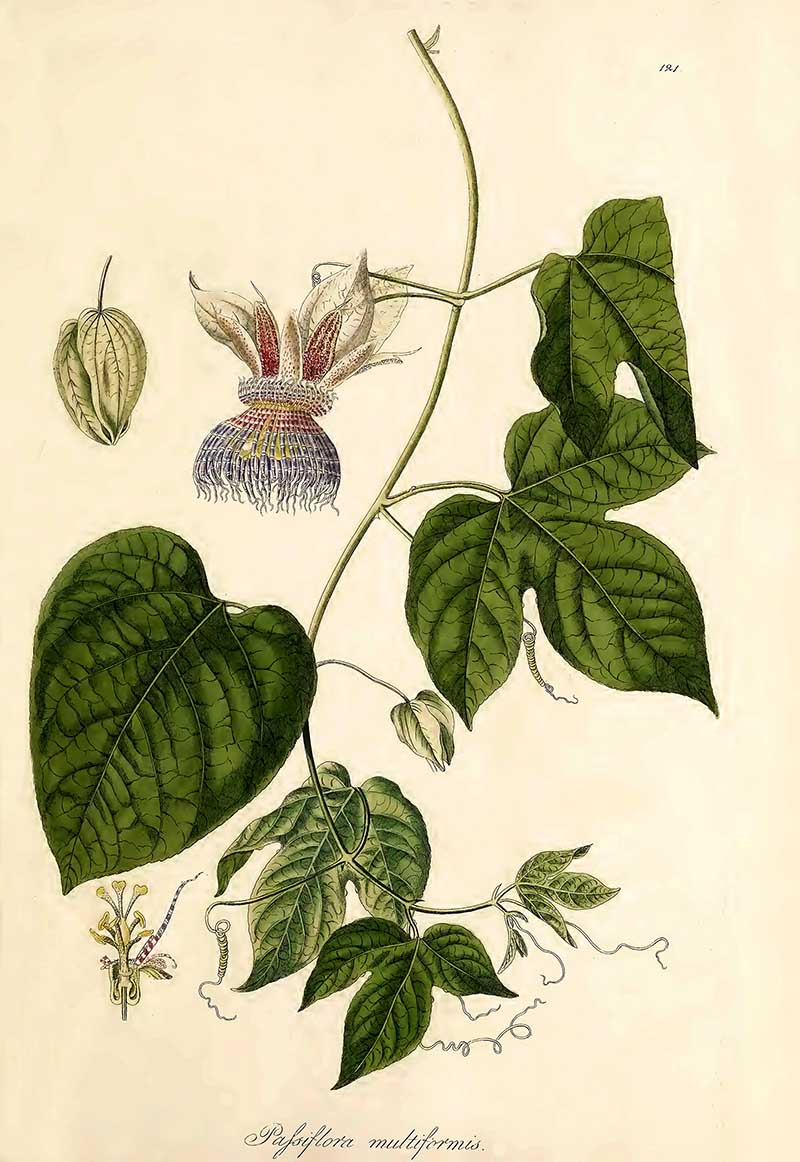
The fruit of this plant is the largest of all the species of passionflower. Another illustration from Edward's "Botanical Register", 1815.
(This image was used for the DIY tea light lanterns craft)
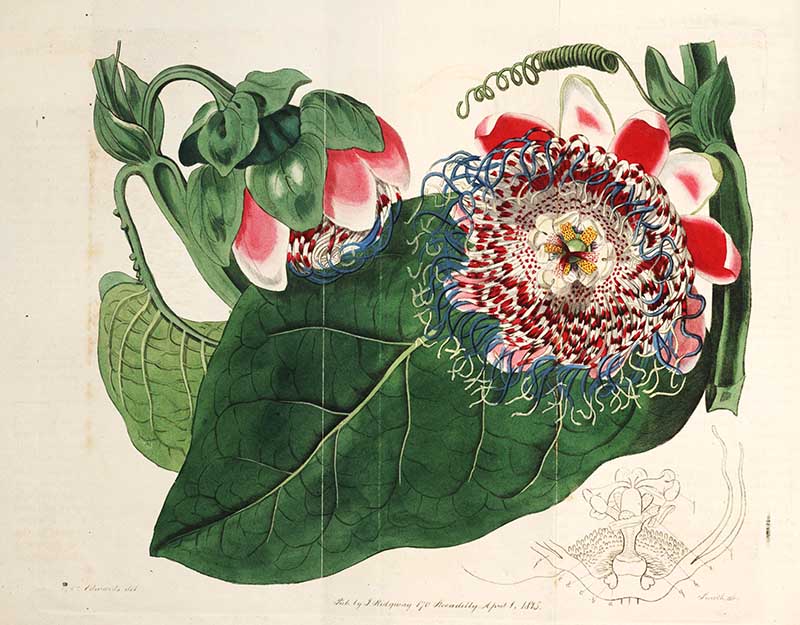
This black-and-white passion flower drawing is by Charles Plumier, 1693. The fruit of this South American plant is used to make drinks and desserts. It is said to taste a bit like guava.
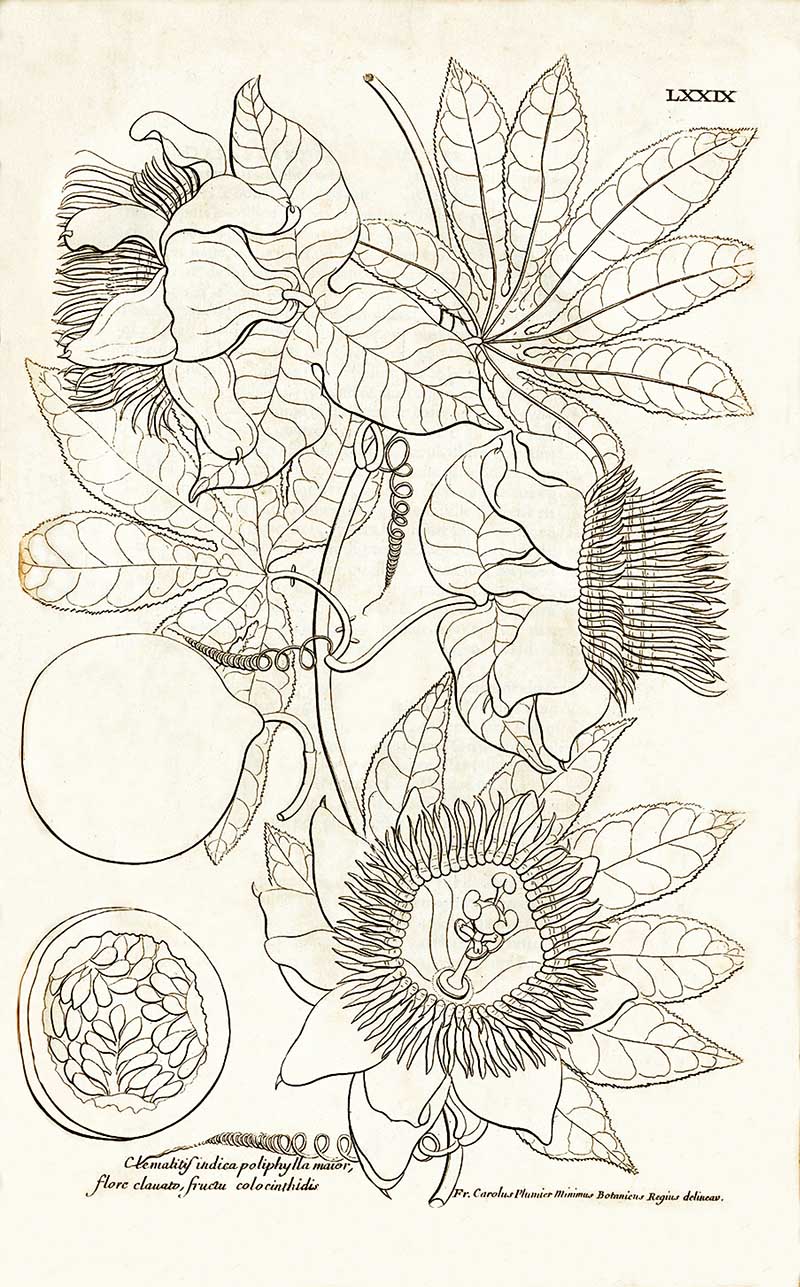
Another passion fruit botanical illustration from Edward's "Botanical Register" (1815).
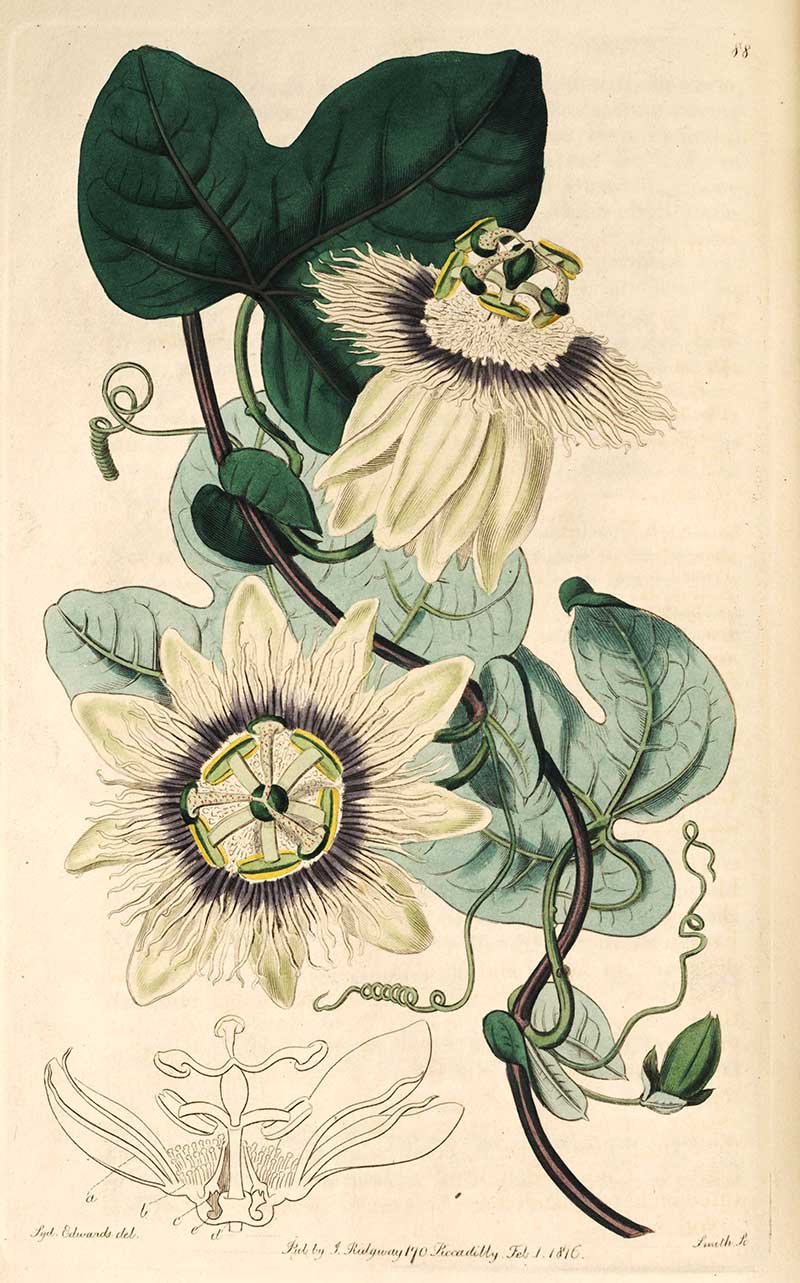
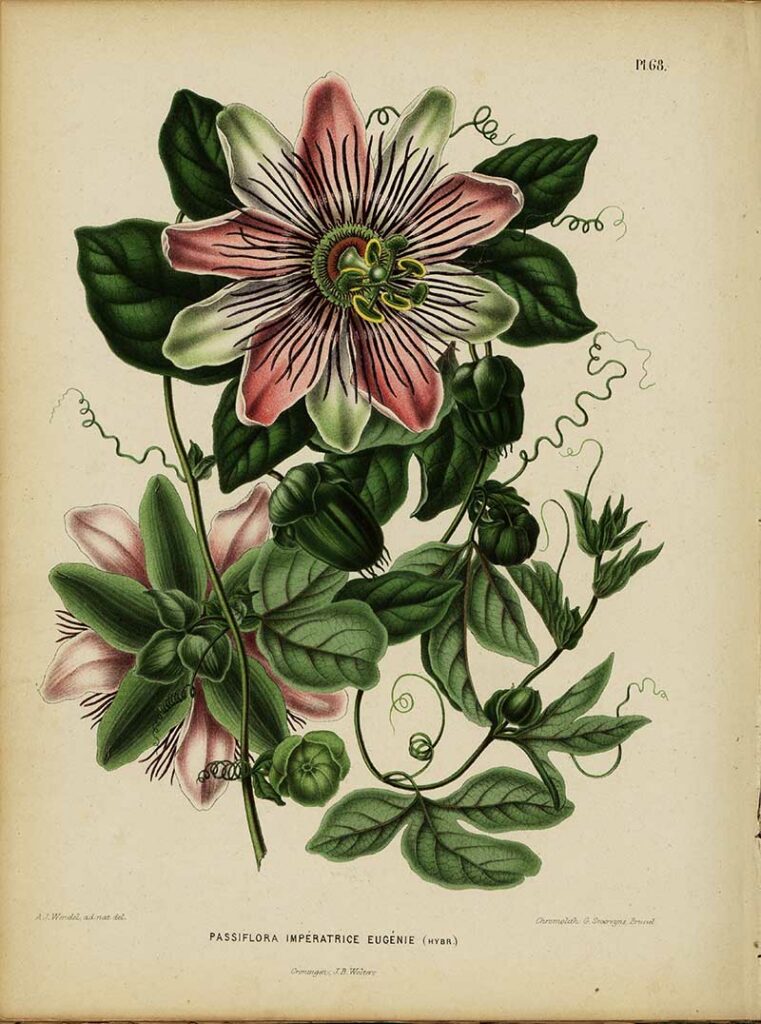
20. Passiflora Impératrice Eugénie
Apparently, this passion flower is a good one for the bees. This passion flower painting is by the Dutch botanist Abraham Jacobus Wendel (1868).
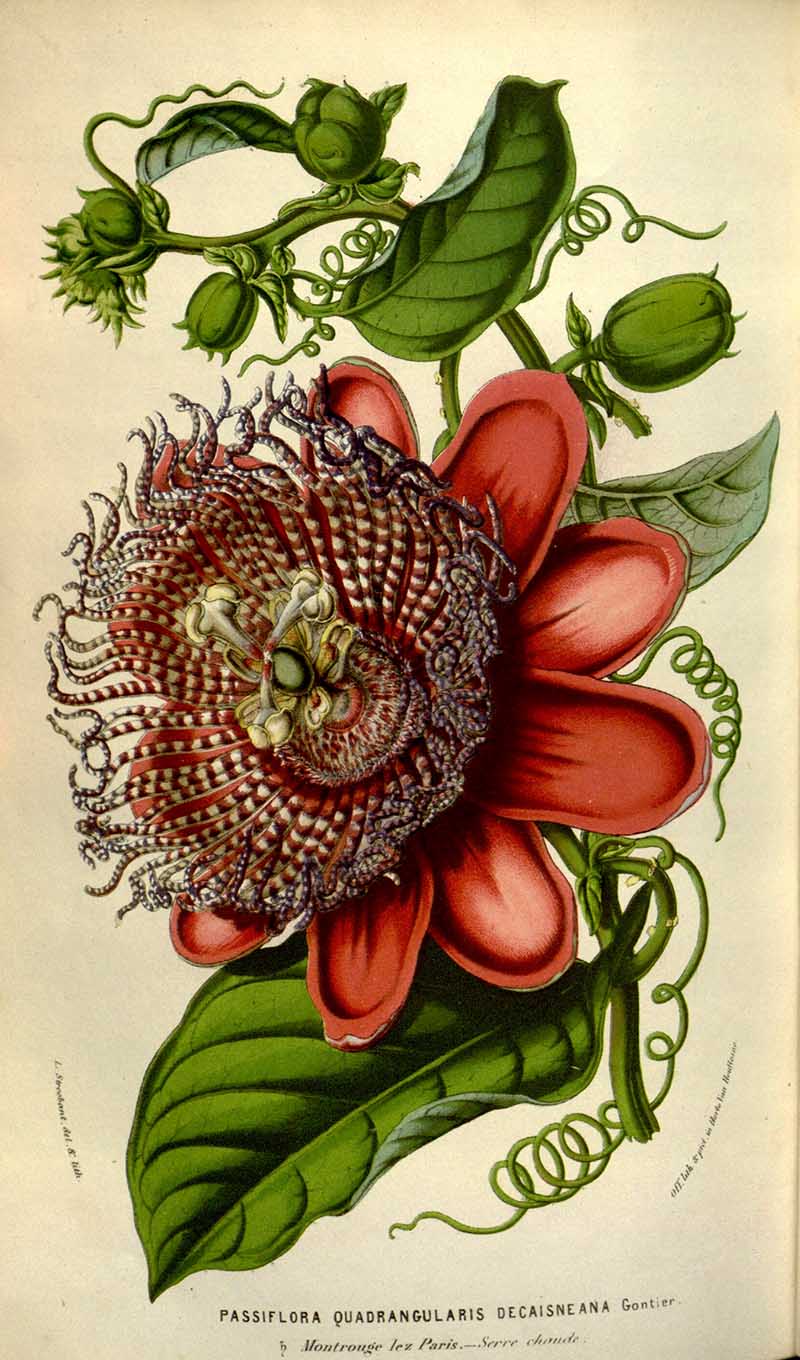
This passion flower botanical illustration is from the book "Flora of greenhouses and gardens of Europe: or descriptions and figures of the rarest and most deserving plants, newly introduced on the continent or in England" by Van Houtte, Louis (1852).
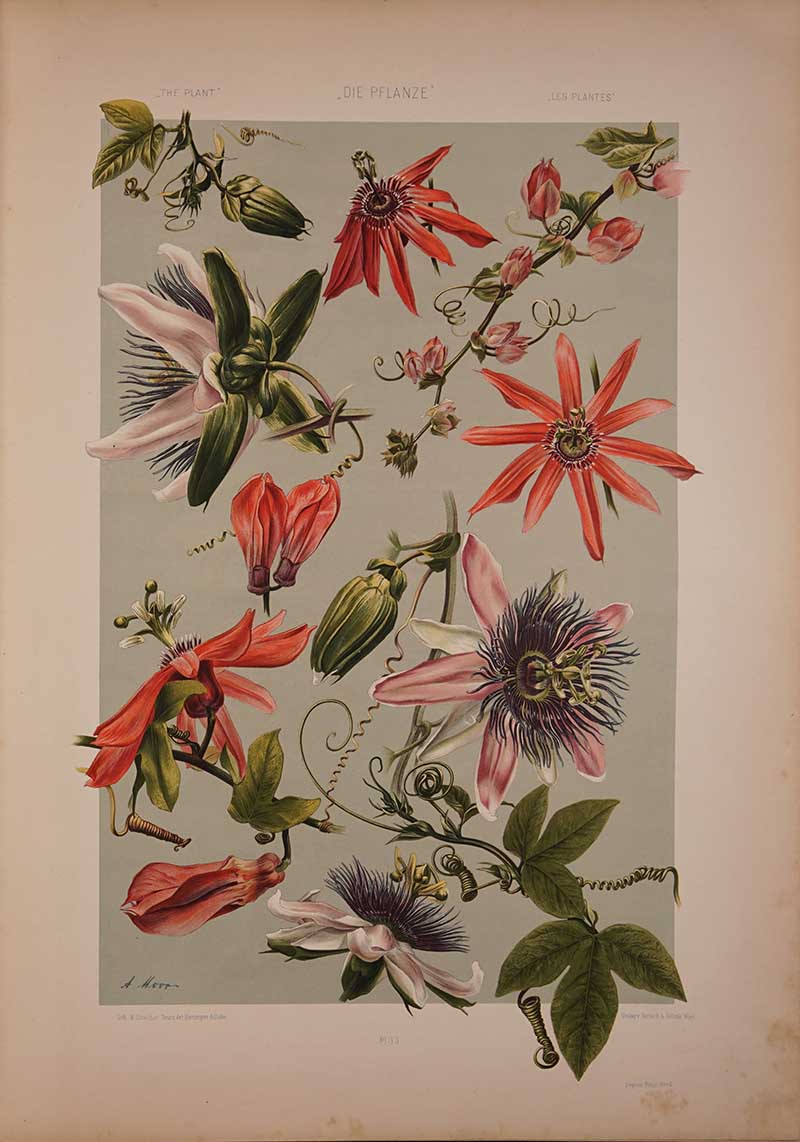
22. Passion Flower Plant Art Print
A beautiful stylised Passion flower plant art print from Die Pflanze in Kunst und Gewerbe. Translates as The Plant in Arts and Crafts 1886.
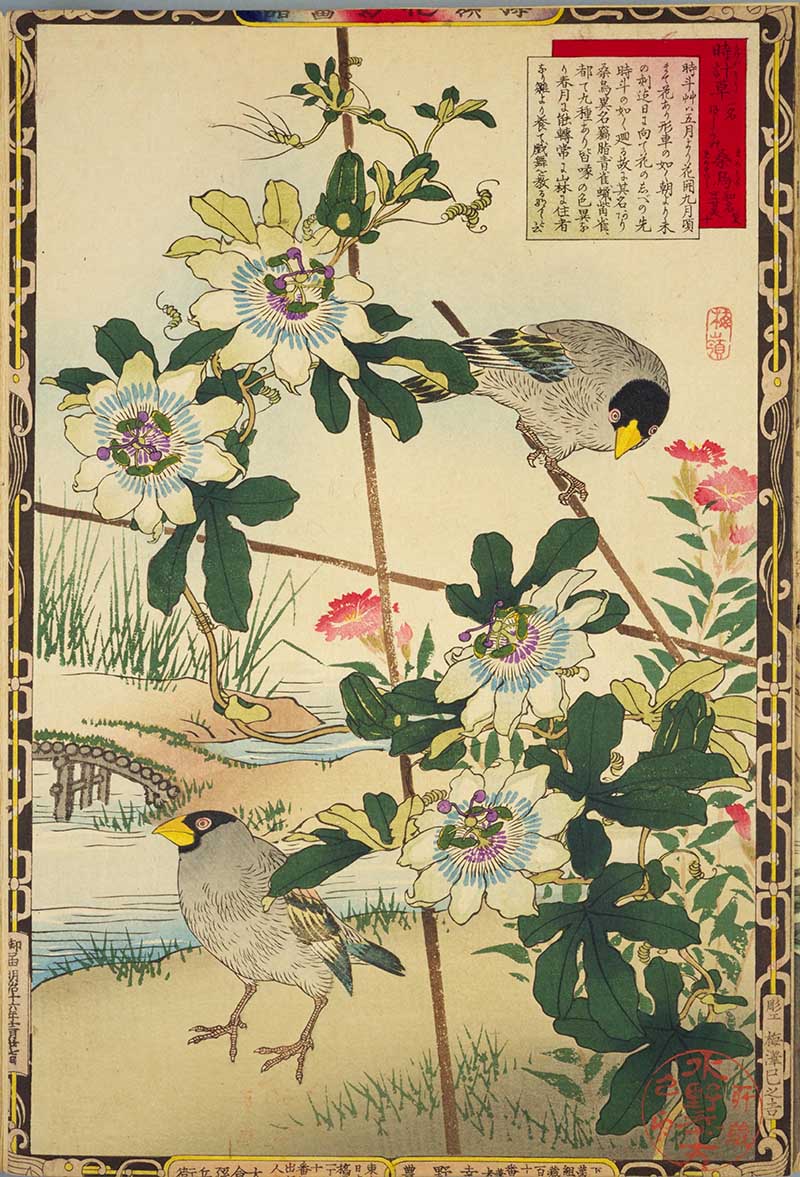
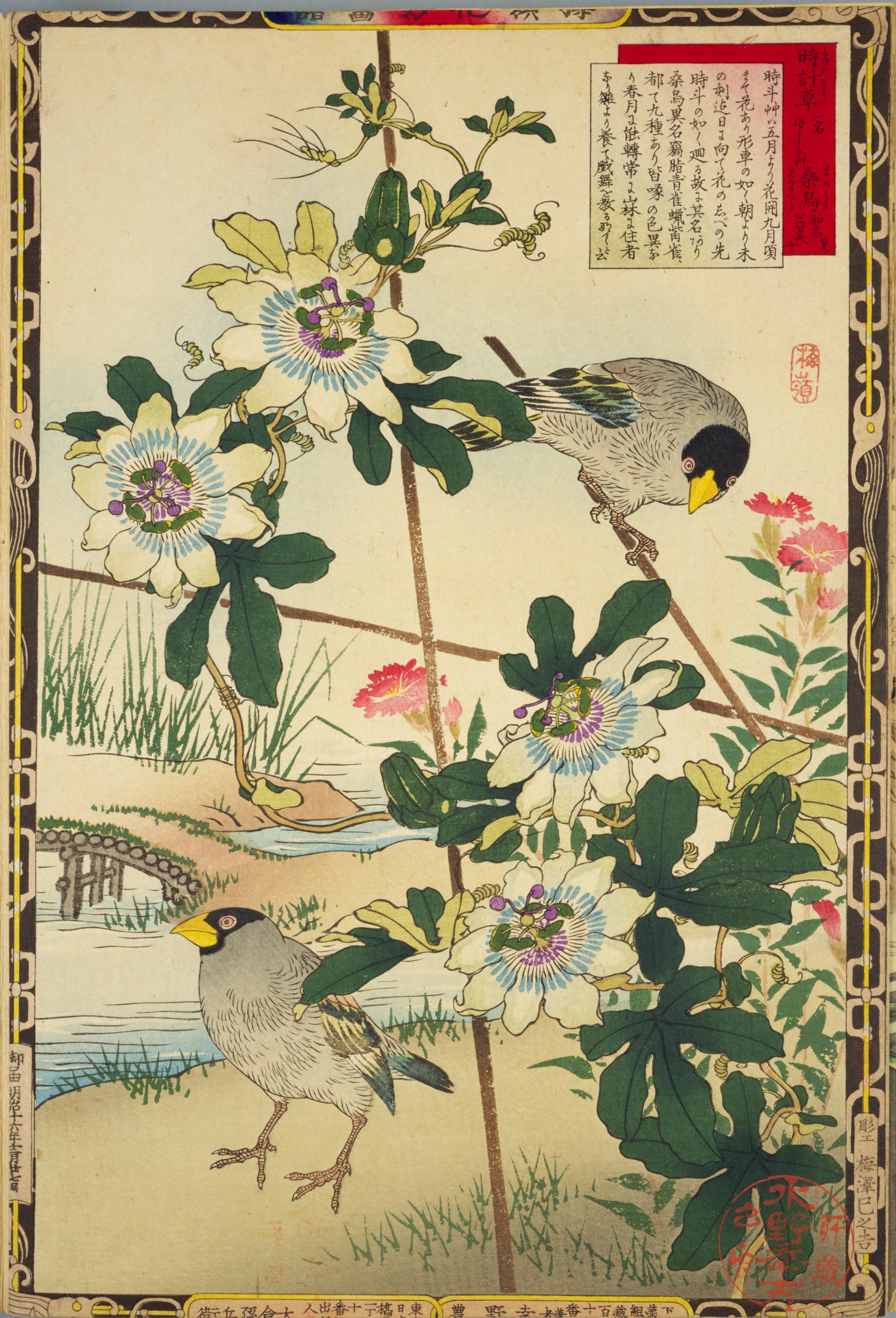
Print 23: Kono Bairei Passion Flower
A vintage Japanese art print of small birds and passion flower by Kono Bairei.
Other Botanicals
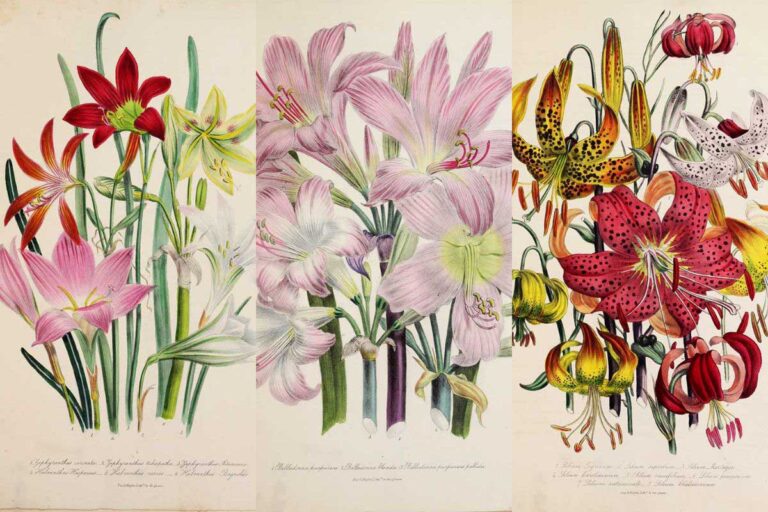
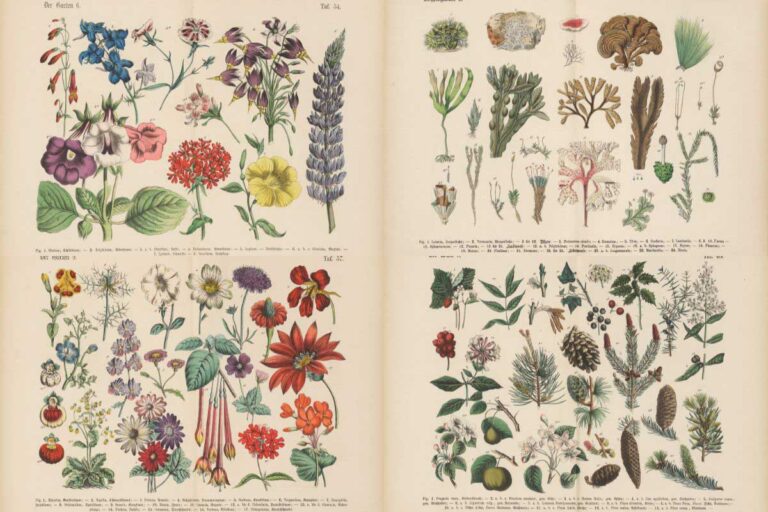
There are three more gorgeous passionflower prints in the Temple of Flora and in Gessner's botany tables.
For another tropical beauty, check out the giant water lily (Victoria Amazonica).
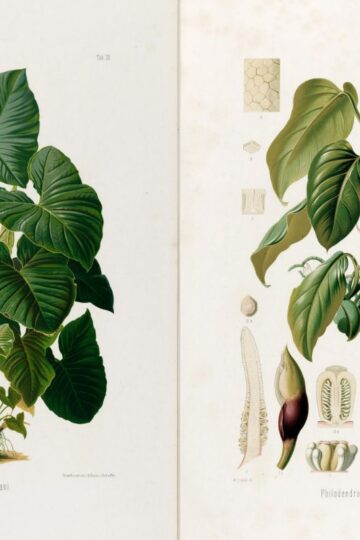
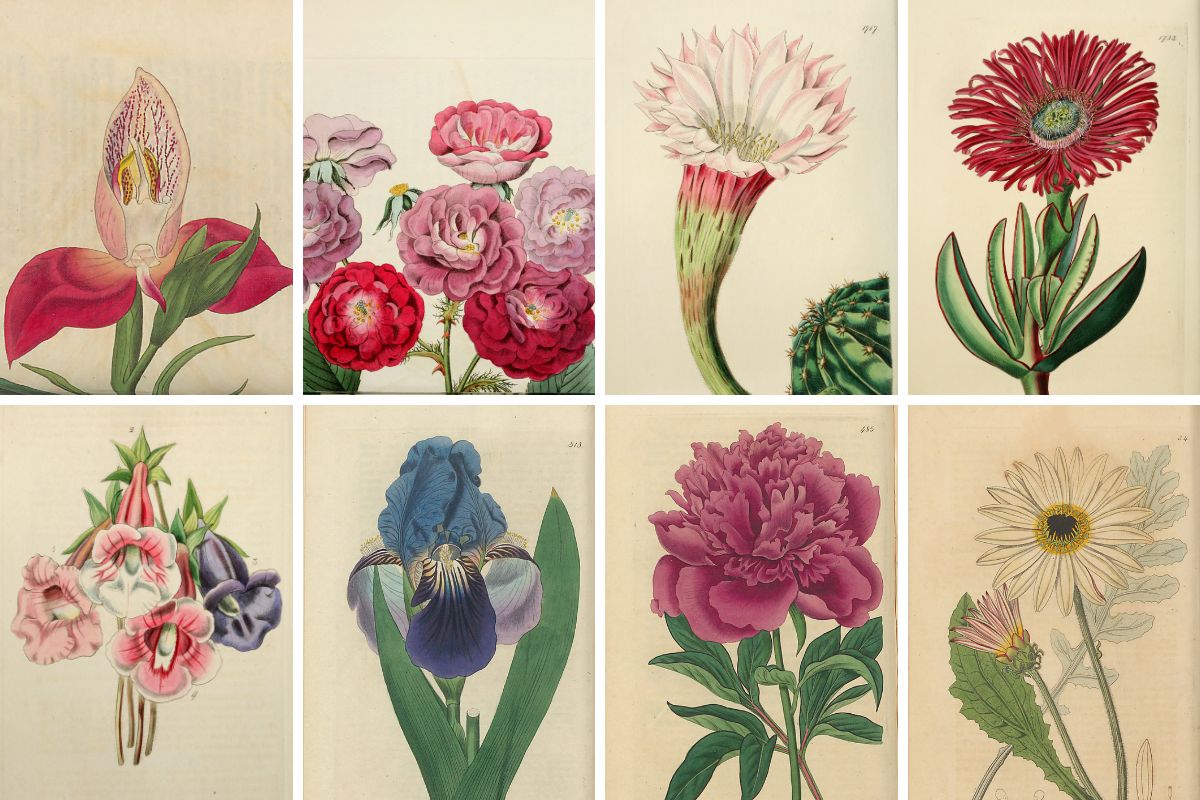
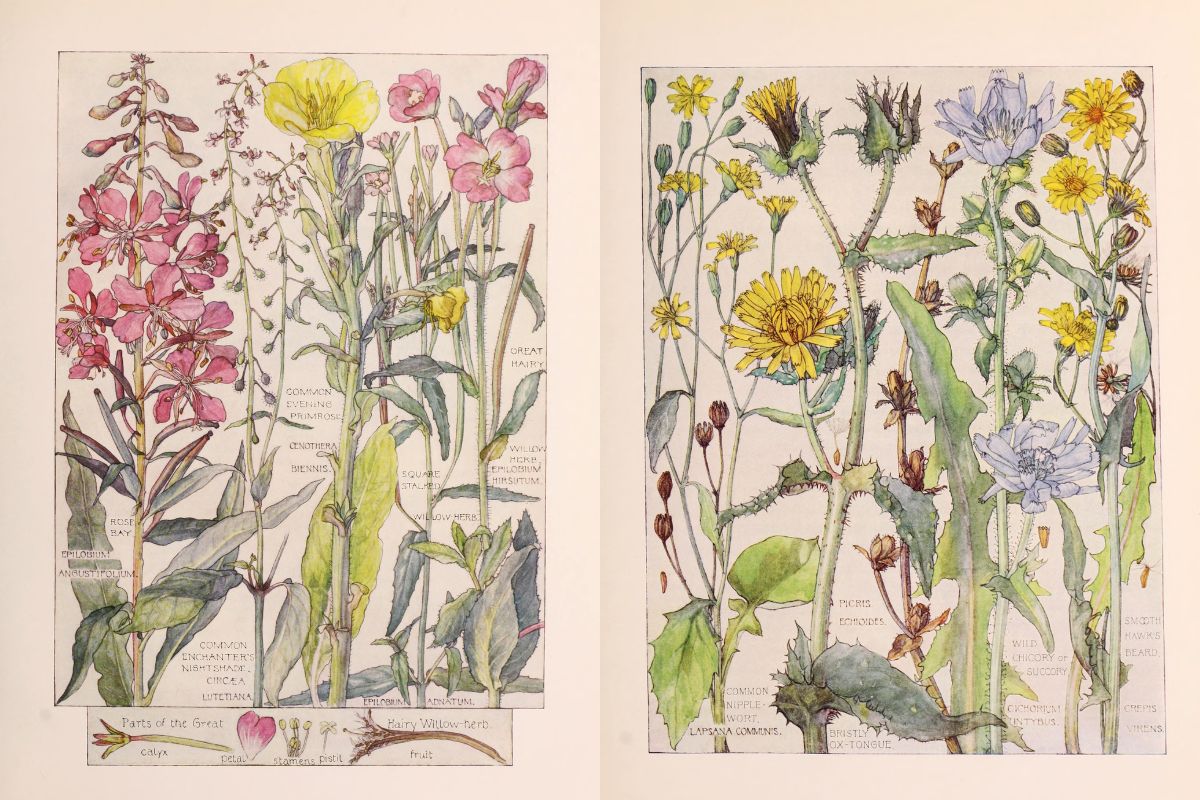
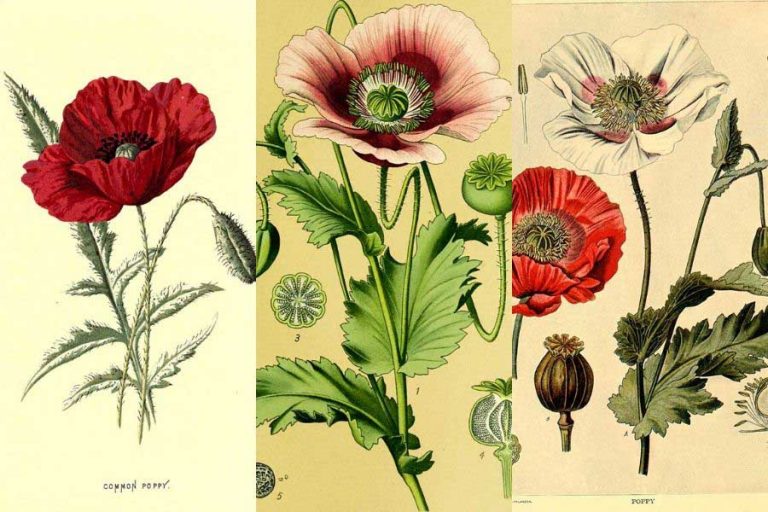
Don't forget to check out all the other stunning flower drawing collections on Picture Box Blue. These include flowers such as roses, peonies, magnolias, and sunflowers, just to name a few.
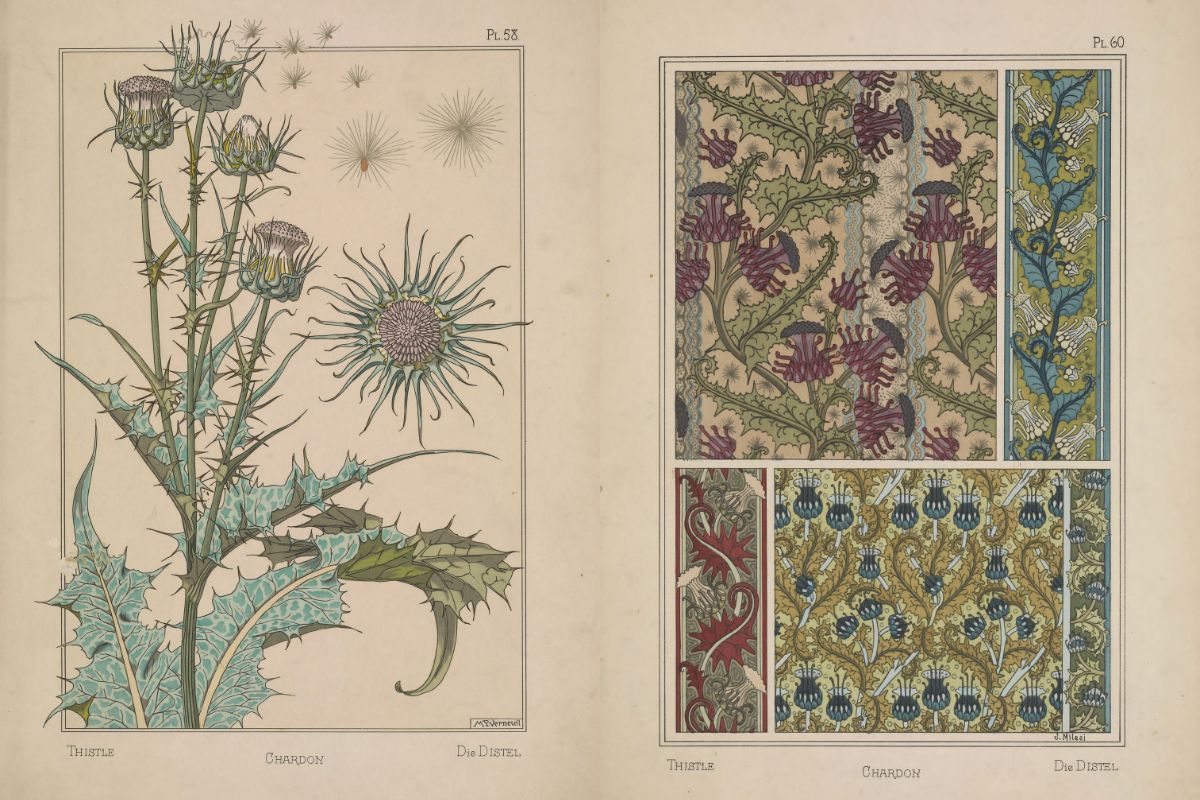
There are also botanical collections of cacti, tropical leaves, and woodland plants. As well as the beautiful botanical posters of Adolphe Millot.
If you fancy, you can Buy Me A Coffee Here.
I am practically fanatic about Passion flowers and your drawings. Can’t decide which one I would like a copy of to hang up in my formal dining room. I don’t know how to down load. Do any illustrations get turned into framed to purchase. Looking for picture and 1940s frame. Please help.
Hi Barbara, glad you like the pictures. Unfortunately, I don't offer a printing service, but you can send the download to any online photo/print site, and they will print it for you. If you click on the title of the flower you want, a larger image will open up in a new window on your computer. If you then click on that picture with your mouse (right button), there will be an option to save that image to your hard drive. Save that file to your hard drive. You can then upload that file to a printing site for printing.