14 Fascinating Old School Charts to Download for Free
I've always found old classroom posters fascinating. Somehow, Victorian educators made everything from the animal kingdom to a collection of geometric shapes look delightful. These colourful School and Family Charts are a perfect example, packed with captivating illustrations of birds, animals, plants and all sorts of things you probably wouldn't expect to see hanging on a classroom wall.
Created in the 19th century to help children learn through pictures and observation, the charts offer an intriguing glimpse into Victorian education. I've picked 14 of the most appealing illustrated examples from an 1890 collection held by the Library of Congress, skipping the rather wordy reading lessons to concentrate on the colourful pictures and diagrams.
They're lovely pieces of educational history, but I think they'd look equally good framed on a wall today. If you enjoy this sort of old-school illustration, you might also like my collection of French natural history classroom posters by Émile Deyrolle.
The History of the School and Family Charts
The School and Family Charts first appeared in 1862 and were published by Harper & Brothers in New York. Two American educators, Marcius Willson (1813–1905) and Norman Allison Calkins (1822–1895), created them to make learning more interesting for young children.
Willson was a successful textbook author, while Calkins was a teacher and influential figure in American education. Together, they developed 22 large charts covering reading, writing, drawing, geometry, colours, zoology and botany. The series proved popular enough to be reprinted for decades, which explains why these examples date from 1890, nearly 30 years after the originals appeared.
Learning Through Pictures
Their teaching method was based on something called object teaching. The idea was simple: children learn more naturally when they can see, touch and examine things for themselves, rather than just memorising facts.
Instead of starting with the written word apple, for example, a teacher might show pupils a real apple, encourage them to describe it and then introduce its name. It was part of a growing movement to make education more practical and engaging.
The charts came with a detailed teaching manual written by Willson, full of suggested questions and activities. Teachers could use the same illustrations with children of different ages, gradually introducing more complicated ideas as their knowledge developed.
What Were Victorian Classroom Charts Like?
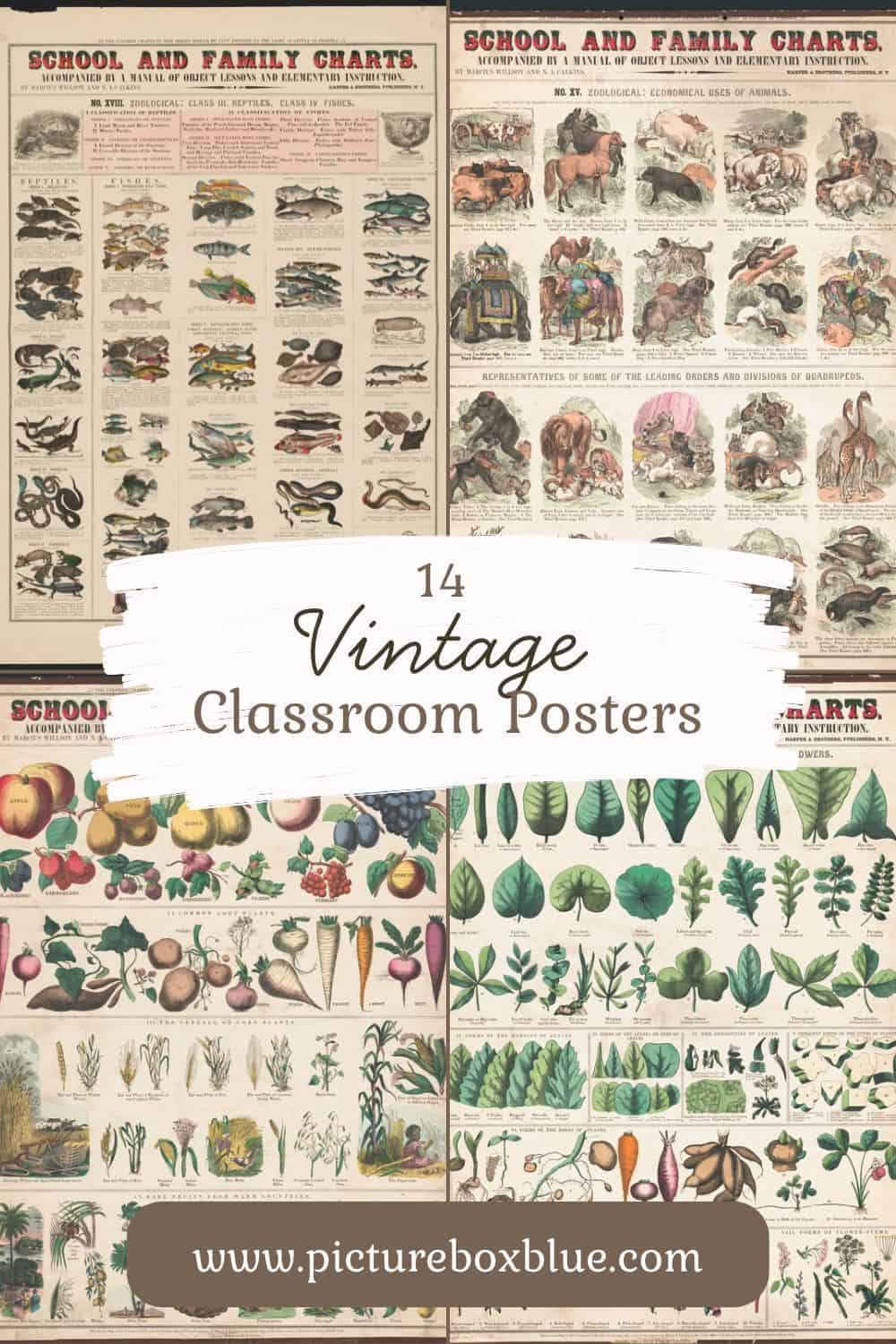
The posters measured roughly 22 by 30 inches (56 by 76 cm), making them large enough for a whole classroom to see. Some were mounted on sturdy boards and hung on walls, while others were sold in portable sets for home use.
They weren't particularly cheap, either. In 1862, a complete set of 22 mounted charts cost $9, while a portfolio version for family use cost $11. And in 1904, Willson patented a special device called an Educational Chart Exhibitor. It was essentially a cabinet fitted with rollers, allowing teachers to scroll through large pictures without taking them down and putting up new ones (Victorian PowerPoint!).
How to Download the Free Victorian School Charts
Click on the title above the chart you want. A higher-resolution image will open in a new tab, where you can save it to your computer or print it.
The original illustrations come from the Library of Congress. They are in the public domain, so you can use them for personal projects, crafts, printable wall art, and commercial designs.
These are scans of genuine 19th-century prints, so don't be surprised to find the odd crease, faded patch or mark on the paper. Personally, I think these signs of age add to their charm. They would make lovely vintage wall art for a study, home library or creative workspace. You could also print smaller versions for junk journals, scrapbooks and decoupage projects.
Botanical School Posters
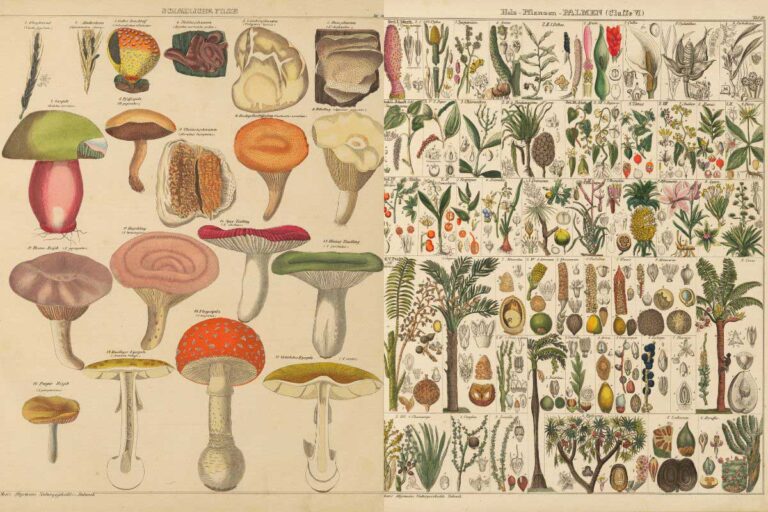
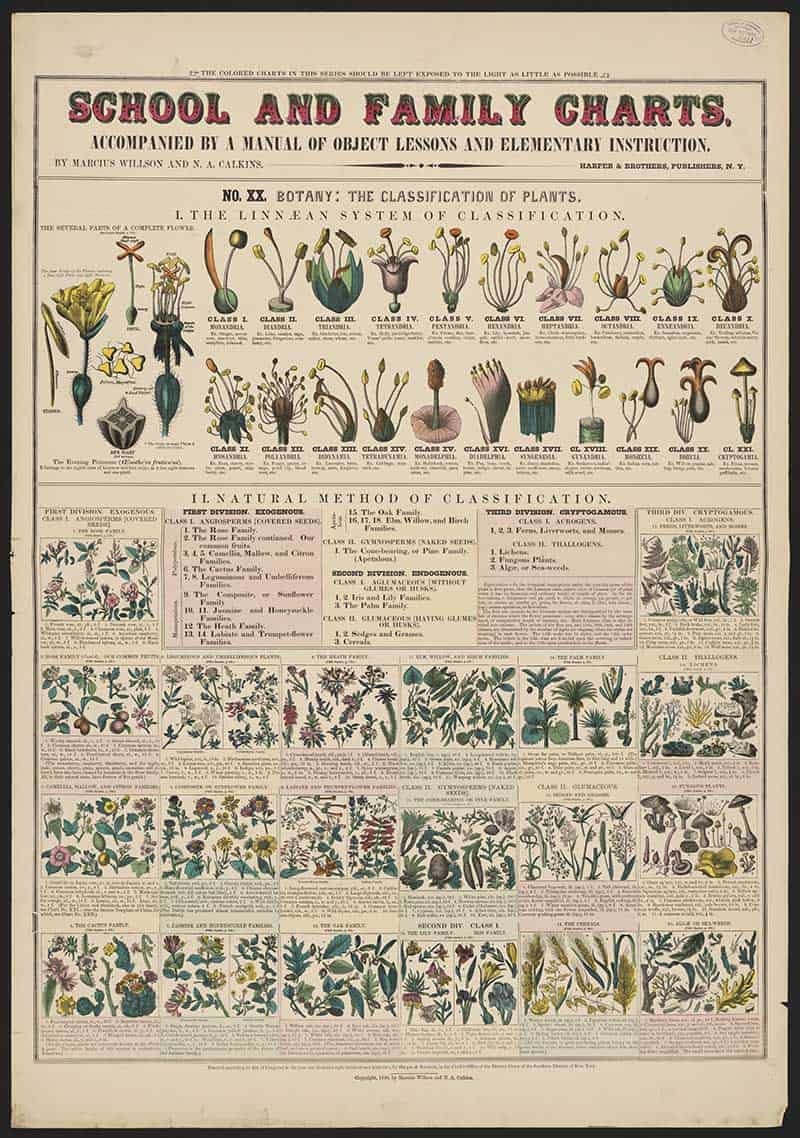
Botanical charts, packed with illustrations of leaves, stems, roots, flowers and useful plants.
Print 1: Botany: The Classification of Plants
For more botanical classification type posters like these, check out Oken's Natural History Prints.
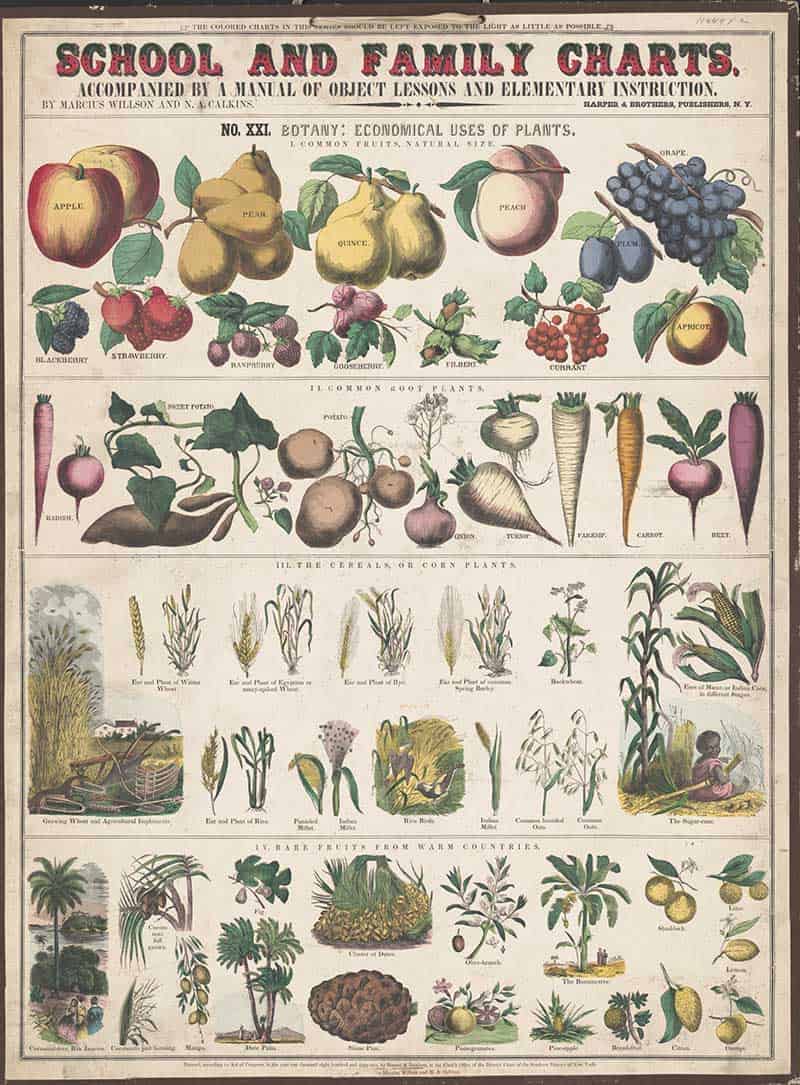
Print 2. Botany: Economical uses of Plants
Chart of popular fruits, vegetables and other crops from around the world. If you like this, you'll love the stunning Adolphe Millot Fruit & Vegetable posters on the site.
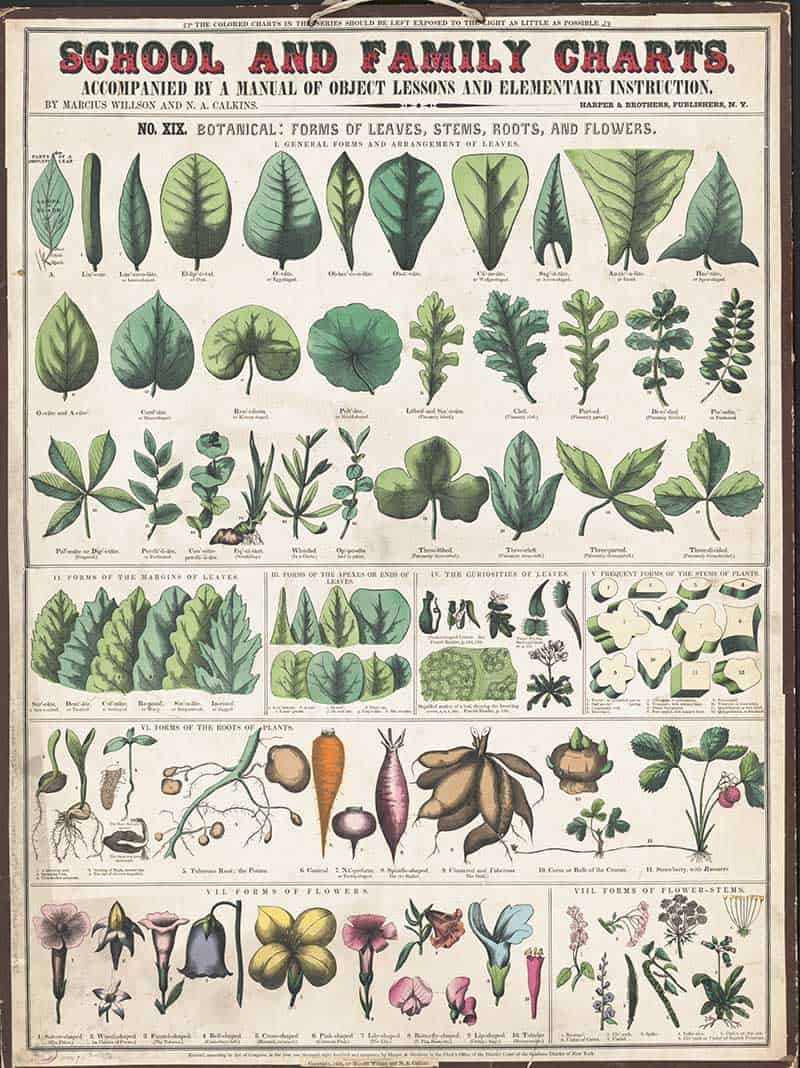
Print 3: Botany: Forms of Leaves, Stems, Roots, and Flowers
The Japanese Nature Charts collection on the blog includes a beautiful Japanese equivalent of this chart.
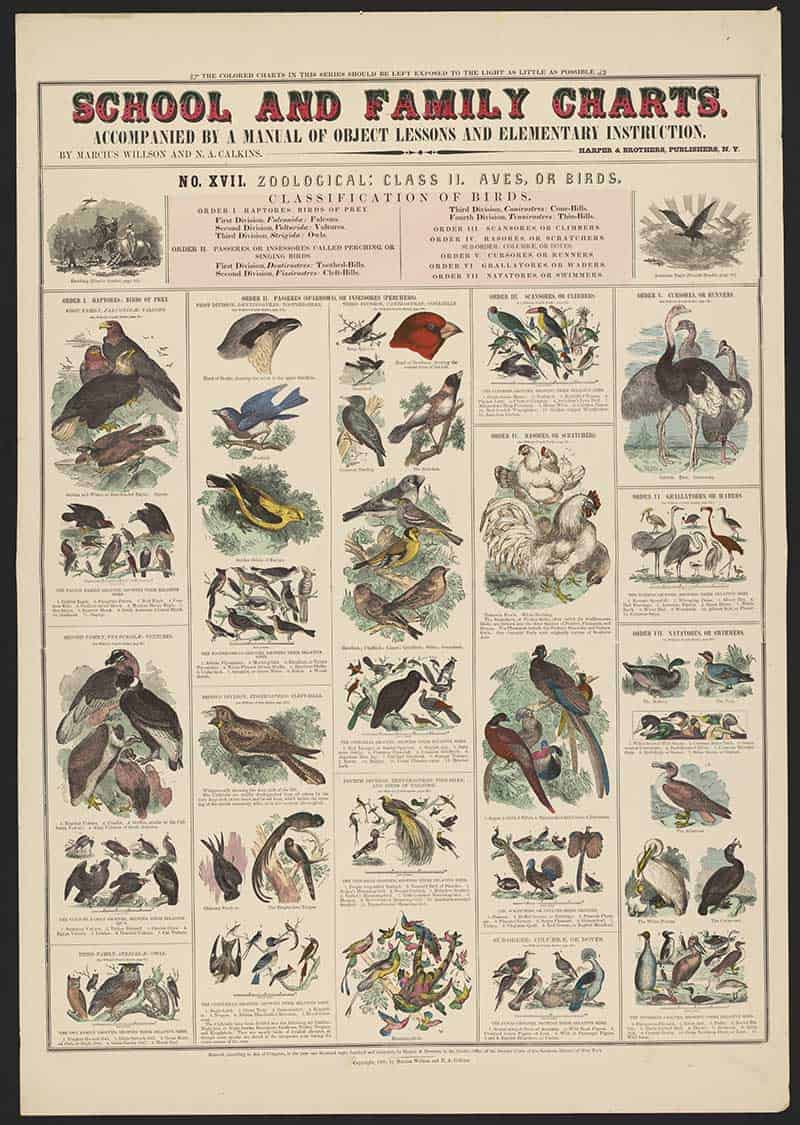
Zoological Charts
The zoological charts bring together a wonderful variety of animals, from familiar birds and mammals to reptiles and fish, all neatly arranged in the style of Victorian scientific illustrations.
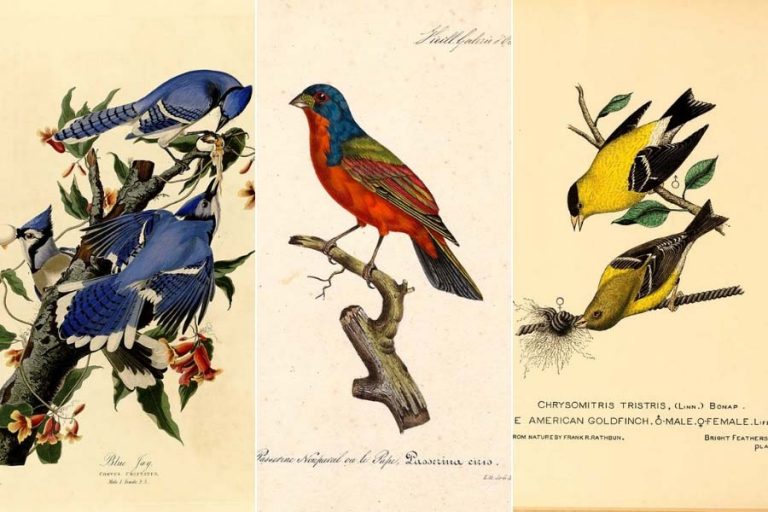
The site also has beautiful collections of vintage bird prints, including this fun Pictorial Alphabet of Birds that wouldn't look out of place in a Victorian garden.
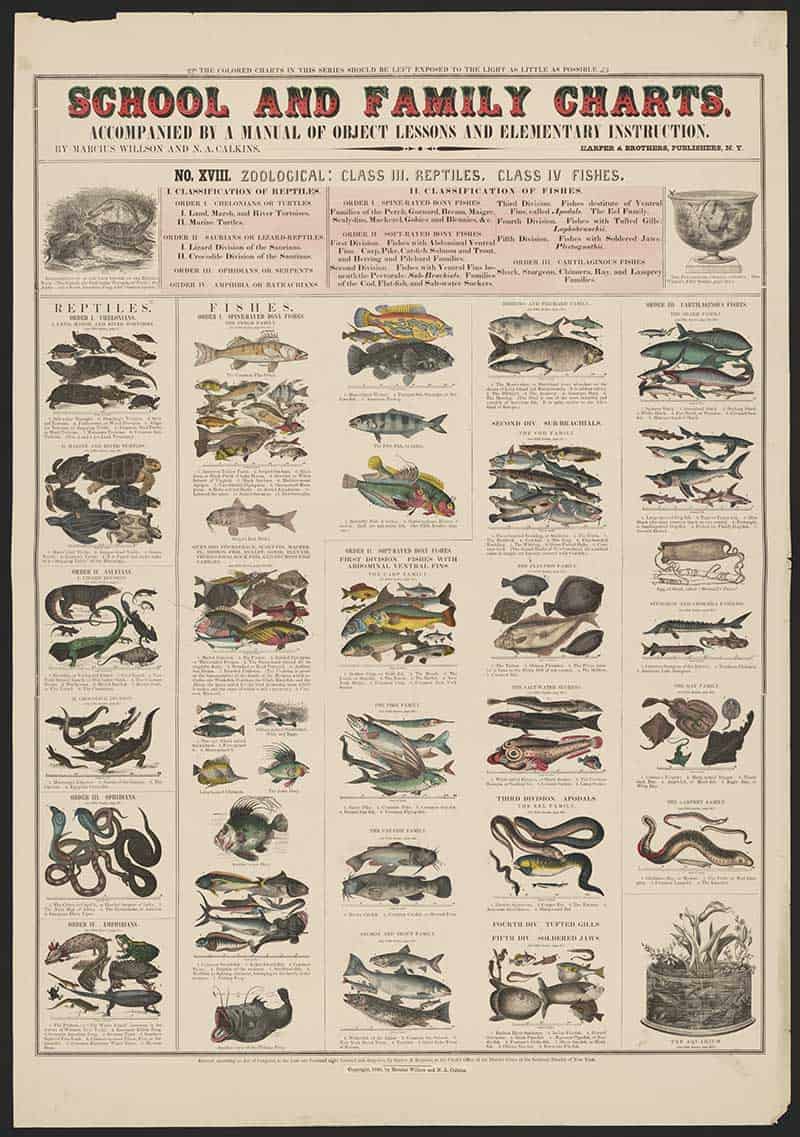
Print 5: Zoology of Reptiles & Fishes
For more zoological fish collections, check out Jardine's Ichthyology charts.
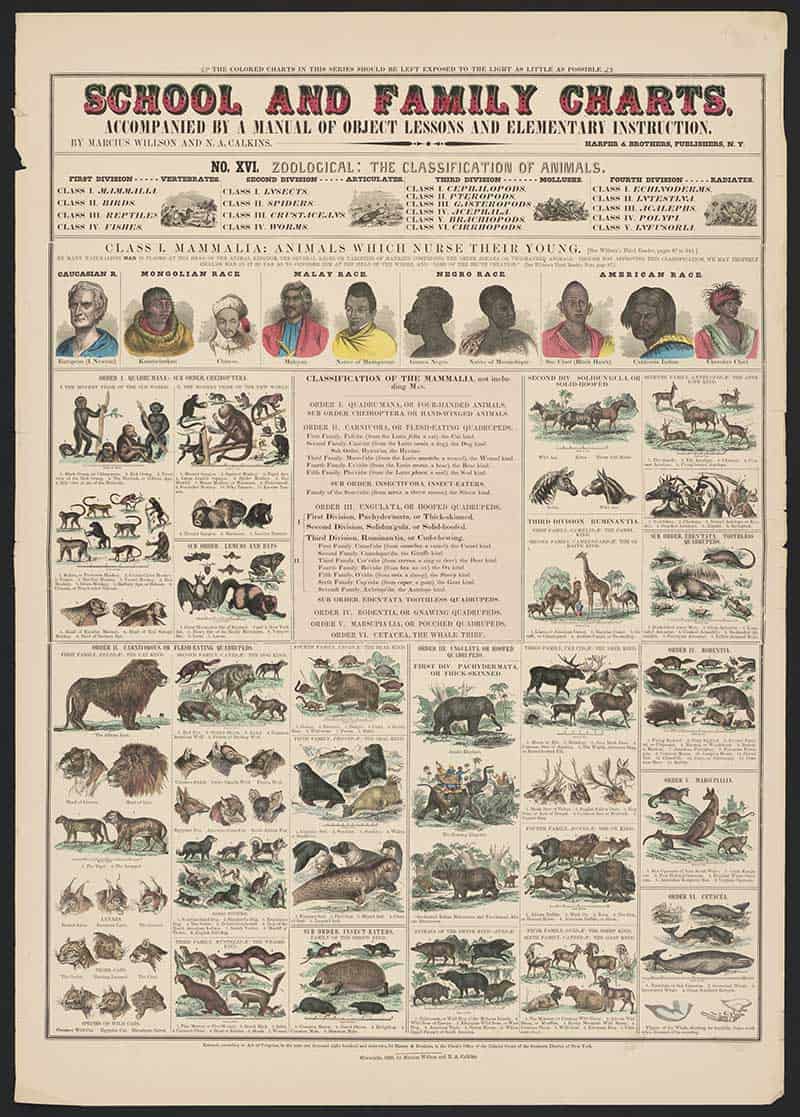
For an extensive collection of mammalian charts, check out the popular Larousse Dictionnaires Animal illustrations.
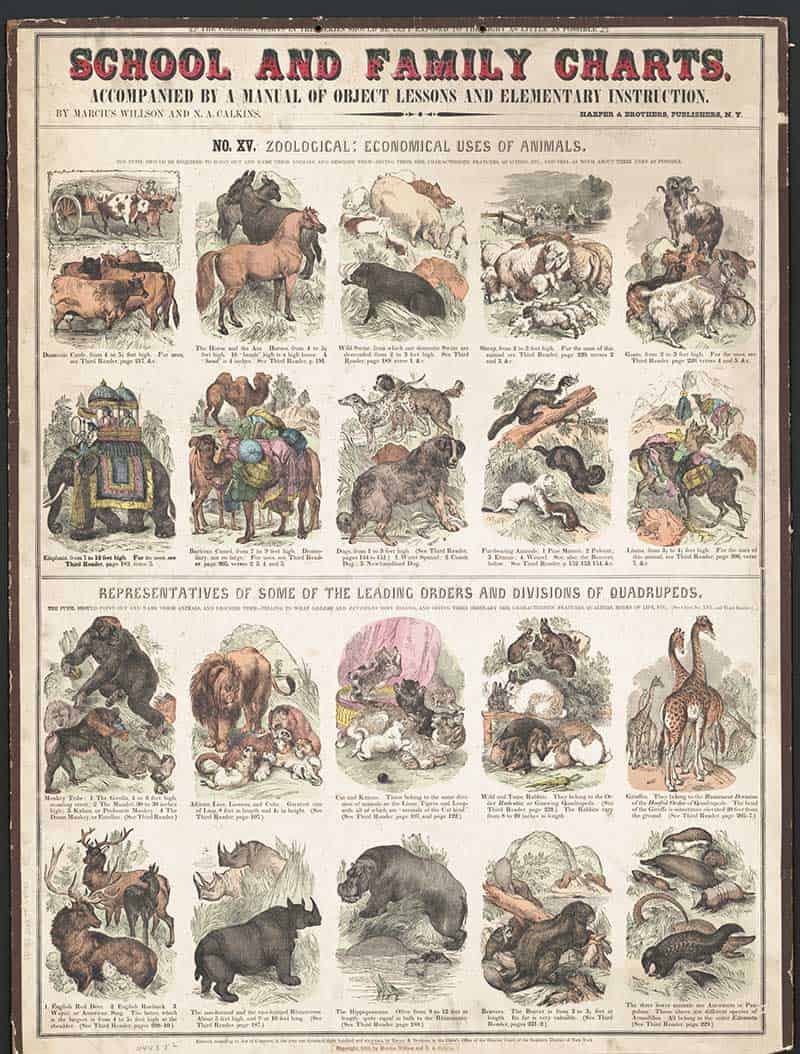
Print 7: Economical Uses of Animals
Showing how people depended on different creatures for food, materials and other practical purposes. It's a fascinating reflection of how natural history was taught in the 19th century, when people often studied animals as much for their usefulness as for their place in the natural world.
Also includes a section on the classification of quadrupeds.
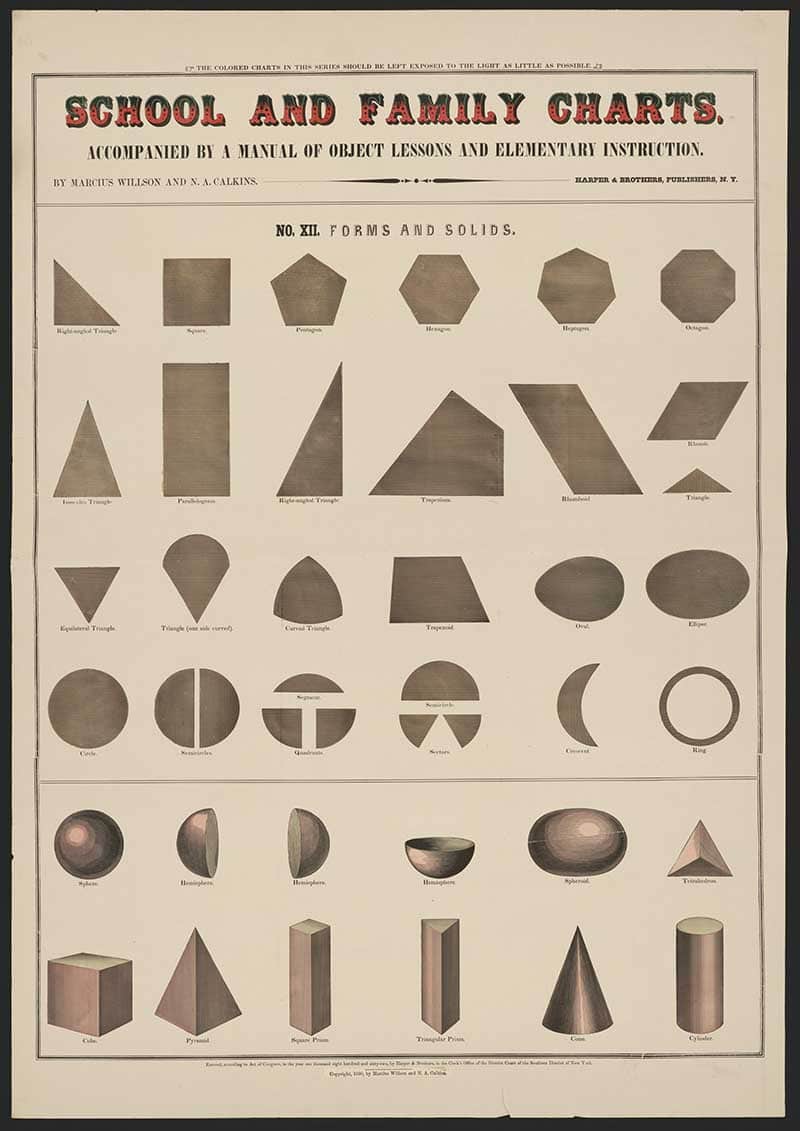
Drawing & Colour Charts
The geometric designs remind me of some of the fascinating vintage science posters by John Emslie.
This wonderfully organised chart explores lines, angles, measurements and directions. It's a fascinating mixture of geometry and geography, showing how mathematical ideas could be applied to the physical world.
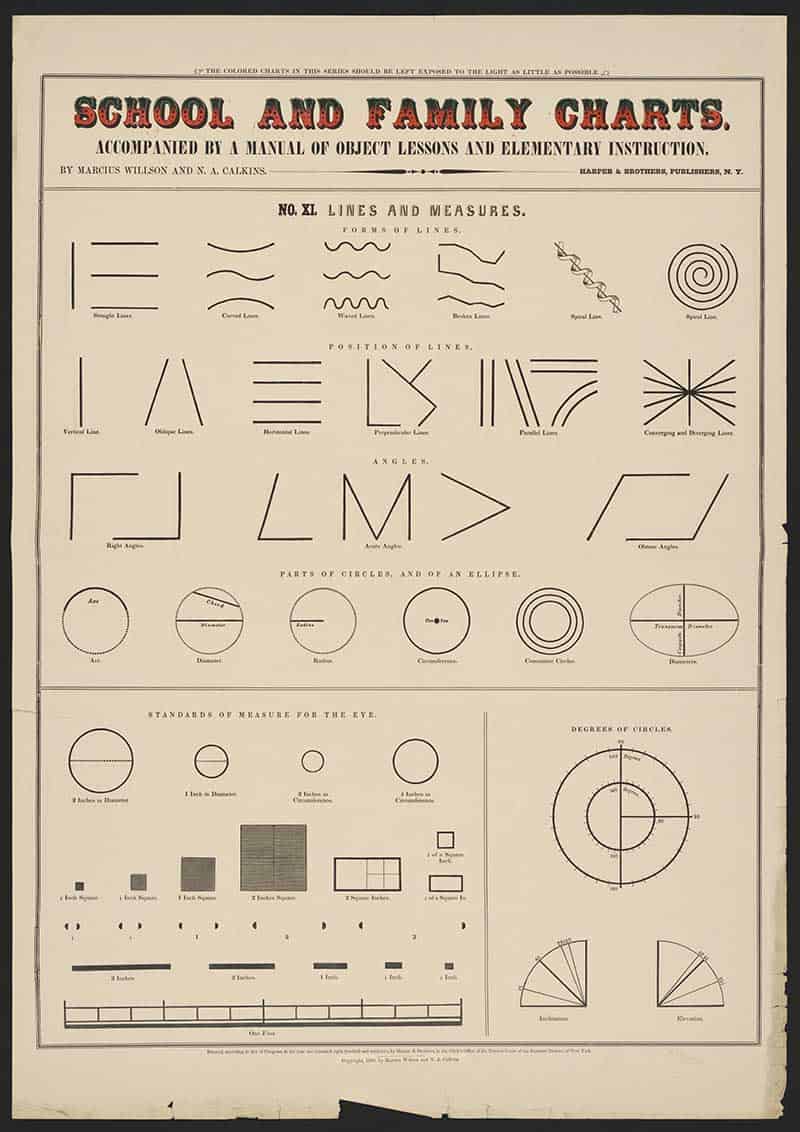
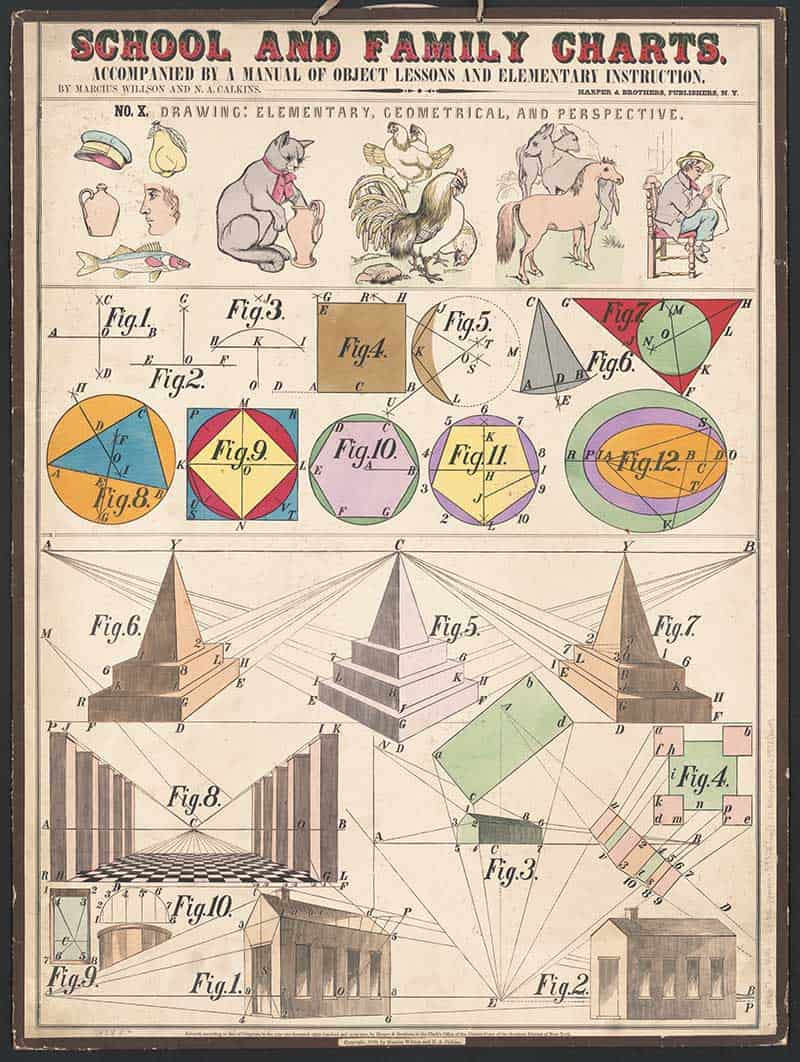
It introduced children to different ways of drawing, moving from simple outlines to geometric figures and the principles of perspective.
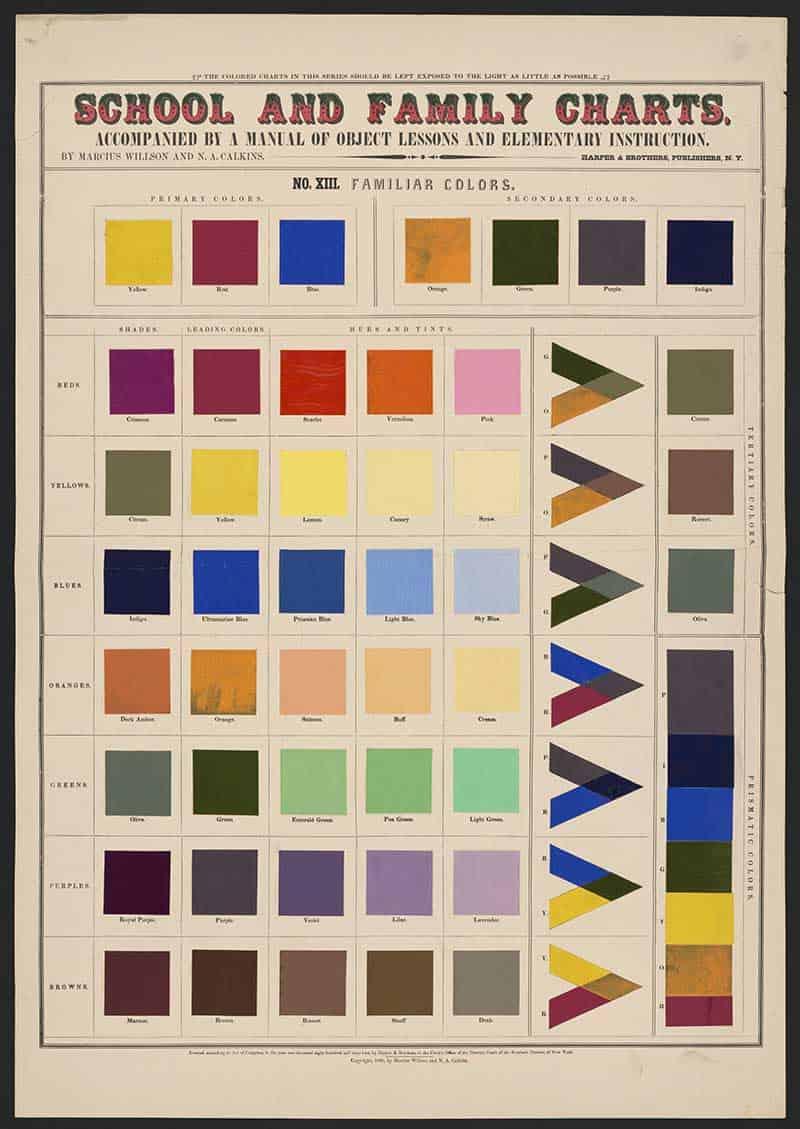
Colour study print displaying labelled swatches of primary and secondary colours, shades, tints and colour combinations.
The blog has a lovely collection of vintage colour and pattern charts to explore.
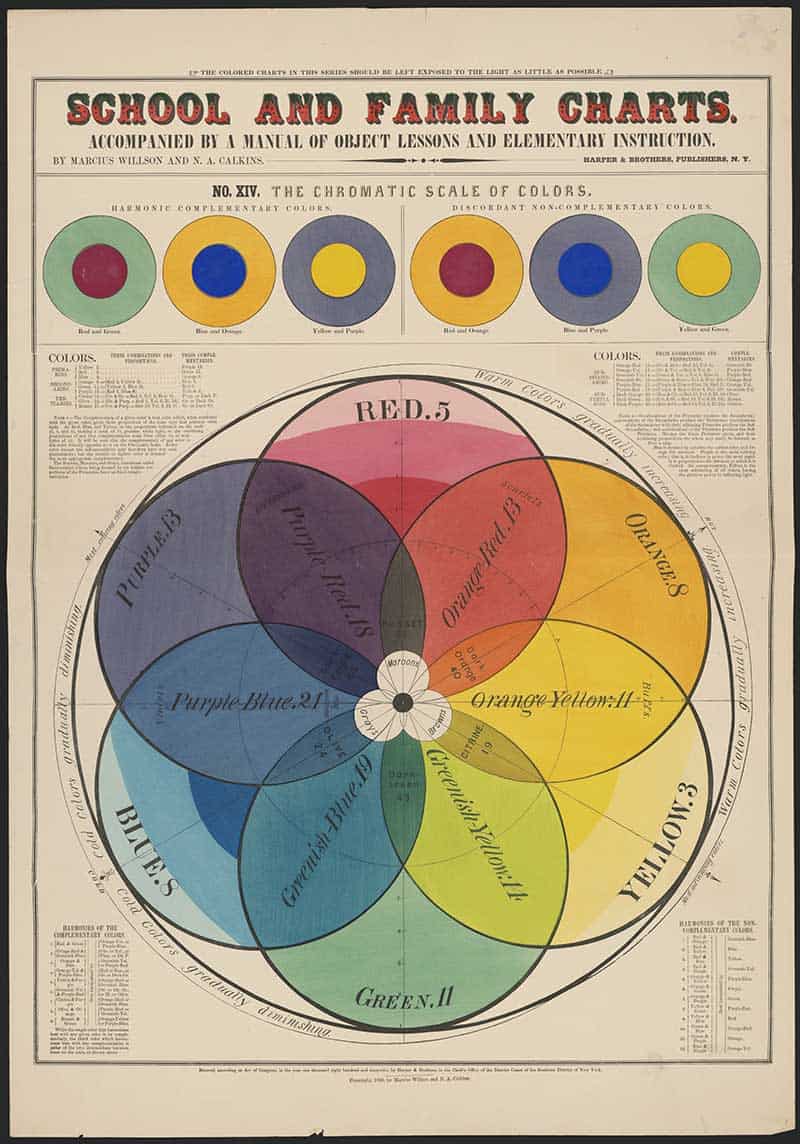
Print 12. Chromatic Scale of Colours
The chart explores colour relationships, using bold arrangements of different hues to help pupils understand the chromatic scale. Check out the wonderful collection of vintage colour wheels and colour theory posts on the blog.
Reading & Writing
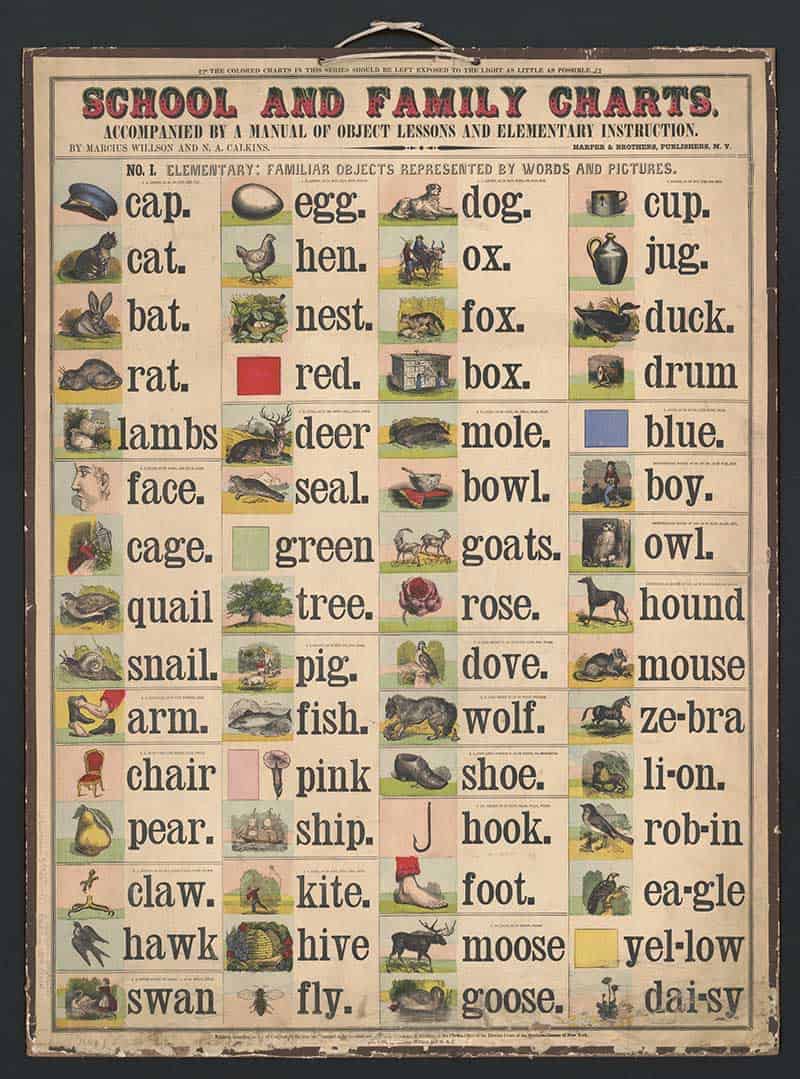
Vintage School and Family Charts object lesson print pairing simple words with pictures.
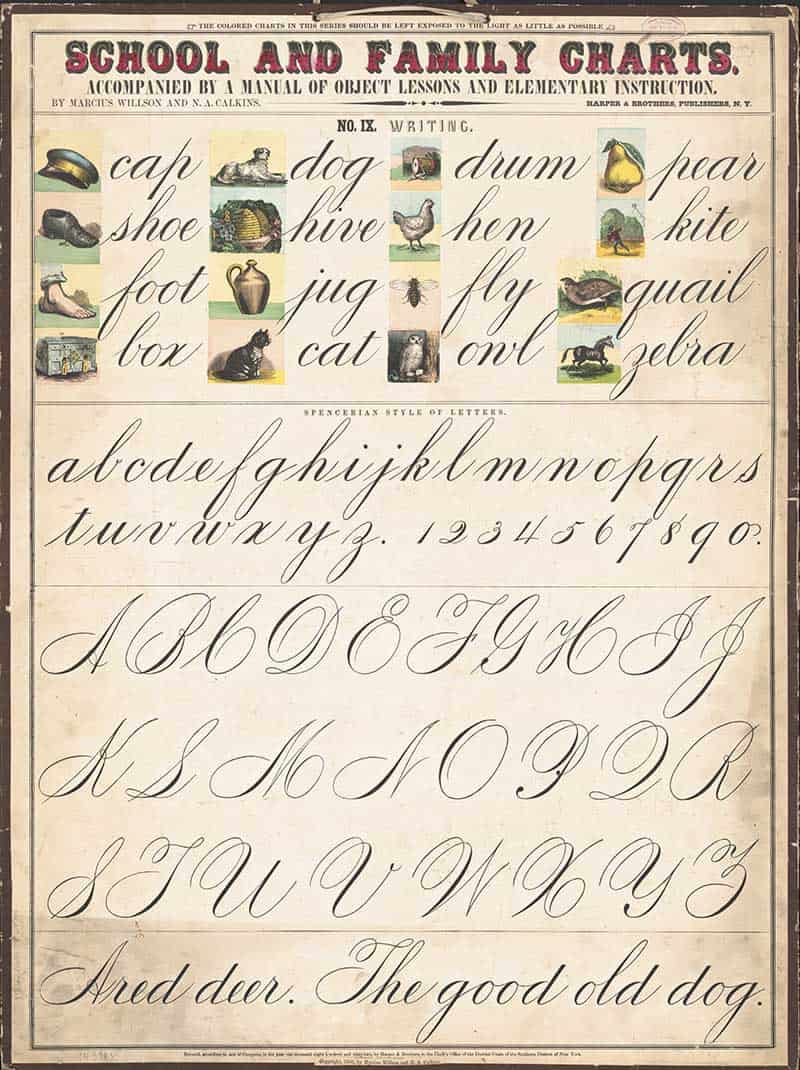
Handwriting print with illustrated practice words, Spencerian lowercase and capital alphabets, numerals and a cursive sentence.
If you are interested in fancy writing, then check out the amazing Hofnagel Calligraphy prints.
A Final Thought
What I enjoy most about these old-school charts is how they encourage you to stop and look properly at things. Whether it's the shape of a leaf, the markings on a bird or the relationship between different colours, there's always something interesting tucked away in the illustrations.
I suppose that's one reason I enjoy collecting vintage prints in the first place. You start looking at a picture because it's pretty, and before you know it, you've spent half an hour learning about something you never even realised you were curious about!
If these charts have sparked your curiosity, there are plenty more old illustrations to explore on Picture Box Blue. Have a look at my collection of 25 vintage nature posters, featuring all sorts of creatures from Oliver Goldsmith's natural history books. For something equally colourful, check out the fabulous educational geography posters by Levi Yaggy, or the gorgeous natural history charts by Adolphe Millot, packed with birds, butterflies and insects.