
25 Free Prints of Beautiful Traditional Japanese Patterns and Designs
Inside: A collection of traditional Japanese patterns, surface pattern designs, and meanings, all rooted in Japanese culture. These patterns are in the public domain and are free to print, showcasing the beauty of traditional Japanese art forms.
The history of Japanese patterns and textile designs is a fascinating tale of creativity and cultural exchange, especially during the Edo period (1603-1868). Japan's isolation fostered the development of distinct cultural elements, such as ukiyo-e woodblock prints, kabuki theatre featuring actors in elaborate costumes, and tea ceremony culture. These influences shaped Japanese textiles' vibrant, often geometric designs, featuring motifs like cherry blossoms, hemp leaves, and symbols of good fortune and long life.
In the Meiji period (1868-1912), Japan's interaction with the West introduced new influences, leading to more subdued naturalistic patterns, including plum blossoms and representations of bad luck and tranquillity. This period also saw the use of cotton and wool alongside traditional fabrics, enhancing the variety of Japanese fabrics.
The traditional prints here focus mainly on those from the Meiji period, like Kono Bairei's birds and flowers.
The Meaning Of Traditional Japanese Patterns
The Meiji period also saw the introduction of the Jacquard loom, enabling intricate patterns such as the rinzu pattern, featuring repeating geometric motifs. Japanese designs in the early 20th century were influenced by European Art Nouveau, leading to a style known as “Japonisme.”
The Most Popular Patterns
Here are examples of traditional Japanese patterns. Each type of pattern has a unique story and symbolism:
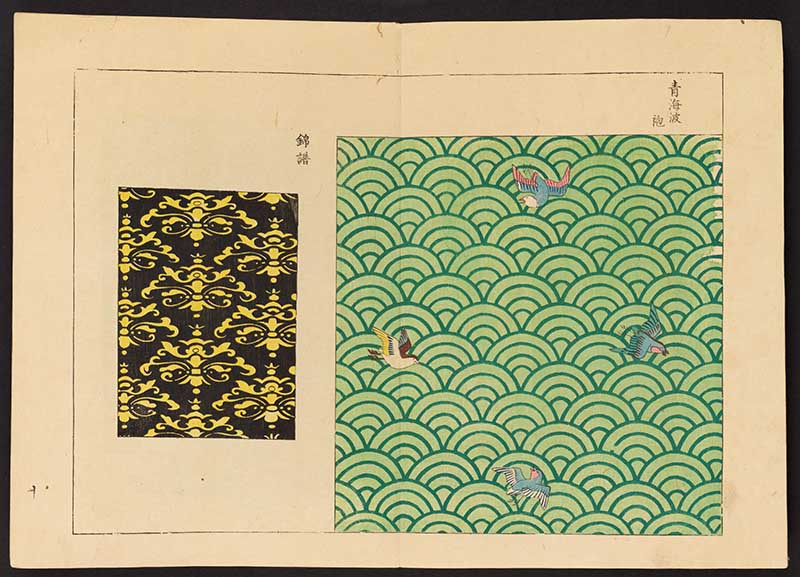
- Seigaiha is a simple pattern of concentric circles symbolising tranquil waves, representing good luck and prosperity. It is a symbol of wealth.
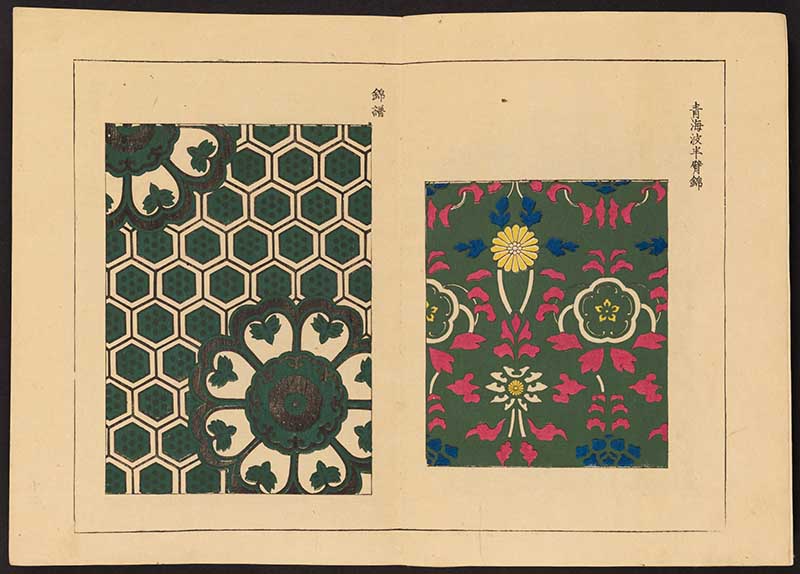
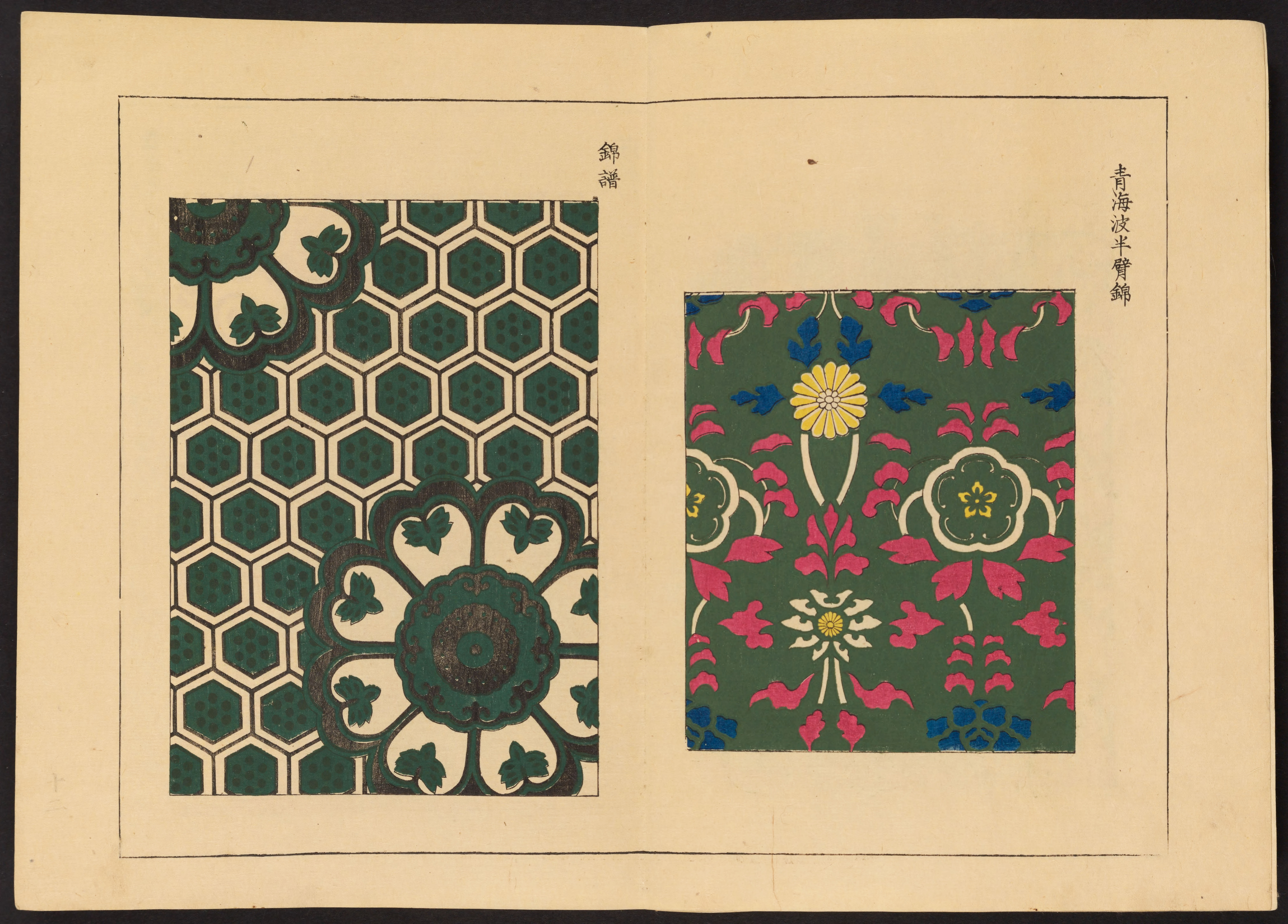
- Kikko Pattern - a hexagon shape resembling a tortoise’s shell, symbolising longevity and good fortune.
- Asanoha pattern - resembles the hemp leaf, forming a geometric, star-like motif. It symbolises growth and health and is commonly used in traditional clothing, particularly for children, to wish them a robust and vibrant life.
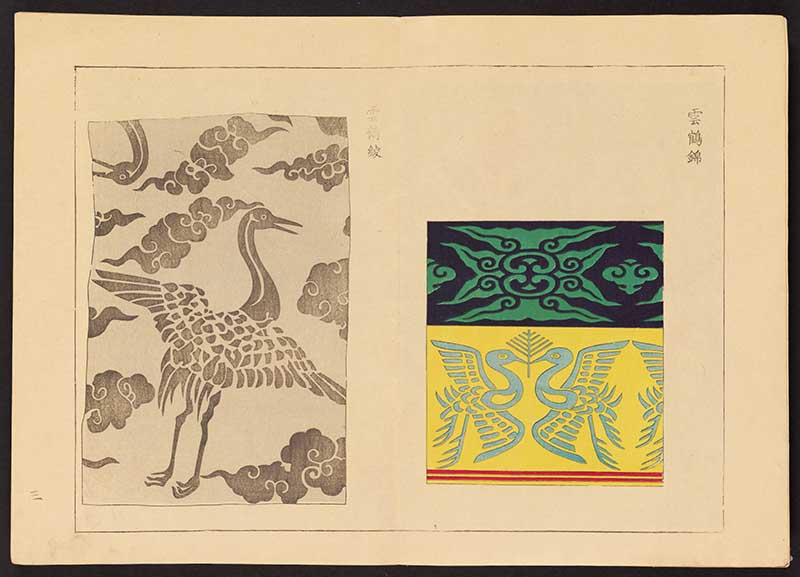
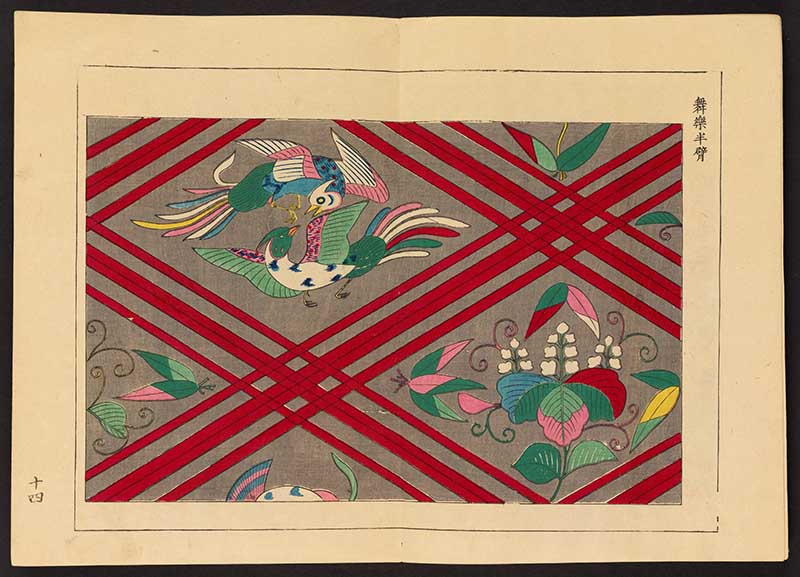
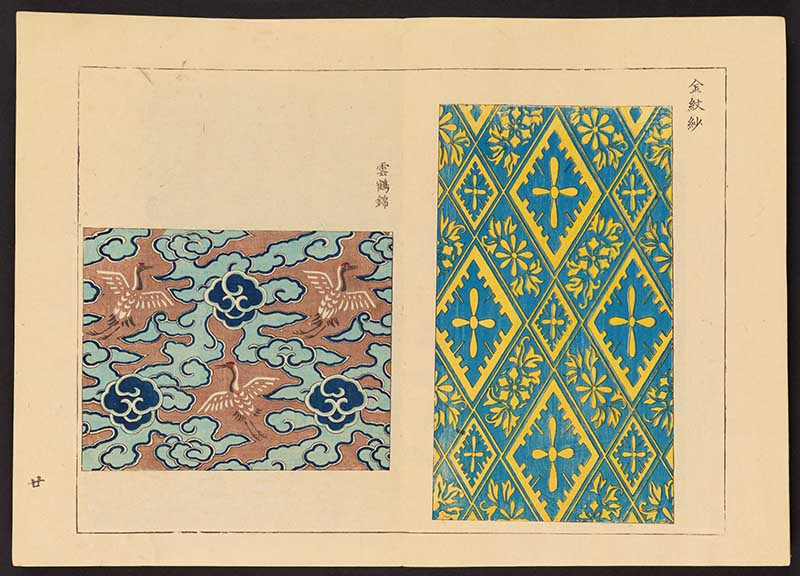
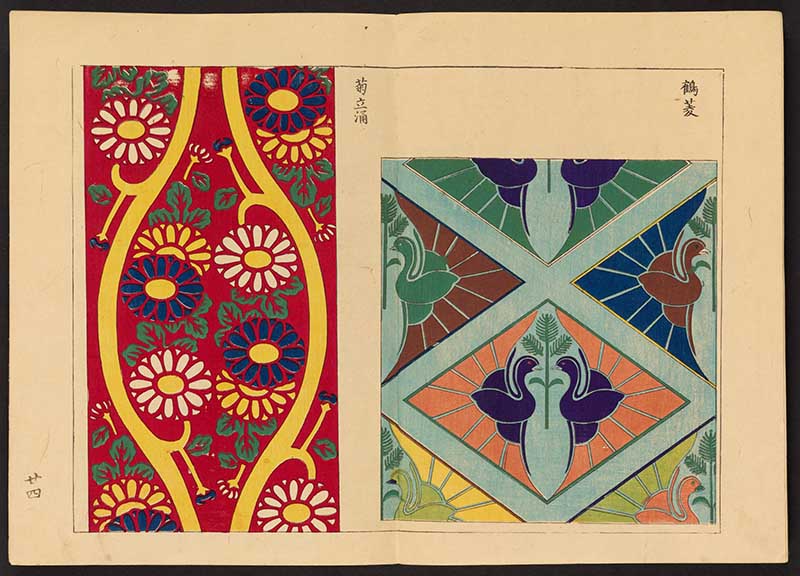
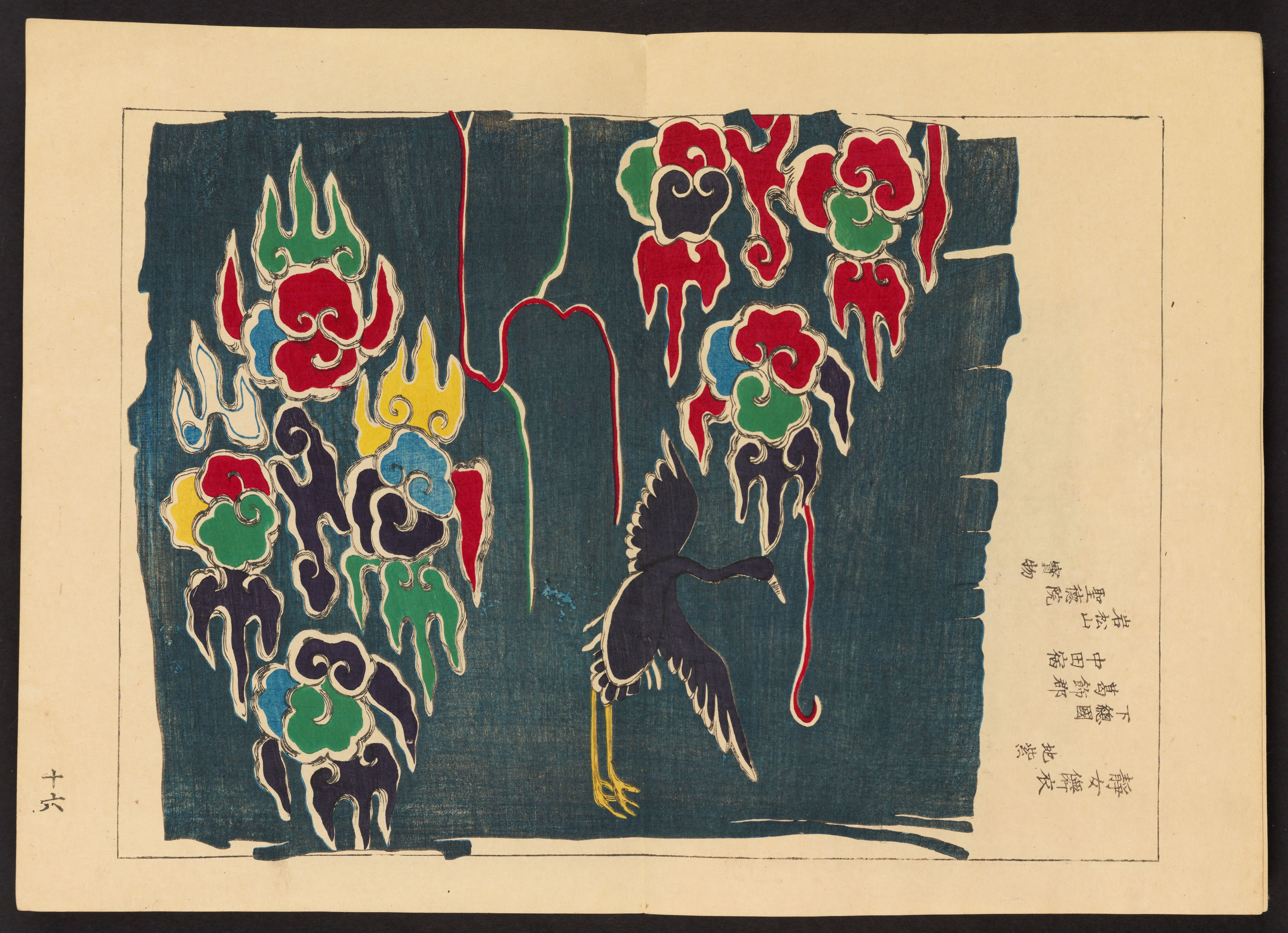
- Tsuru is a crane pattern that symbolises good fortune and longevity. This migratory bird is prevalent in textiles, ceramics and other art forms.
- Shippo Pattern - interlocking circles, symbolising the “Seven Treasures” of Buddhism, which include gold, silver, lapis lazuli, crystal, agate, coral, and pearl.
- Sakura - a pattern of cherry blossoms, representing renewal and the fleeting nature of life.
More Pattern Designs
- Ume - a plum blossom pattern, symbolising perseverance and beauty in adversity.
- Yagasuri Pattern- diagonal lines resembling arrows, symbolising resilience.
- Tatewaku - swirls resembling ferns, symbolising growth and natural beauty.
- Mizuhiki - a pattern of knots, symbolising good luck and friendship.
- Kumihimo - a pattern of braided cords, symbolising unity and creativity.
- Kusa Pattern - a grass pattern, symbolising the beauty of the natural world. It symbolises the beauty and impermanence of life.
- Kiku-zukushi is a pattern that features lots of Chrysanthemum flowers.
- Tsubaki pattern features the Camellia flower, depicted in various stages from buds to full blooms. This pattern symbolises love and beauty.
- Matsu pattern prominently features pine trees, symbolising longevity, endurance, and eternal youth. Traditional Japanese textiles and art often use this pattern to convey wishes for long-lasting happiness and steadfastness.
- Kagome Pattern: This resembles a woven basket with a simple geometric pattern forming hexagons. It's often found in bamboo crafts and textiles and symbolises strength and good luck.
- Kanoko Pattern: These simple designs are related to a Japanese tie-dye technique. It resembles small dots or spots, similar to those on a fawn's back, and is commonly seen in traditional Japanese kimonos. The Kanoko pattern represents elegance and high status.
The Komon pattern is a type of traditional Japanese fabric design. It features tiny, detailed motifs that repeat across the fabric. These tiny patterns can be of many things, like plants, animals, or geometric shapes.
From a distance, the fabric often looks like a single colour. Samurai originally wore this pattern, known for its elegance and subtlety. Today, it's used in kimonos and other garments, as well as in modern fashion and interior design.
How To Download The Designs
Click on the title above the very old pattern you want. A higher-resolution image will open in a new browser window. Click the illustration to print and save it.
All the beautiful patterns featured here are in the Public Domain, so they are copyright-free.
Patterns & Designs From Kyūko zufu
Kyūko zufu is a famous Japanese design book known for its stunning illustrations of traditional Japanese patterns, inspiring generations of artists and designers.
One of the most distinctive features of Kyūko zufu is its use of rich, vibrant colours. The book's illustrations are printed using a unique technique known as benizuri-e, which involves woodblock printing multiple layers of paint.
Kyūko zufu was incredibly influential and helped spark a renewed interest in traditional Japanese patterns and design. Its impact is still visible today, as many contemporary designers continue to draw inspiration from this iconic book's stunning patterns and illustrations.
The prints below are from a collection at the Smithsonian Libraries.
Patterns 1 -8
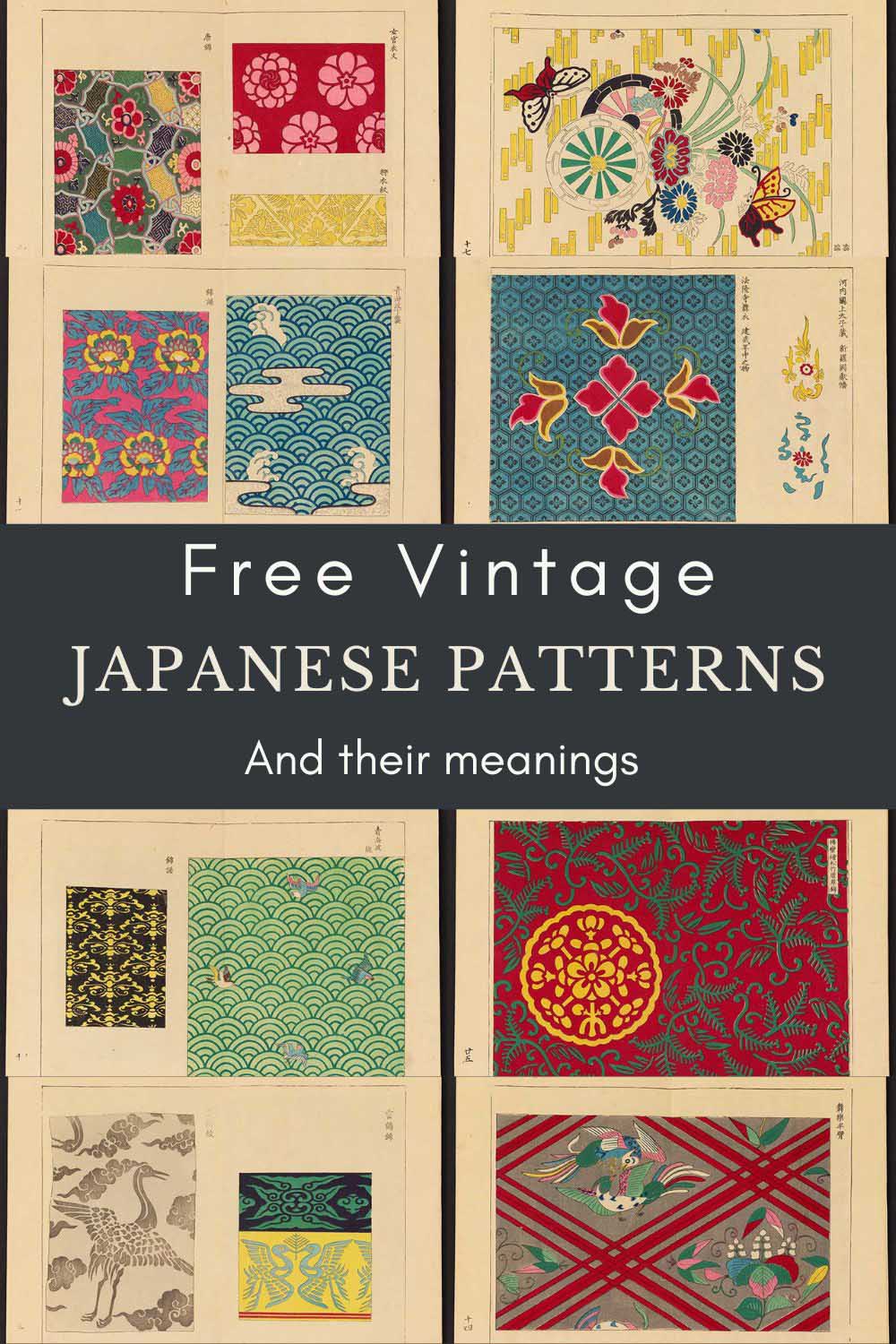
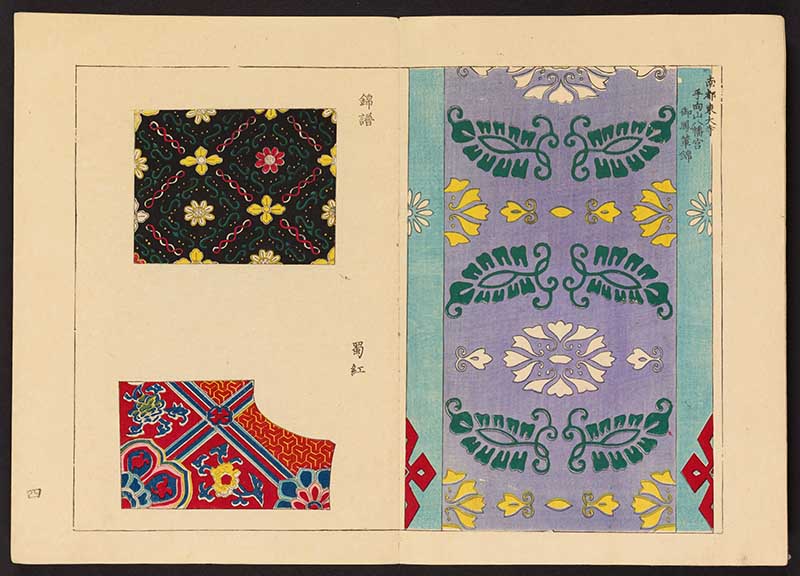
The small red pattern is an example of a "Kachō", which means "flowers and birds", and "ga", which means "picture" or "painting." Kachō-ga is a popular Japanese art and design motif featuring realistic and stylised depictions of various flowers and birds.
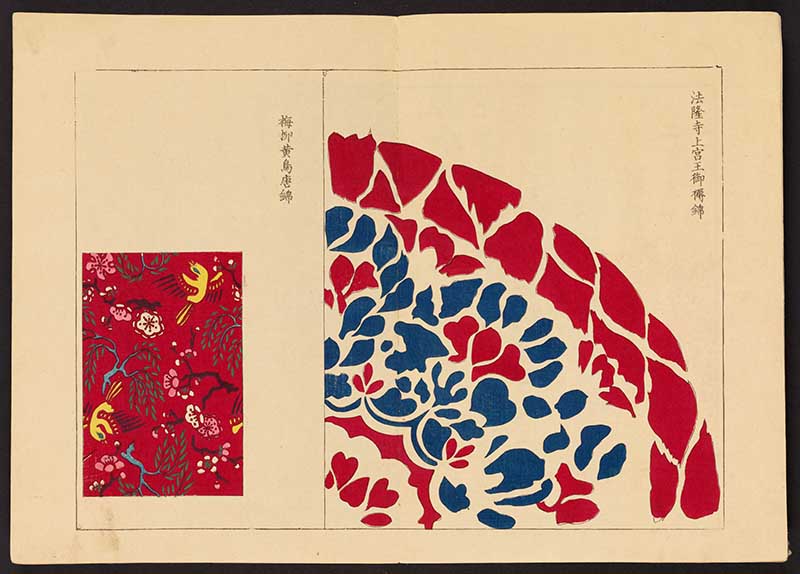
Pattern 2 Flower On Blue Hexagons
The background pattern is an example of Kikkou, a repeating pattern of hexagons resembling a tortoise's shell.
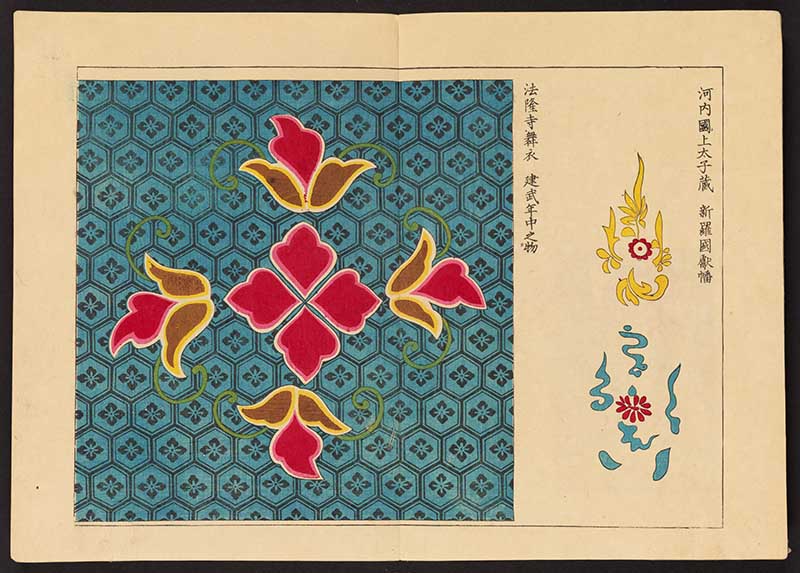
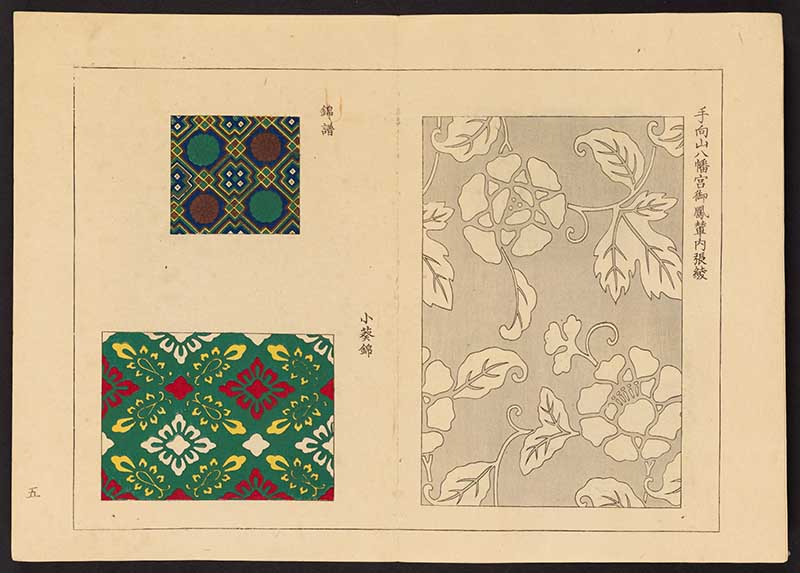
Pattern 4: Three Flower Motives
The Kiri pattern features a repeating pattern of paulownia flowers and leaves. It symbolises nobility, strength, and endurance.
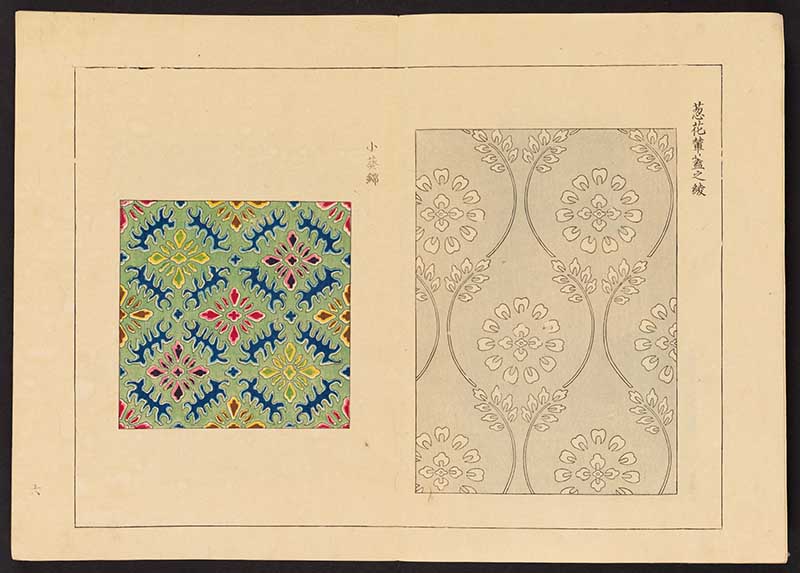
Print 7: Checkerboard and Flowers
The Ichimatsu pattern features a repeating pattern of squares, resembling a checkerboard. It symbolizes balance, harmony, and the Buddhist concept of the Middle Way.
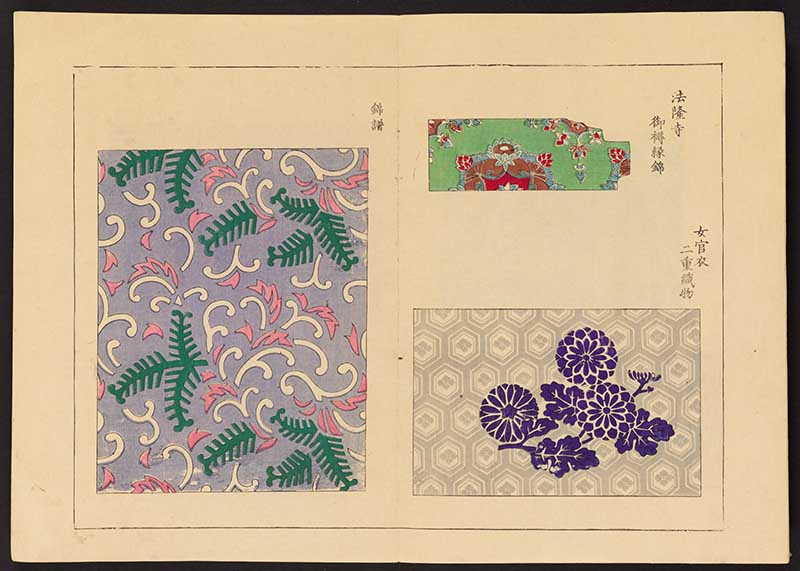
Japanese Patterns 9-16
Pattern 9: Flowers and Colourful Geometrics
Diamond shapes sit in the middle of the colourful flower pattern design. The Hishi pattern features a repeating pattern of diamond shapes that resemble fish scales. It symbolises good luck and protection from evil.
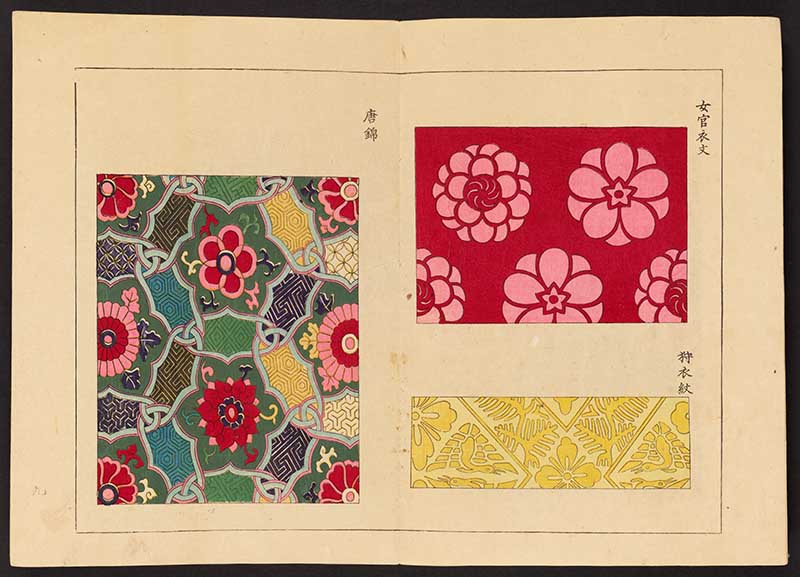
A classic example of Seigaiha, a wave design of concentric circles that resemble ocean waves.
Kiku: Chrysanthemums are a symbol of the sun and are often associated with longevity and loyalty.
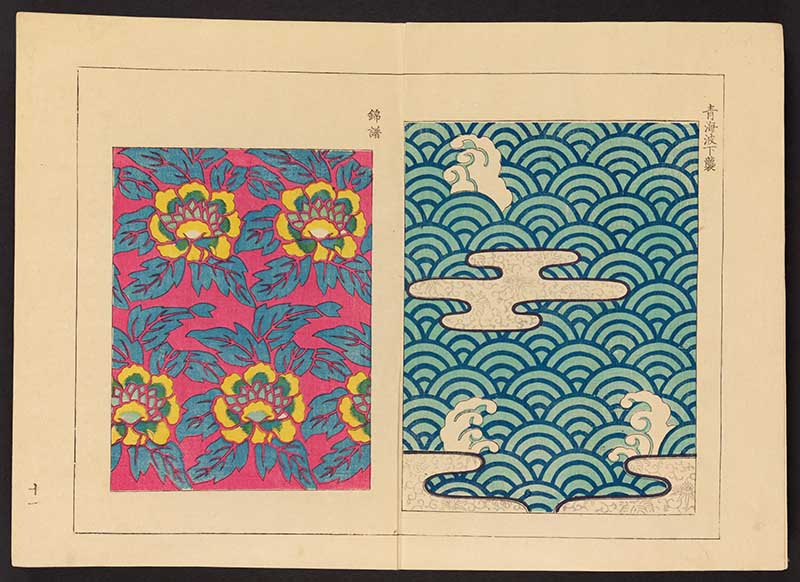
Pattern 12: Hexagons and Flowers
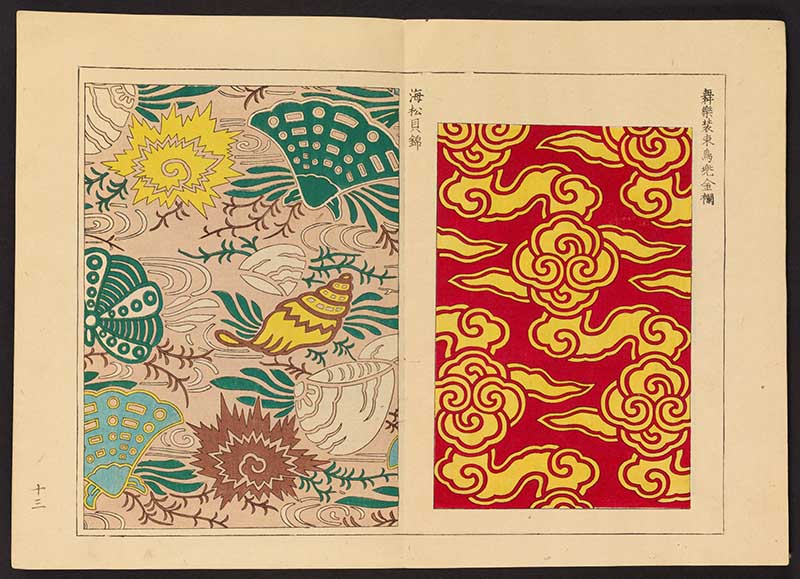
Seashell patterns appear in various Japanese art forms, including pottery, lacquerware, and textiles. They are often incorporated into designs alongside other natural elements, such as waves, fish, and flowers, to create harmony and balance.
- Scallops (Hotate-gai): Scallops form a fan-shaped pattern and symbolise good luck and prosperity.
- Abalone (Awabi-gai): Abalone shells are a symbol of good fortune and safe travels.
- Clams (Hamaguri-gai): Clams are a symbol of contentment and harmony in the home.
- Cowrie (Tawara-gai): Cowrie shells are a symbol of money and wealth.
- Conch (Horagai): Conch shells are a symbol of communication, as they were traditionally used as a horn to signal important messages.
- Oyster (Kaki-gai): Oysters are a symbol of fertility and family harmony.
- Snail (Katatsumuri-gai): Snail shells are a symbol of longevity and good health.
Pattern 14: Colourful Birds Geometrics
Kumiko (Wooden lattice): Kumiko is a geometric pattern with a wooden lattice design. It represents bringing order to chaos and is often used in interior design.
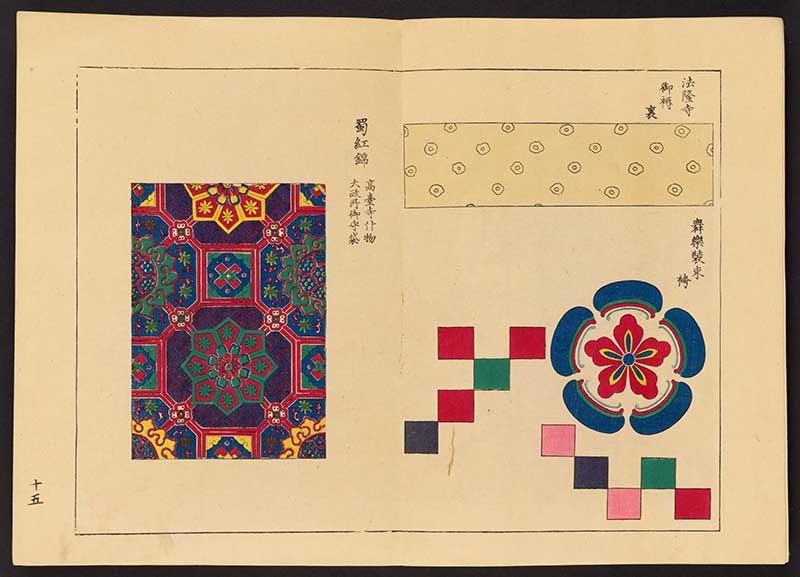
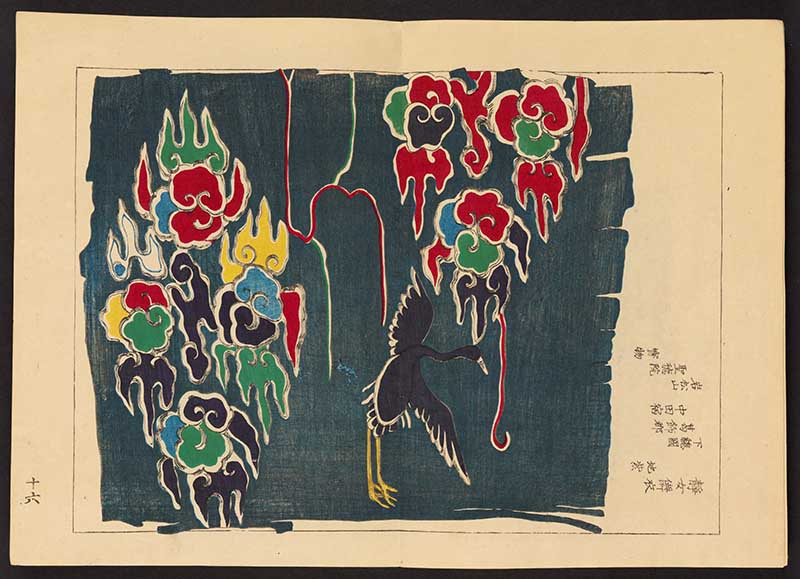
Patterns 17-25
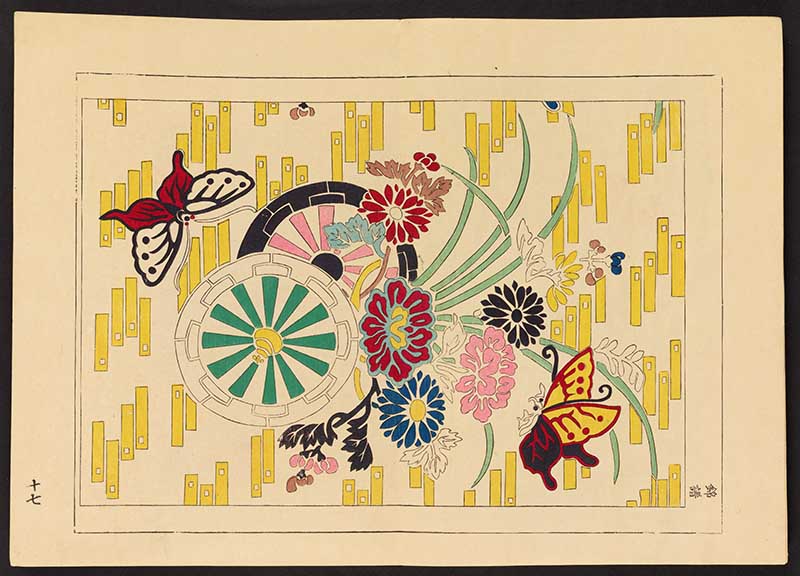
Ume-gaeshi (Reverse plum blossom): Ume-gaeshi is a pattern that features plum blossoms and butterflies. The butterflies in this pattern are depicted with their wings folded as if they are resting on the plum blossoms. The design symbolizes the coming of spring and the renewal of life.
Check out the vintage Japanese butterfly patterns from Tanaka Yūhō's One Hundred Butterfly Patterns.
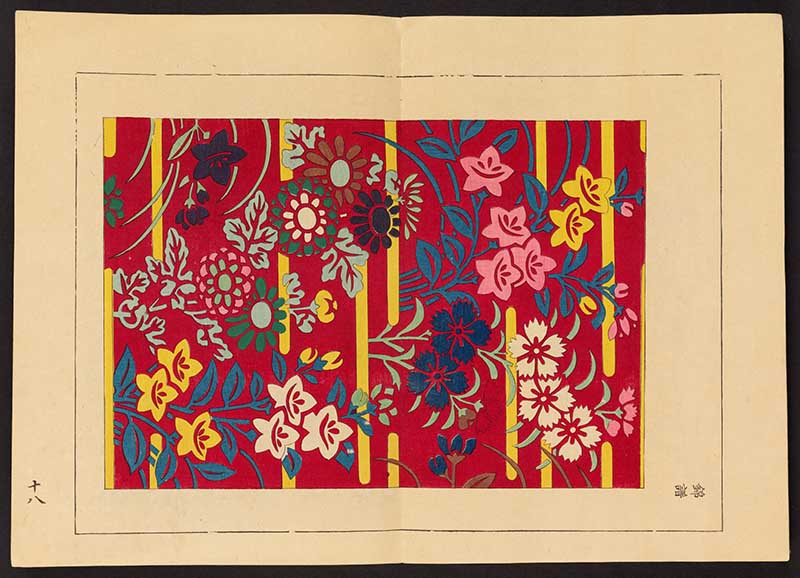
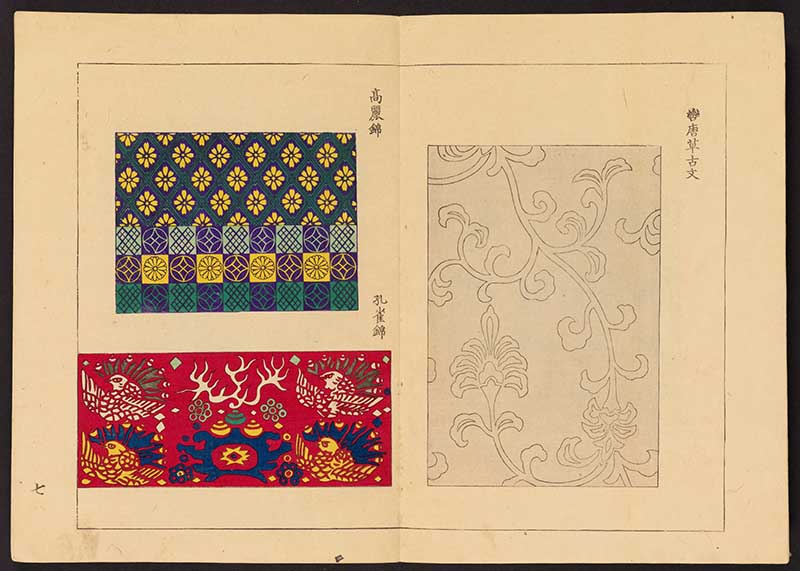
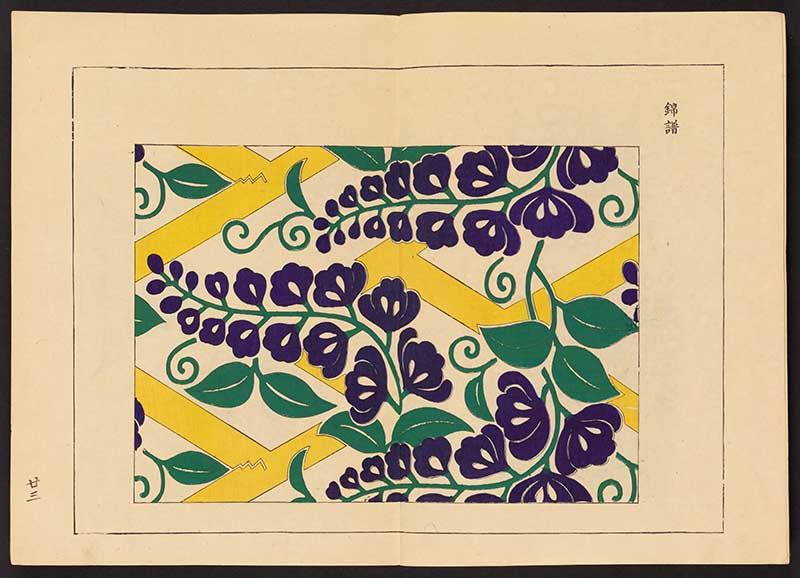
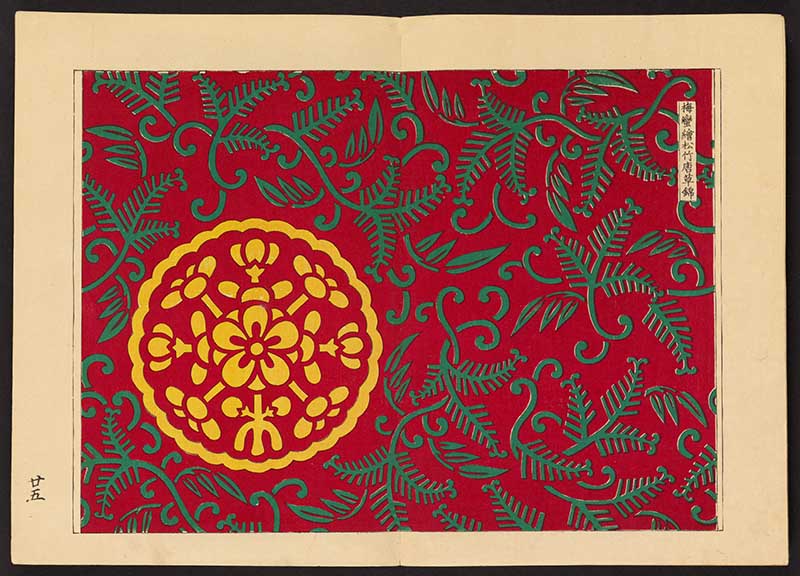
The Karakusa pattern features a repeating pattern of scrolling vines, leaves, and flowers. It symbolises prosperity, longevity, and fertility.
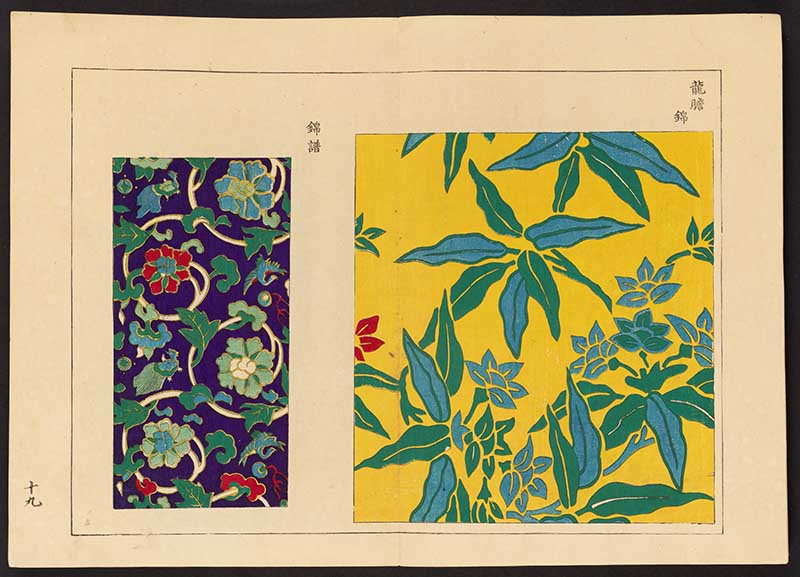
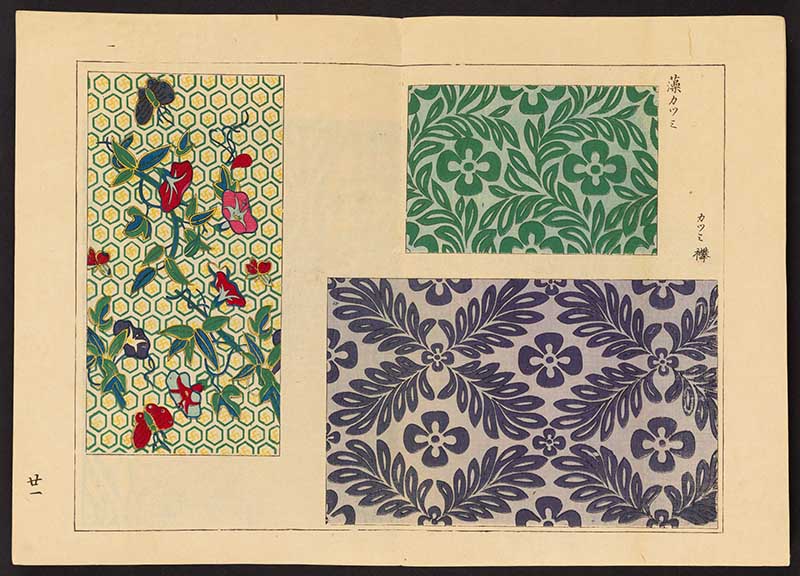
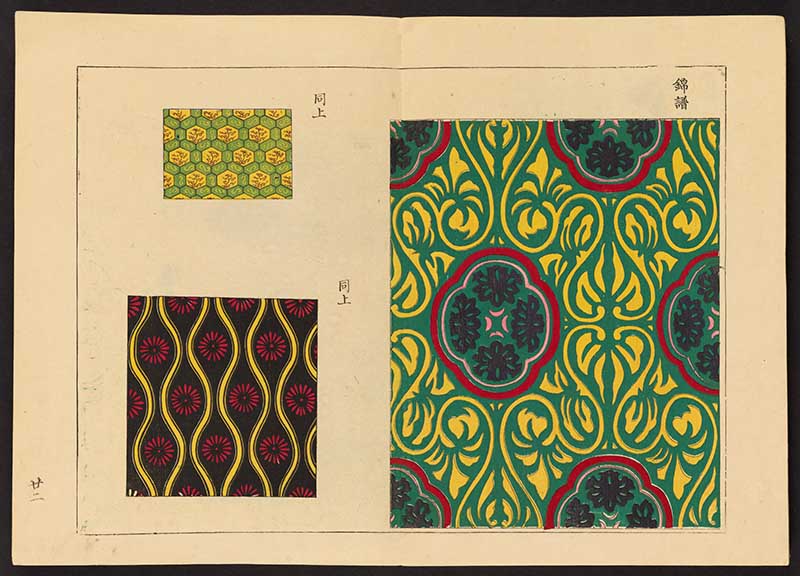
A traditional Japanese flower pattern on vines is called "Karakusa". It is a popular Japanese art and design motif featuring scrolling vines with leaves and flowers. It has its roots in Chinese pattern design. The pattern is often used to decorate various objects, such as textiles, ceramics, and lacquerware.
Other Sources of Japanese Patterns
The site also has further collections you should check out. The first is from the Shin Bijutsukai, an influential Japanese art and design magazine that played a crucial role in shaping Japanese art and design during the early 20th century.
The magazine championed traditional Japanese arts and crafts and helped to create a sense of national pride and identity among Japanese artists and designers.
The second is Watanabe Seitei's prints featured in Bijutsu Sekai. The magazine focused on Japanese art and featured articles and illustrations of Japanese artists' work.
These vintage Japanese Kimono prints feature many traditional Japanese patterns.
More Japanese vintage art and images are featured on the site. This includes Kusakabe Kimbei's stunning hand-coloured photographs of Japan during the late 19th and early 20th centuries.
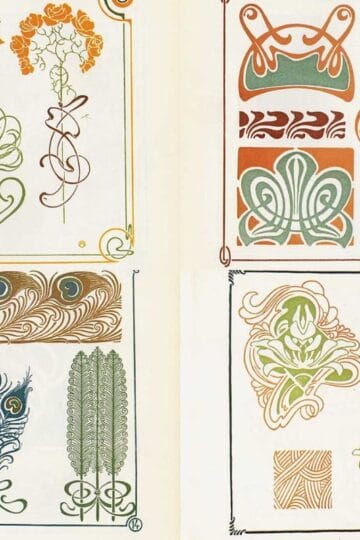
Even though these folk art embroidery patterns are European, they are still worth having a look at.
If you fancy, you can Buy Me A Coffee Here.

I love love love these images....but I also really appreciate the informative content you include about these images. Well done!
Thank you. I do have a soft spot for vintage Japanese art and design.