32 Beautiful Vintage Japanese Women Prints by Tsukioka Yoshitoshi
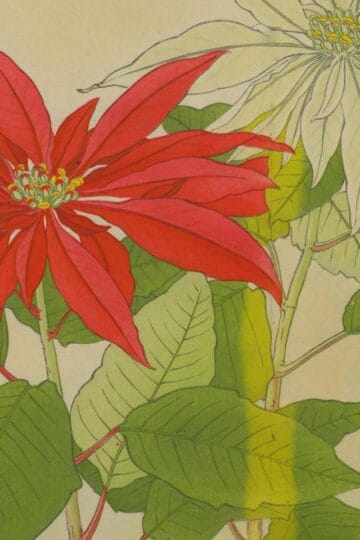
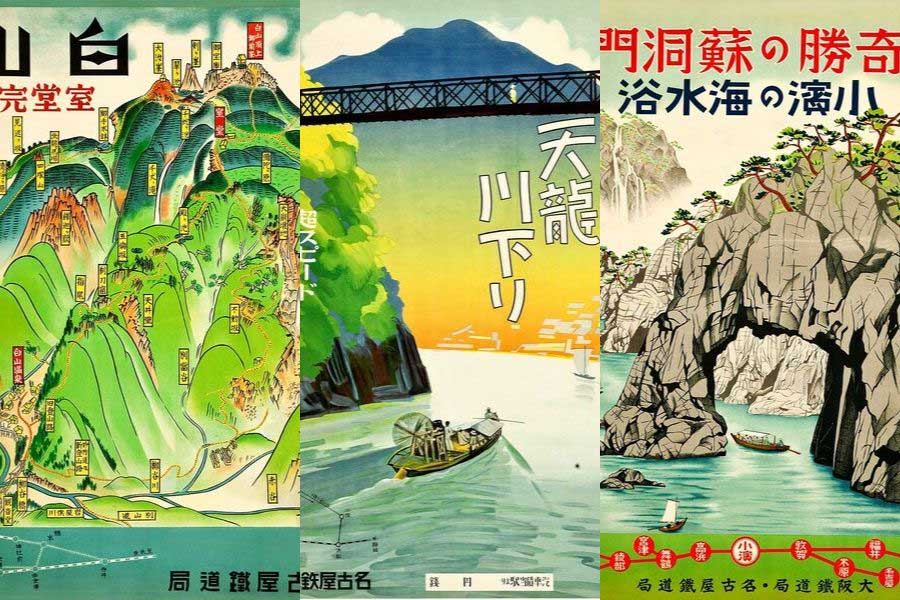
What first attracted me to these vintage Japanese women prints was the bright colours and beautiful, simple graphic style of the woodblock illustrations. I love the bold outlines, flat areas of colour and intricate patterns on the kimonos. They have a wonderfully fresh look, even though they were created over 130 years ago.
Japanese Customs & Manners
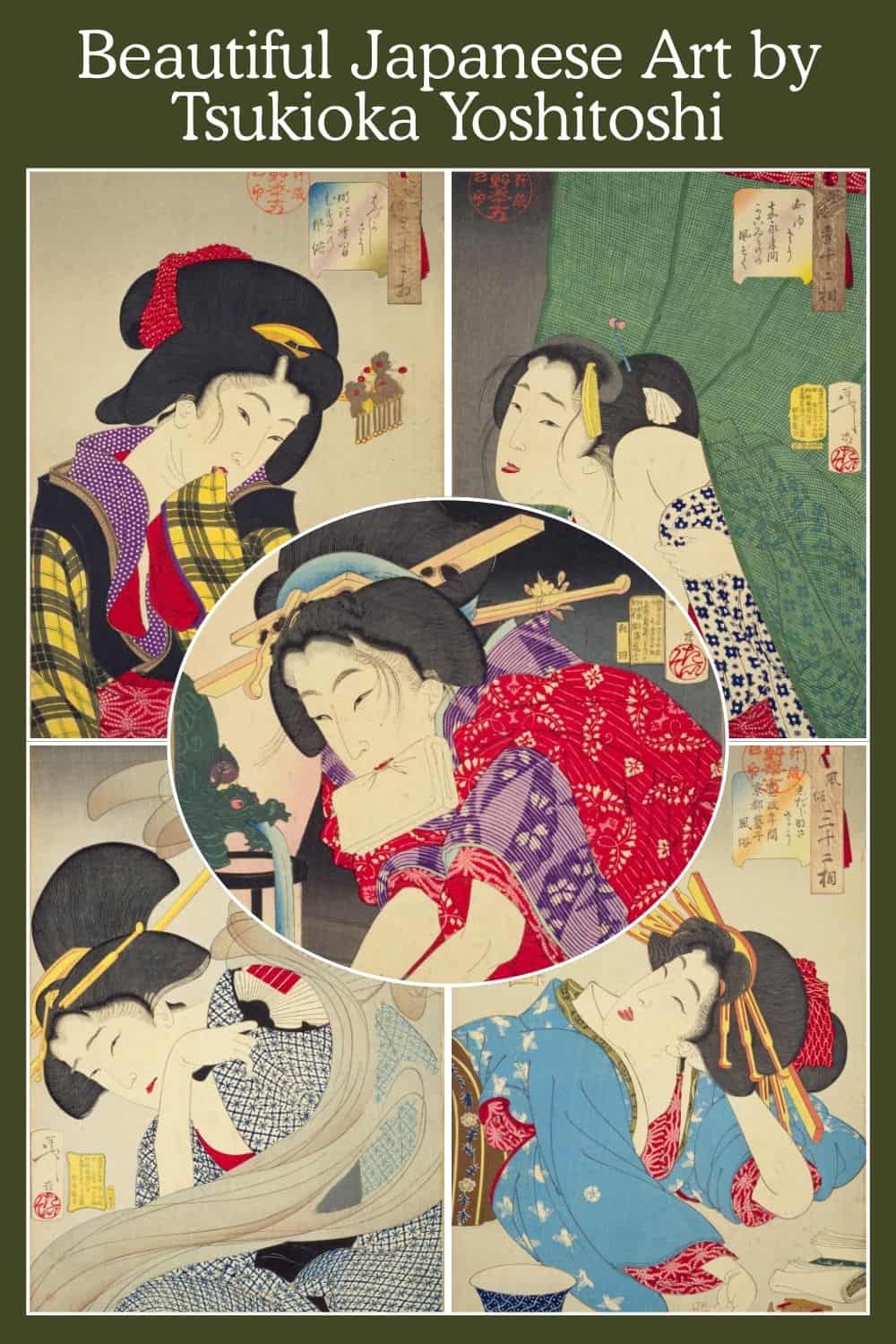
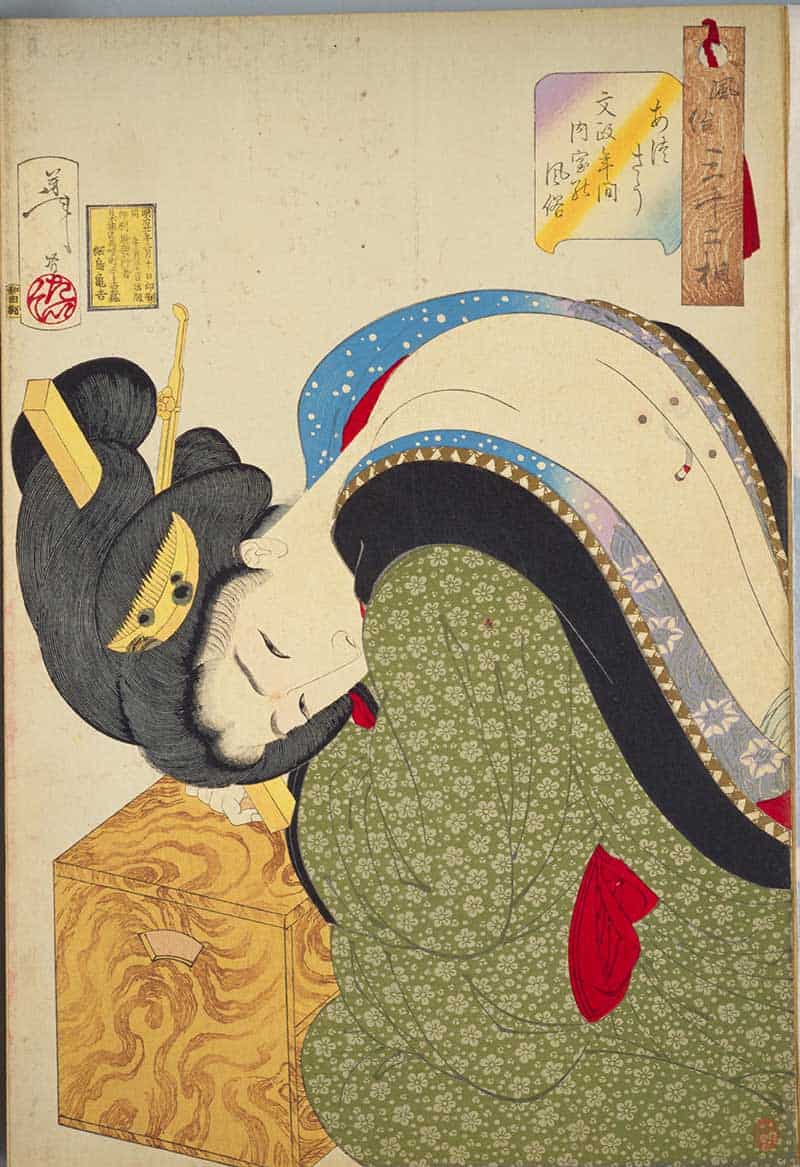
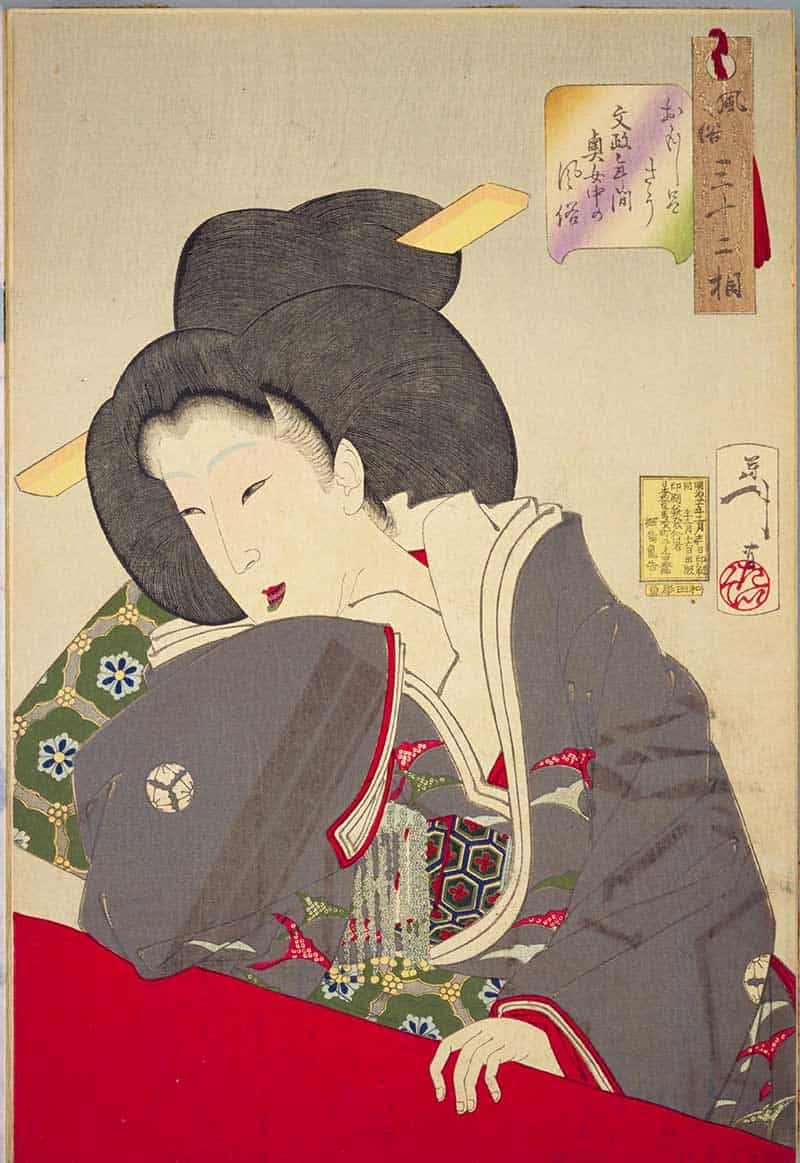
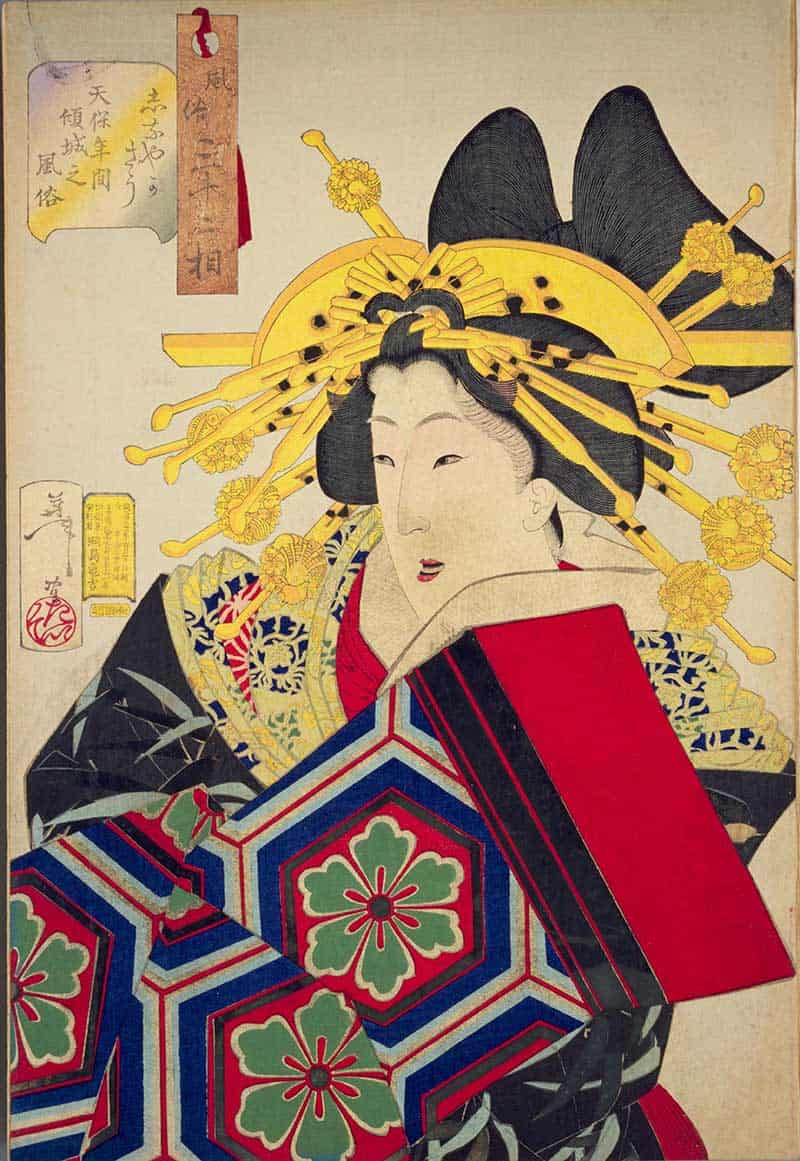
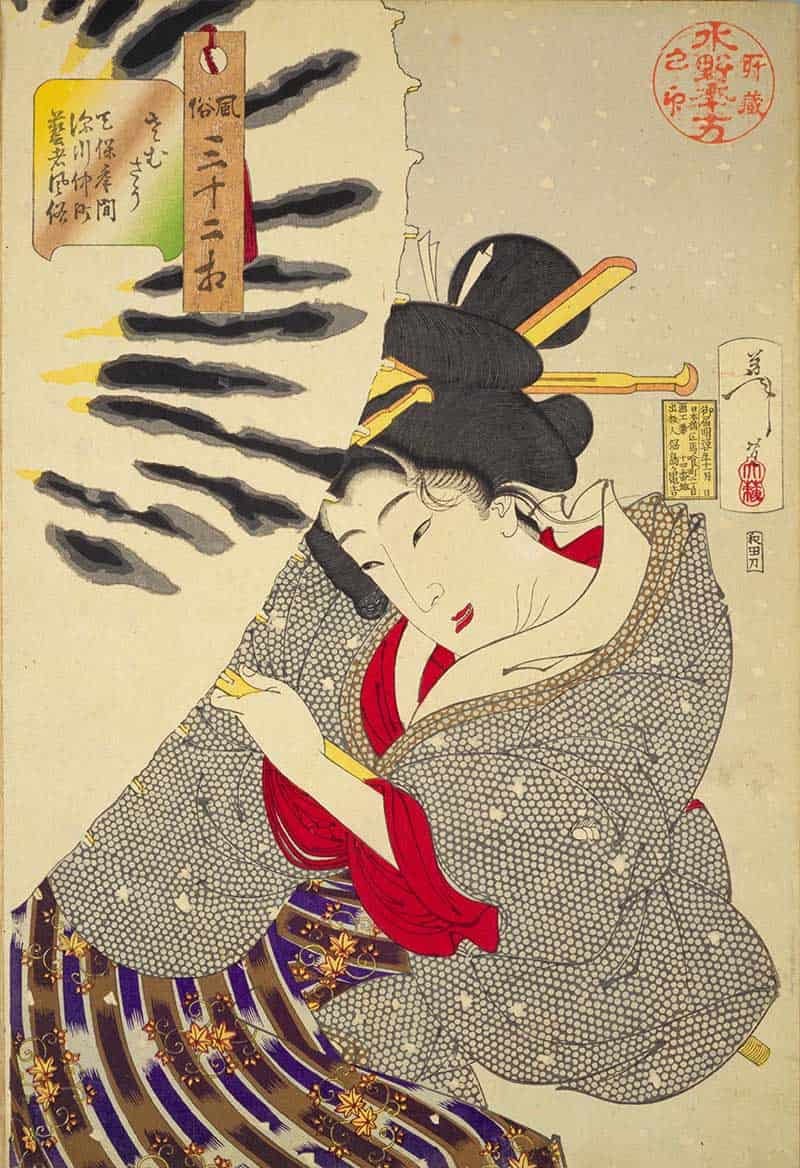
The collection, Thirty-Two Aspects of Customs and Manners (Fūzoku Sanjūnisō), was created in 1888 by Japanese artist Tsukioka Yoshitoshi (1839–1892). It features colourful woodblock portraits of women from different occupations.
Beyond the striking artwork, the portraits have plenty of character. Some women look amused, others sleepy, annoyed or deep in thought. The prints are also interesting from a historical point of view, showing different hairstyles, fashions and customs.
I wanted to share the complete series because I think it's a lovely example of Japanese graphic art. They're a little different from the floral patterns and decorative designs I've featured before on Pictureboxblue, but they have that same wonderful use of colour and pattern.
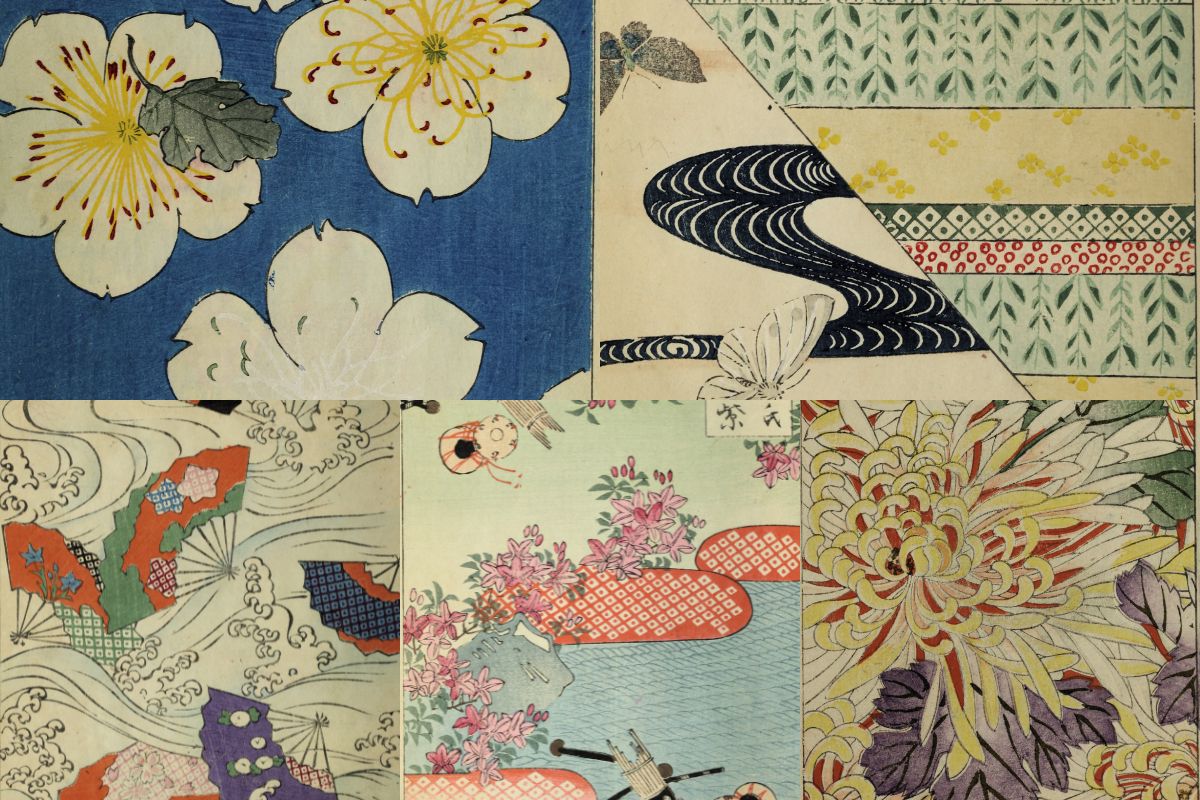
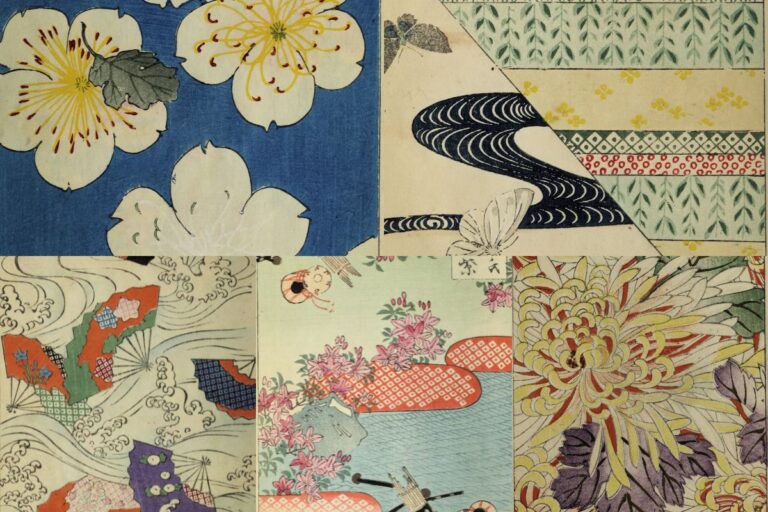
If you enjoy the decorative details in these prints, you might also like my collections of kimono art, traditional Japanese patterns and Shin-Bijutsukai Japanese art prints.
Who Was Tsukioka Yoshitoshi?
Tsukioka Yoshitoshi was one of the last great masters of ukiyo-e, the traditional Japanese art of woodblock printing. He trained under the famous artist Utagawa Kuniyoshi and became known for his dramatic historical scenes, supernatural subjects and detailed portraits.
He worked during the Meiji era, when Japan was changing rapidly, and Western influences were becoming more common. Photography and modern printing techniques were also beginning to replace traditional woodblock art.
Despite these changes, Yoshitoshi continued working with traditional woodblock printing, bringing his own distinctive style to the medium. Today, he is recognised as one of the most important Japanese printmakers of the late 19th century.
His Thirty-Two Aspects of Customs and Manners series is particularly interesting because it focuses on women from different periods of Japanese history. The portraits capture everyday moods and expressions while also showing changing fashions, hairstyles and social customs.
Although the prints were produced in 1888, many of the women depicted wear styles from earlier periods. This makes the collection an interesting look back at Japanese life and fashion during a time of rapid cultural change.
How to Download and Print the Japanese Women Prints
All 32 Japanese woodblock prints featured below are in the public domain and free to download and print. To download a print, click on the image title above each picture. A higher-resolution version will open in a new tab, where you can save it to your computer or print it.
These colourful illustrations would make lovely vintage wall art, especially displayed as a small collection. They're also ideal for junk journals, scrapbooking, collage, decoupage and other paper crafts.
Custom & Manners Prints 1-16
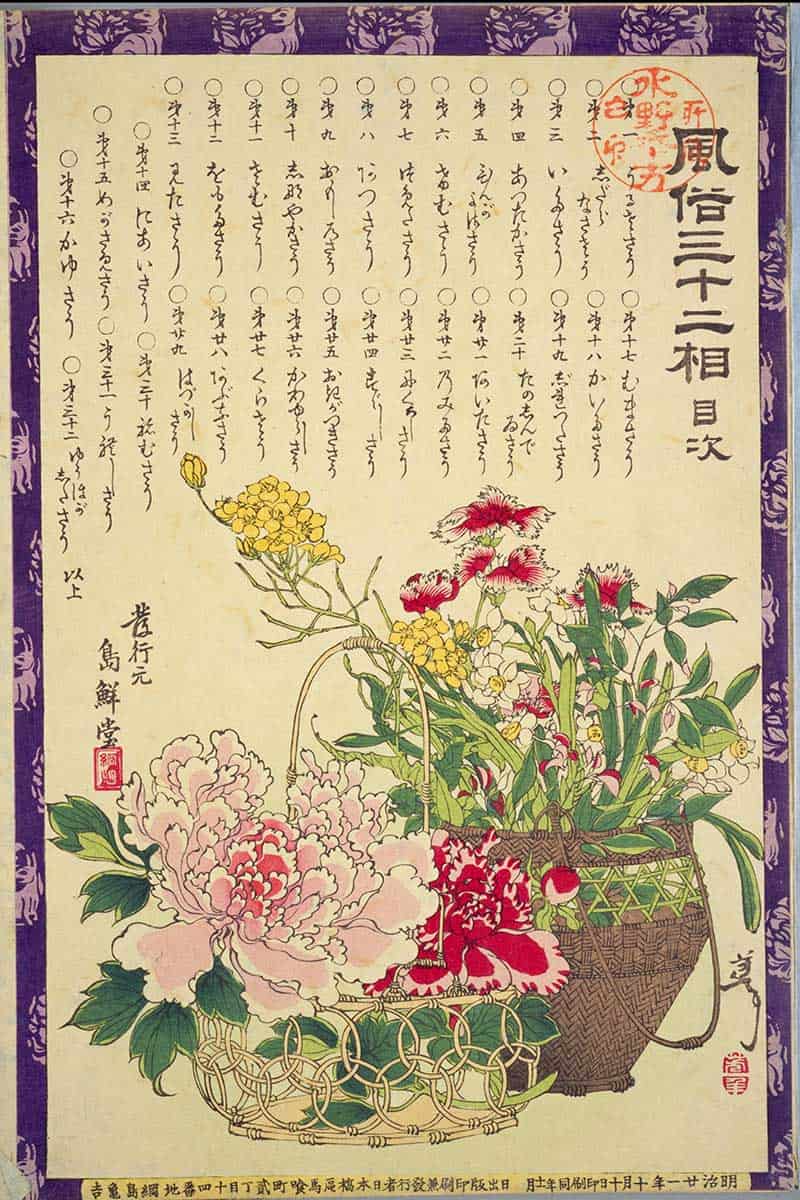
Tsukioka Yoshitoshi, Thirty-two Aspects of Customs and Manners: Table of Contents, showing title page and table of contents bordered in purple, with baskets of peonies, chrysanthemums and other flowers.
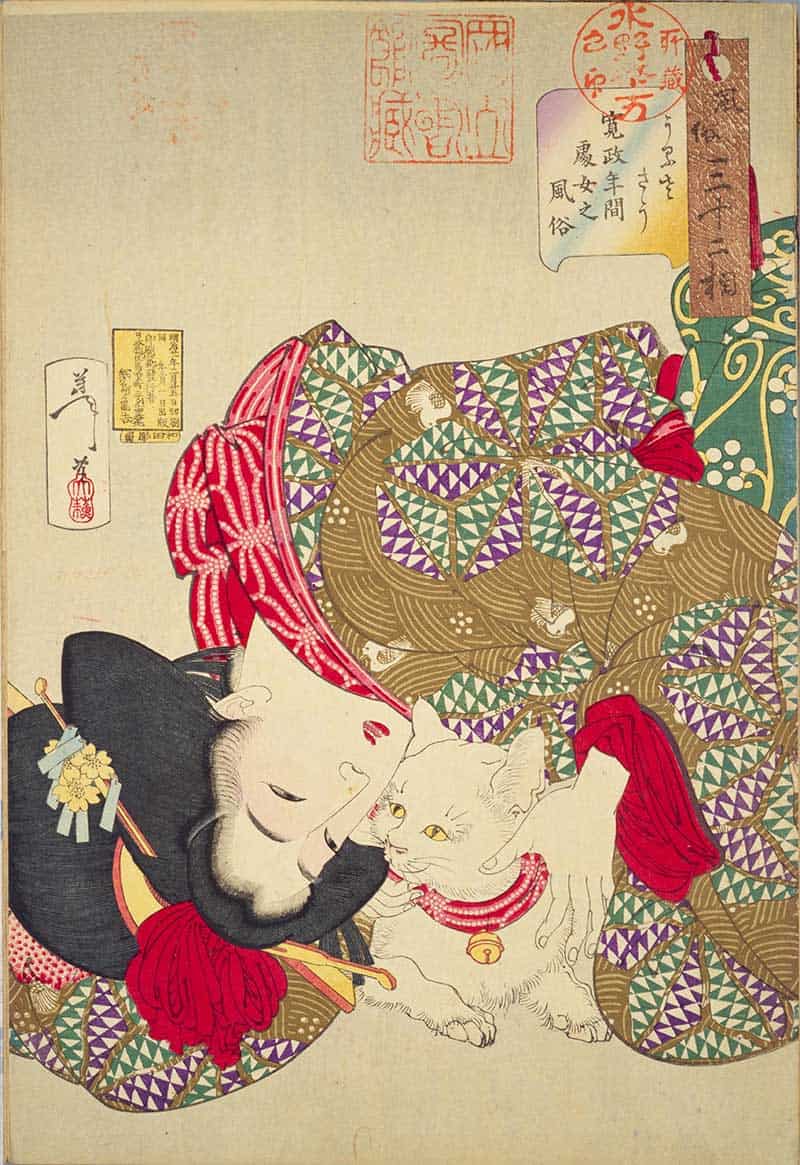
Habits of a virgin of the Kansei era, showing a young woman in a patterned kimono playing with a cat.
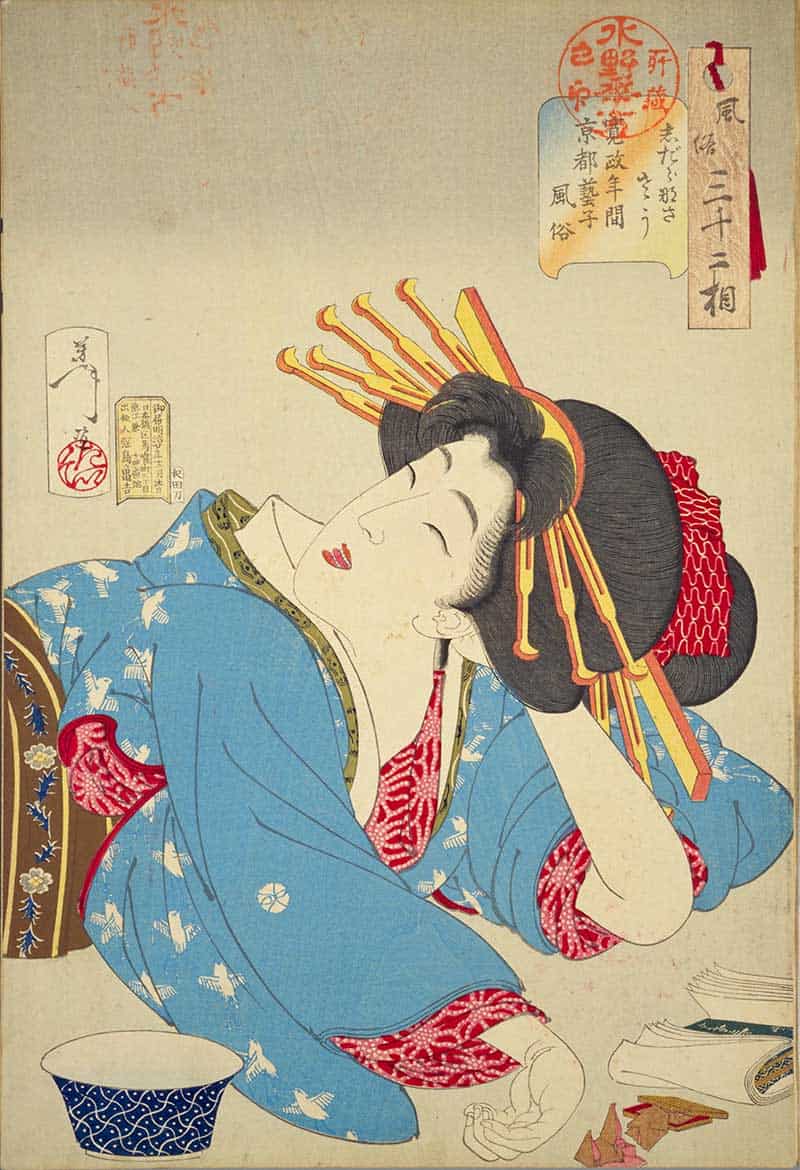
Habits of a geisha of Kyoto of the Kansei era, relaxing in a blue kimono.
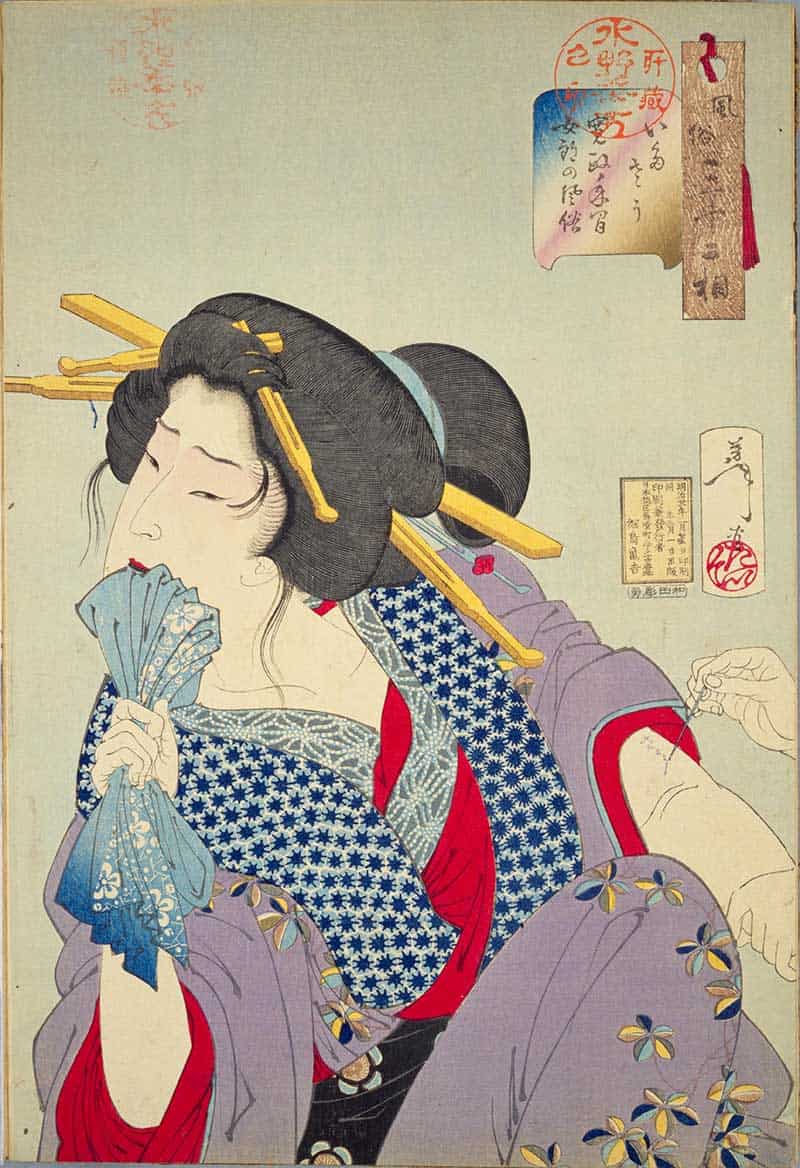
Prostitute of the Kansei era biting cloth while another hand tattoos or treats her arm.
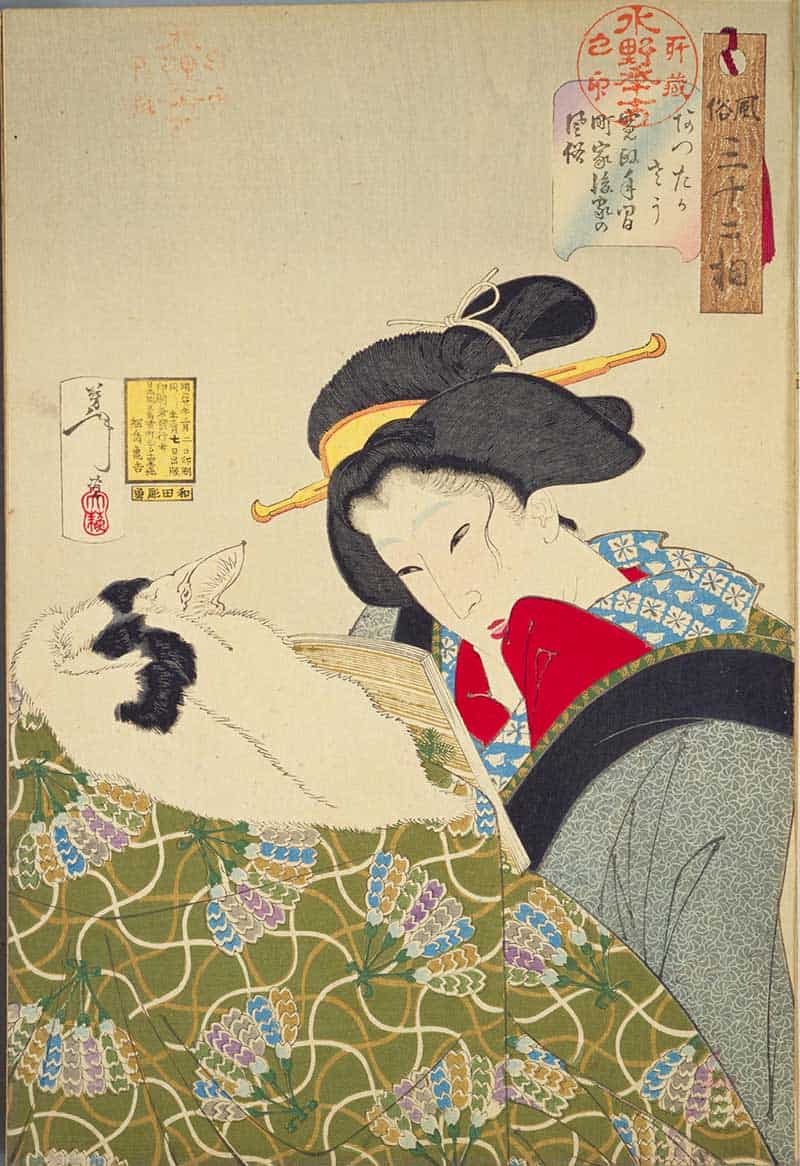
Widow in layered patterned robes holding a fluffy pet close to her chest.
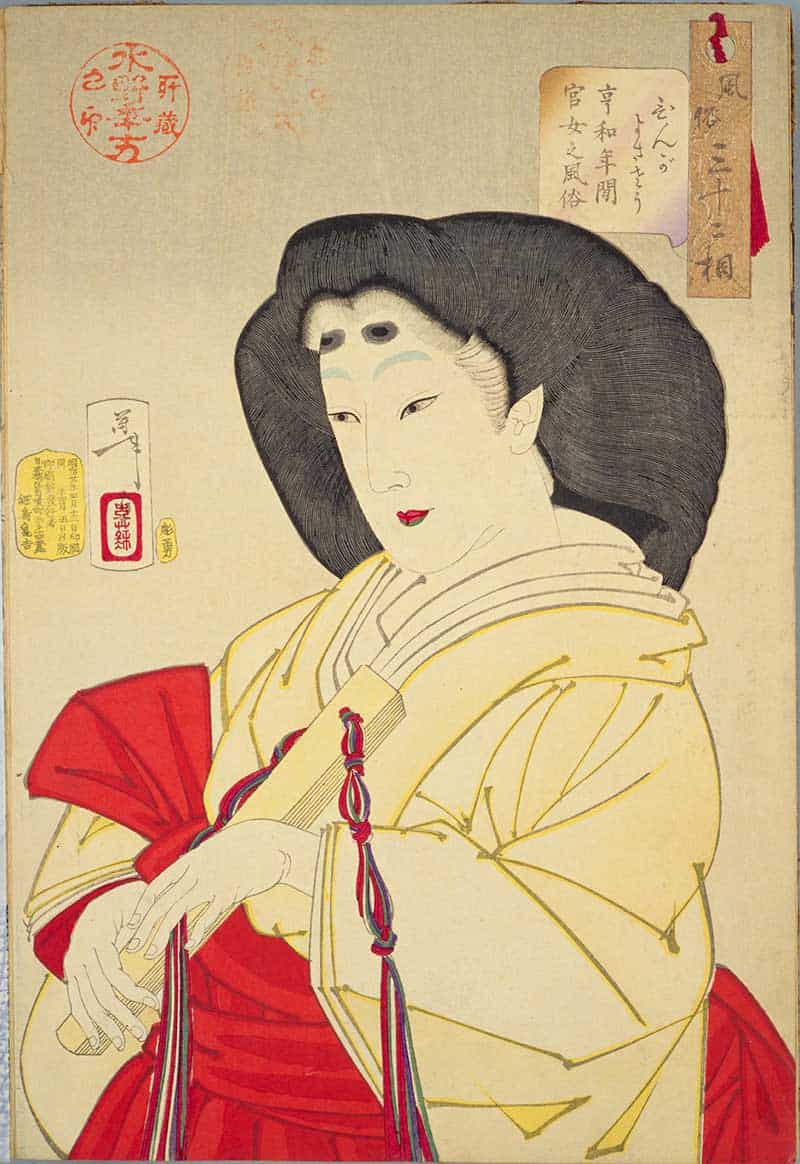
Lady of the Imperial court in the Kyowa era in pale yellow robes holding red cord tassels, with formal hair
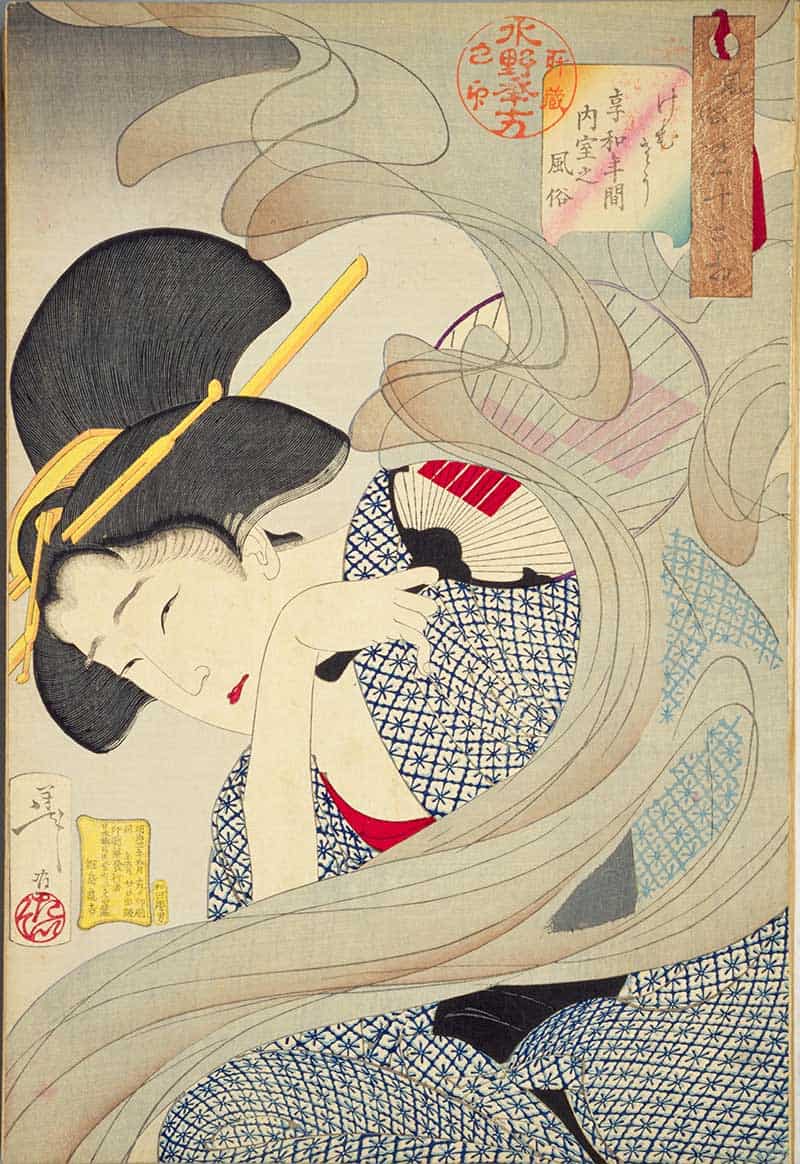
Housewife of the Kyowa era bending through curling smoke while holding a fan.
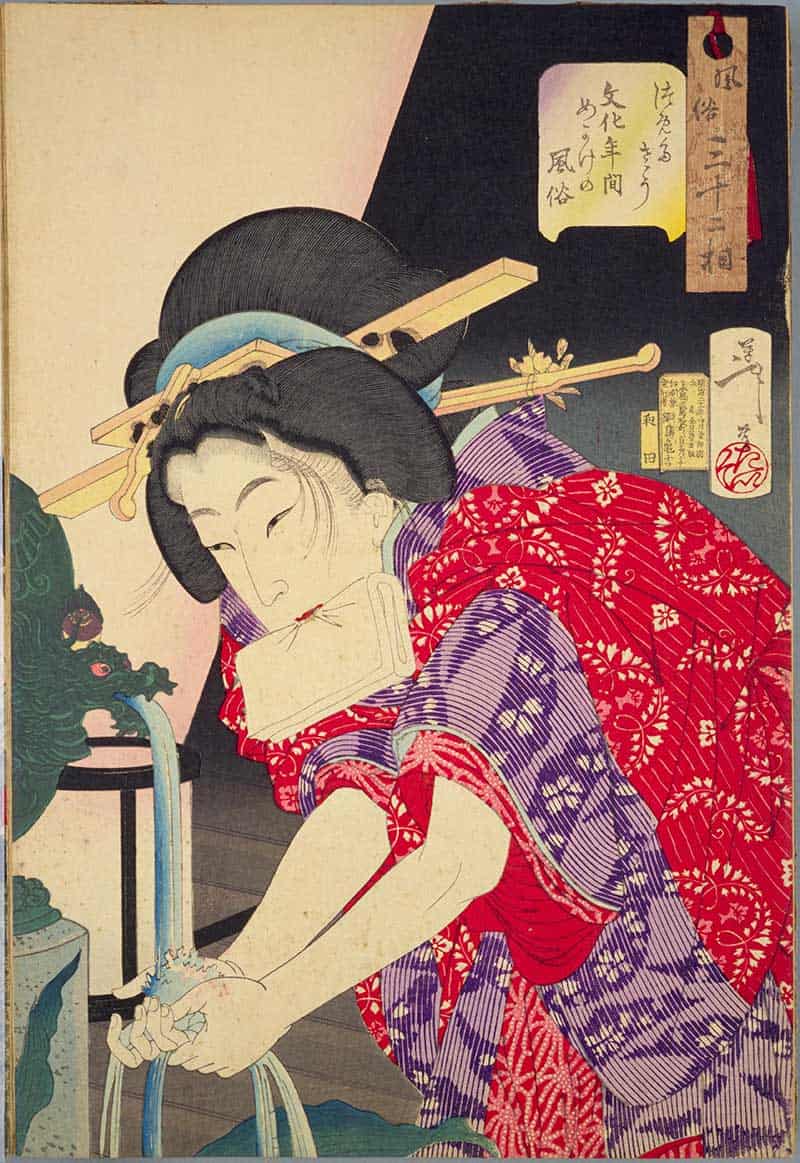
A concubine of the Bunka era in red and purple robes washing or drawing water by an indoor basin.
Wealthy housewife of the Bunsei era in a green patterned kimono leaning forward with her hair arranged in a broad coiffure.
A high-ranking lady-in-waiting of the Bunsei era in grey and floral robes, looking down over a bright red railing.
Akeisei of the Tempo era, showing a courtesan with elaborate gold hair ornaments wearing richly patterned red, blue and black robes.
A geisha from the Nakamachi district of Fukagawa in the Tempo era huddled beside a snow-covered tree trunk in a grey patterned kimono.
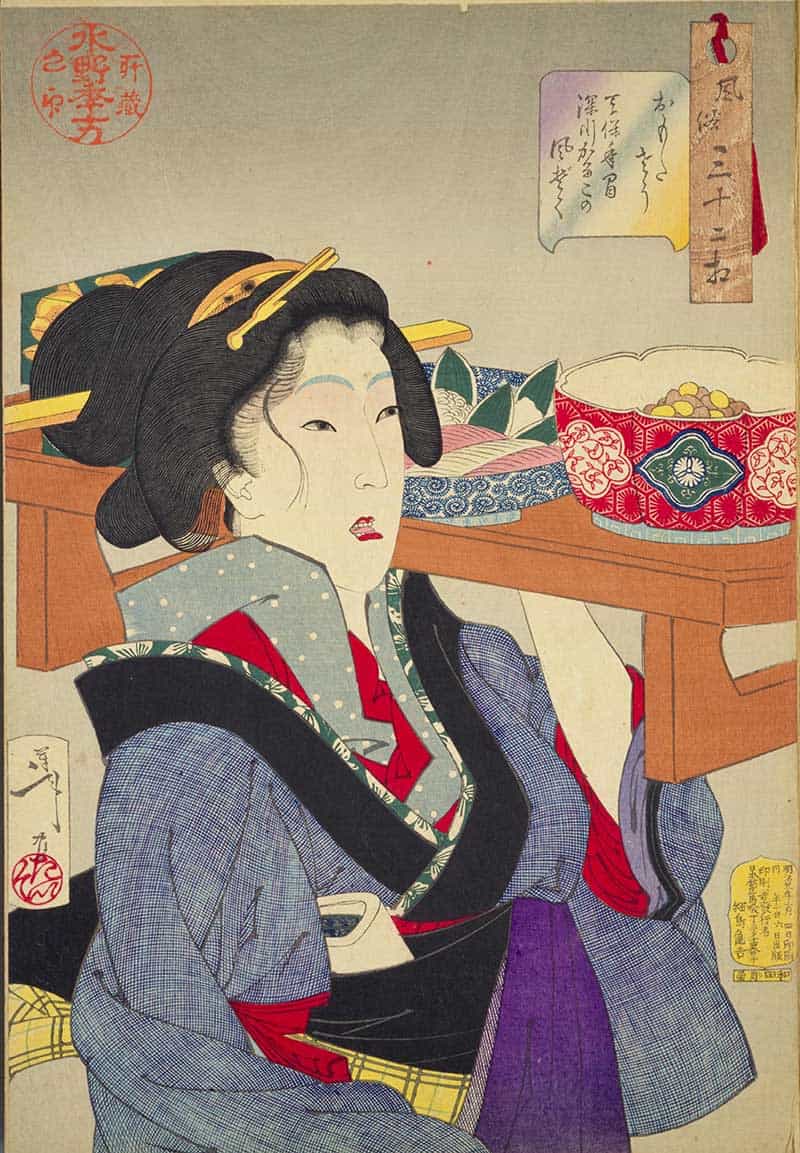
A waitress in the licensed quarters at Fukagawa in the Tempo era carrying a tray stacked with bowls and food over her shoulder.
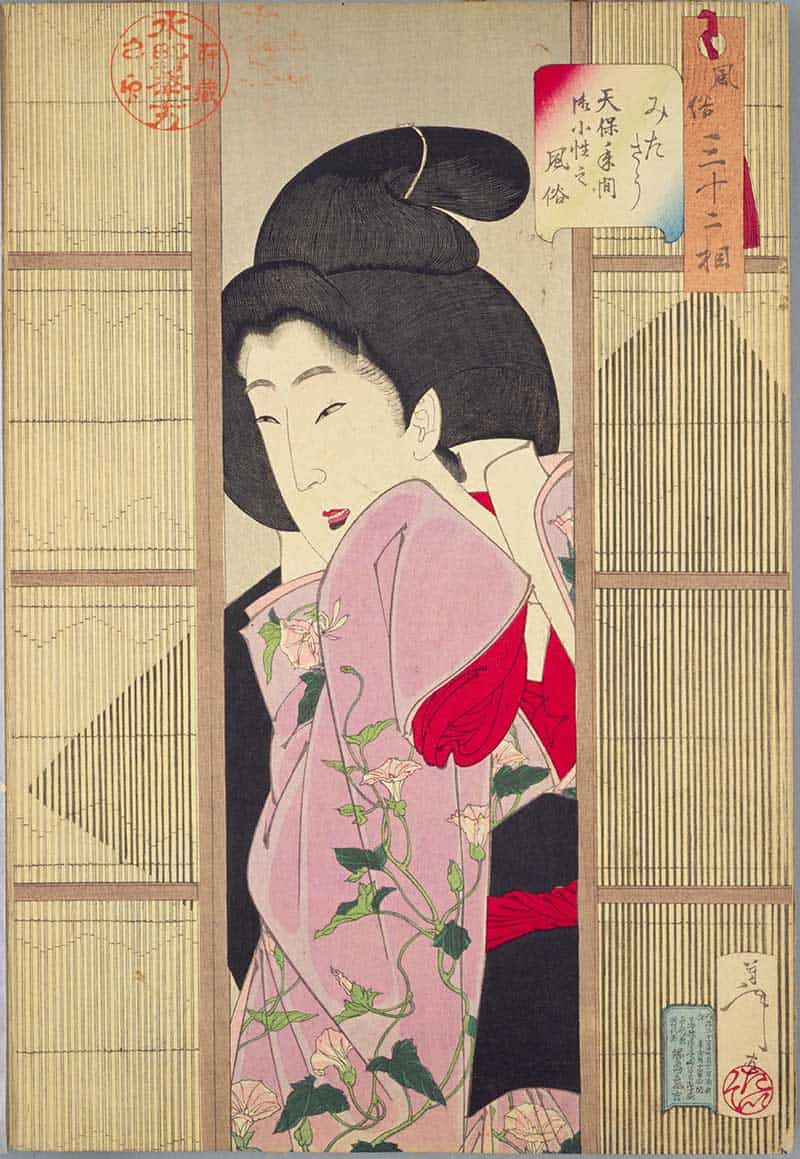
Habits of an okosho of the Tempo era in a pink floral kimono peering from between sliding screens.
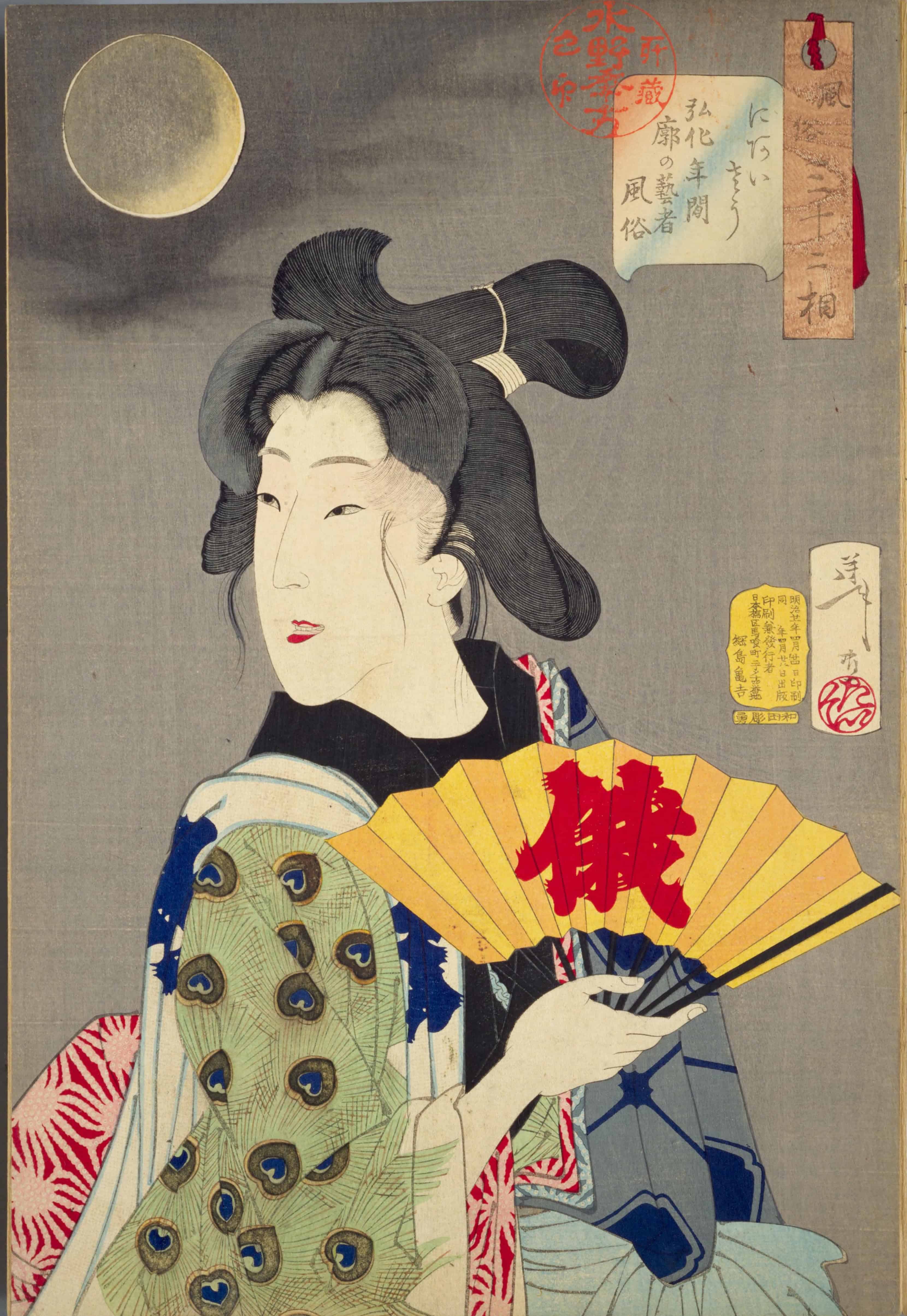
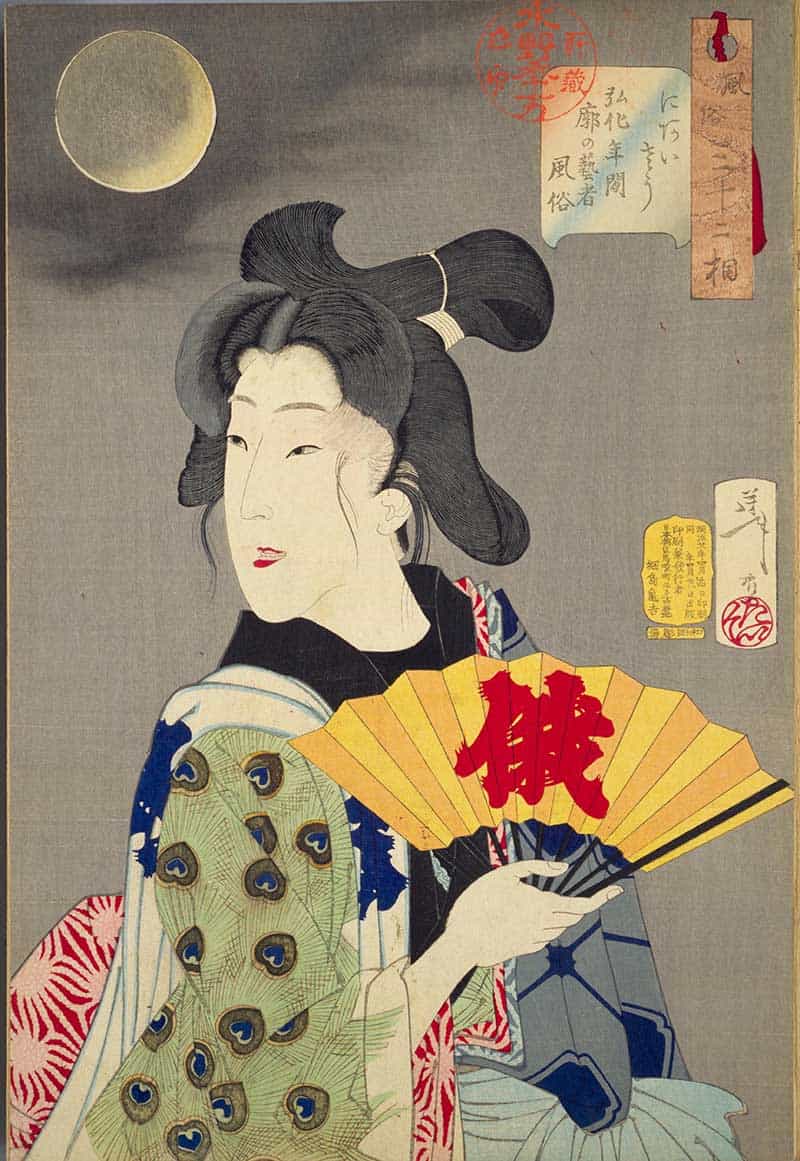
A geisha of the licensed quarters in the Koka era, holding an open fan before a night sky and moon.
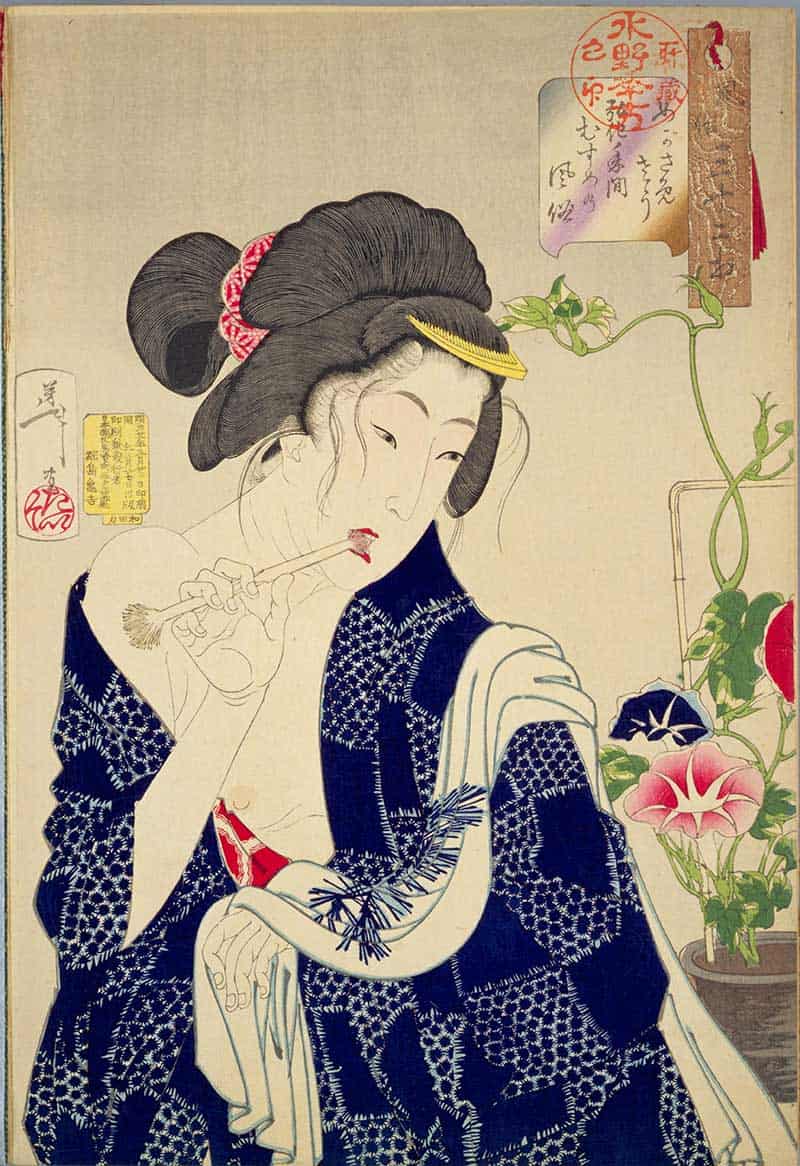
A young woman in the Koka era among morning glories, brushing or touching her mouth as she wakes.
Customs Prints 17-33
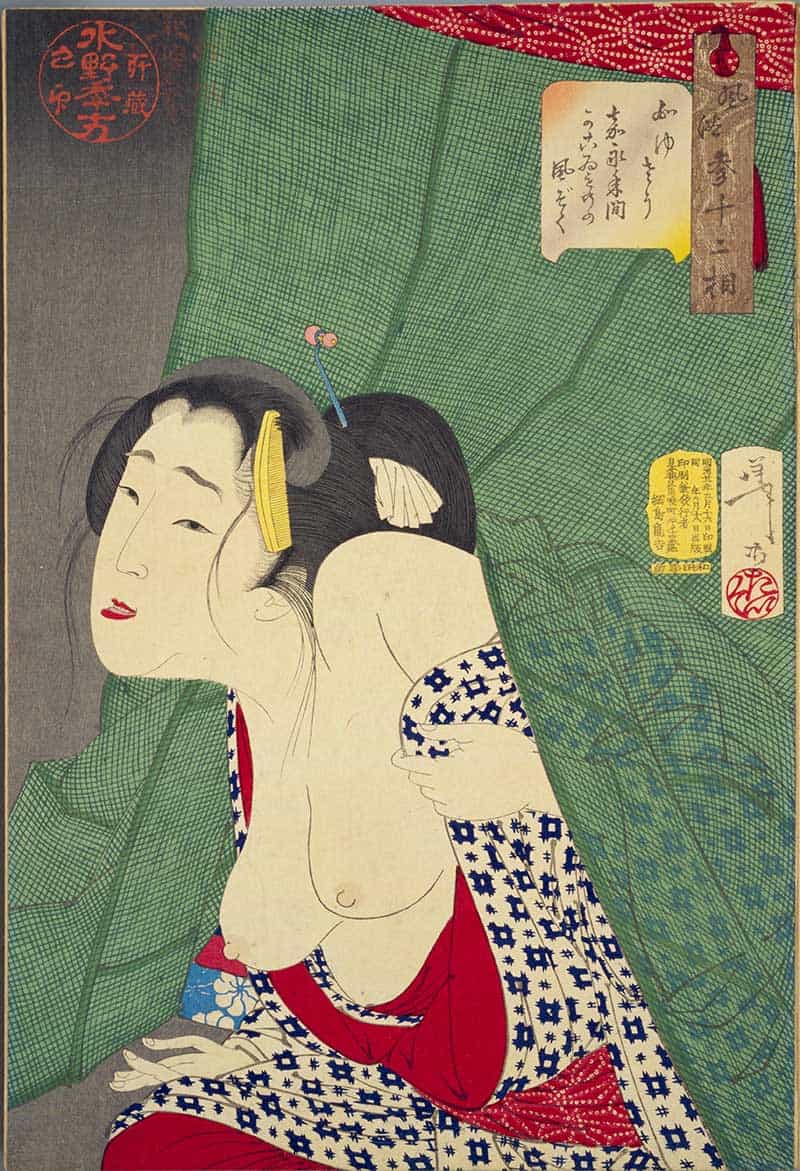
A concubine of the Kaei era, shown partly behind a green mosquito net, scratching her shoulder.
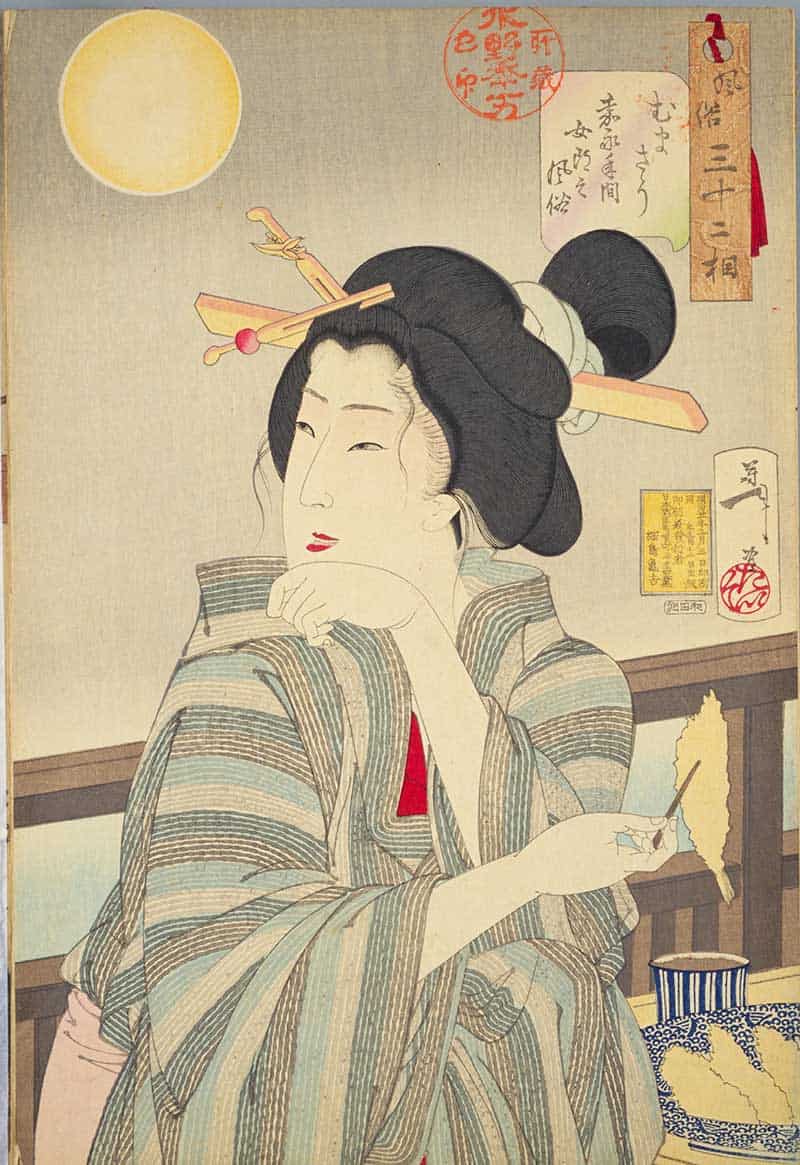
Habits of a prostitute of the Kaei era eating.
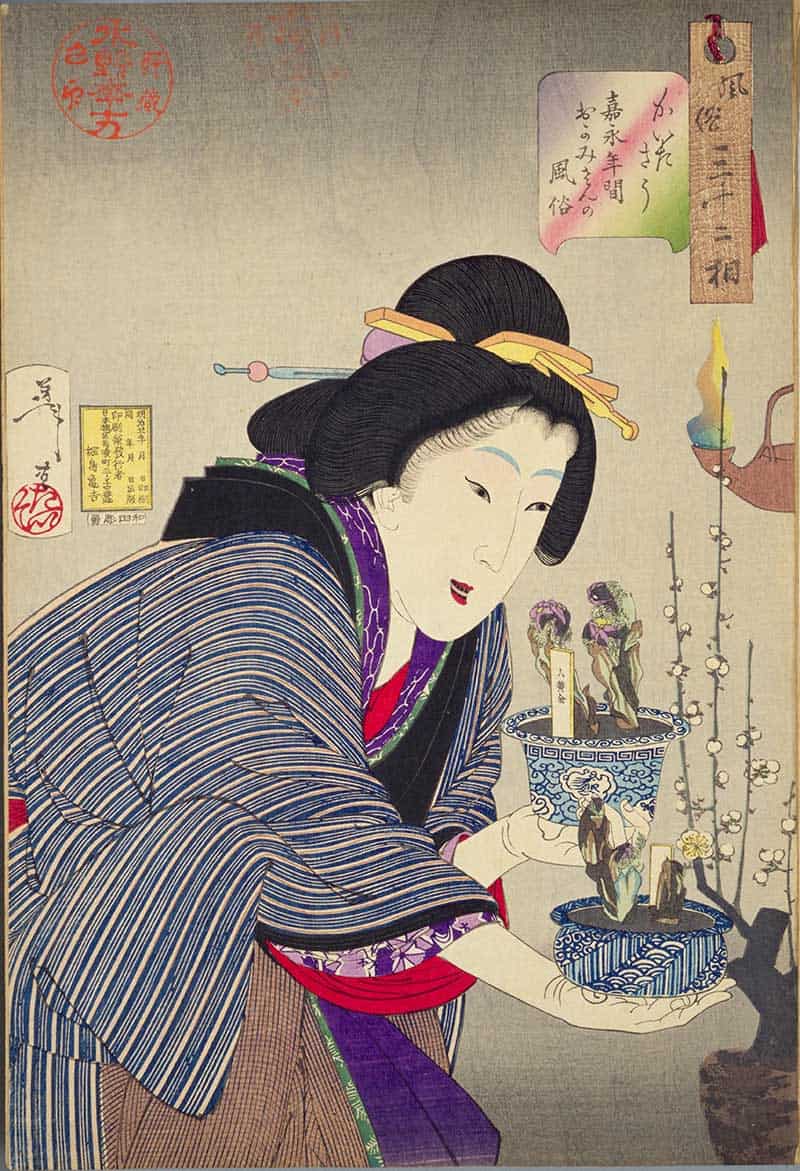
A proprietress of the Kaei era arranging potted plants.
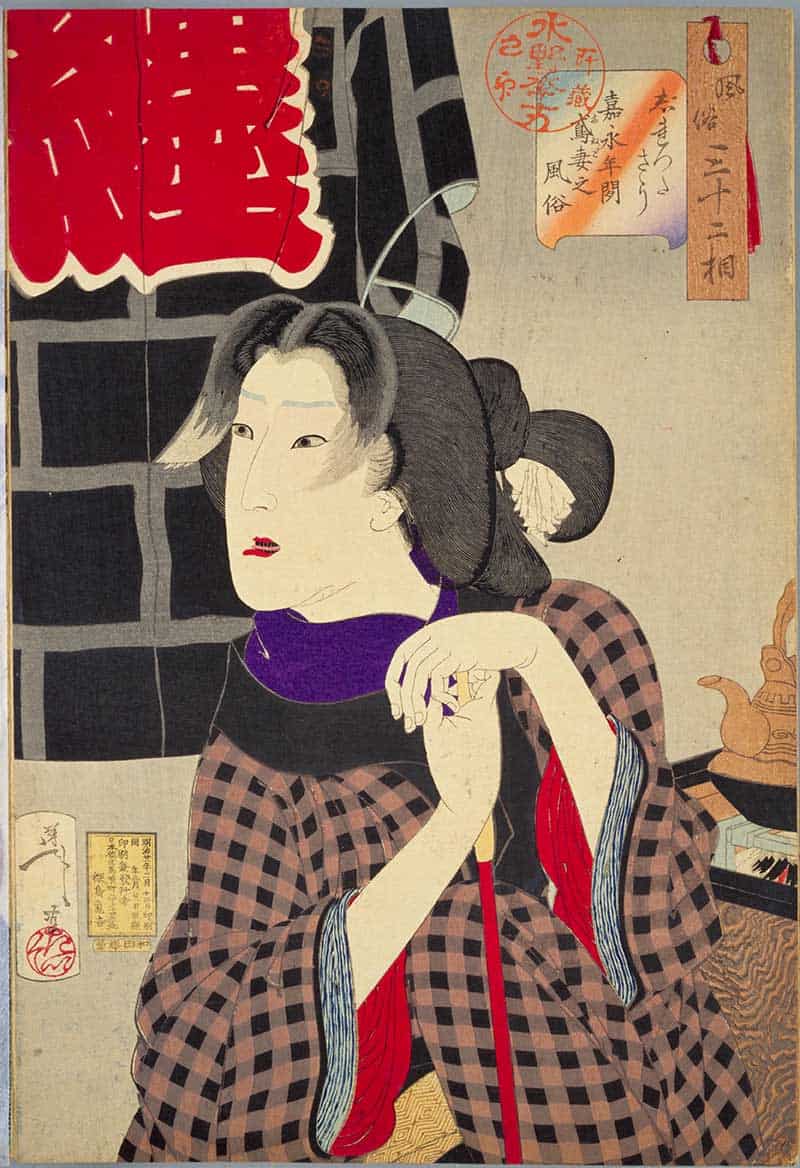
Wife of a fire chief in the Kaei era, seated in a checked kimono before a fireman's standard.
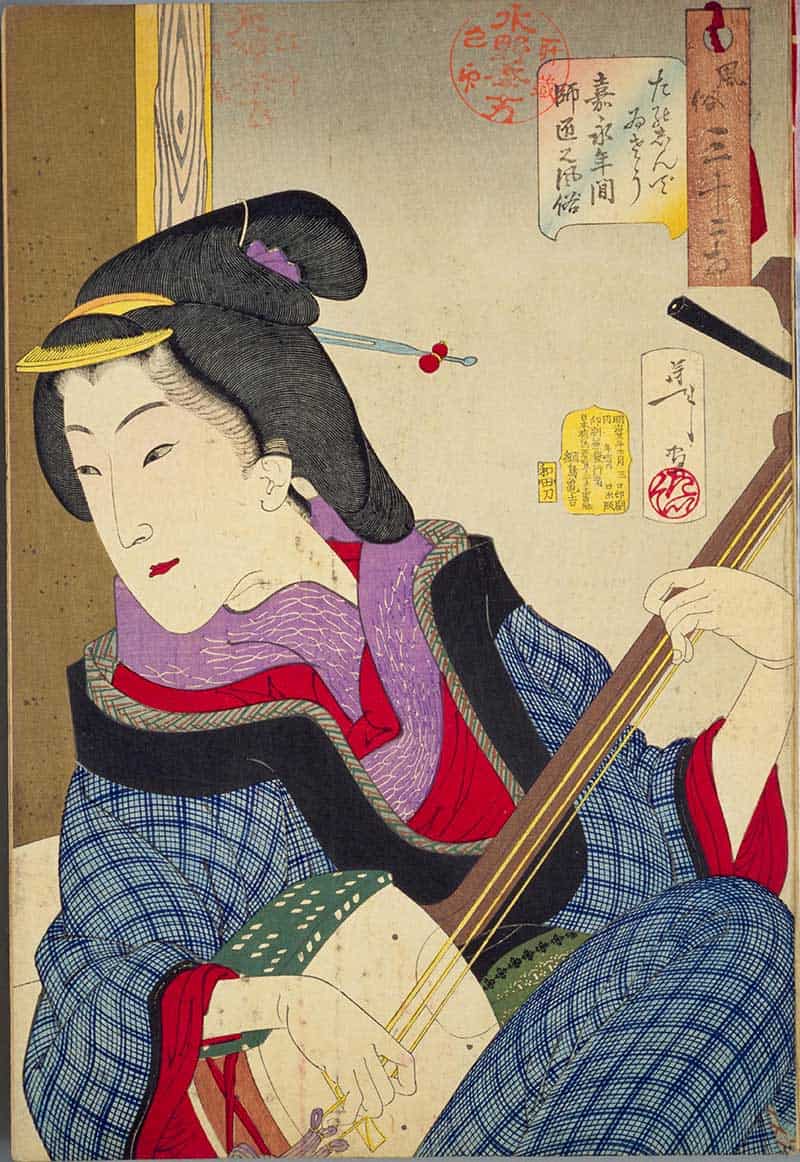
Teacher of the Kaei era playing a shamisen, a stringed instrument.
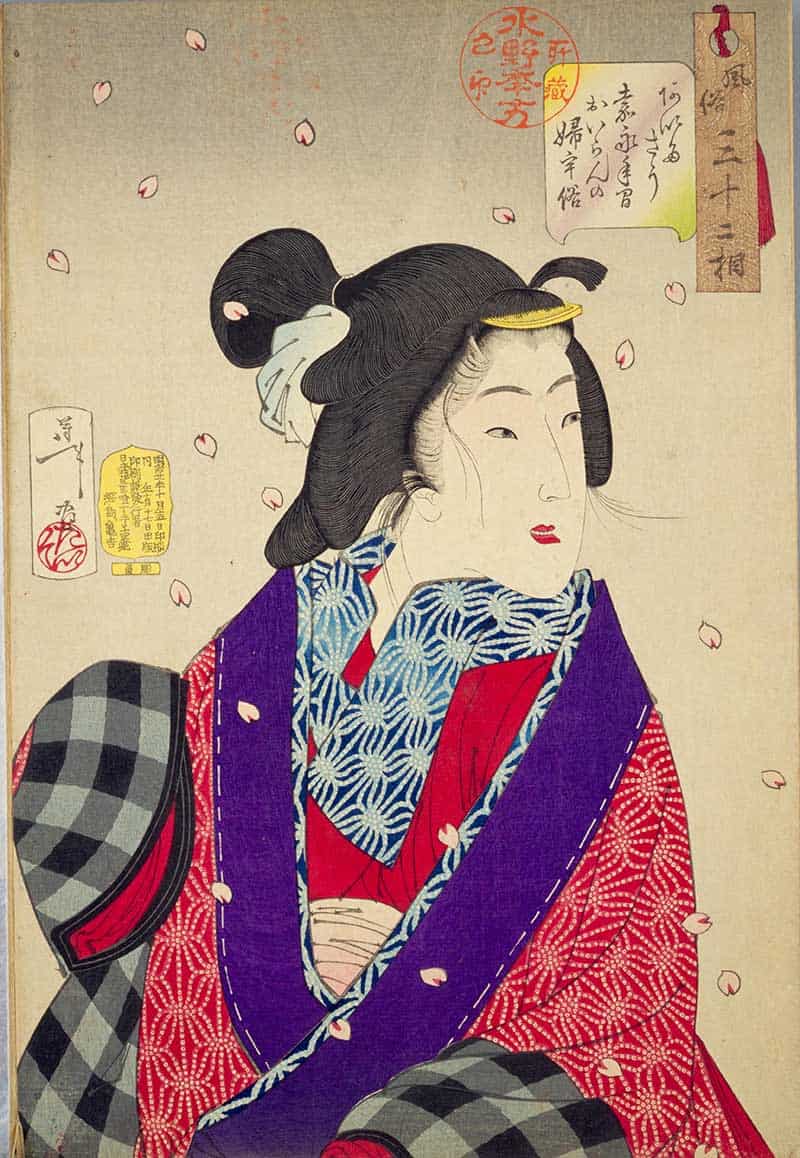
An oiran of the Kaei era, a courtesan in colourful robes gazing upward as cherry blossom petals fall around her.
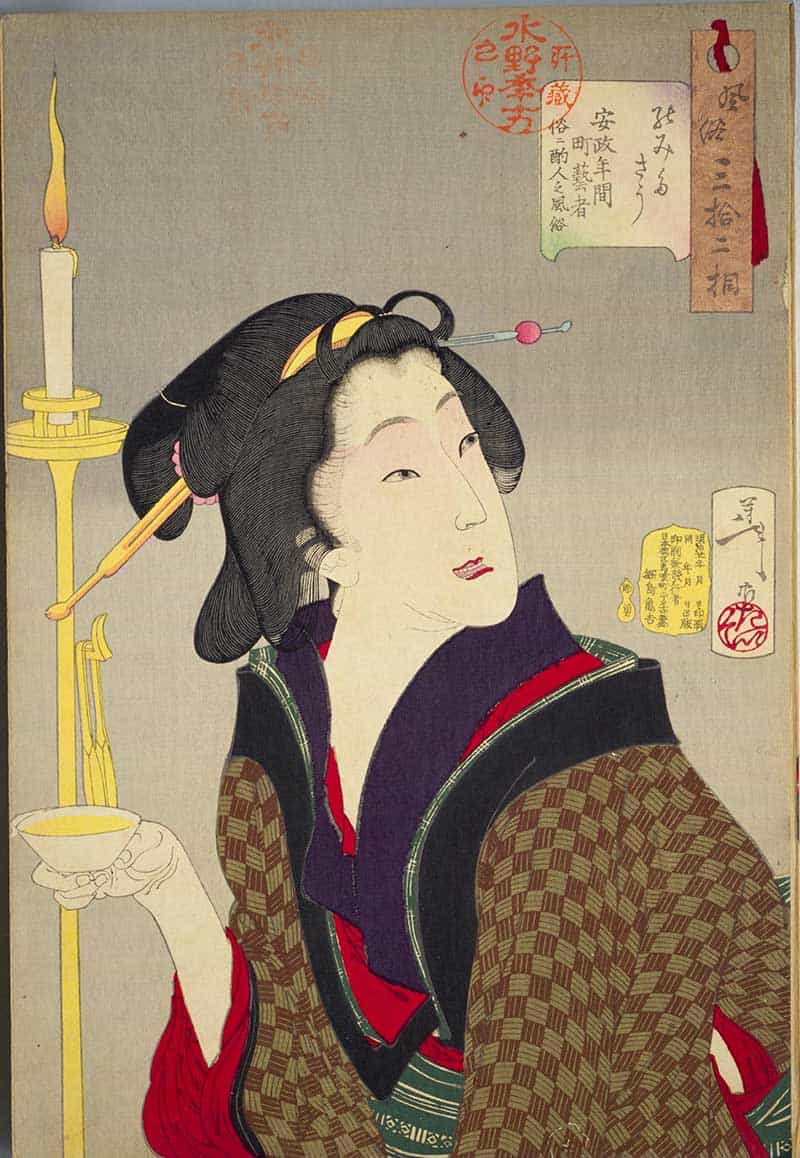
A street geisha, a bar-girl, of the Ansei era holding a small cup.
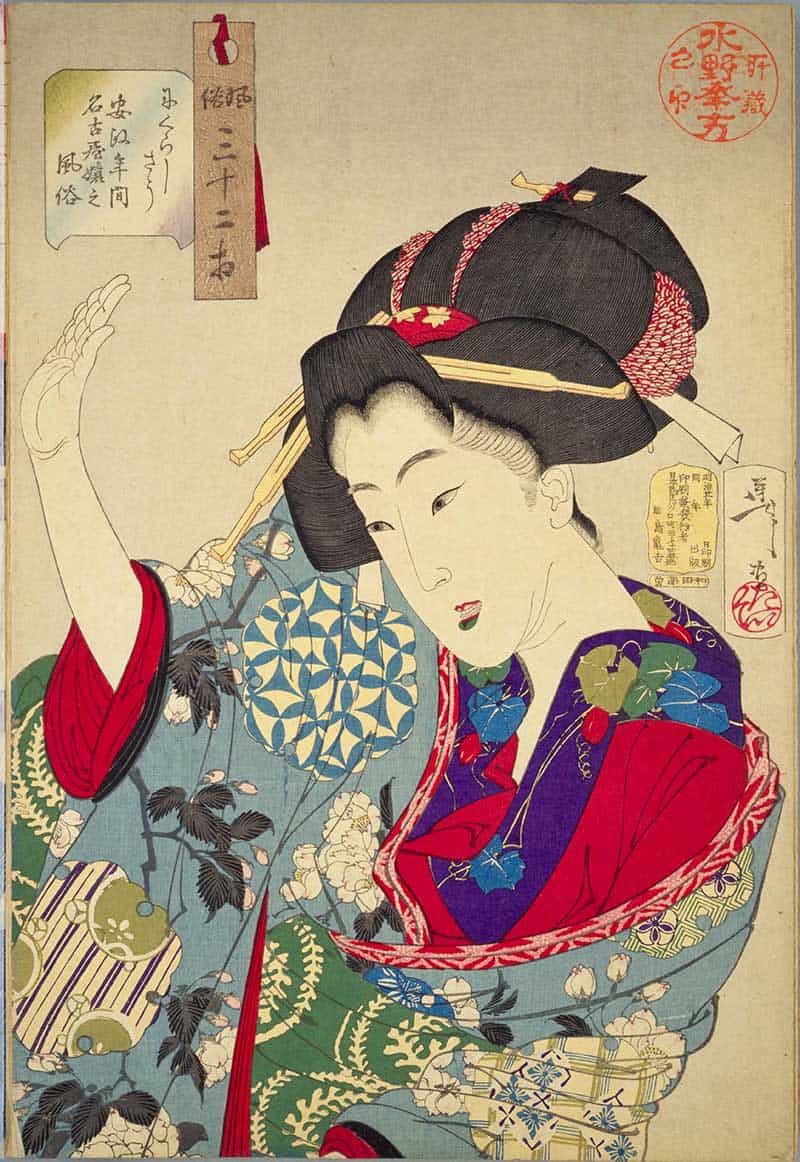
Young woman of Nagoya in the Ansei era, wearing a bright floral kimono, raising one hand as if refusing or protesting.
Geisha in the 5th or 6th year of the Meiji era, wearing a blue striped kimono and seated beneath a large red paper lantern.
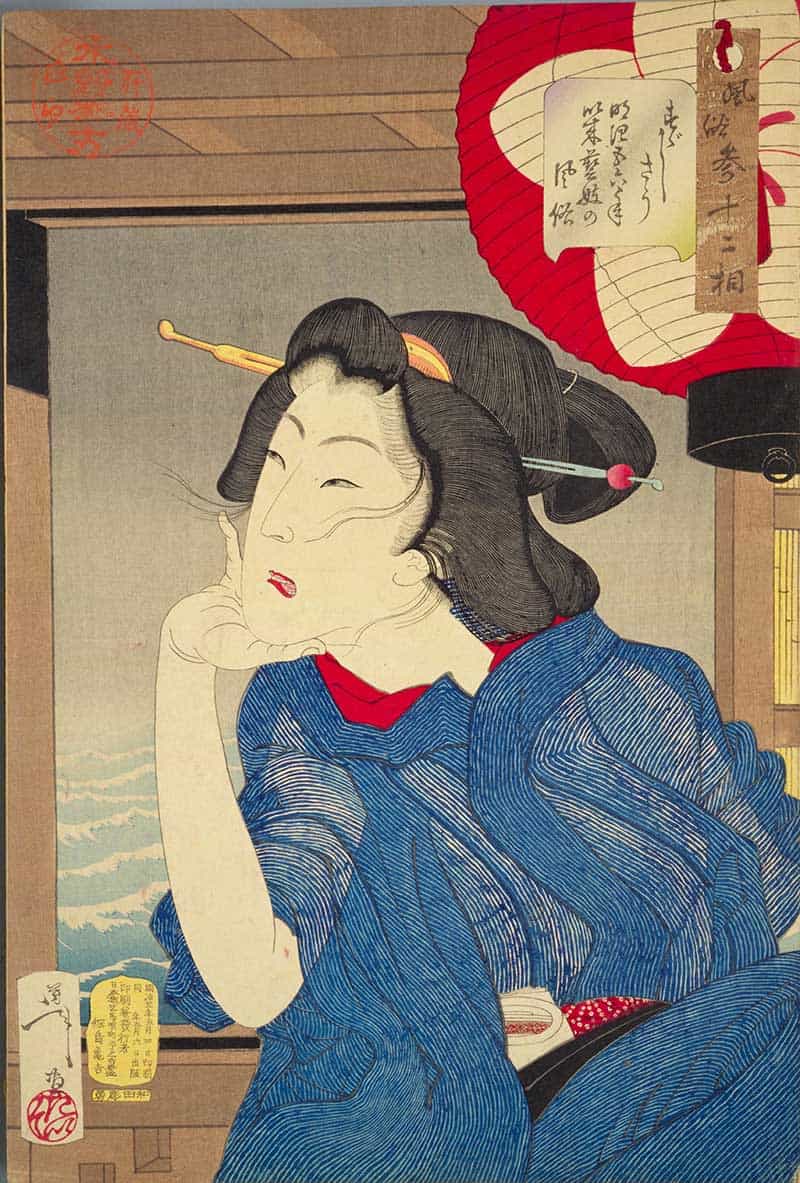
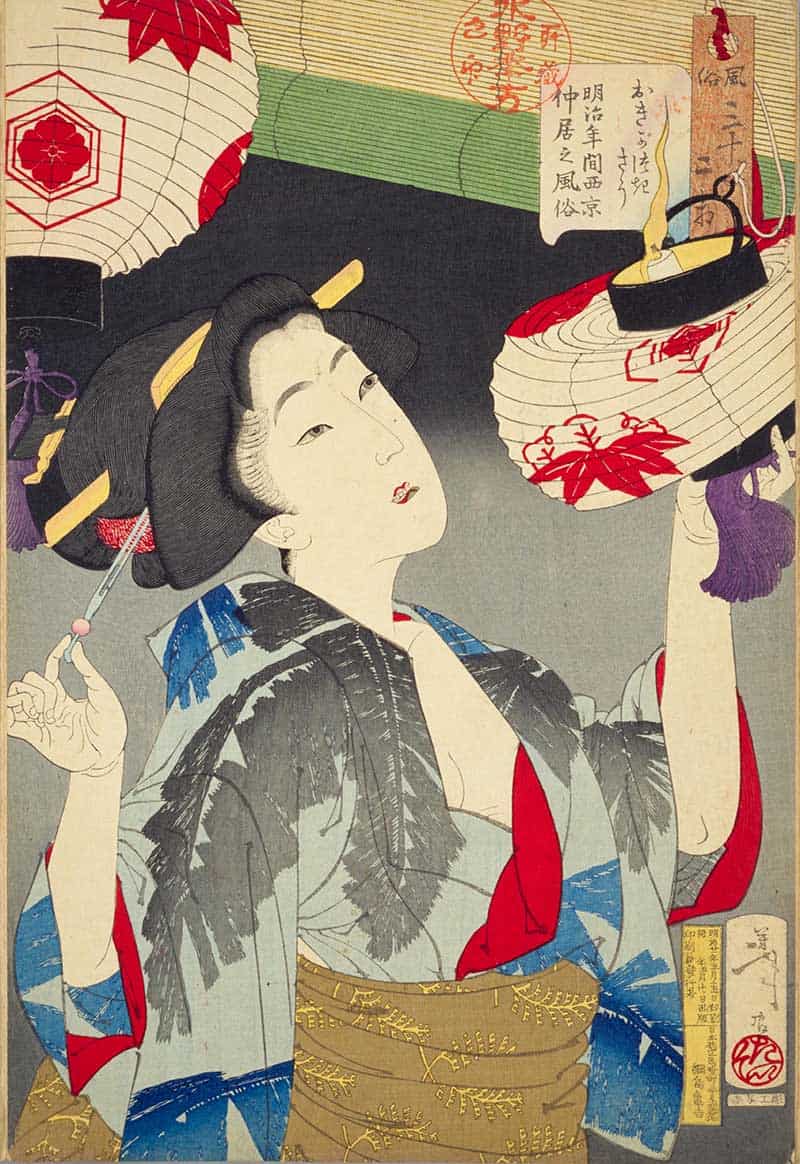
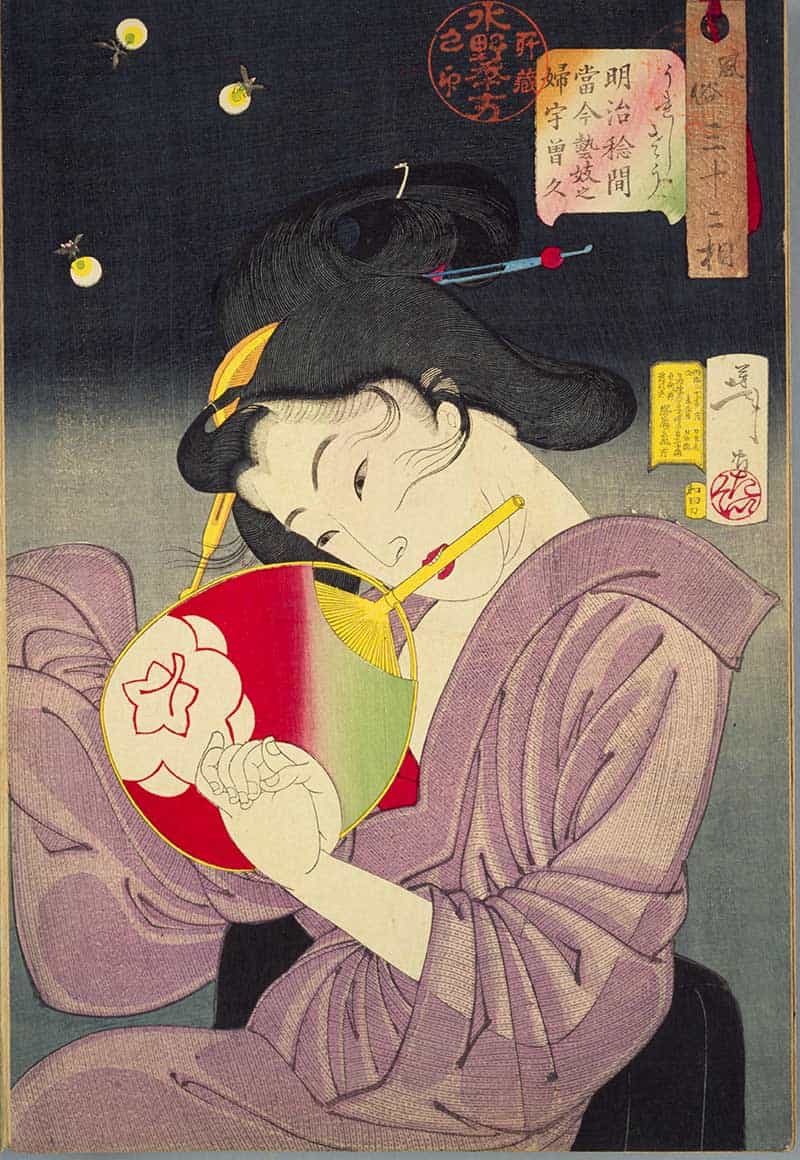
Waitress of Western Kyoto in the Meiji era in pale robes looking up while holding a decorated lantern and hairpin.
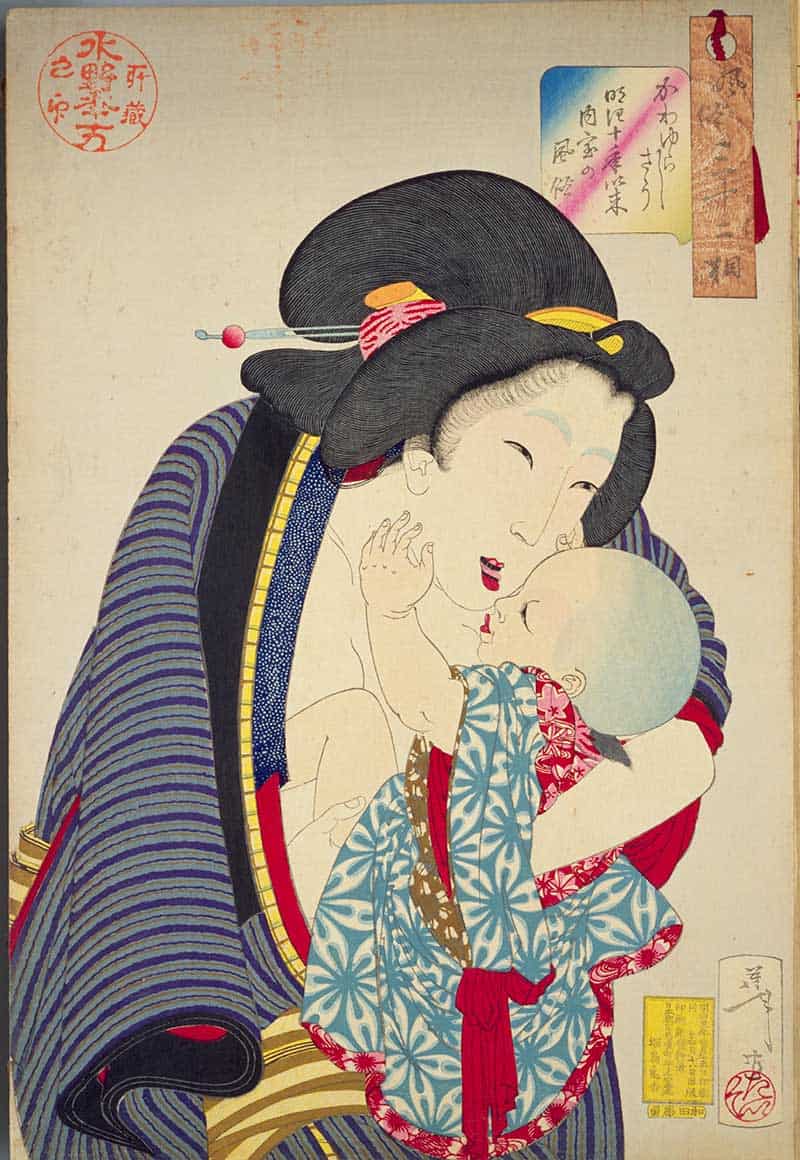
Housewife of the 10th year of the Meiji era in a striped outer robe holding a small child.
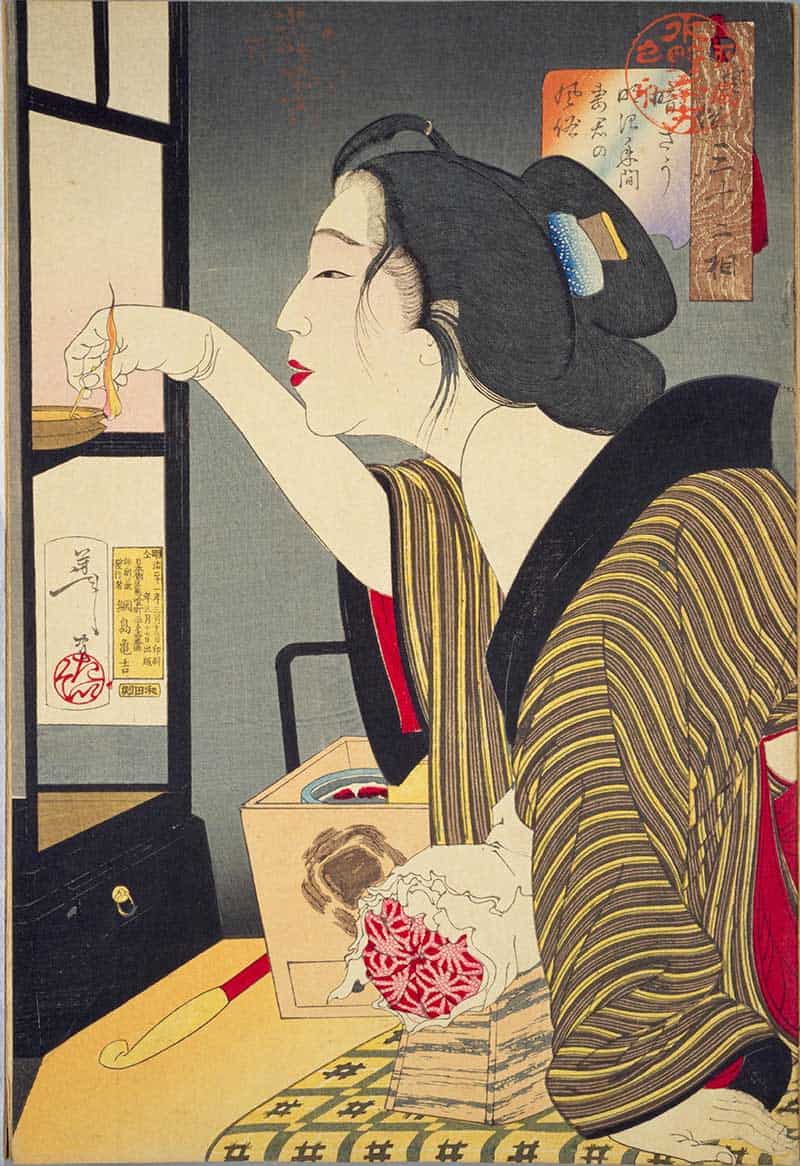
Housewife of the Meiji era, seated indoors by a window, trimming or adjusting a hanging lantern or lamp.
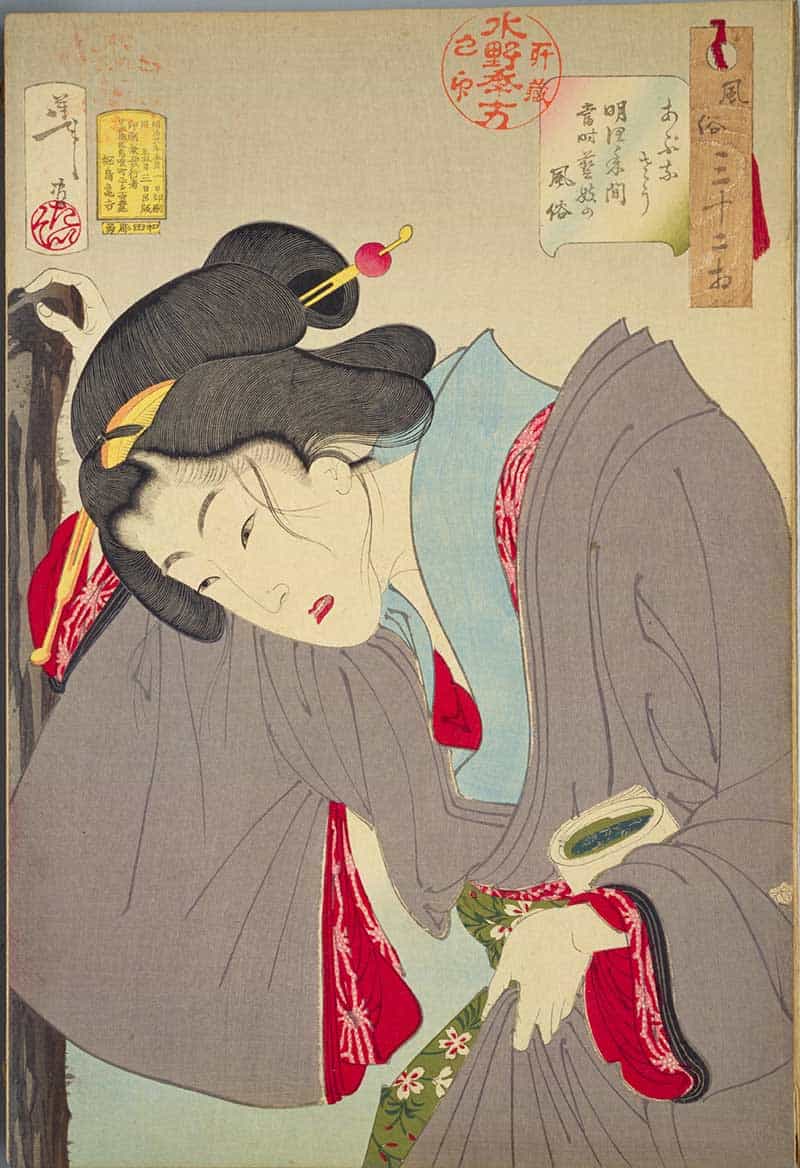
Meiji-era geisha leaning over with a small cup or container in one hand.
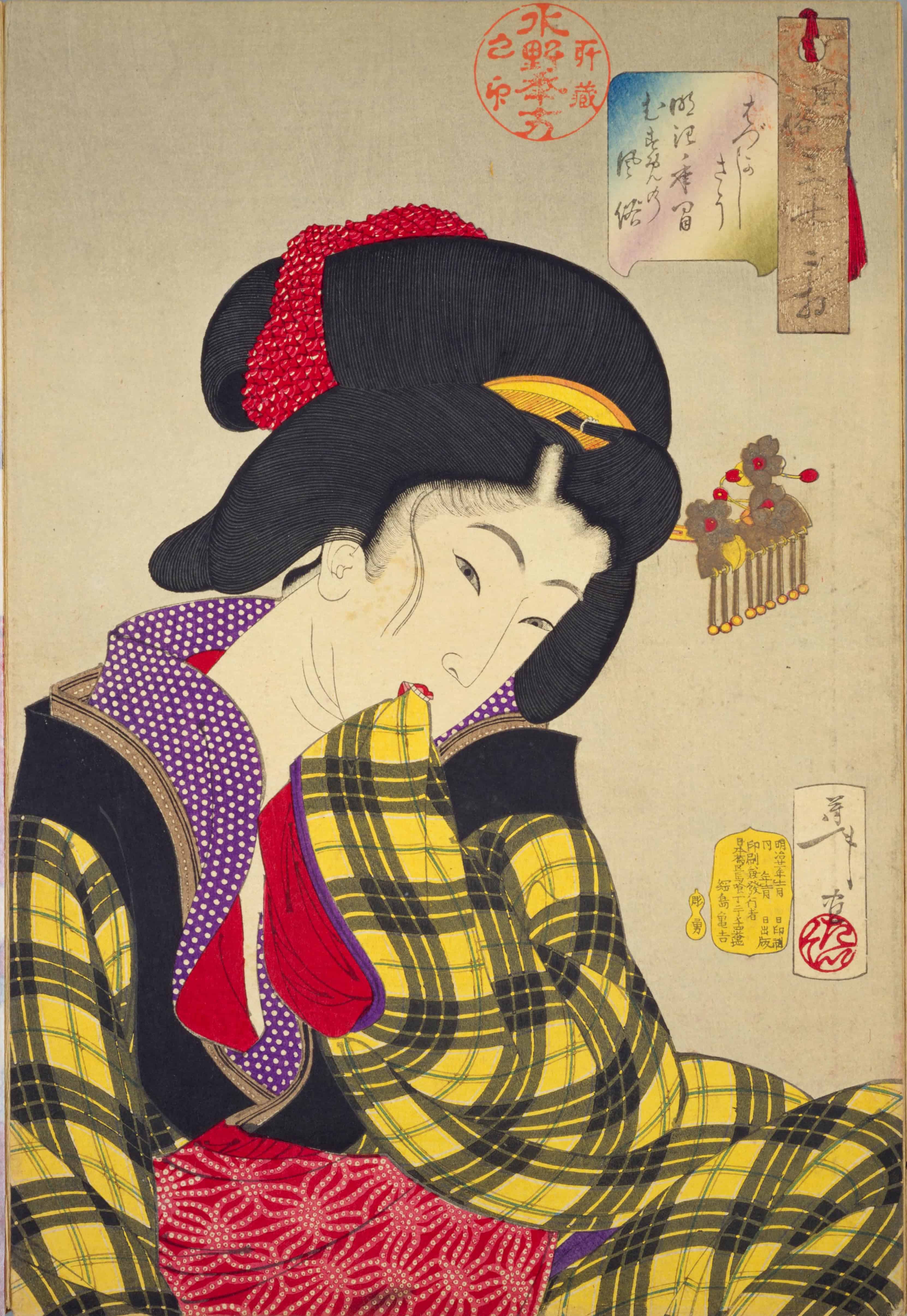
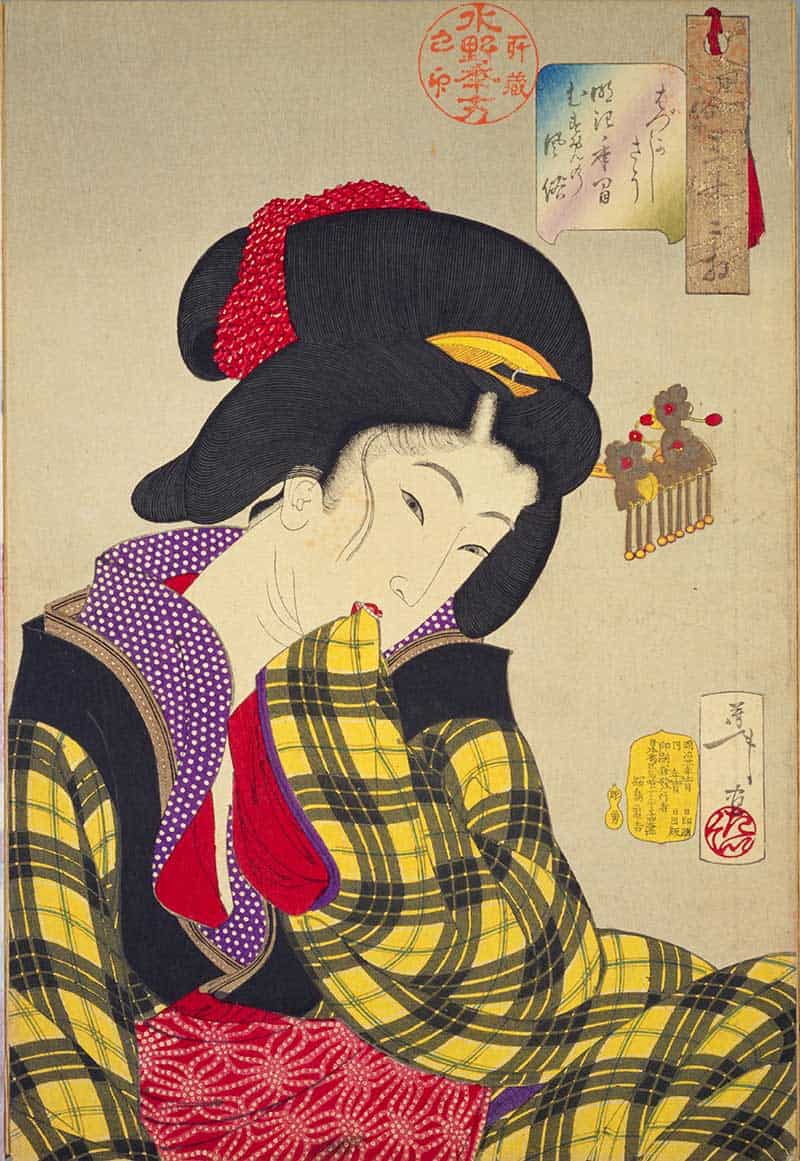
Shy young woman of the Meiji era, wearing a yellow plaid kimono, looking sideways with a hair ornament behind her.
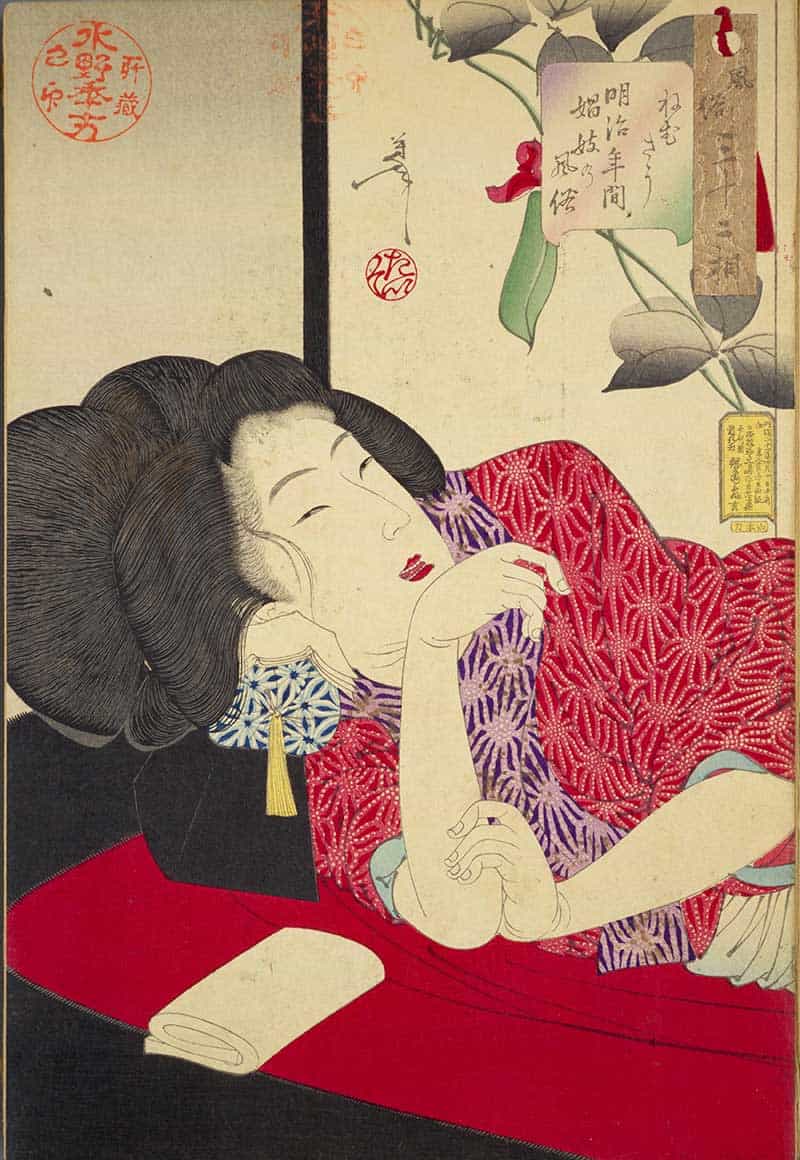
Sleepy prostitute of the Meiji era reclining.
Smiling modern geisha of the Meiji era.
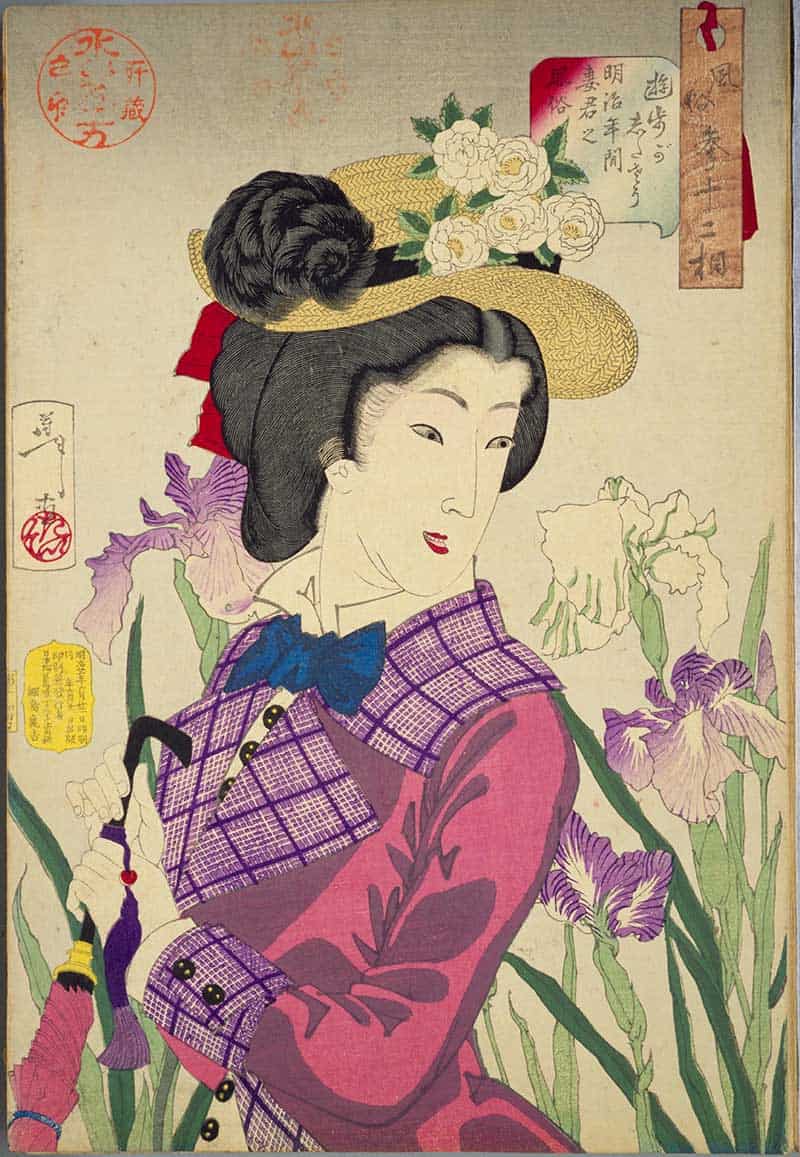
Wife of a nobleman in the Meiji era, wearing Western-style purple checked clothing, a straw hat, a parasol, and irises.
More Beautiful Vintage Japanese Art
I hope you've enjoyed this wonderful collection of Japanese portraits as much as I have. Yoshitoshi had a real talent for capturing personality.
I also love that Yoshitoshi shows women from different periods of Japanese history, not just his own time. You can spot the changing fashions in their kimonos, hairstyles and accessories, from elaborate traditional outfits to newer Meiji-era styles. It's a fun way to look back at Japanese fashion and see how things changed over the years, all through 32 colourful portraits.
If you'd like to explore more vintage Japanese art, have a look at these beautiful Kōno Bairei bird and flower prints. They differ from Yoshitoshi's portraits but were created around the same period and are just as lovely to look at.
You might also enjoy the Japanese butterfly patterns by Tanaka Yuho or the colourful Shin-Bijutsukai Japanese graphic art prints. And don't forget to browse the other vintage Japanese textile patterns on Pictureboxblue, where there are plenty more beautiful public domain images to download and print.
If you fancy, you can Buy Me A Coffee Here.