49 Beautiful Antique French Botanical Charts
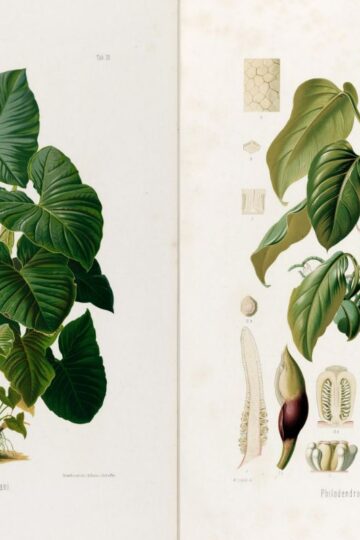
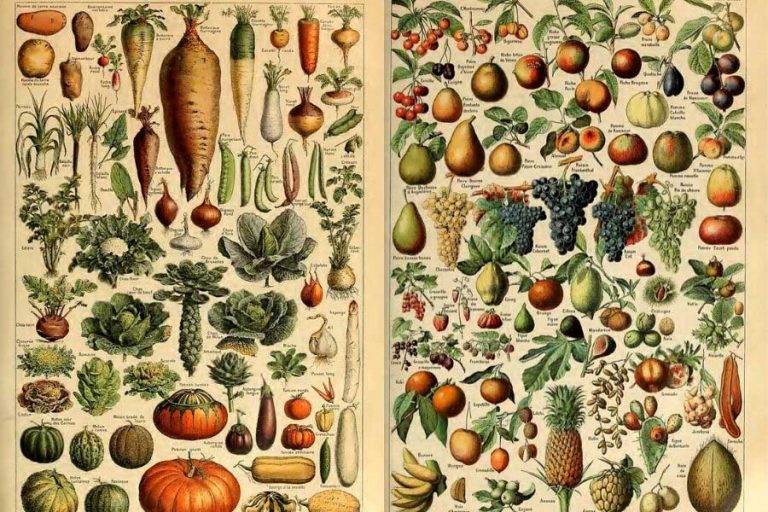
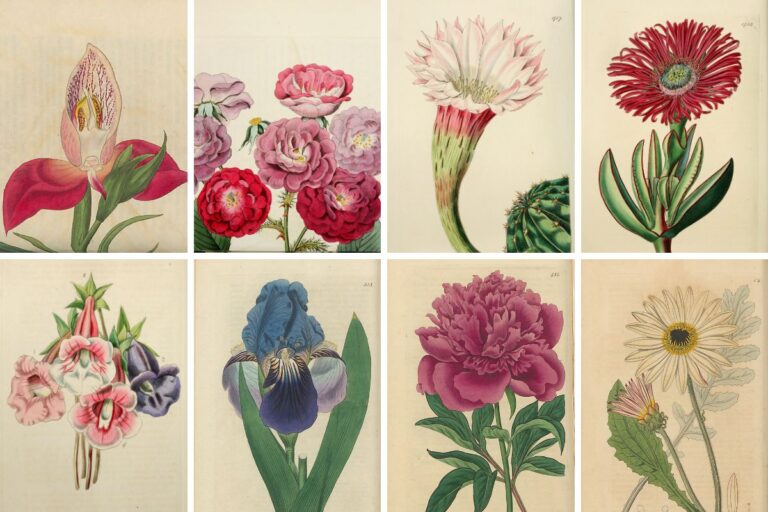
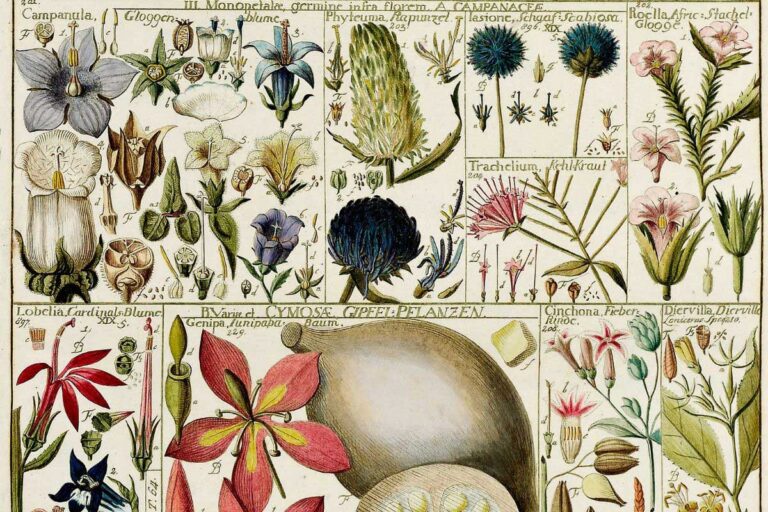
This collection features quirky nature illustrations from a wonderful old French botanical book, with beautiful drawings of flowers, leaves, seeds, and all sorts of interesting plant details.
What I particularly like about these illustrations is that they're not your typical botanical flower paintings. Many pages look more like old scientific charts, with lots of little drawings neatly arranged to show different plant parts. Some are quite colourful, while others are simpler drawings showing everything from the shape of a leaf to the inner workings of a flower.
About Traité de botanique générale
The illustrations come from Traité de botanique générale, which translates as Treatise on General Botany. Published in Paris in 1860, the work is associated with François Hérincq, Frédéric Gérard, and Oscar Réveil. It was a detailed guide to the plant world, covering everything from how plants grow and reproduce to their different shapes and structures.
The two illustrated volumes contain over 100 botanical plates, with detailed drawings of flowers, leaves, roots, stems, fruits and seeds.
Many of the illustrations are beautifully coloured, and I particularly like how the smaller drawings are arranged on each page. They remind me of the wonderful botanical prints from Oken's Natural History, another 19th-century collection I've featured on Picture Box Blue. Oken's charts include everything from mushrooms and seaweed to flowers and fruit, all arranged in a similar educational style.
Both collections are lovely examples of how old scientific books could be informative and pretty to look at at the same time.
Beautiful Vintage Botanical Charts
One thing I enjoy about these old botanical books is seeing how much detail the illustrators managed to fit on a single page. Some plates show many different leaf shapes, while others take flowers apart to reveal their petals, stamens, and other tiny structures. There are also lovely studies of seeds, fruits, stems and roots.
The charts remind me of the famous Adolphe Millot botanical posters from the old French Larousse encyclopaedias. These earlier French botanical illustrations have a similar appeal, though they focus more on plant structure than on simply identifying different species.
If you enjoy these detailed botanical studies, you might also like the Carl Hoffmann botanical prints. His 1880 German plant book is another wonderful mixture of colourful plant illustrations and educational diagrams.
How to Download the Botanical Illustrations
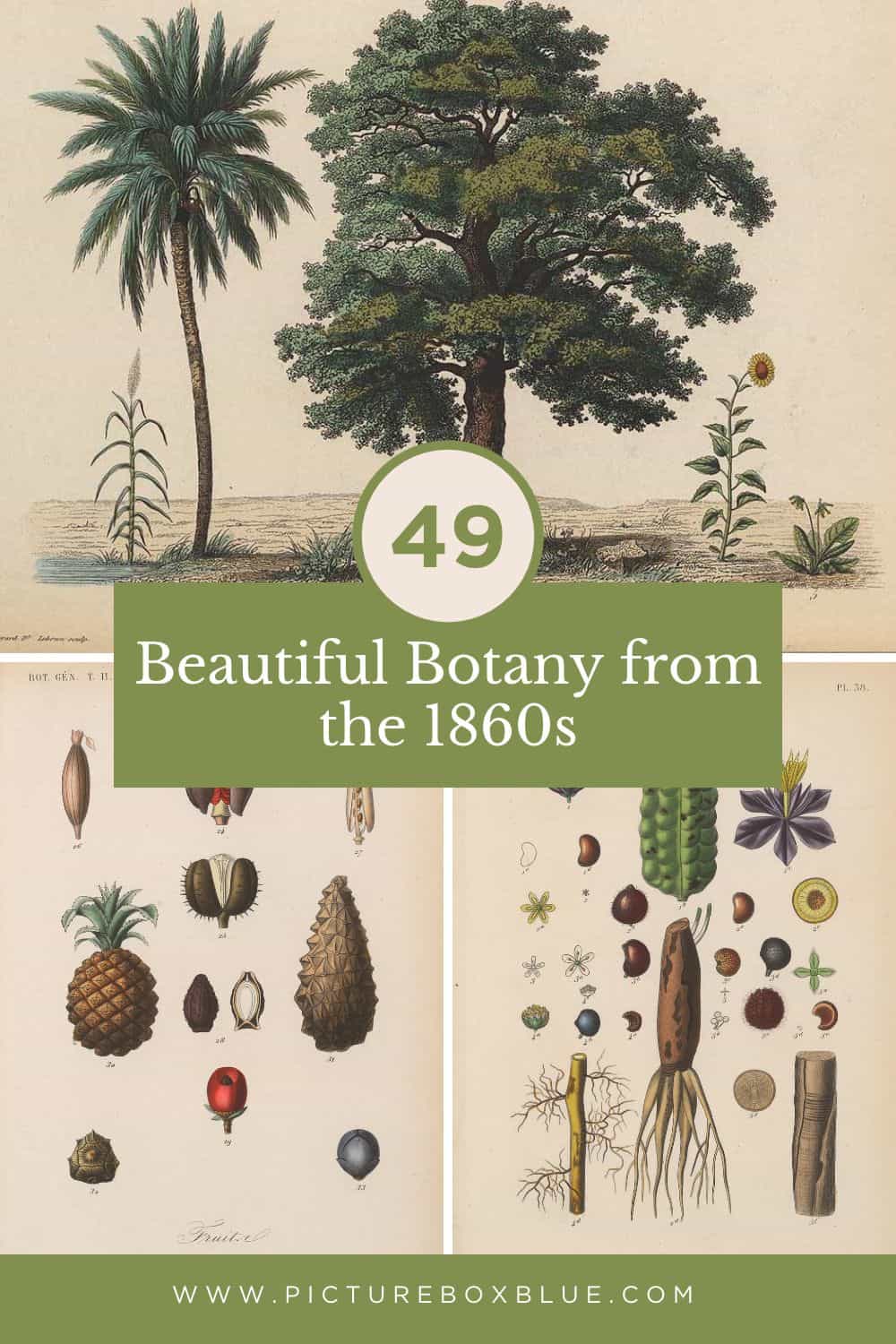
I've selected around 50 of the most interesting botanical plates from the two original volumes. All the illustrations are in the public domain and free to download. They would look lovely framed as vintage wall art, but I can also see them being used for junk journals, scrapbooks and all sorts of botanical crafts.
To download a print, click on the title above the illustration you want. This will open a higher-resolution version in a new tab, where you can right-click and save it to your computer.
Curious Comparisons in Nature Prints
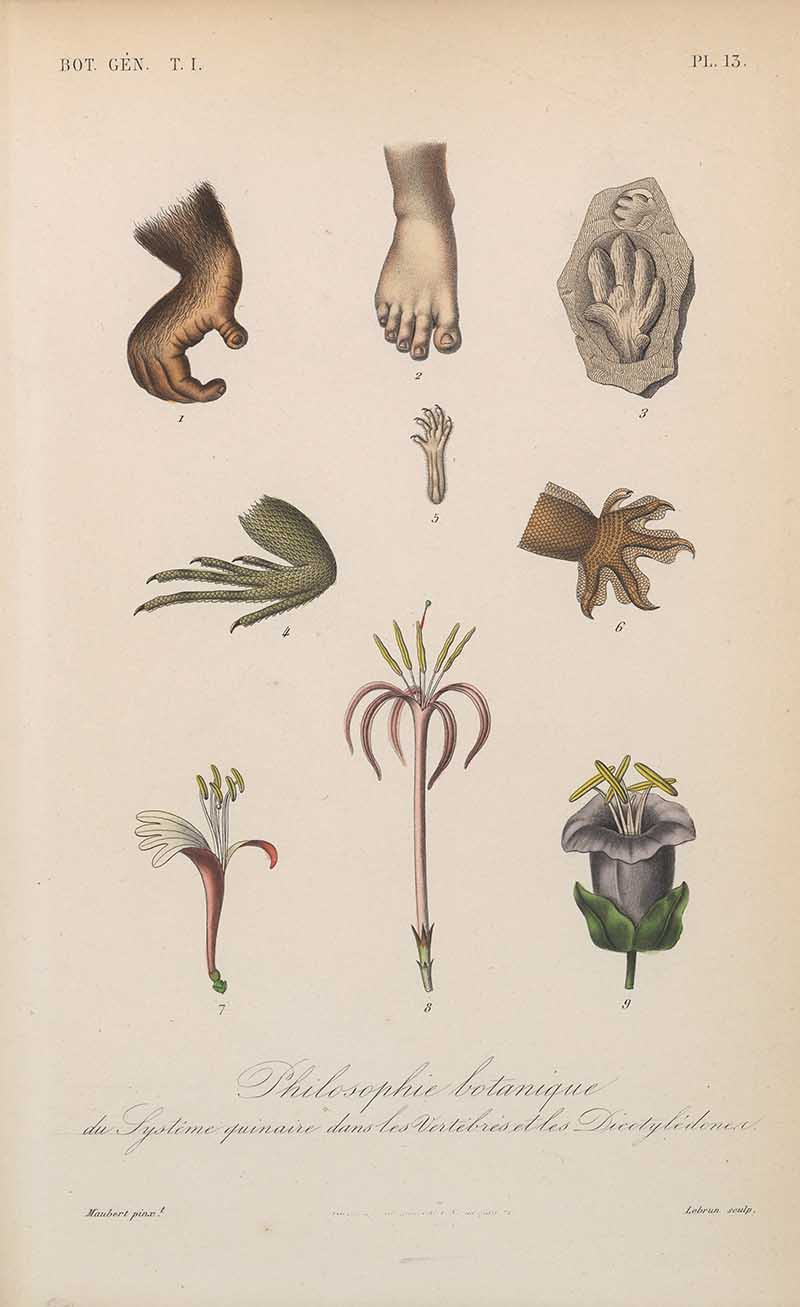
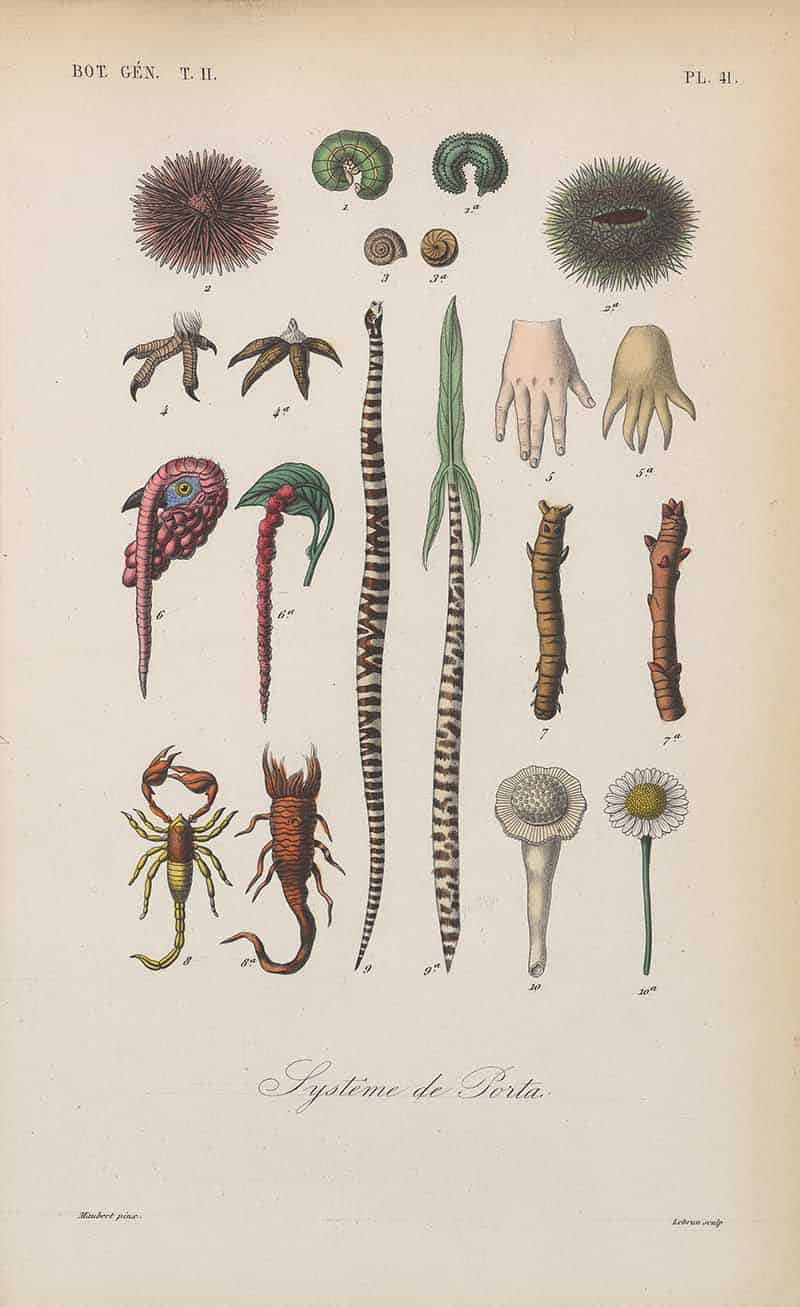
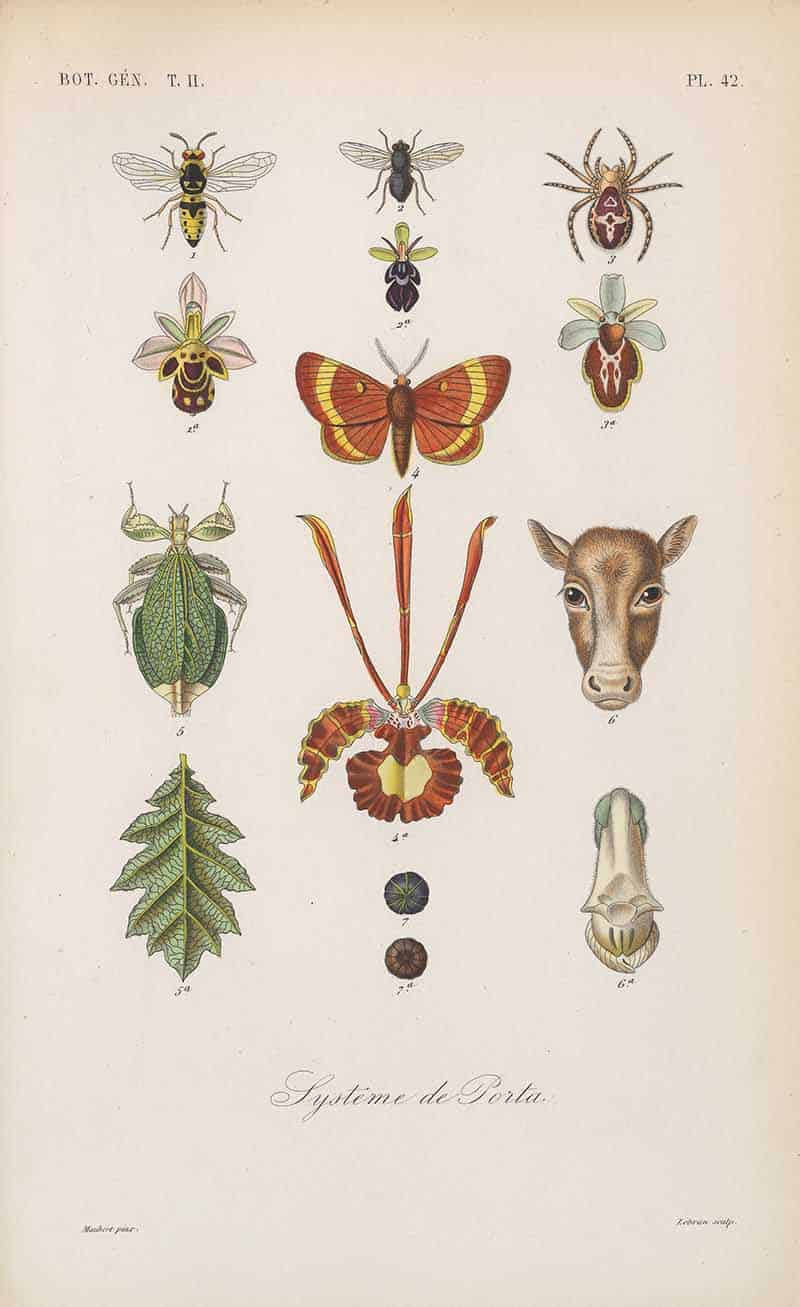
Some of the most interesting illustrations in these books aren't strictly botanical. They include monkeys, fish, jellyfish, and even human feet!
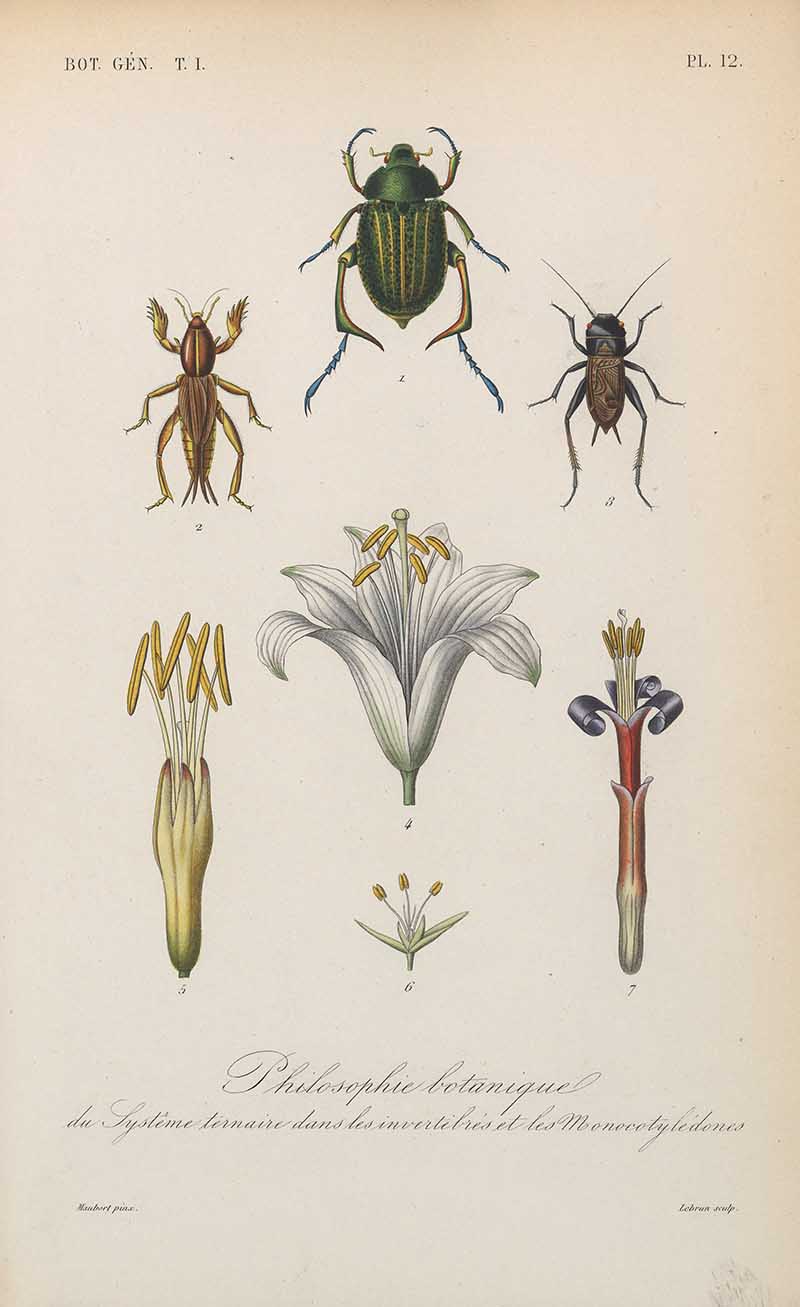
The authors looked for patterns and similarities between plants and animals, comparing everything from tree branches to the number of fingers, toes, and flower petals. Some of their theories are now outdated, but these unusual charts give us a fascinating glimpse into how Victorian scientists viewed the natural world.
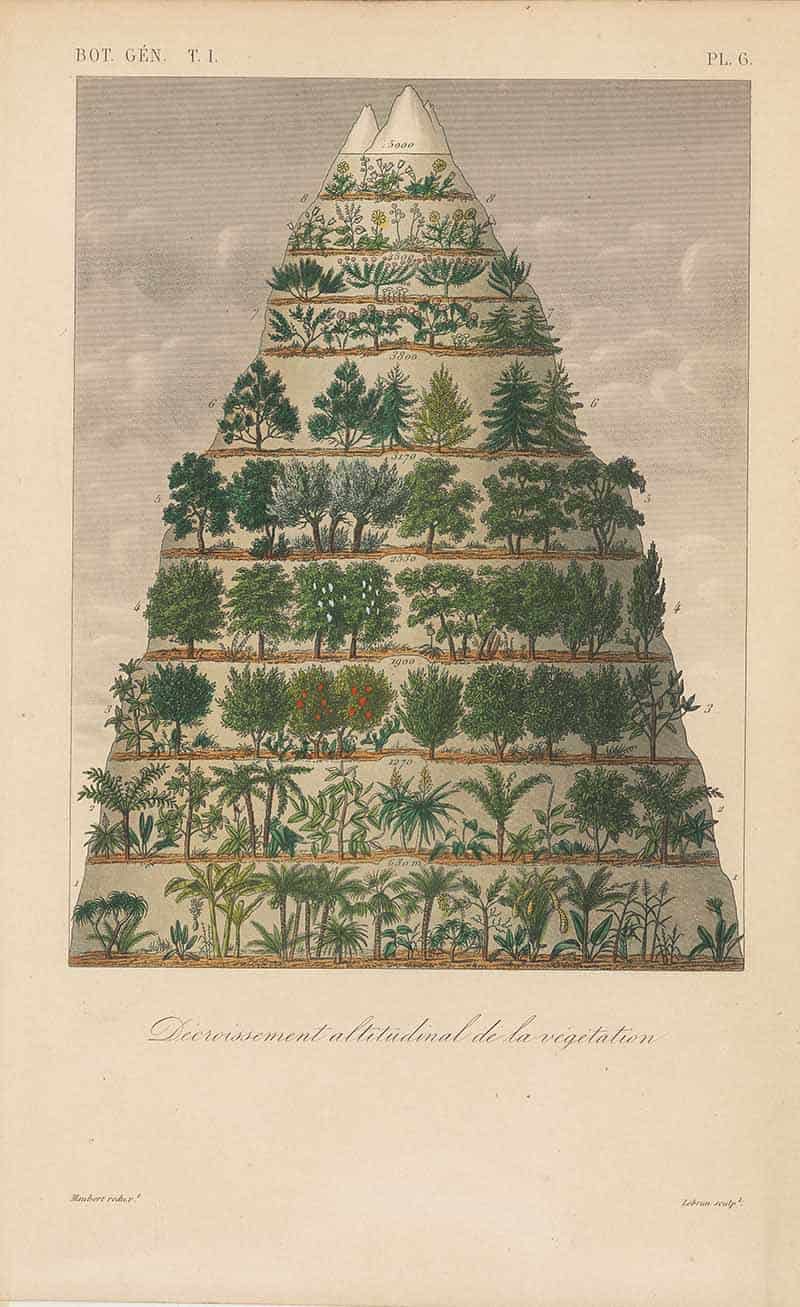
Print 1: Vegetation Climate Zones
Mountain-shaped diagram showing vegetation arranged in ascending climate zones. The site includes a collection of vintage mountain charts.
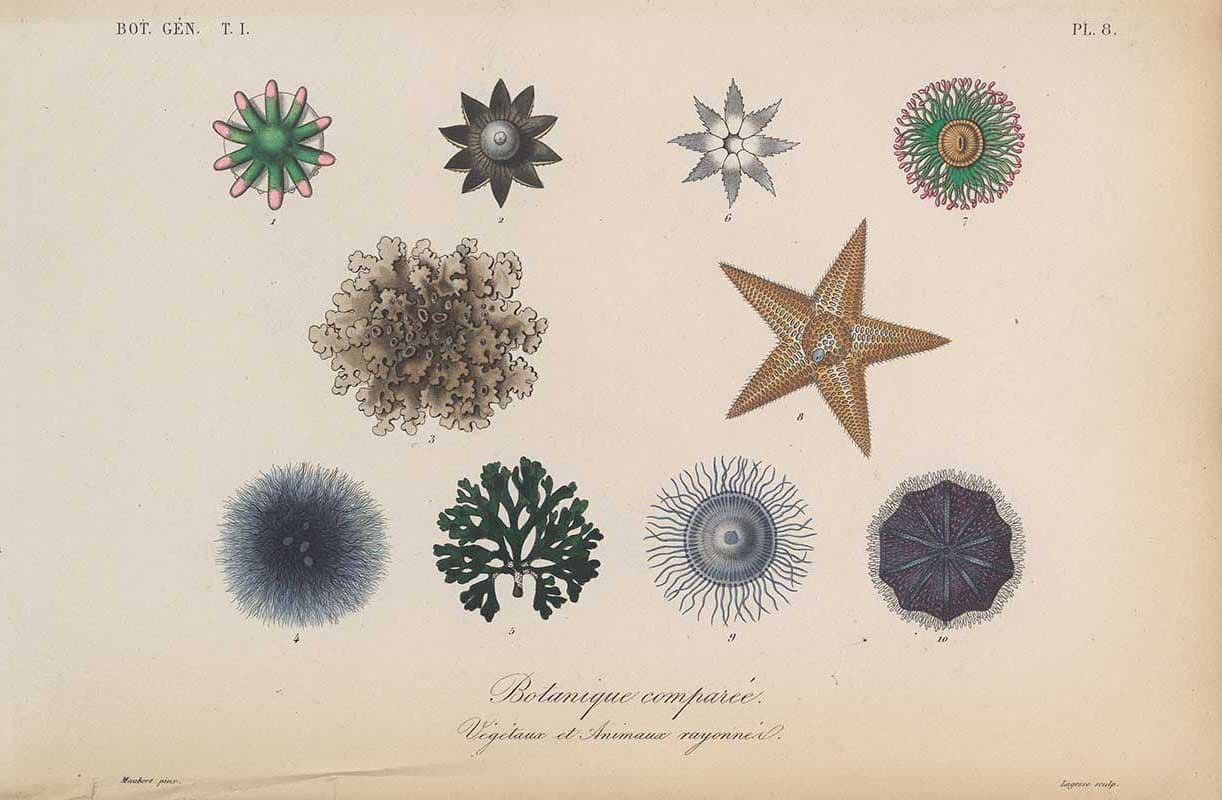
Print 2. Radial Forms in Nature
The illustrations explore radial symmetry, where parts of an organism are arranged around a central point, rather like the petals of a flower.
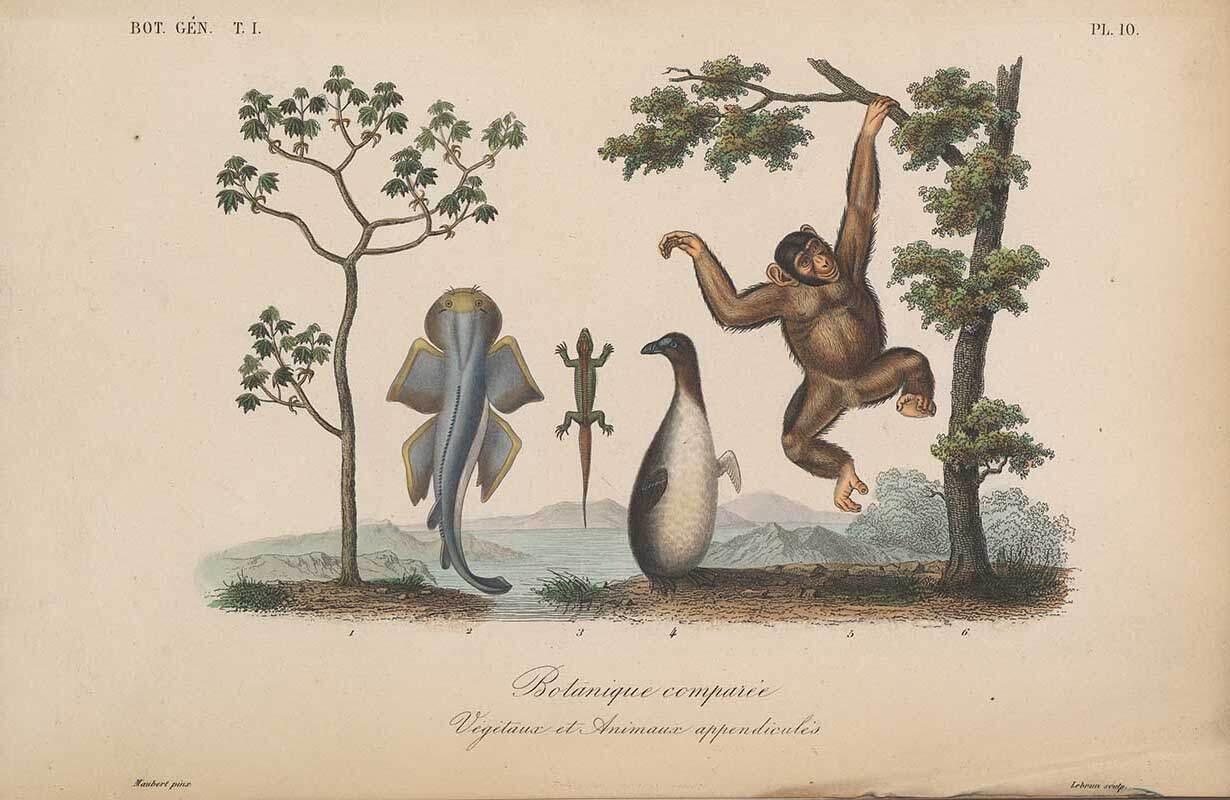
Print 3. Comparing Plants & Animals
You wouldn't normally expect to find a chimpanzee, penguin, lizard and shark sharing a page with an oak tree and a horse chestnut! But that's exactly what you'll find on Plate 10. The idea was to show how trees and animals share similar branching shapes, from a chimpanzee's limbs to an oak's branches.
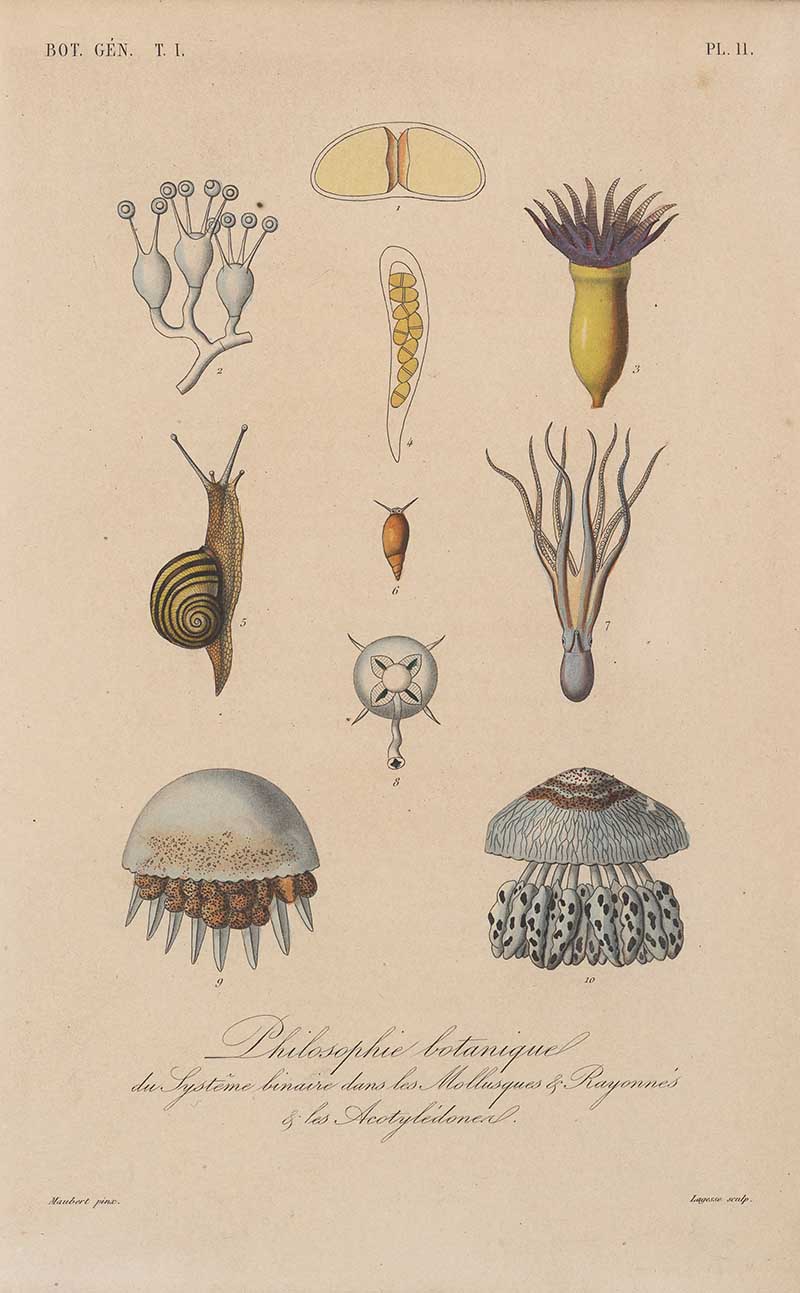
Print 4. Binary System in Nature
This plate has another rather odd mix of illustrations, with snails, an octopus, jellyfish, fungi and mosses all sharing the page.
This time, the authors were exploring how the number two and its multiples appear in nature, from a snail's pairs of tentacles to an octopus's eight arms.
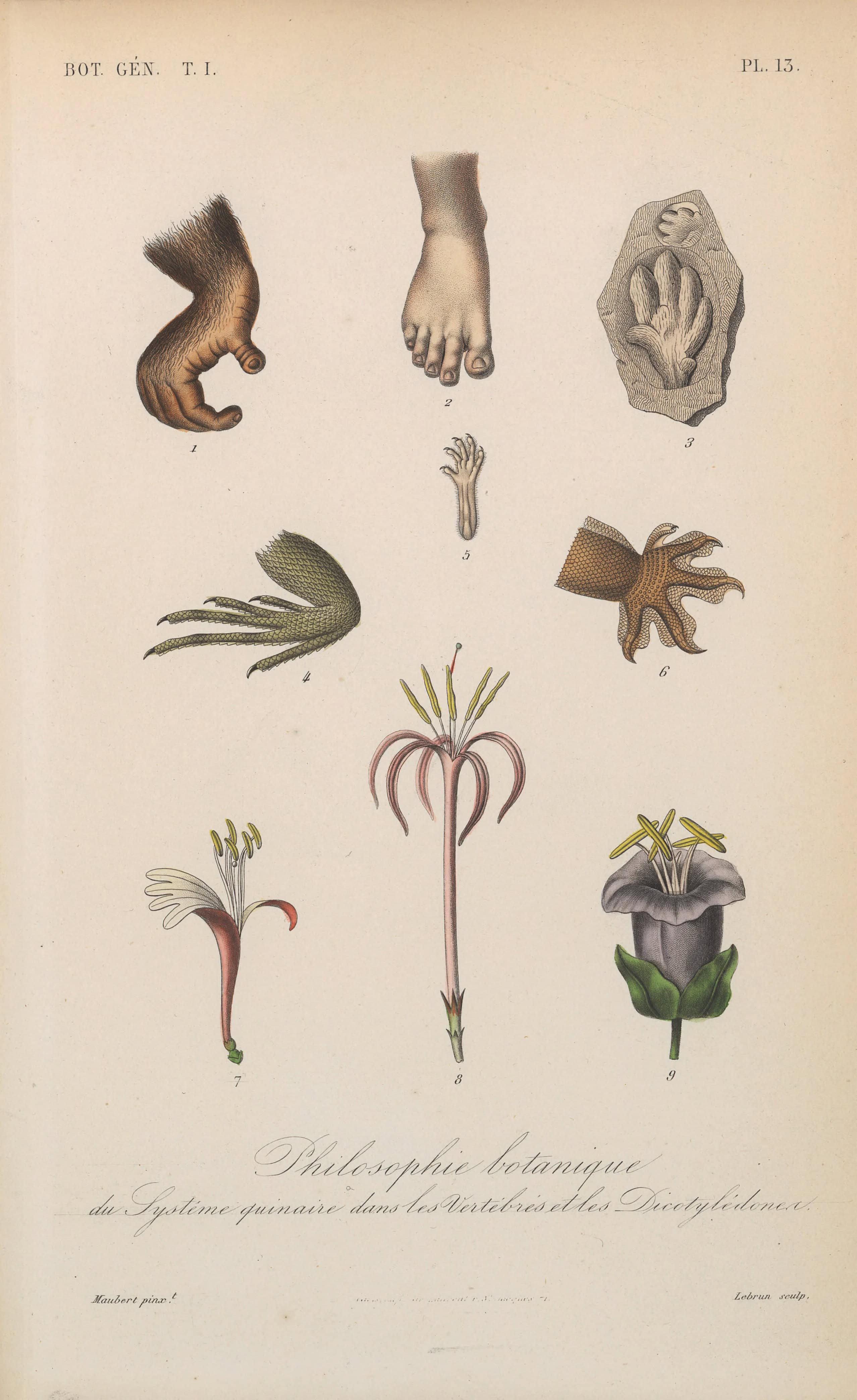
Five seems to be the magic number, from the fingers of a monkey's hand and the toes of a human foot to the petals of certain flowers; this chart explores how often the number five crops up in nature.
Beautifully detailed animal paws and feet contrast with colourful botanical drawings, all brought together to illustrate a 19th-century scientific theory.
Three beautifully detailed insects and several delicate flowers to explore the importance of the number three in nature.
The beetles and cricket-like insects have six legs, while the flowers belong to the monocot family, whose petals and other floral parts often come in threes or multiples of three.
Print 7. Linnaean Classification
Linnaean classification chart pairing burrs, roots and flowers with hands, birds, scorpion and lobster.
Print 8. Linnaean Classification 2
Pairing insect-like flowers with a butterfly, beetle, cow and floral anatomy
Leaves, Stems and Roots
Illustrations showing different leaf shapes, branching patterns, roots, and plant structure.
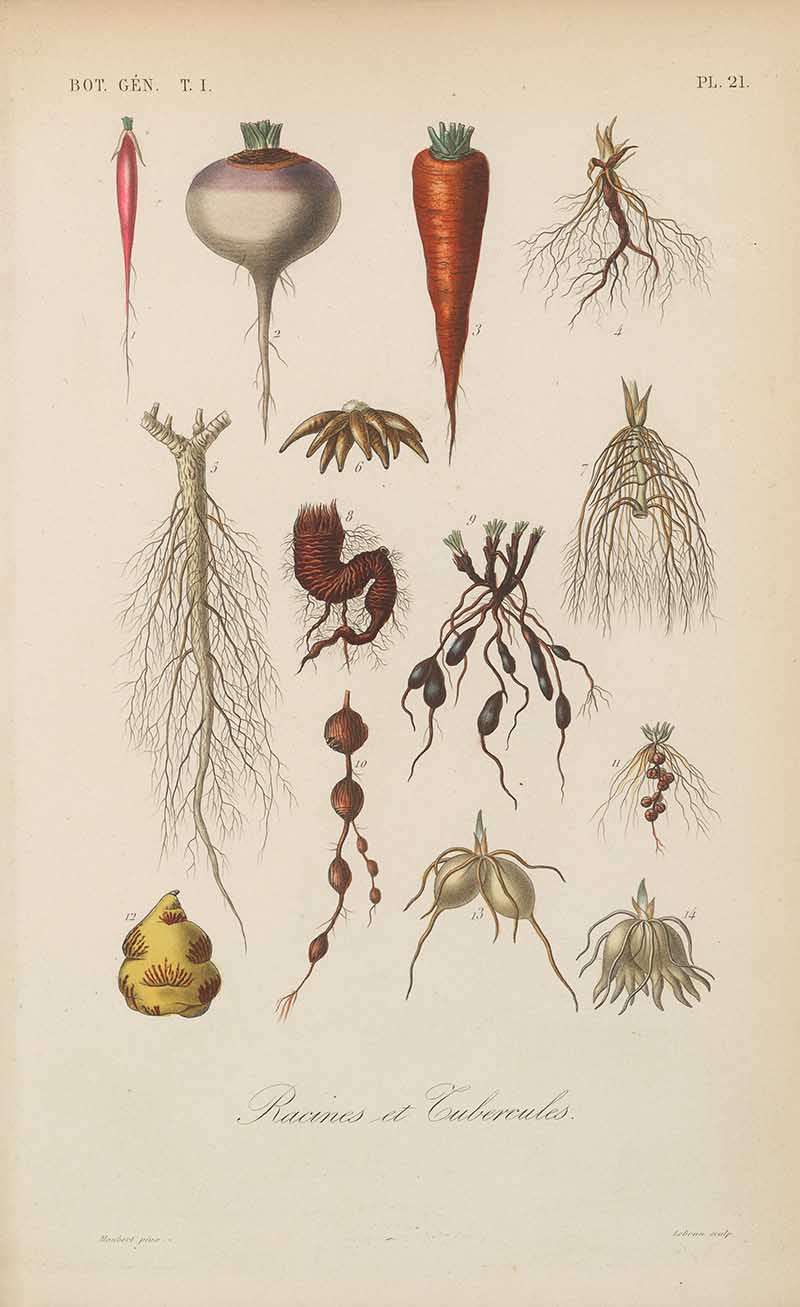
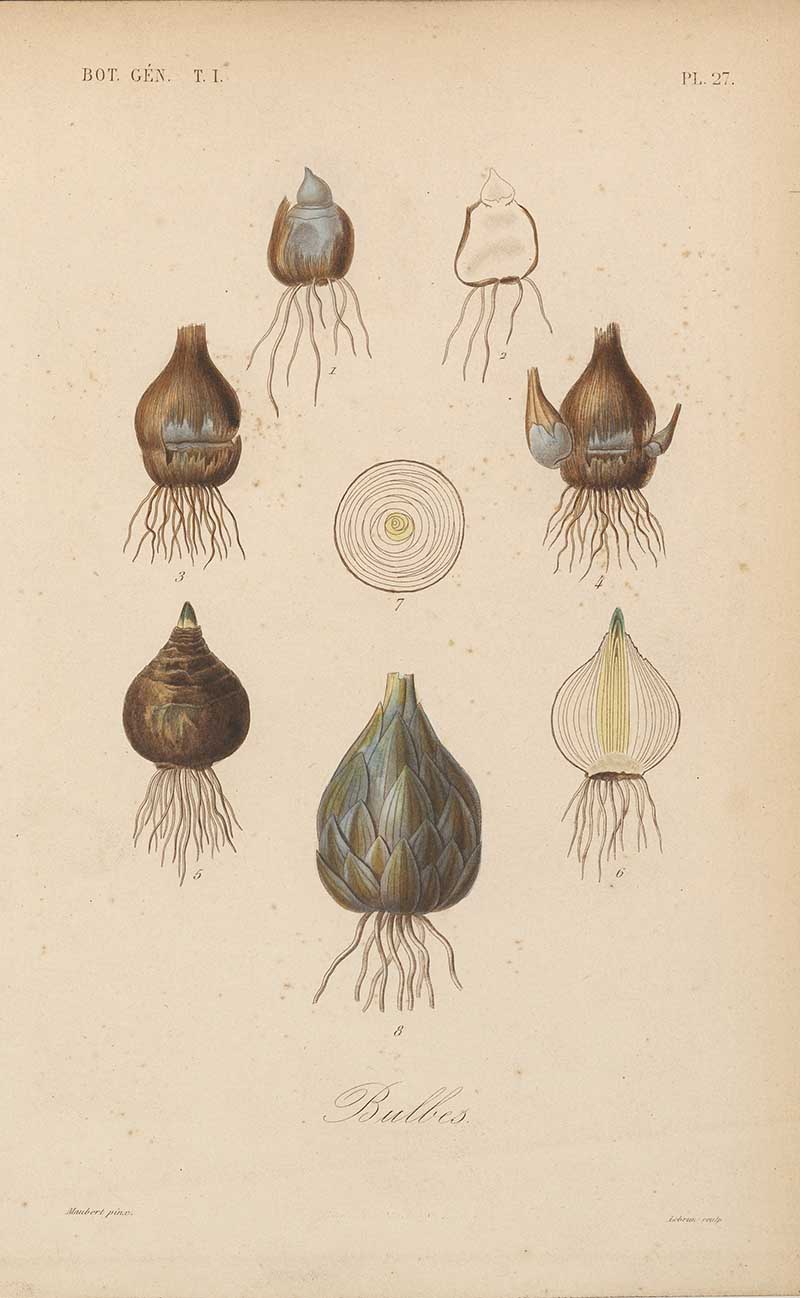
Plate of taproots, fibrous roots, bulbs and edible root vegetables.
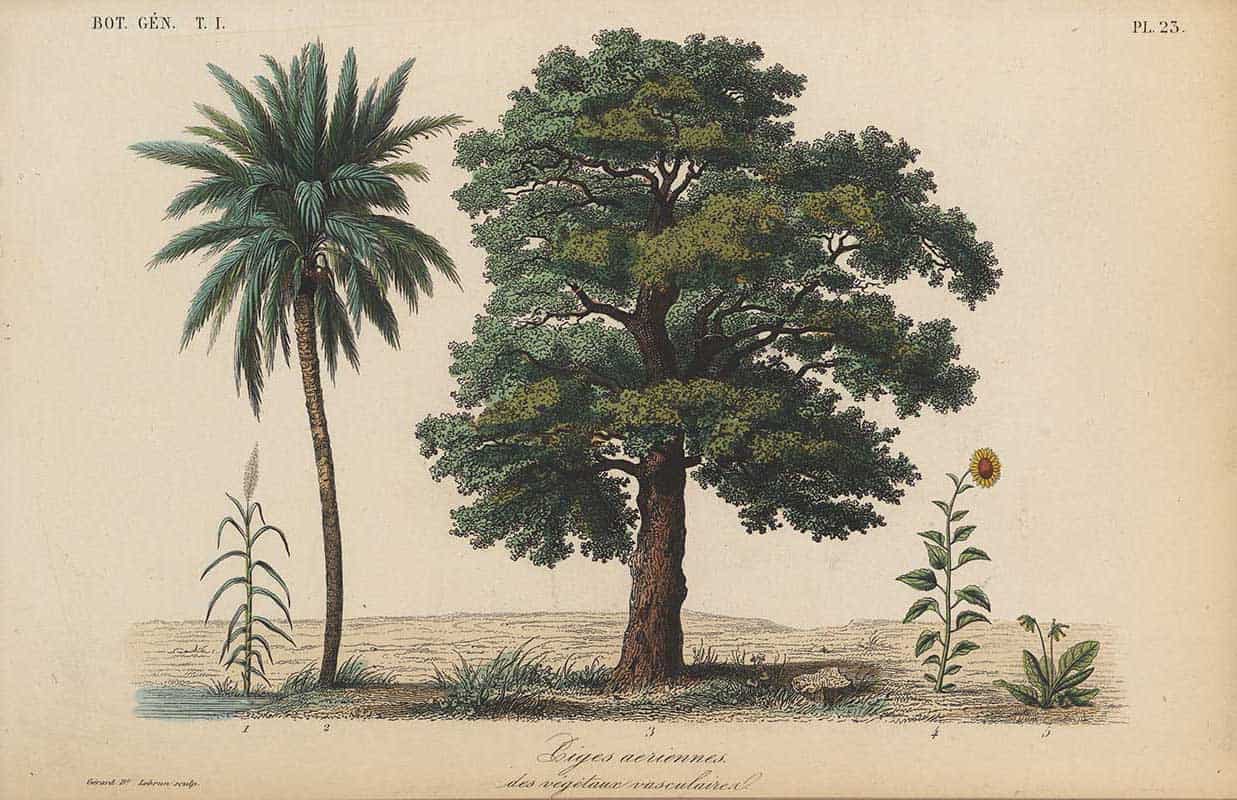
The chart compares different ways plants grow, whether tall and woody, slender and upright, or low to the ground.
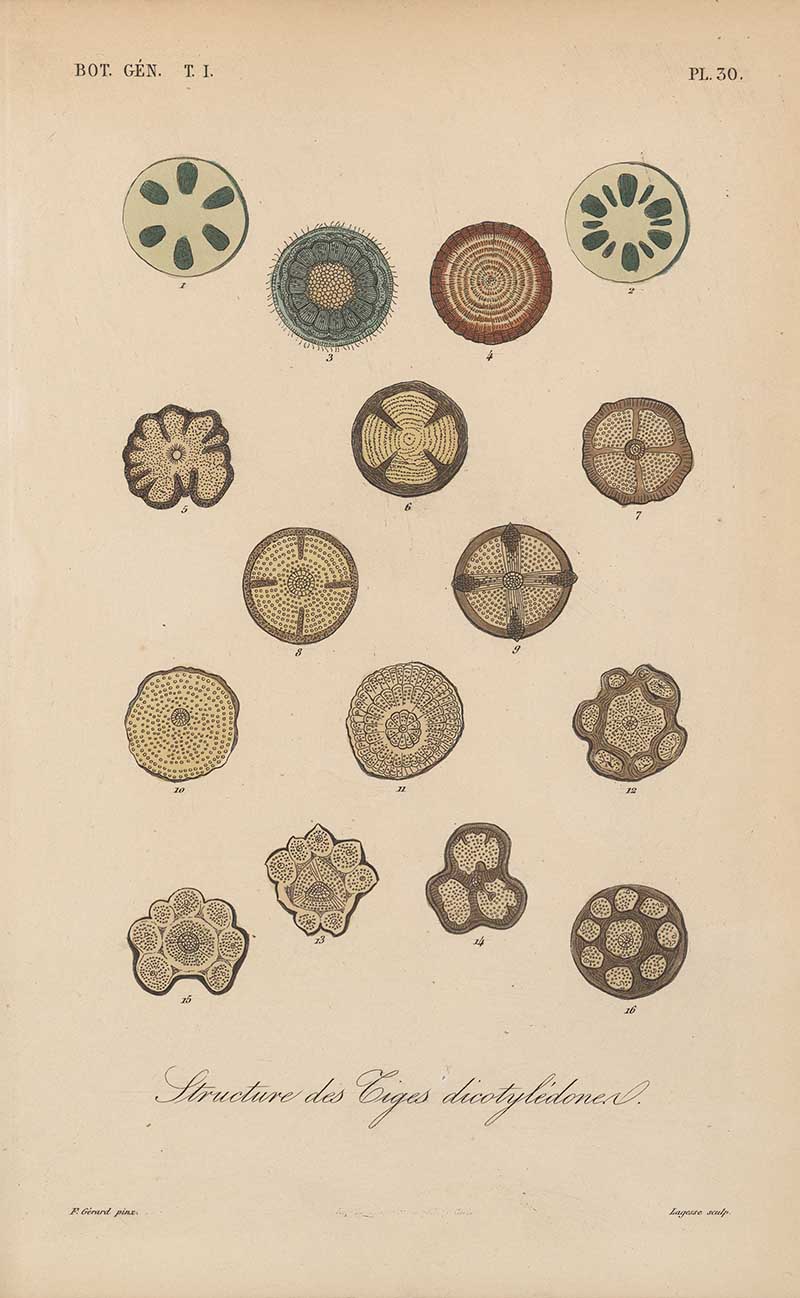
Print 12. Dicot Stem Cross-Sections
Print 13. Seven Simple Leaf Shapes
Seven simple leaf shapes, including oval, lanceolate, fan-shaped and round leaves.
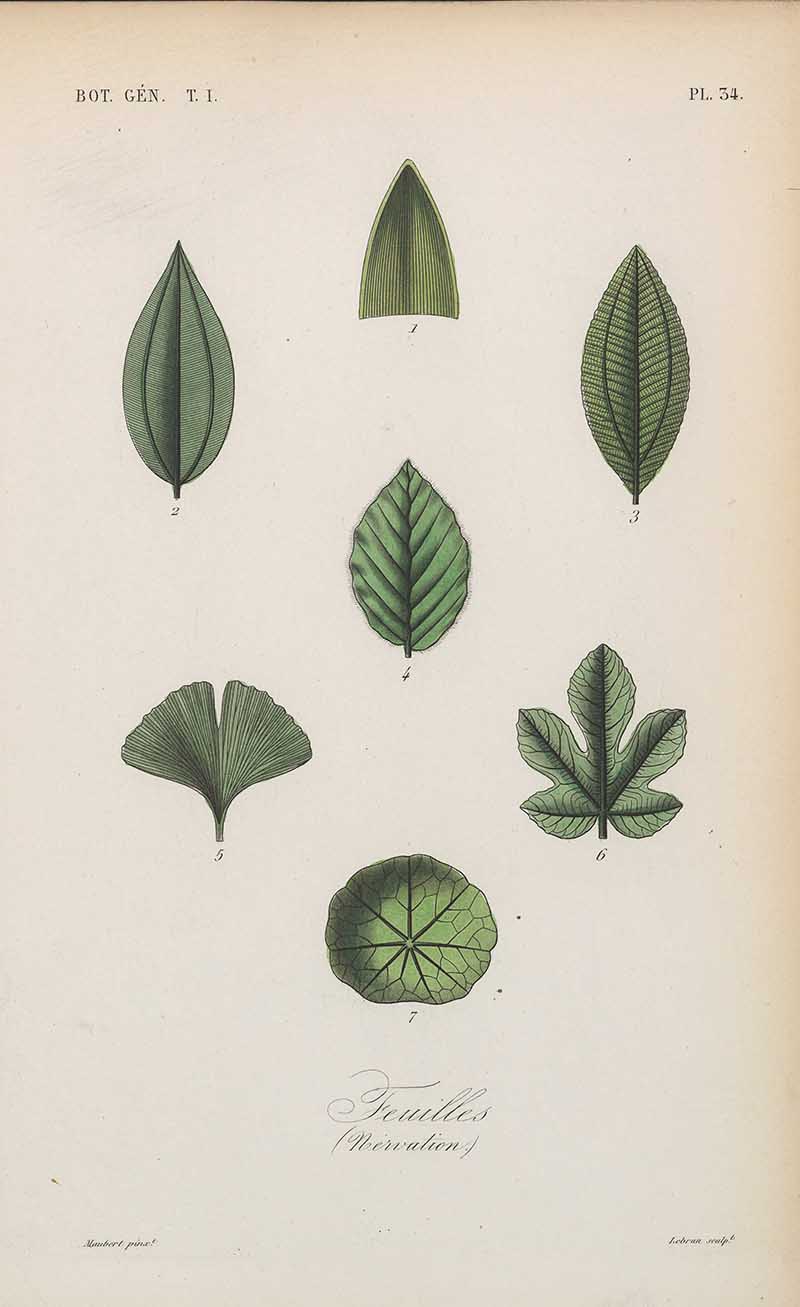
Print 14. Leaf Shapes, Round Heart and Long
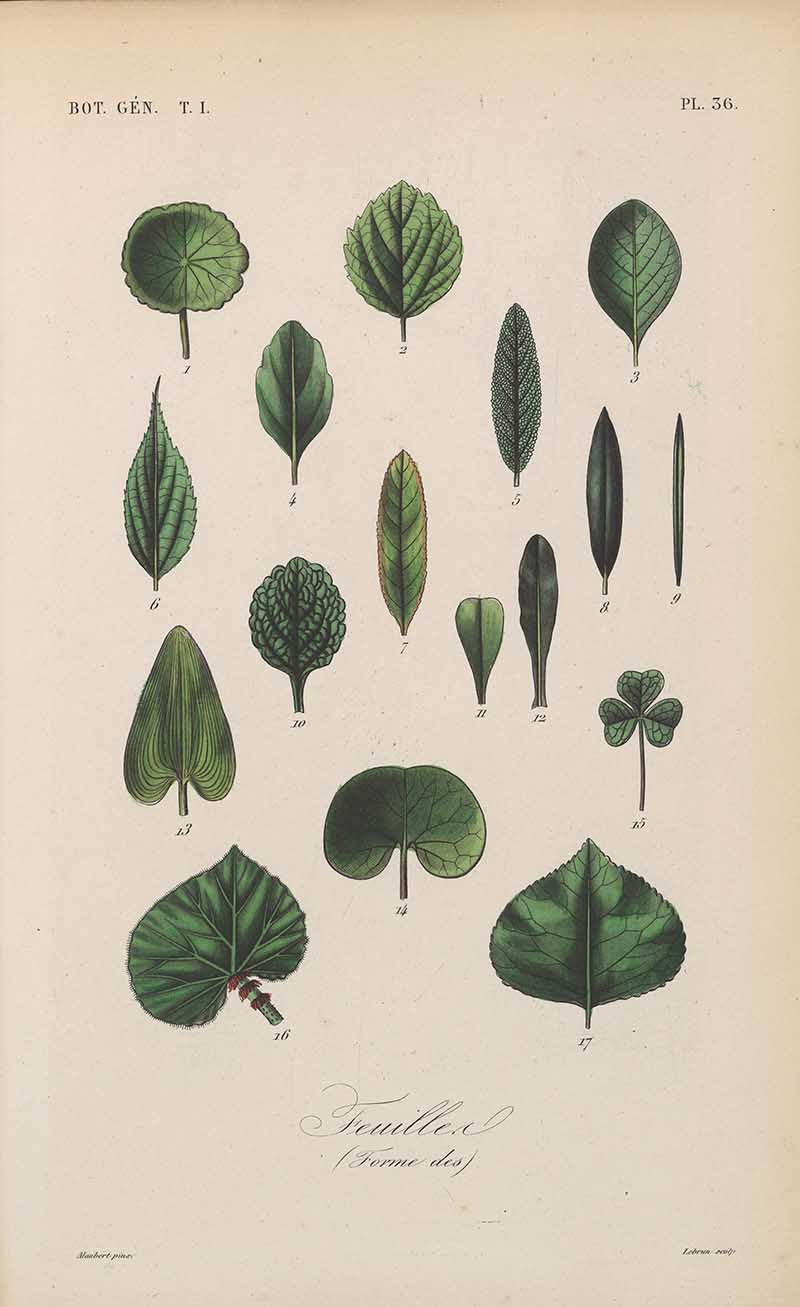
Print 15. Triangle and Fan Leaf Shapes
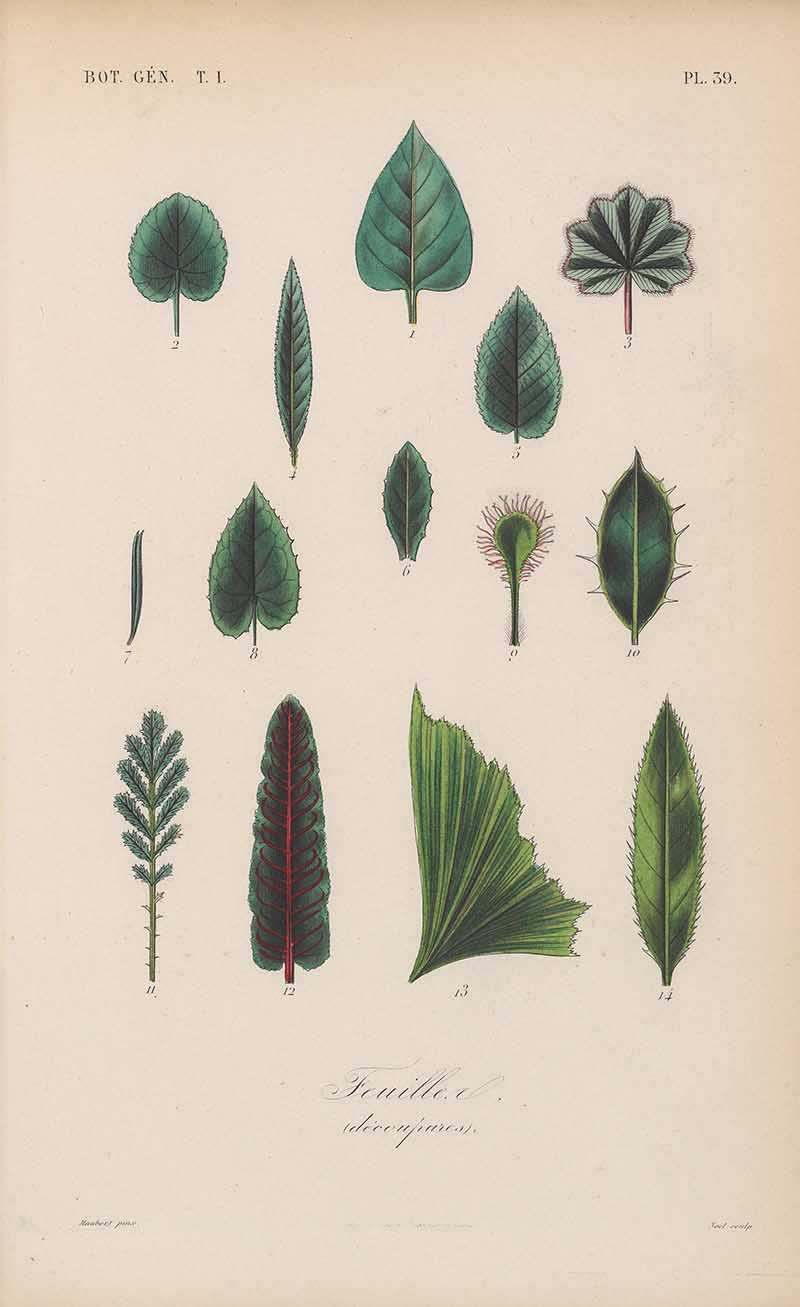
Grid of simple leaves with triangular, round, lobed, fan and palmate shapes.
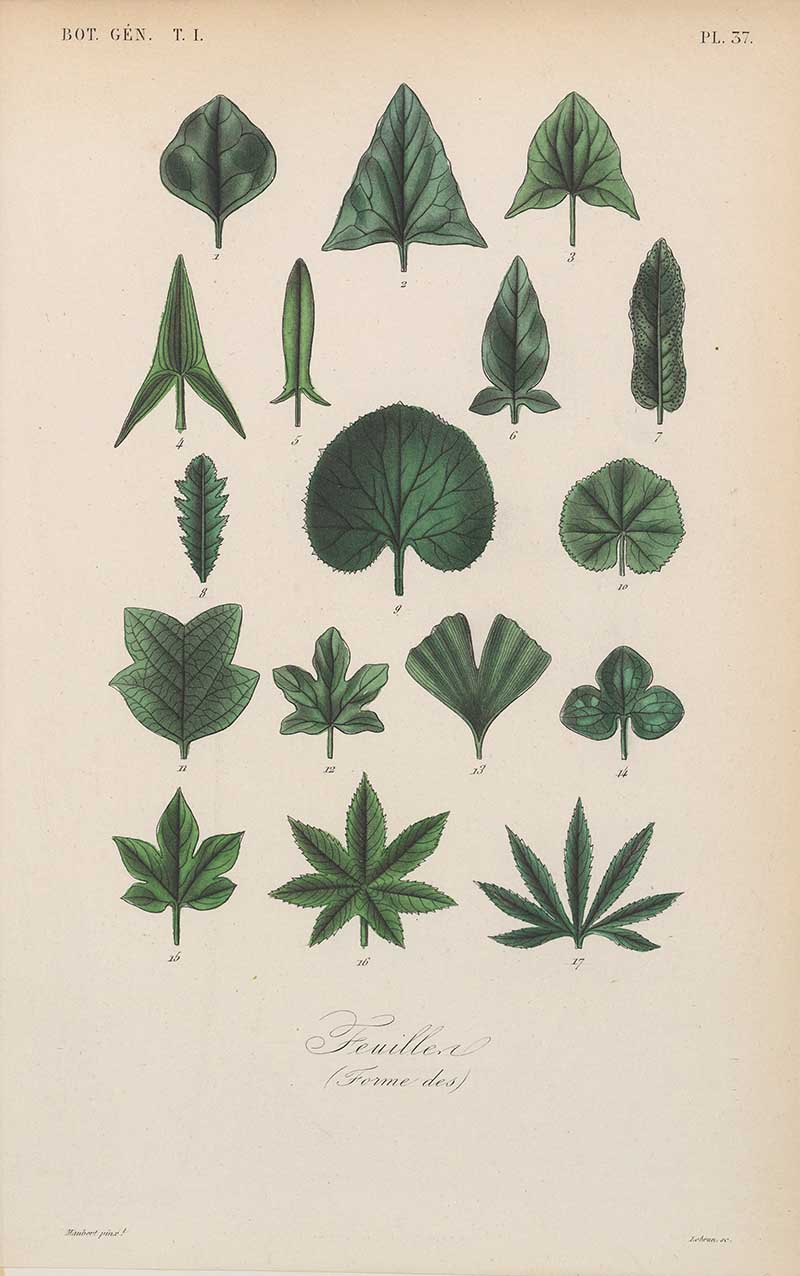
Print 16. Divided & Lobe Leaf Shapes
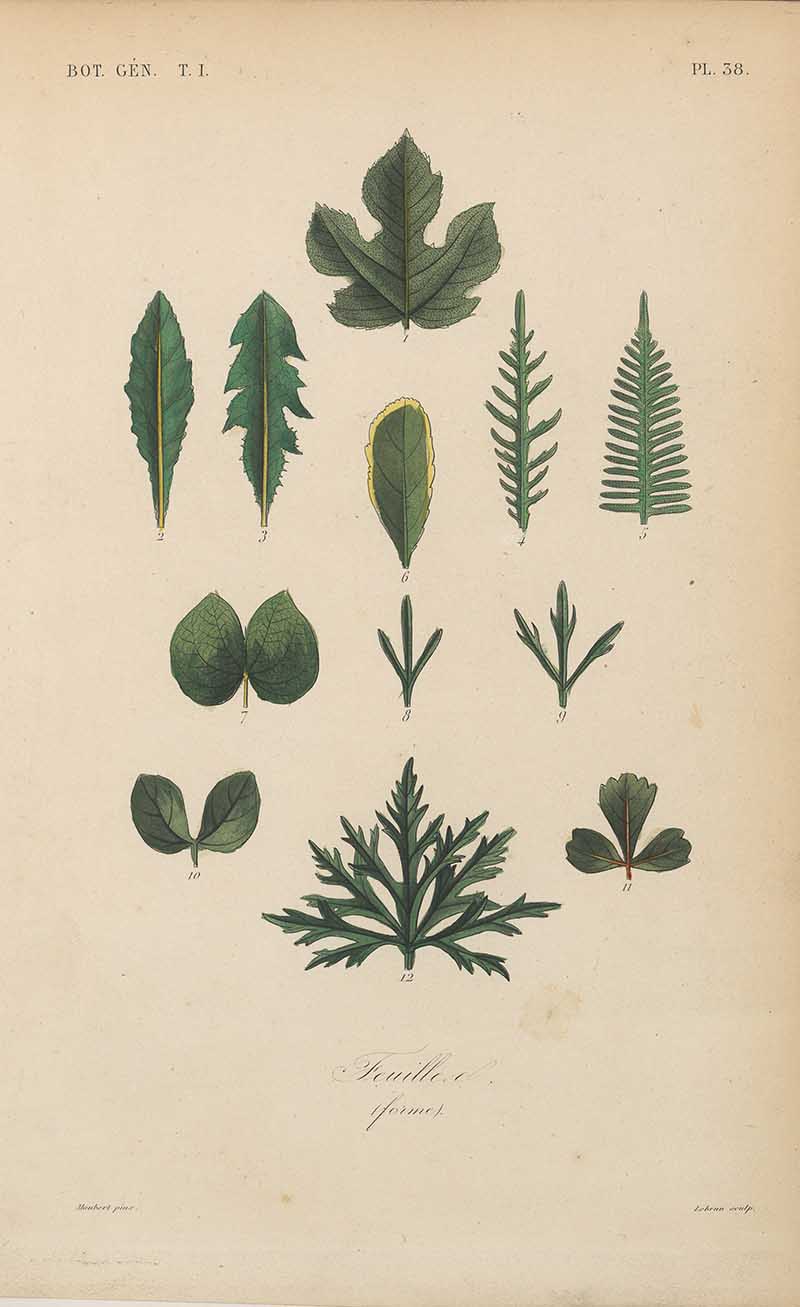
Print 17. Narrow & Spiny Leaves
Assorted narrow, oval, spiny and fan-shaped leaf forms with varied margins.
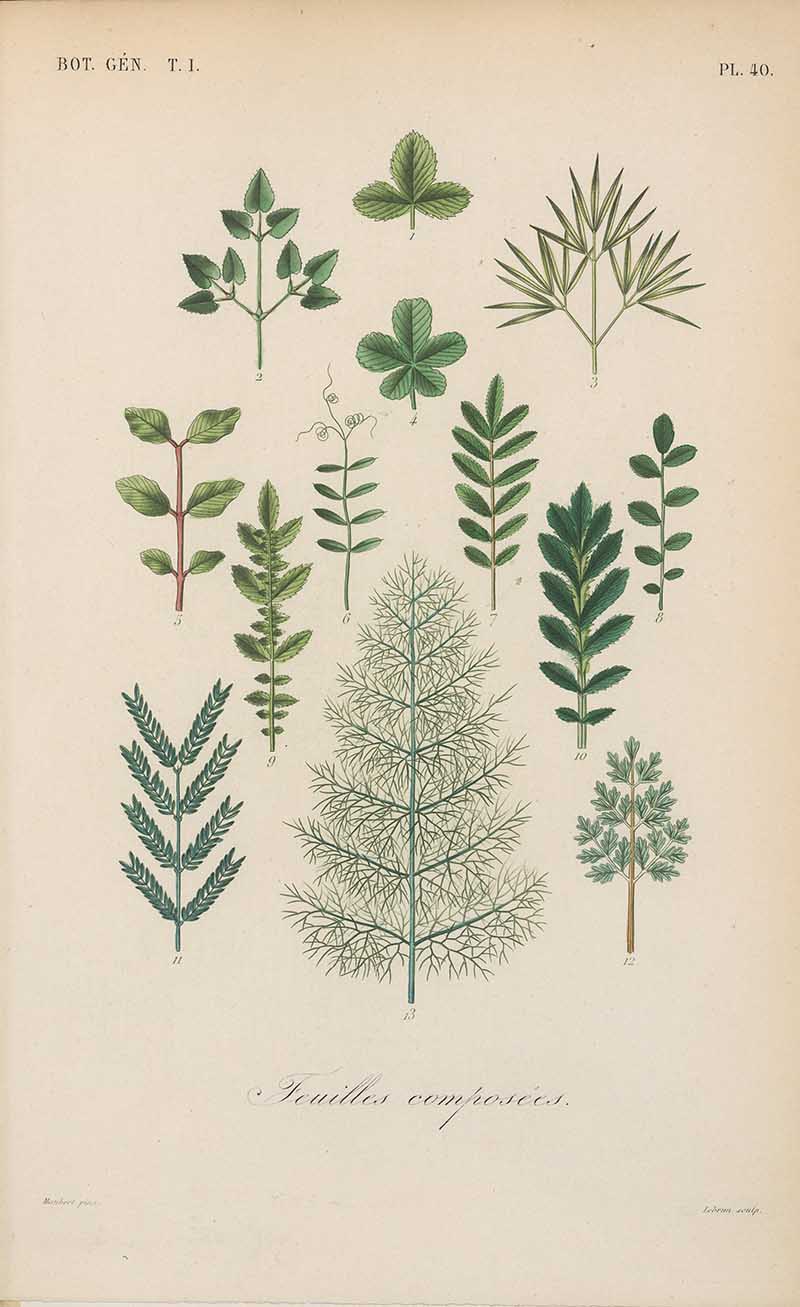
Flowers and Their Anatomy
Print showing flower shapes, petals, stamens and the inner workings of flowers.
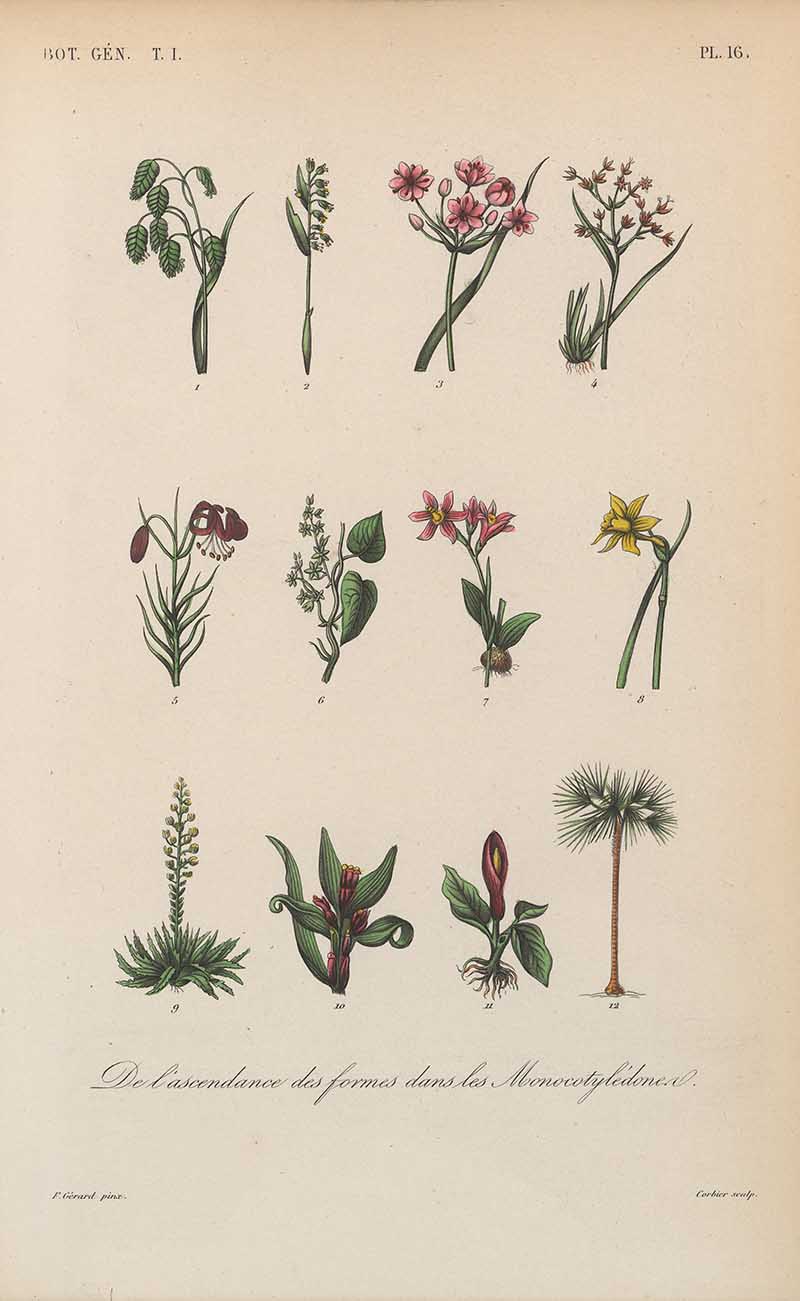
Monocot plants include lilies, orchids, grasses, and palms. These plants often have long, narrow leaves with parallel veins and flowers with petals arranged in threes.
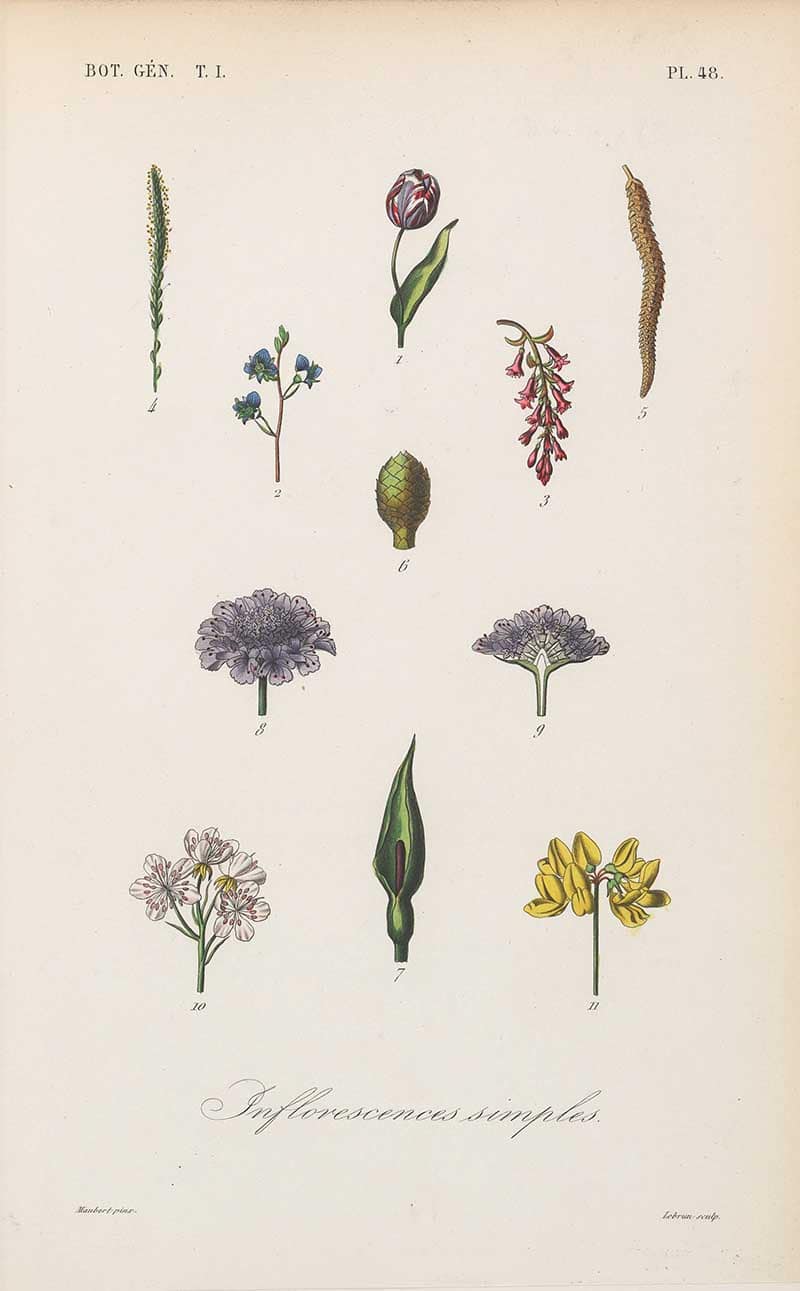
Examples of simple flower clusters including catkins, spikes, racemes, heads and umbels.
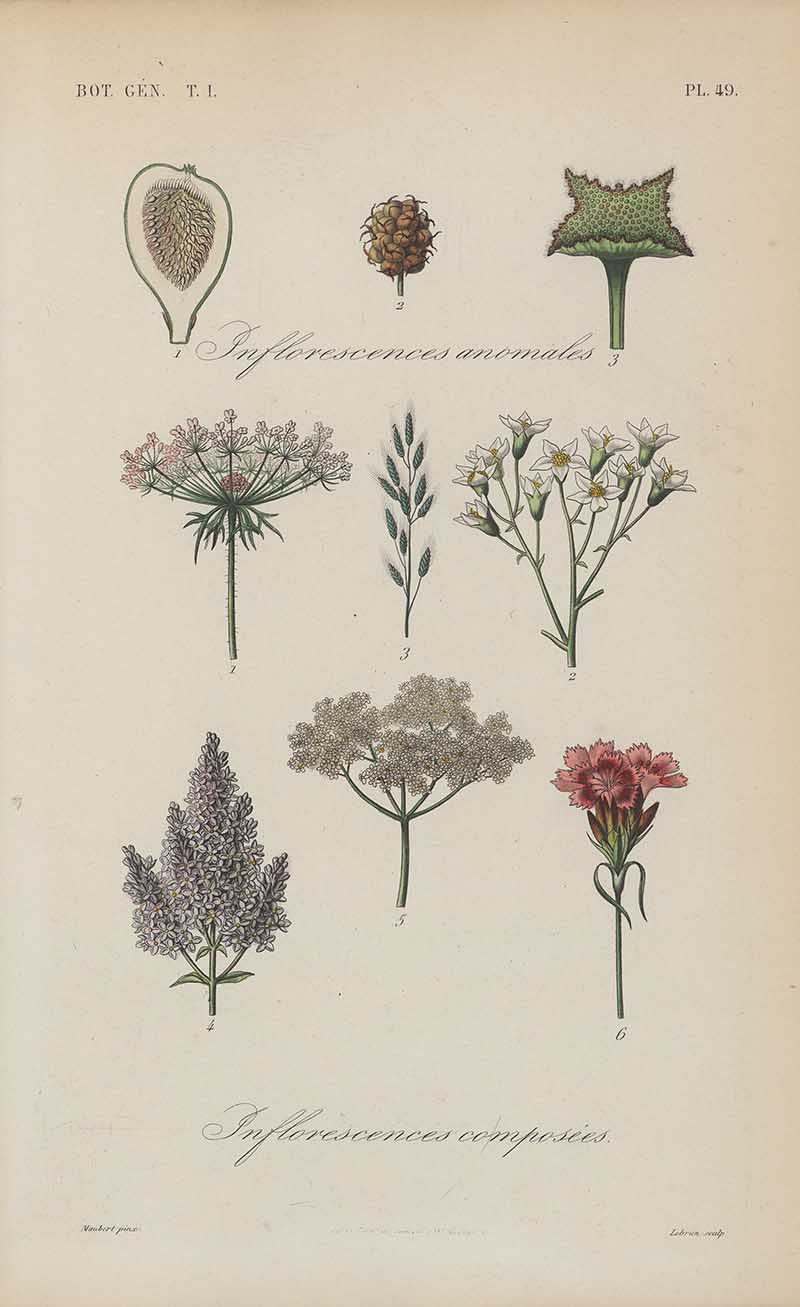
Print 21. Compound Inflorescences
Examples of compound inflorescences including umbels, panicles and branching flower clusters.
Print 22. Comparative Flower Diagram
Diagrams showing monocot and dicot blossoms in varied shapes and colours.
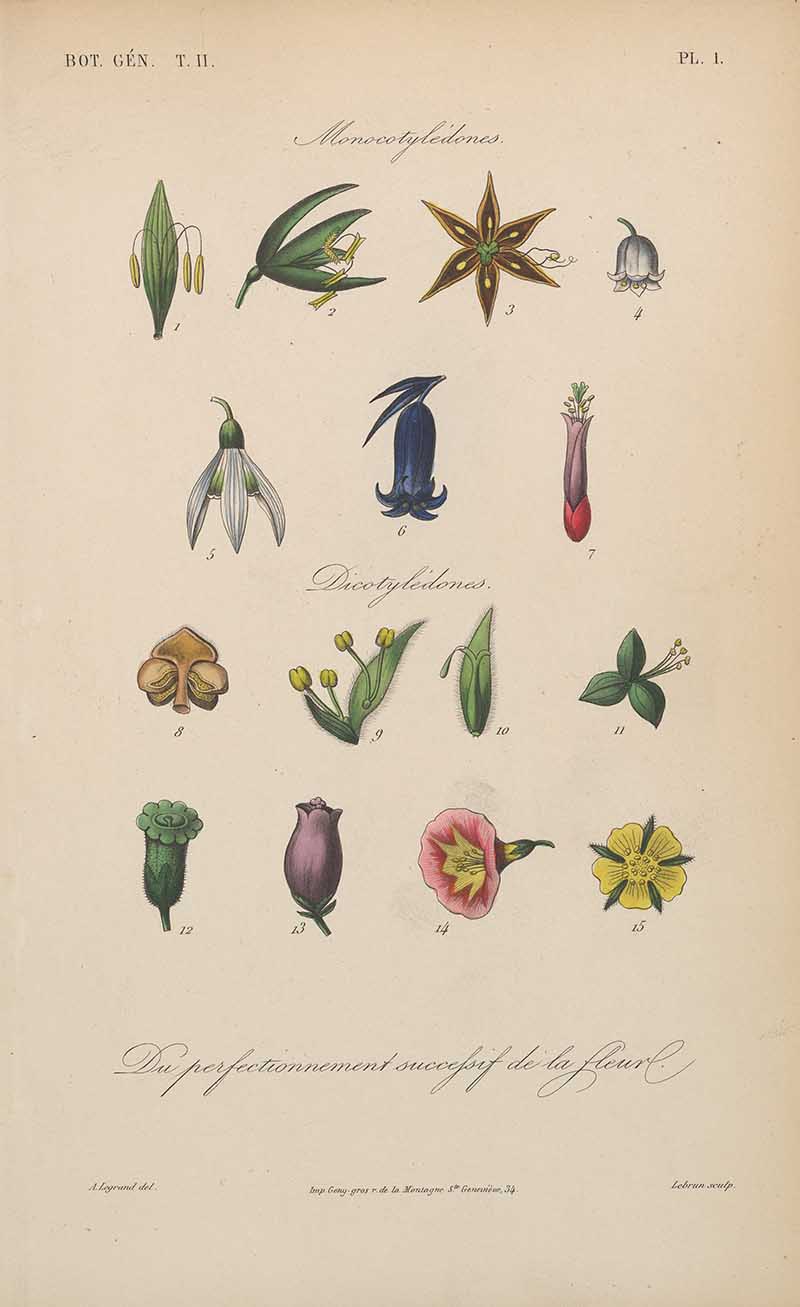
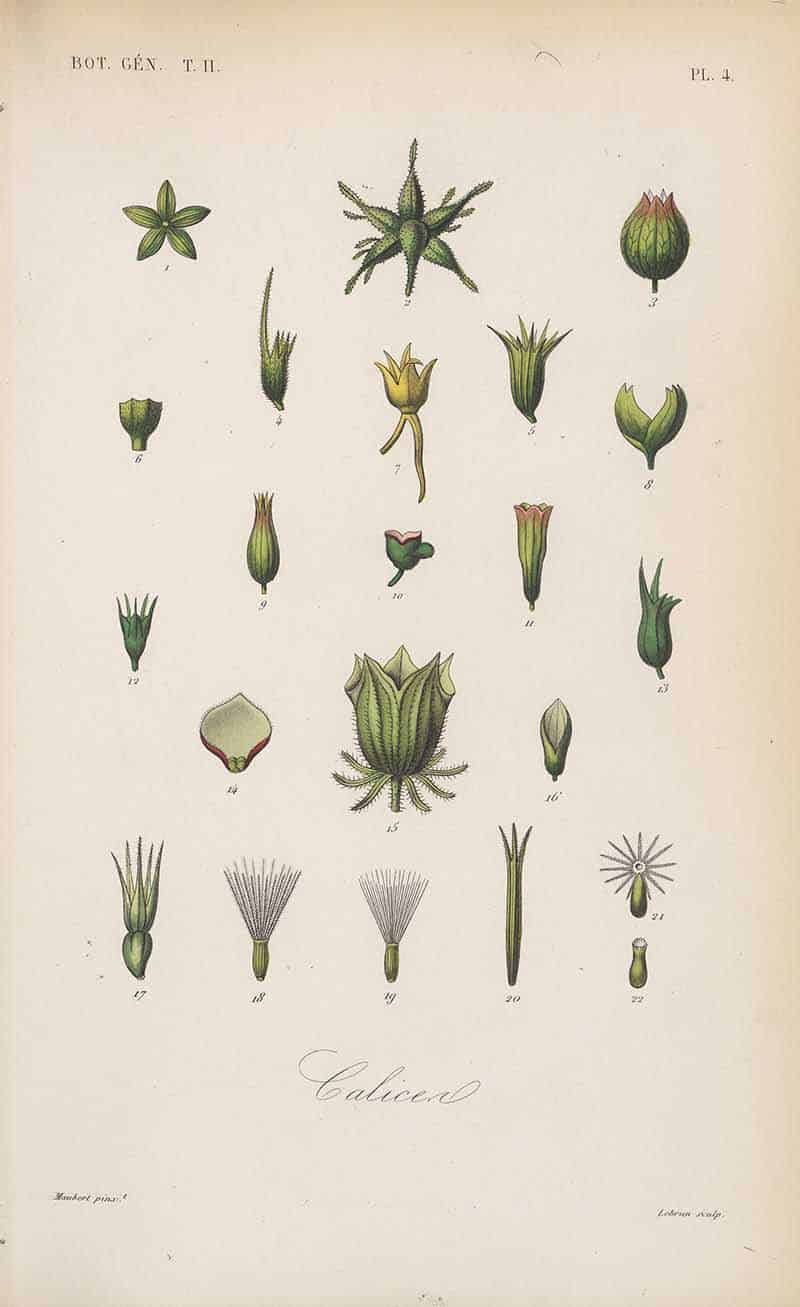
Plate of green calyx forms from star-shaped sepals to tubular and bristled structures
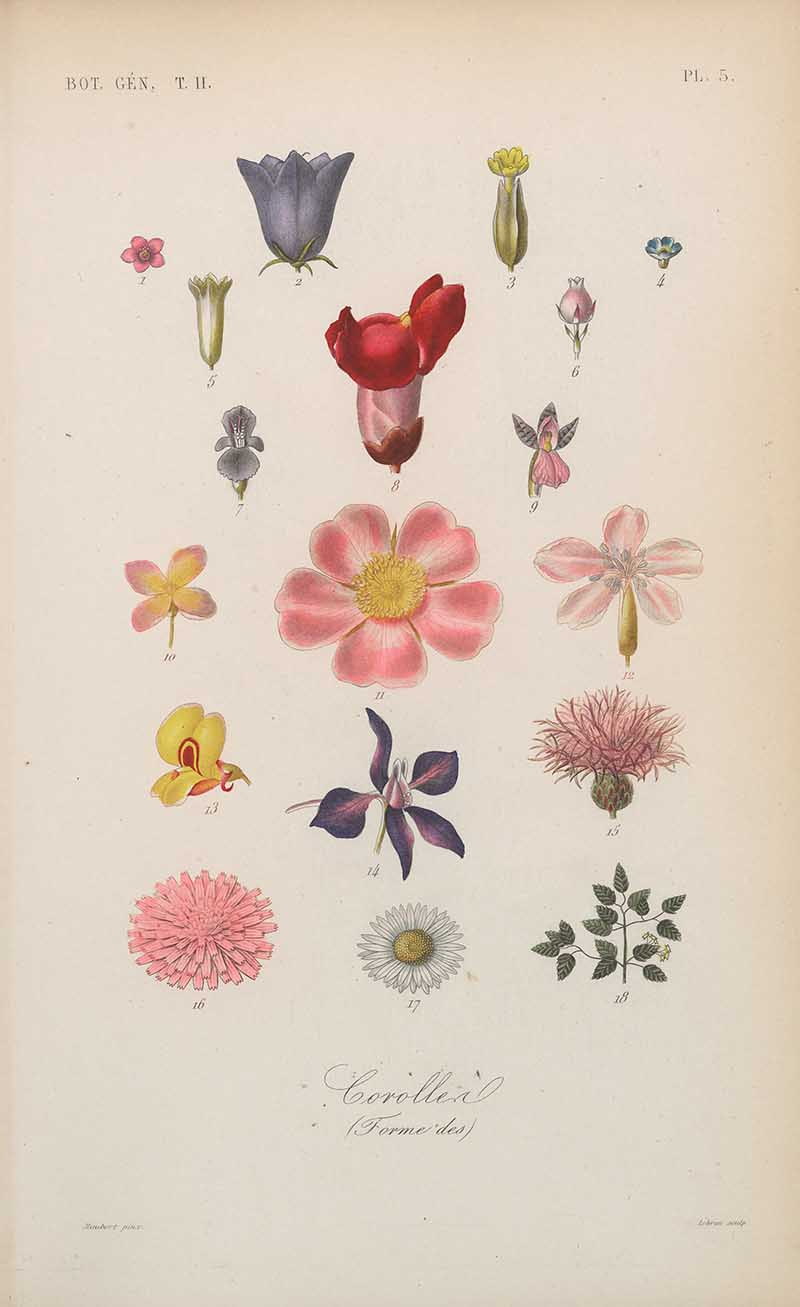
Print 24. Colourful Corolla Forms
Including bell, tubular, orchid-like, rose and daisy flowers
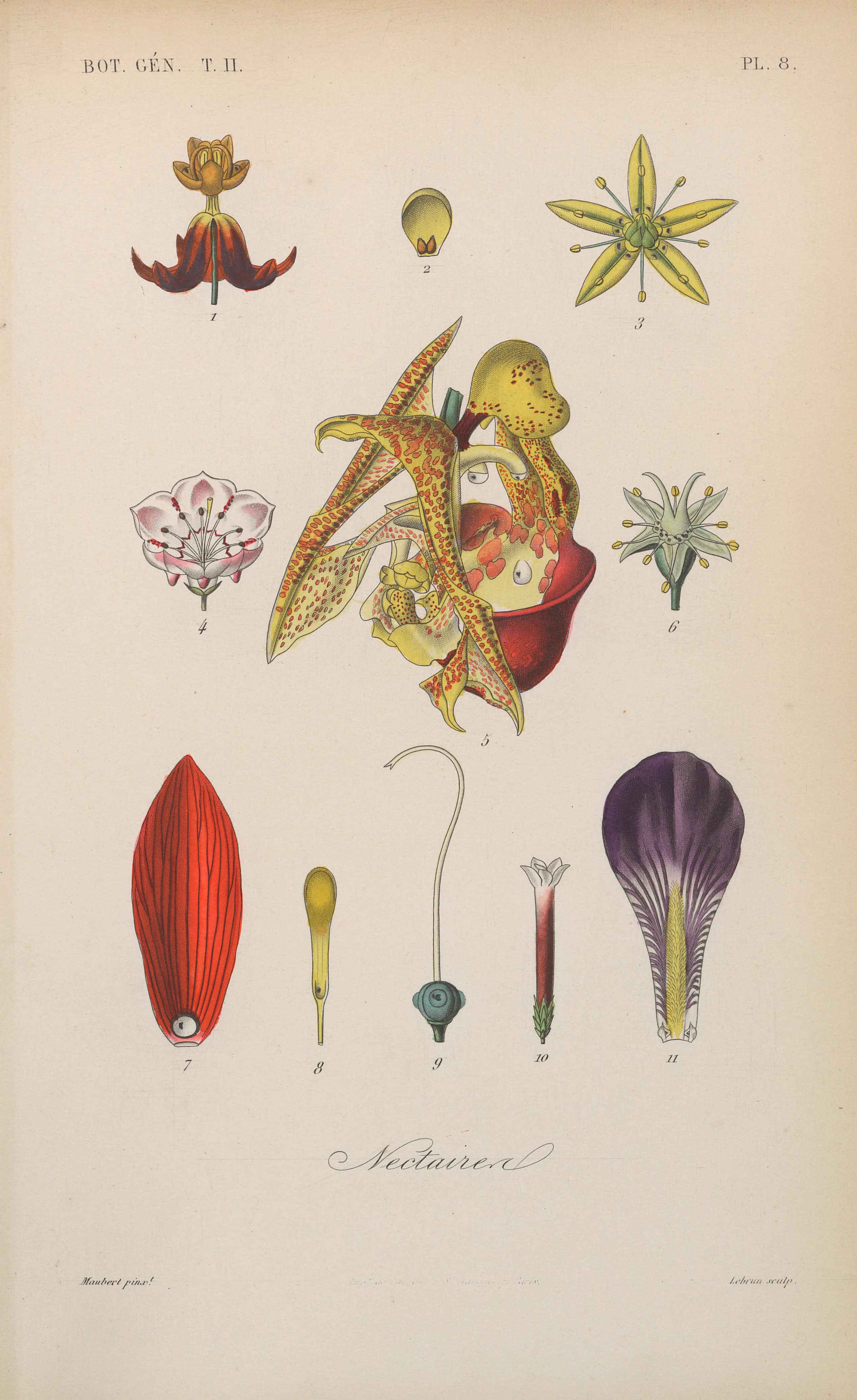
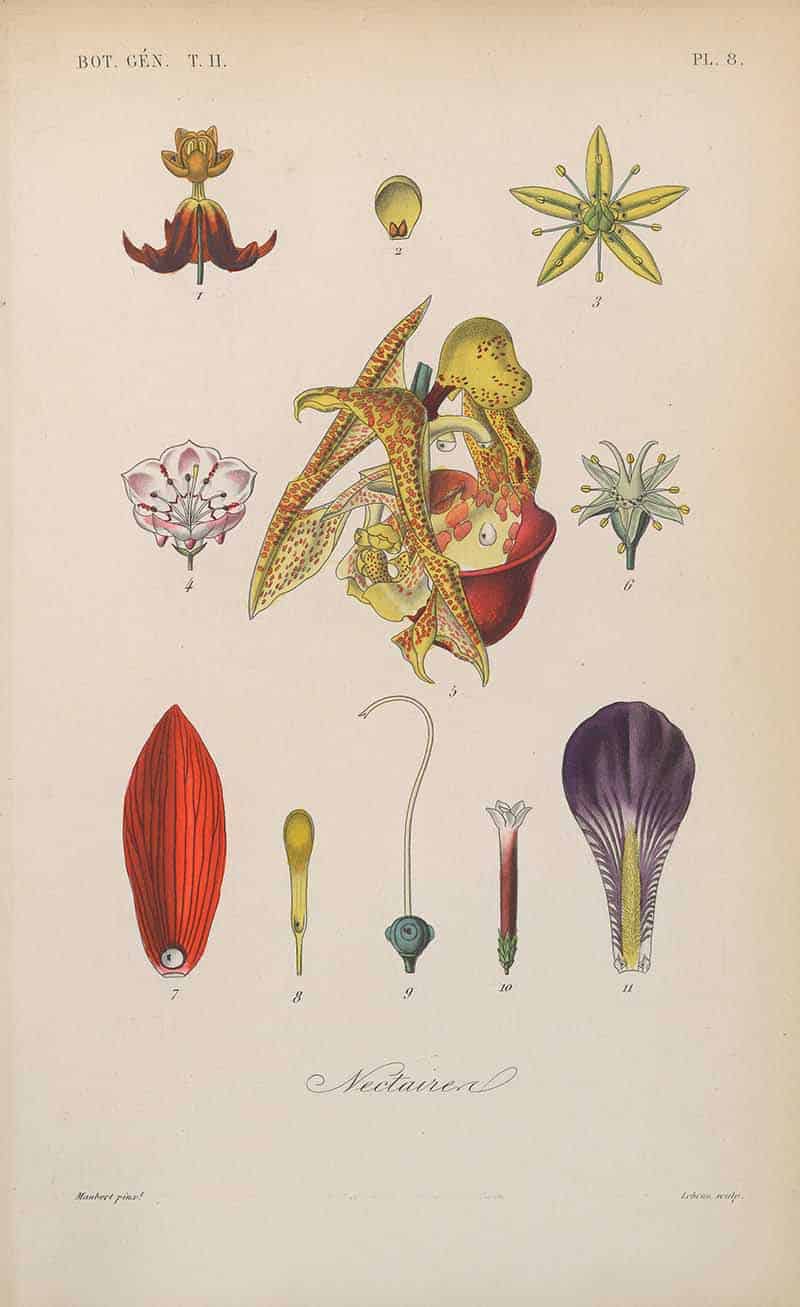
Print 25. Nectar Flower Structures
Unusual nectar-bearing flower structures including orchid-like blooms and tubular floral parts.
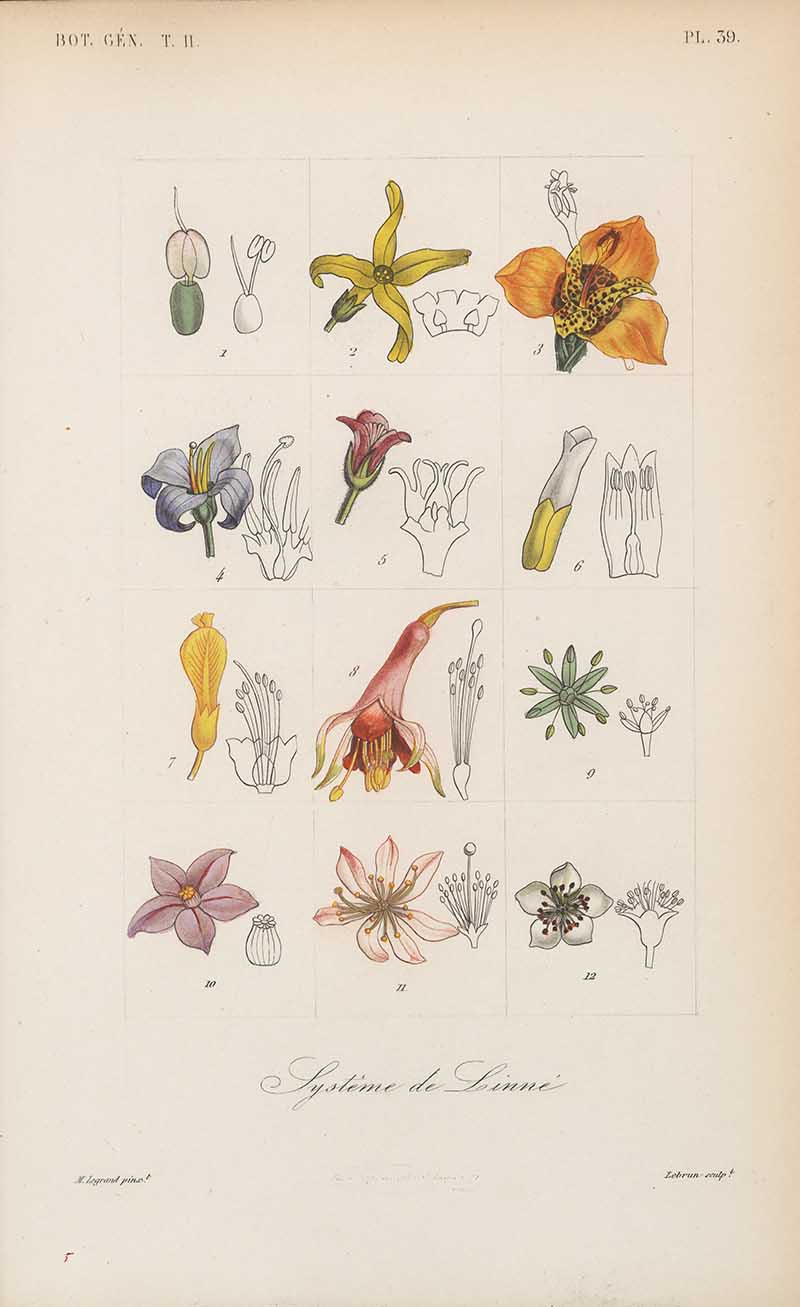
Print 26. Classification of Flowers
Linnaean classification chart of colourful flowers with matching floral anatomy.
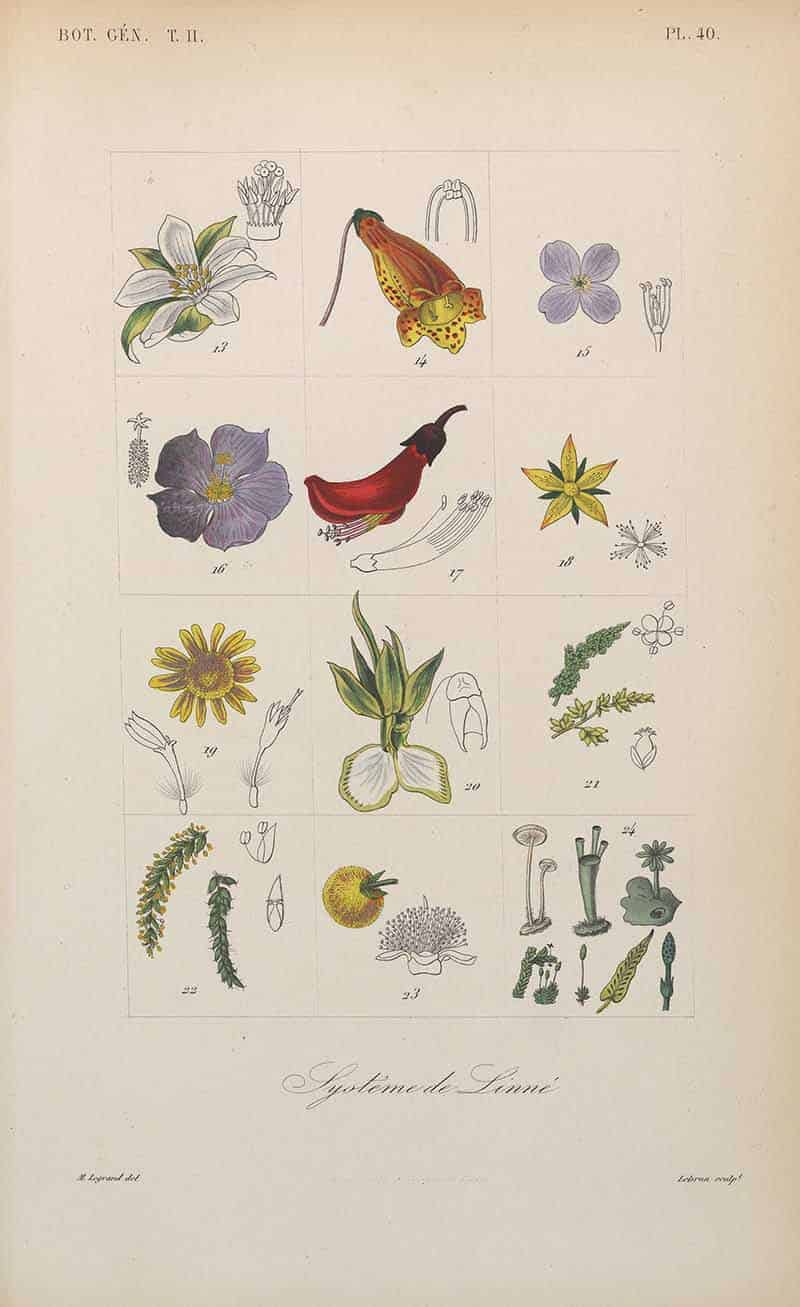
Print 27. Flower Classification 2
Print 28. Chart of Flower Structures
Jussieu natural method chart of colourful flowers and dissected floral structures.
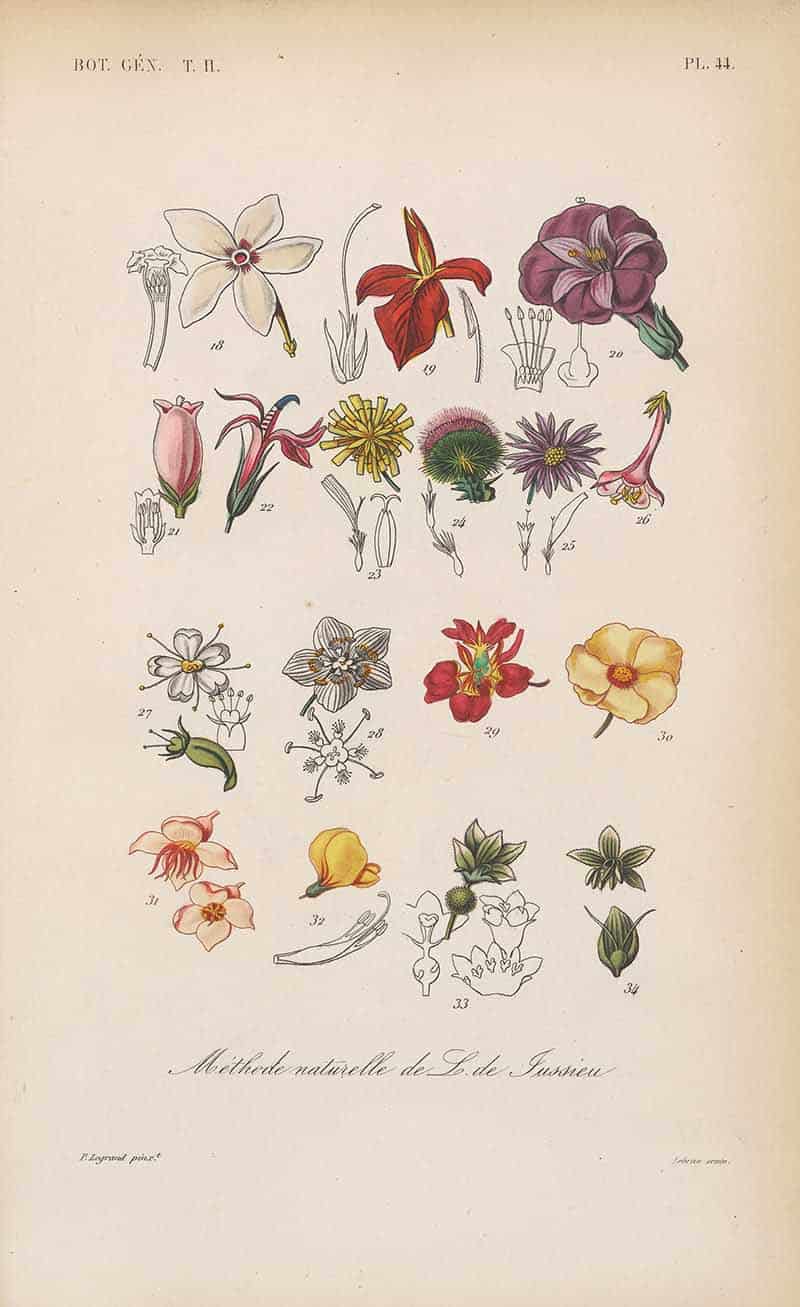
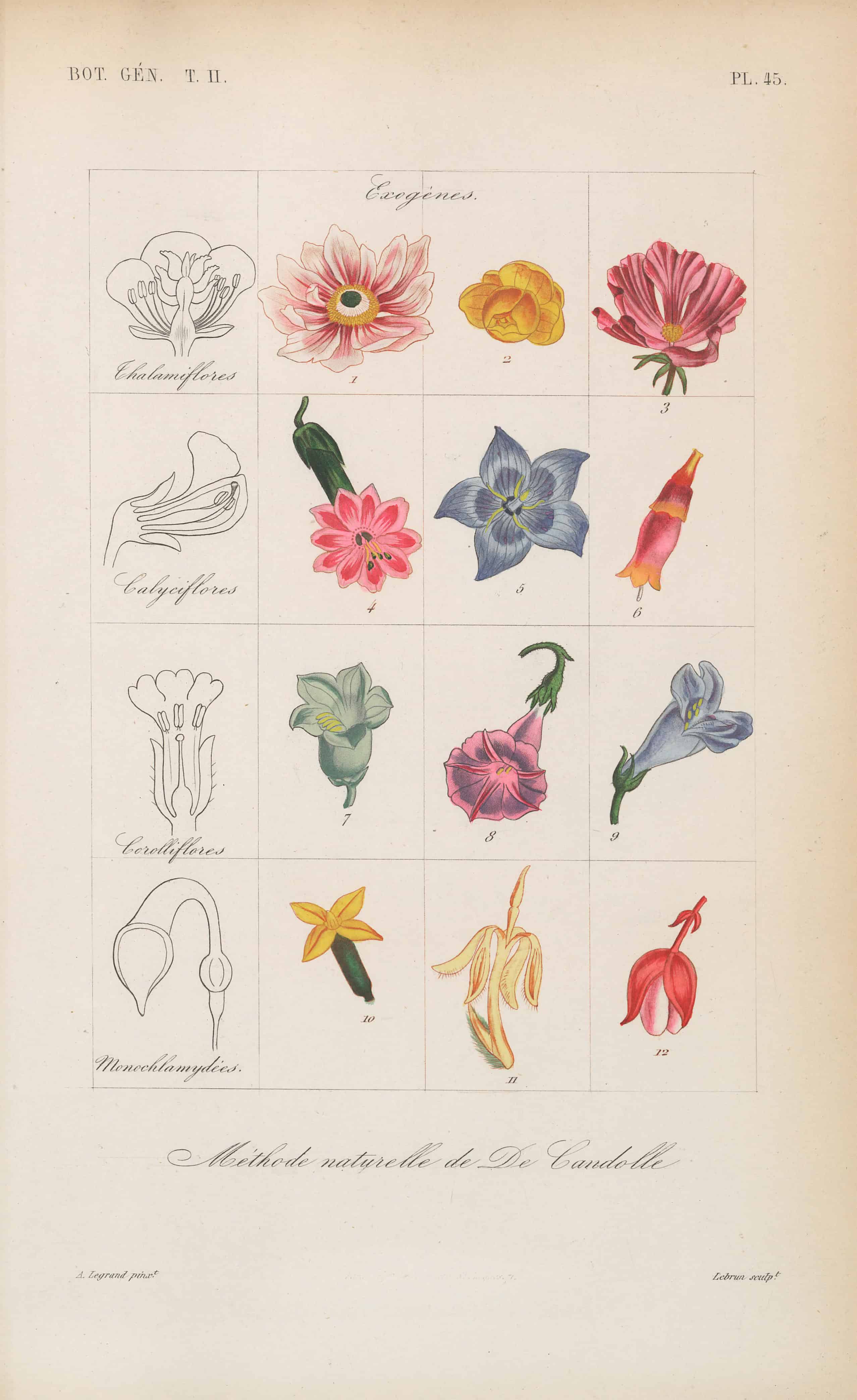
Print 29. Candolle Classification Chart
Exotic flower forms.
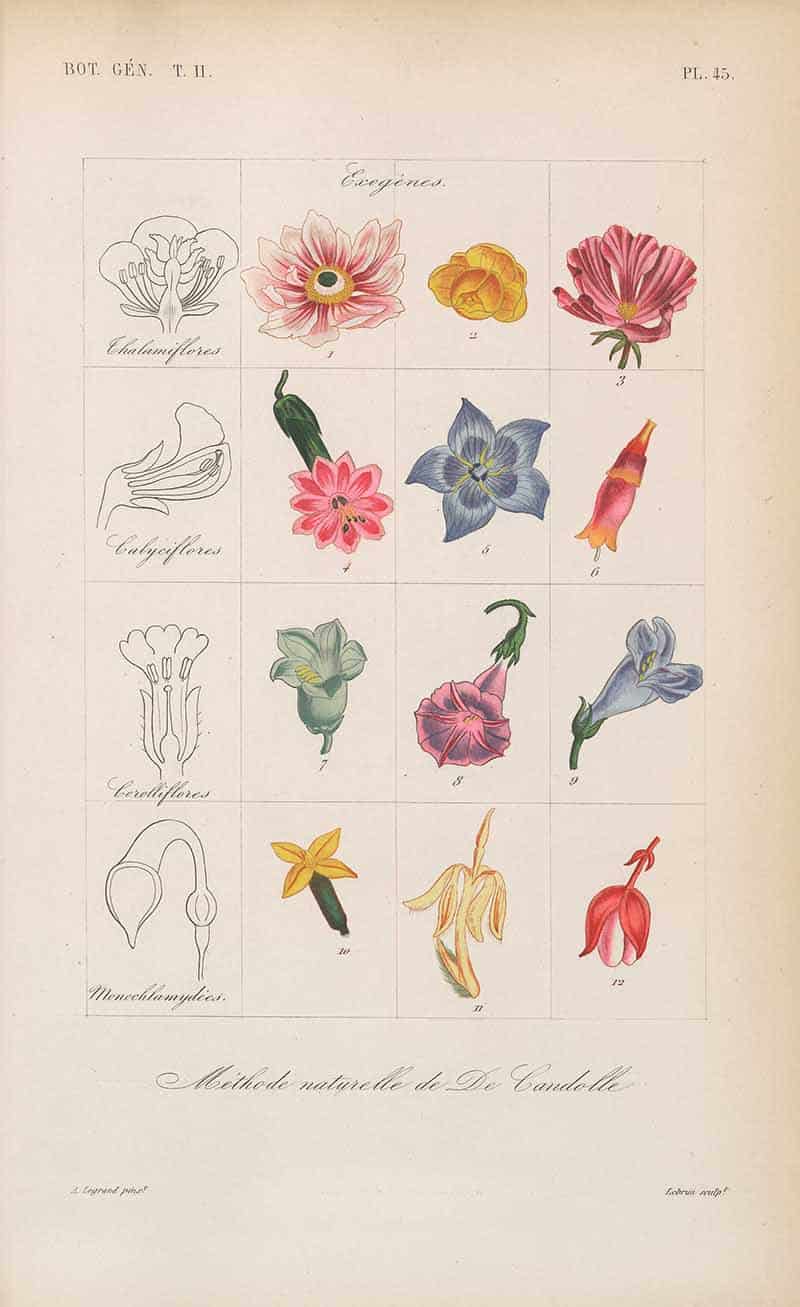
Print 30. Candolle Classification Chart 2
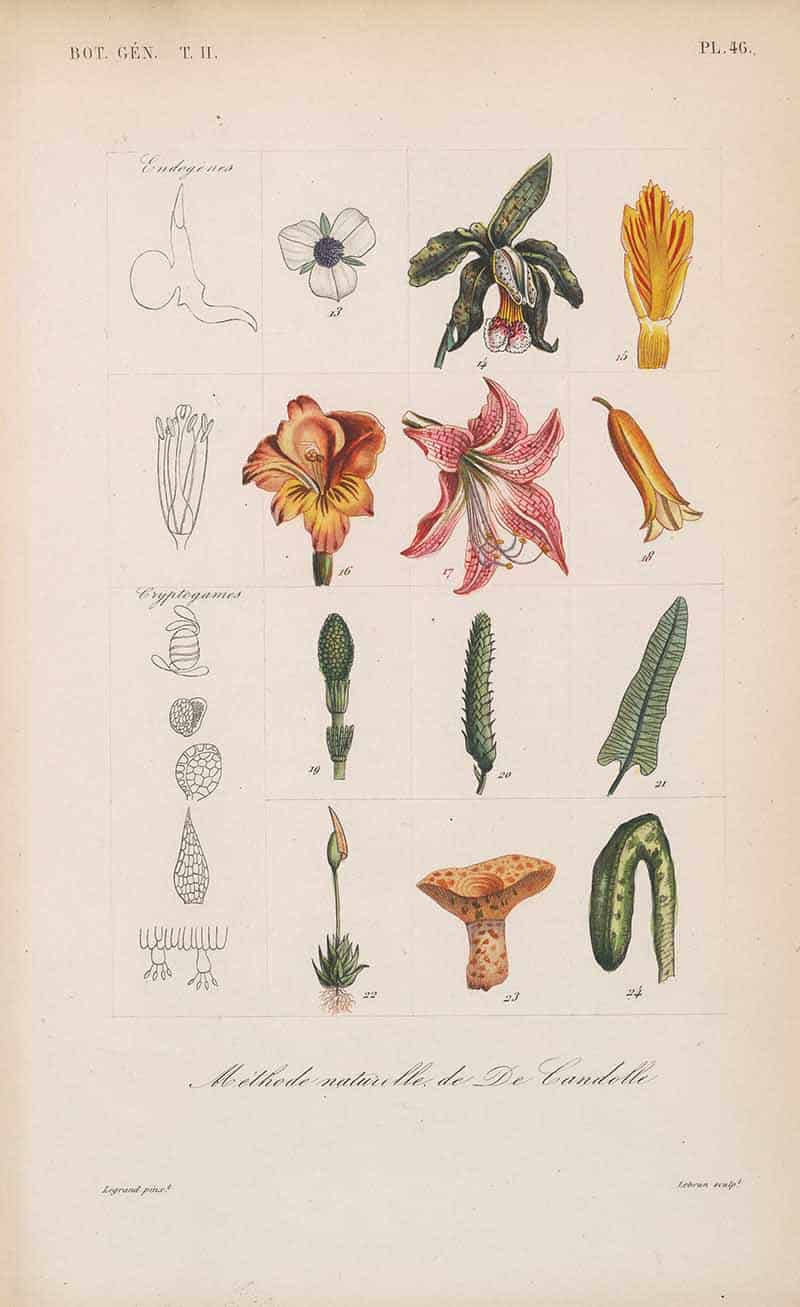
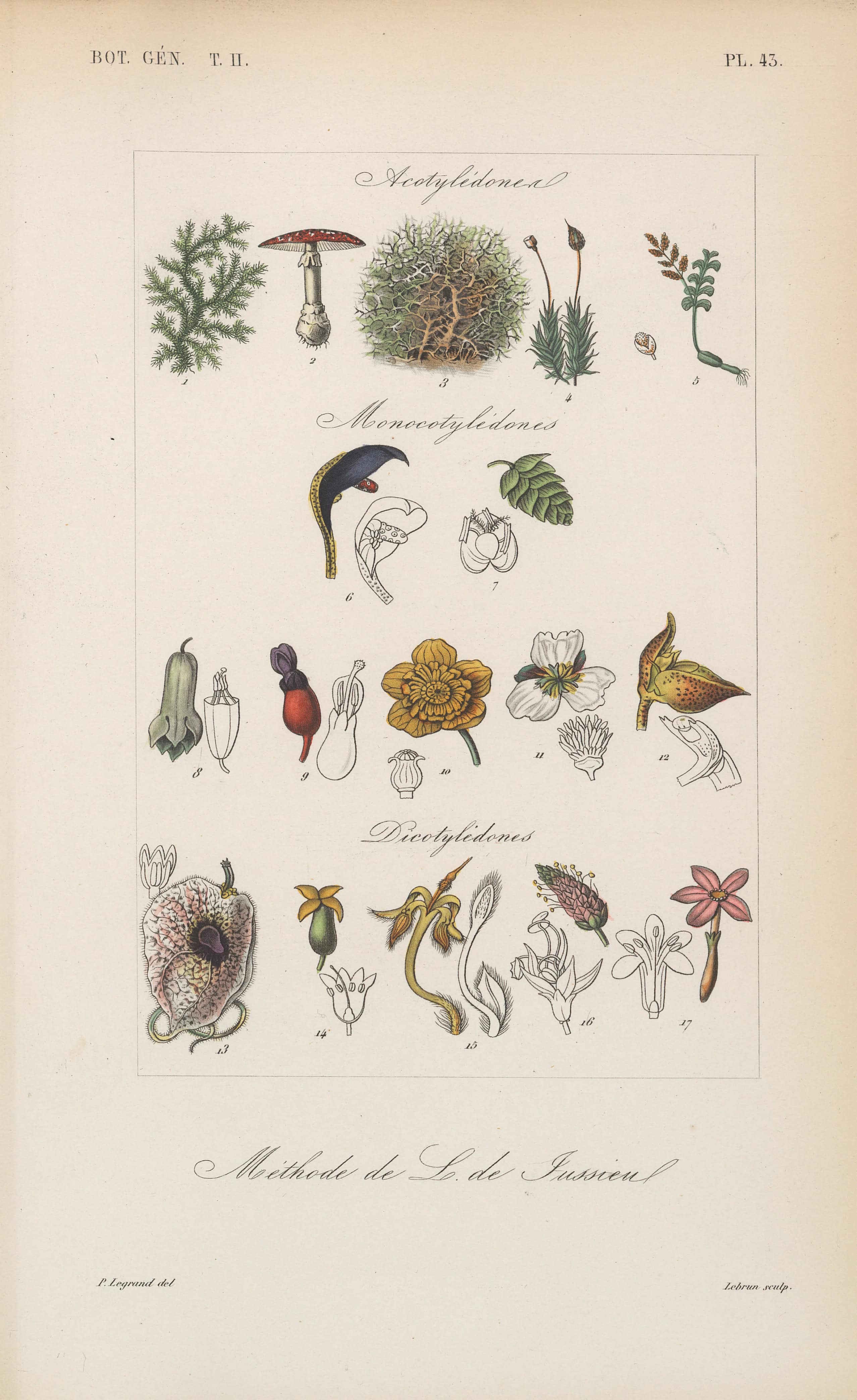
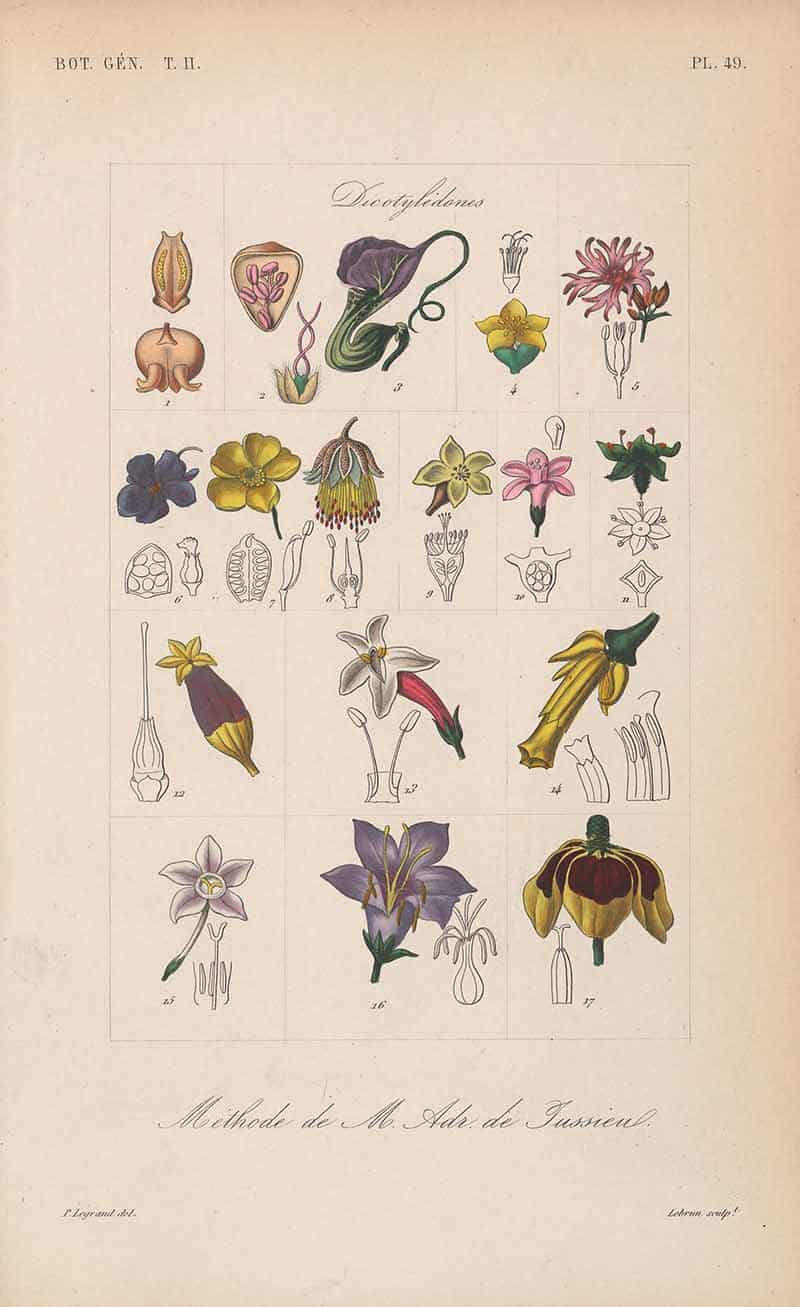
Print 31. Jussieu Classification Chart of Flowers
Varied colourful dicot flowers and their anatomical diagrams.
Fruits, Seeds and Plant Life
Charts featuring fruits, seeds, seed pods, germination and how plants grow and reproduce.
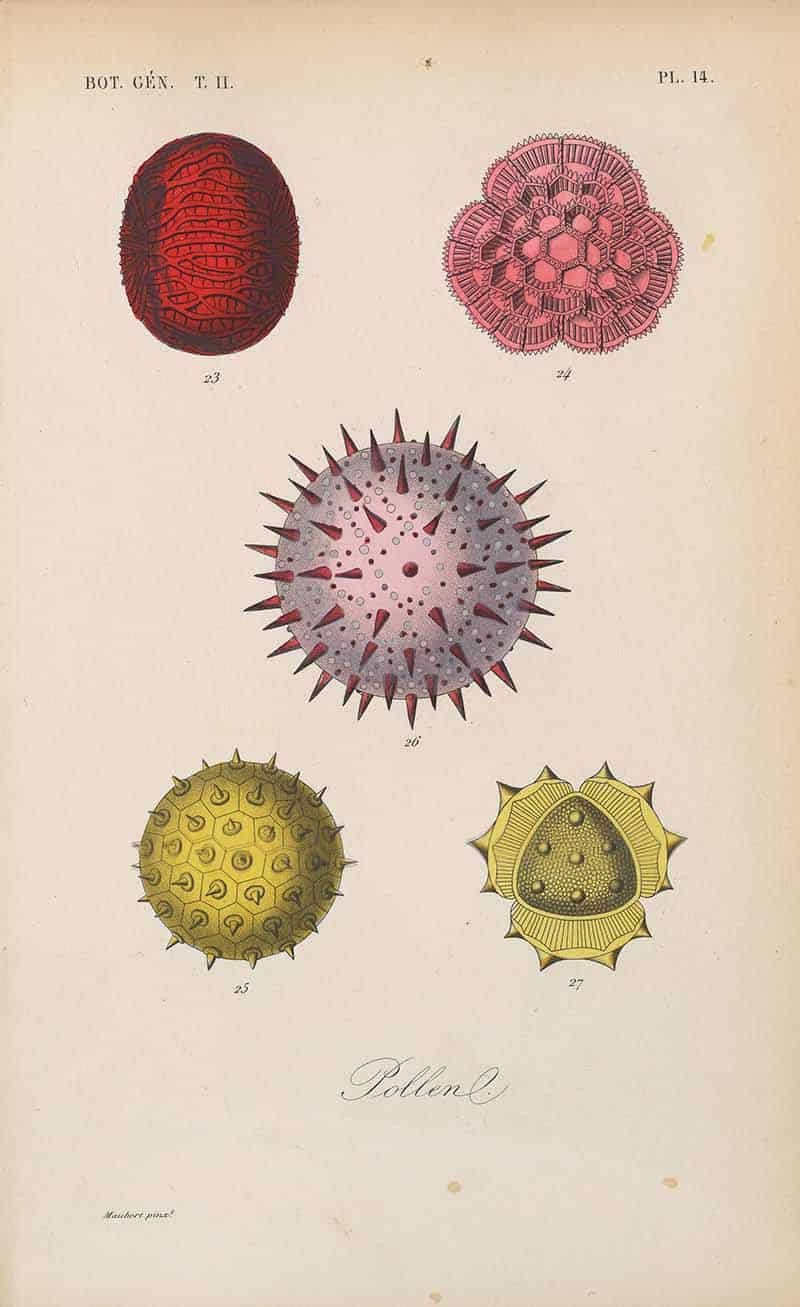
Print 32. Magnified Pollen Grains
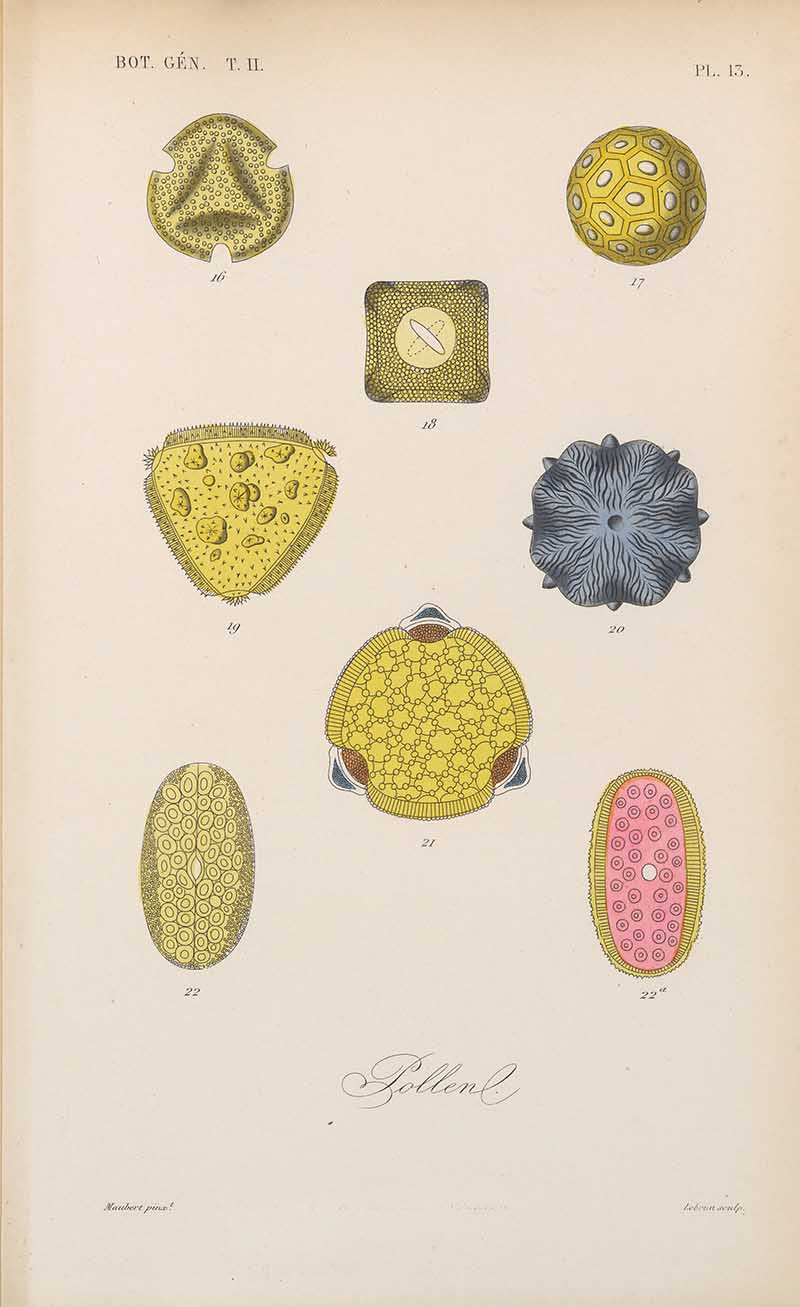
Magnified round and spiny pollen grains in red, pink, grey and yellow.
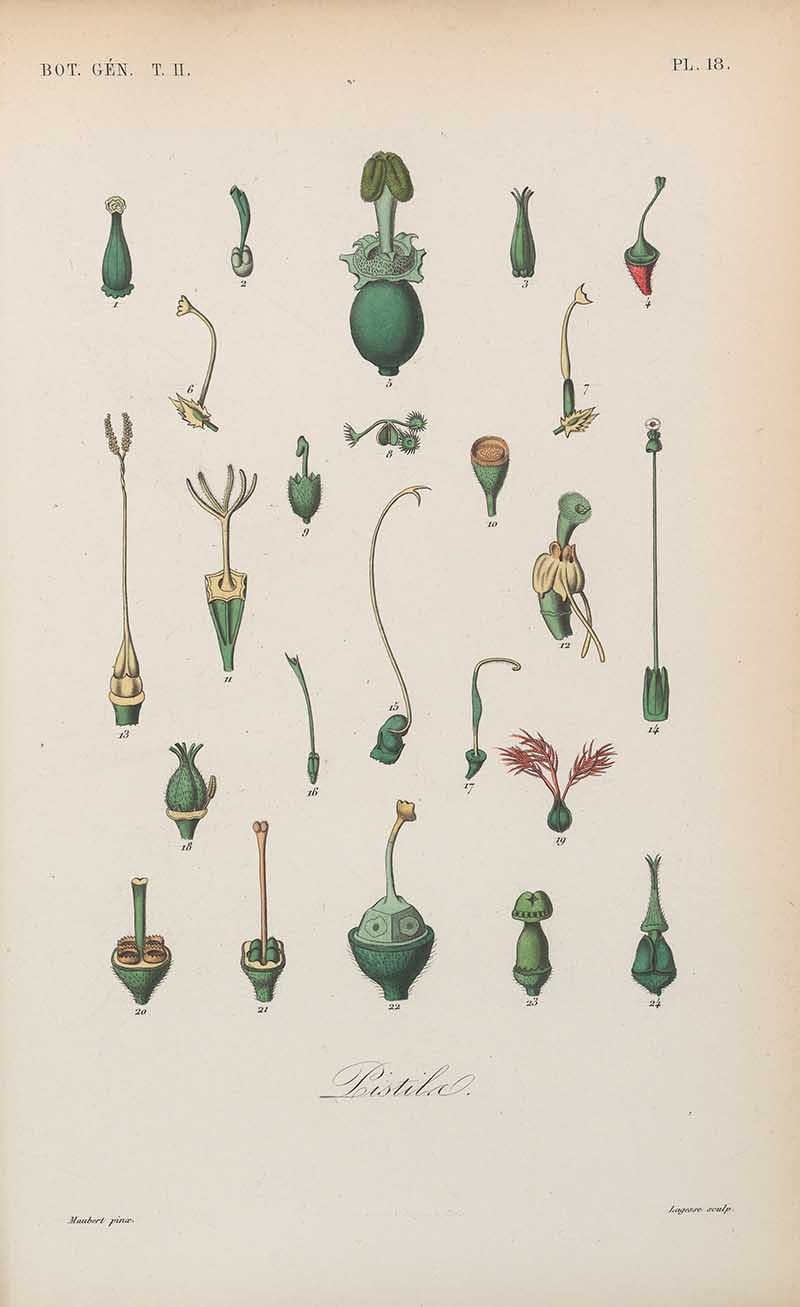
Print 34. Pistils & Female Flower Parts
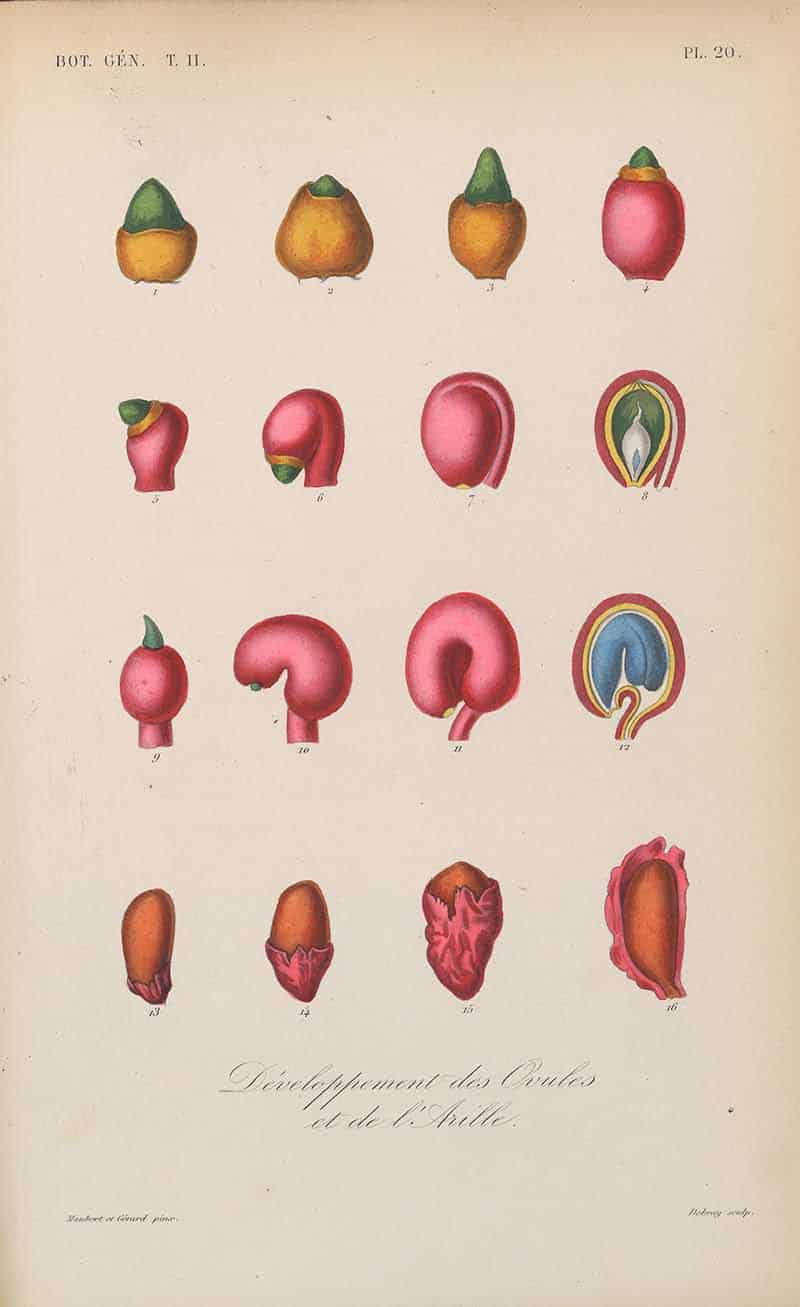
Stages in ovule and seed development shown as colourful orange, pink and red cutaway forms.
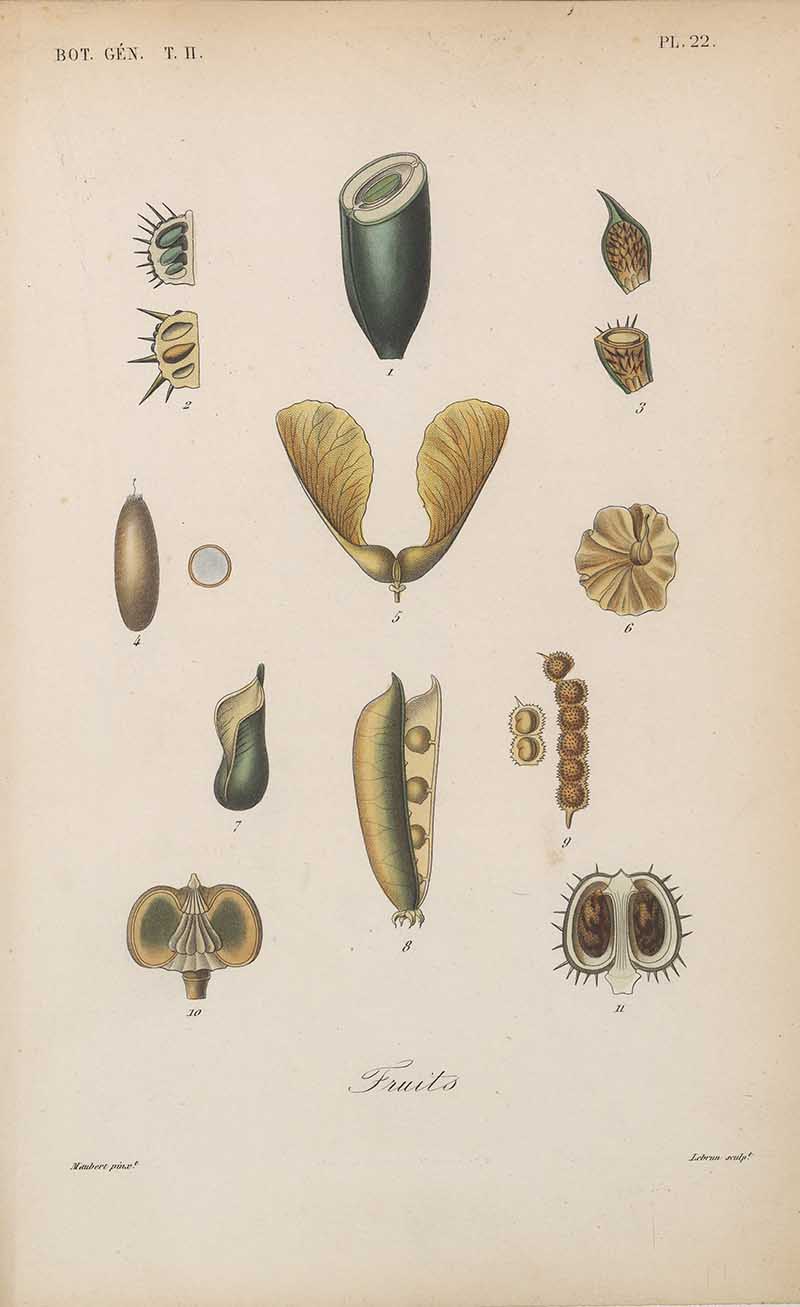
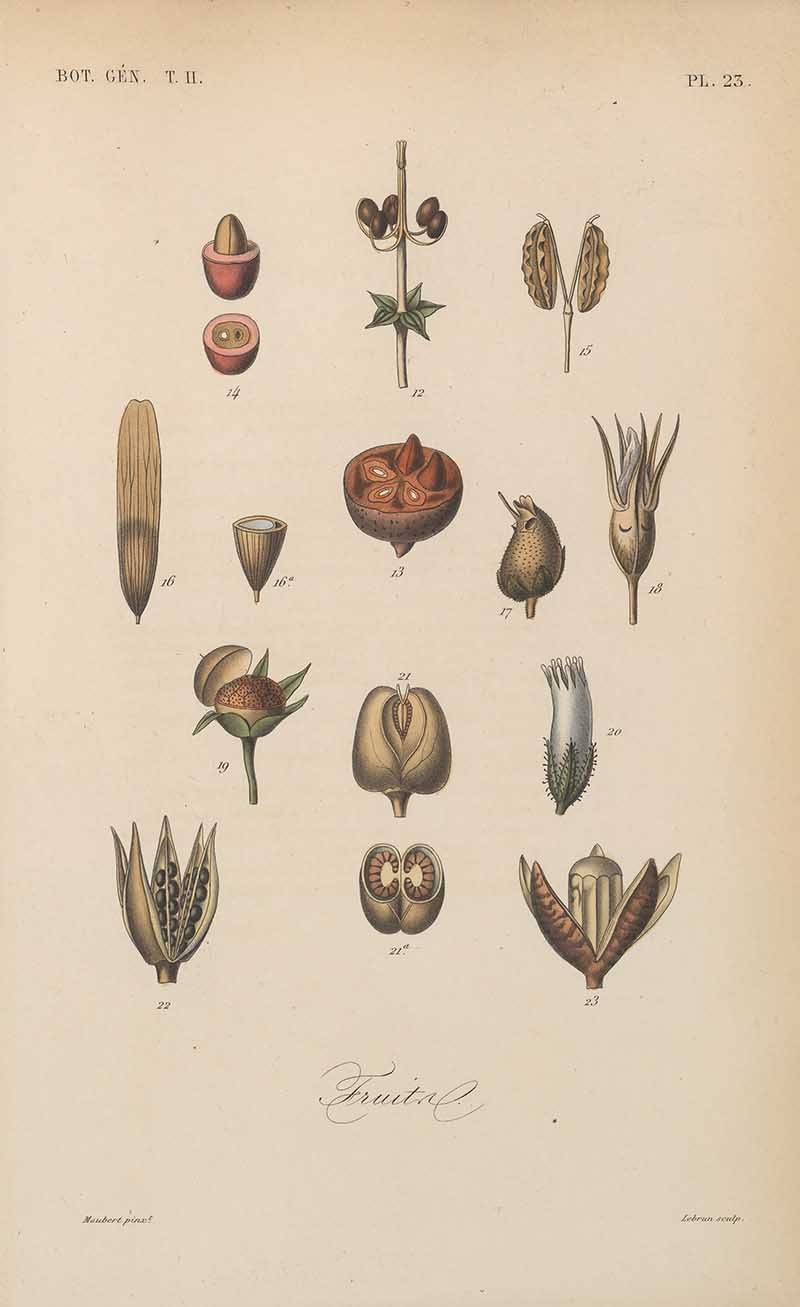
Print 36. Assorted Fruits and Seeds
Including winged samaras, pods, capsules and burrs.
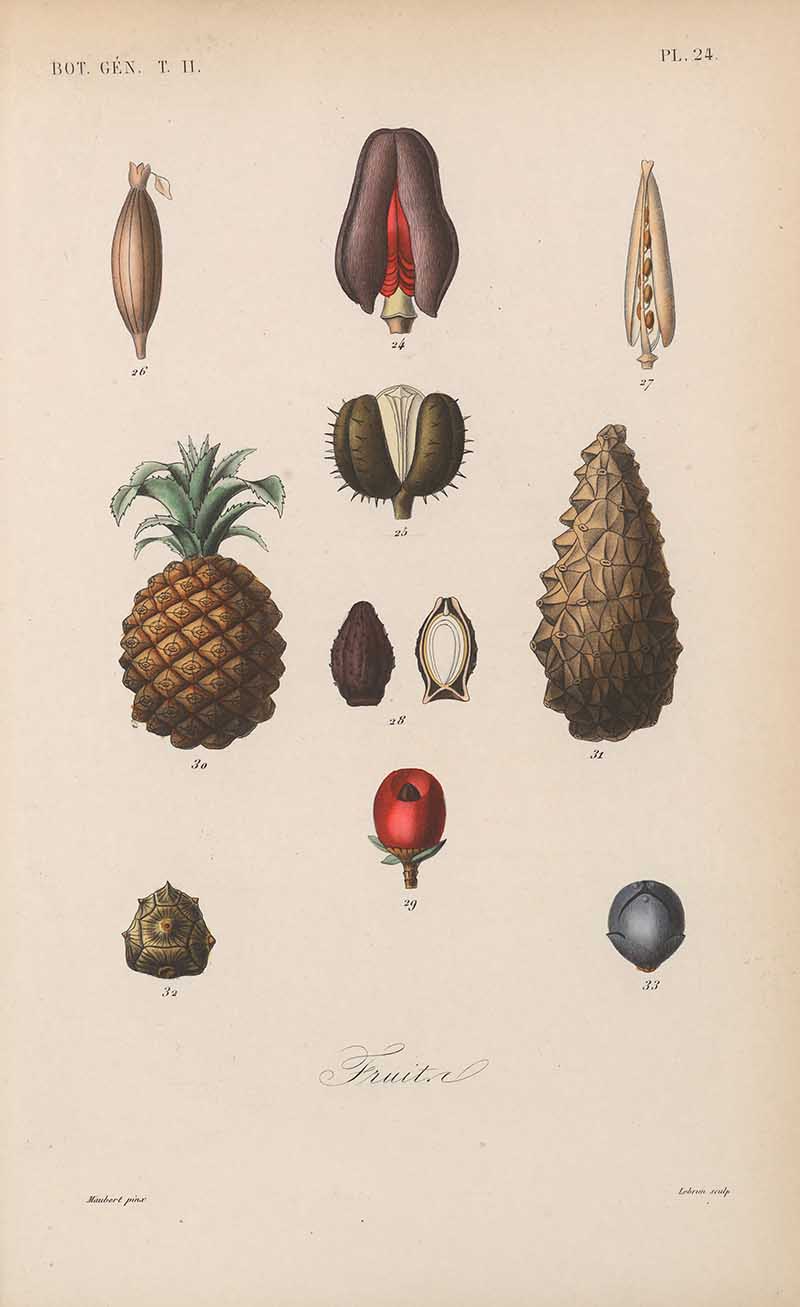
Including pineapple, pine cone, pod, berry and cutaway seed forms
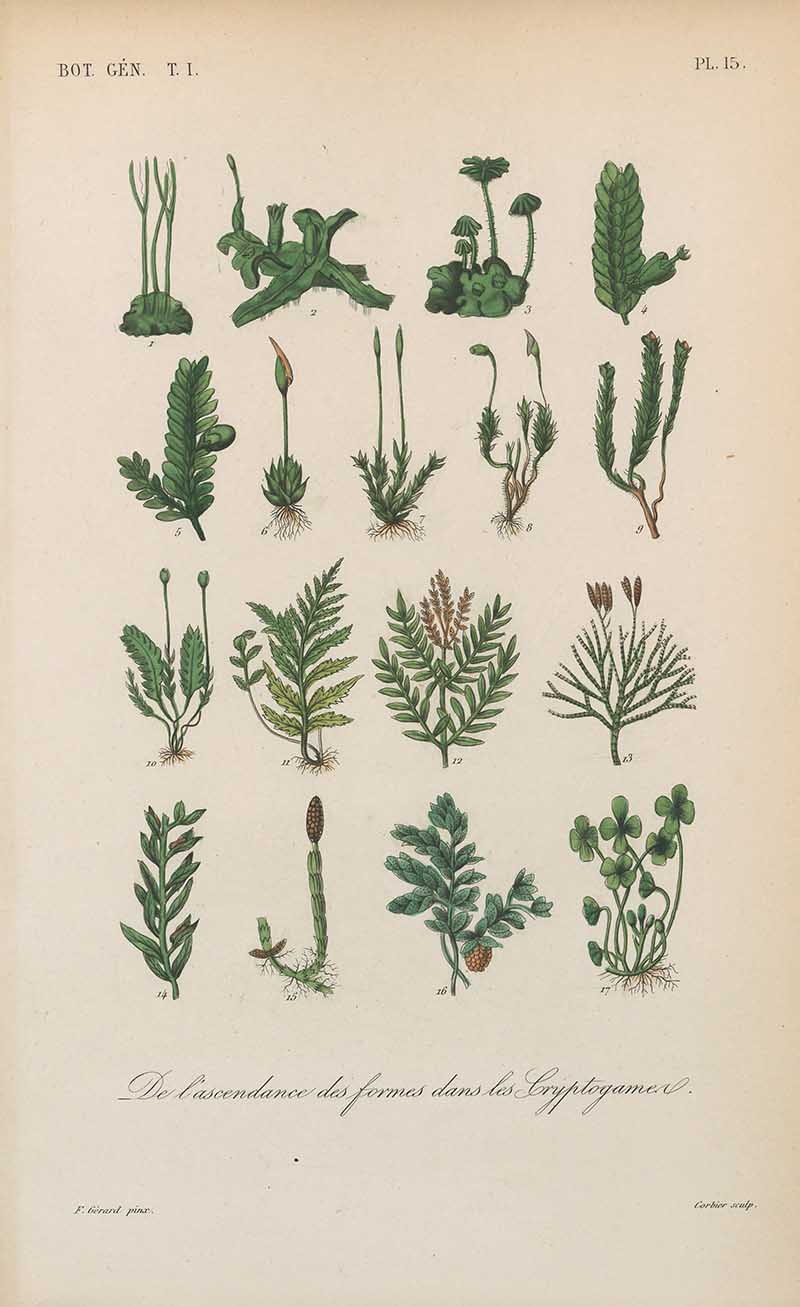
Ferns, Fungi and Other Botanical Curiosities
Rows of mosses, ferns, clubmosses and horsetails showing cryptogam plant forms.
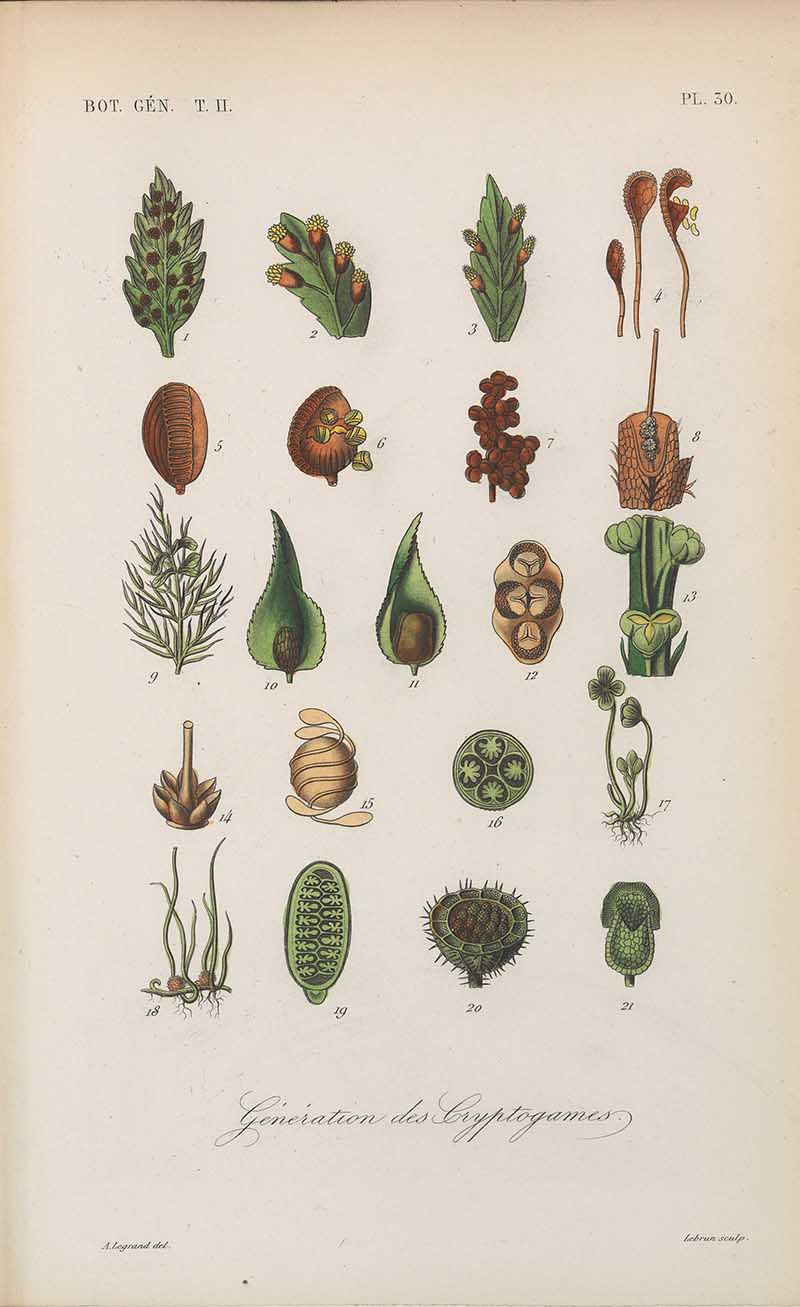
Print 40. Reproductive Structures
Reproductive structures of mosses, ferns and other cryptogams.
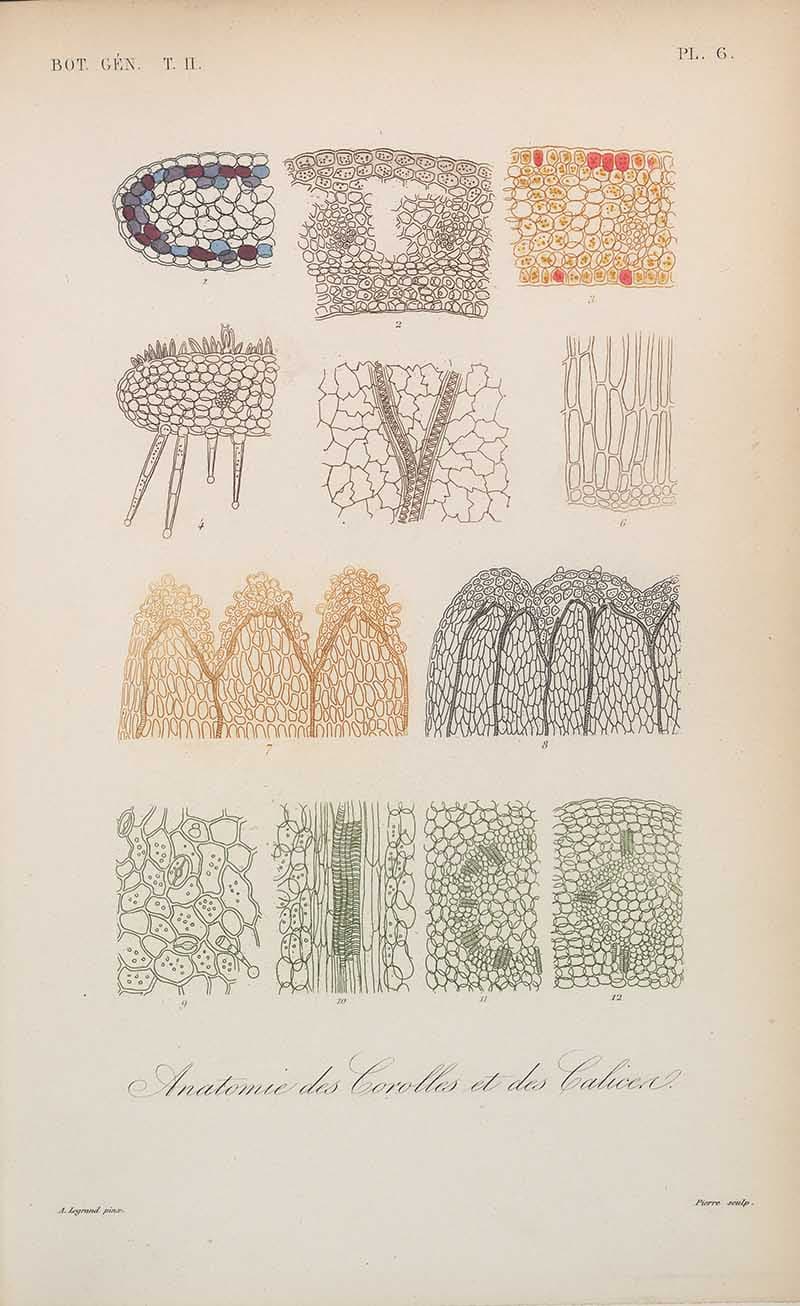
Detailed botanical anatomy diagrams of plant cells, hairs, veins, and tissue sections, in a vintage French botanical illustration style.
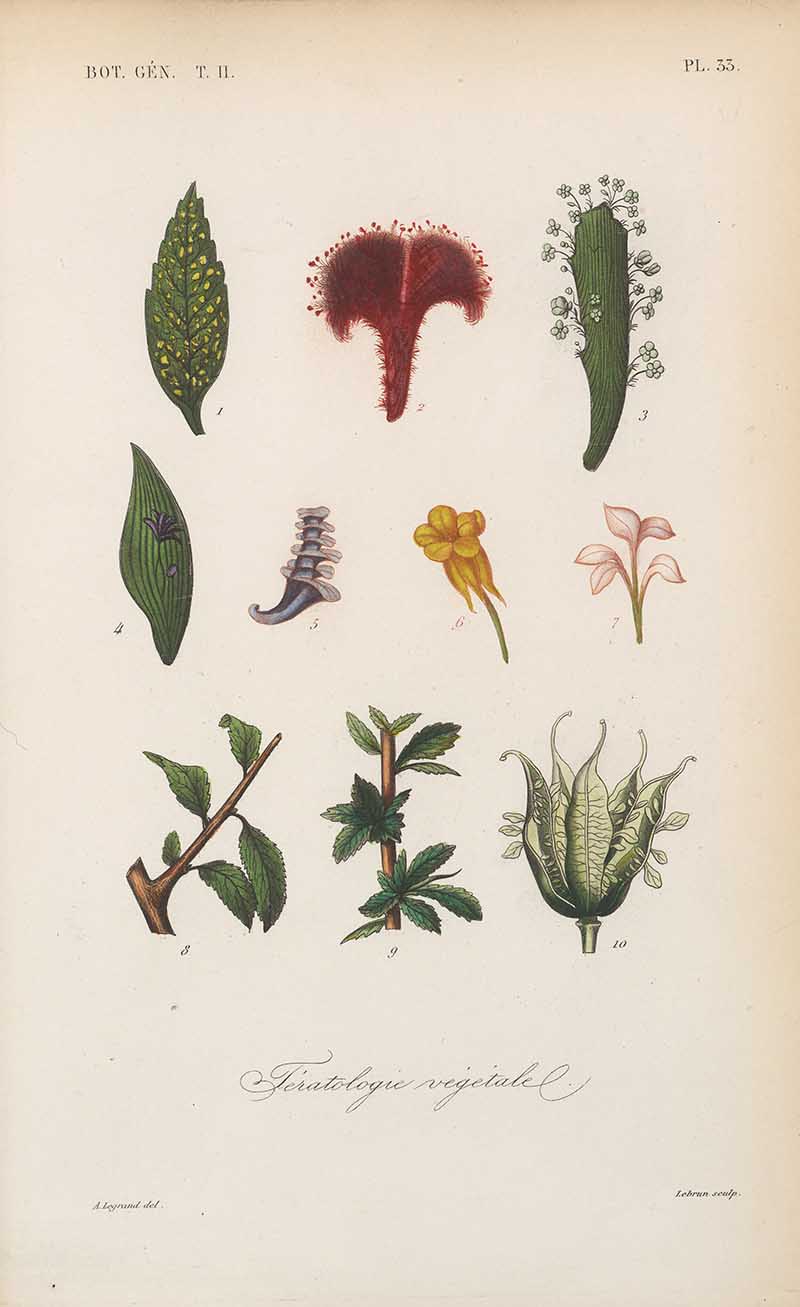
Plant movement and sensitivity diagrams with leaves, flowers and curling tendrils.
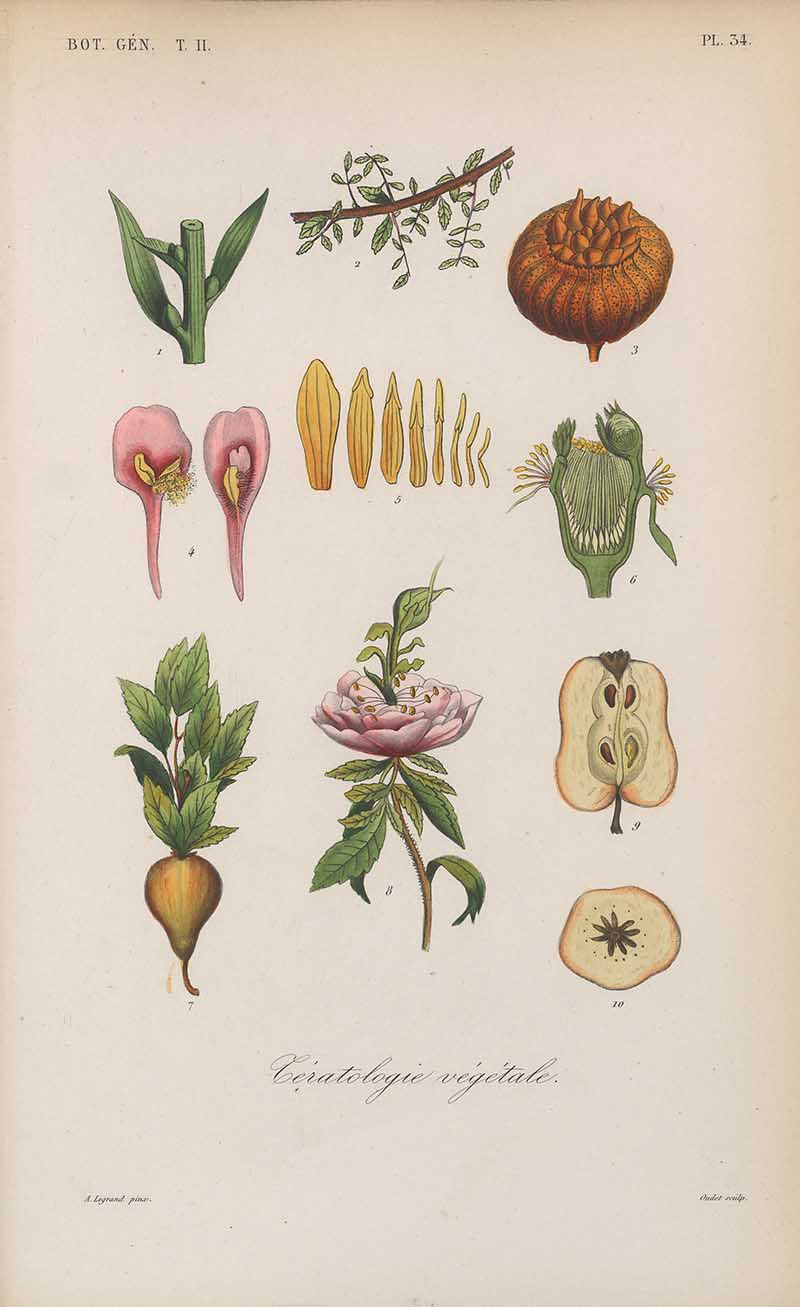
Plant physiology plate showing stems, flowers, seed structures, a rose and cut fruit.
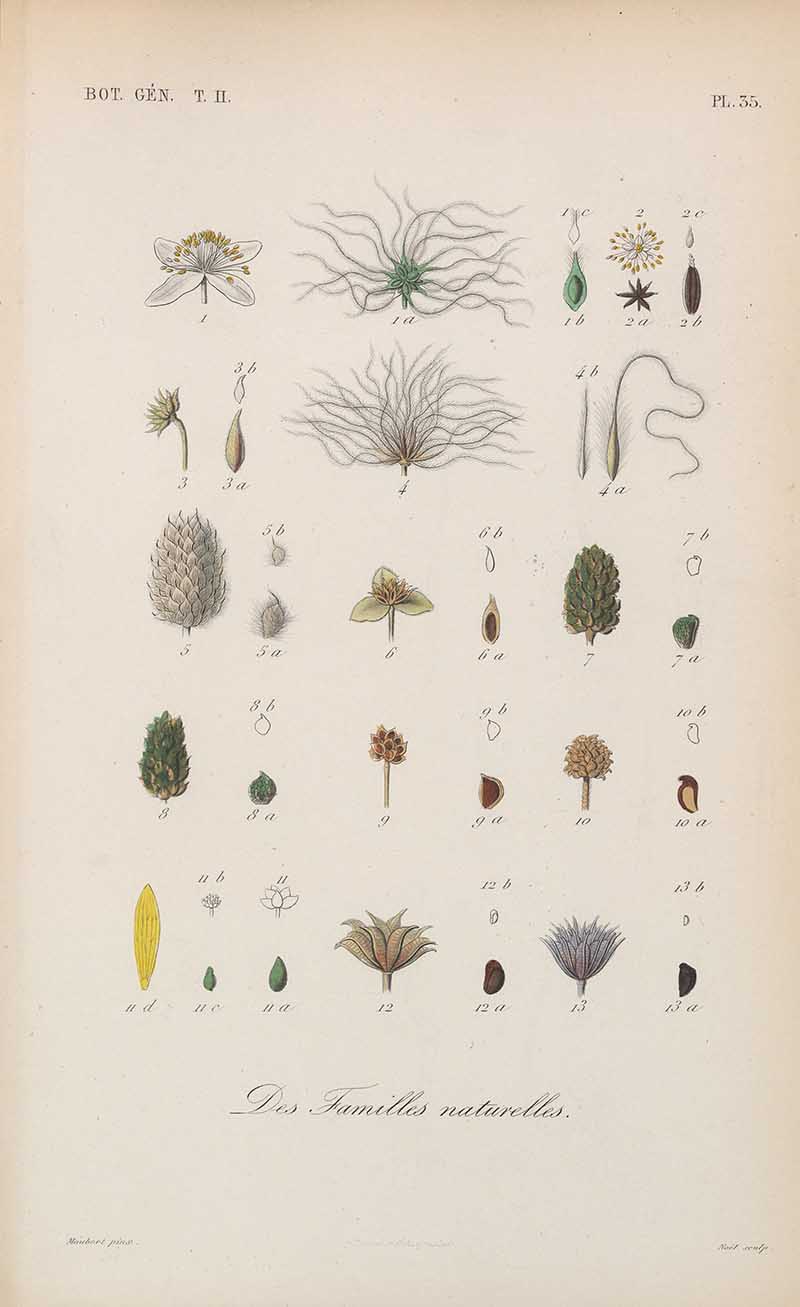
Print 44. Natural Plant Families
Natural plant families compared through tiny flowers, cones, seeds and floral structures.
Print 45. Natural Plant Families 2
Natural plant families represented by cones, woody stems, fruits, seeds and branching seaweed-like forms.
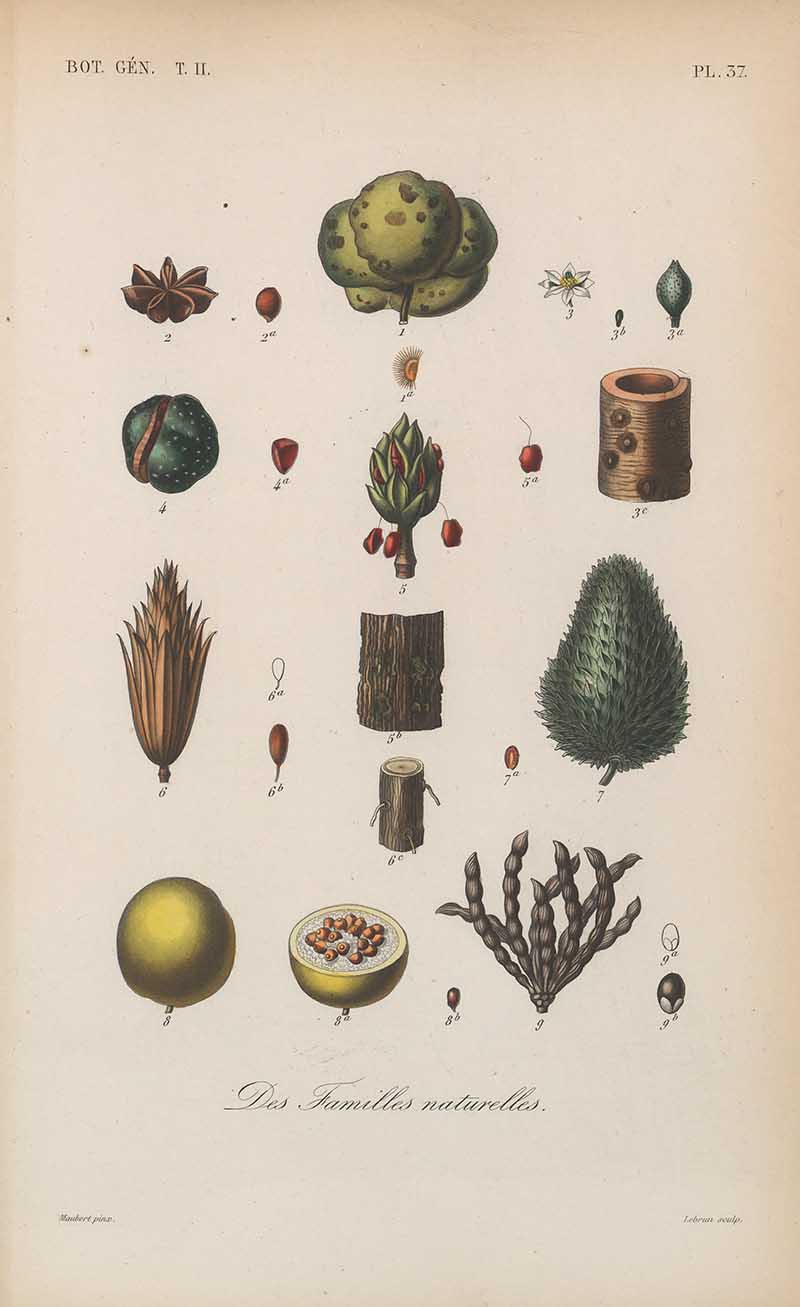
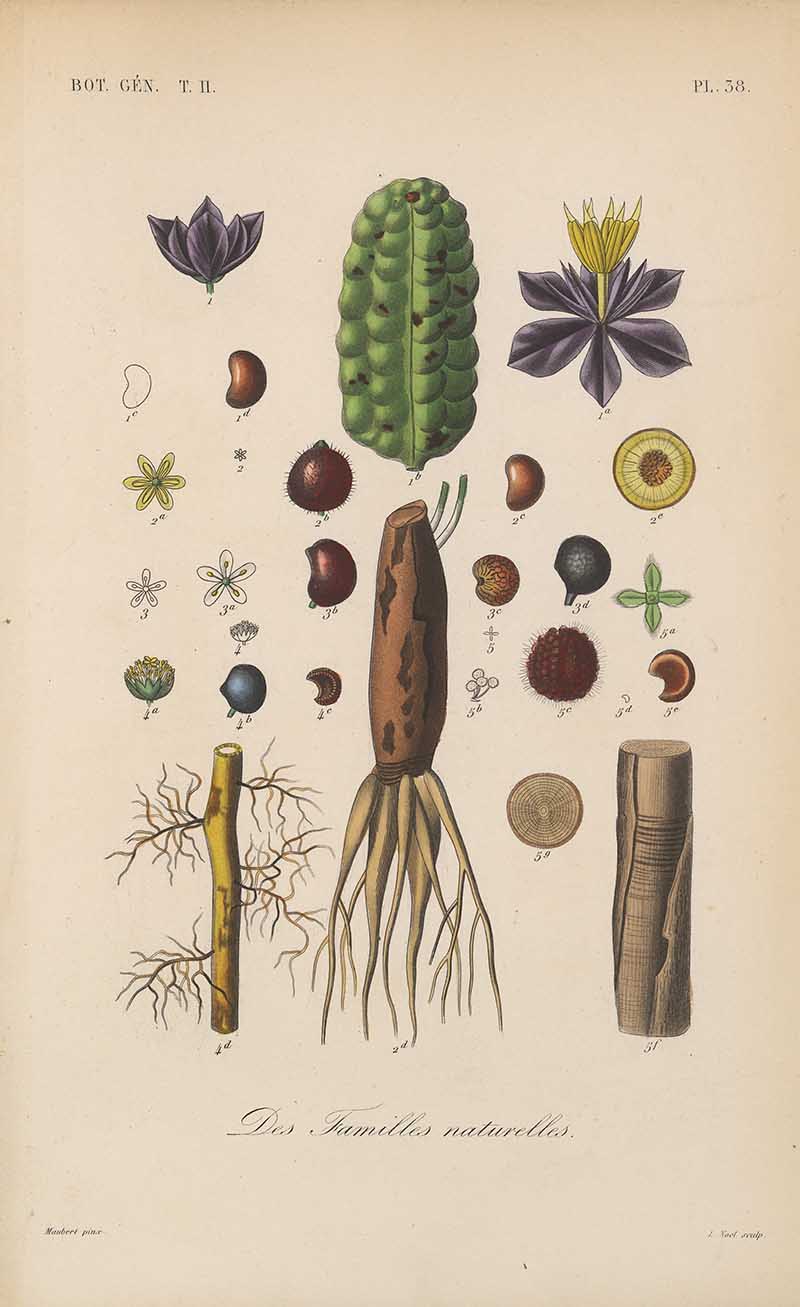
Print 46. Natural Plant Families 3
Represented by a green cone, roots, stems, seeds and star-shaped flowers.
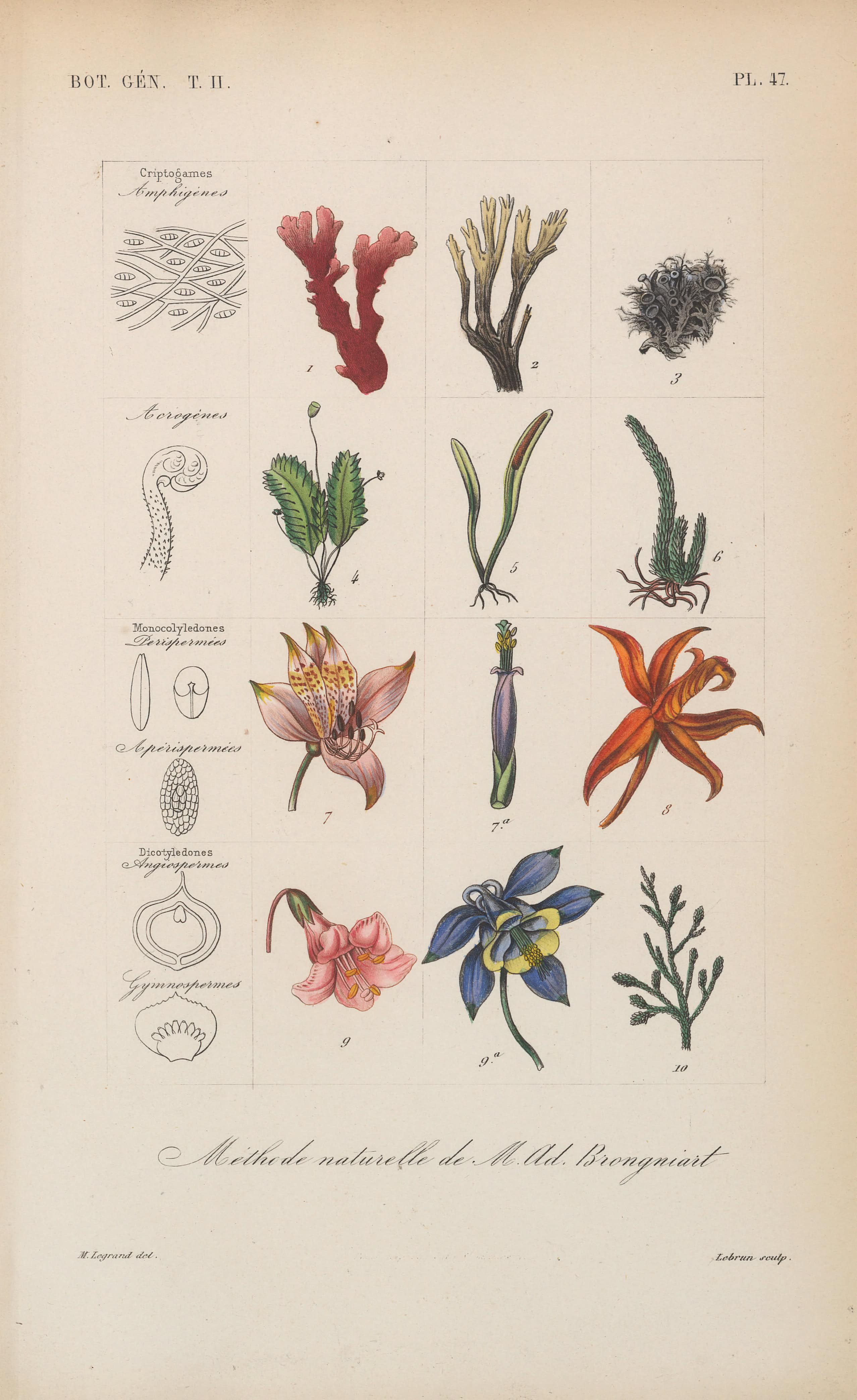
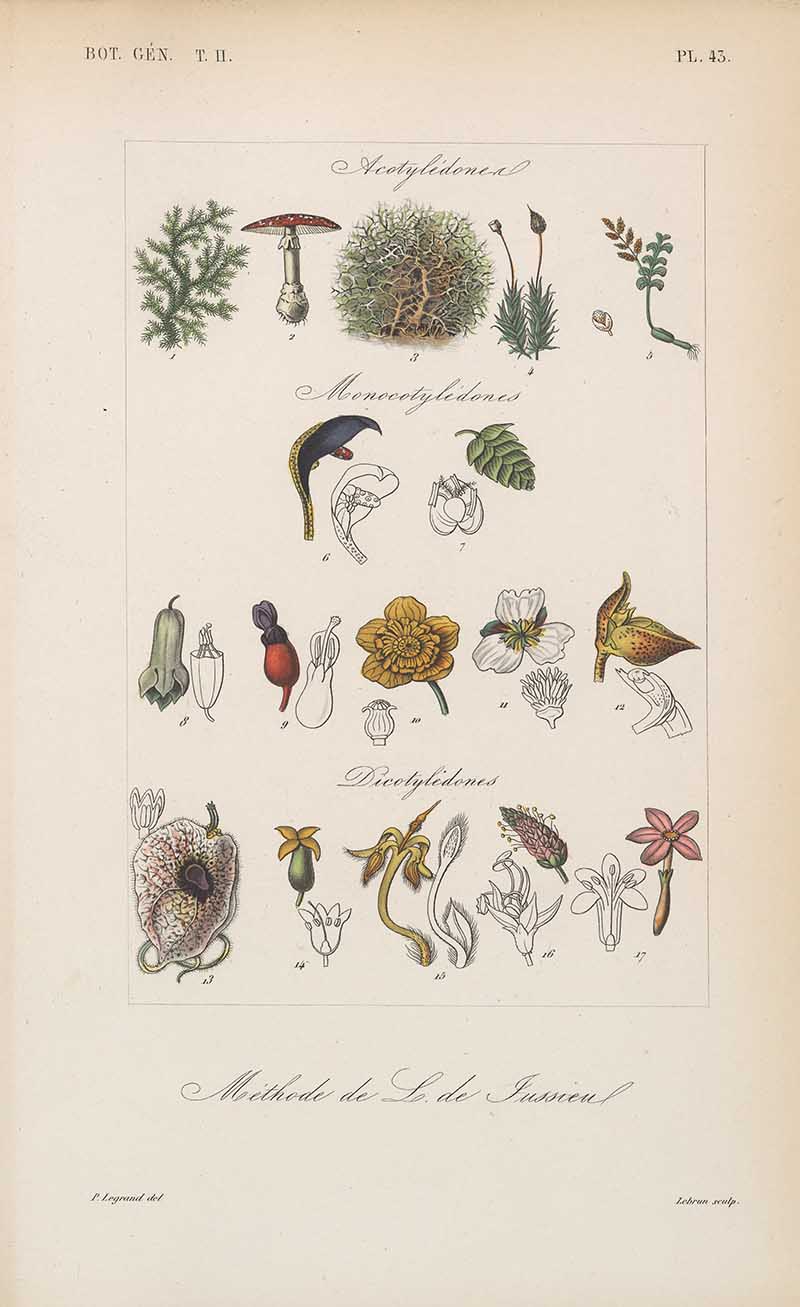
Print 47. Jussieu natural classification chart
Comparing cryptogams, monocots and dicot flower forms.
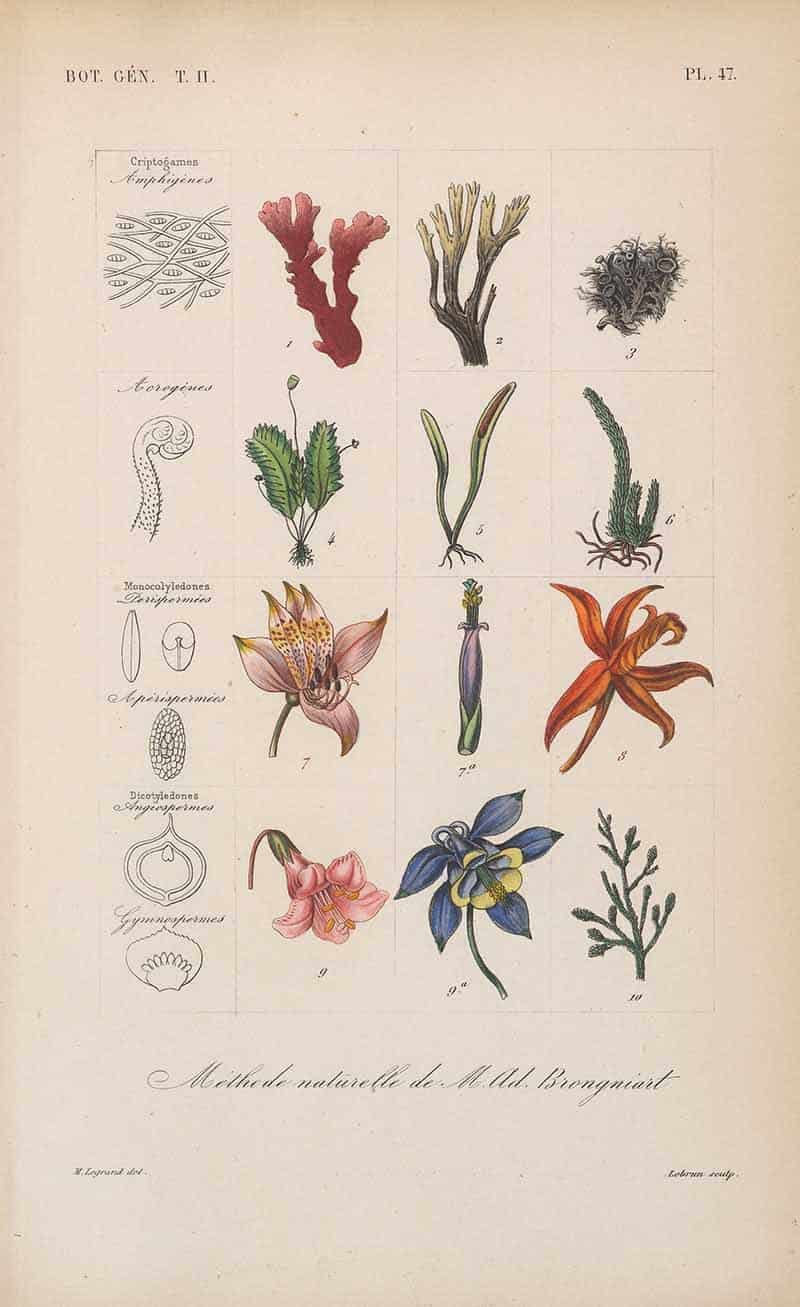
Print 48. Botanical Classification Chart
Botanical classification chart with algae, ferns and colourful lily-like flowers.
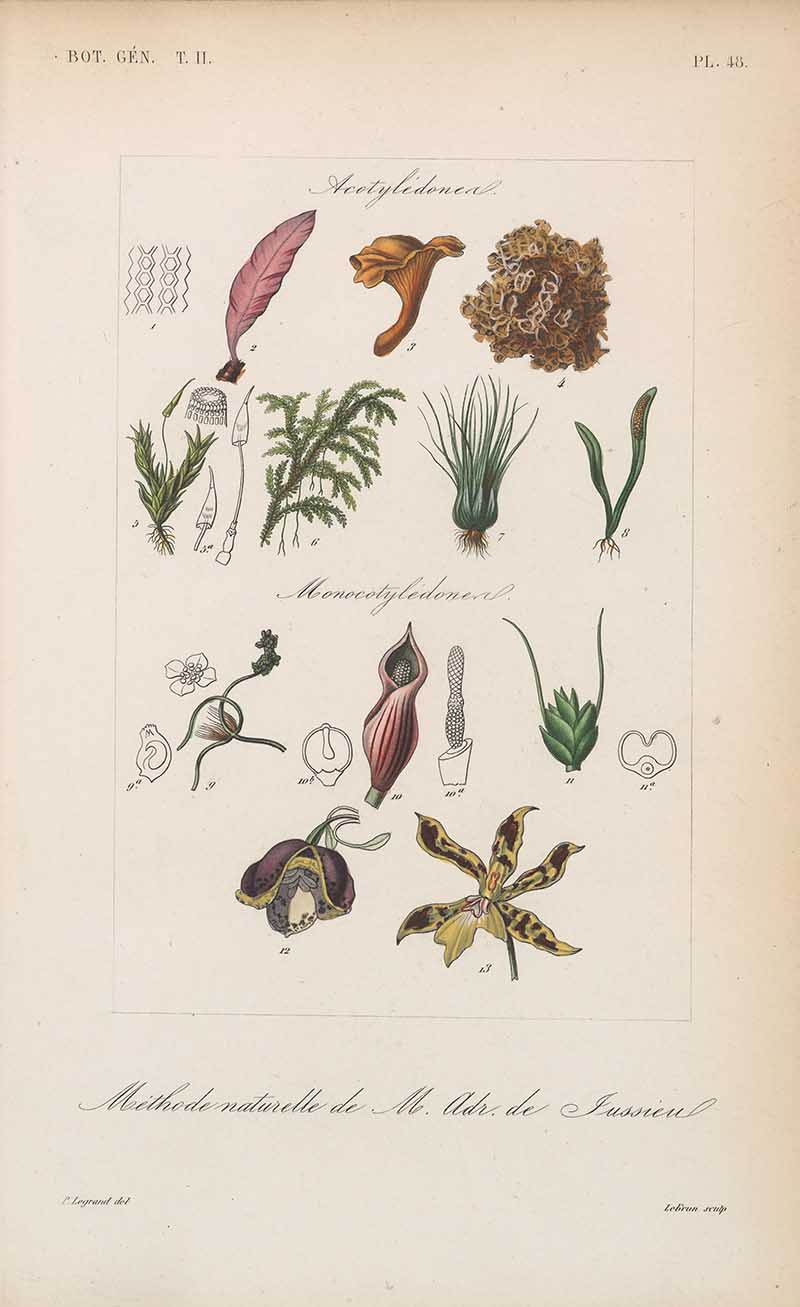
Print 49. Jussieu Classification Chart
Jussieu classification chart comparing mosses, ferns, grasses and unusual monocot flowers.
More Vintage Scientific Charts
If you like this botanical illustration style, Picture Box Blue has several other collections worth exploring.
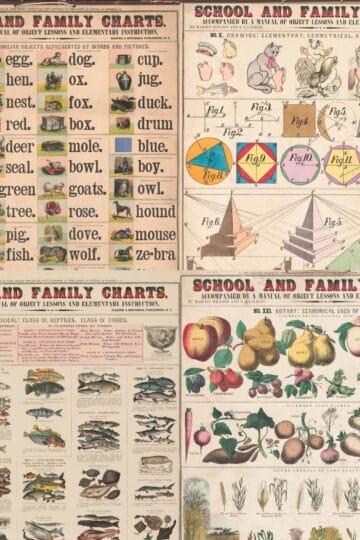
The vintage school charts include some lovely botanical posters showing leaf shapes, flowers, roots and different ways of classifying plants. They're a great example of the sorts of illustrations once used to teach children about the natural world.
There are also the wonderful French Émile Deyrolle classroom posters. These cover all sorts of natural history subjects, including detailed diagrams of plants, seeds and flowers. I particularly like the botanical charts showing how familiar plants grow.
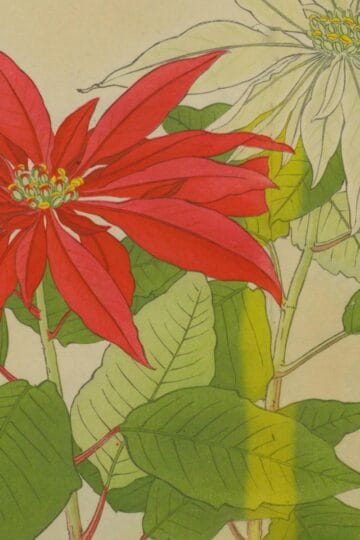
For something a little different, check out the Japanese nature charts from the Meiji era. These 1873 woodblock prints feature beautifully arranged illustrations of plants, fruits, vegetables and animals. It's interesting to see how Japanese artists approached similar educational illustrations.
If you fancy, you can Buy Me A Coffee Here.