
Amazing Free Vintage Colour Wheel Posters And Charts
I'm a big fan of colour, especially a rainbow of colour. My home is full of rainbow crafts and DIYs. I thought it would be fun to add some vintage colour wheel posters and vintage colour charts to the decor.
I even display many colourful vintage flowers and vintage bird prints from Picture Box Blue in a rainbow gallery wall.
Colour wheels and rainbows are very closely interlinked. Isaac Newton invented the colour wheel in 1666.
Newton played around with white light and made rainbow patterns using prisms. That's when he discovered that white light is composed of a rainbow of colours: red, orange, yellow, green, blue, indigo, violet.
Newton also noticed that red and violet were similar (both contain red). So he twisted the band of colour around to form a circle. This was the original vintage colour wheel. This helped explain many of the mathematical relationships between colours.
Color Circles
A colour wheel is also known as a colour circle. Basically, it is an abstract illustrative organisation of colour hues around a circle. It shows the relationships between primary, secondary, and tertiary colours.
The primary colours are red, yellow, and blue. The secondary colours are green, orange, and purple. The tertiary colours are yellow-orange, red-orange, red-purple, blue-purple, blue-green, and yellow-green. These are the 12 colours that typically appear on a colour wheel.
Artists and designers use colour wheels regularly to mix, determine, and pick colours confidently.
You can use the colour wheel to develop colour schemes. Colour schemes are harmonious combinations of colours on the colour wheel.
According to colour theory, these combinations include any two colours opposite each other on the colour wheel, any three colours equally spaced around the colour wheel forming a triangle, or any four colours forming a rectangle (actually, two pairs of colours opposite each other).
The Free Vintage Colour Wheel Posters To Download
1. Hiler Colour System
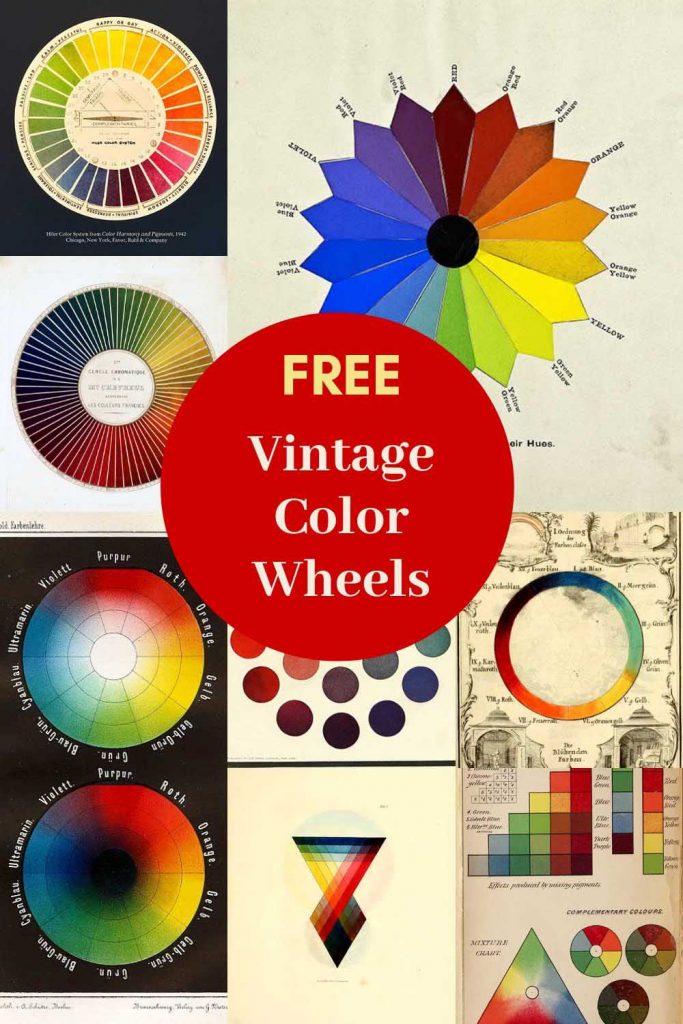
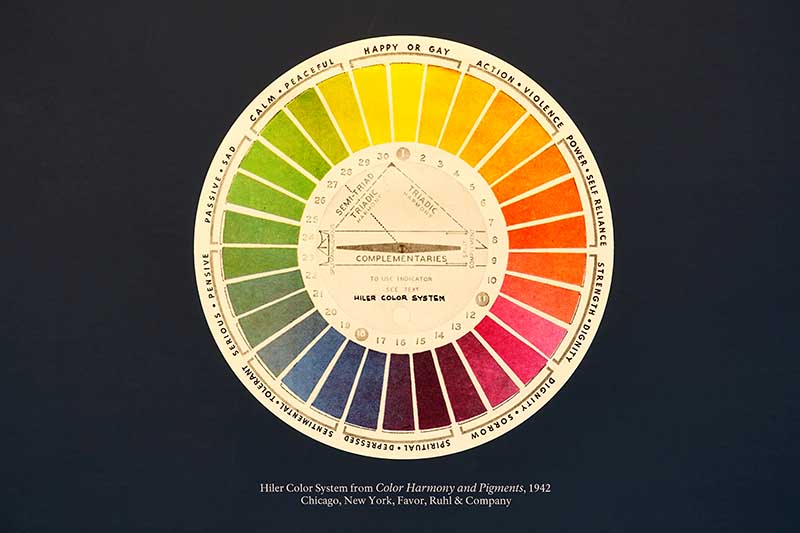
Hilaire Hiler was an artist and psychologist who combined his artistic and psychoanalytical training to formulate an original perspective on colour.
Hiler's colour wheel differs from Newton's because it is based on ten colour groups: yellow, orange, orange-red, red, purple, blue, turquoise, sea green, green, and leaf green. Each group contains three variations, yielding the 30-step wheel.
His wheel is unique because it is based not on mathematical relationships of colour but on psychological ones.
In the Hiler colour system, groups of colours are associated with different psychological states. For example, he attributes yellow to happy and gay. At the same time, green is associated with passive and sad psychological states.
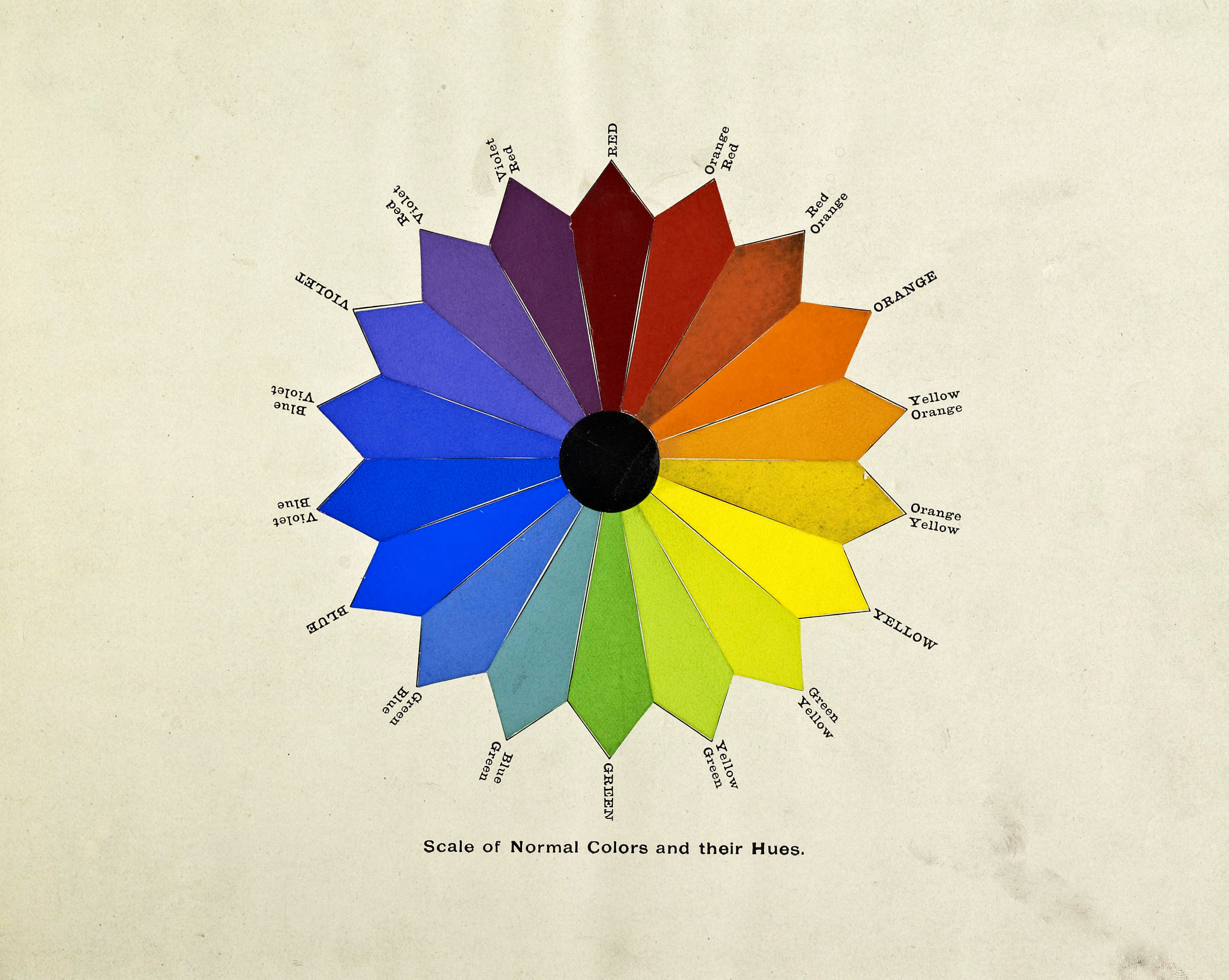
2. A class-book of colour
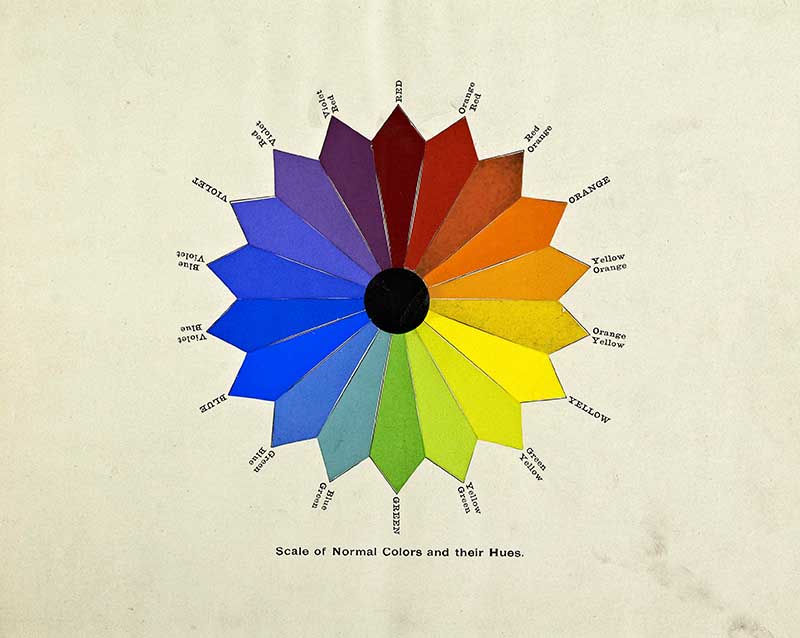
This vintage colour wheel is from the 1895 book " A class-book of colour: including colour definitions, colour scaling, and the harmony of colours" by Mark Maycock.
Mark's colour wheel is composed of 18 spokes made up of the seven colours of the rainbow and their hues.
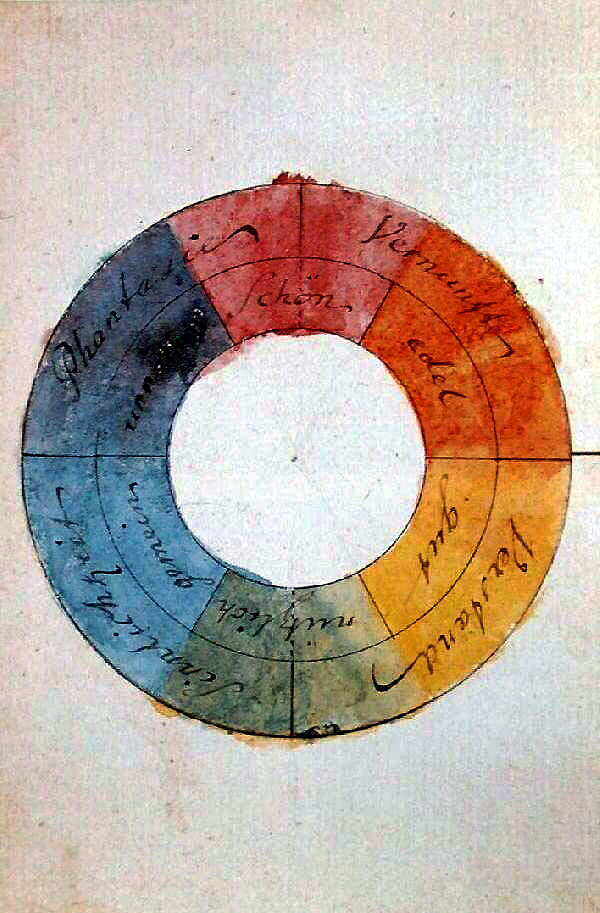
3. Goethe's Vintage Colour Wheel
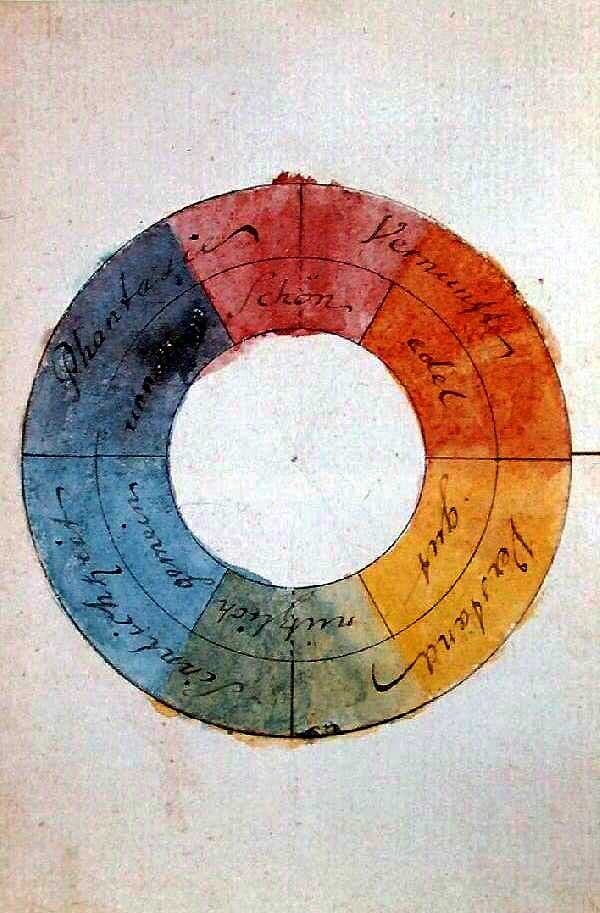
This colour wheel is from the German poet Johann Wolfgang von Goethe's book "The Theory of Colours" 1810.
Goethe also established a kind of colour psychology. He associated red with the "beautiful", orange with the "noble", yellow with the "good", green with the "useful", blue with the "common", and violet with the "unnecessary".
"These six qualities were assigned to four categories of human cognition, the rational (Vernunft) to the beautiful and the noble (red and orange), the intellectual (Verstand) to the good and the useful (yellow and green), the sensual (Sinnlichkeit) to the useful and the common (green and blue) and, closing the circle, imagination (Phantasie) to both the unnecessary and the beautiful (purple and red)".
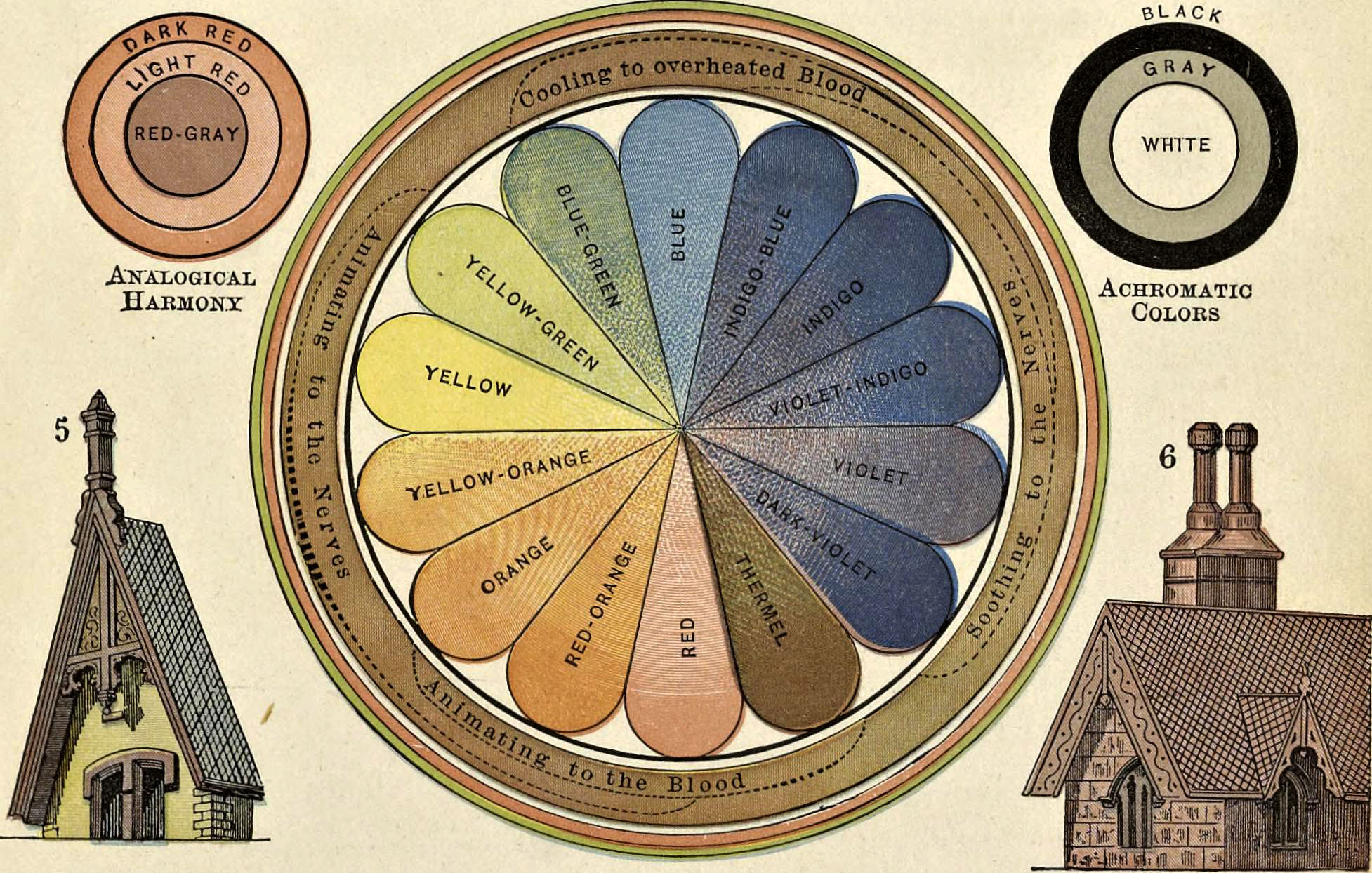
4. The Principles Of Light and Colour
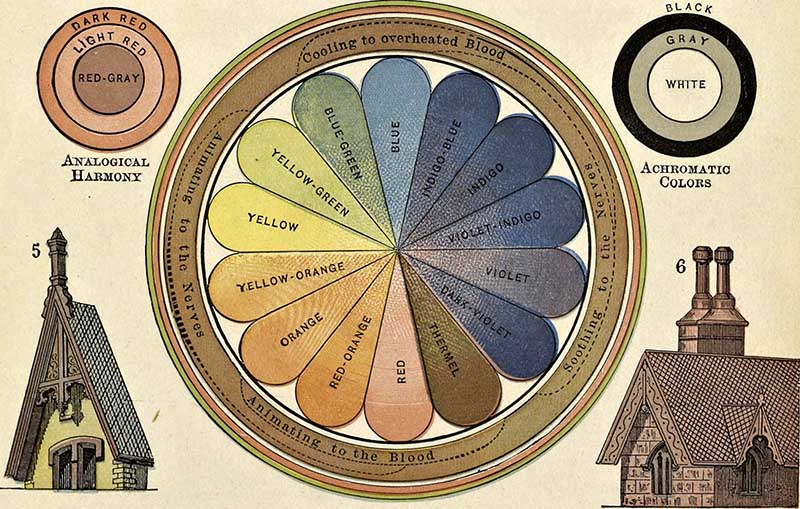
The colour circle is from the book "The principles of light and colour: including among other things the harmonic laws of the universe, the etheric-atomic philosophy of force, chromo chemistry, chromo therapeutics, and the general philosophy of the fine forces, together with numerous discoveries and practical applications " by Edwin Babbitt (1878).
Edwin Babbitt had two purposes for publishing his book. The first was to convince his fellow doctors in the medical profession that he had discovered a valuable therapeutic system. The second was to present to the world a philosophy of ‘light and colour’ that he believed described the basis of all life.
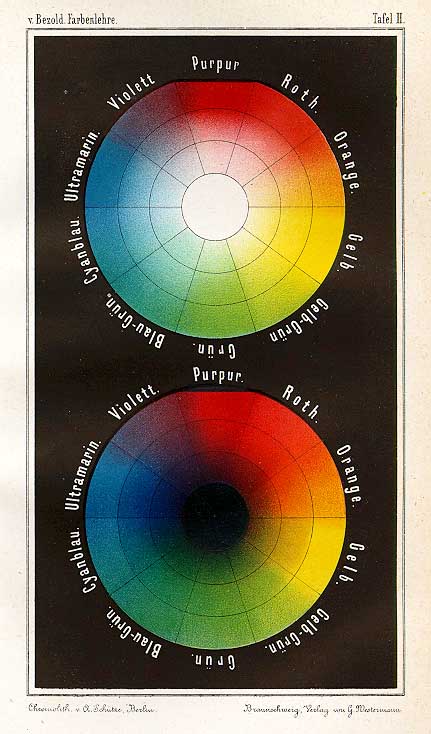
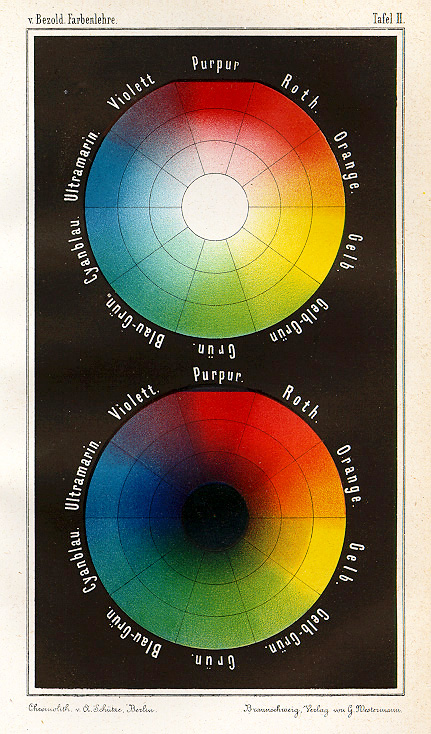
5. Bezold's Colour Wheel
A vintage colour wheel by the German physicist Johann Friedrich WilhSchiffermüller.
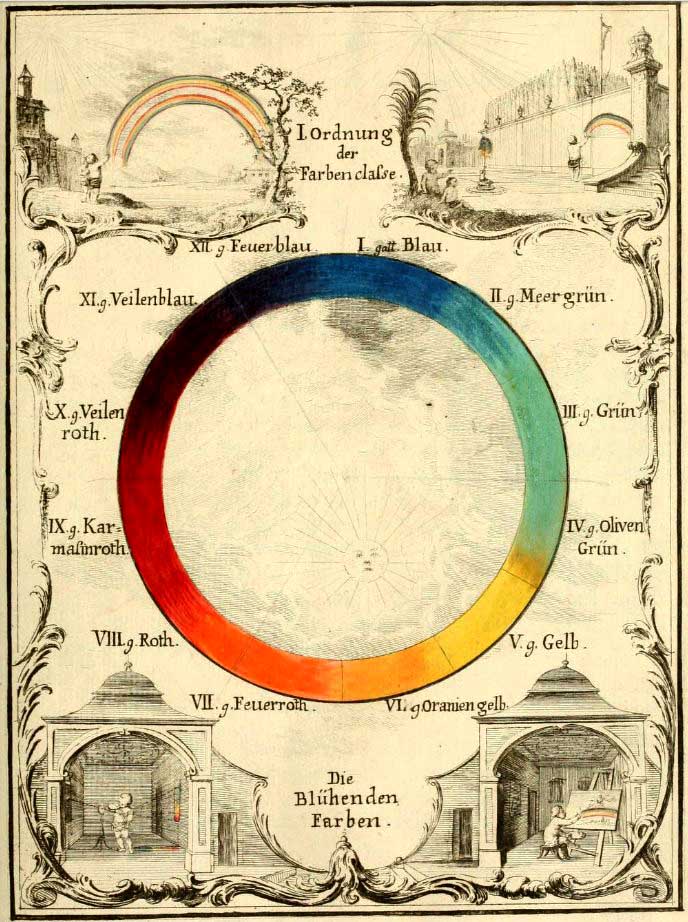
6. Ignaz Schiffermüller Color Circle
A 177Schiffermüller by the Austrian naturalist Ignaz Schiffermuller from his publication " Versuch eines Farbensystems" (Trying a color system).
A colour circle, hand-tinted with twelve colours continuously shading into one another.
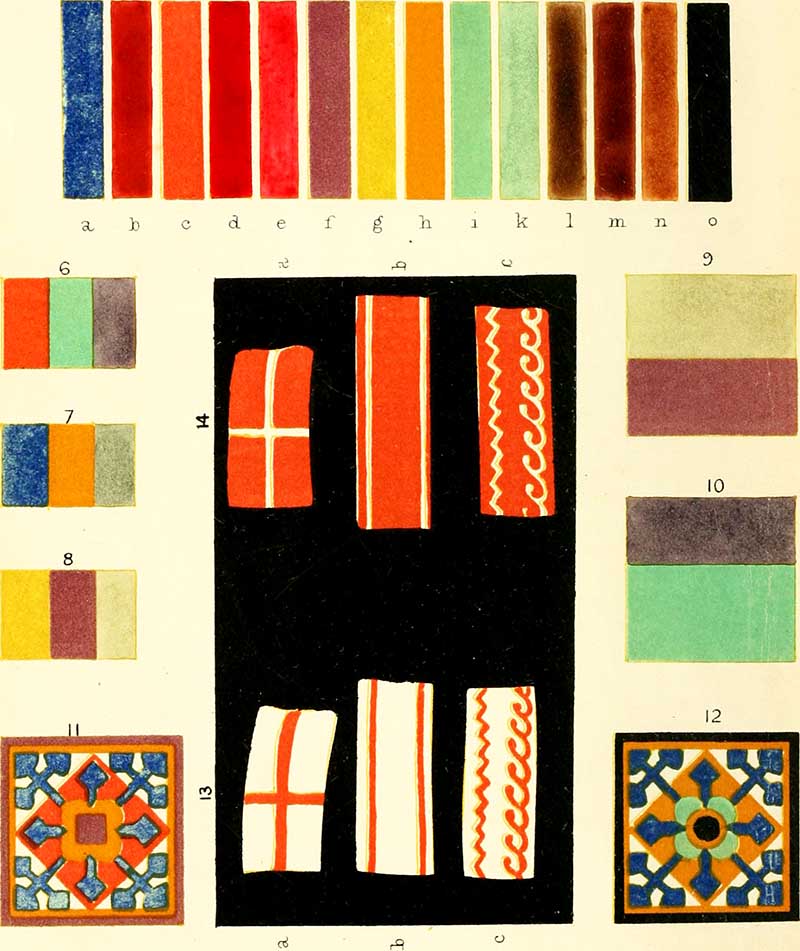
7. Modern Chromatics Colour Chart
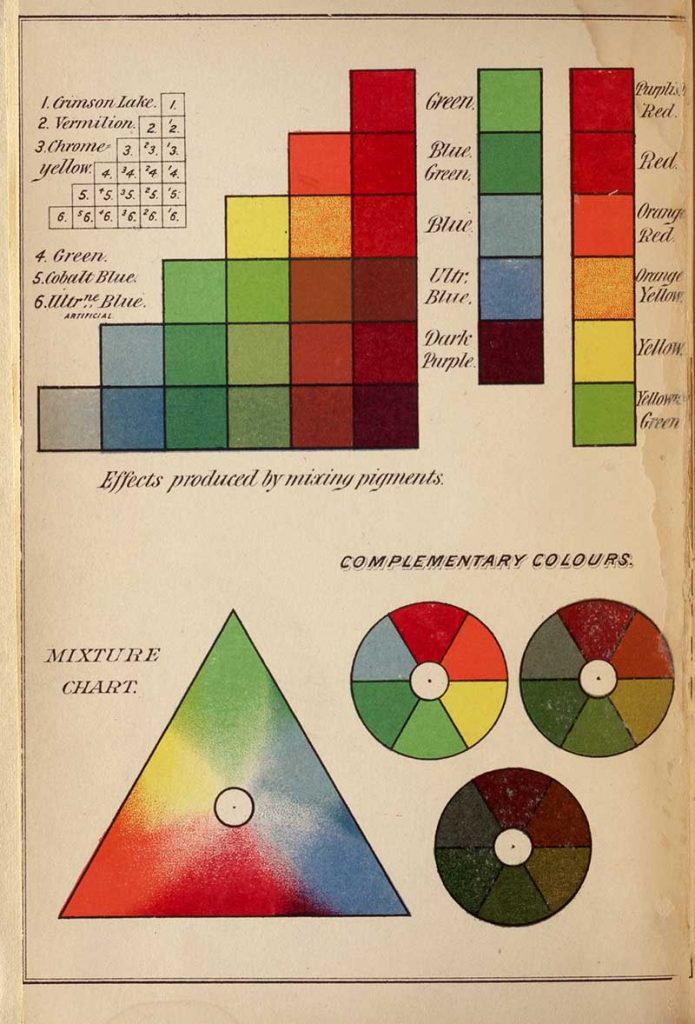
A colour chart from the book "Modern chromatics: with applications to art and industry" by Ogden Nicholas Rood (1879). Chromatics is the science of colours
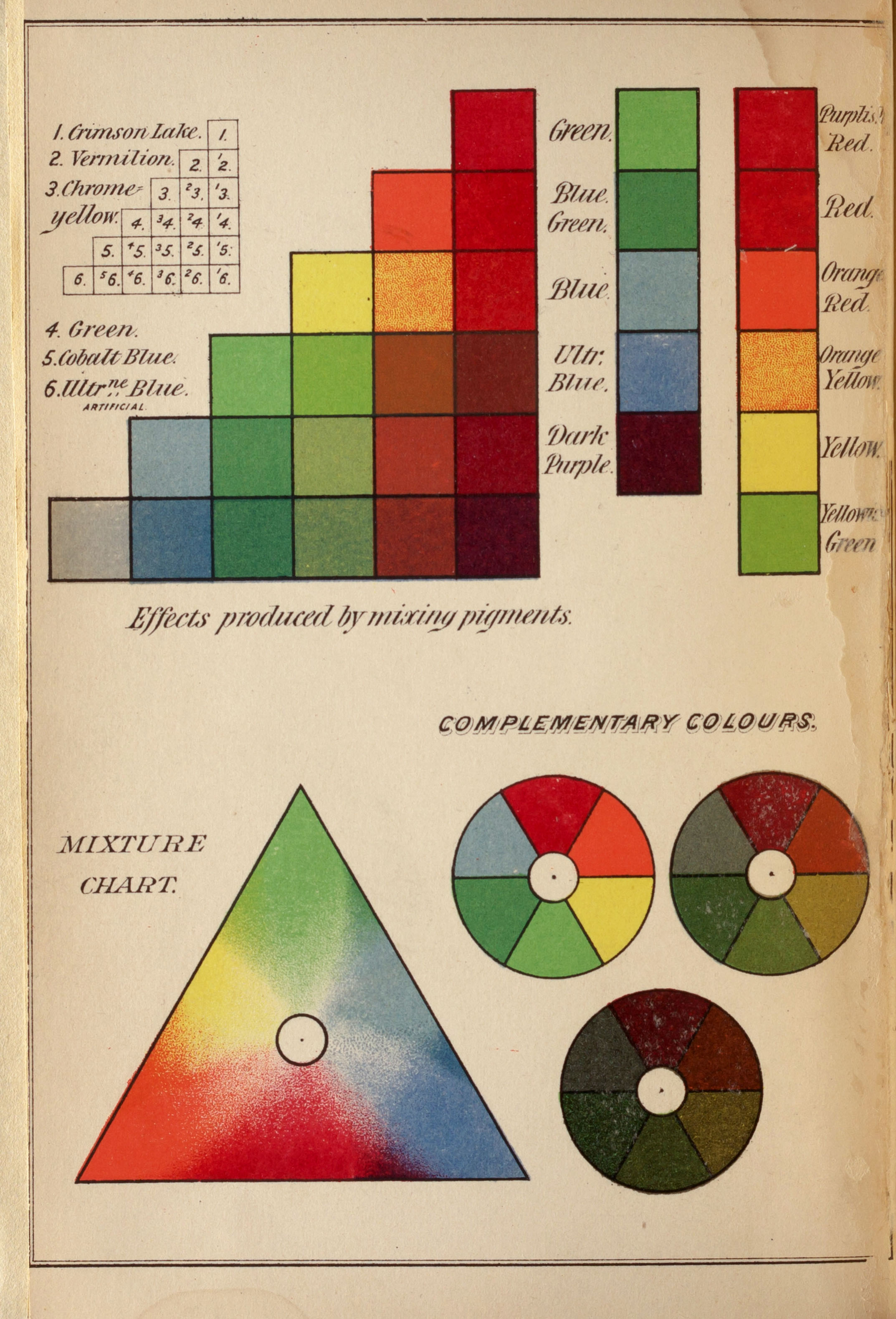
8. 1858 Vintage Colour Chart
This colour chart is from the book "On colour, and on the necessity for a general diffusion of taste among all classes", by John Wilkinson.
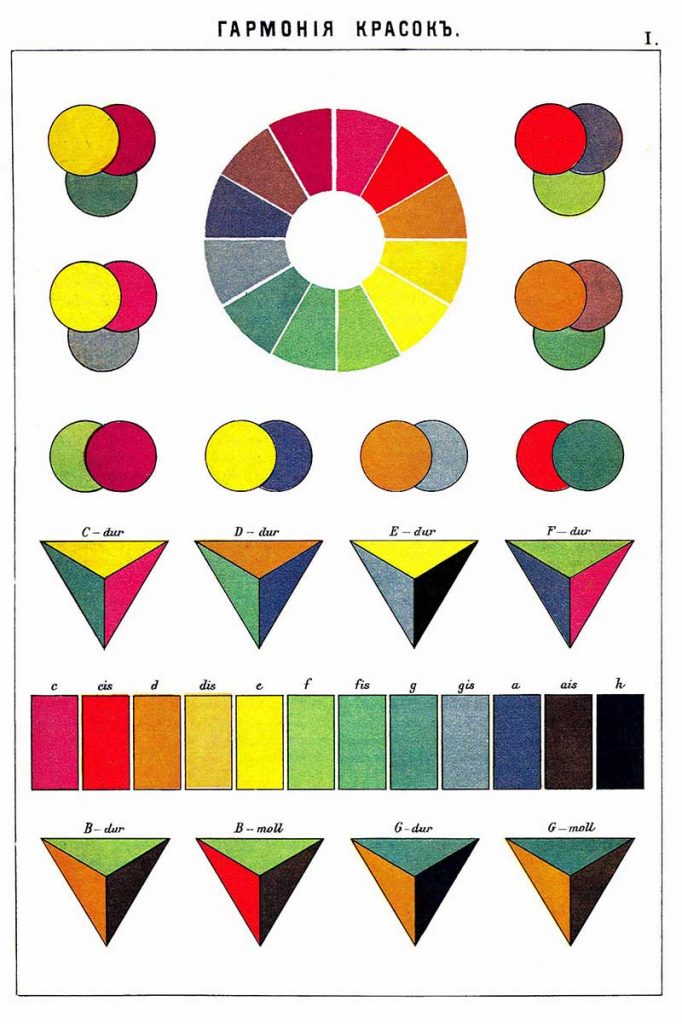
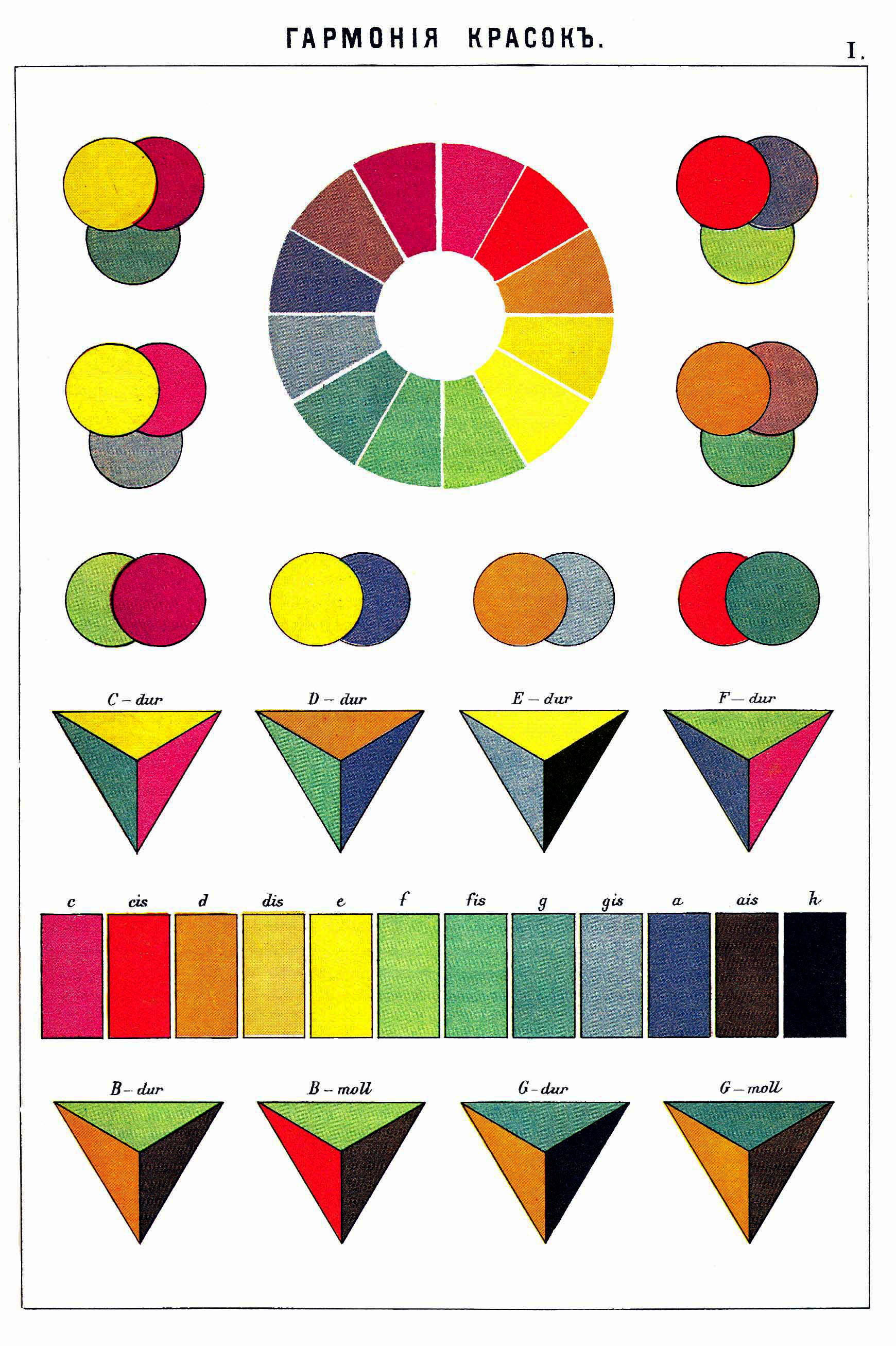
9. Russian Color Chart
This vintage poster of colour wheels and charts is from the Russian Encyclopedia "Brockhaus and Efron Encyclopedic Dictionary".
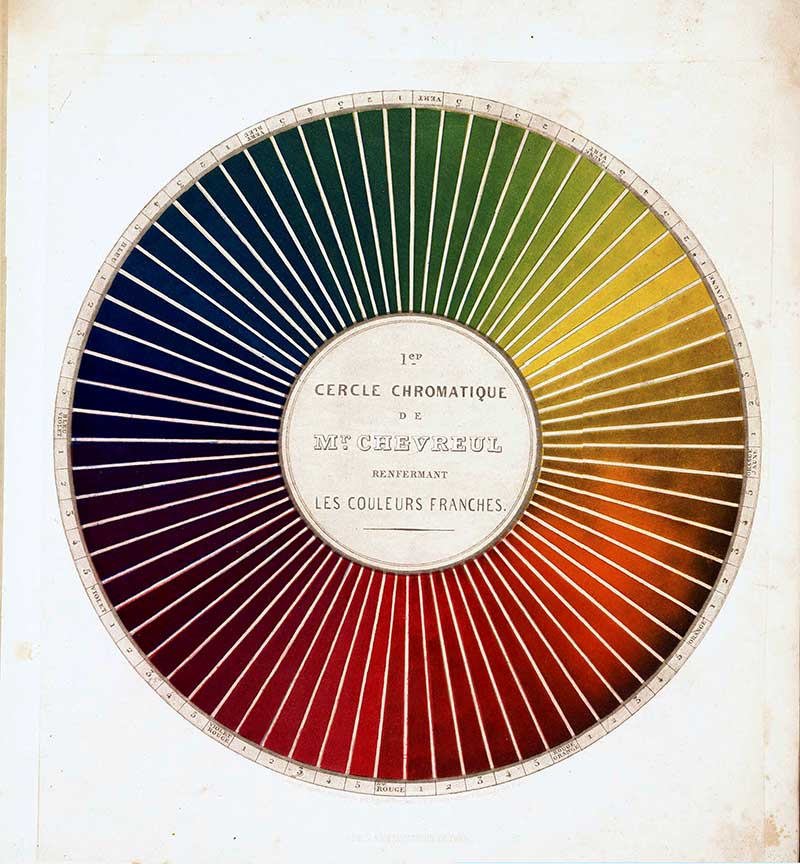
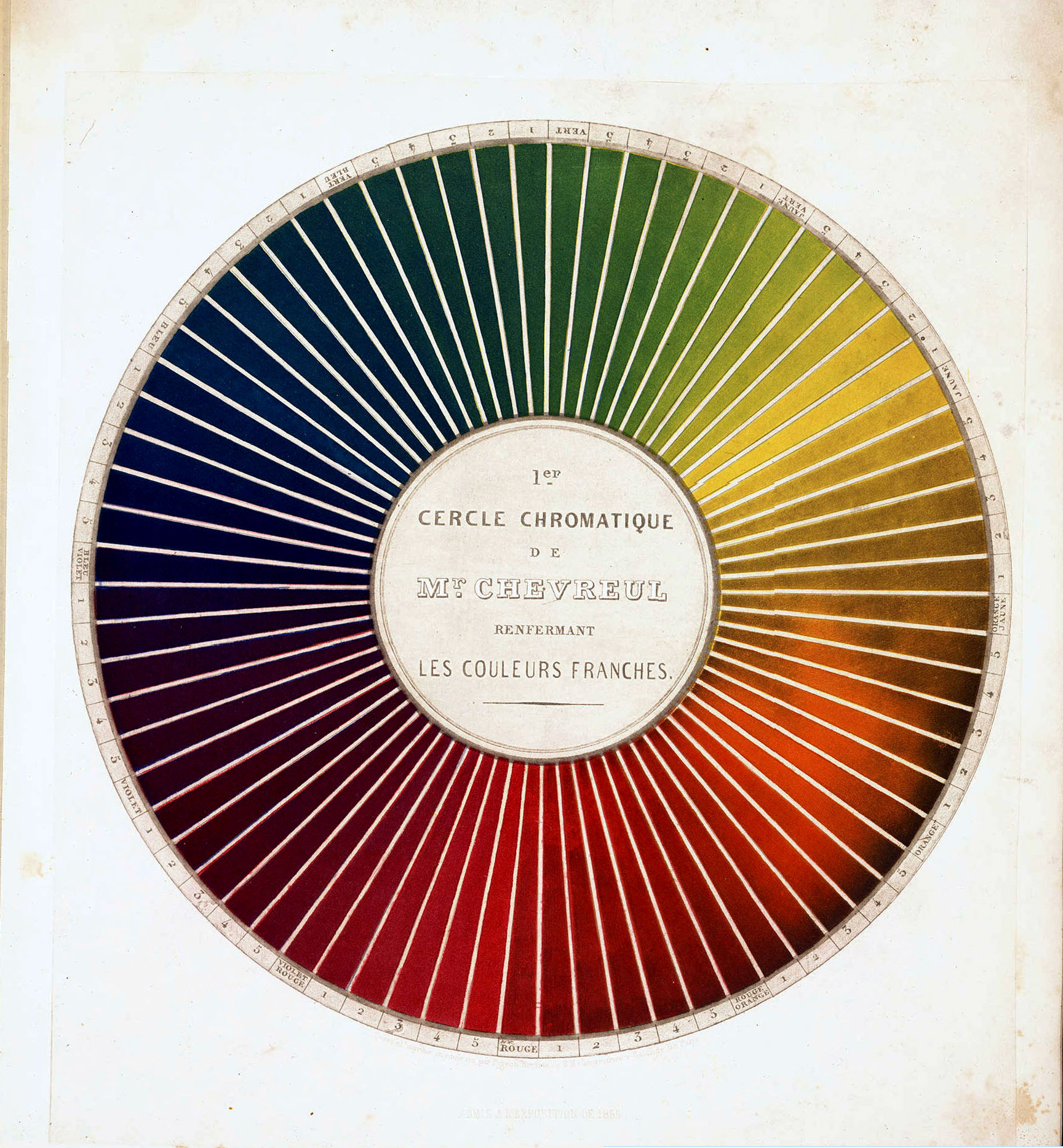
10. Cercle Chromatique
This vintage colour wheel is by the French chemist Michel Eugène Chevreul.
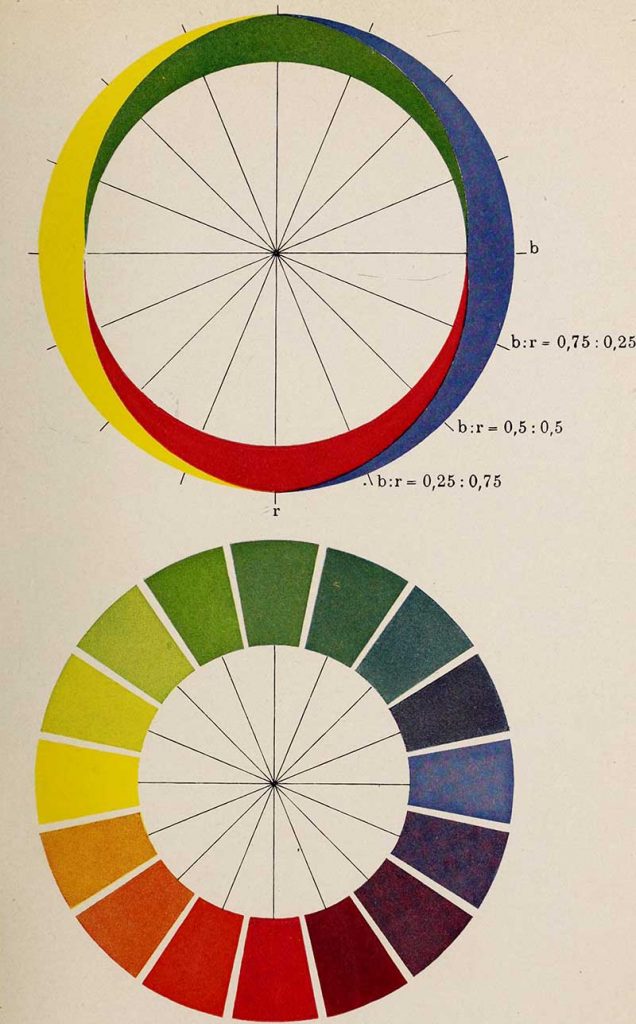
11. 1922 Vintage Color Wheel
This colour chart is from a German experimental psychology book, "Lehrbuch der Experimentellen Psychologie".
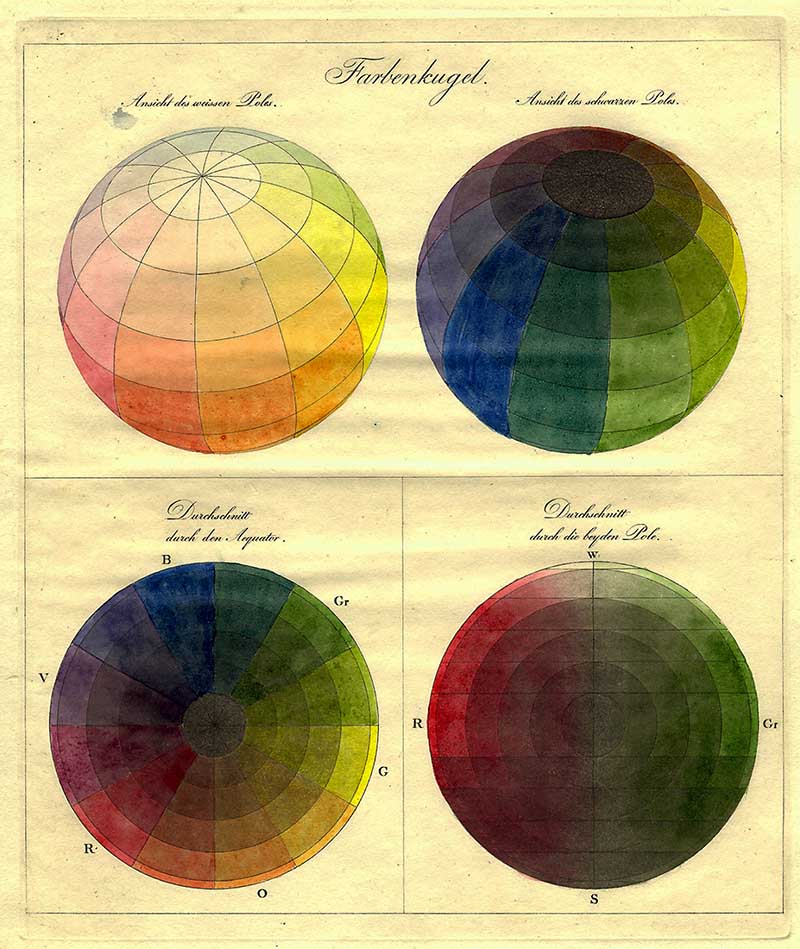
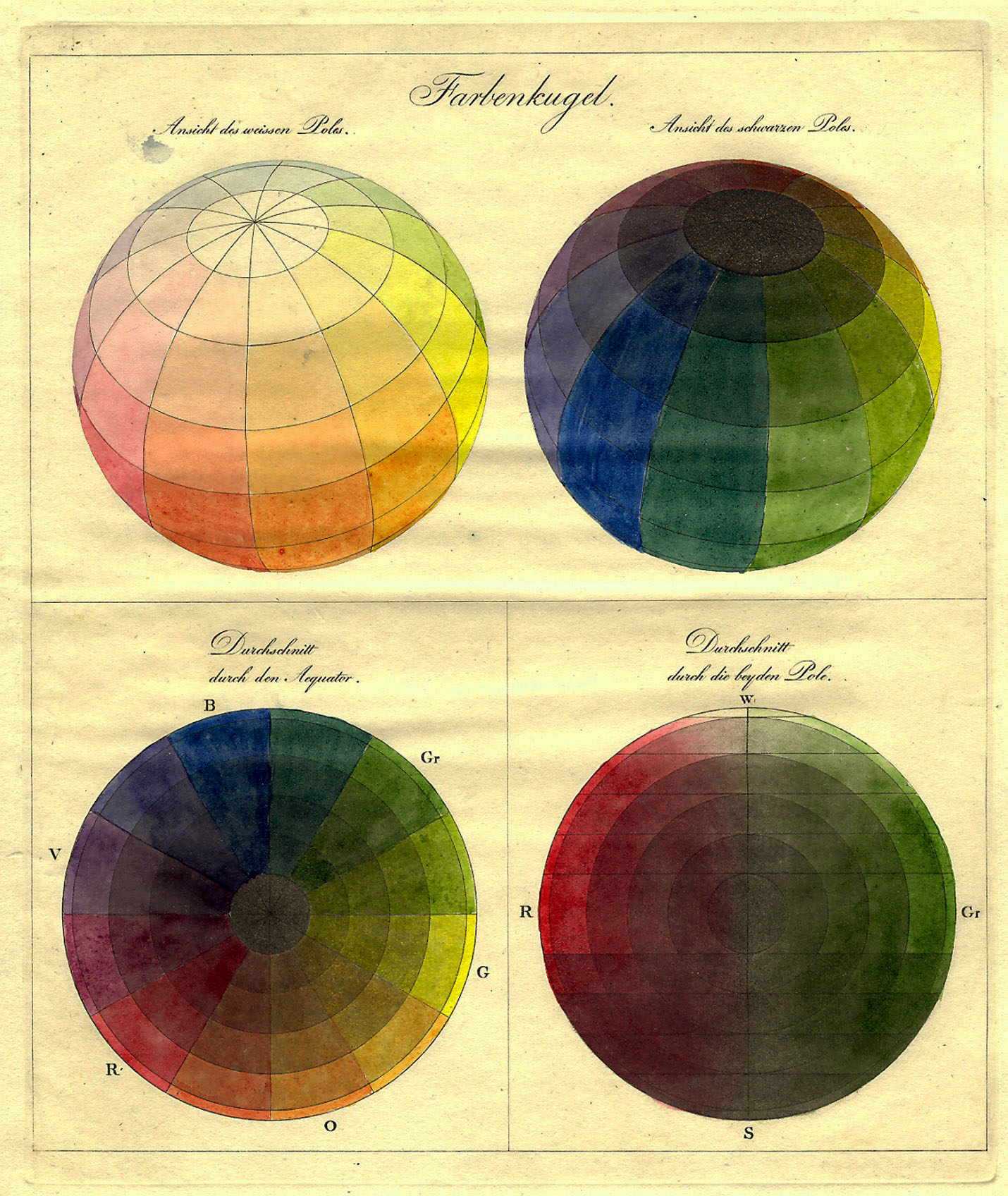
12. Philipp Otto Runge'sColourr Sphere
The colours are organised in three dimensions on a sphere. Pure colours feature a large chromatic circle where green is opposed to red and yellow to purple around the equator, between the black pole and the white pole. Grey is in the centre.
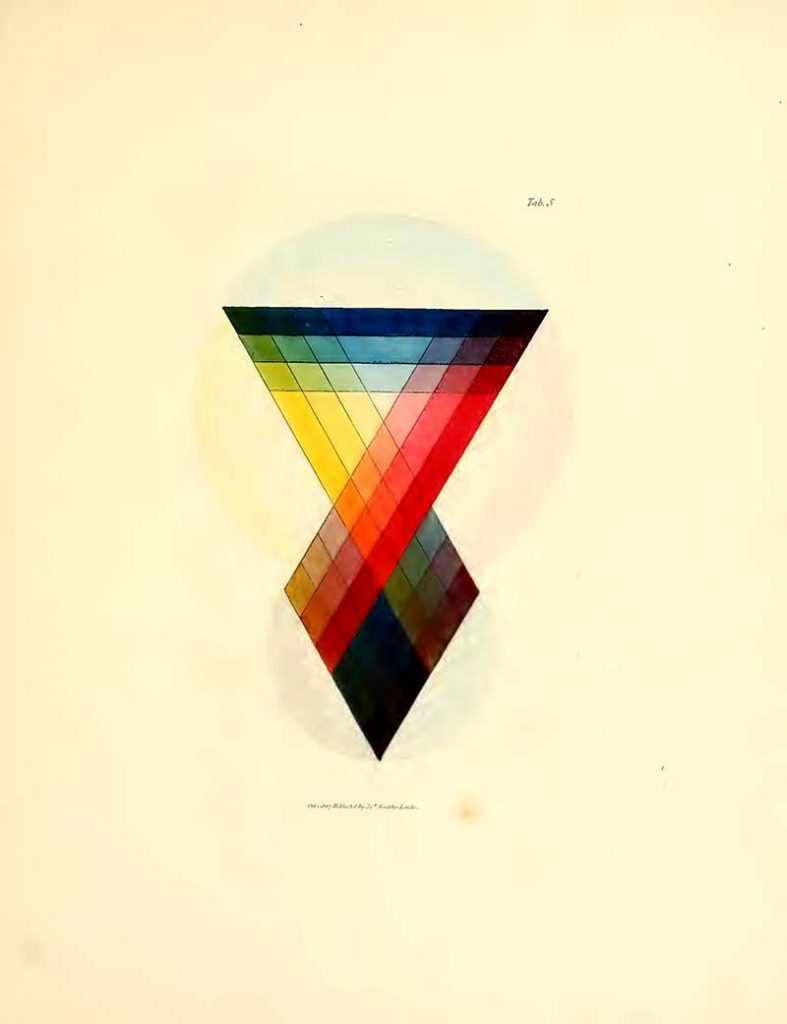
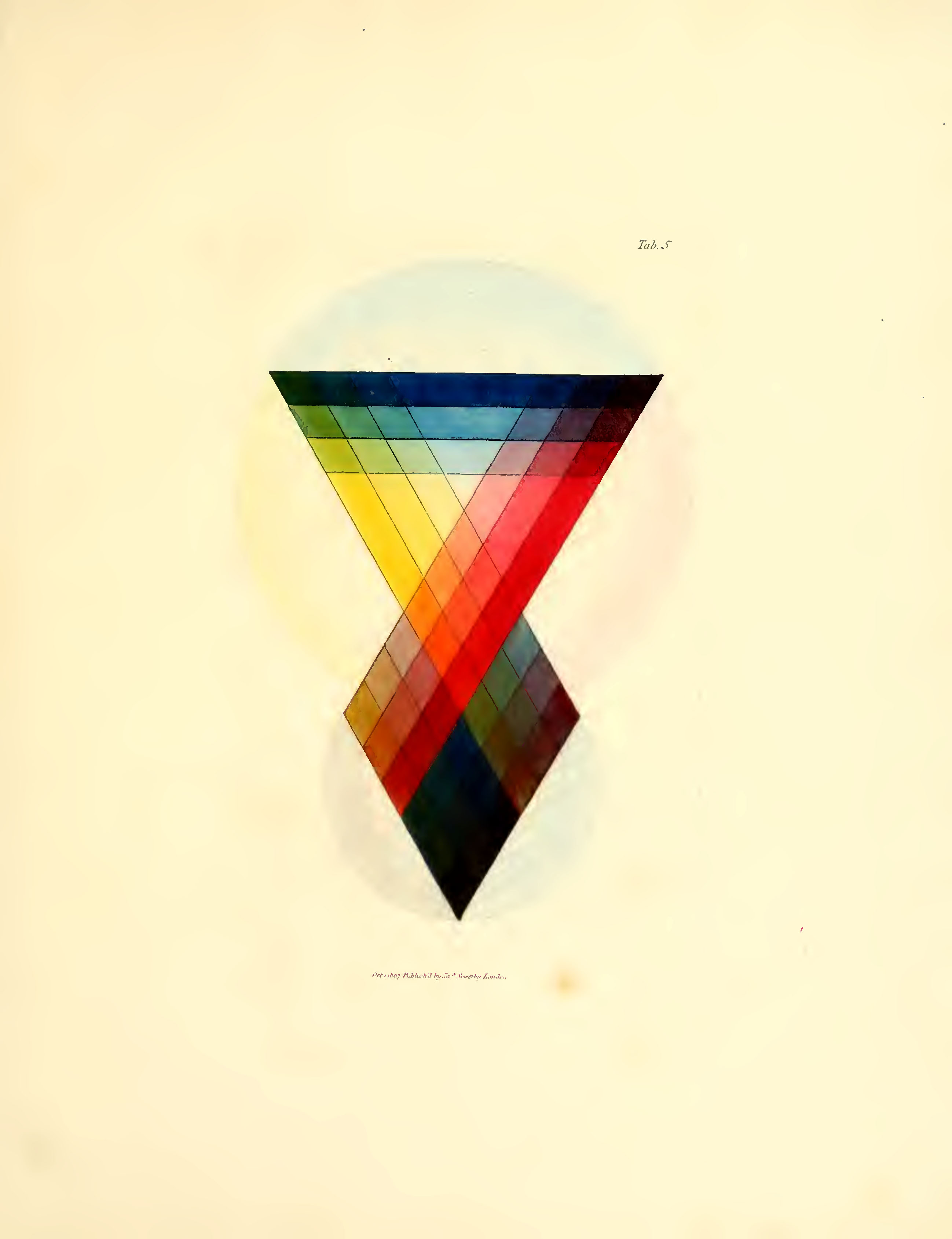
13. Sowerby's Colour Triangles
Colour blending triangles from James Sowerby's "A New Elucidation of Colours, Original, Prismatic, and Material" (1809).
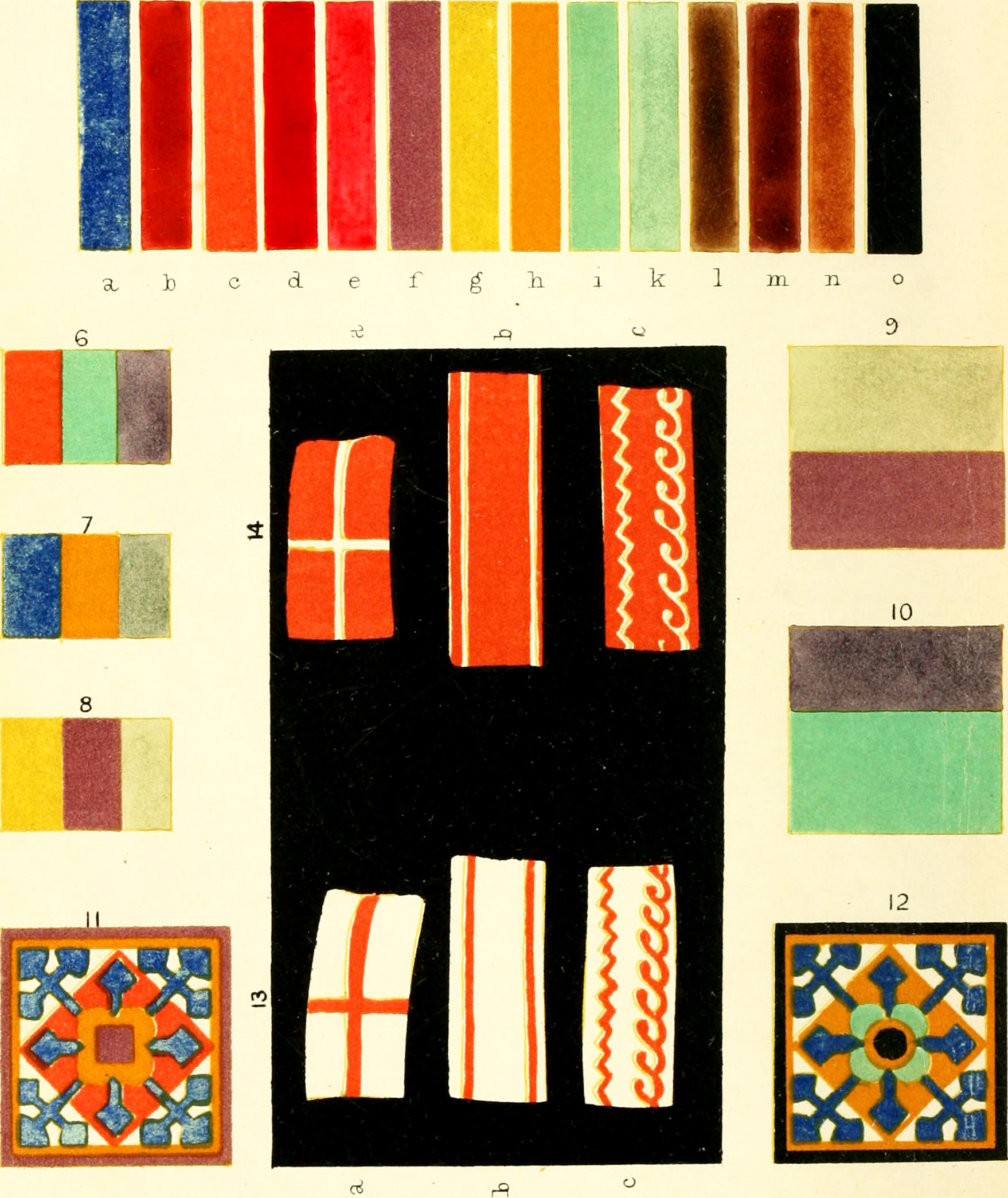
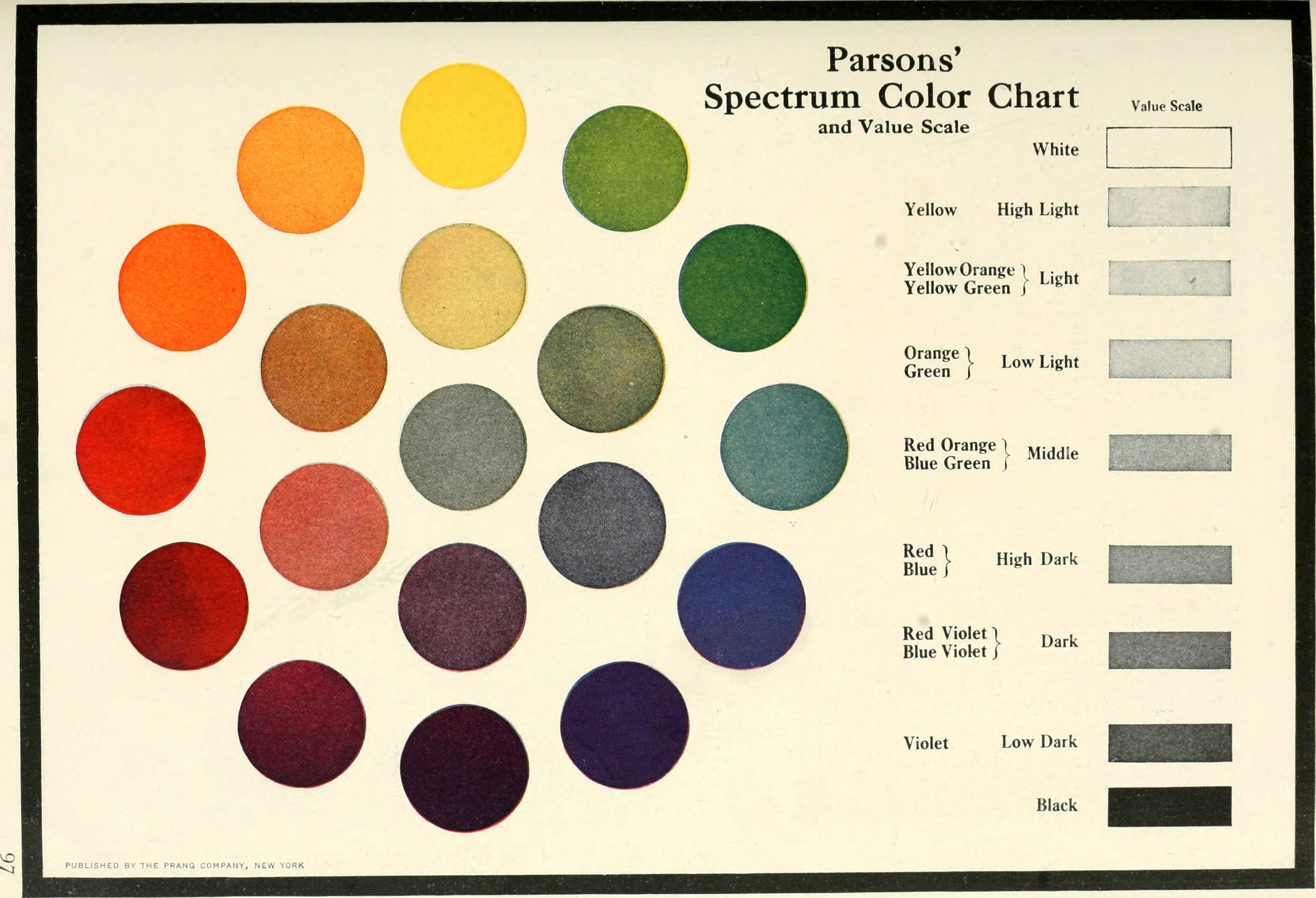
14. Parsons Spectrum Colour Chart
This vintage colour chart is from the book "The principles of advertising arrangement" (1912) by Frank Parsons.
Description of the Colour Chart
The Colour Chart shows the three primary colours, yellow, red and blue, the same being the elements out of which every other colour tone is made. Yellow and red make orange; yellow and blue make green; red and blue make violet. These three are the so-called binary colours.
The even step between a binary and its adjacent primary is called the hue; thus, the step between green and yellow is yellow-green, and the one between green and blue is blue-green. These two are hues of green. In the same way, there are two hues of orange and two of violet.
Complements are shown opposite each other in the circuit. The outside circuit shows the normal colours in their full intensity. The inner circuit—the background circuit — shows half-neutral tones of the same colors each made by adding to the normal color a part of its complement.
The central tone of gray is made by using any pair of complements. Besides the Color Chart is a Value Scale of grays from black to white.

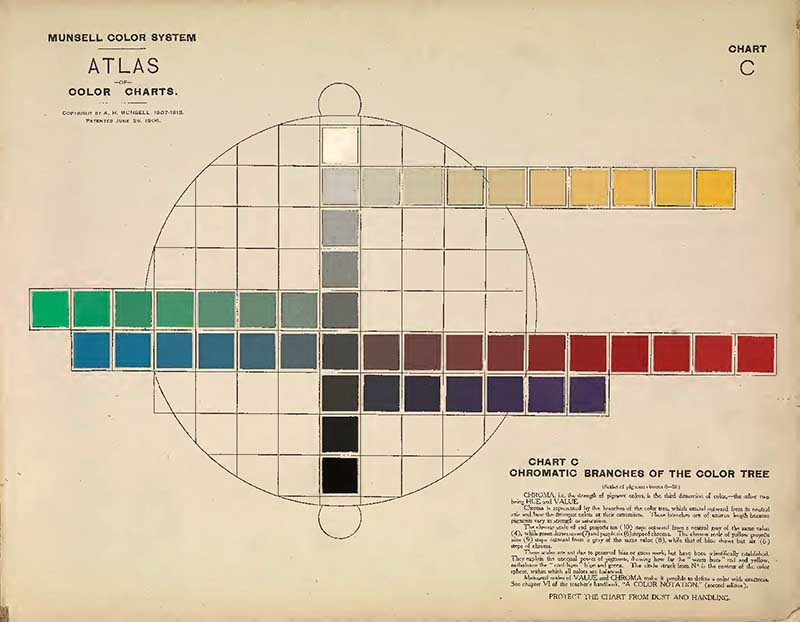
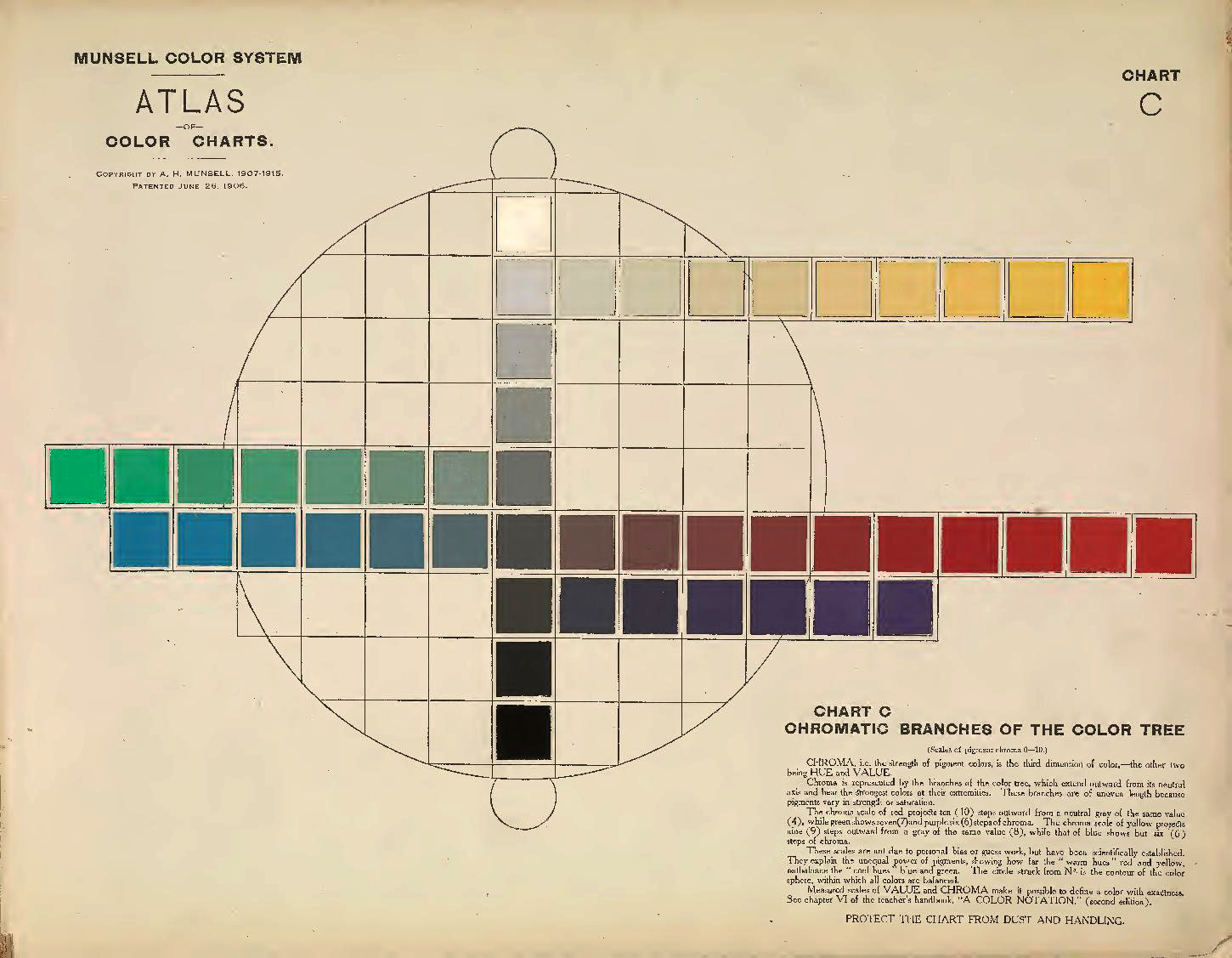
15. Atlas of the Munsell Color_System
In colourimetry, the Munsell colour system is a colour space that specifies colours based on three properties: hue (basic colour), chroma (colour intensity), and value (lightness). It was created by Professor Albert H. Munsell (1915).
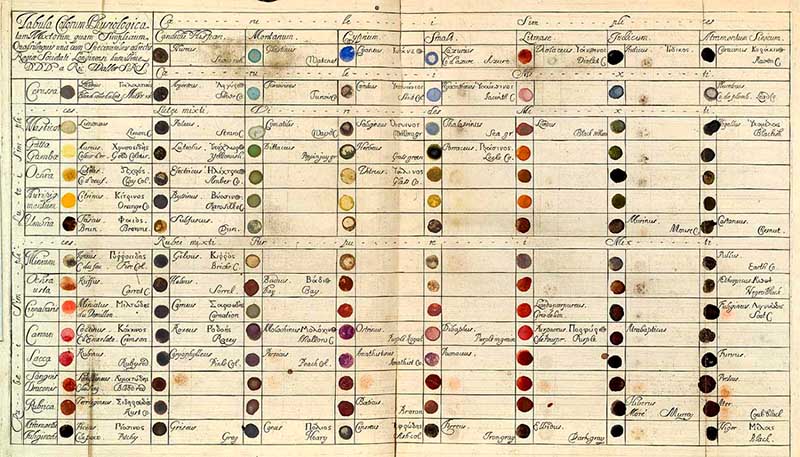
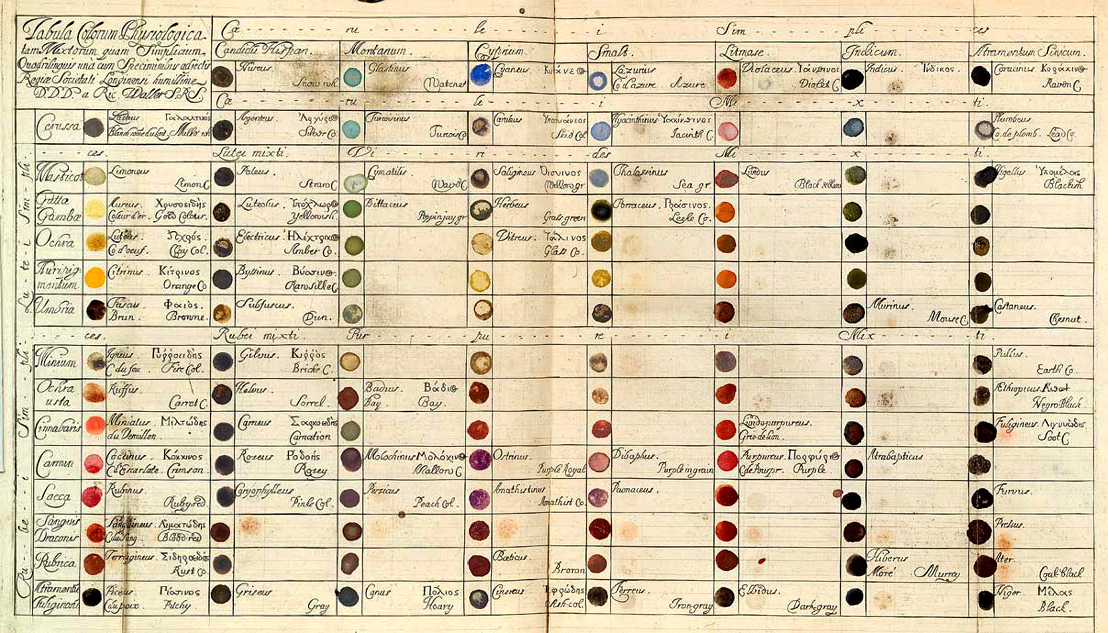
16. 1686 Vintage Colour Chart
Richard Waller's "Tabula Colorum Physiologica" (1686) is one of the earliest known colour charts.
Waller created it as a tool for describing plants and animals. Collectors and scientists could compare their specimens to this table and use the names provided to identify the colours of leaves, bark, flowers, feathers, plants, and animals.
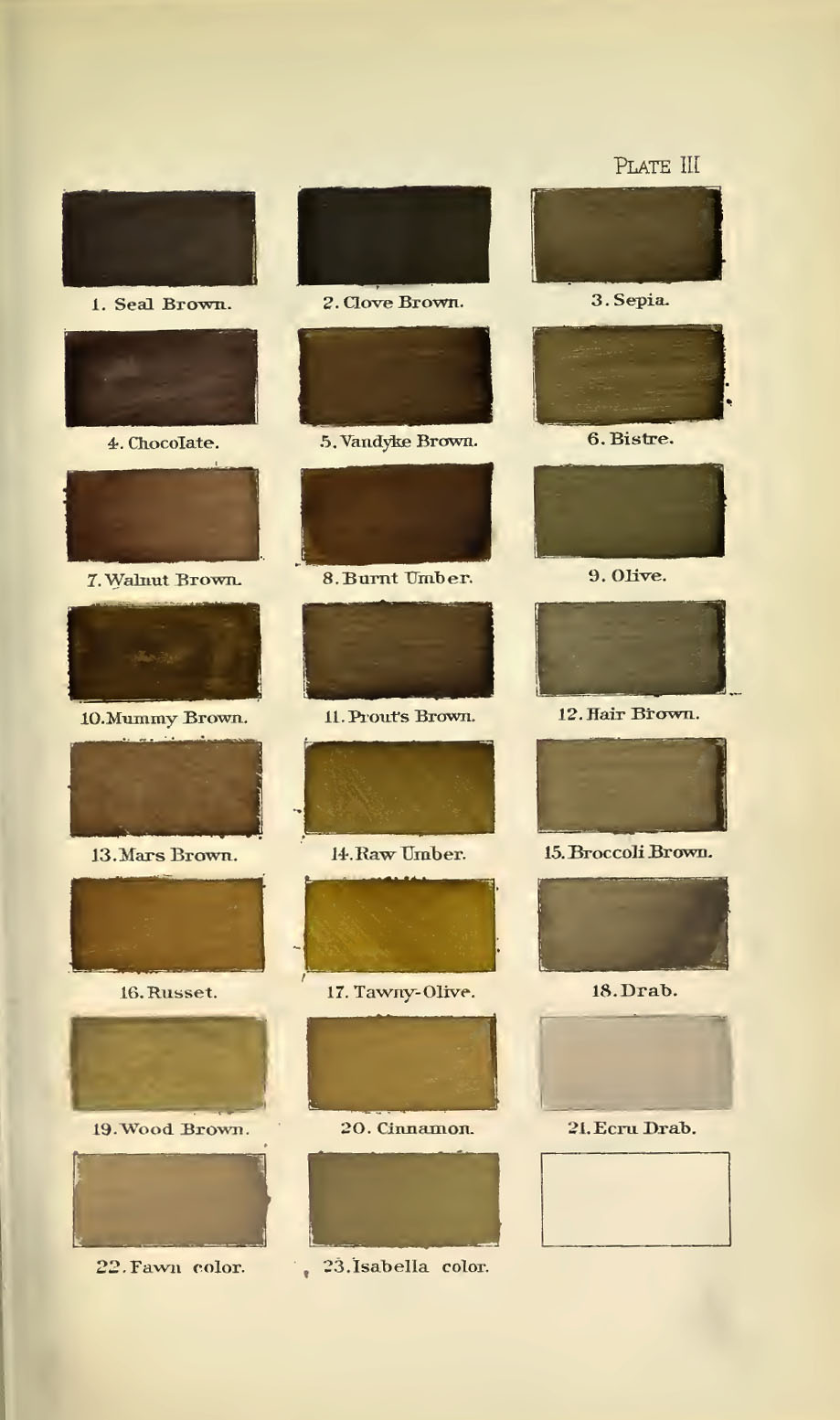
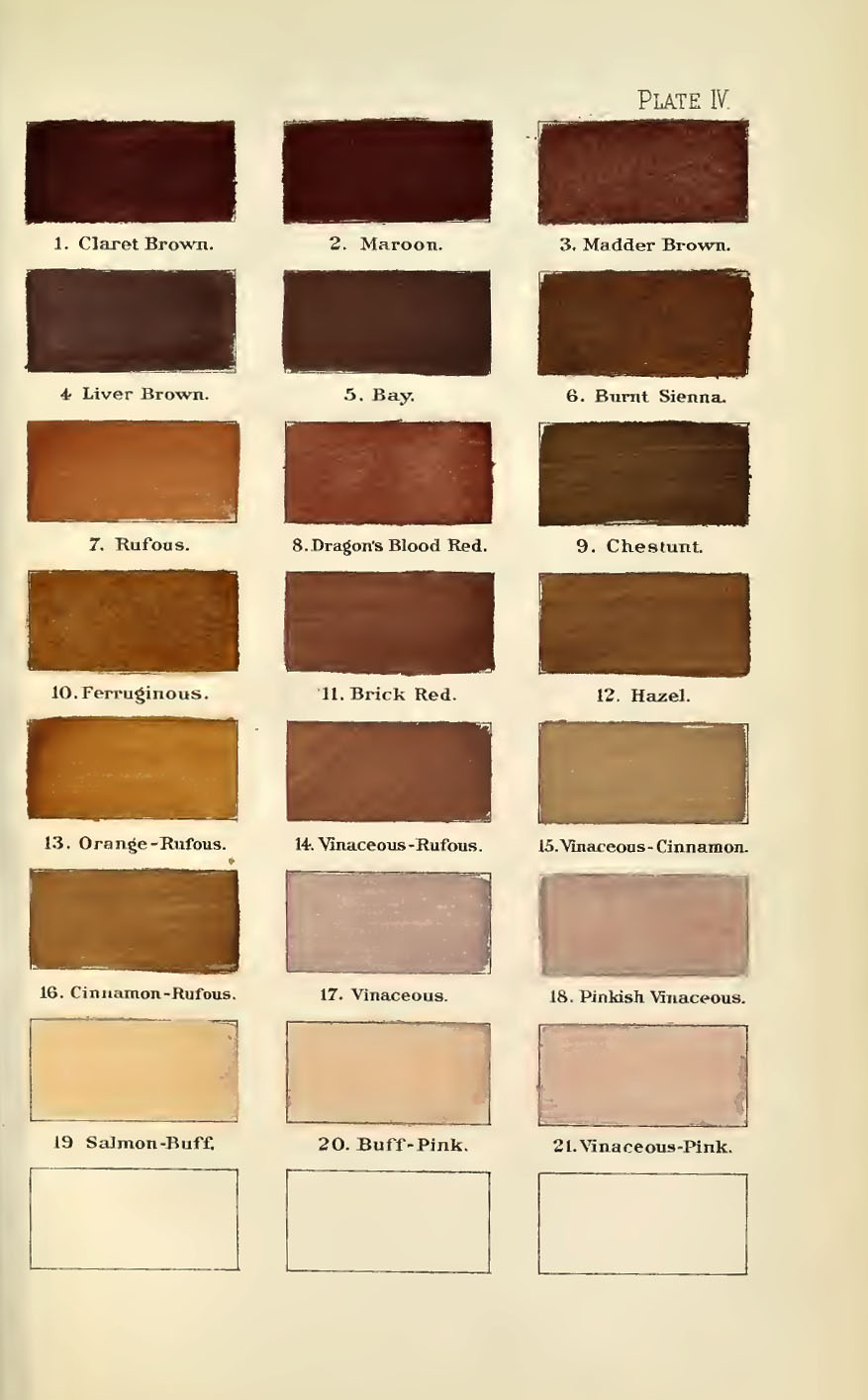
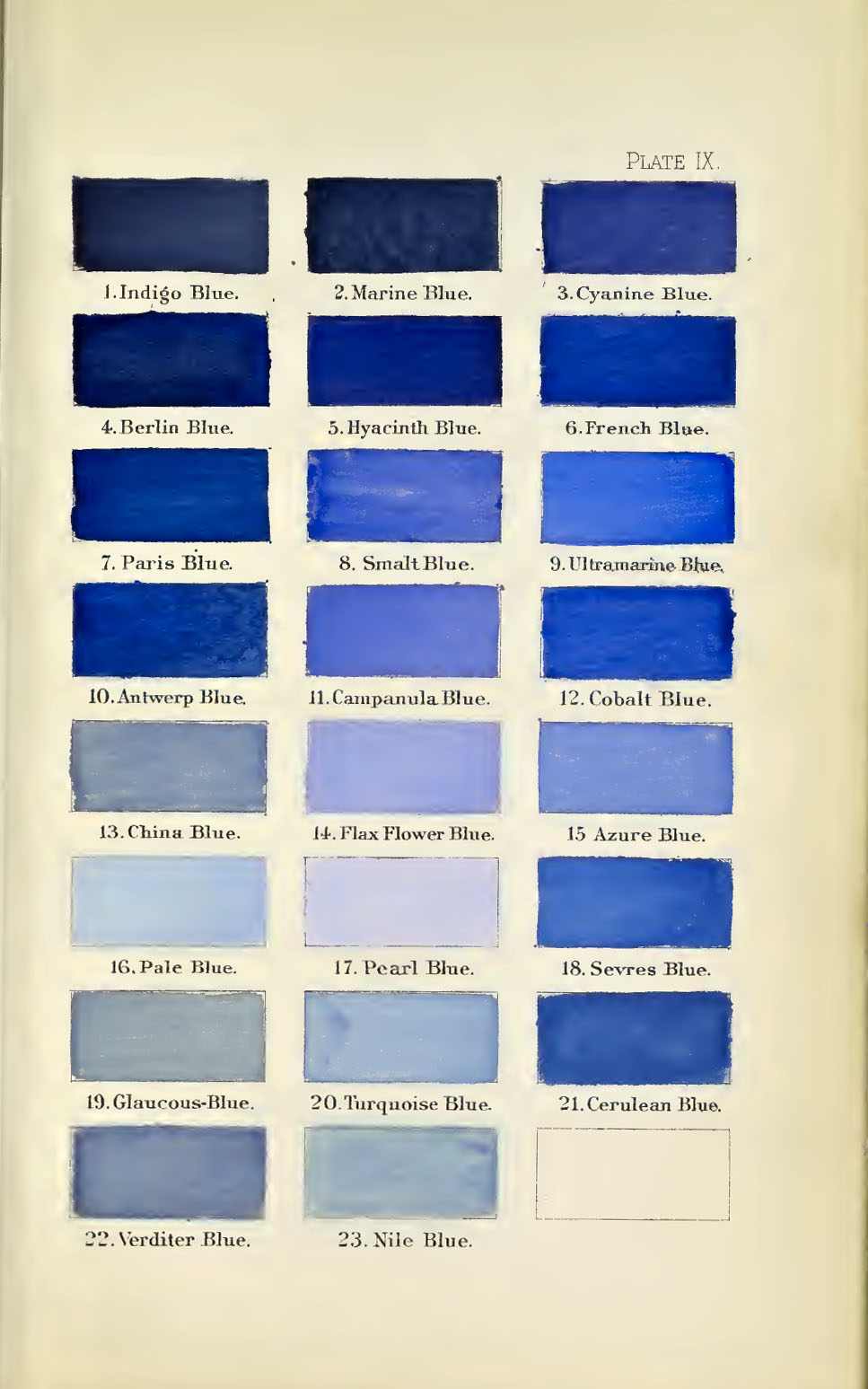
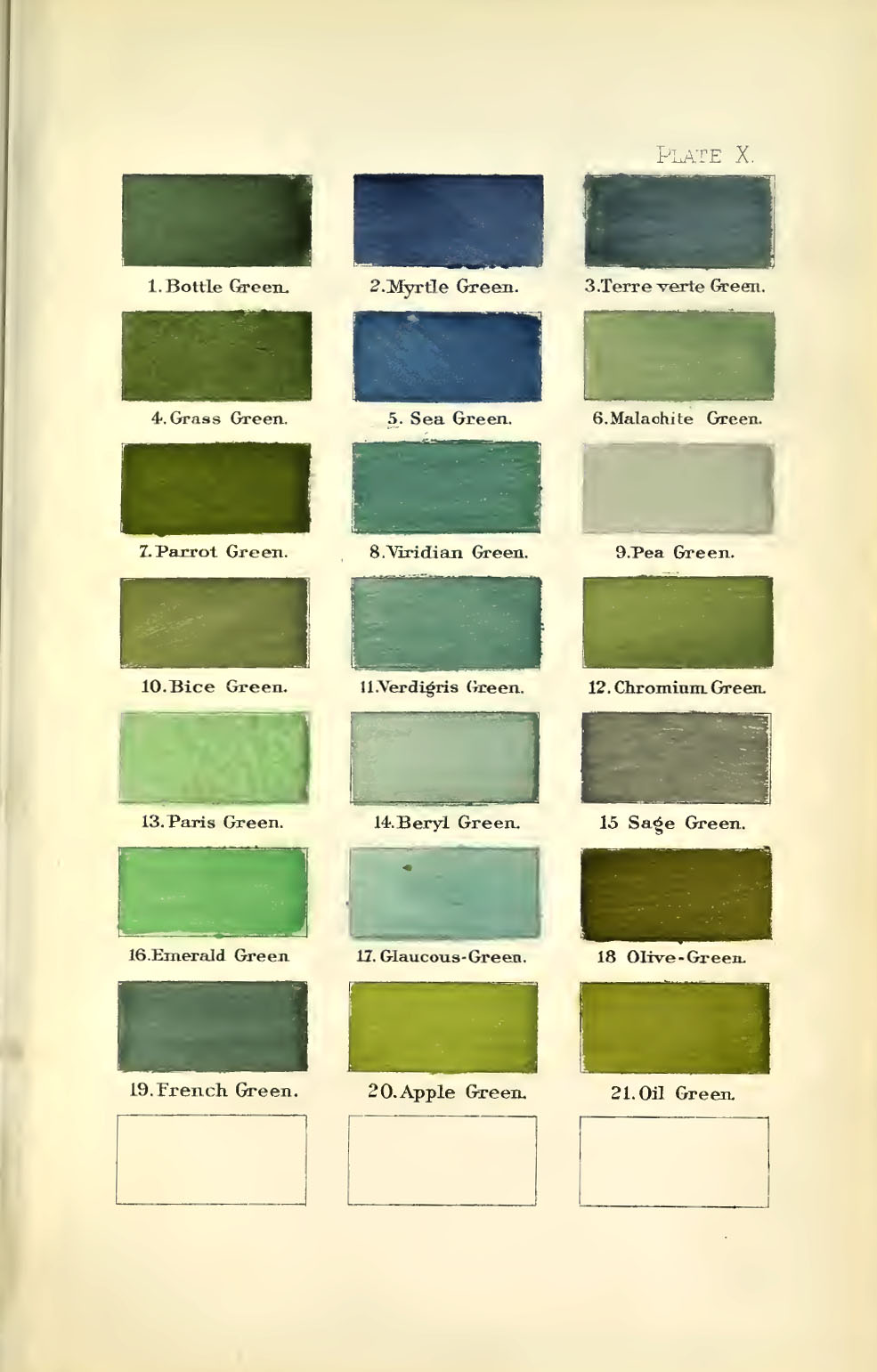
The Following Vintage Color Charts are from the Book "A nomenclature of colours for naturalists".
"A nomenclature of colours for naturalists: and compendium of useful knowledge for ornithologists" by Robert Ridgeway 1886.
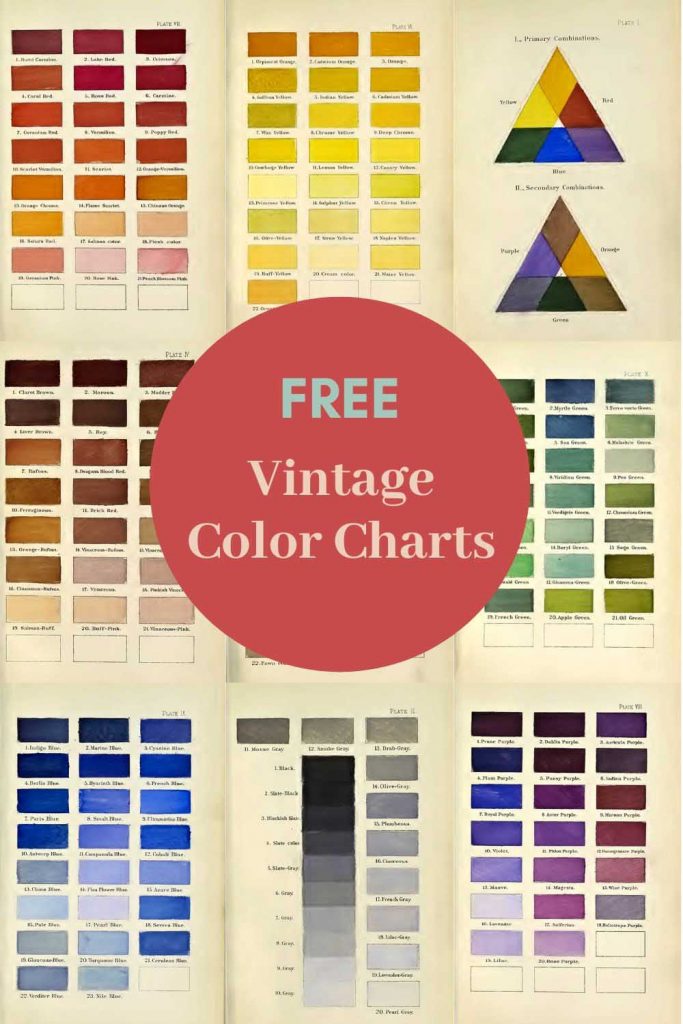
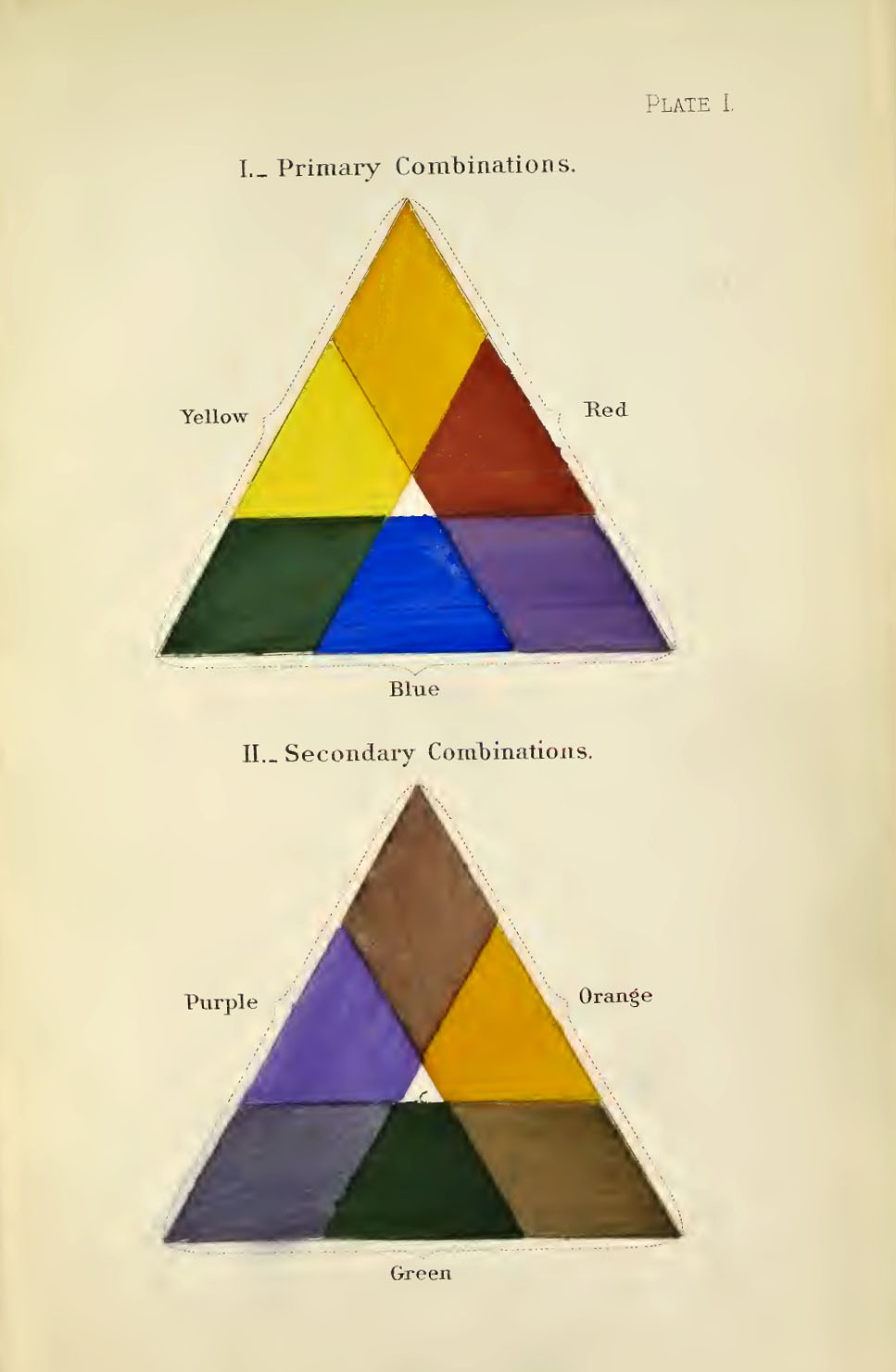
17. Primary and secondary colours in colour triangles
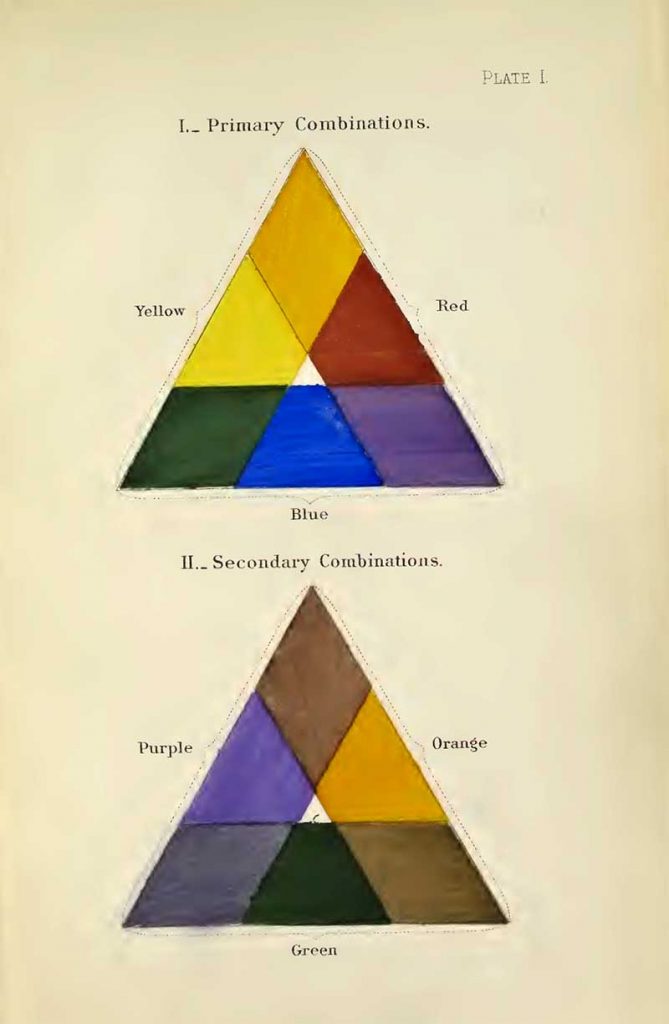
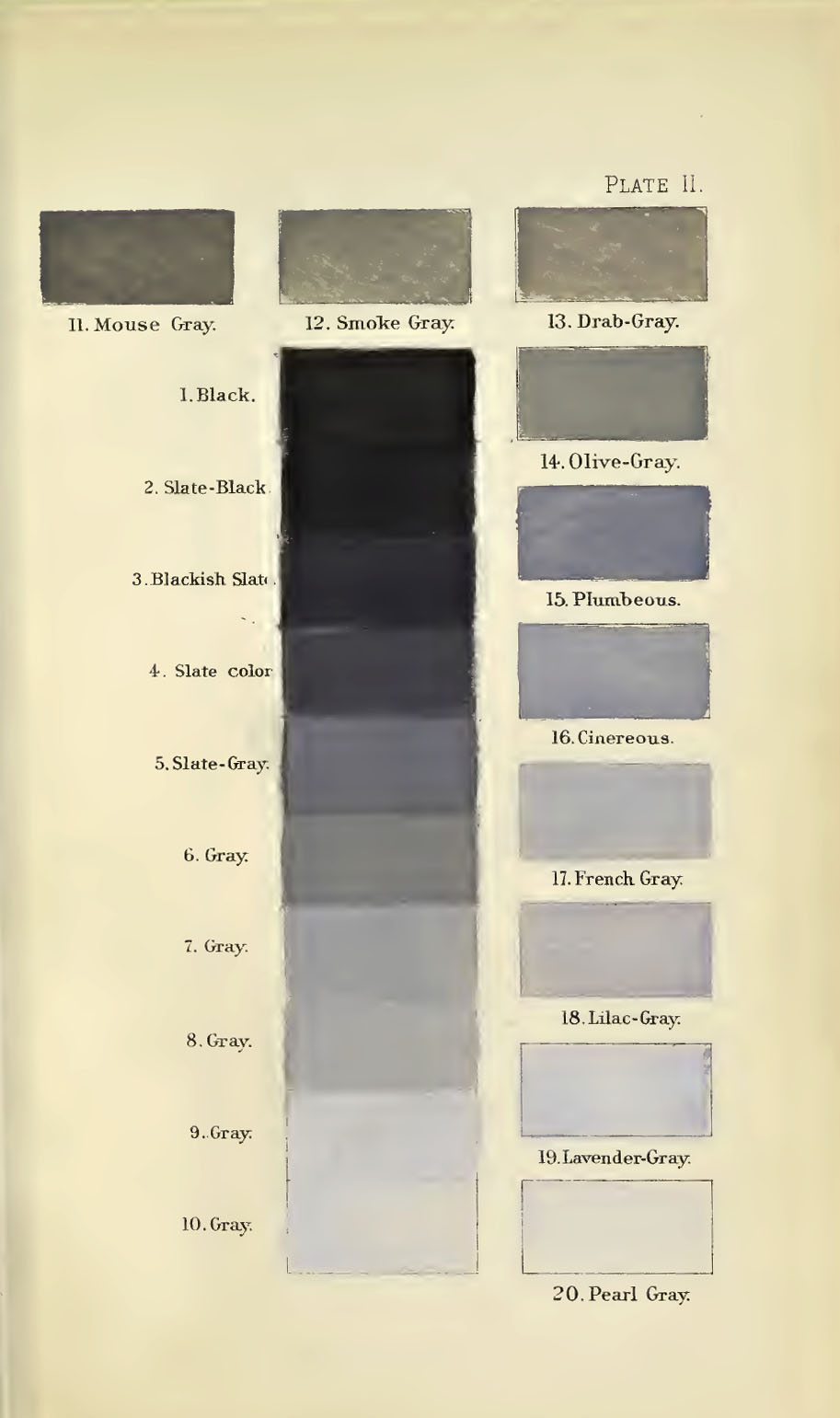
18. Vintage Colour Chart - Greys
All the shades from Black to Pearl Grey.
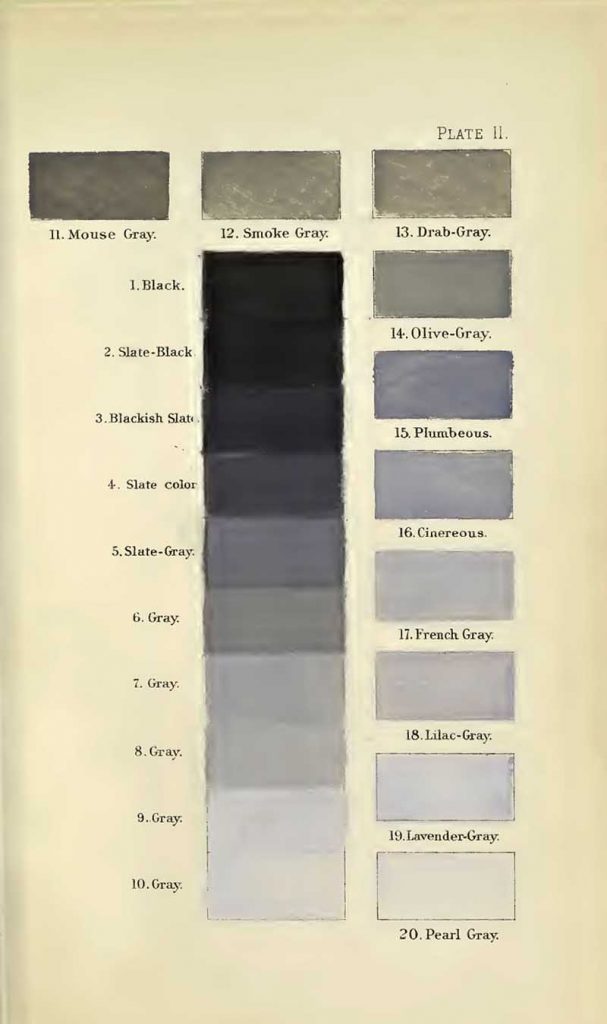
19. Vintage Colour Charts Browns 1
From Seal Brown to IsabellaColourr.
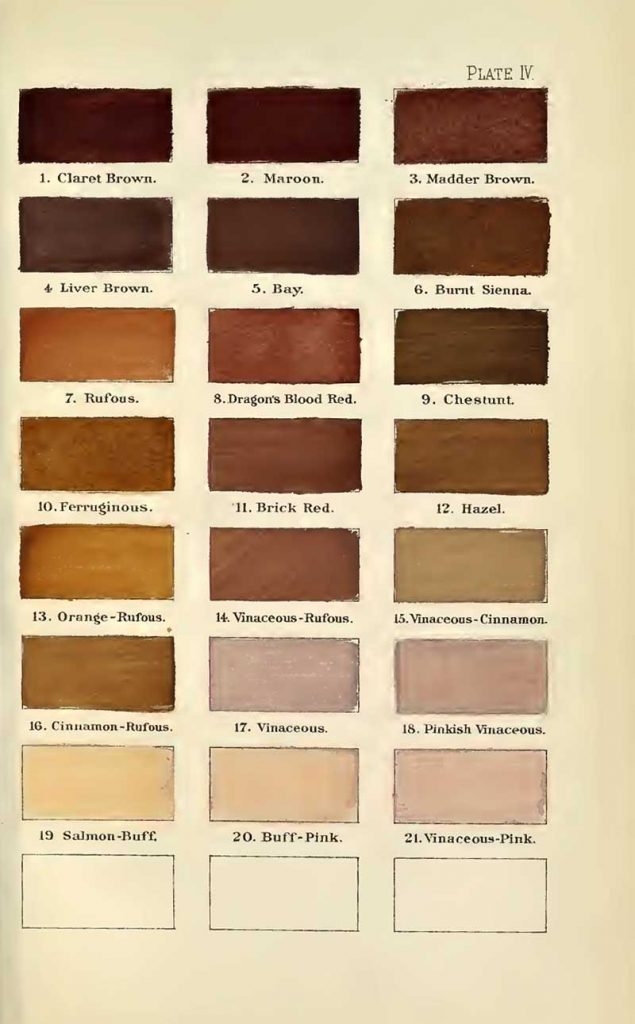
20. Vintage Colour Chart Browns 2
From Claret Brown to Vinaceous Pink.
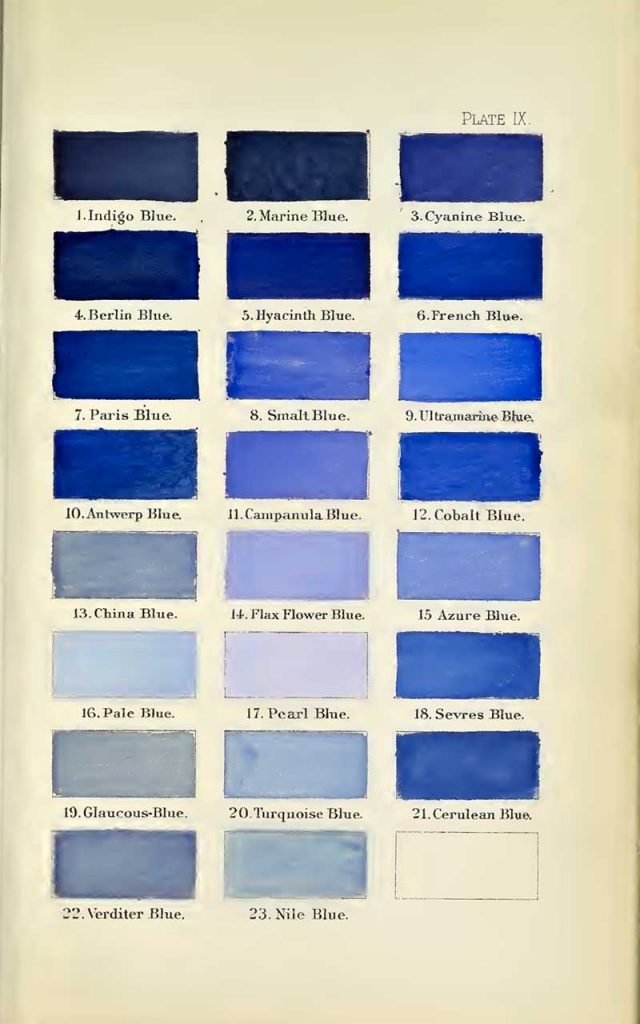
21. Vintage Colours - Blues
From my personal favourite colour, Indigo, to Blue to Nile Blue.
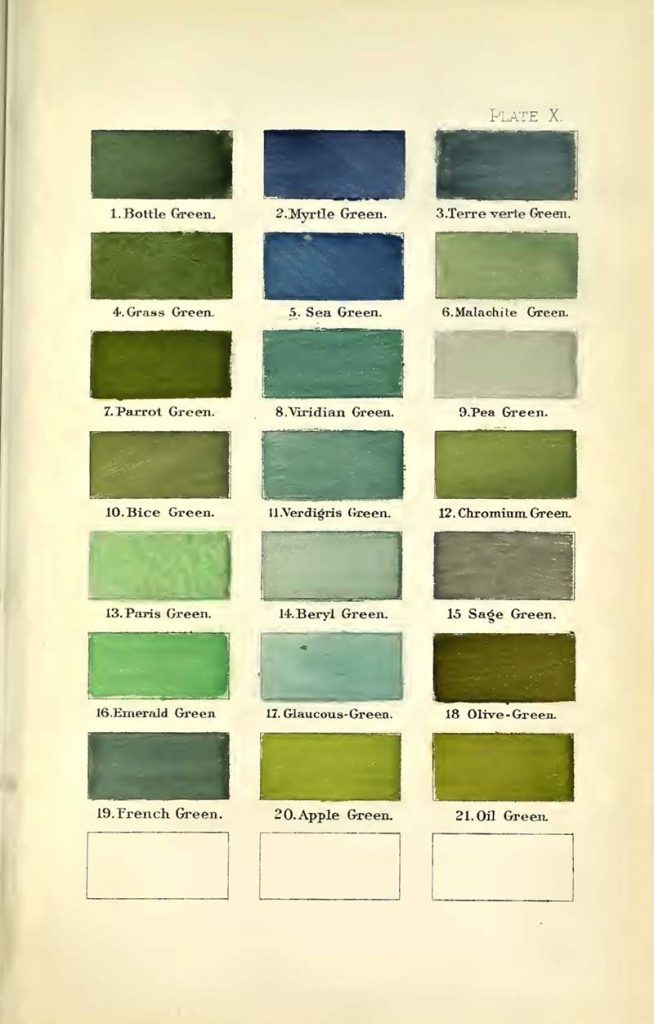
22. Vintage Colours - Greens
From Bottle Green to Oil Green.
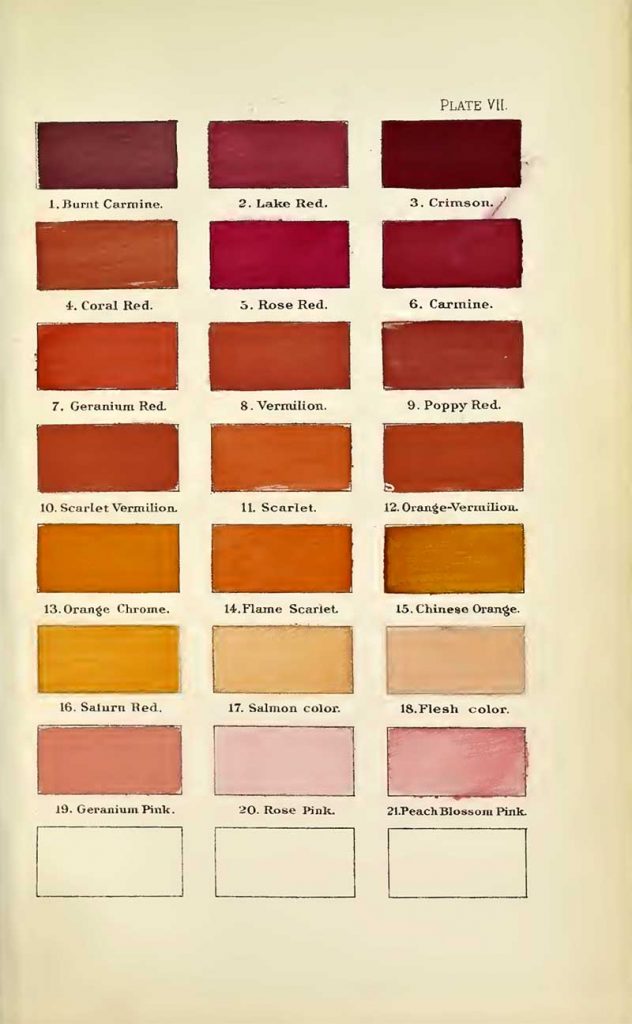
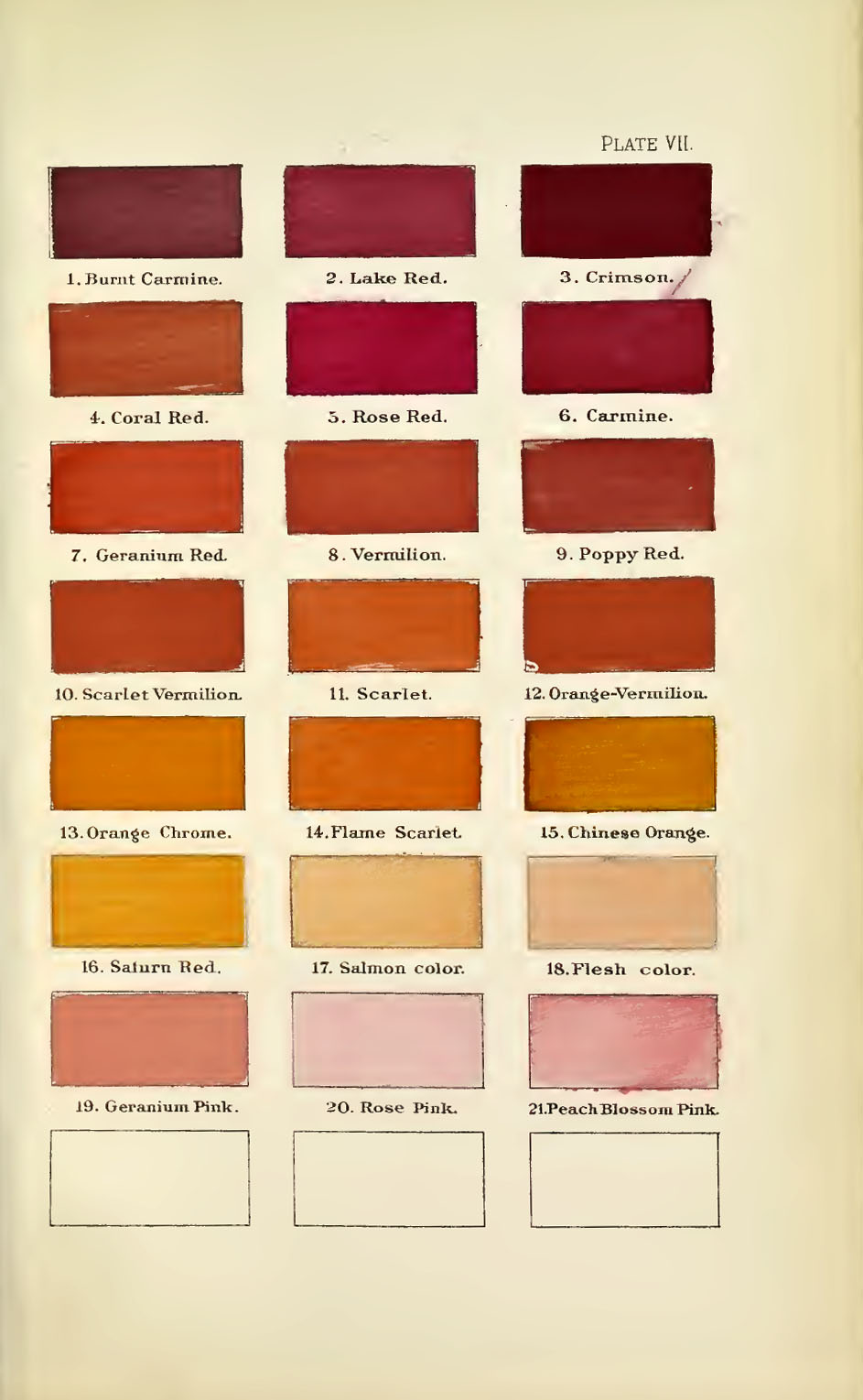
23. Vintage Colour Charts - Reds
From Burnt Carmine to Peach Blossom Pink.
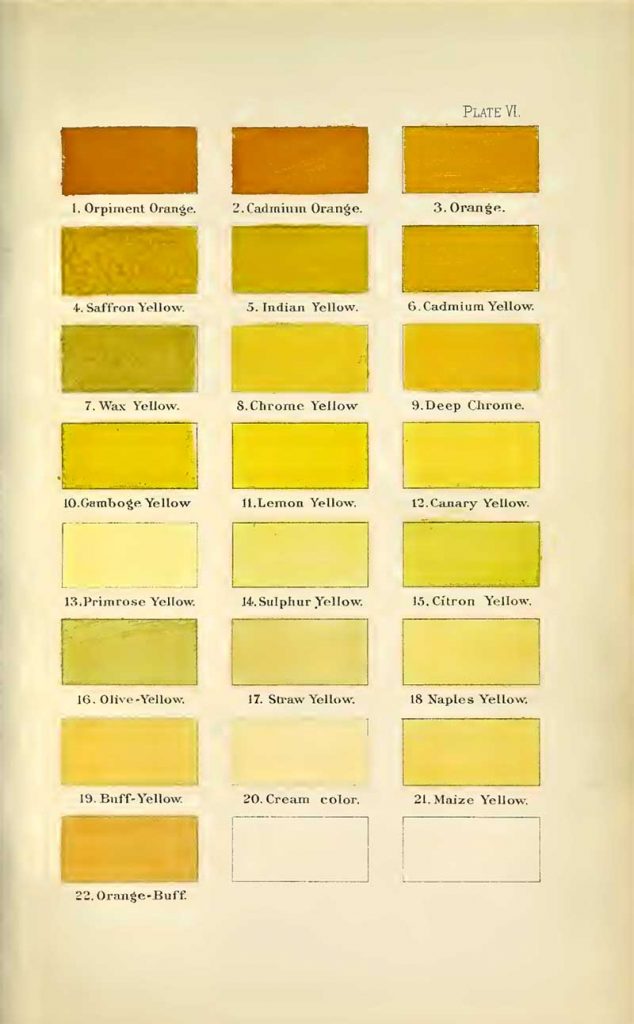
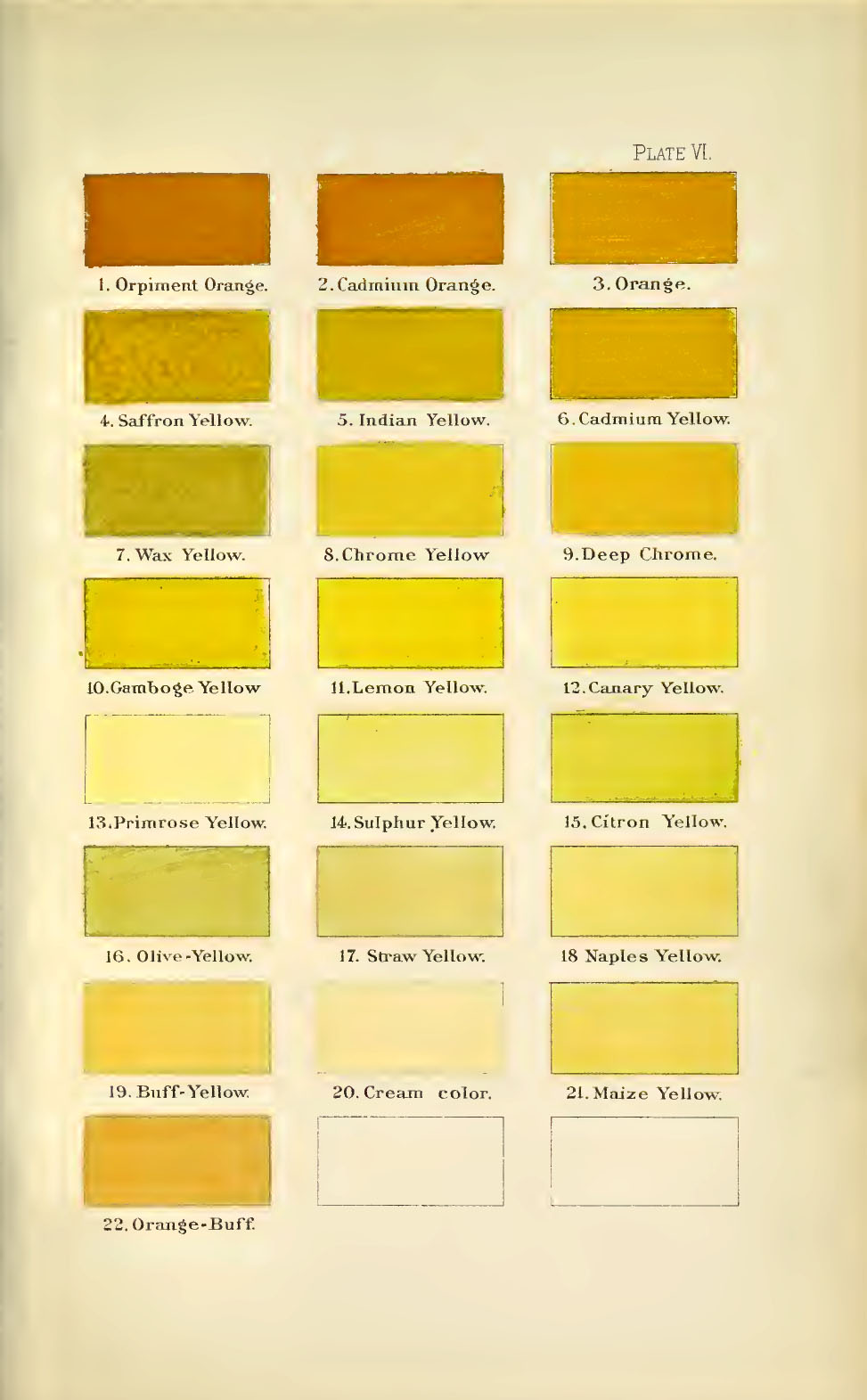
24. Vintage Colour Charts - Orange
From Orpiment Orange to Orange Buff.
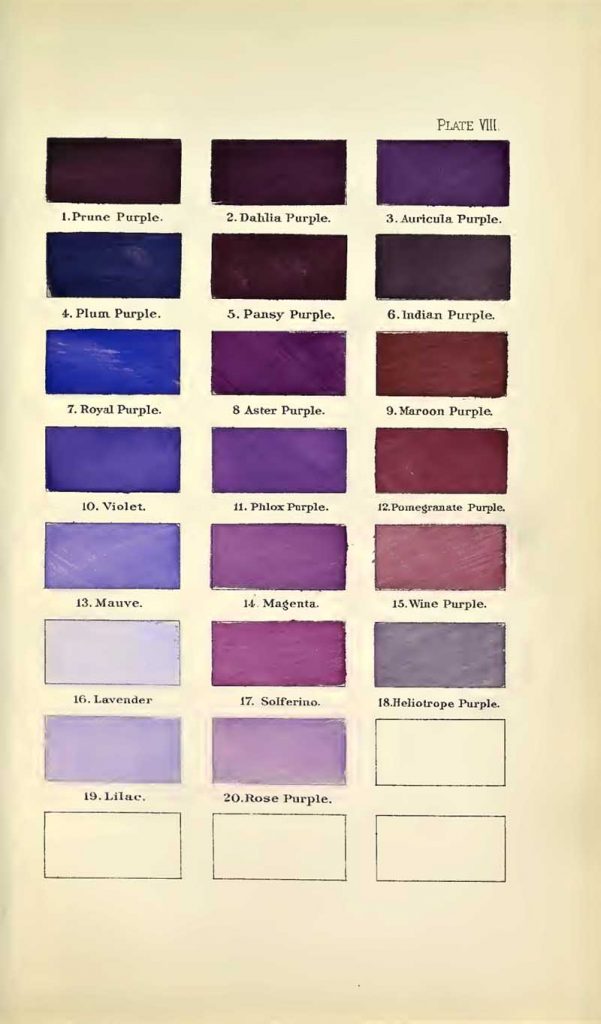
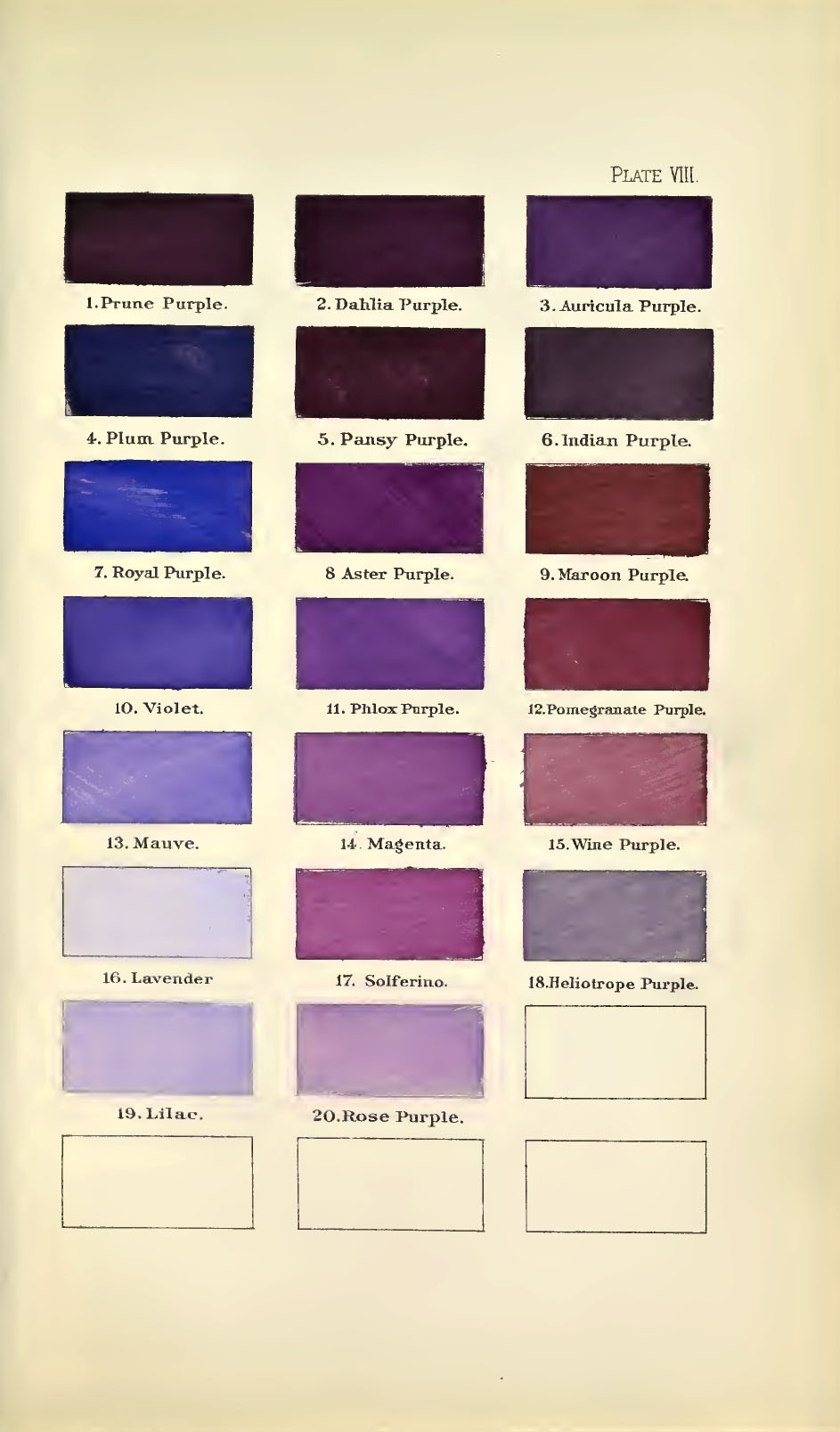
25. Vintage Colour Charts - Purples
From Prune Purple to Rose Purple.
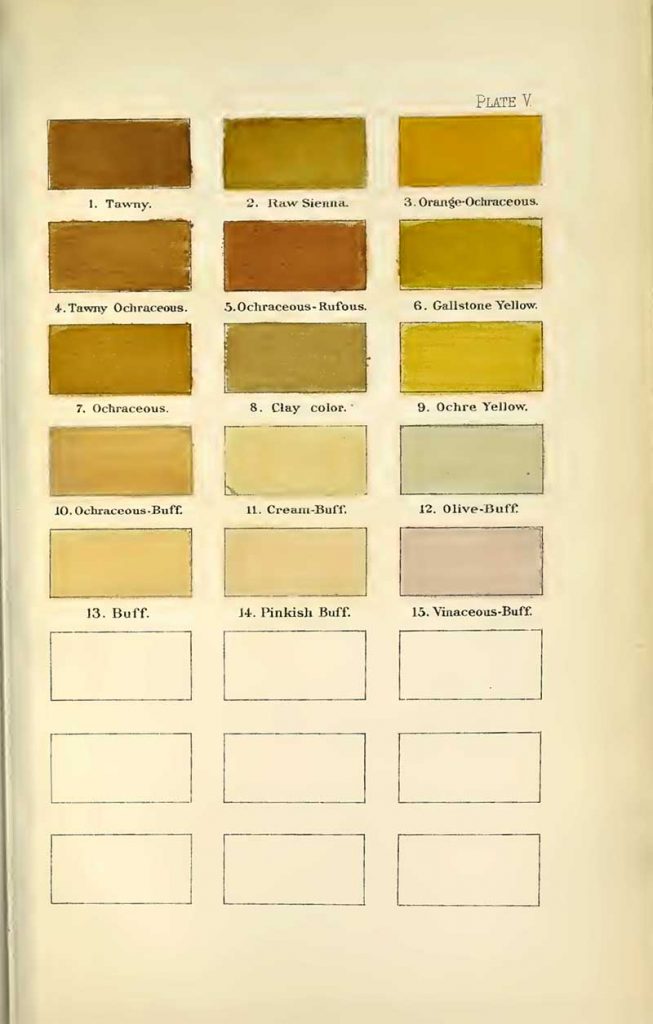
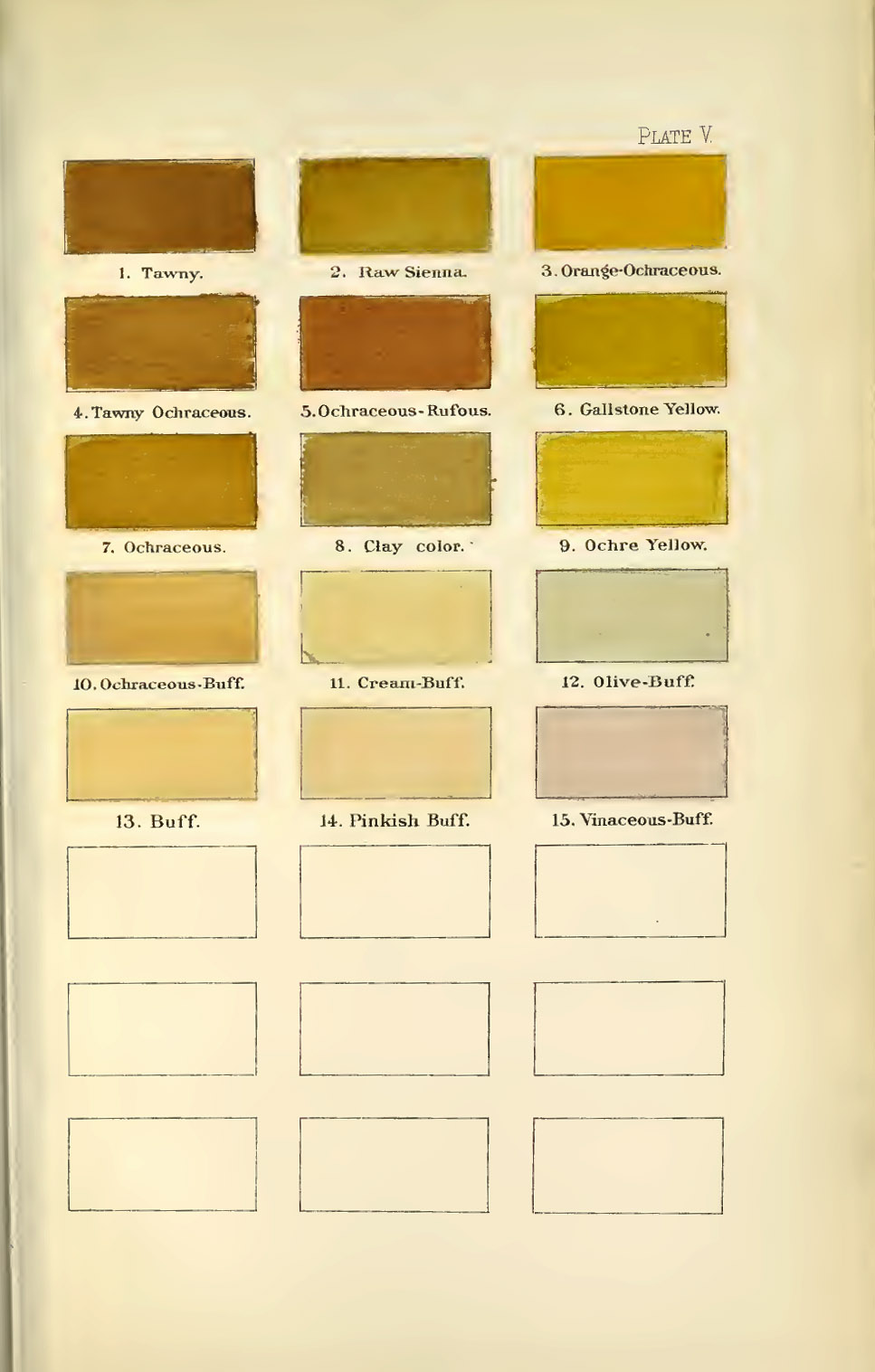
26. Vintage Colour Chart - Yellow
From Tawny to Vinaecous Buff.
If, like me, you enjoy a colourful home decor scheme, any of these vintage colour wheels or vintage colour charts would look fabulous framed as part of a gallery wall. Find more colour and pattern charts here and check out those of Owen Jones's Grammar of Ornament.
These colour wheel posters will go with the vintage circus posters on my wall, along with the colourful vintage hot air balloon prints and vintage Japanese travel posters.
For the best results, I send the JPG of the print I want to my local printers or one of the big print companies. There, you can get the image printed on good-quality paper with high-quality printing, such as giclée.
Most of these printing companies will use software to recommend the optimum print size for each picture. If you search for art printing services, you should find one that meets your needs.
I have a collection of vintage artist supply drawings and adverts from an old catalogue on Pictureboxblue, which would complement these colour wheel prints.
If you enjoyed these posters, then you might want to check out some of the other vintage educational charts and posters on the site.
If you fancy, you can Buy Me A Coffee Here.


These are wonderful! Thank you.
Thank you, glad you like them.
Great collection for inspiration ! Well done!
Thank you so much I'm pleased you enjoyed them.
Wow this is such a great and interesting collection! I love that Goethe though Violet was “unnecessary “. I had no idea that colour wheels went back so far, or were shaped in different ways. Really appreciate this post, thank you!
Thank you so much, yes it's interesting to see the history of color wheels.
Wow, I didn't know that the color chart dated to 1686! Still learning something new every single day.
I didn't know either until I started curating this collection.
Color wheels have always confused me but all of the information and research you've provided is such a great resource! PINNED! Thank you!
Thank you so much, really pleased to hear that you like the resource.
I really love your vintage prints! I have multiple on my walls and there's nothing quite like them, it would be really awesome if you did a collection of vintage tarot cards 🙂
Thank you, Lauren. I will see what I can do about the tarot cards, watch this space.
Thank you so much for this post. My goodness the work in the research and posting musst have taken ages.
Thank you, I really enjoy finding the images and finding information about them. That is why I do this blog.