
Free Skeleton Prints for Art, Anatomy & Halloween
Obsessed with bones, illustrations, or Halloween flair? These 20 vintage skeleton prints are your new best friend. Whether you’re into anatomical art, gothic décor, or spooky crafts, these high-resolution, public domain images are ready for your creativity.
More Than Just Halloween Decor
Skeletons may be the poster child of October thrills, but these vintage illustrations offer so much more. They’re beautiful historical artifacts, anatomical guides, and creative inspiration all rolled into one. Think of them as conversation starters. Whether you’re decorating for Halloween or studying bone structure for your art practice.
The Science & Stories in Bones
Did you know humans start life with 270 bones, which reduce to about 206 in adulthood as some fuse together? Or that the skeleton isn’t just a frame, it supports our body, enables movement, protects organs, produces blood cells, stores minerals, and even contributes to endocrine regulation? These skeleton prints aren’t just spooky; they’re windows into centuries of anatomical study.
Here you’ll find 20 high-resolution skeleton illustrations (public domain), including classic 1690s and 1830s prints. curated for both the Halloween-obsessed and the anatomy-curious. Use them for art reference, vintage décor, DIY crafts, or just to marvel at how people once visualized the human form.
How to Use These Skeletons
- Art & Illustration References — great for anatomy sketching, character design, or stylized work
- Vintage & Gothic Décor — frame your favorites for year-round wall art
- DIY & Halloween Projects — overlays for printables, greeting cards, ephemera
- Study & Curiosity — enjoy the labels, details, and historical context of old anatomy
To download a higher-resolution version of the skeleton illustration you want, click on the title above, then you can print or save that image.
There is also a collection of human skull drawings available to download on Pictureboxblue.

Skeleton Illustrations 1-10
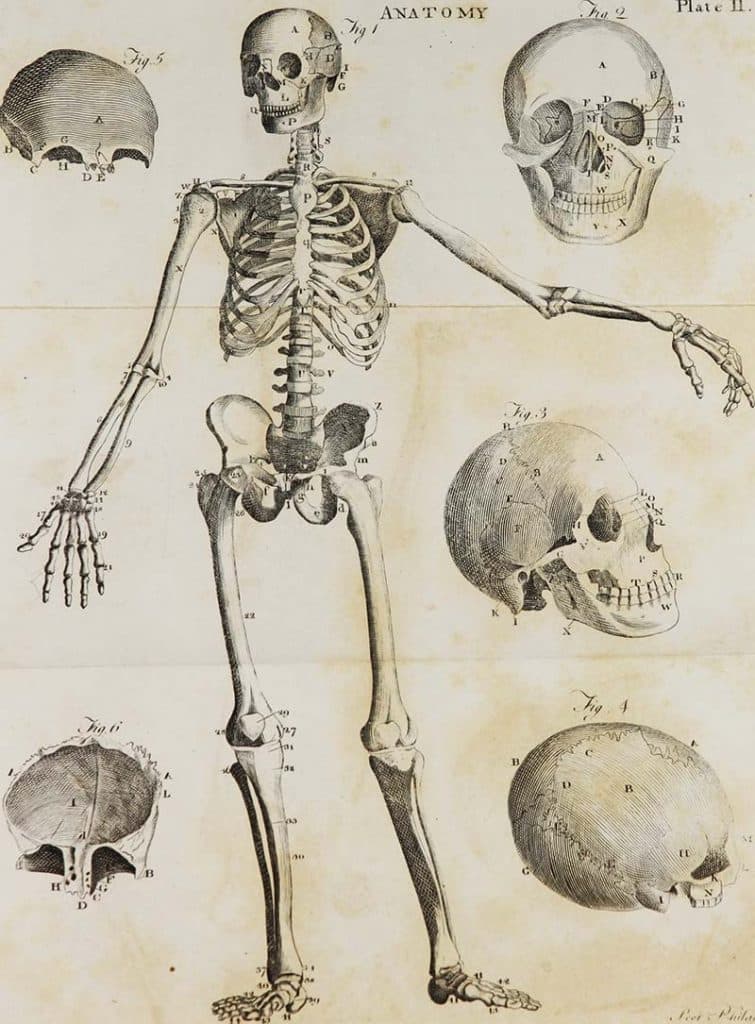
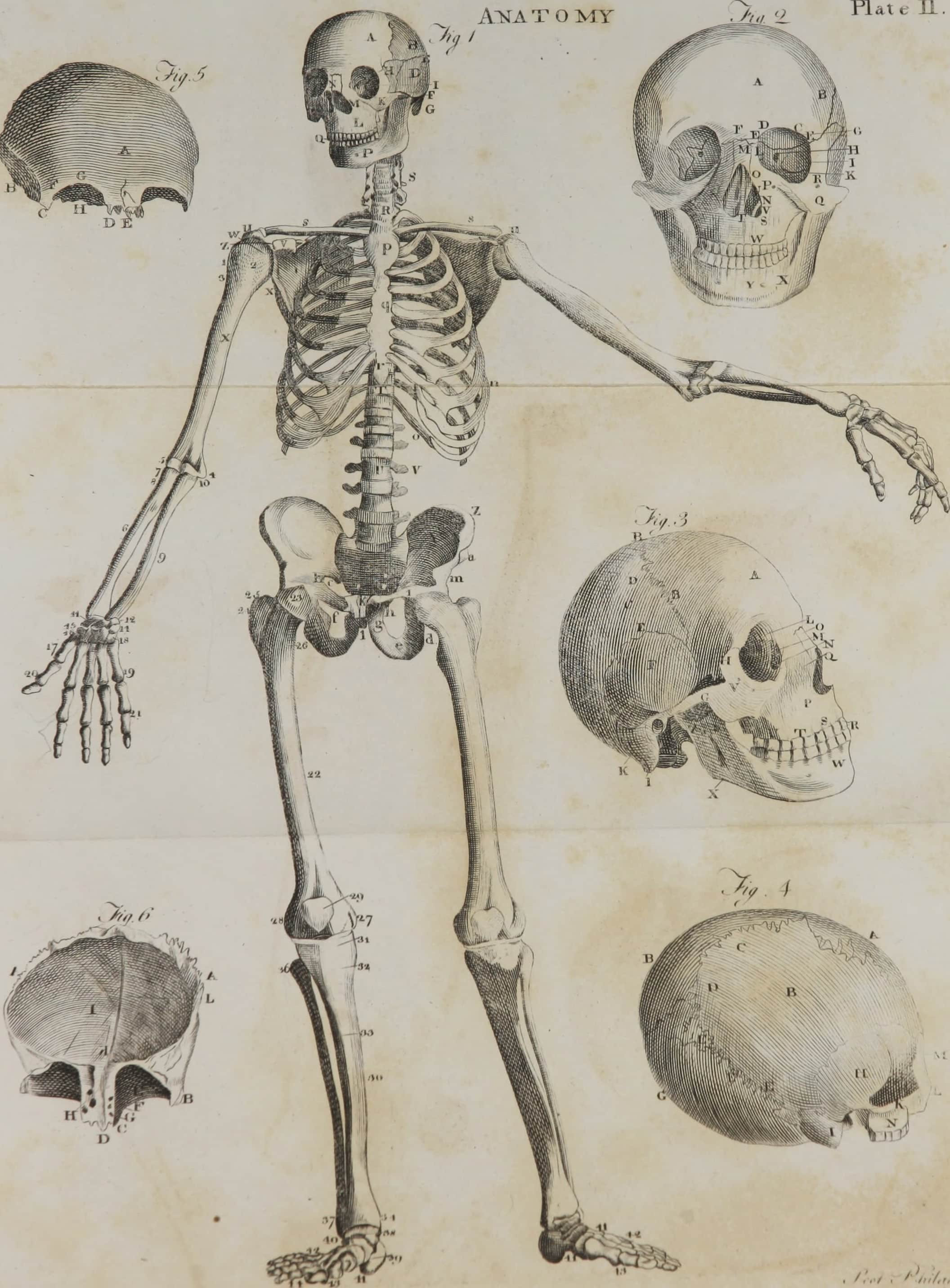
1. 1839 Human Skeleton And Skulls
These excellent skeleton illustrations and skull drawings are from "A System of Anatomy For The Use Of Students Of Medicine (Volume 1)". This book by Casper Wistar was published in 1839.
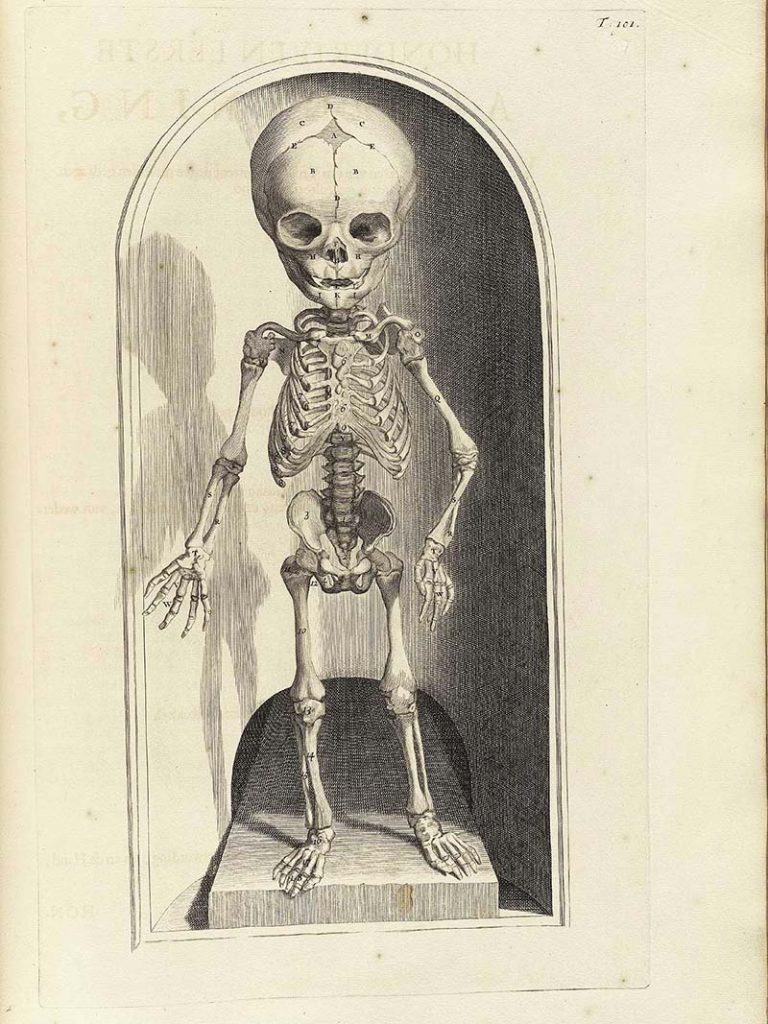
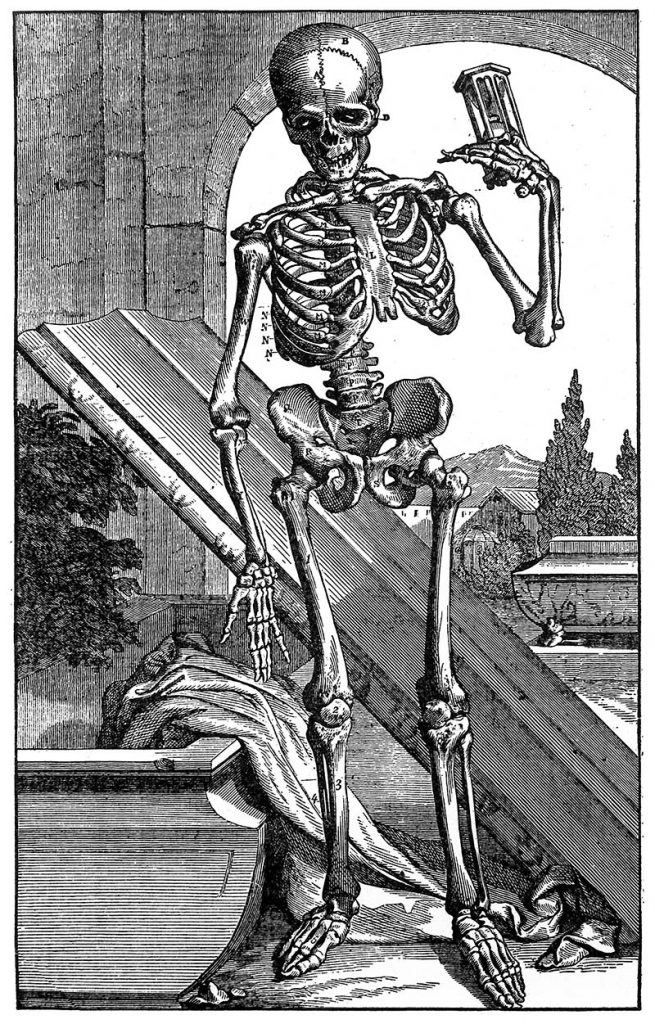
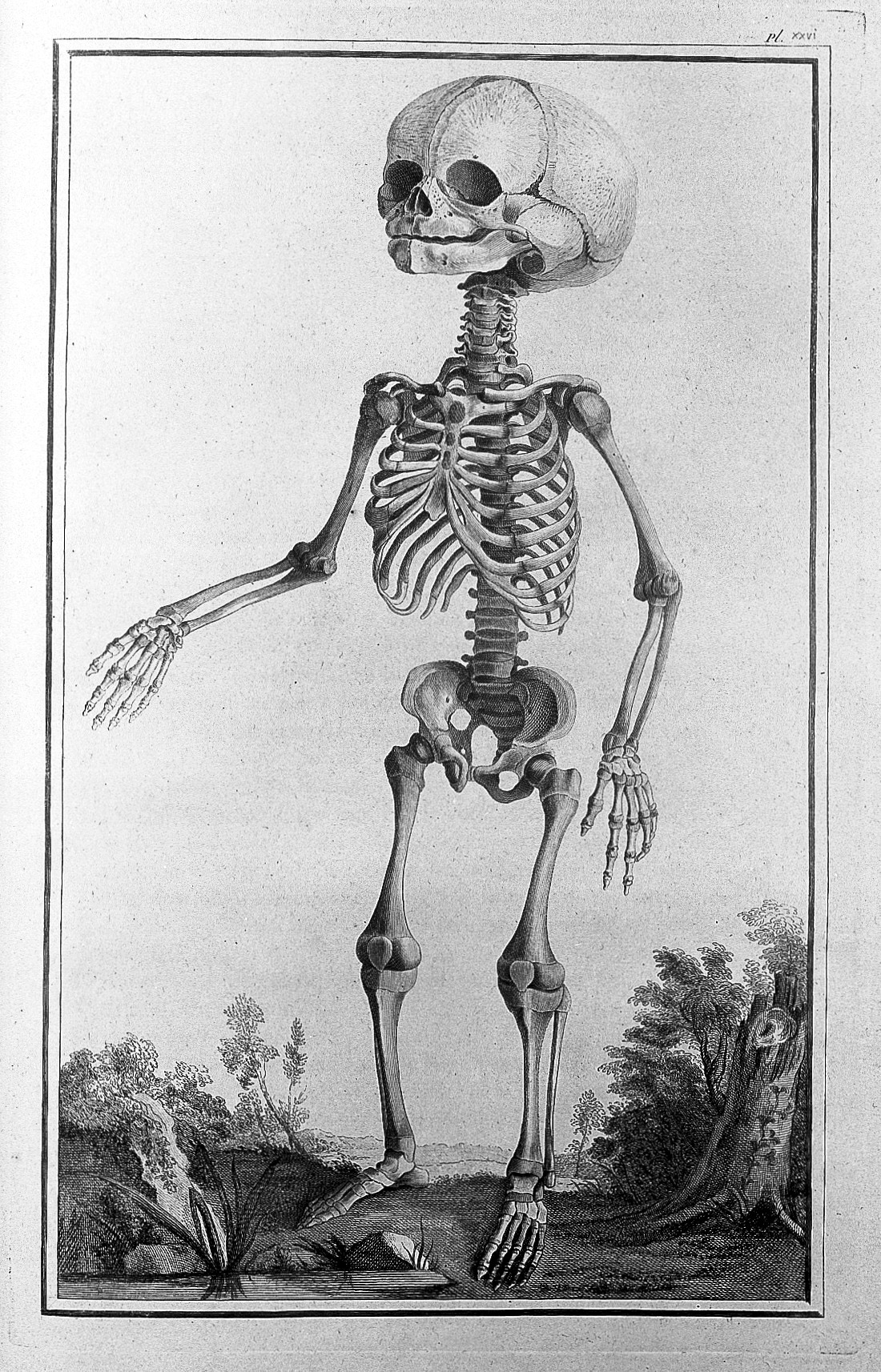
This image is by the Dutch physician and anatomist Govard Bidloo, in 1690. Judging by the size of the skull on this skeleton drawing in relation to the rest of the body, I would think this is a drawing of a child's skeleton.
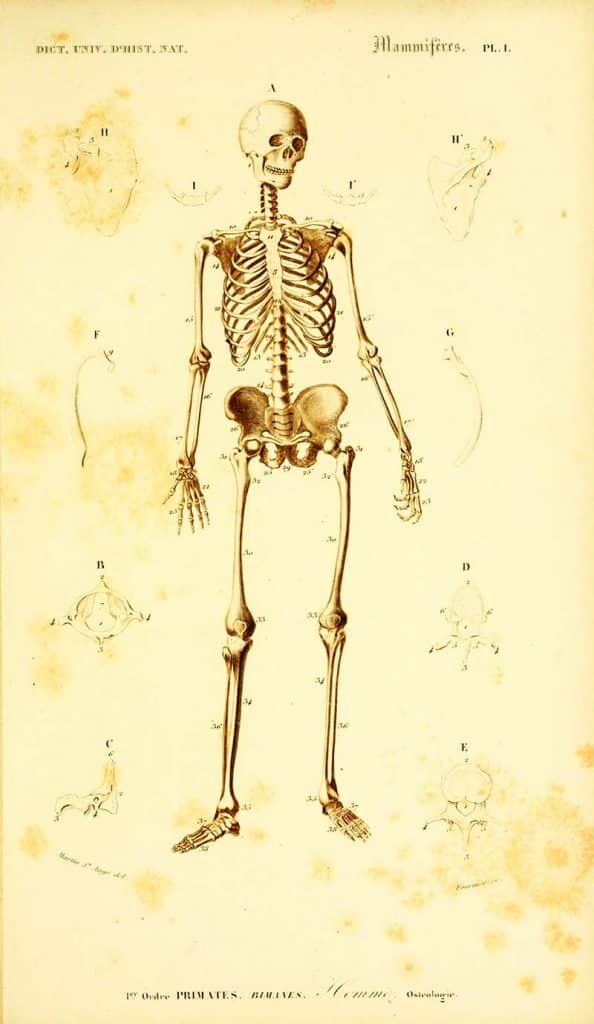
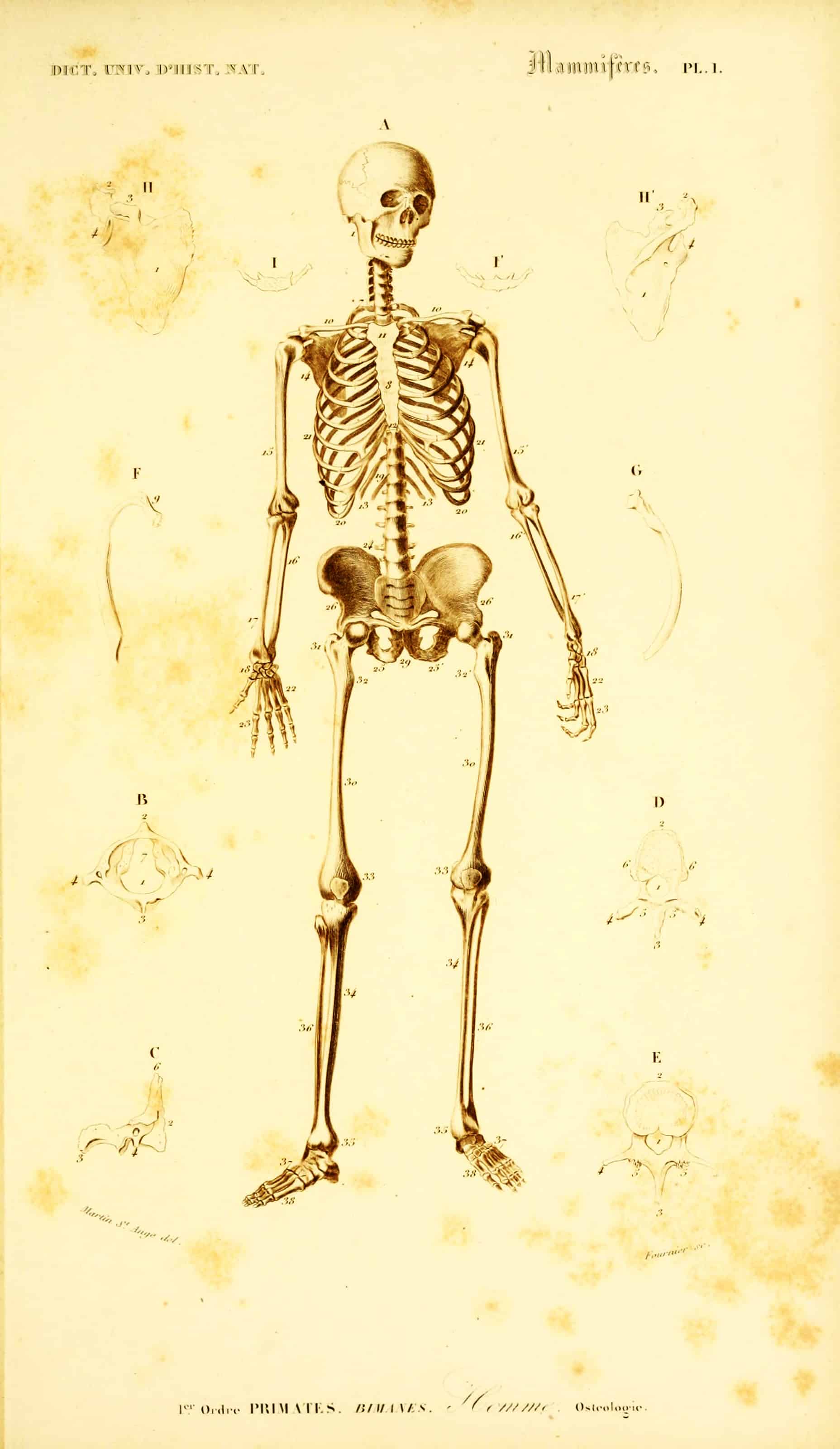
3. 1849 Human Skeleton Illustration
An excellent example of the human skeleton from the seminal book "Dictionnaire Universel d'histoire Naturelle" published in 1849.
I've already shared some wonderful animal prints and images from this famous book by Charles d'Orbigny.
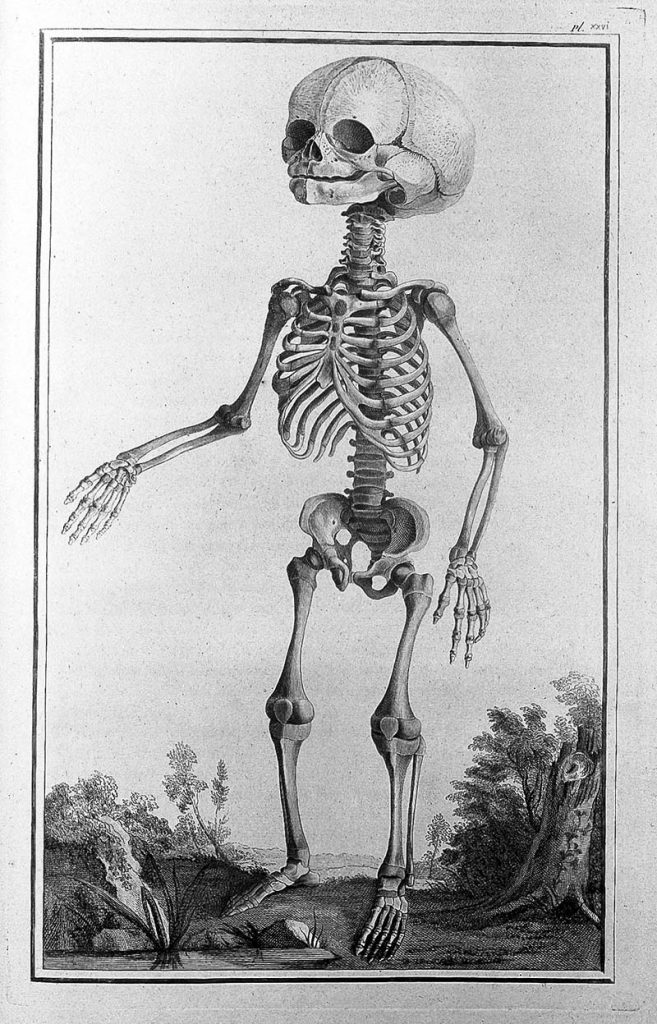
4. 1759 Illustration "Traite d'osteologie"
Another child skeleton drawing, this time by the Scottish surgeon and anatomist, Alexander Monro.
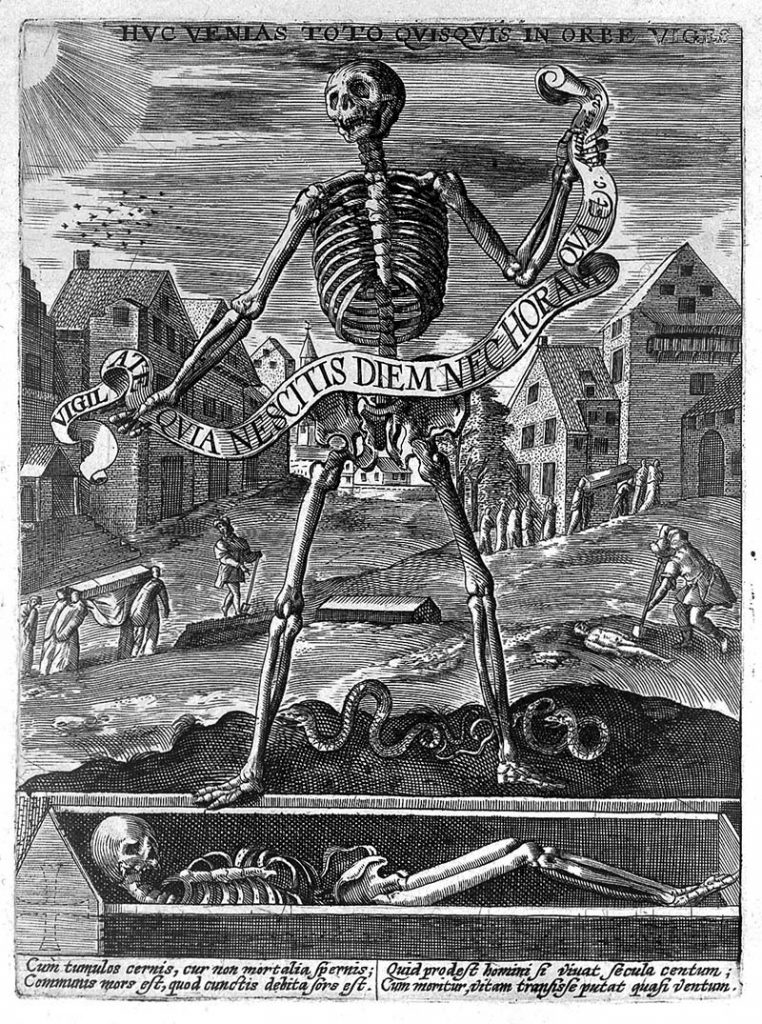
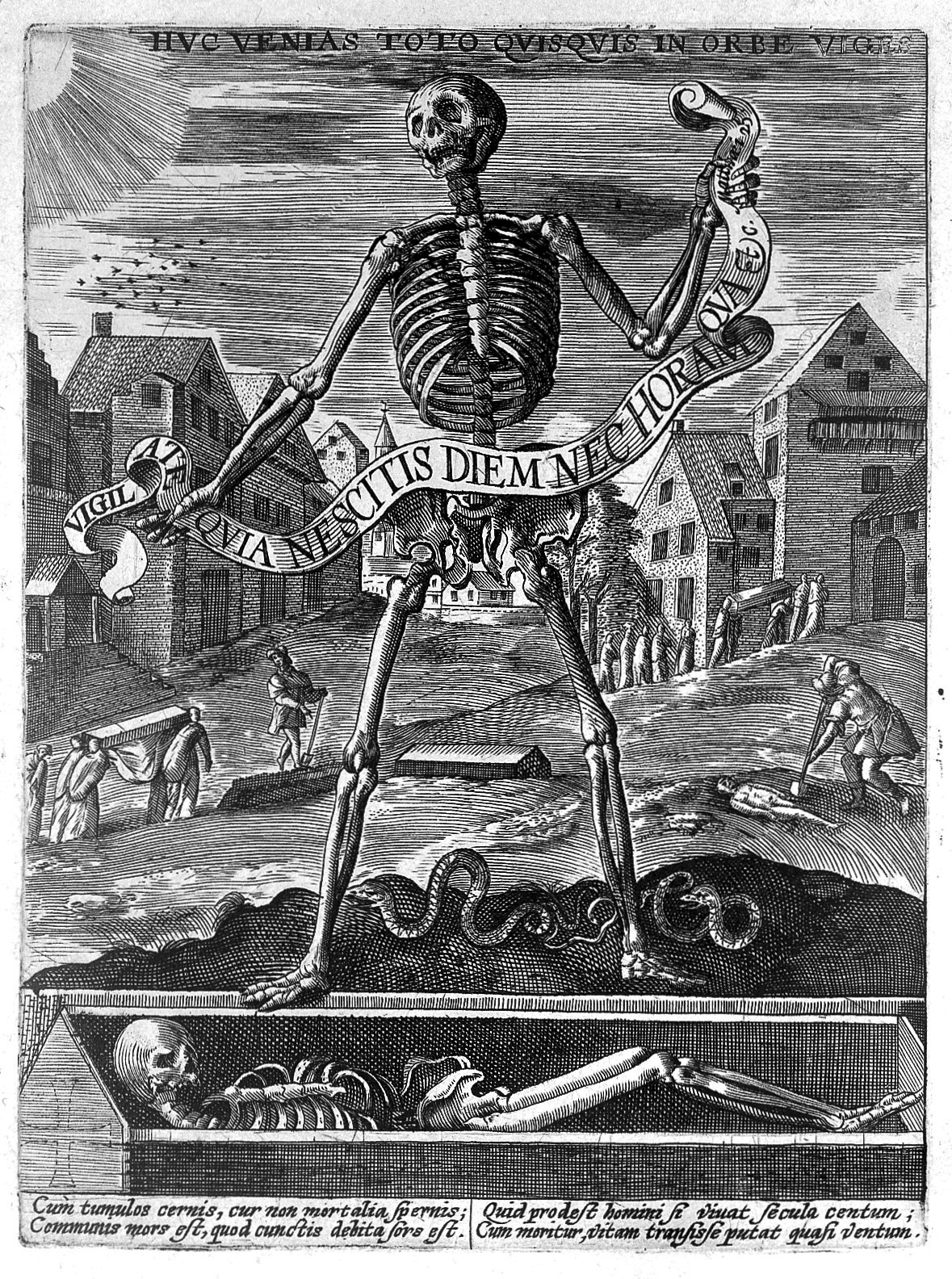
5. Allegory of Death; Skeleton
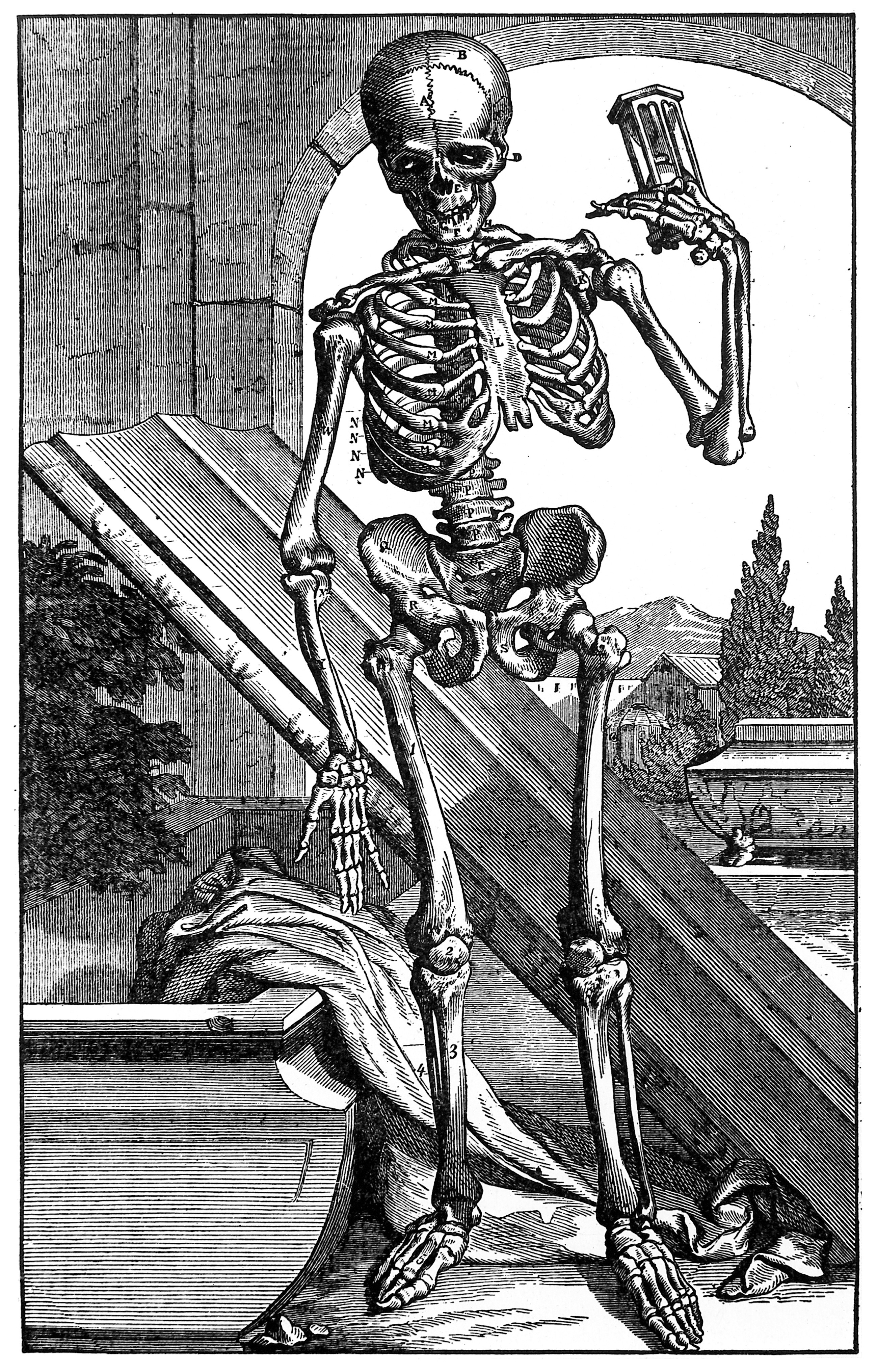
This excellent illustration is believed to date back to 1690. It is from the collection at the Wellcome Trust.
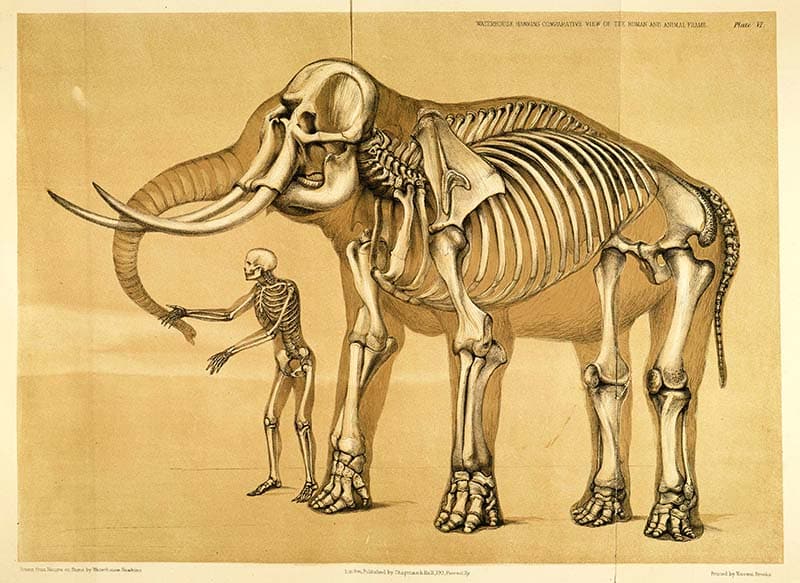
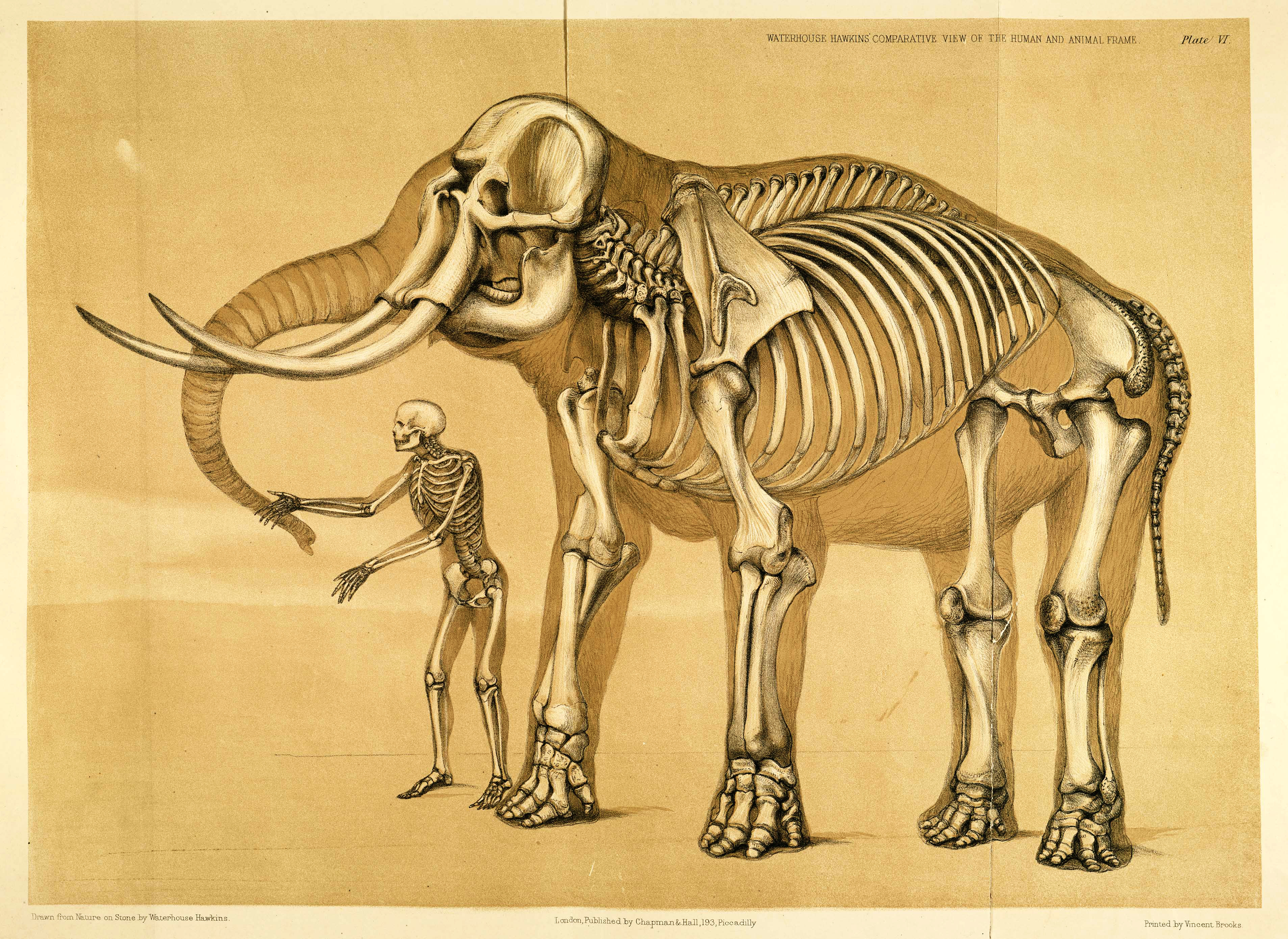
6. Comparative View of Human & Elephant 1860
These are interesting skeletal illustrations comparing the skeletons of a human and an elephant. The drawing is by Benjamin Waterhouse Hawkins, 1860.
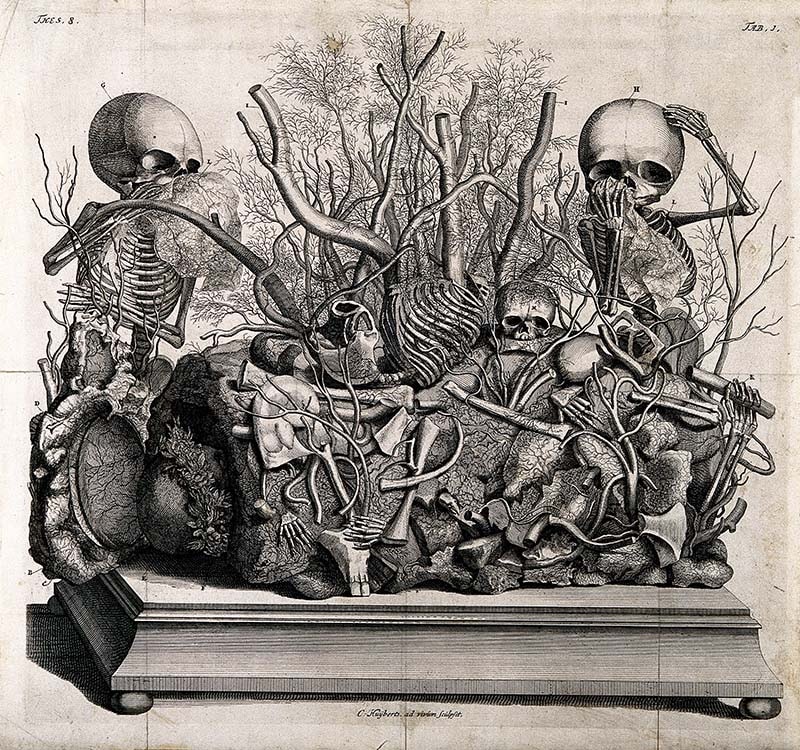
7. Skeleton Illustrations - "Tableau of Injected Vessel"
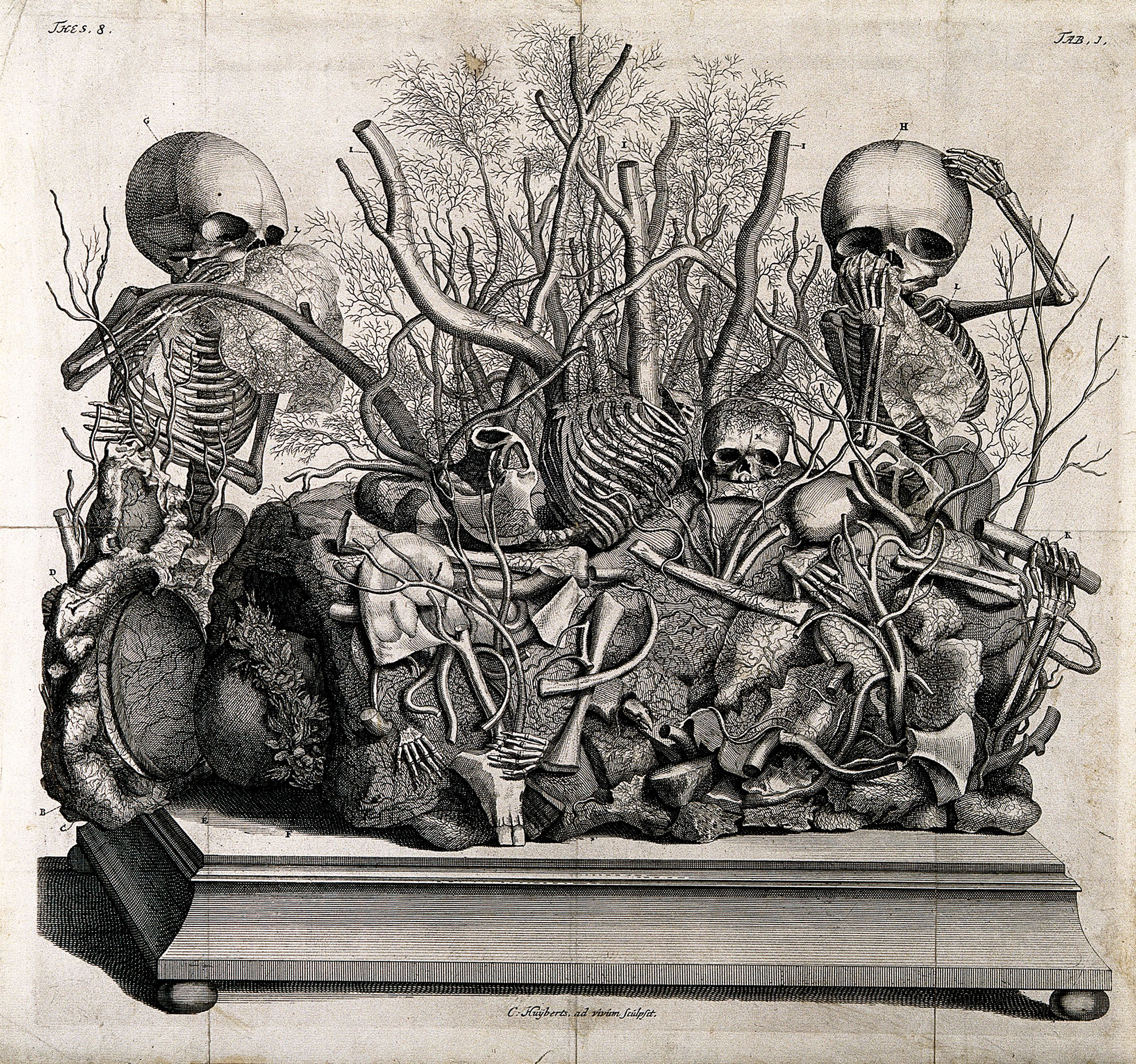
Another fabulous piece of skeleton art from the Wellcome Trust. This one is by Frederik Ruysch, the Dutch anatomist. You'll also find this image with some of Ruysch's anatomical prints in this collection of vintage Spooky illustrations.
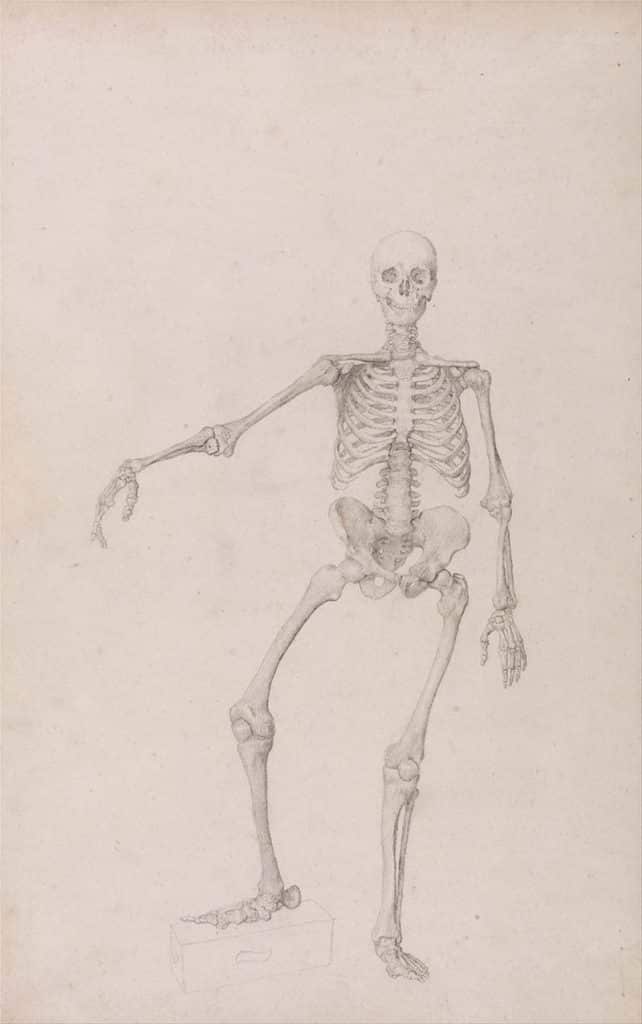
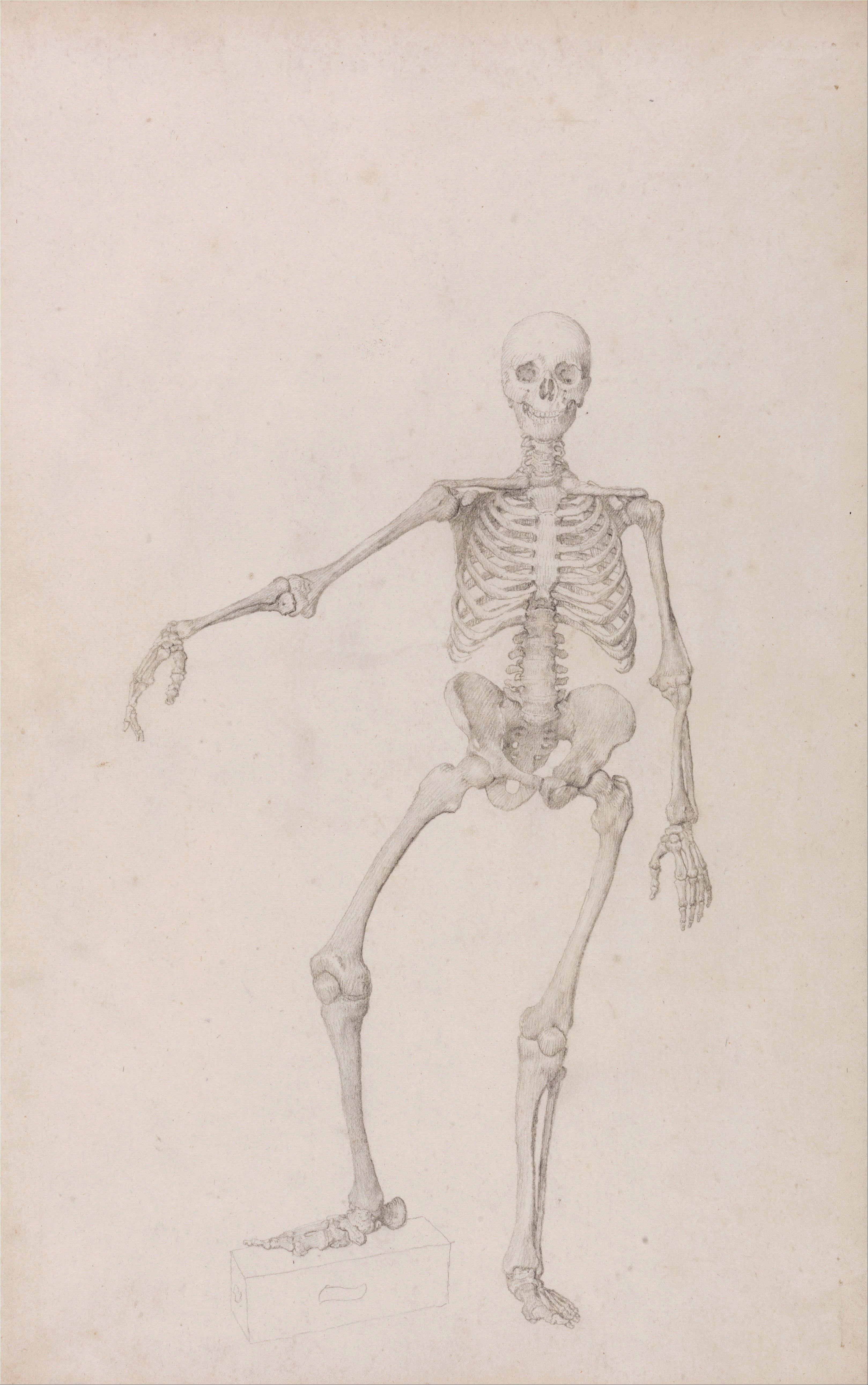
8. George Stubbs Skeleton Illustration
From the book "A Comparative Anatomical Exposition of the Structure of the Human Body with that of a Tiger and a Common Fowl".
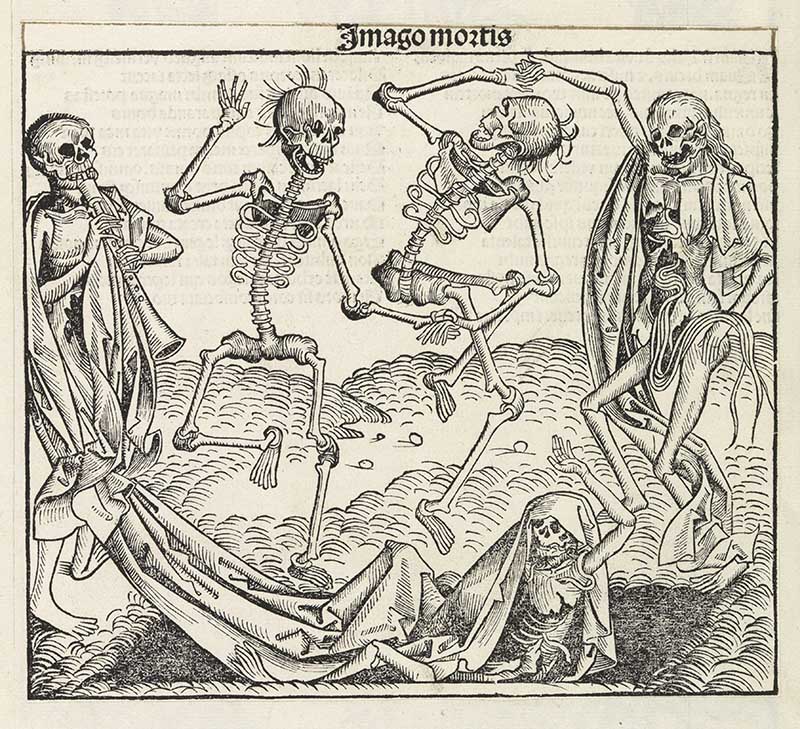
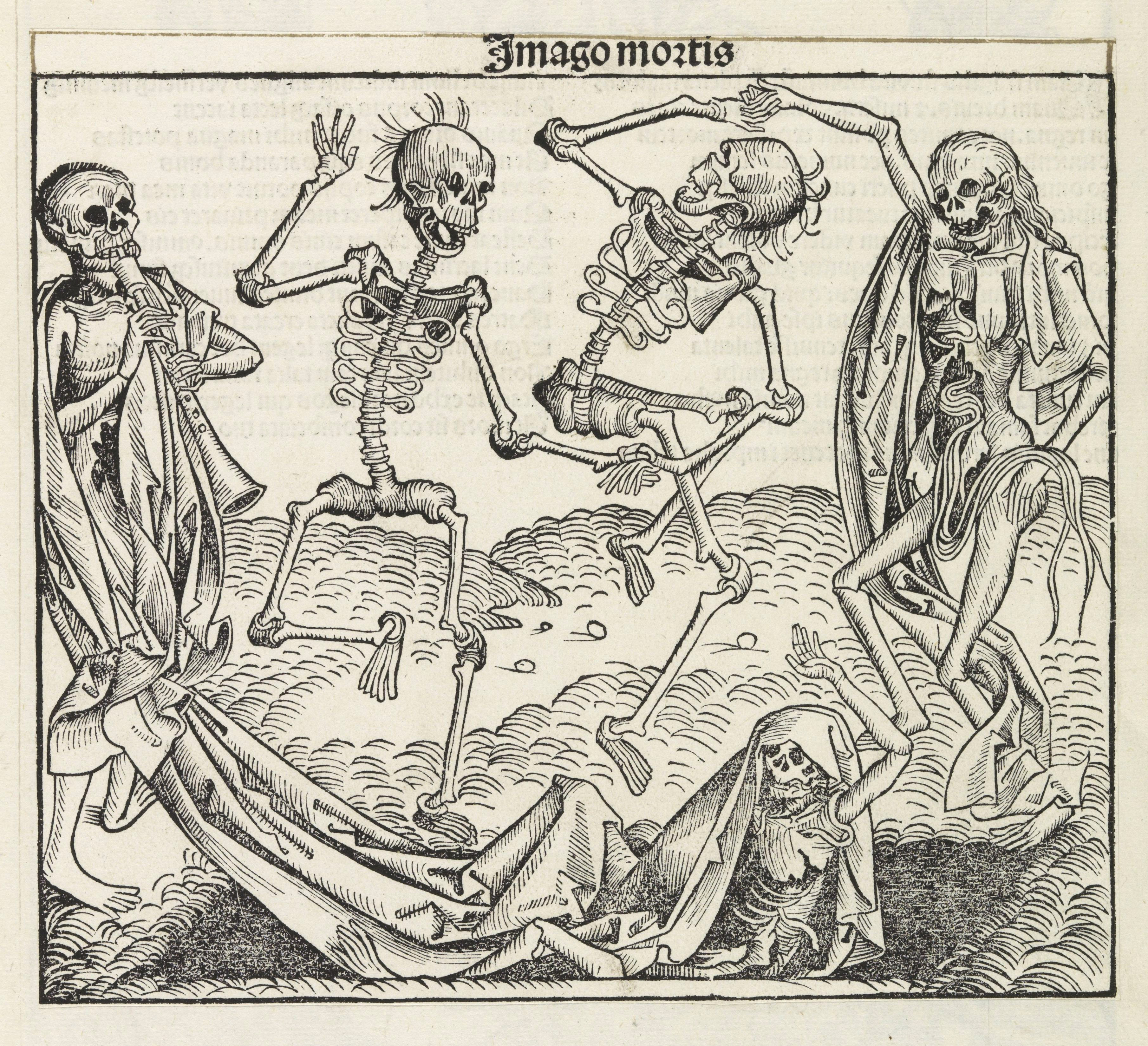
A delightful vintage Halloween art print of dancing skeletons from the Rijksmuseum collection. A woodcut print by Michel Wolgemut from 1493.
Skeletons 11-20
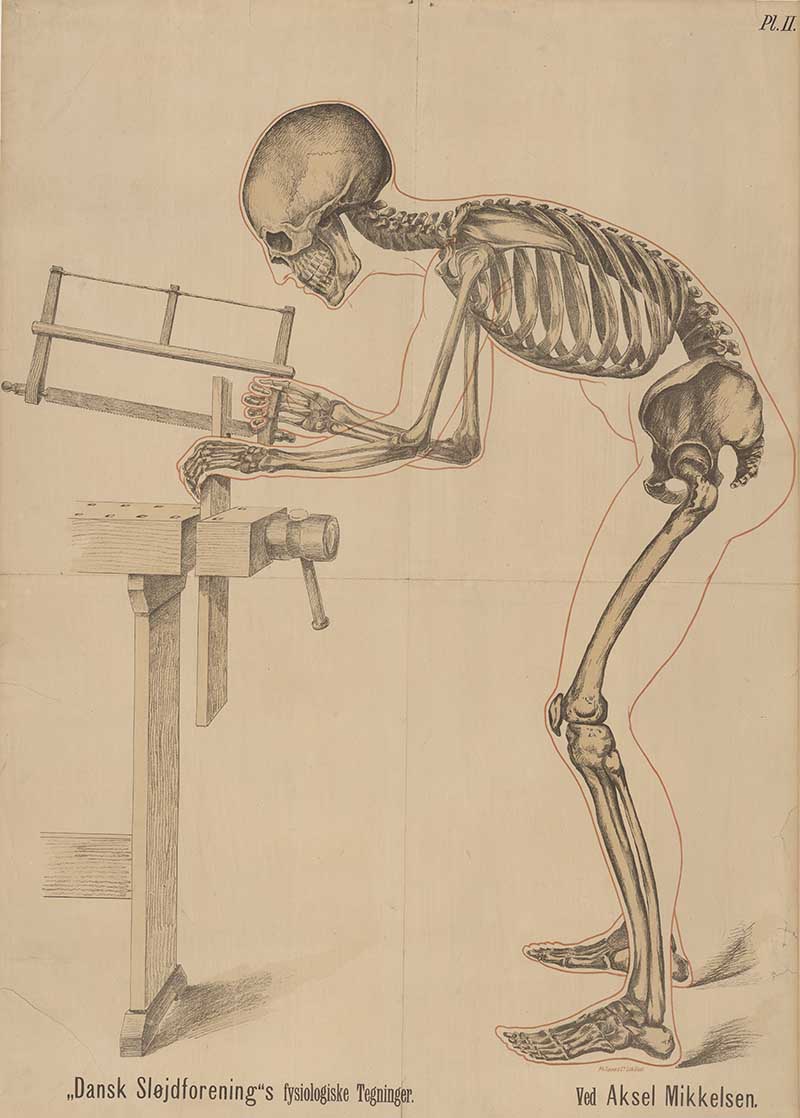
Print 11: Danish Skeleton 1889
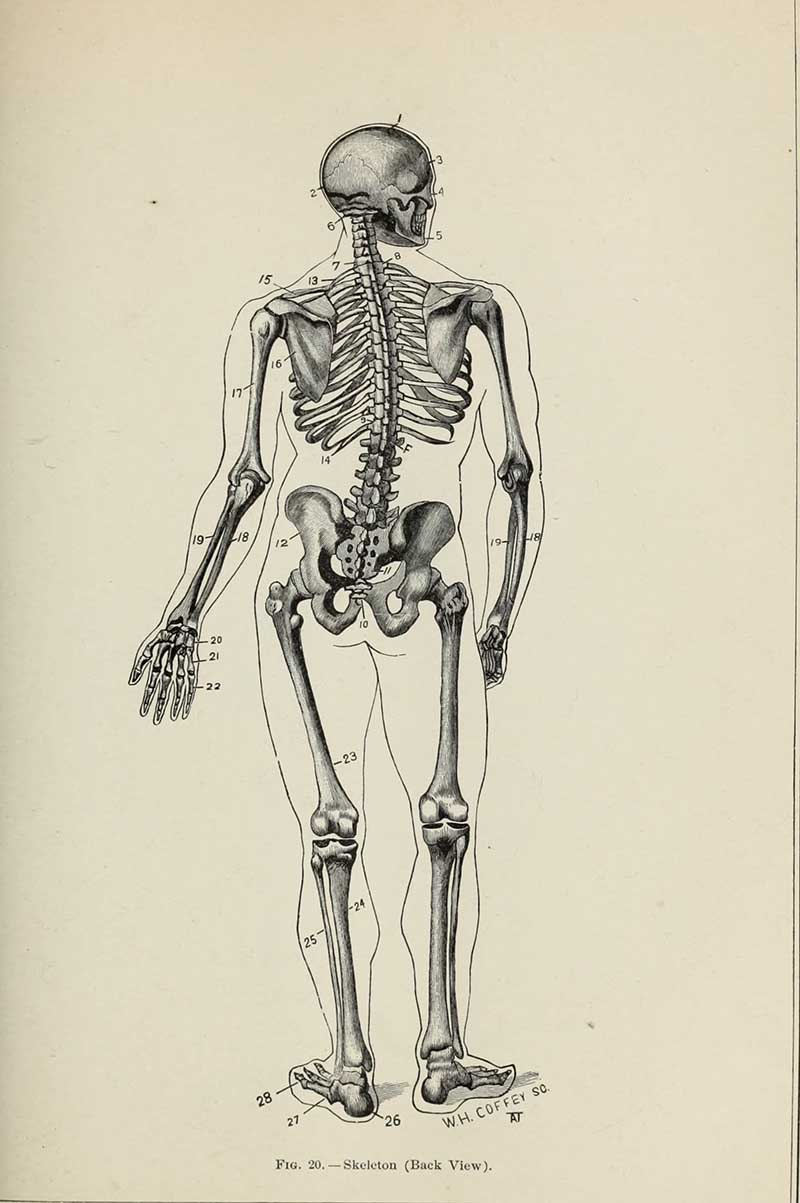
Print 12: Gately's Skeleton (Back View).
Back view skeleton from "Gately's Universal Educator. An educational cyclopaedia and business guide" by Beale, Charles E., 1883.
1. Parietal; 2. Occipital; 3. Frontal; 4. Malar; 5. Inferior maxillary or lower jawbone, 0. Atlas or first cervical vertebra ; 7. Vertebra prominens, or seventh cervical vertebra; 8. First dorsal vertebra ; 9. Twelfth dorsal, first lumbar vertebra ; 10. Coccyx; 11. Sacrum; 12. Os iunominatum ; 13. First rib; 14. Twelfth and last rib ; 15. Clavicle or collar-boue ; 16. Scapula or shoulder-bone; 17. Humerus; 18. Ulna; 19. Radius; 20. Carpal bones, 7 ; 21. Metacarpal, 5; 22. Phalanges, 14; 23. Femur; 24. Tibia; 25. Fibula; 20. Tarsus, 7 ; 27. Metatarsus, 5 ; 28 Phalanges, 14.
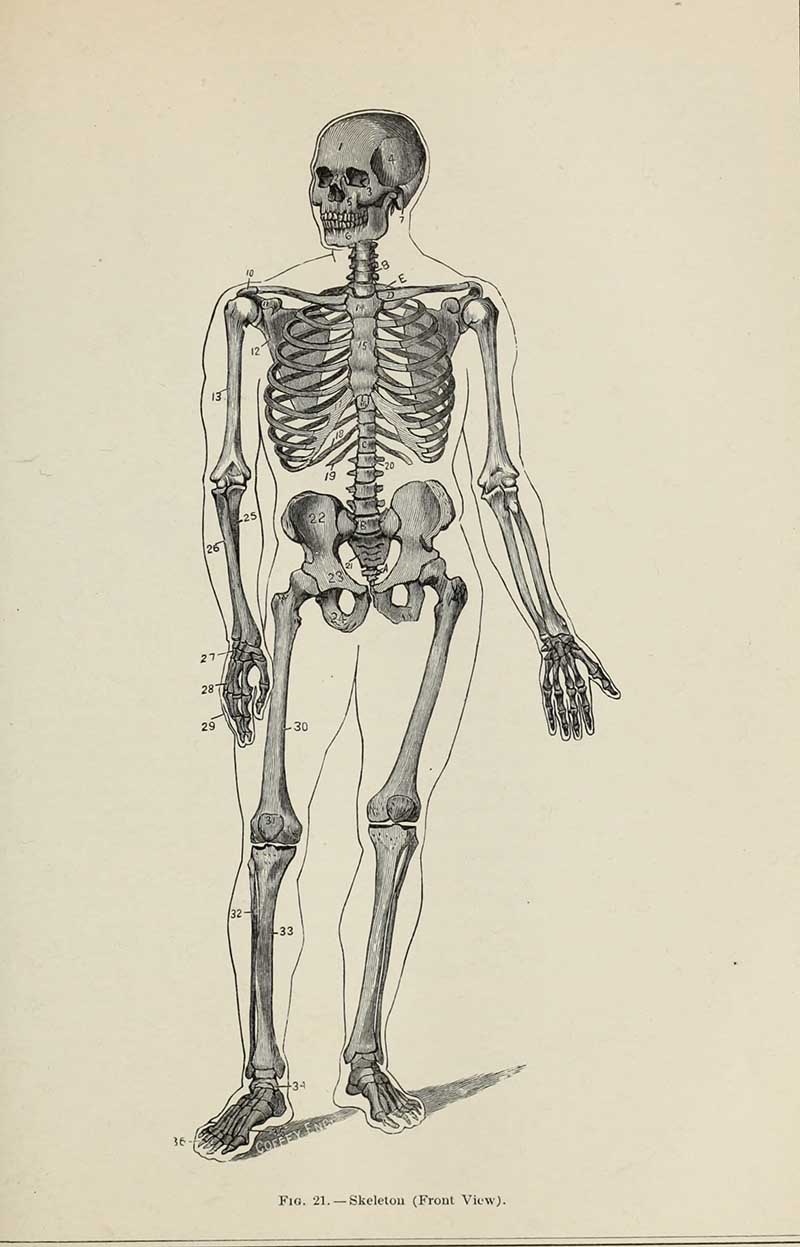
Print 13: Gately's Skeleton (Front View)
Key: 1. Frontal; 2. Nasal; 3. Malar- 4. Temporal; 5. Superior maxillary, or upper jaw; 0. Inferior maxillary, or lower jaw; 7. Mastoid process; 8. Last cervical vertebra; 9. First dorsal vertebra; 10. Acromion process of the scapula, 12; 11. Coracoid process of the scapula; 12. Scapula; 13. Humerus; 14. Manubrium, or first piece of sternum; 15. Sternum, or breast-bone ; 10. Ensiform, or third piece ; 17 Cartilage of sixth rib ; 18. Eleventh rib ; 19. Twelfth rib ; 20. First lumbar vertebra; 21. Sacrum; 22, 23, 24. Pelvis, 22. Ilium, 23. Pubes; 24. Ischium; 25. Ulna; 20. Radius; 27. Carpus ; 28. Metacarpus; 29. Phalanges ; 30. Femur ; 31. Patella ; 32. Fibula; 33. Tibia ; 34. Tarsus , 35. Metatarsus ; 36. Phalanges.
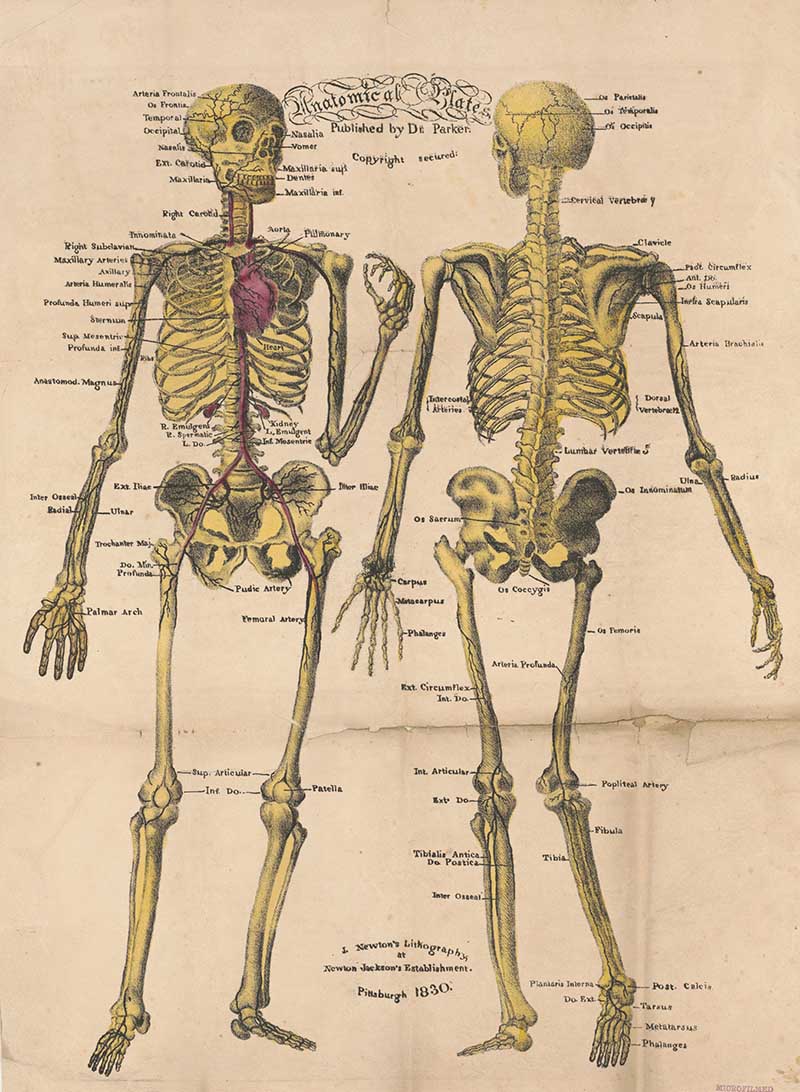
Print 14: Anatomical plates, published by Dr Parker, 1830.
Print 15: Japanese Skeleton 1774 Pt 1
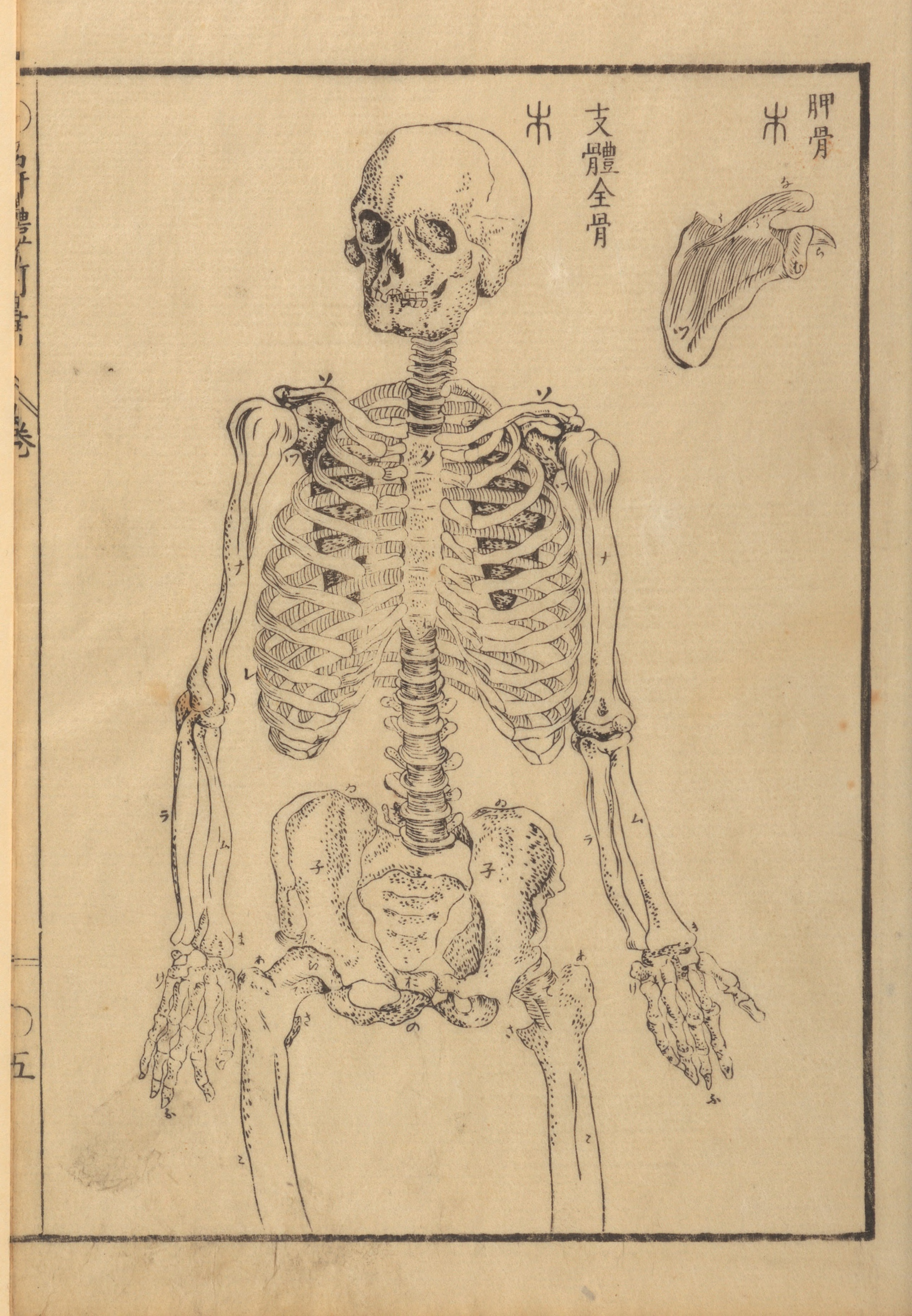
Plate 16: Japanese Skeleton Pt 2
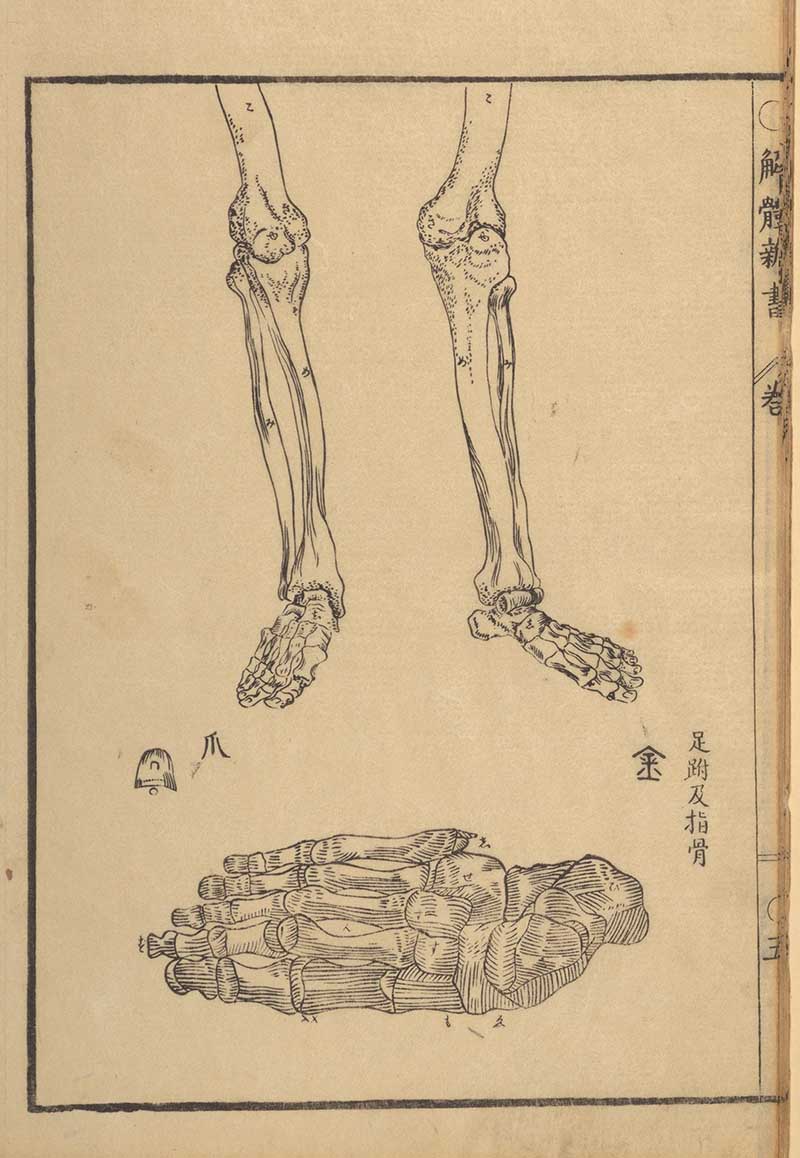
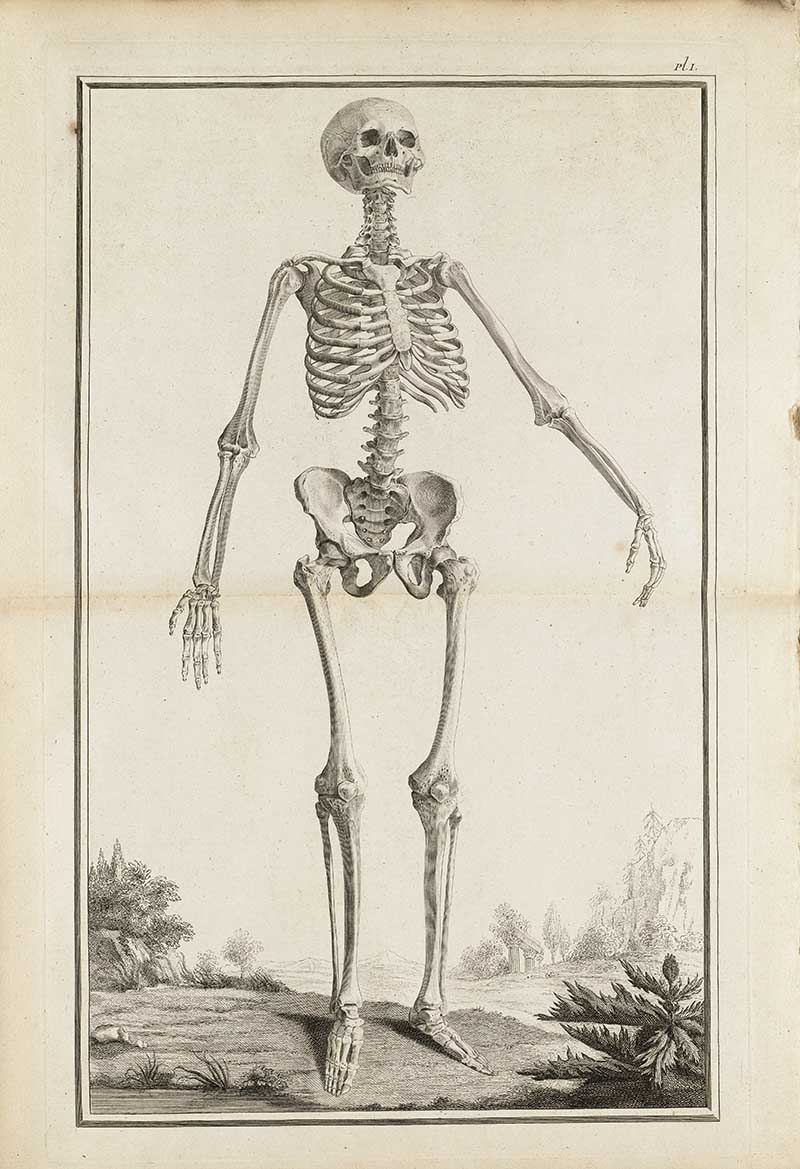
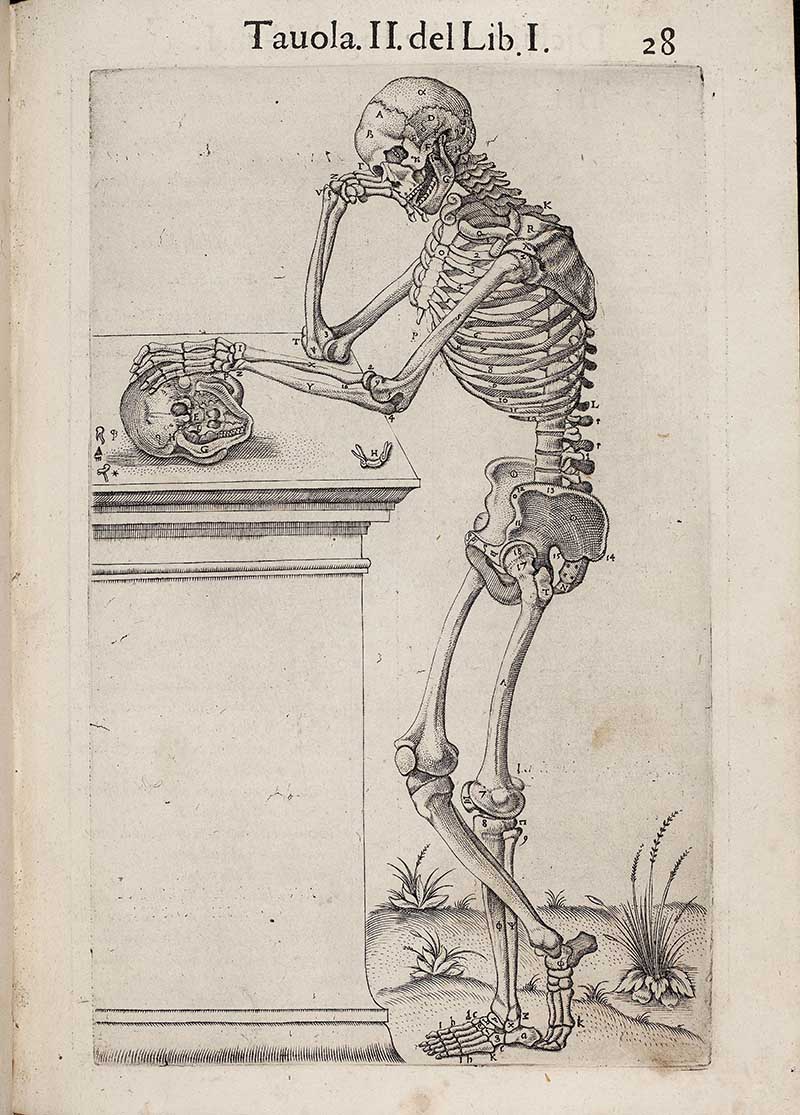
Plate 18: Valverde Skeleton with Skull
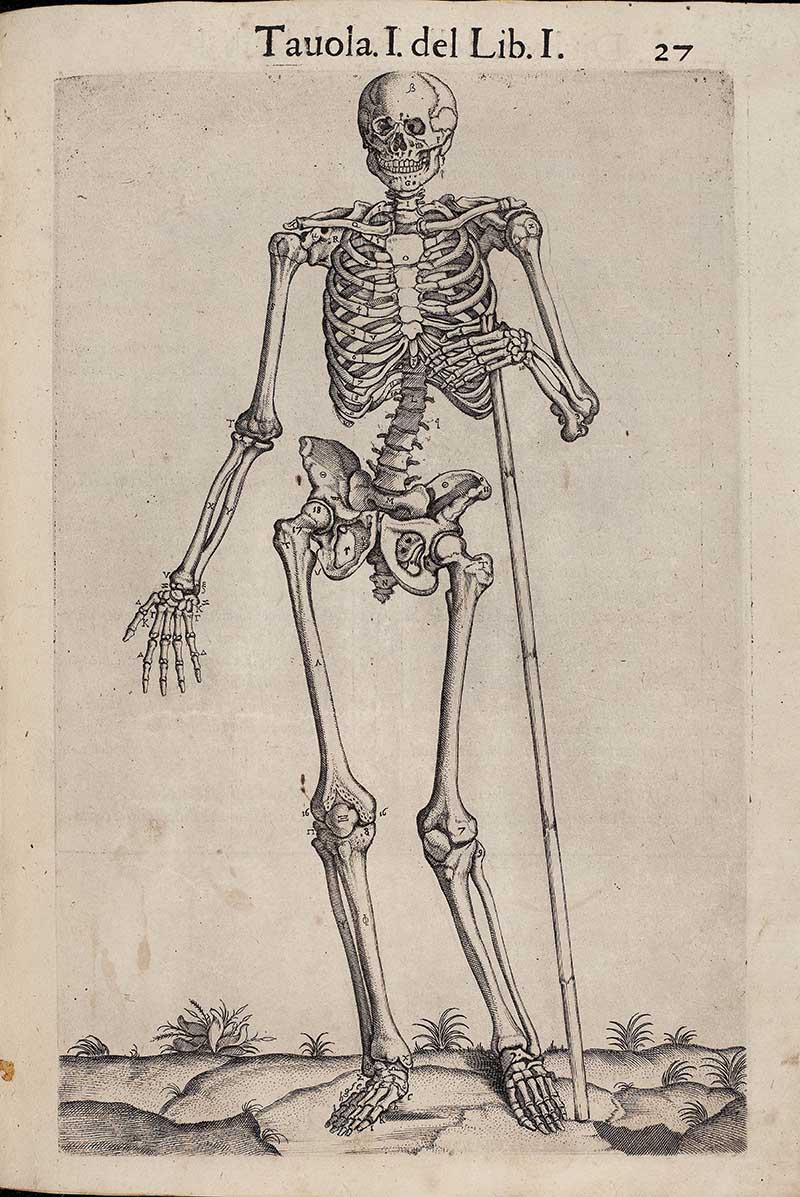
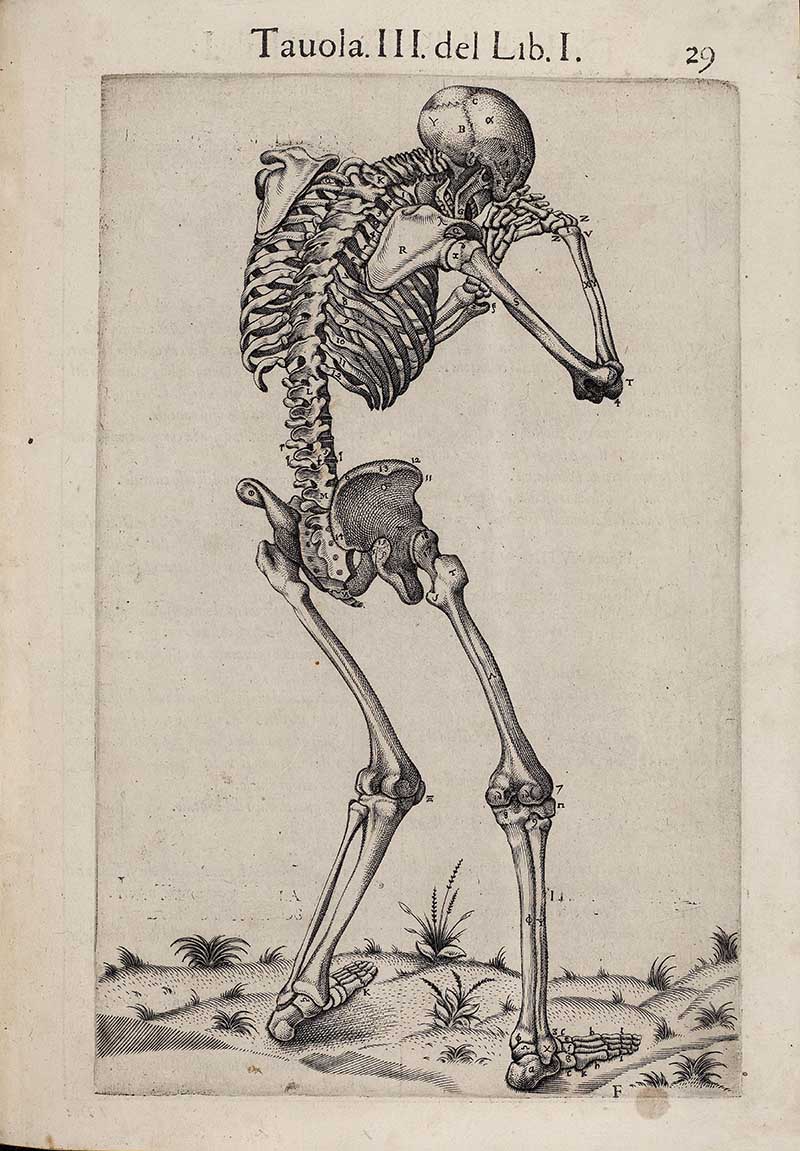
This and then following two vintage skeleton illustrations are from "Anatomia del corpo humano" by Valverde, Juan de, 1560.
Print 19: Skeleton With Stick, Valverde
Print 20: Bent Skeleton Valverde
Other Skeleton & Halloween Ideas
Here is a fun tutorial for an illuminated DIY skull decor for Halloween on Pictureboxblue. The same tutorial would also work well with one of these fabulous vintage skeleton illustrations.
There is also a Halloween patent of an anatomical skeleton.
If you liked this post, you may also want to explore these other free vintage image collections.
If you fancy, you can Buy Me A Coffee Here.
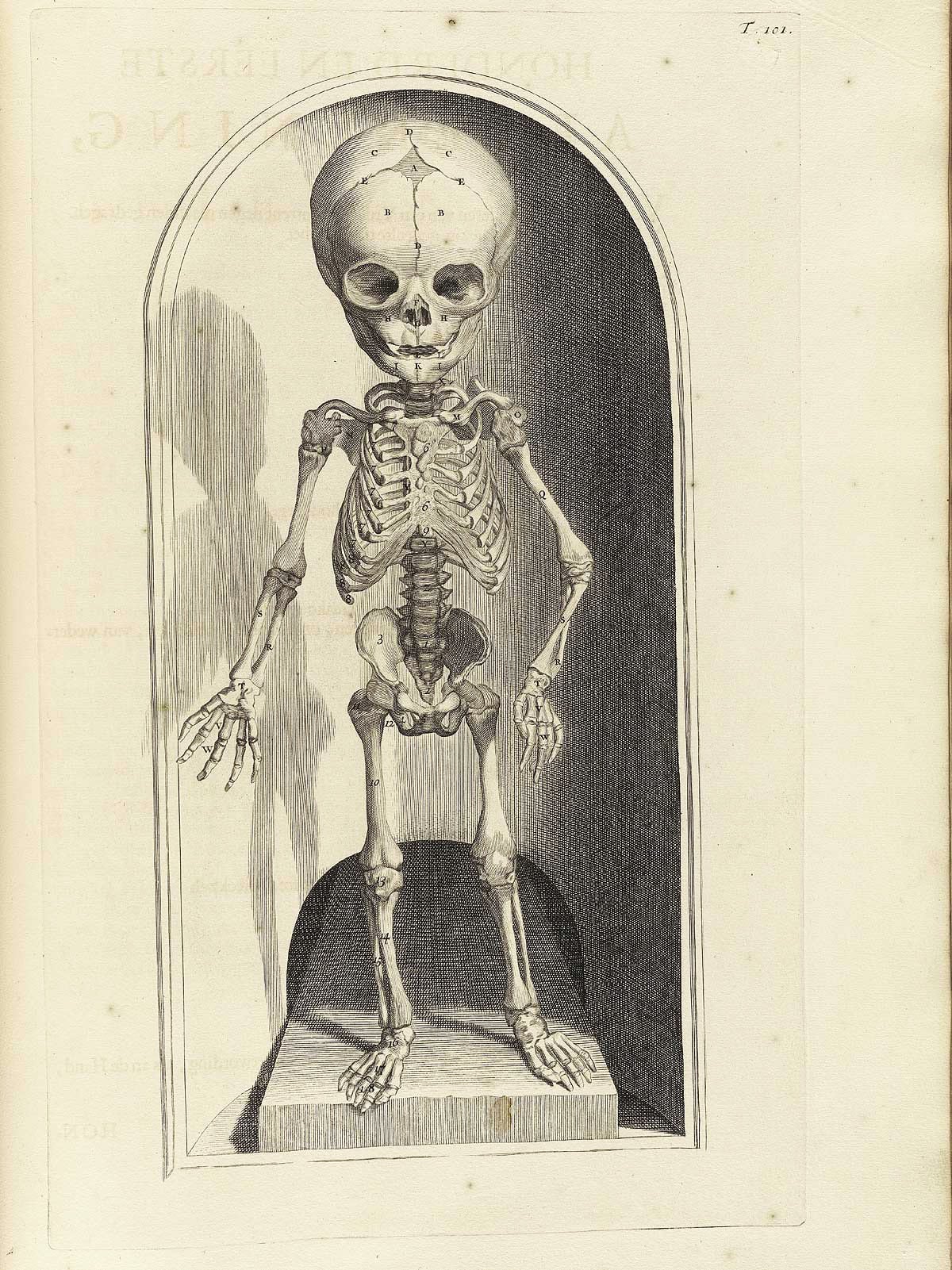
Regarding the 1690 picture, yes, you are right, that is a child skeleton. The skull shows the "anterior fontanelle" (labelled 'D'), which closes up and disappears as the child grows. One of the "soft spots" on a baby's skull, DESIGNED to allow a baby to pass through the birth canal without damaging its brain! (I only commented since you seem to have a healthy knowledge of skeletons and anatomy 😉
Thanks again for the great picture resources!
Thank you.
Claire, I always enjoy seeing your curated collections. Thanks for sharing your skeletons at Vintage Charm--pinned!
Thank you, I thought they would be fun for halloween.
What a great collection! Thanks for sharing at Vintage Charm!
Thank you so much.
Cool illustrations. Pinned
Thank you, glad you like them.
Thanks for sharing! I enjoyed the detailed artistry in these drawings.
Thank you. Yes, some of the old drawings are amazingly detailed and intricate.
What a great printable offering. I’m definitely going to use this in my home decor. I’ll link back to your post too.
Thank you so much, I’m glad you like them.
I've got a few crafting ideas in my mind for these printables. Thanks so much for sharing them =)
Ooh that sounds fun, thank you.
Thank you for curating all of these awesome illustrations! I can't wait to craft with them.
Thank you so much, they were fun to curate.
So awesome! I can't wait to print some of these on t's for my great niece! She's gonna LOVE them!
Thank you!
That sounds like a great idea I bet she will love them.