Free Art Nouveau Botanical Patterns from Eugène Grasset
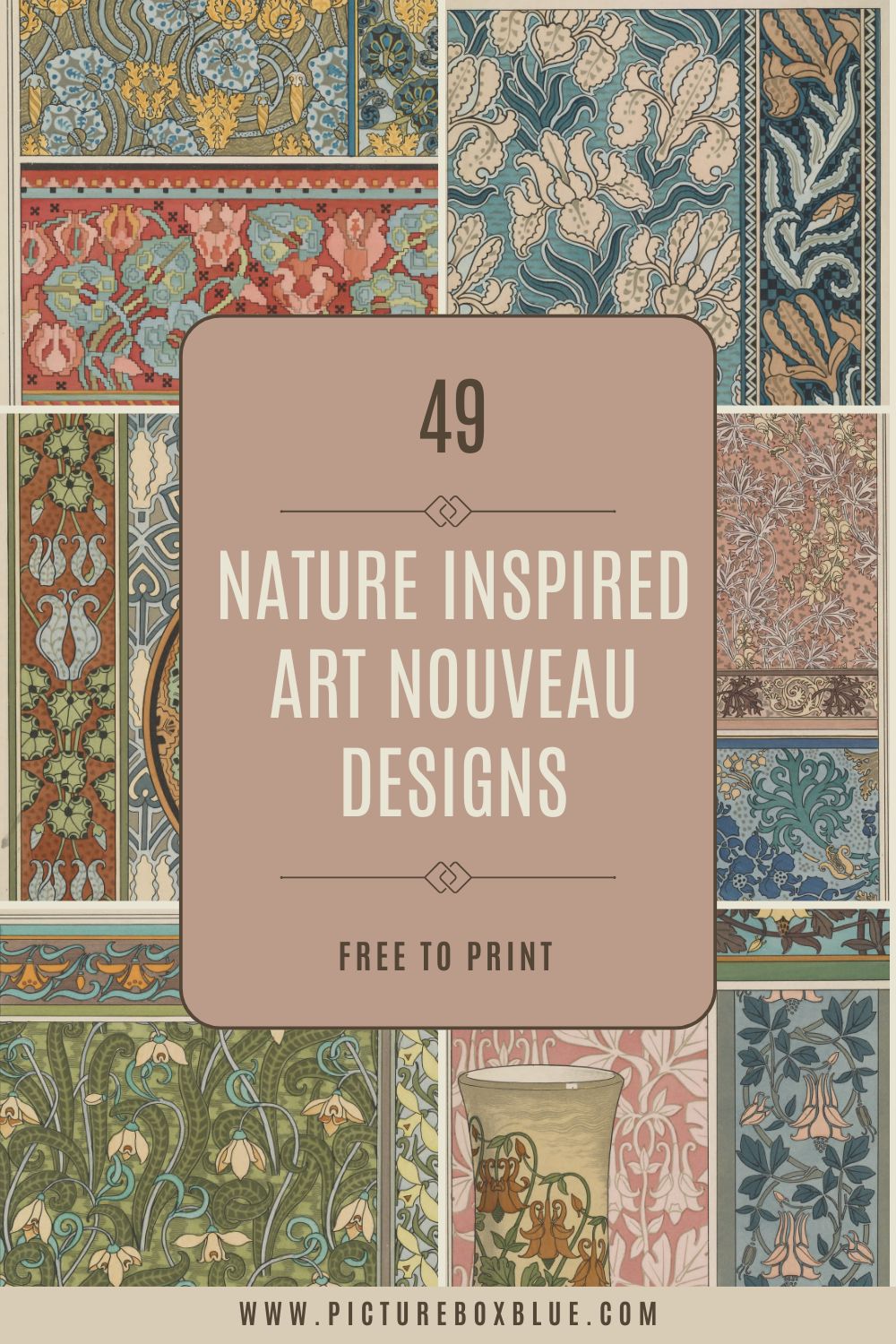
These 49 gorgeous Art Nouveau botanical patterns show how flowers and leaves became decorative art. Download the gorgeous vintage prints for free.
If you love Art Nouveau design, you'll know that nature sits right at the heart of it. Flowing vines, stylised flowers, and elegant botanical forms appear everywhere from wallpapers and textiles to ceramics, jewellery and posters.
About La plante et ses applications ornementales
One of the most beautiful guides to Art Nouveau's nature-inspired approach is the wonderfully illustrated book La plante et ses applications ornementales. Published in 1896, it was created by the Swiss-French designer Eugène Grasset and illustrated by Maurice Pillard Verneuil.
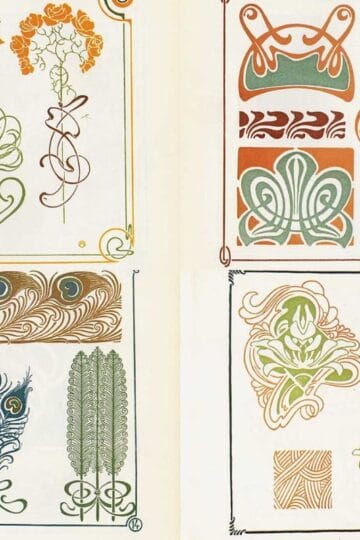
Rather than simply presenting plants as botanical studies, the book shows how real plant forms can be transformed into decorative patterns and design motifs. Leaves curl into borders, stems become repeating patterns, and flowers evolve into elegant ornamental designs that feel instantly recognisable as Art Nouveau.
Originally intended as a guide for artists, designers and craftsmen working in the decorative arts, the book demonstrates how natural plant structures can inspire applied design, from textiles and wallpaper to ceramics and metalwork.
Today, it remains a wonderful source of inspiration and a fascinating insight into a time when designers were actively exploring new ways to turn nature into decorative art.
William Morris and the Roots of Nature-Inspired Pattern
Art Nouveau didn't appear out of nowhere. Earlier designers, particularly William Morris, helped spark renewed interest in nature-inspired patterns during the Arts and Crafts movement. Morris's textiles and wallpapers are filled with lush botanical forms, dense arrangements of flowers, leaves and vines that feel both natural and decorative.
While Morris's patterns tend to be fuller and more traditional in composition, Art Nouveau designers such as Grasset and Verneuil pushed the form further. Their designs often feature more flowing lines, stylised shapes and dynamic movement, creating patterns that feel lighter and more organic.
How to Download the Art Nouveau Prints
All of the images featured in this post come from the original 1896 book La plante et ses applications ornementales by Eugène Grasset and Maurice Pillard Verneuil.
Because the book was published more than a century ago, the illustrations are now in the public domain, which means they are free to download and use.
To download an image:
- Click on the title above the image you like
- A larger high-resolution version will open
- Right-click and choose Save Image As or Print
Art Nouveau Patterns 1-9
This collection of purple Irises Was also featured in the Art Nouveau flowers collection by Maurice Pillard Verneuil. For more stunning paintings of Irises, check out these Japanese Iris prints.
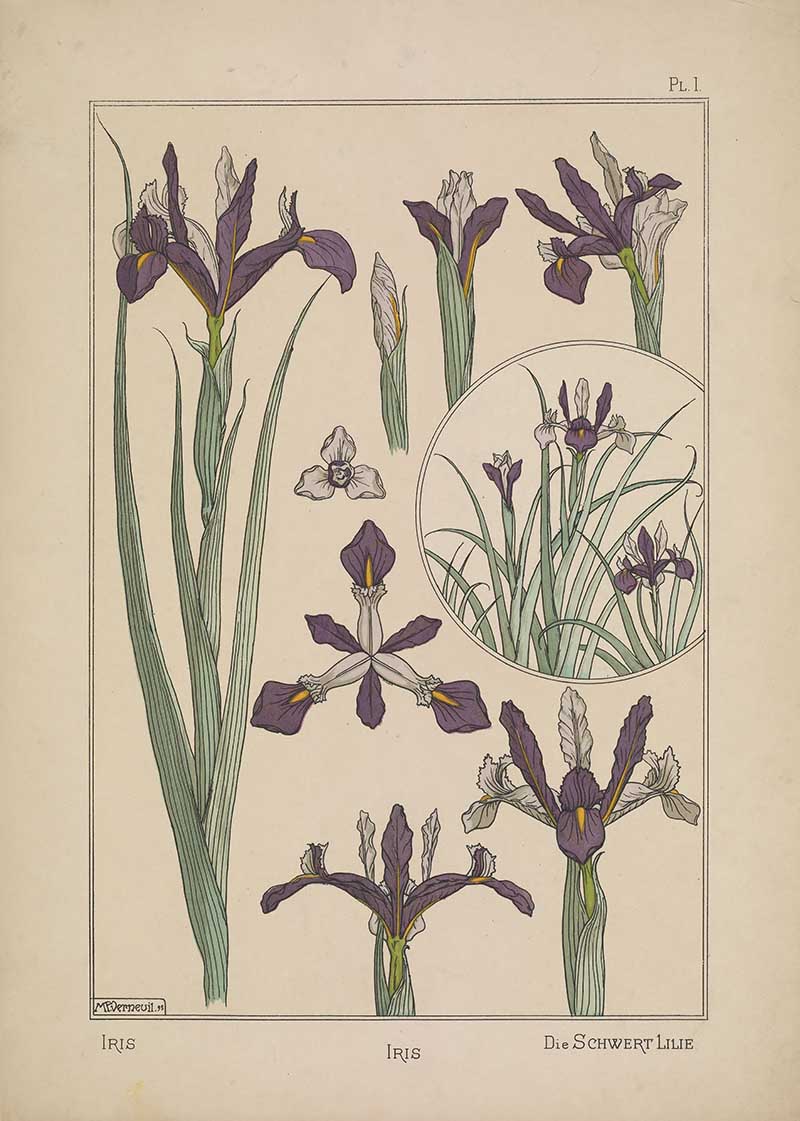
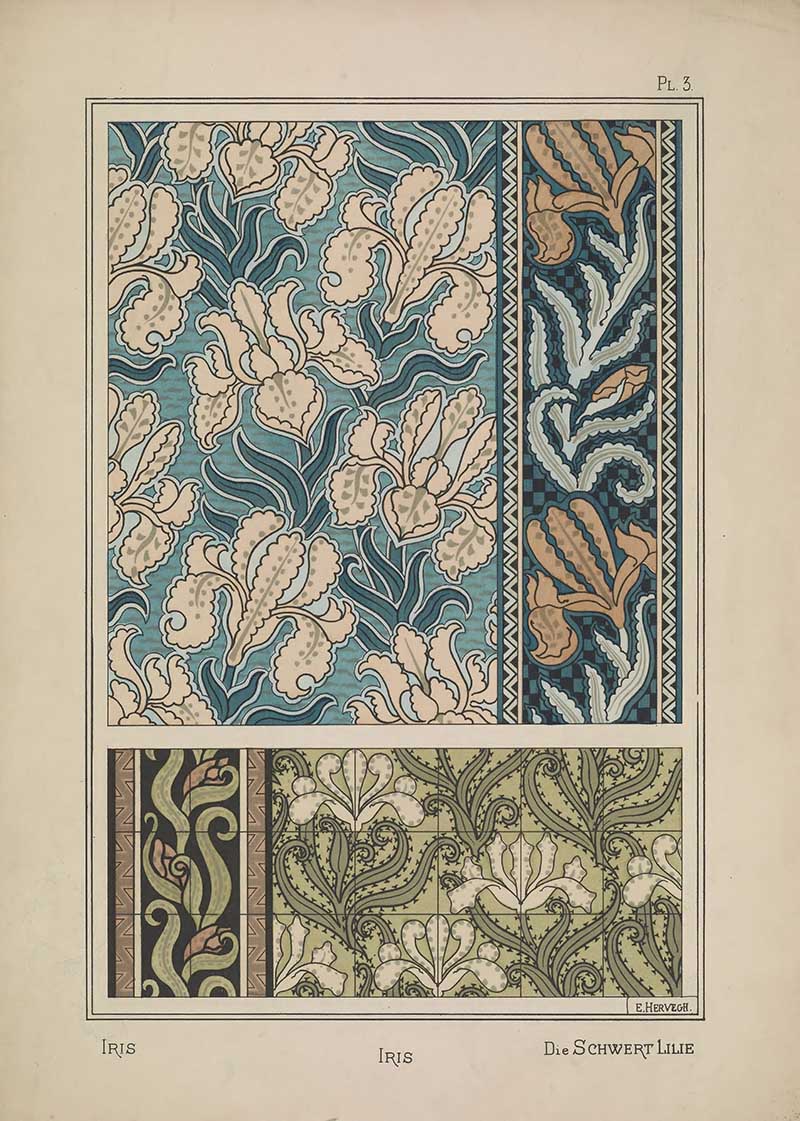
Irises were a popular motif in Art Nouveau, and these designs show why. Their long stems and sculptural petals translate effortlessly into elegant, flowing patterns.
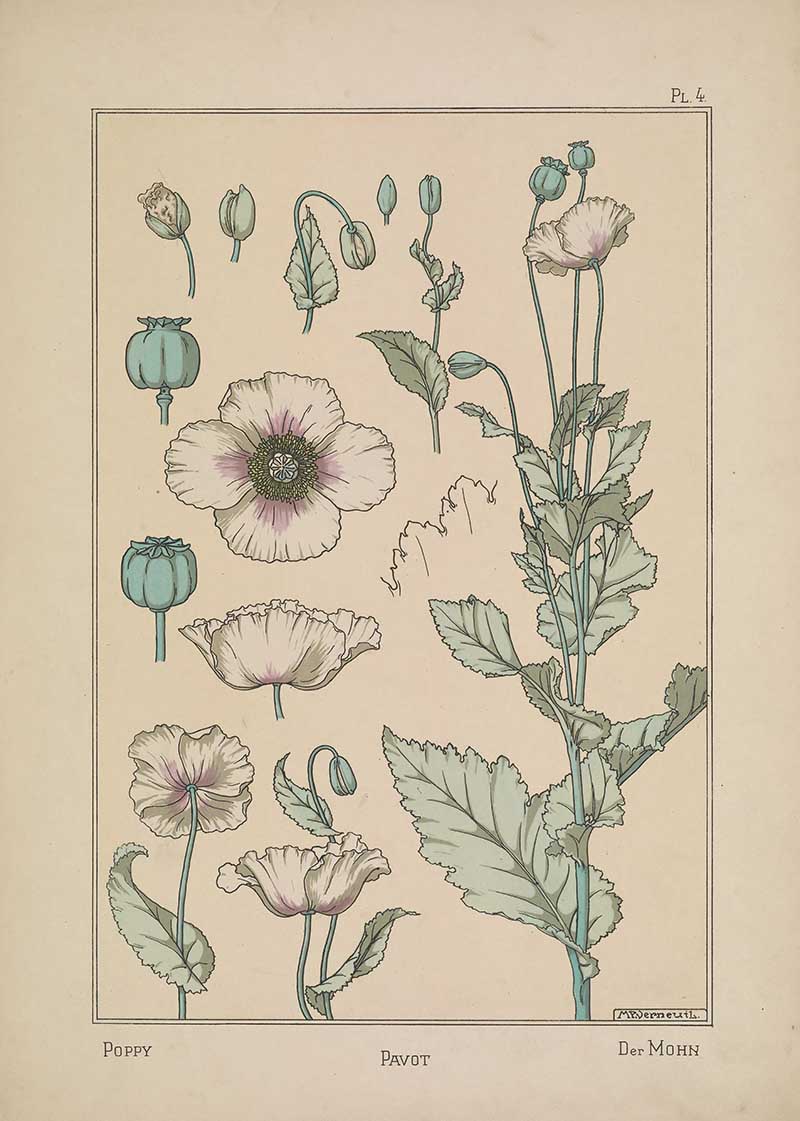
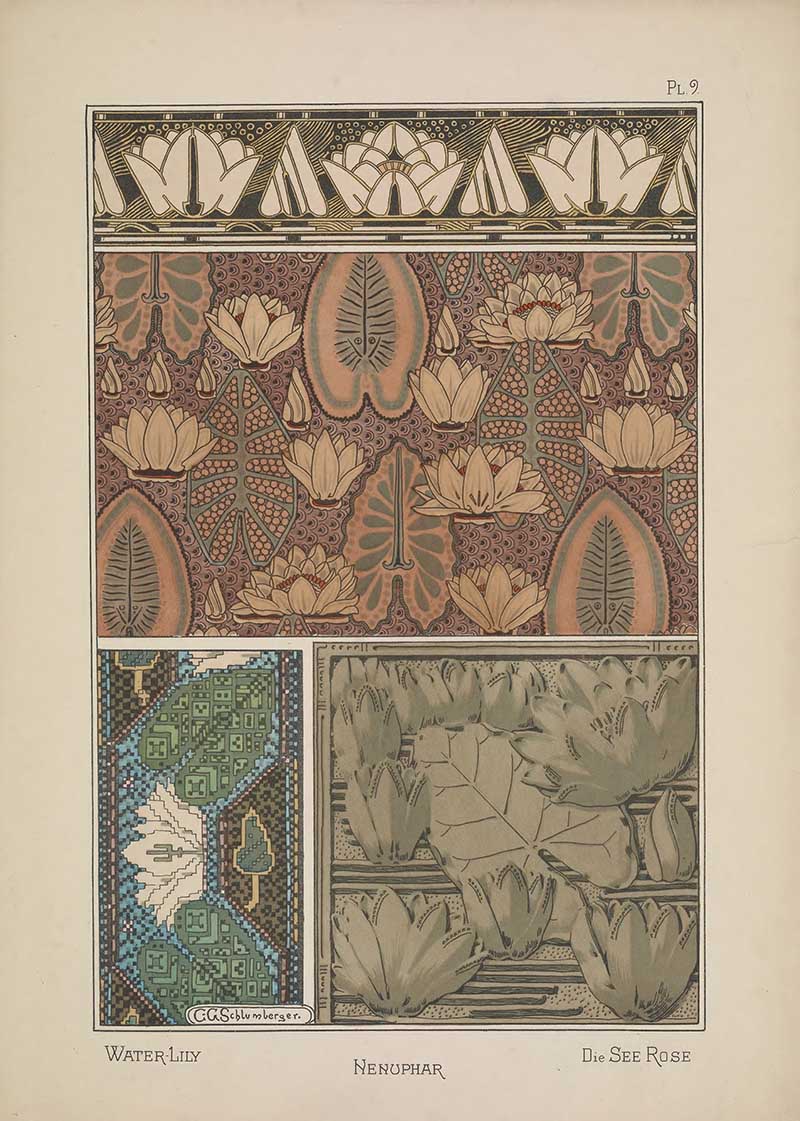
Water lilies feature in the original Art Nouveau flower collection on Pictureboxblue, as well as a whole post on the Giant Water Lily.
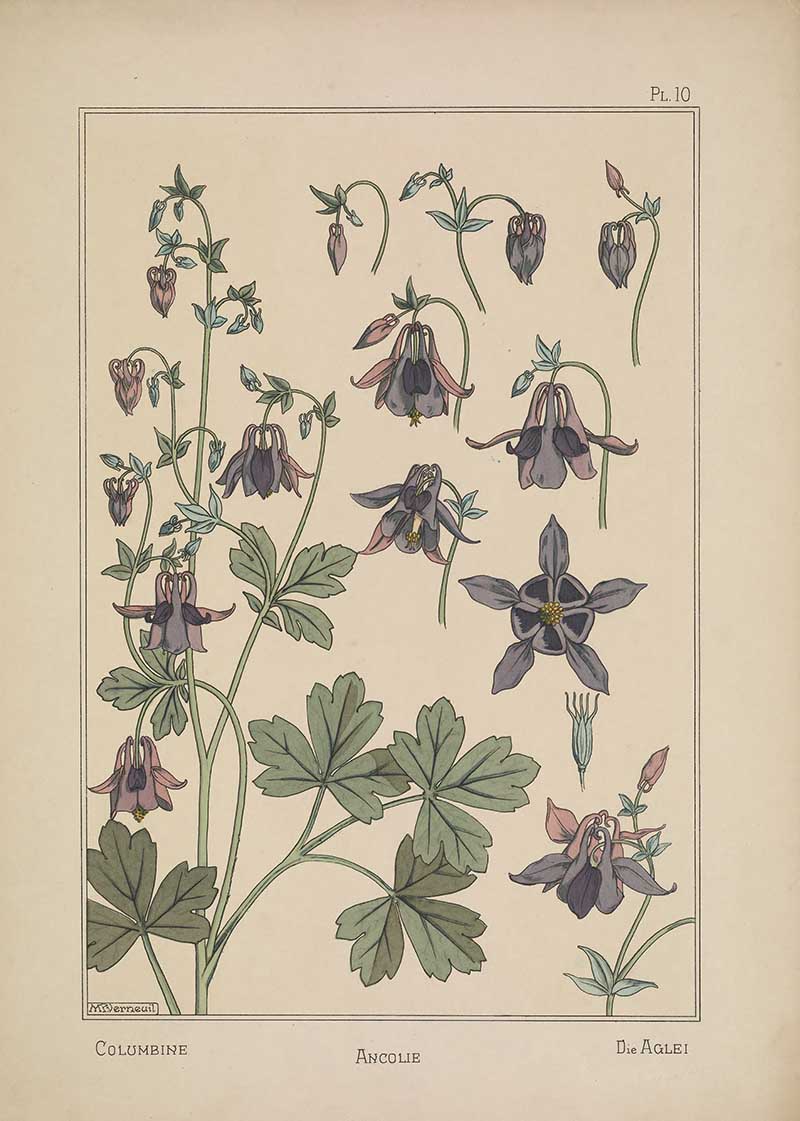
Columbine flowers are spring-blooming perennials with distinctive spurred petals and a nodding, bell-like shape. Their clear structure and curved forms make them easy to adapt into simple, decorative patterns, which is why they work so well in Art Nouveau designs.
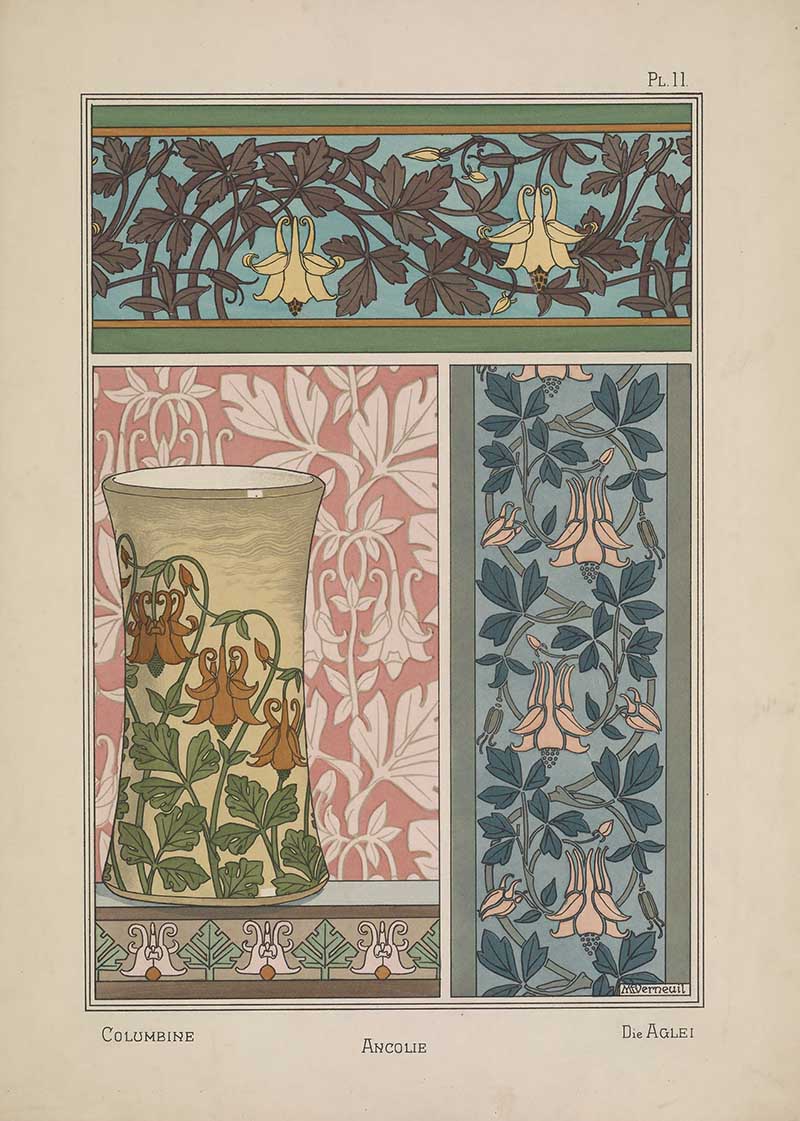
Art Nouveau botanical patterns of Columbine for fabric, borders, and a vase.
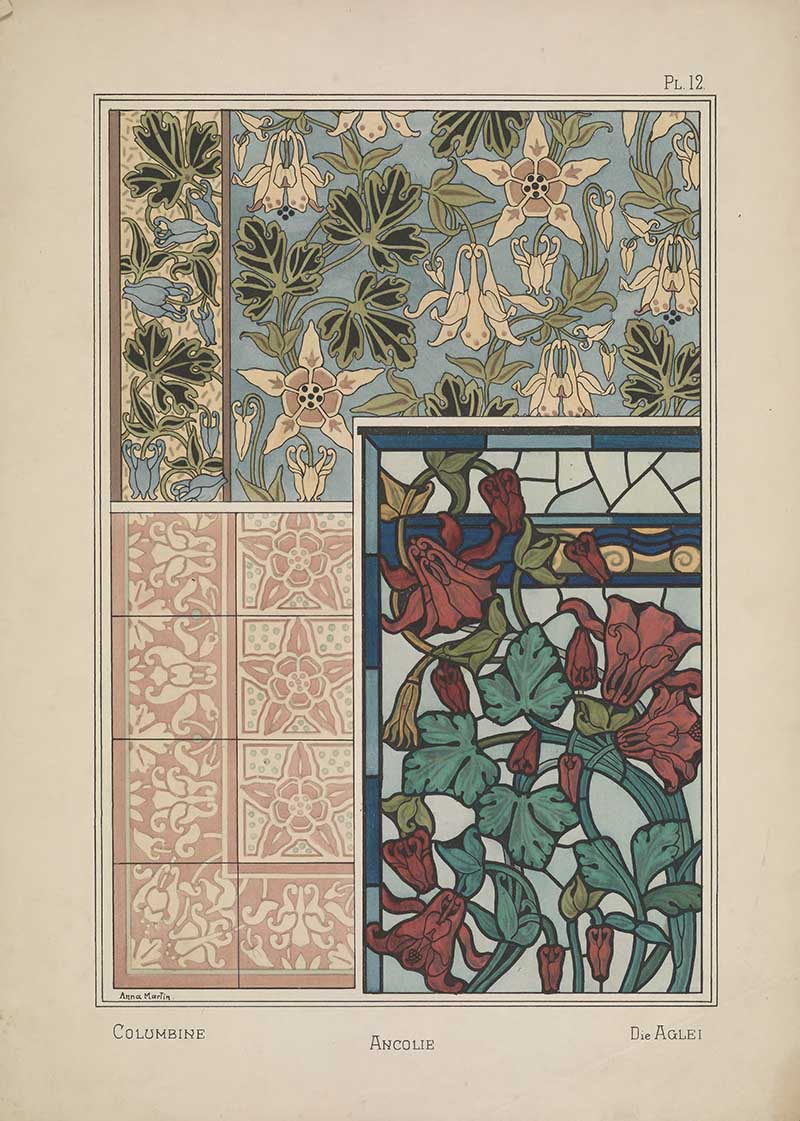
Print 7: More Columbine Patterns
Patterns for wallpaper, tiles and stained glass.
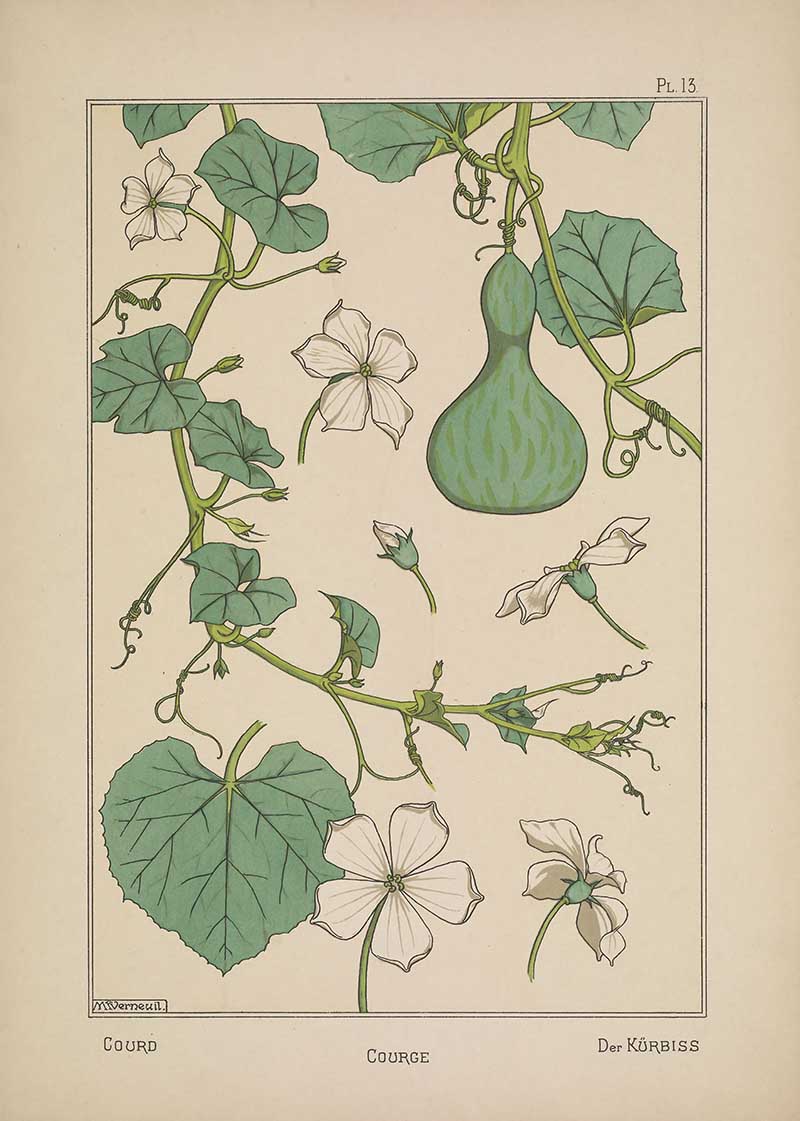
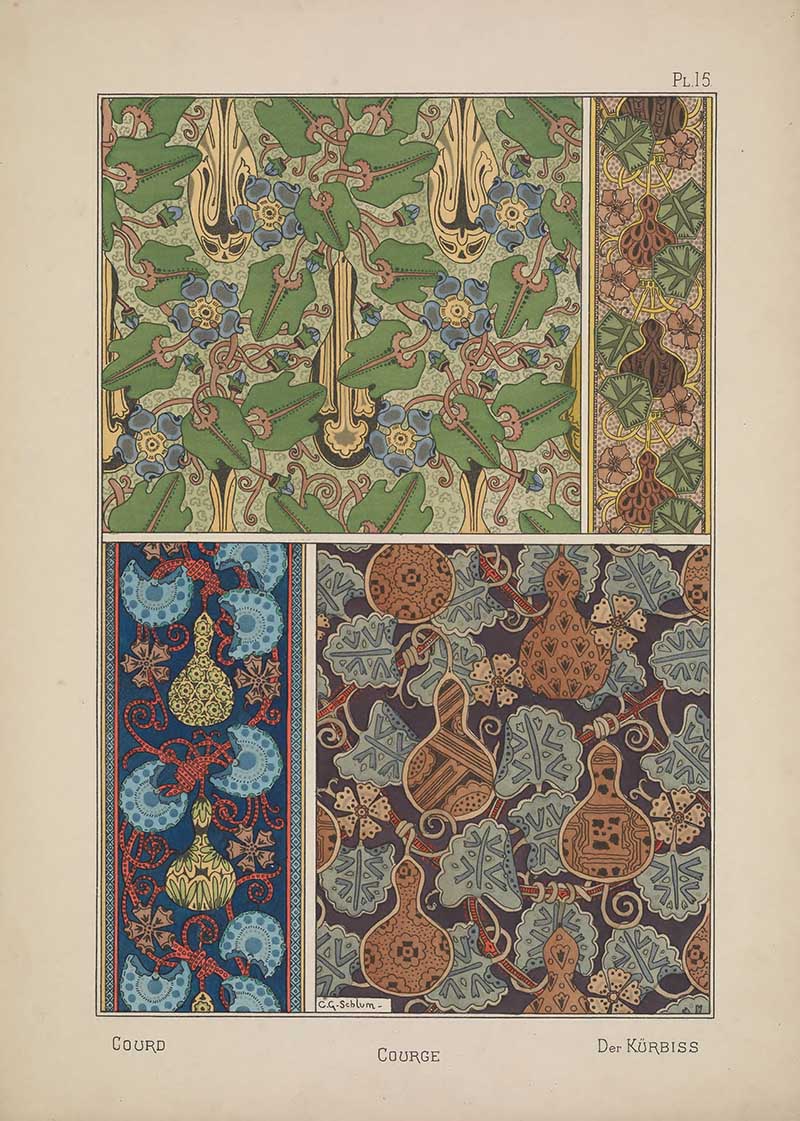
Gourds have bold, sculptural shapes and natural ridges that make them easy to stylise into decorative patterns. They also have a long history in traditional Chinese design, where they symbolise good luck and longevity, and their balanced, rounded forms translate well into repeating motifs, which work beautifully in Art Nouveau patterns, too.
Art Nouveau Designs 10-19
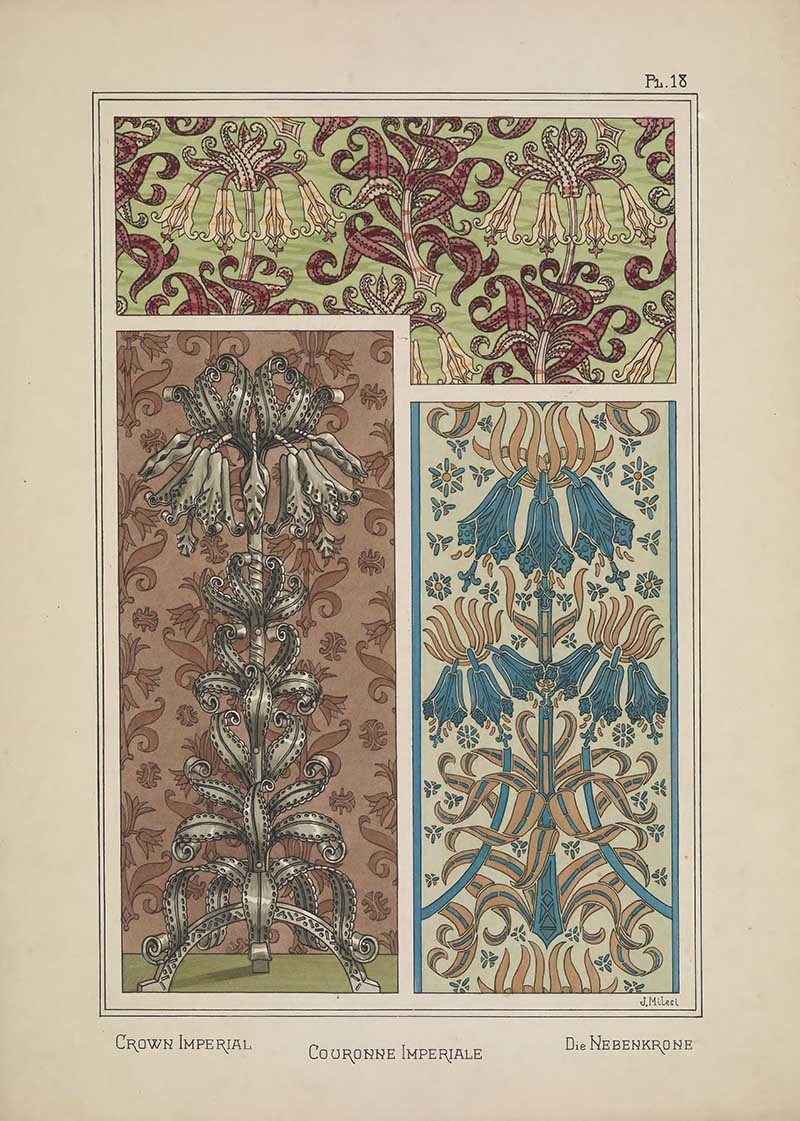
Crown imperial is a striking plant with tall stems topped by a ring of drooping, bell-shaped flowers, giving it a bold, architectural look that lends itself well to decorative pattern design.
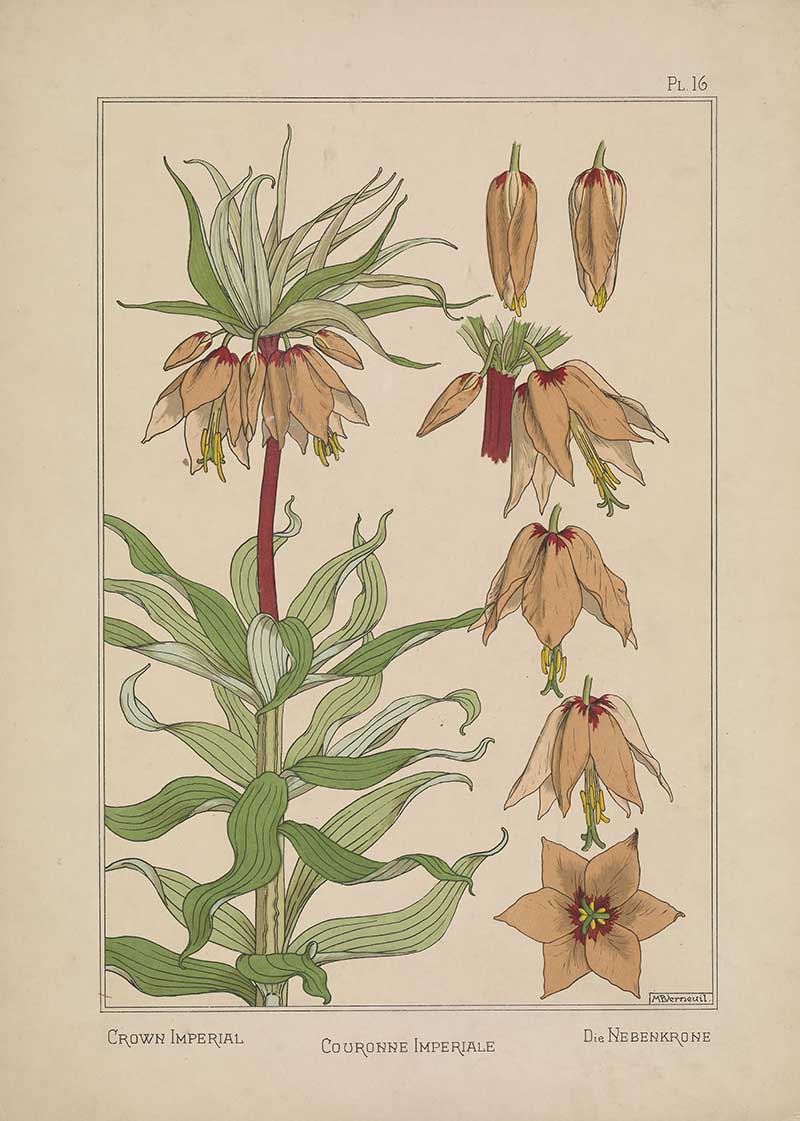
Print 11: Crown Imperial Botanical Patterns
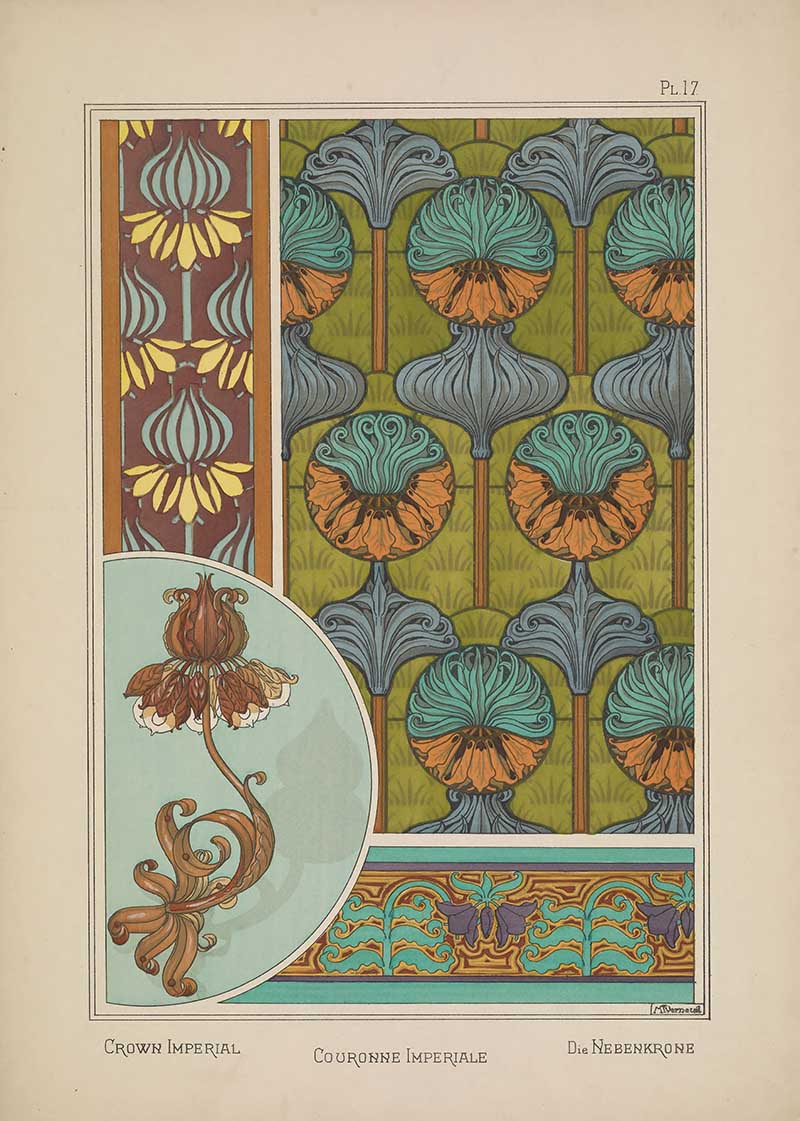
Print 12: More Crown Imperial Patterns
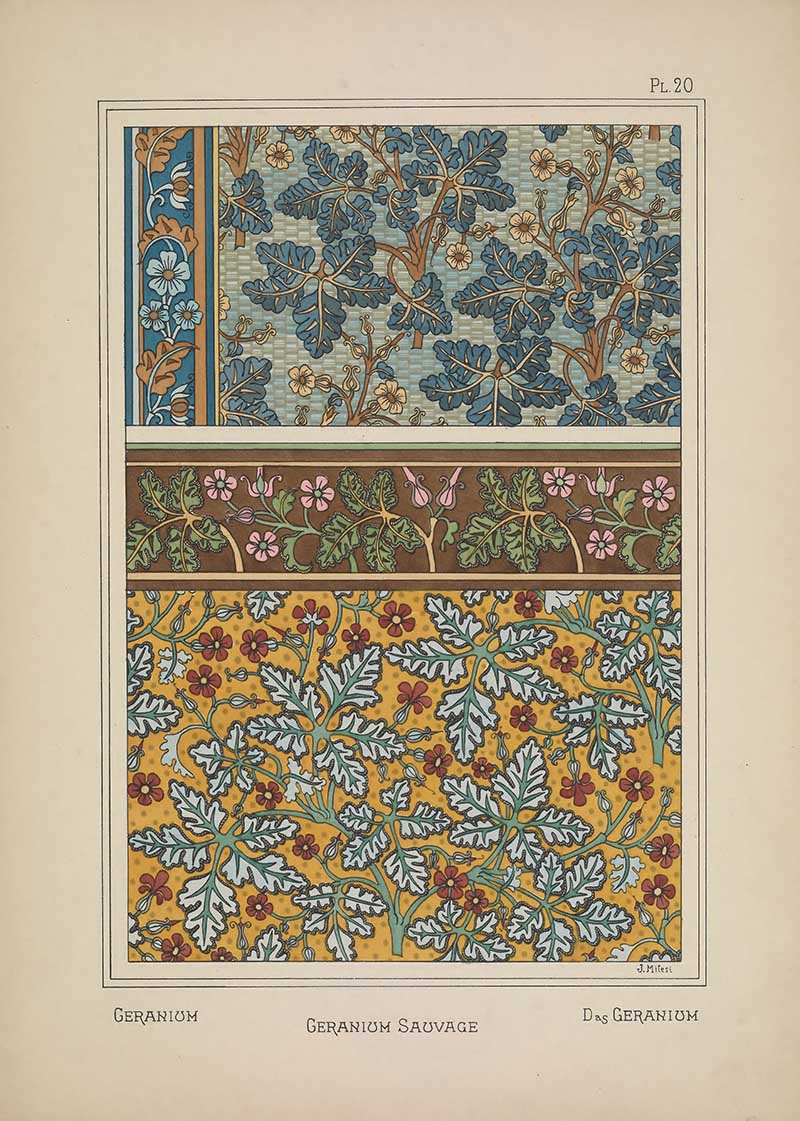
Wild geraniums are native woodland plants with delicate, five-petalled flowers, usually in soft shades of pink, purple or blue. Their simple, open shapes and lightly veined leaves make them easy to adapt into natural-looking decorative patterns.
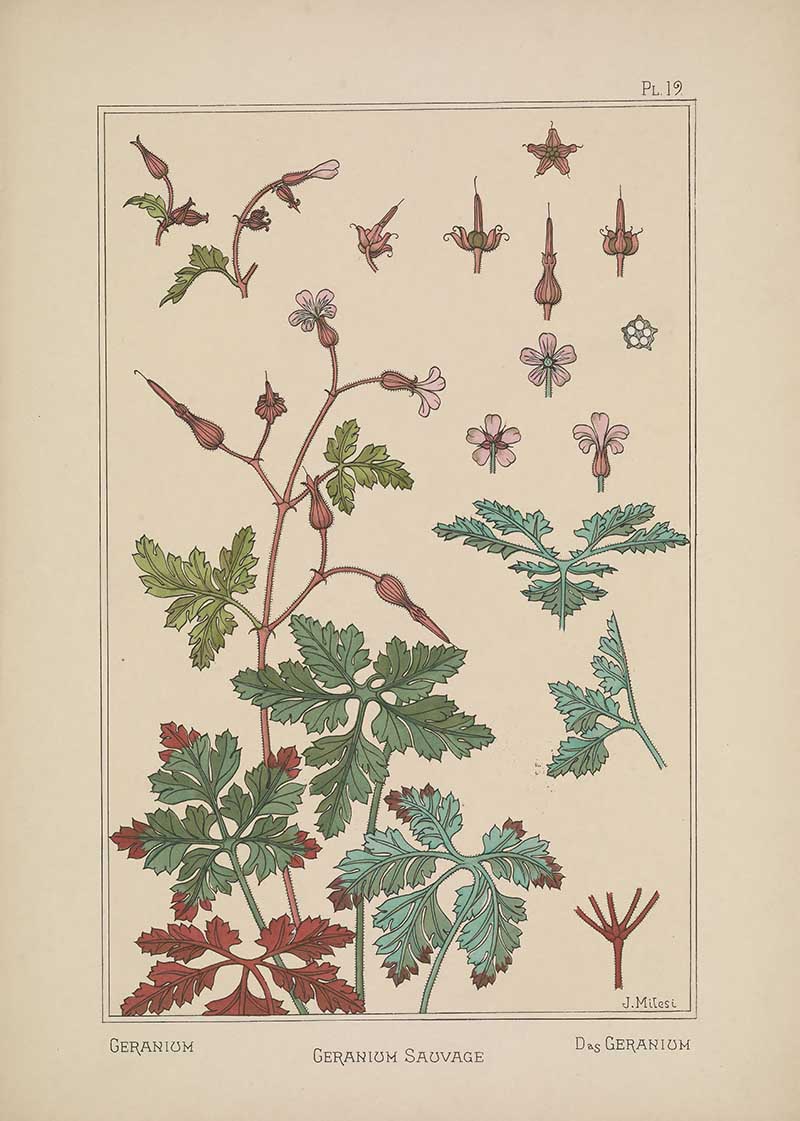
Print 14: Geranium Botanical Patterns
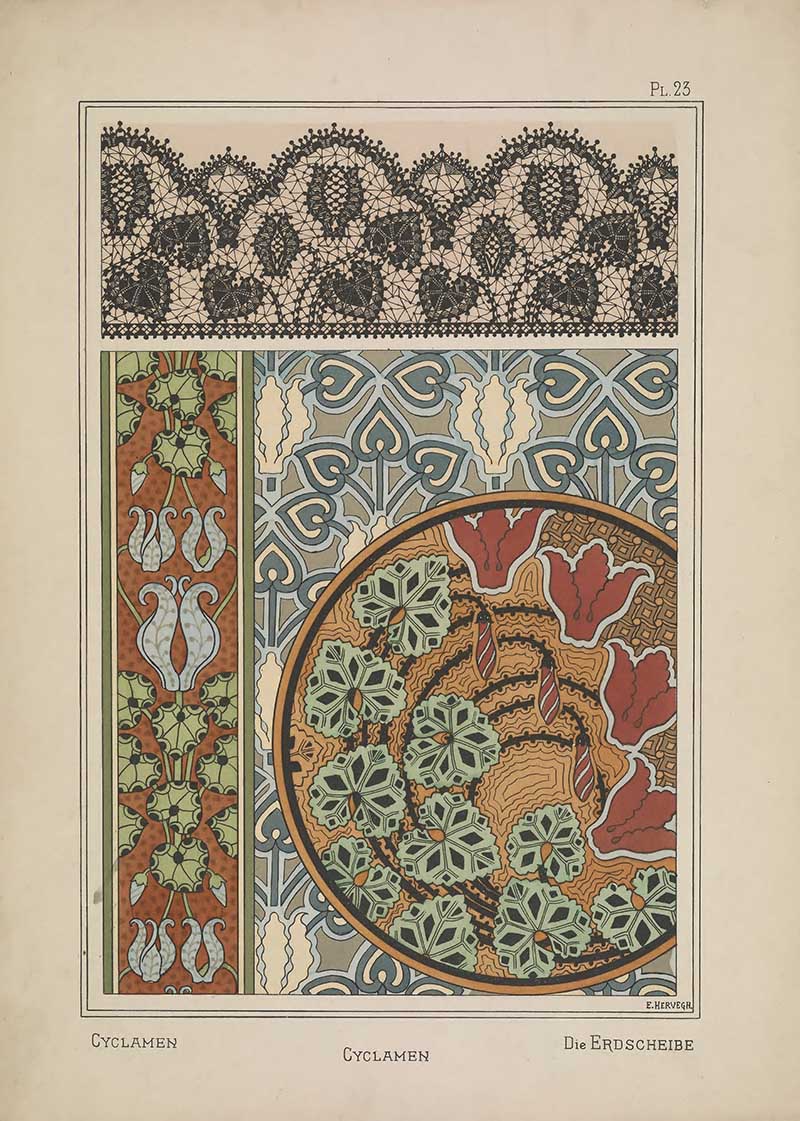
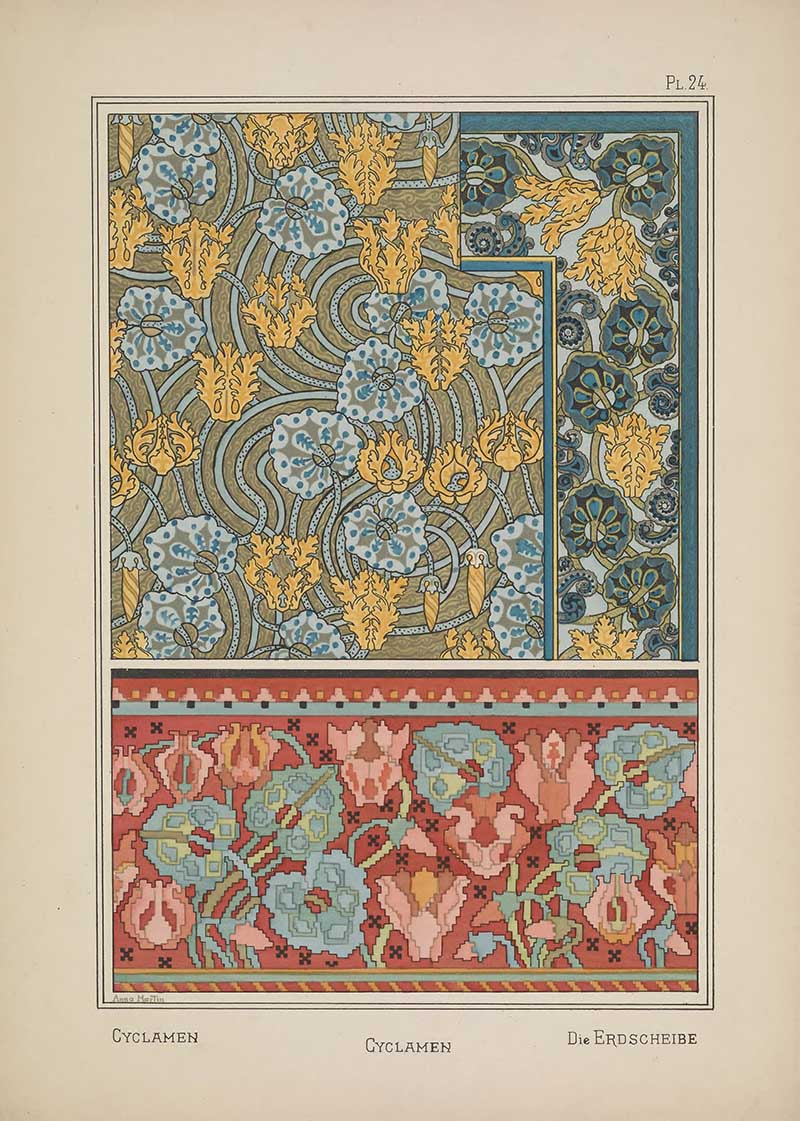
Cyclamen are low-growing plants with distinctive swept-back petals and often beautifully patterned leaves. Their curved flower shapes and heart-shaped foliage make them especially suited to stylised, flowing designs like those seen in Art Nouveau.
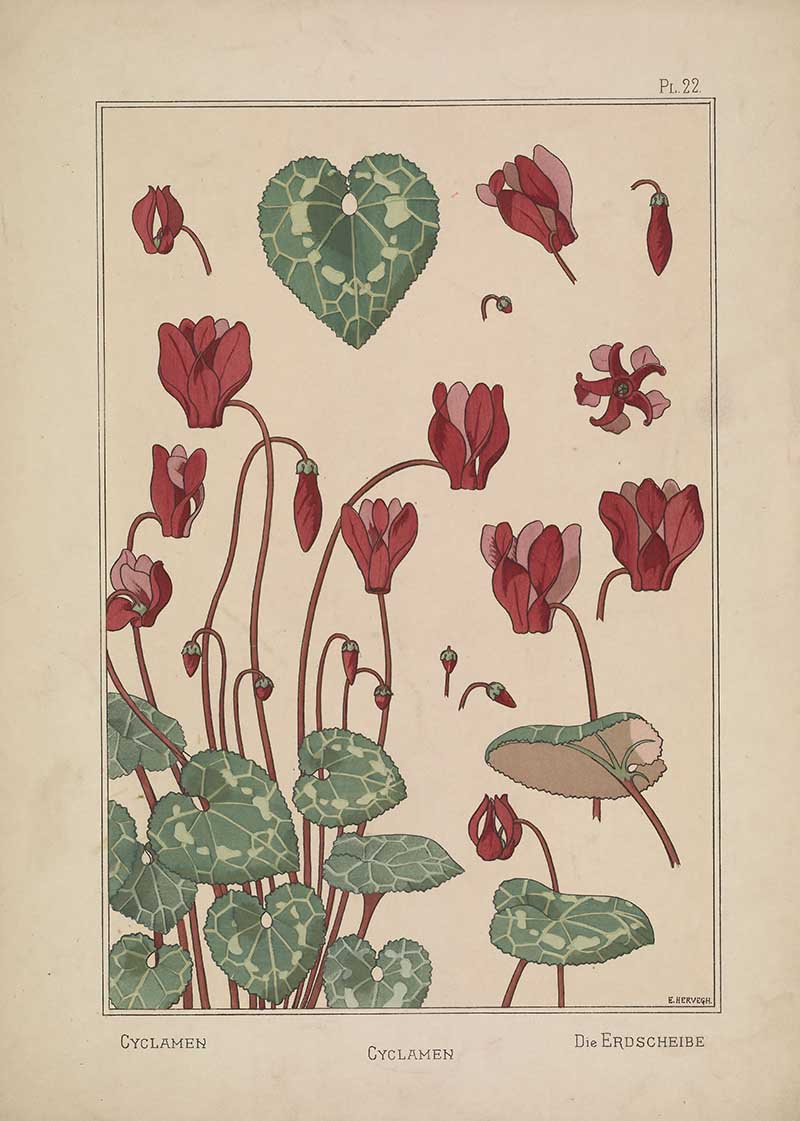
Print 16: Cyclamen Art Nouveau Patterns
Print 17: More cyclamen patterns
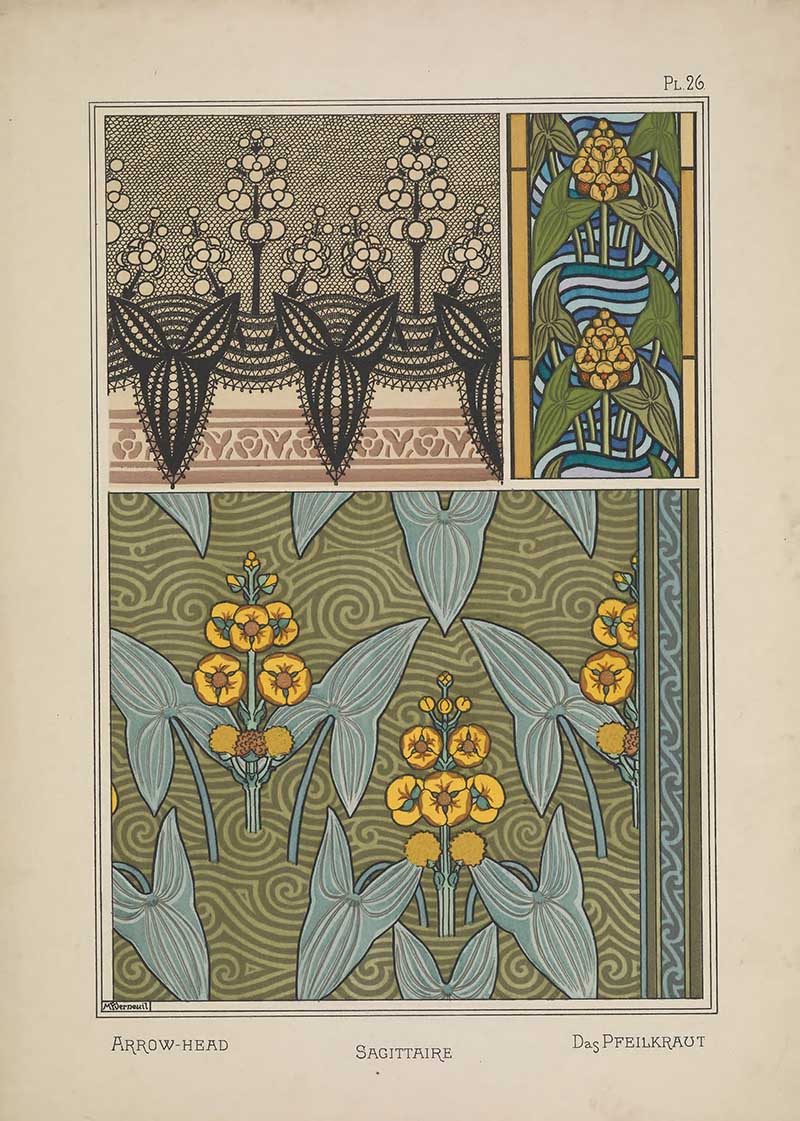
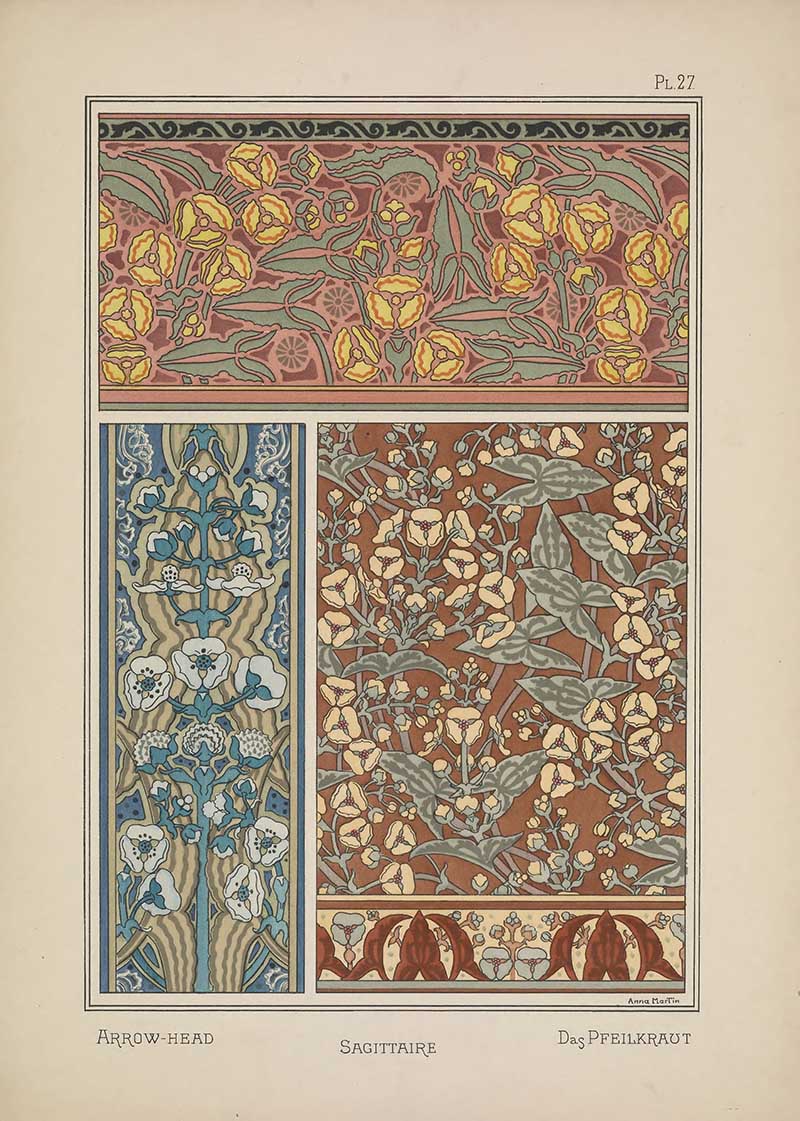
Arrowhead plants are named for their distinctive arrow-shaped leaves, which have a strong, clear silhouette. This bold, geometric form makes them ideal for decorative patterns, where the repeating leaf shape creates simple yet striking designs often seen in Art Nouveau.
Print 19: More Arrow Head Patterns
Art Nouveau Patterns 20-30
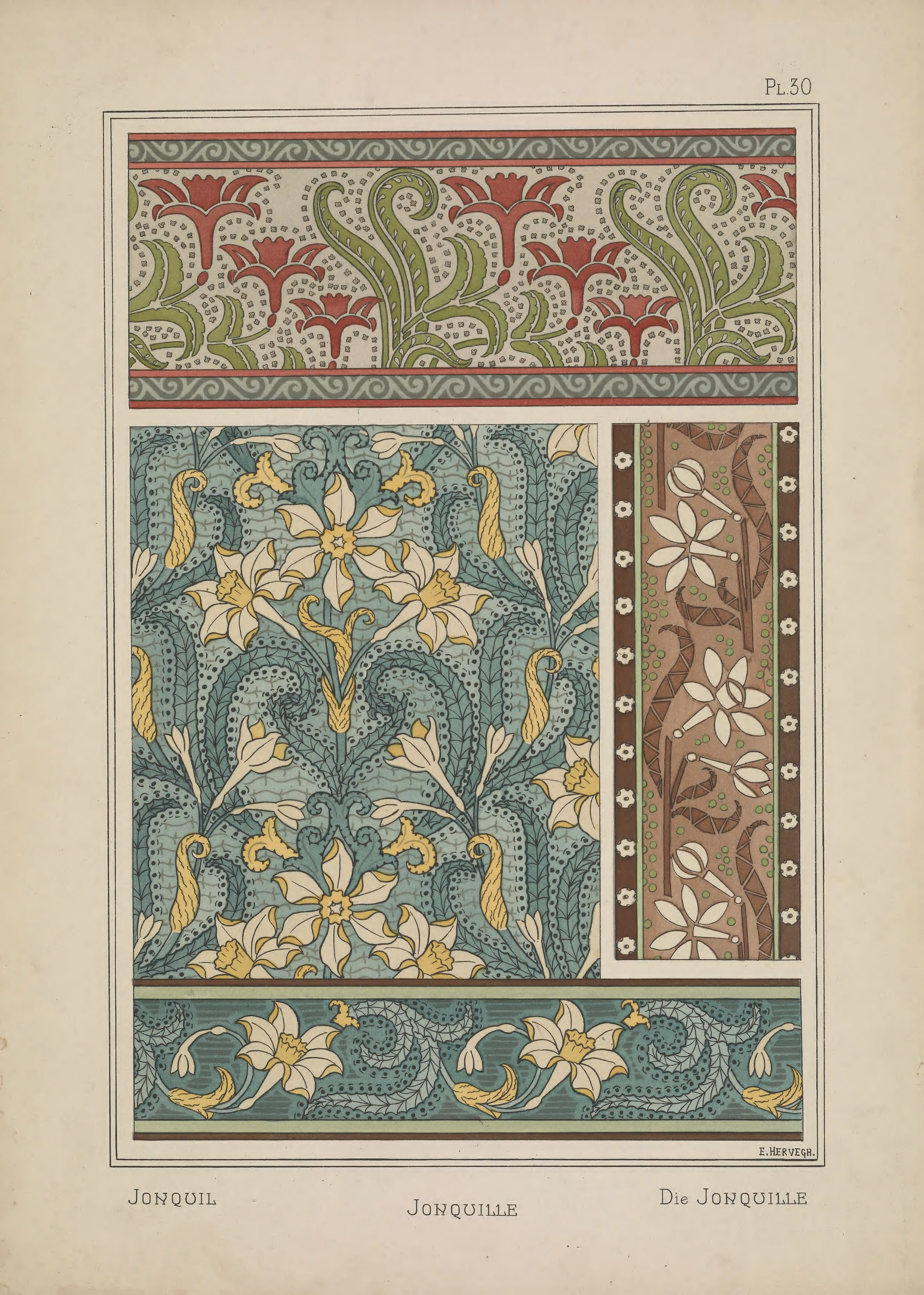
Print 20: Jonquil Botanical Patterns
Jonquils, a type of daffodil, have slender stems and small, fragrant yellow flowers with a central cup surrounded by narrow petals. Their simple structure and repeating blooms make them easy to stylise into rhythmic, decorative patterns.
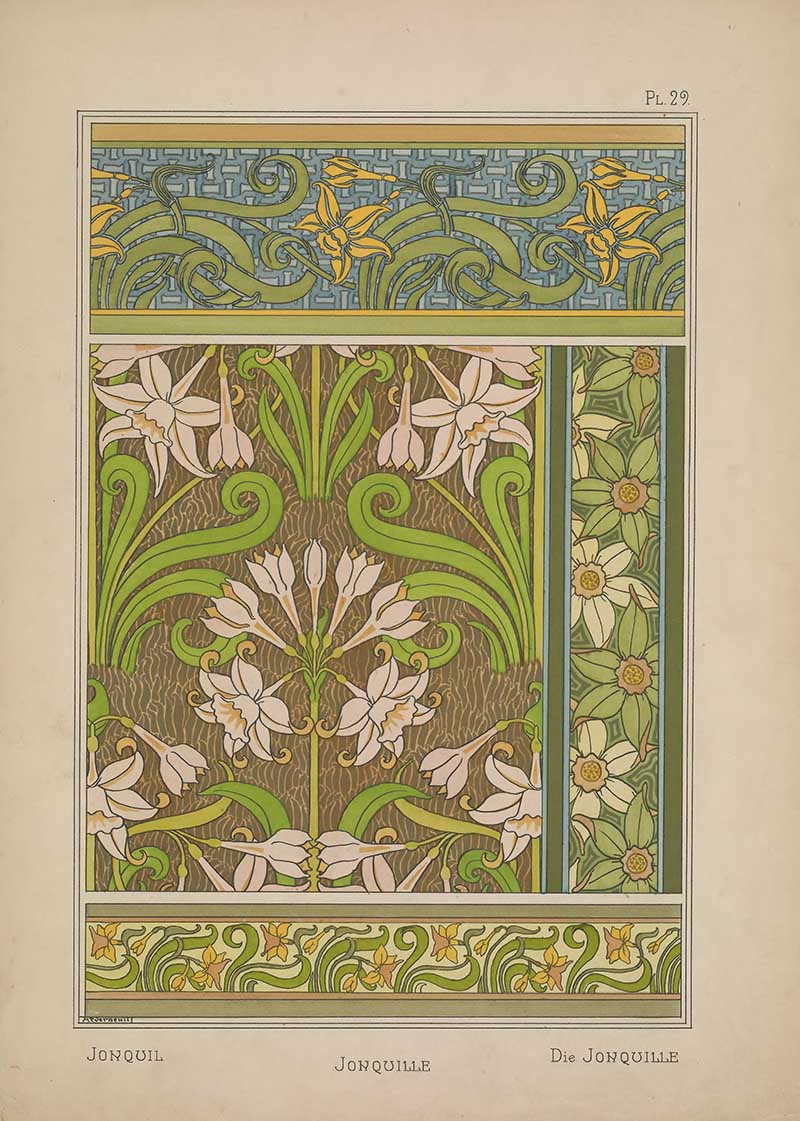
Print 21: More Jonquil Patterns
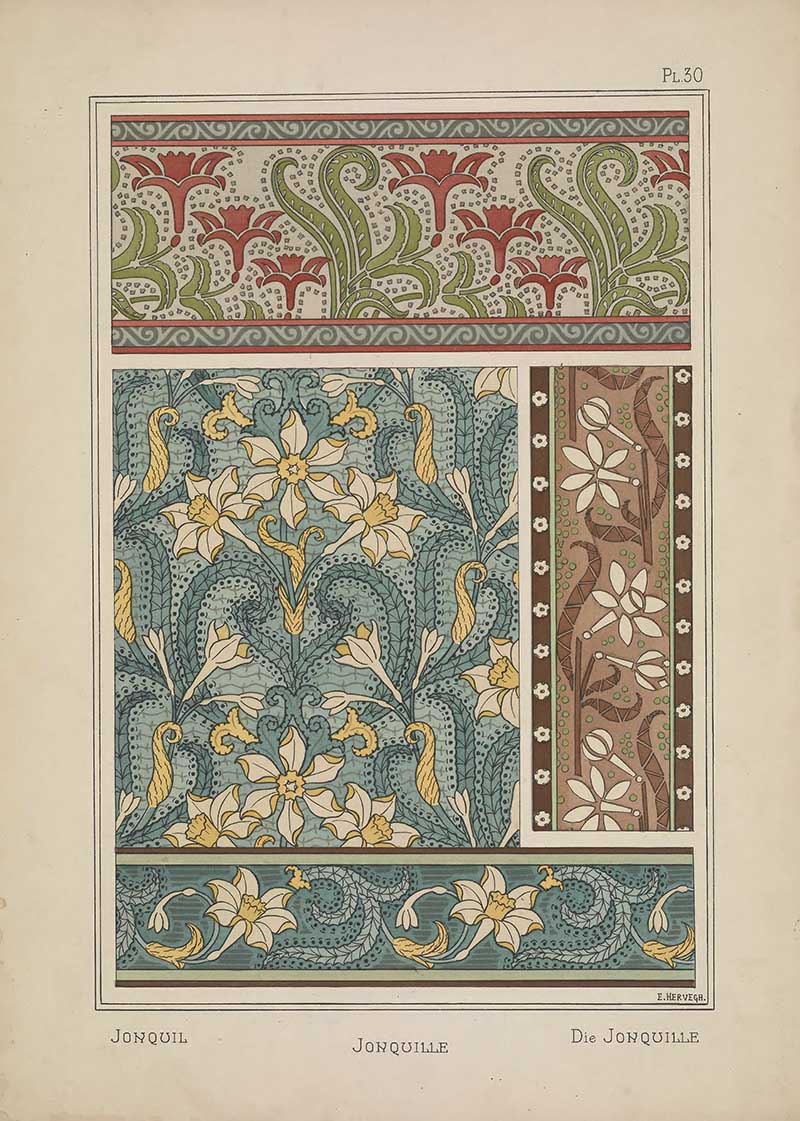
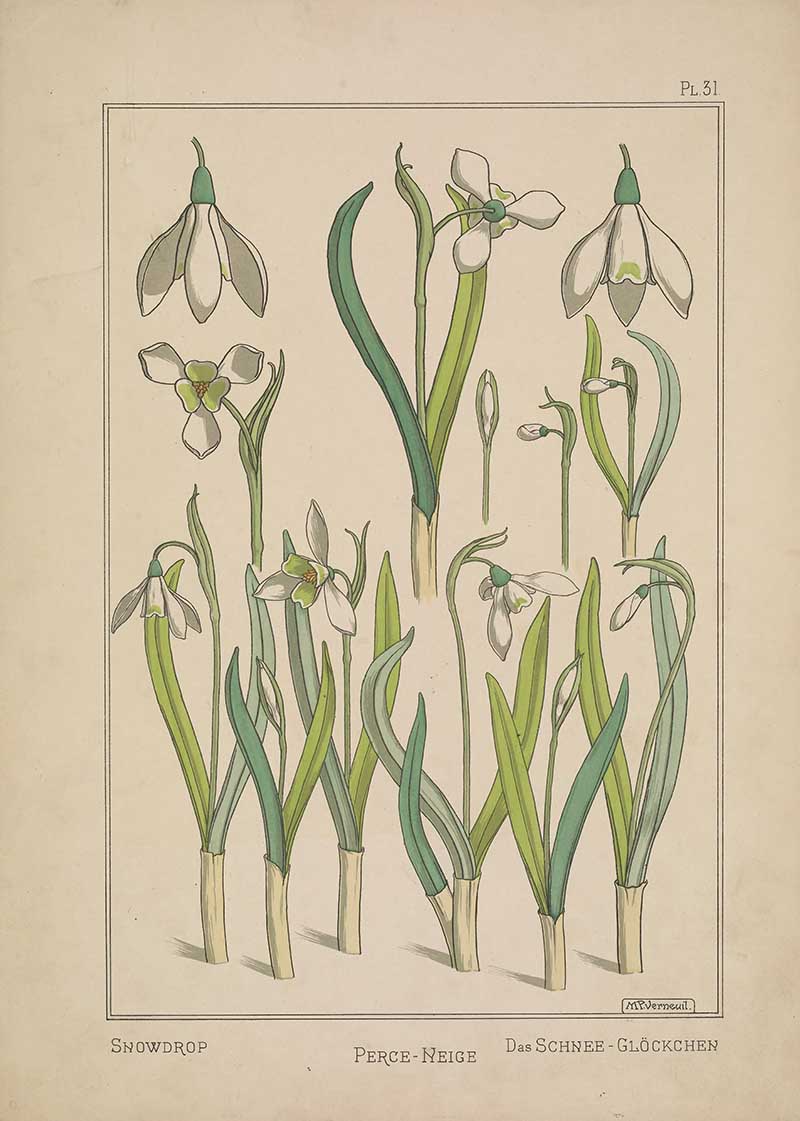
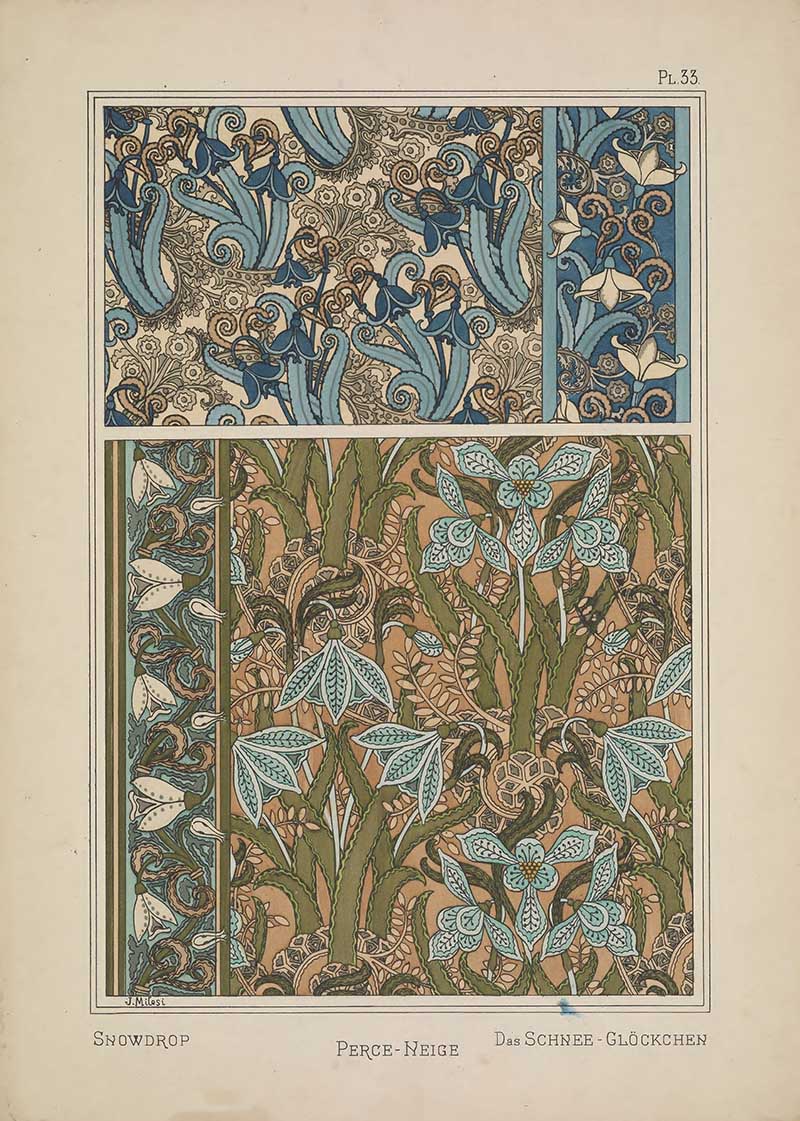
Plate 23: Snowdrop Botanical Patterns
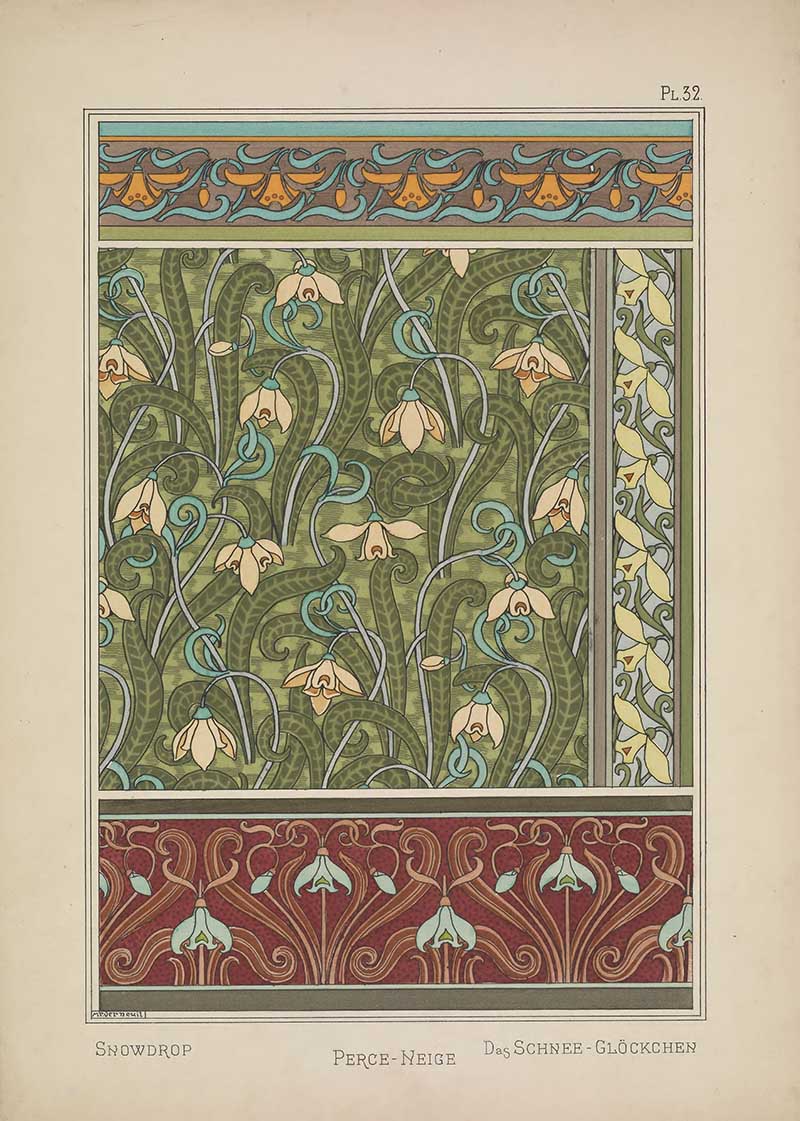
Print 24: More Snowdrop Patterns
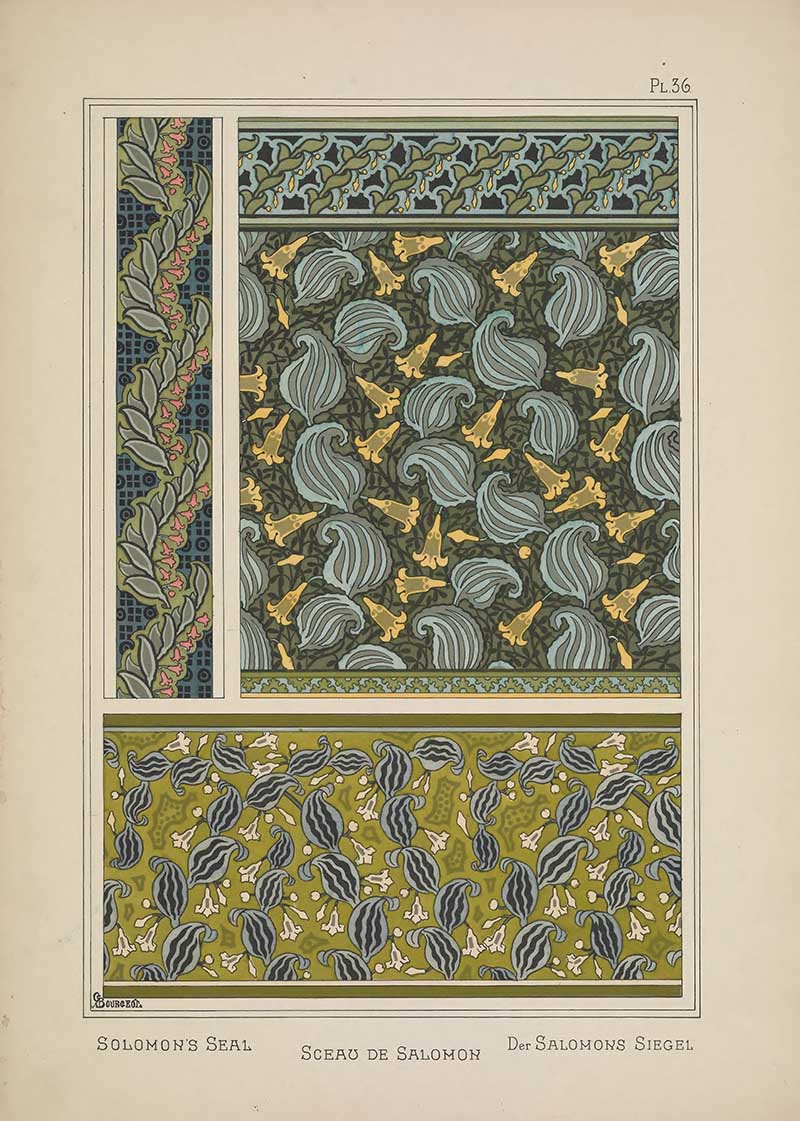
Solomon's seal is a woodland plant with arching stems and small, hanging bell-shaped flowers spaced along the stem. This natural curve and repeating form make it particularly well-suited to flowing, linear patterns in Art Nouveau design.
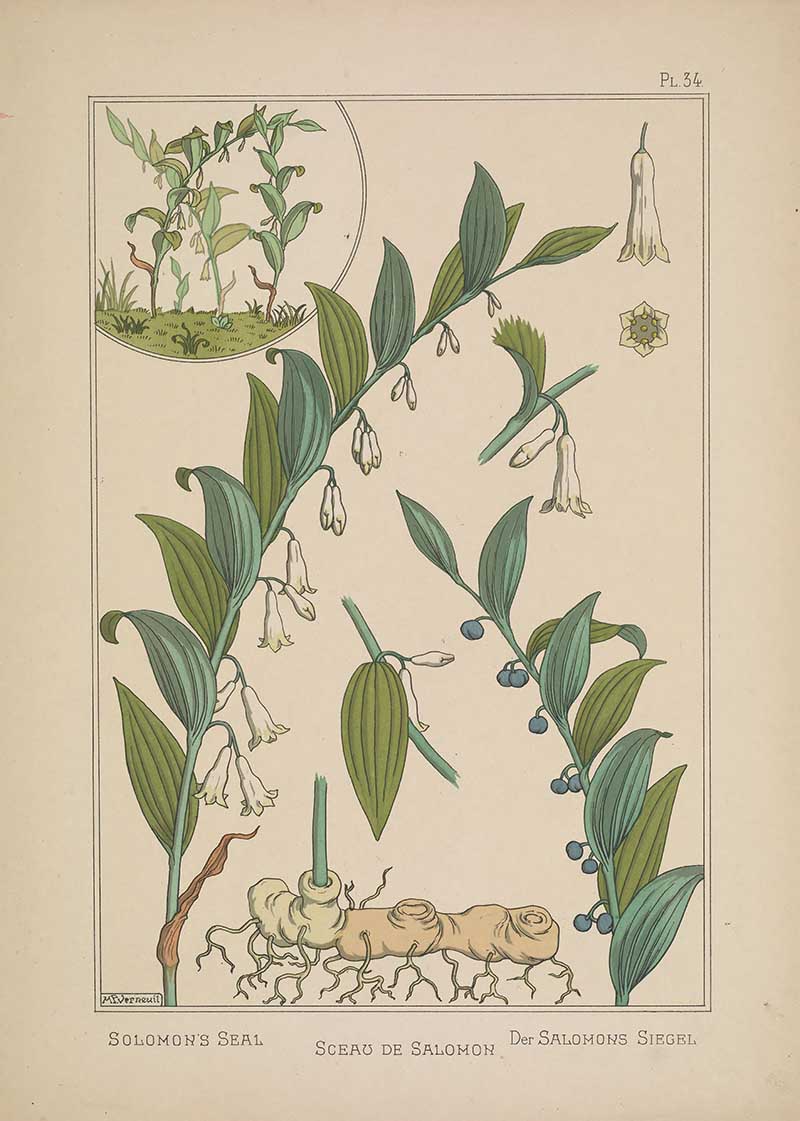
Plate 26: Solomon's Seal Patterns
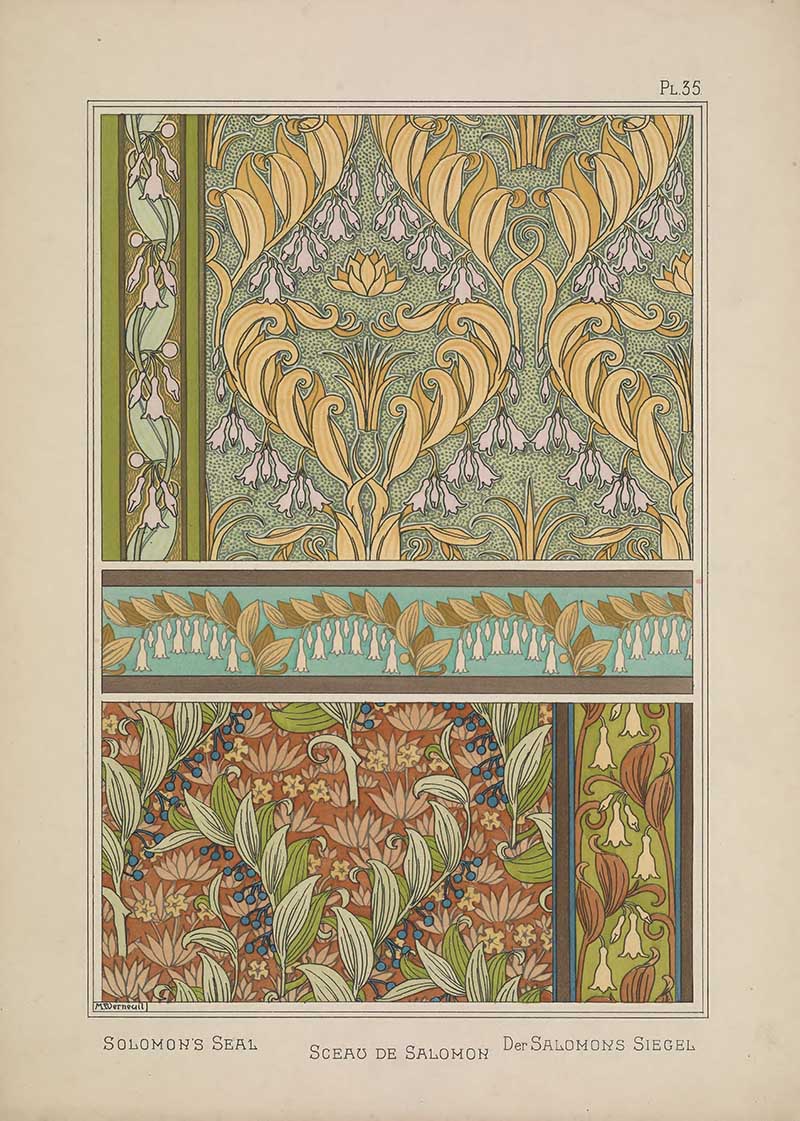
Print 27: More Solomon's Seal Designs
The flower was a favourite of the late Queen Elizabeth II. There is a whole collection of Lily of the Valley botanical prints on Pictureboxblue.
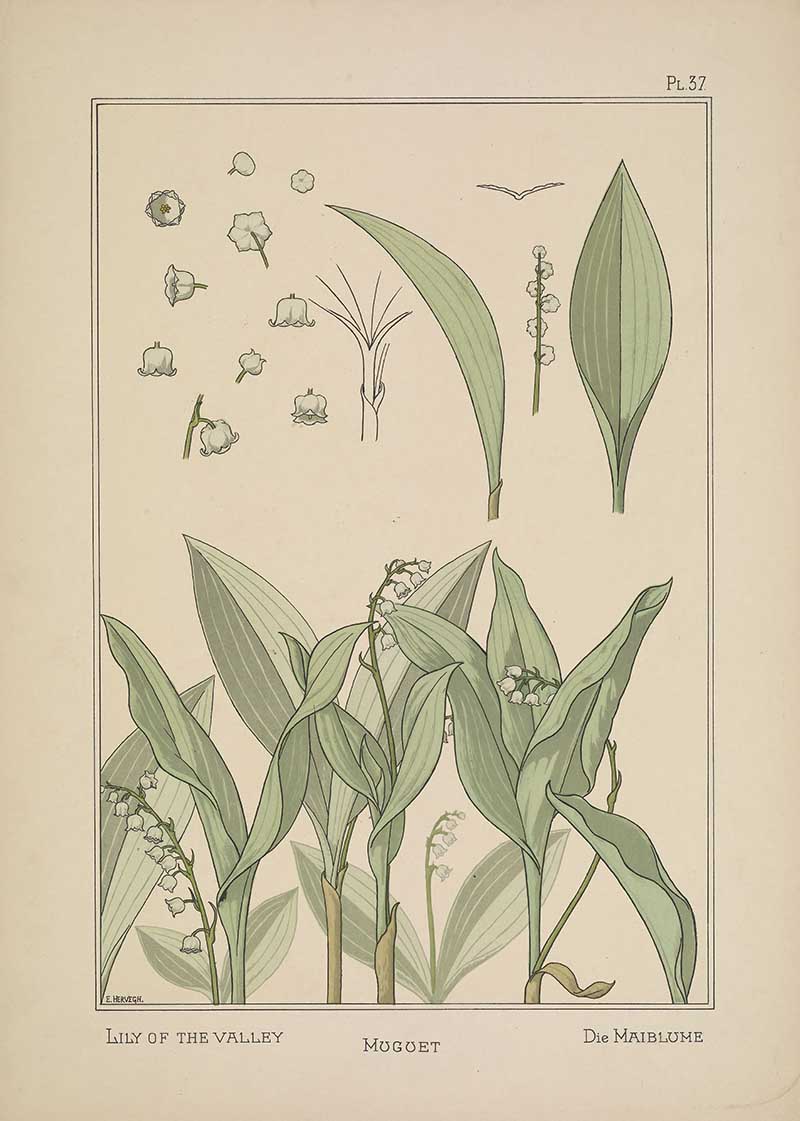
Print 29: Lily of The Valley Patterns
Art Nouveau tile, wallpaper and borders.
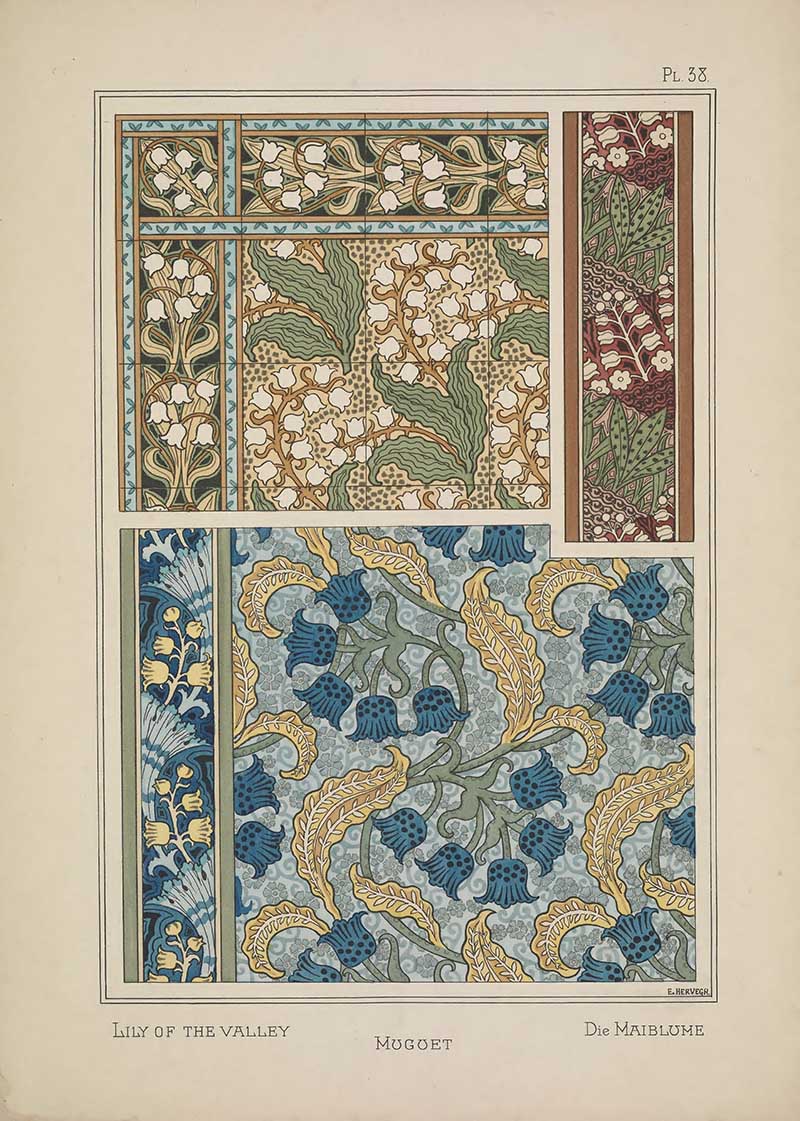
Print 30: More Lily of The Valley Designs
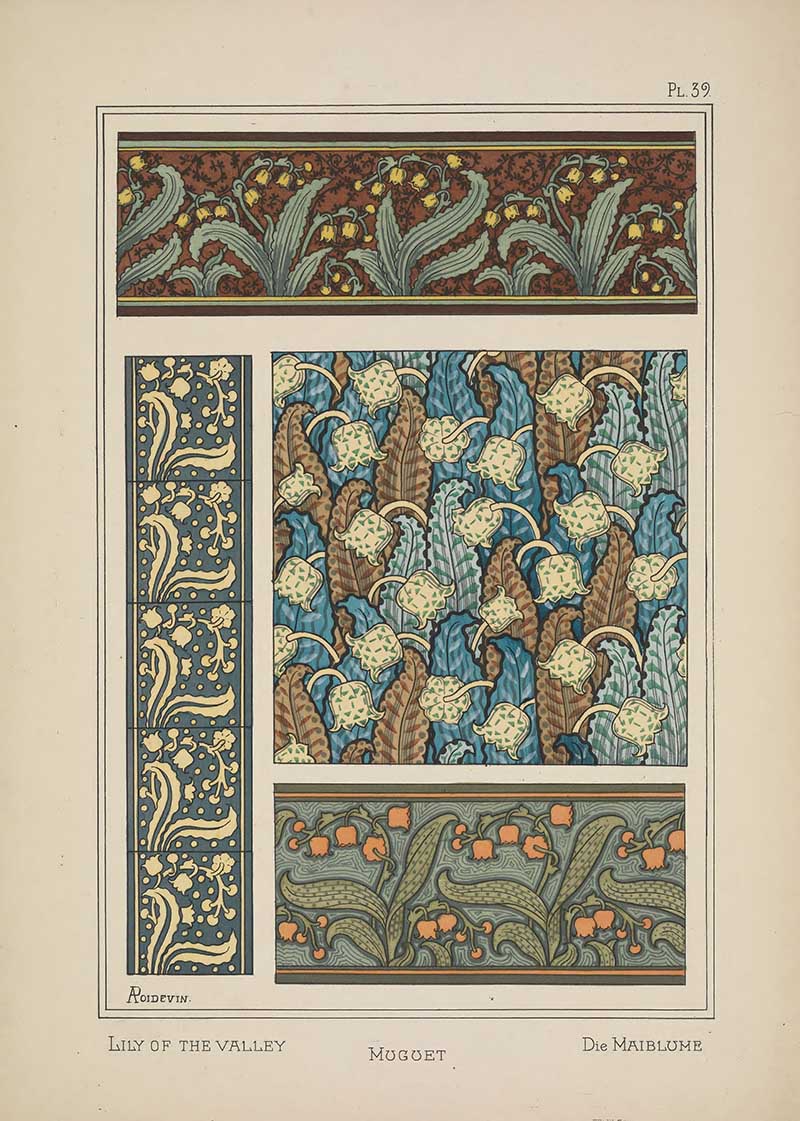
Art Nouveau Floral Patterns 31-40
Nasturtiums are fast-growing plants with round, shield-like leaves and bright, trumpet-shaped flowers in warm shades of orange, red and yellow. Their bold shapes and trailing stems make them easy to adapt into lively, flowing decorative patterns.
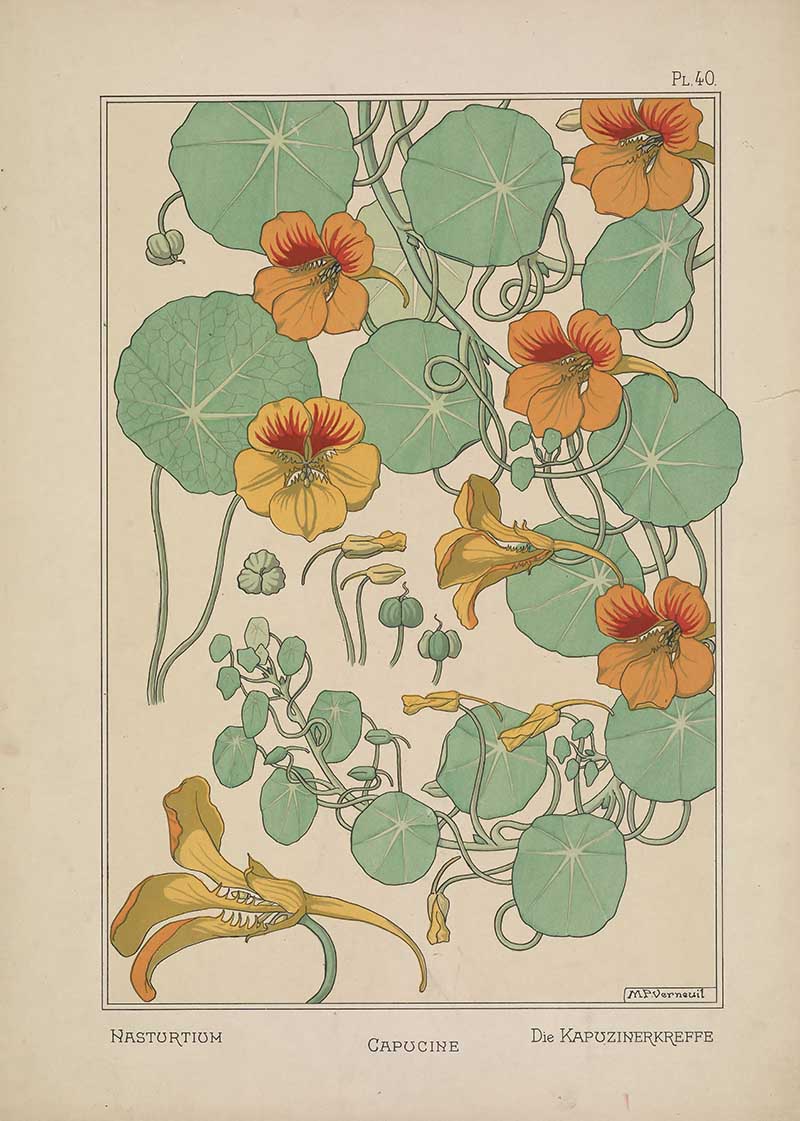
Tiles, wallpaper and border designs.
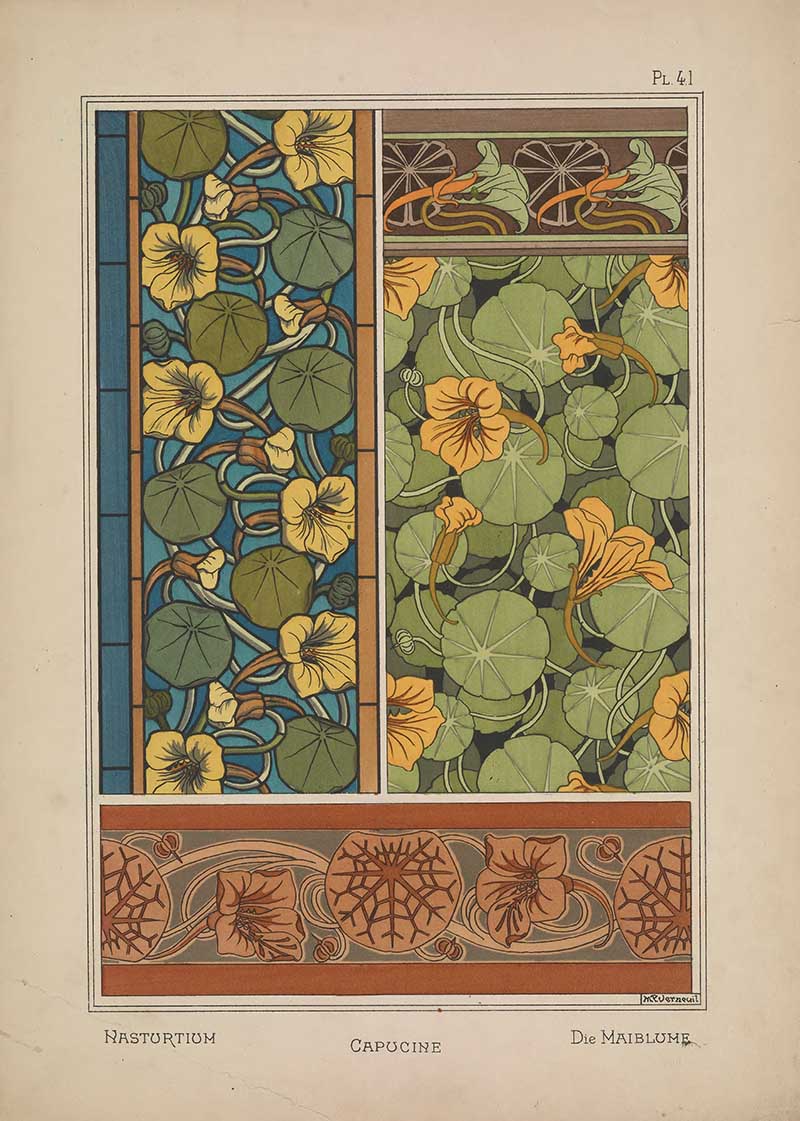
Print 33: More Nasturtium Patterns
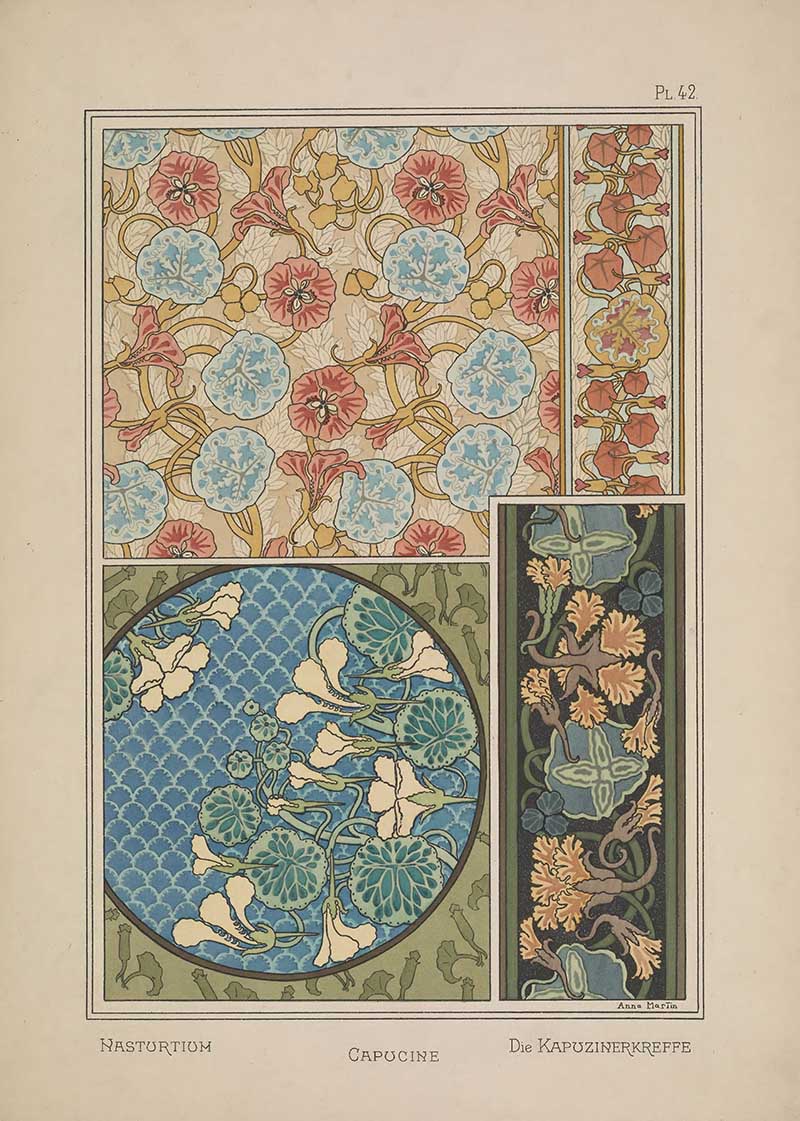
Print 34: Dandelion Art Nouveau Patterns
There are a few beautiful dandelion illustrations in Harriot Adams's wildflower drawings.
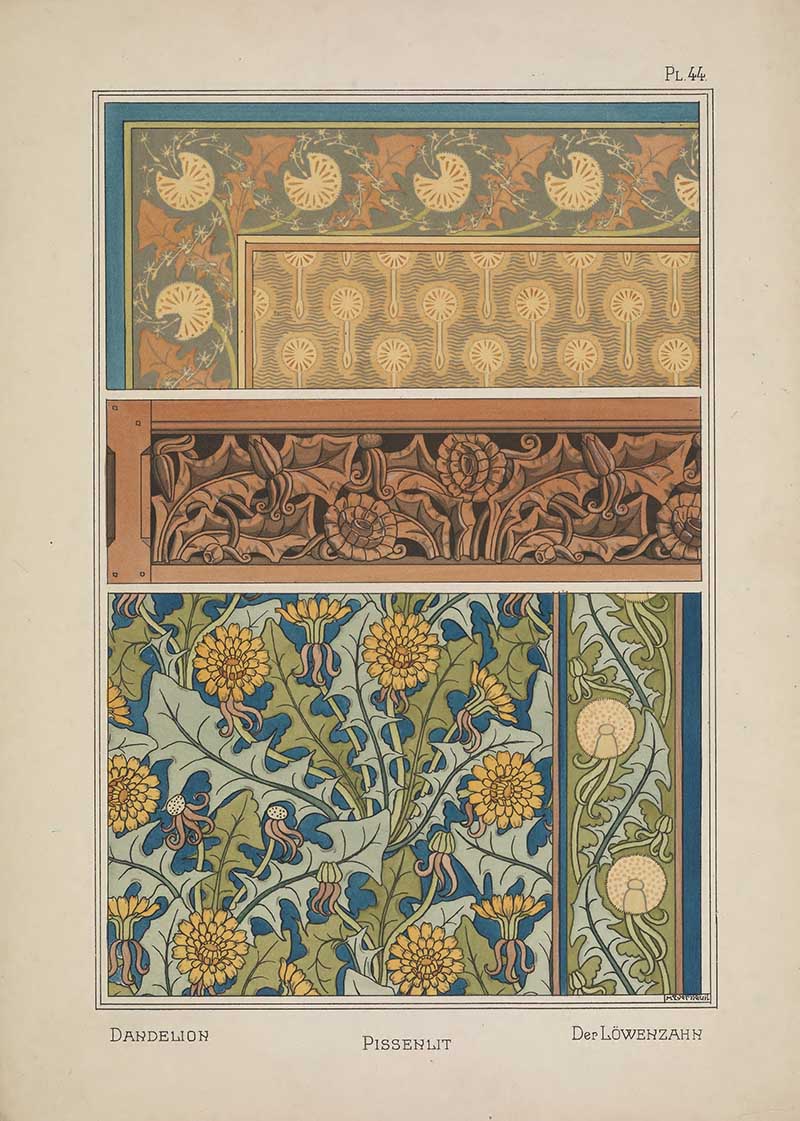
Print 35: More Dandelion Patterns
The Art Nouveau floral designs below even include one for a dandelion-patterned carved table leg.
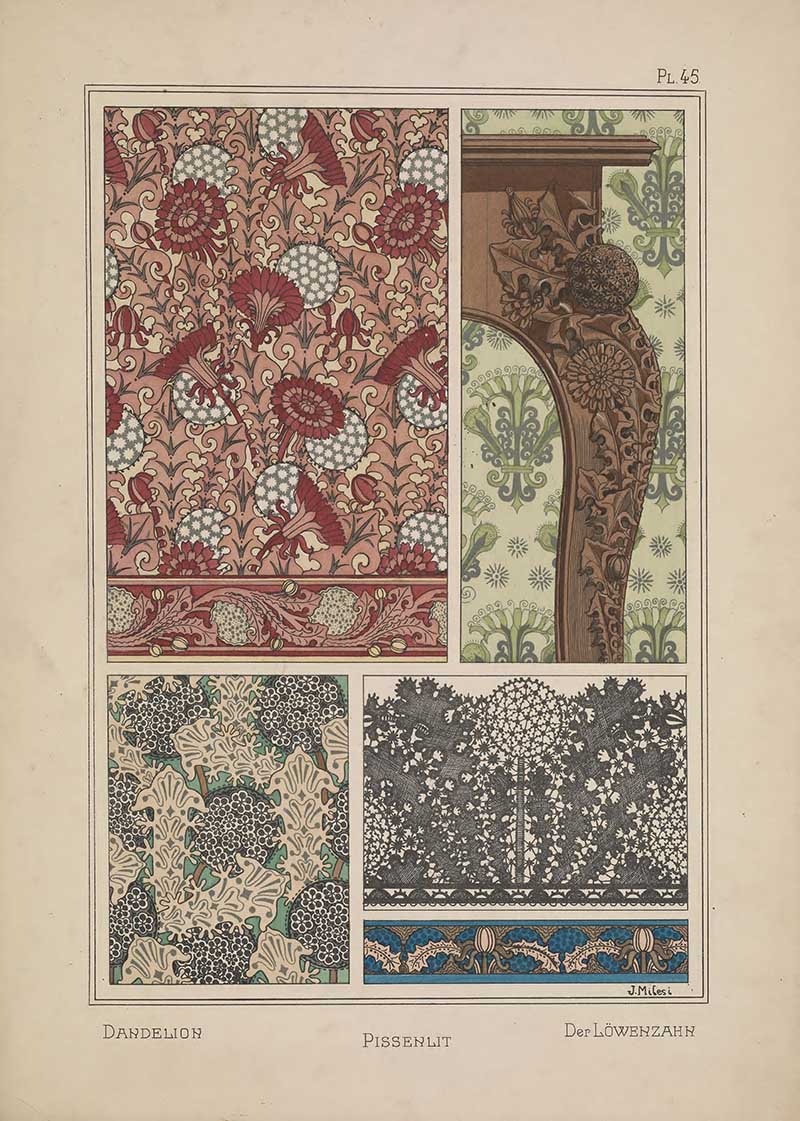
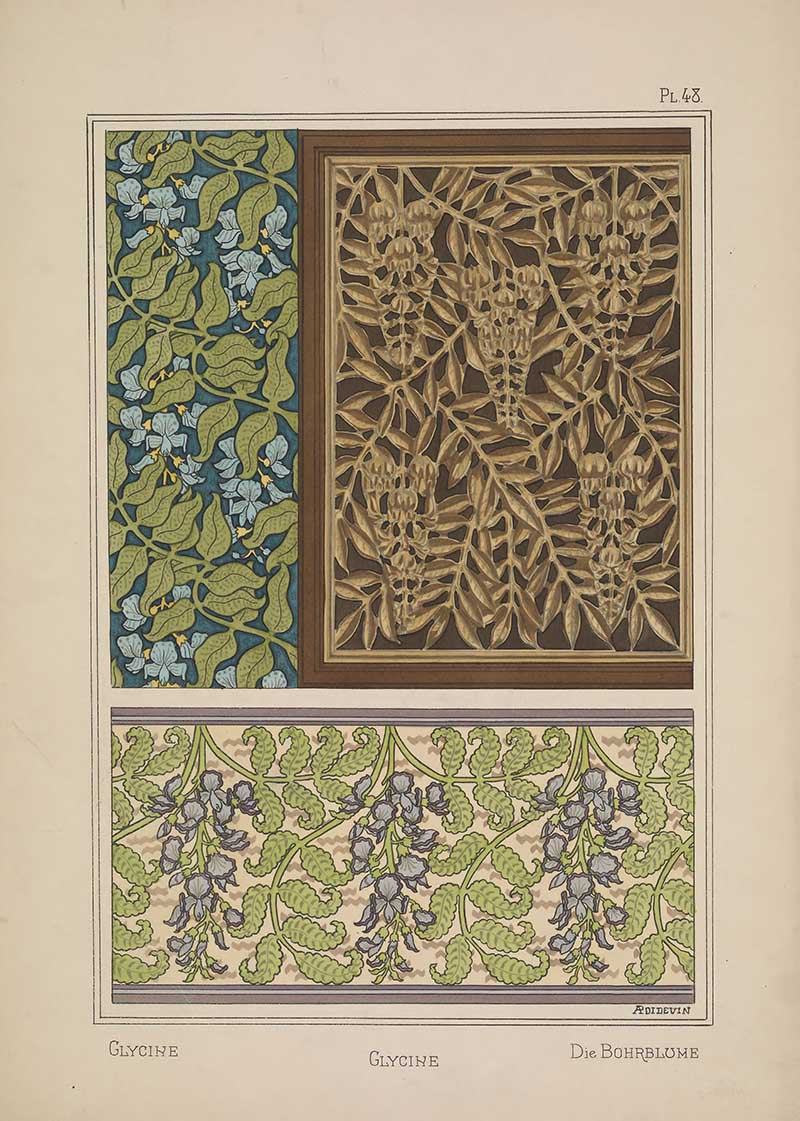
Print 36: Wysteria (Glycine) Patterns
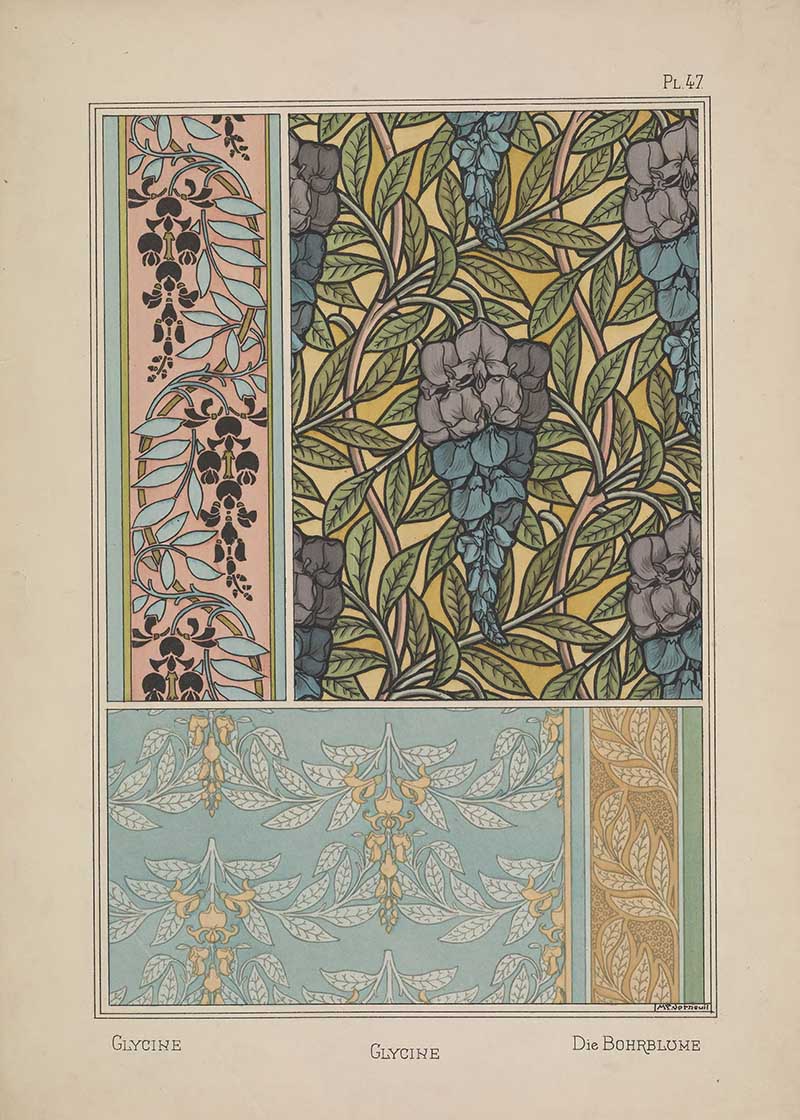
Borders and carved wooden panel design.
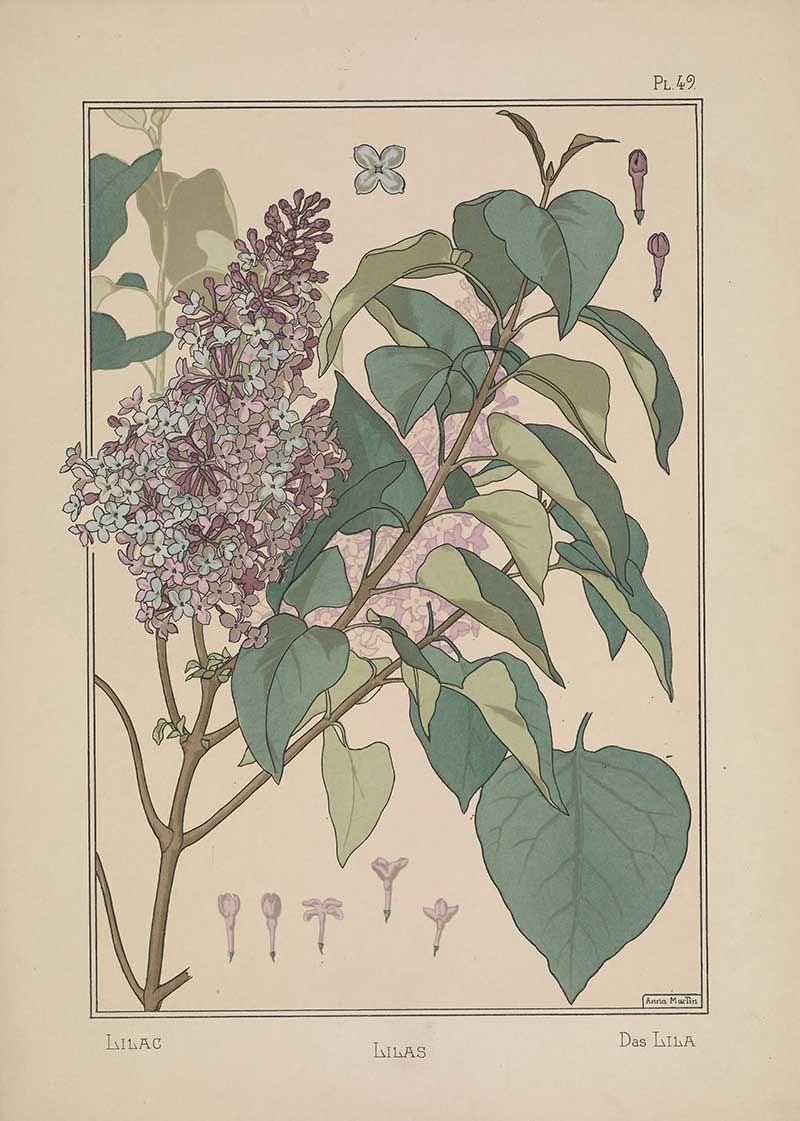
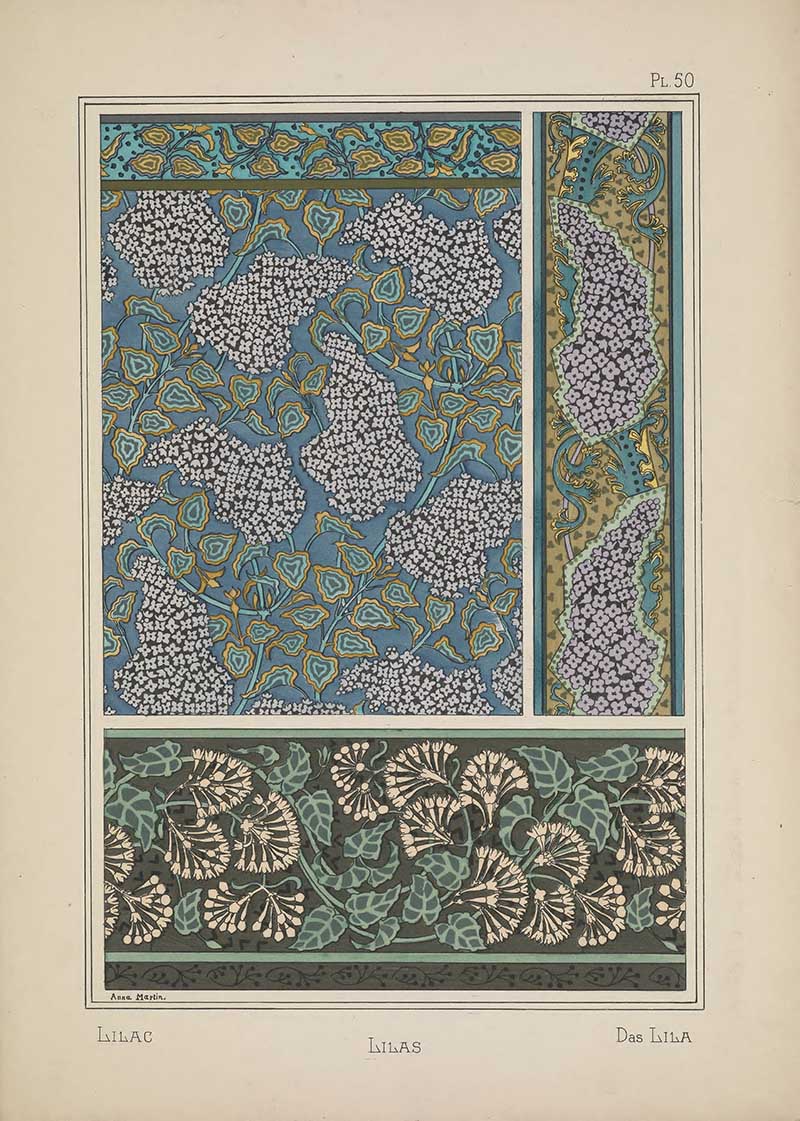
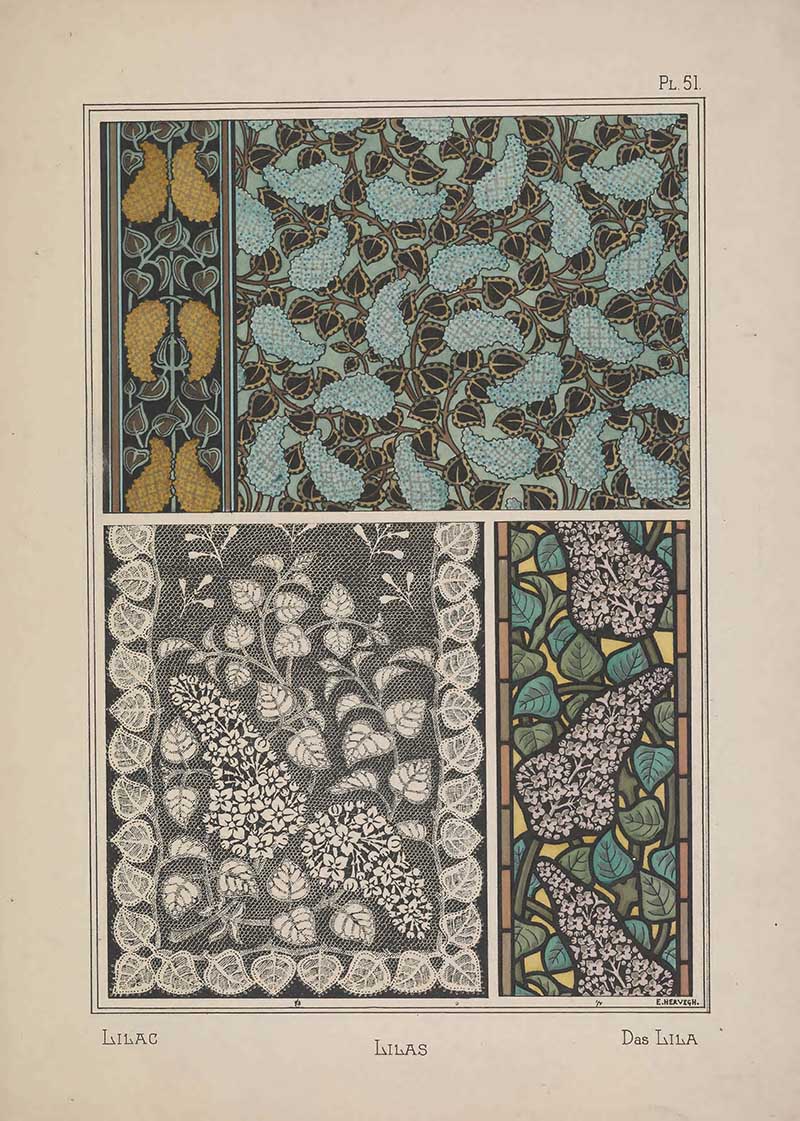
Print 39: Lilac Flower Patterns
Art Nouveau Designs 41-49
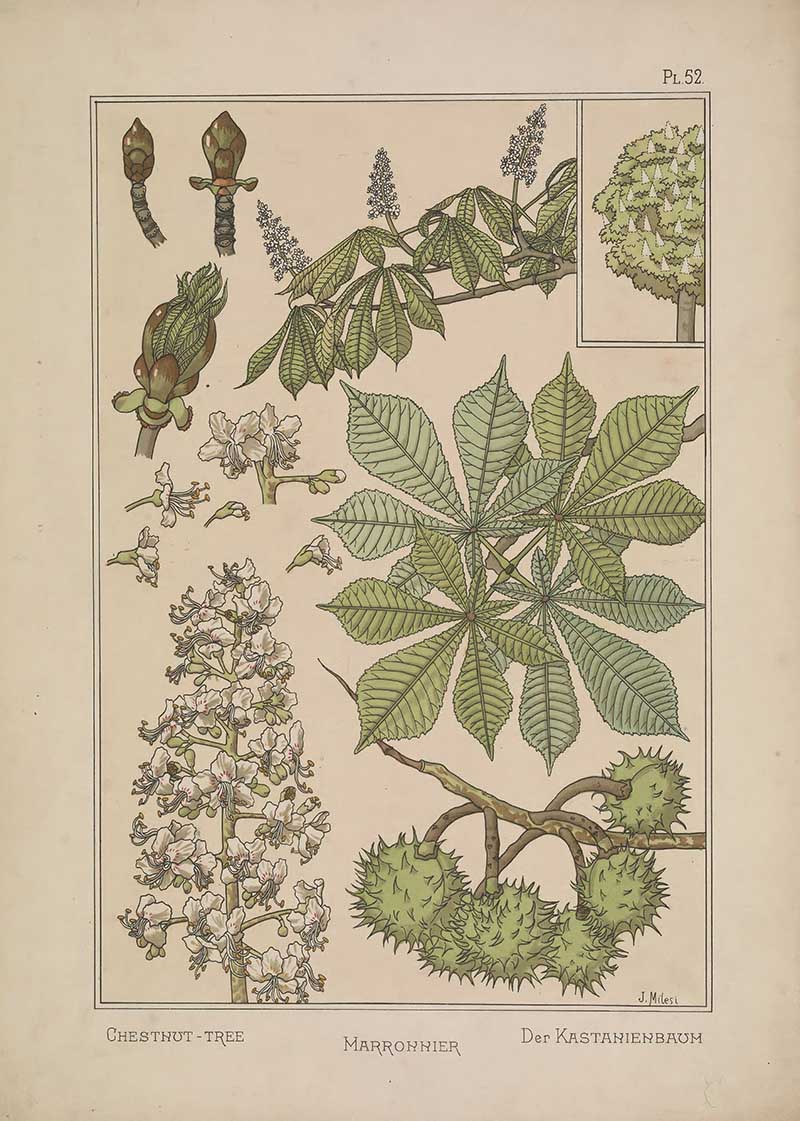
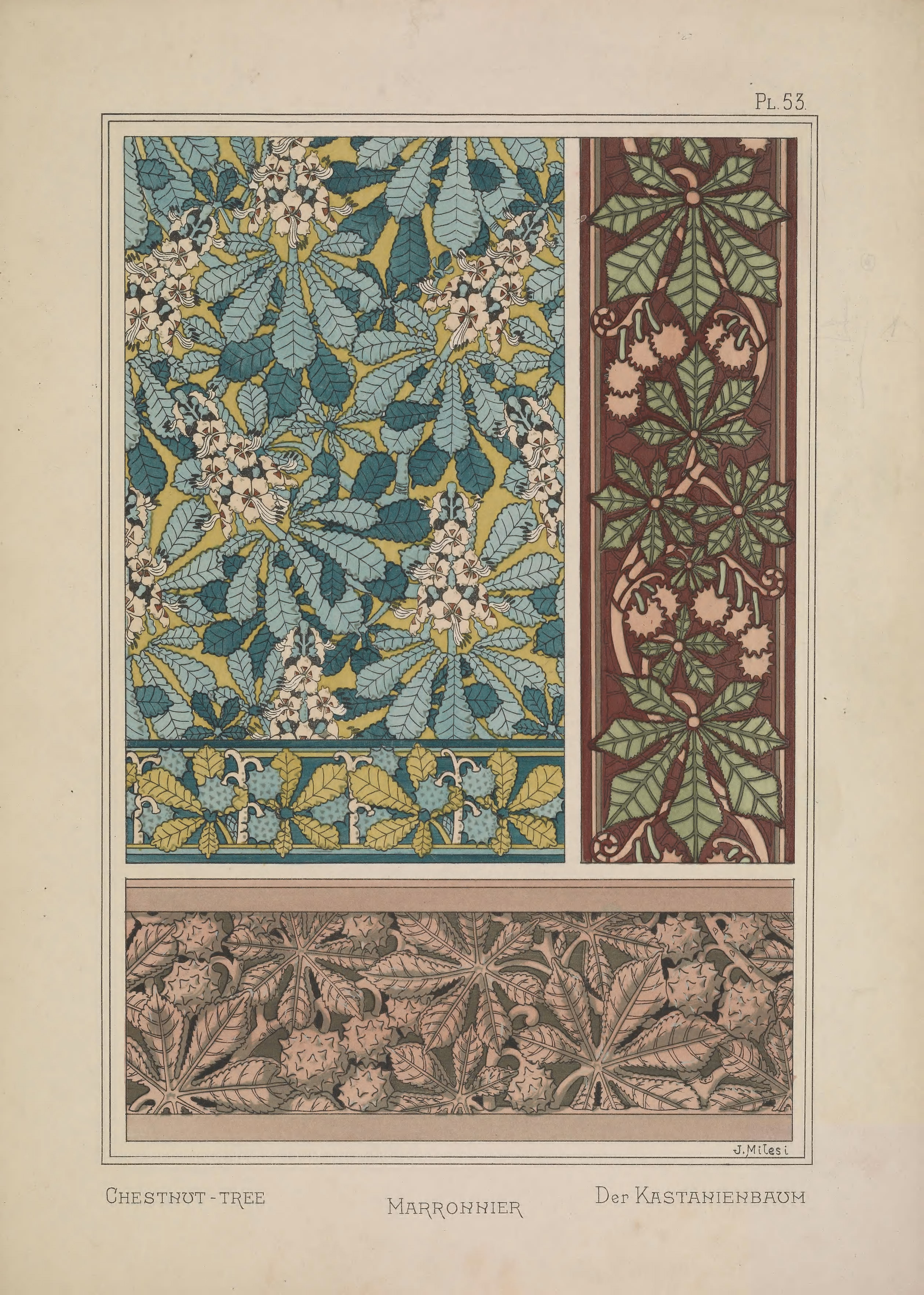
Print 42: Chestnut Tree Art Nouveau Patterns
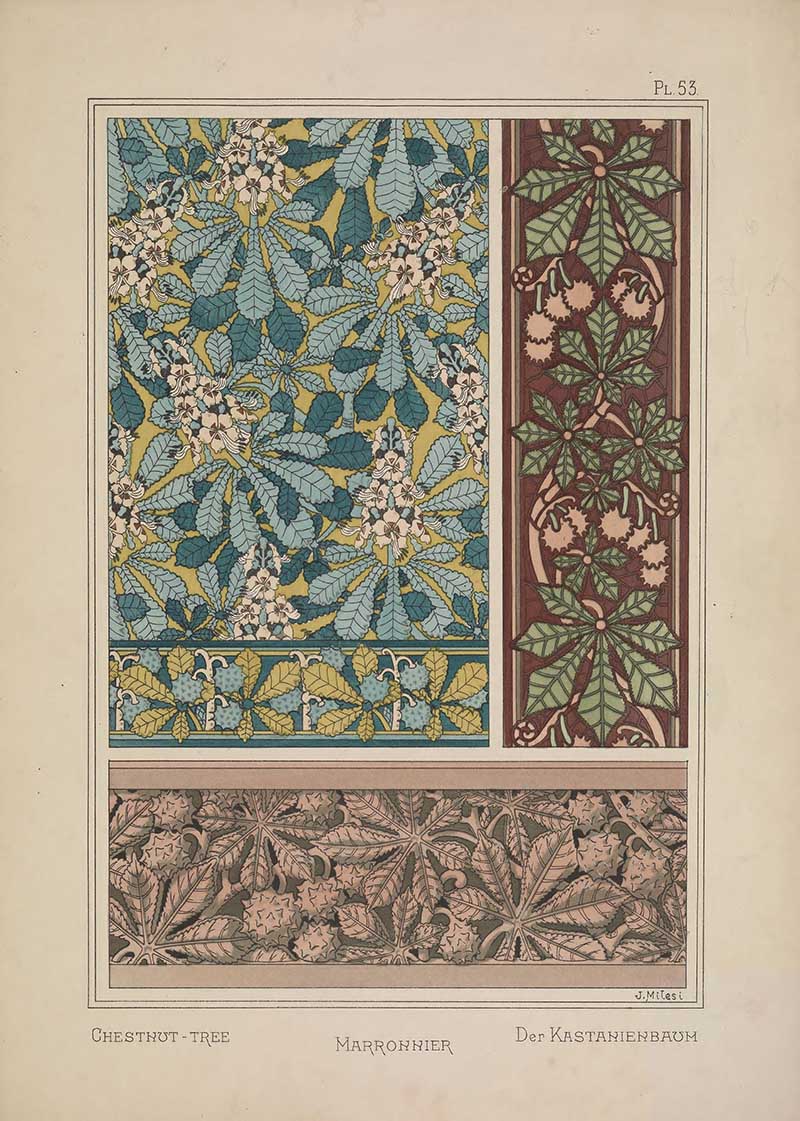
Chestnut tree patterns often feature distinctive palmate leaves and spiky seed husks with a strong, recognisable shape.
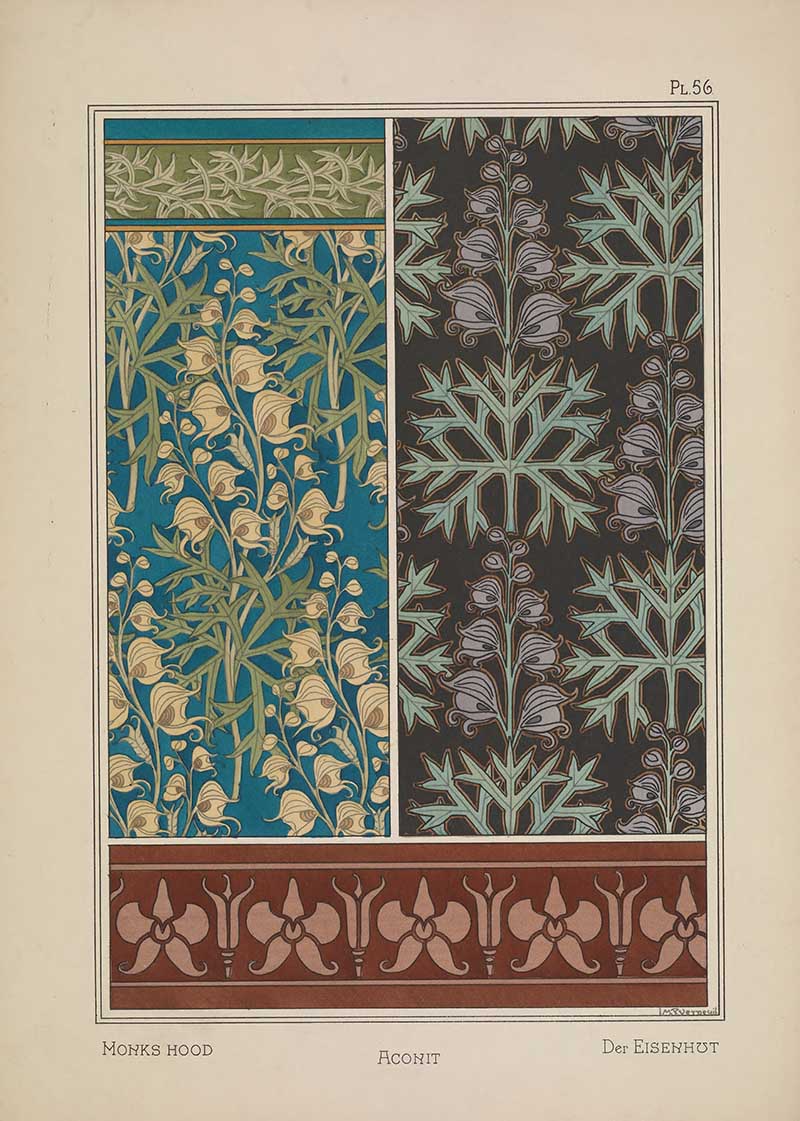
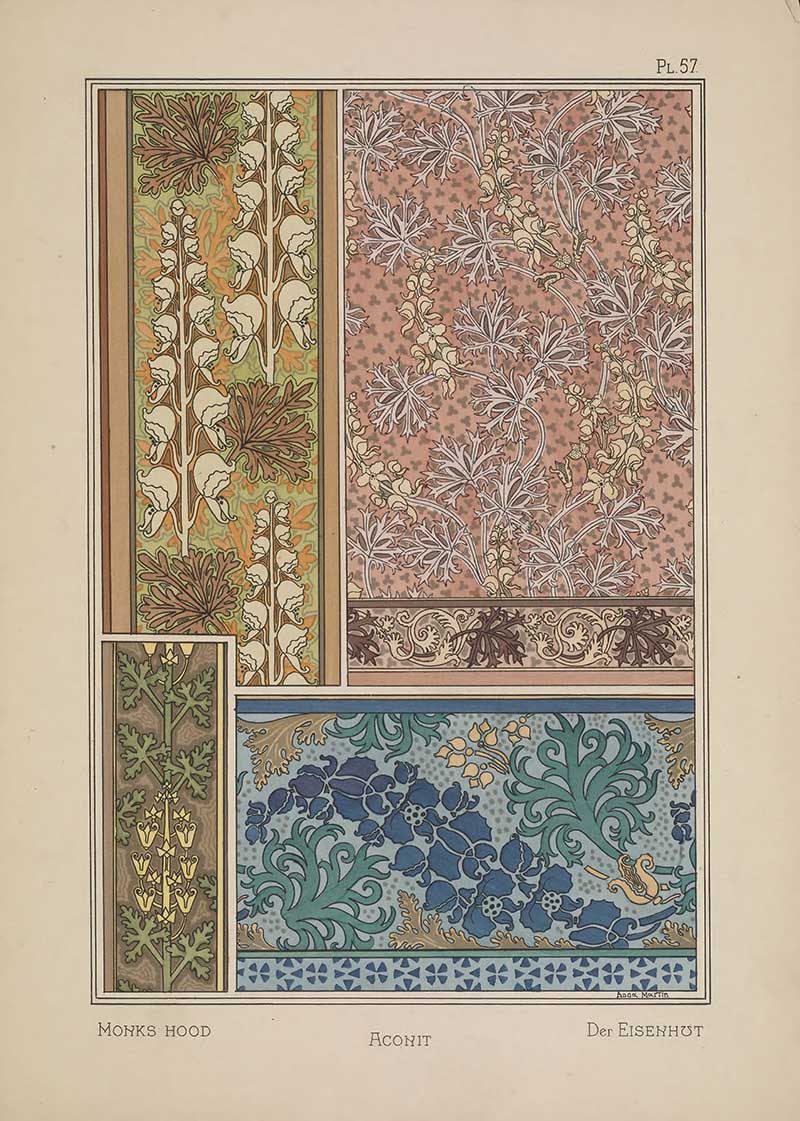
Monkshood flowers have tall spikes of deep blue or purple blooms, each with a distinctive hood-like shape. Their strong vertical form and repeated flowers make them well-suited to stylised, decorative patterns, particularly in Art Nouveau design.
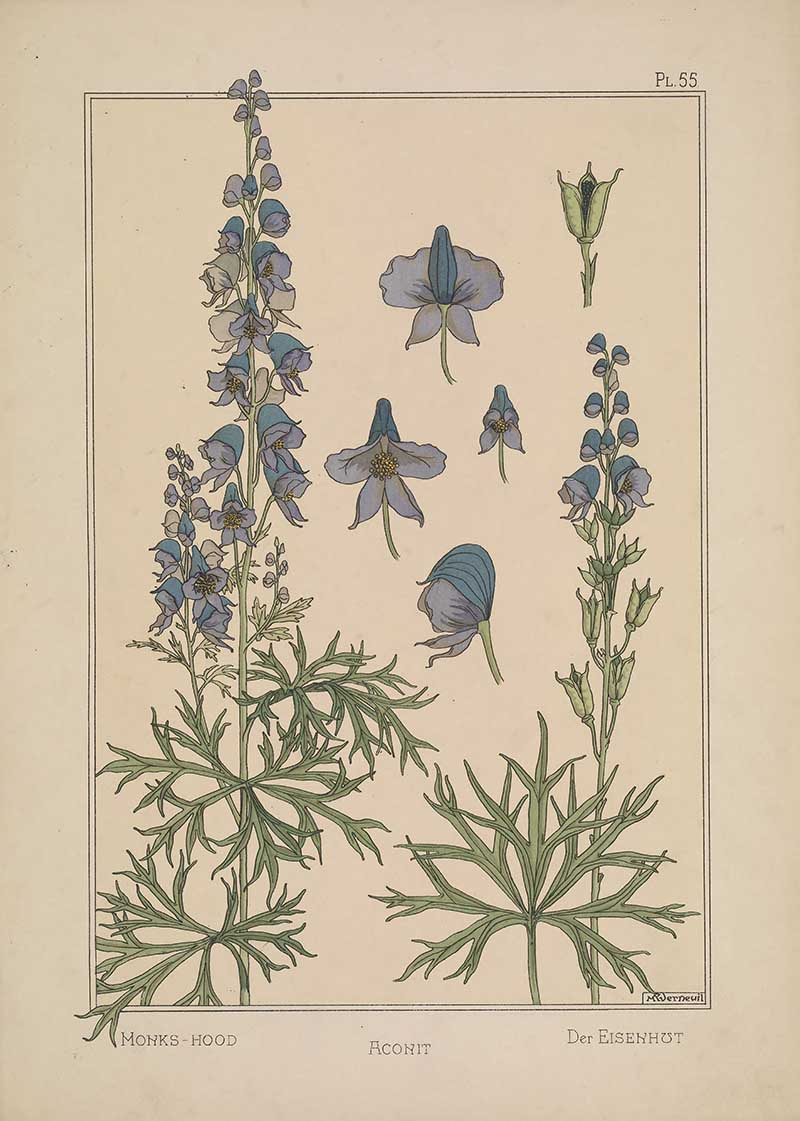
Plate 44: Monk's Hood Flower Patterns
Print 45: More Monk's Hood Patterns
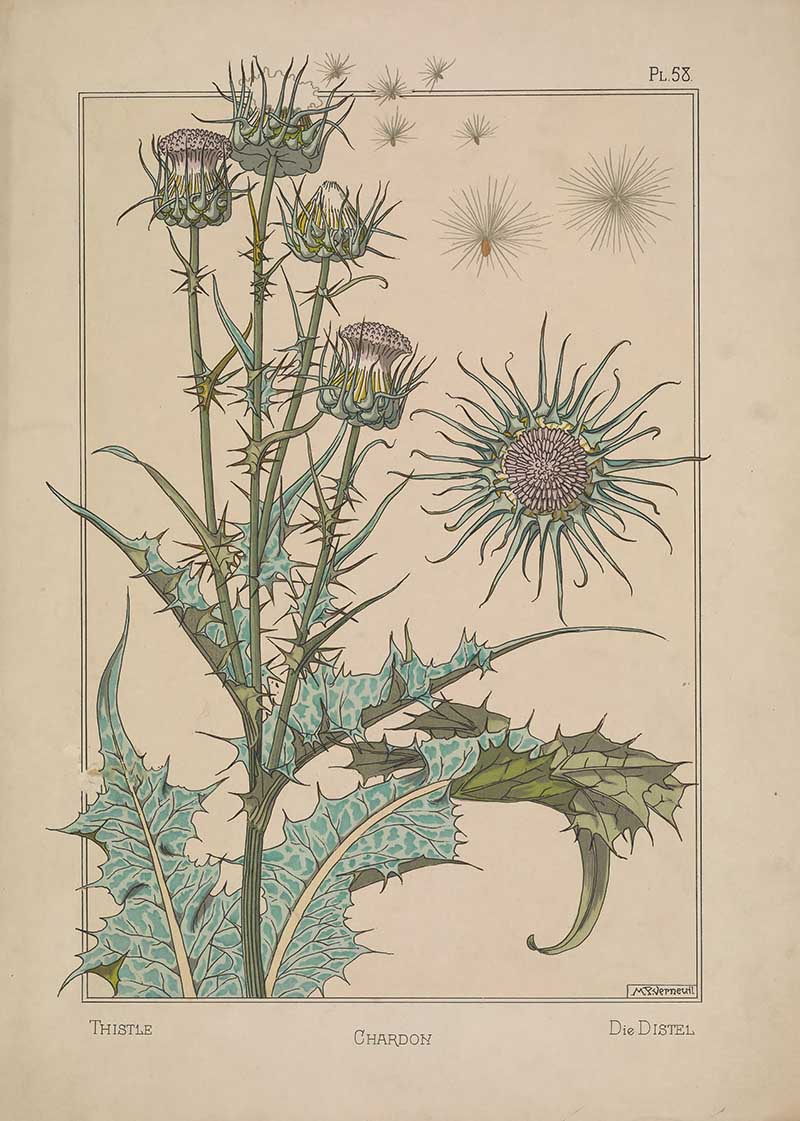
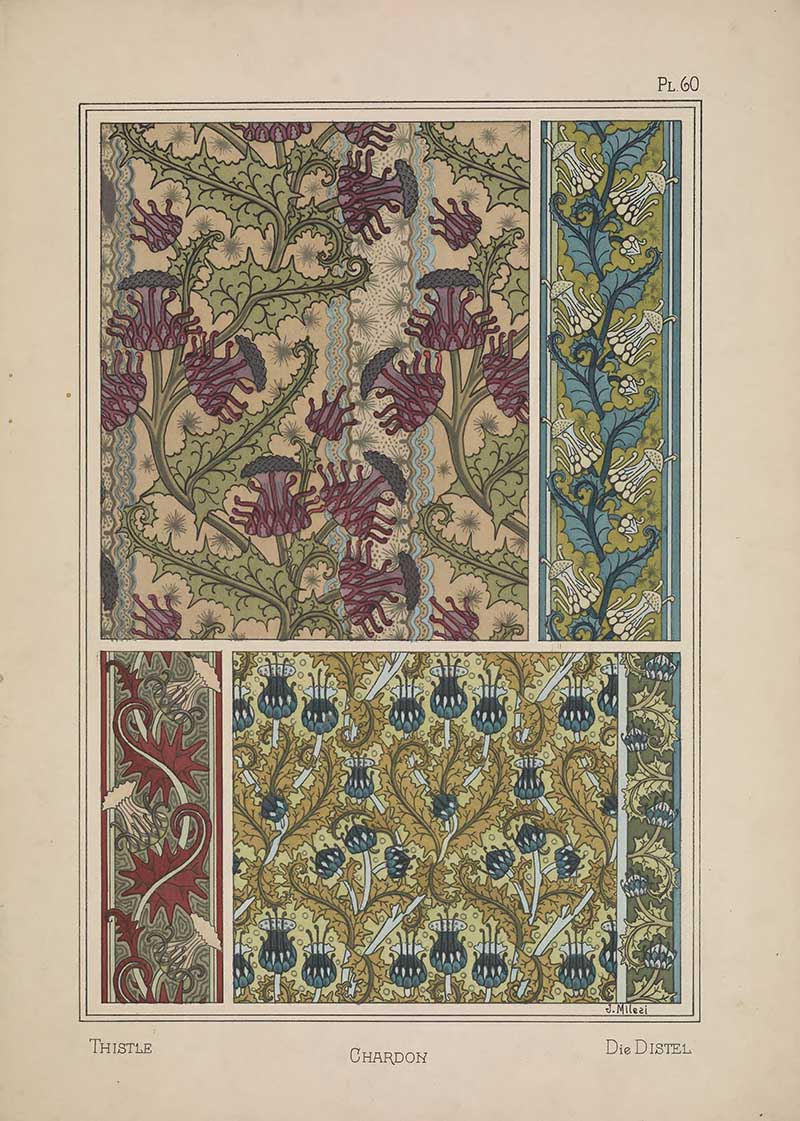
Thistles are hardy plants with spiky leaves and rounded purple flower heads that have a strong, distinctive shape.
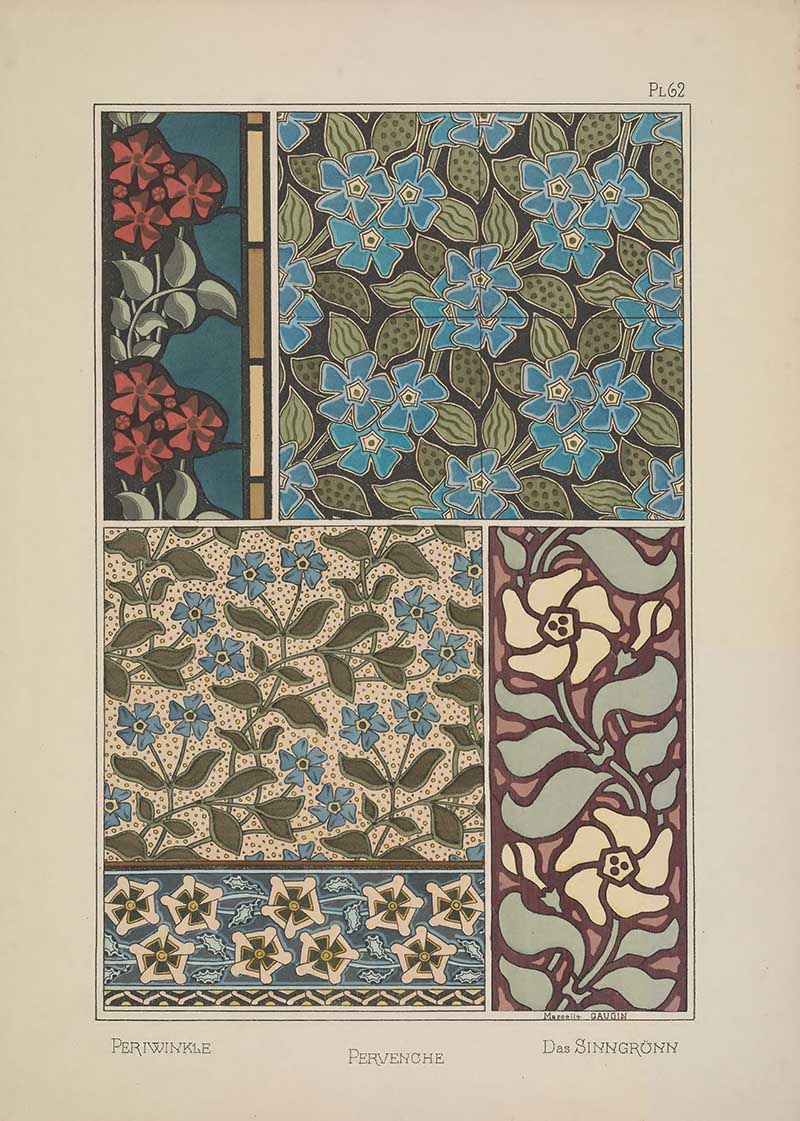
Print 48: Periwinkle Botanical Patterns
Periwinkle, or vinca, has small five-petalled flowers and trailing stems with glossy leaves. It's simple, repeating shapes and gentle curves make it easy to turn into soft, flowing decorative patterns, well-suited to Art Nouveau designs.
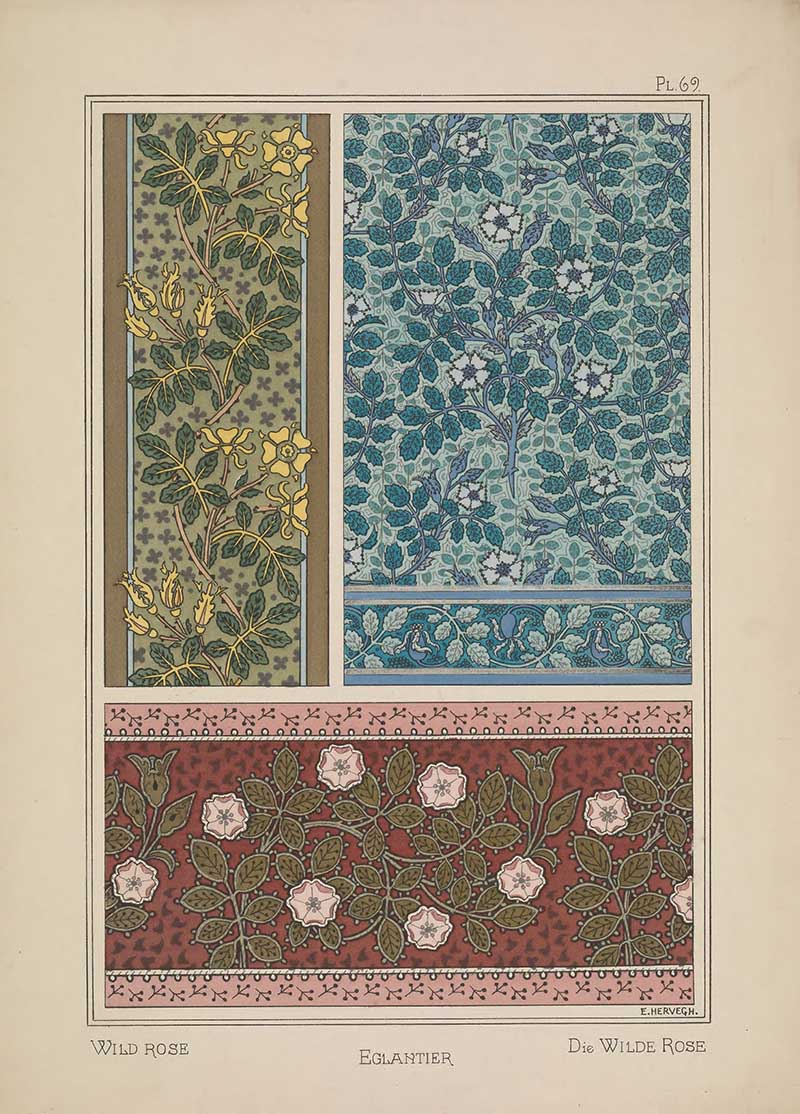
Print 49: Wild Rose Art Nouveau Floral Patterns
Other Art Nouveau Design Books
I've already shared a few similar design gems on Picture Box Blue. If you enjoy this book, you might also like my post on Art Nouveau Flower Prints, which features beautiful botanical plates from the same movement. You'll find more of Eugene's graphics in this collection of Art Nouveau Patterns.
There's also the equally fascinating Art Nouveau Animal Designs collection, where nature-inspired ornament extends to birds, insects and other creatures. And for a slightly different take, Koloman Moser's striking geometric patterns and Séguy's richly detailed floral designs show just how varied Art Nouveau could be.
All of these works come from the same creative period, when designers were exploring new ways to turn natural forms into decorative art.
If you fancy, you can Buy Me A Coffee Here.