
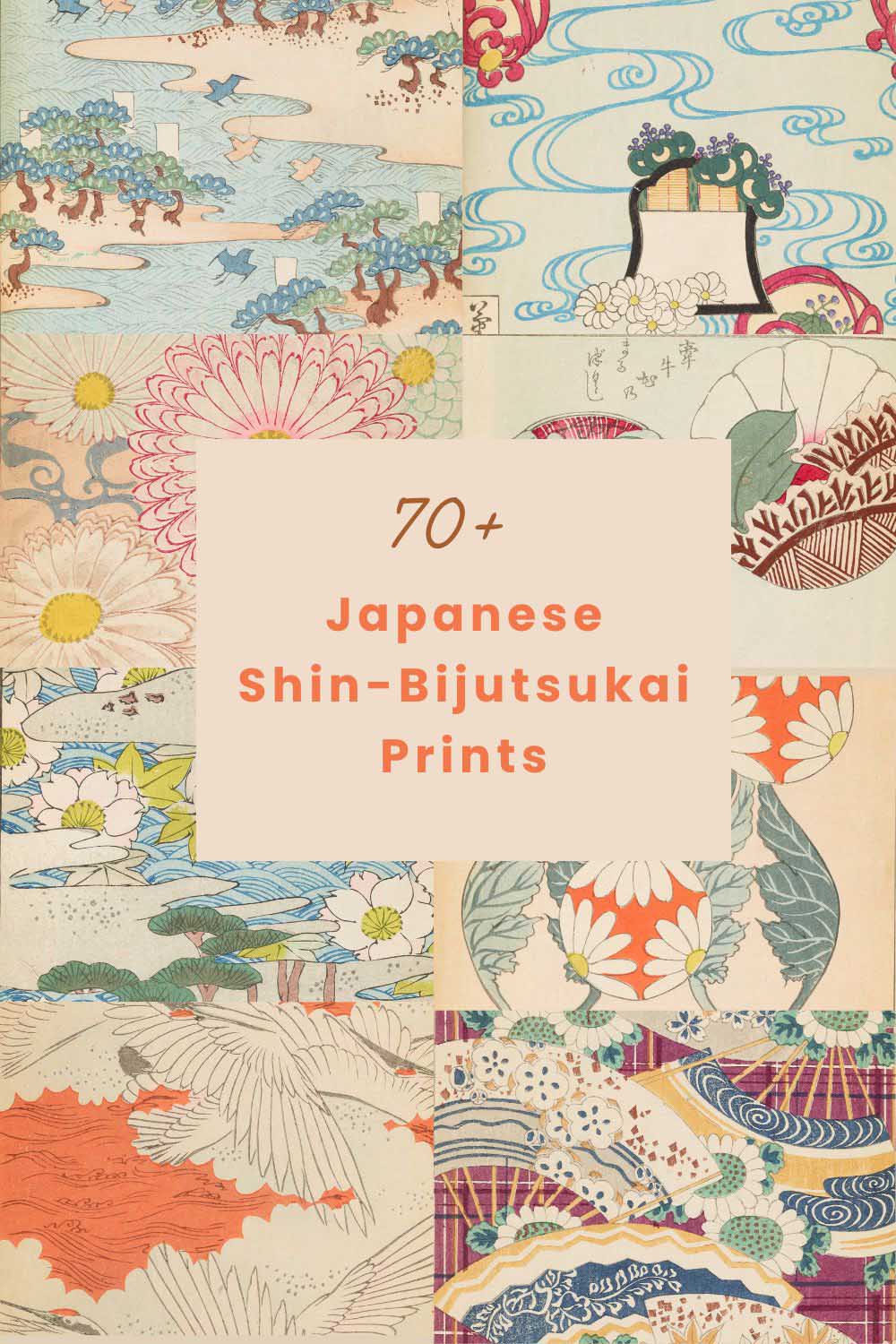
71 Exciting Early 20th-Century Japanese Graphic Prints to Download
Vibrant Japanese prints from Shin Bijutsukai’s later issues—ideal for design lovers, crafters, and Art Nouveau fans.
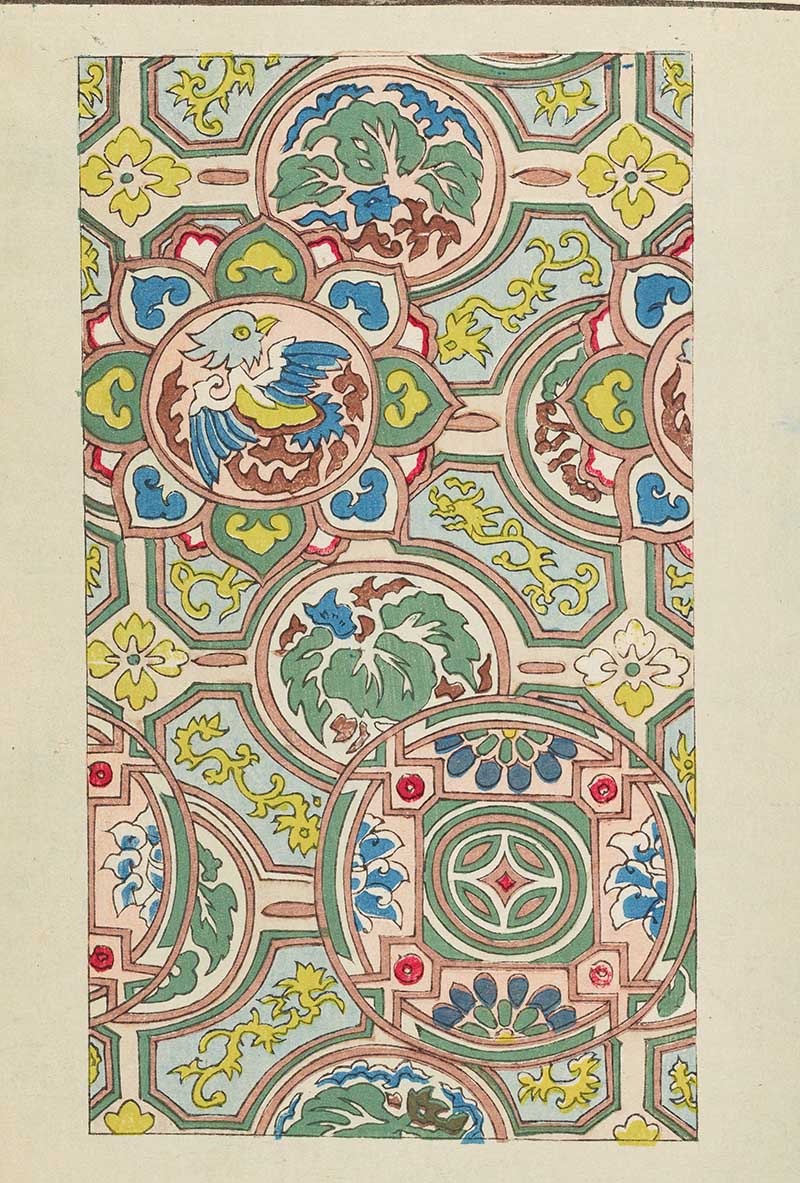
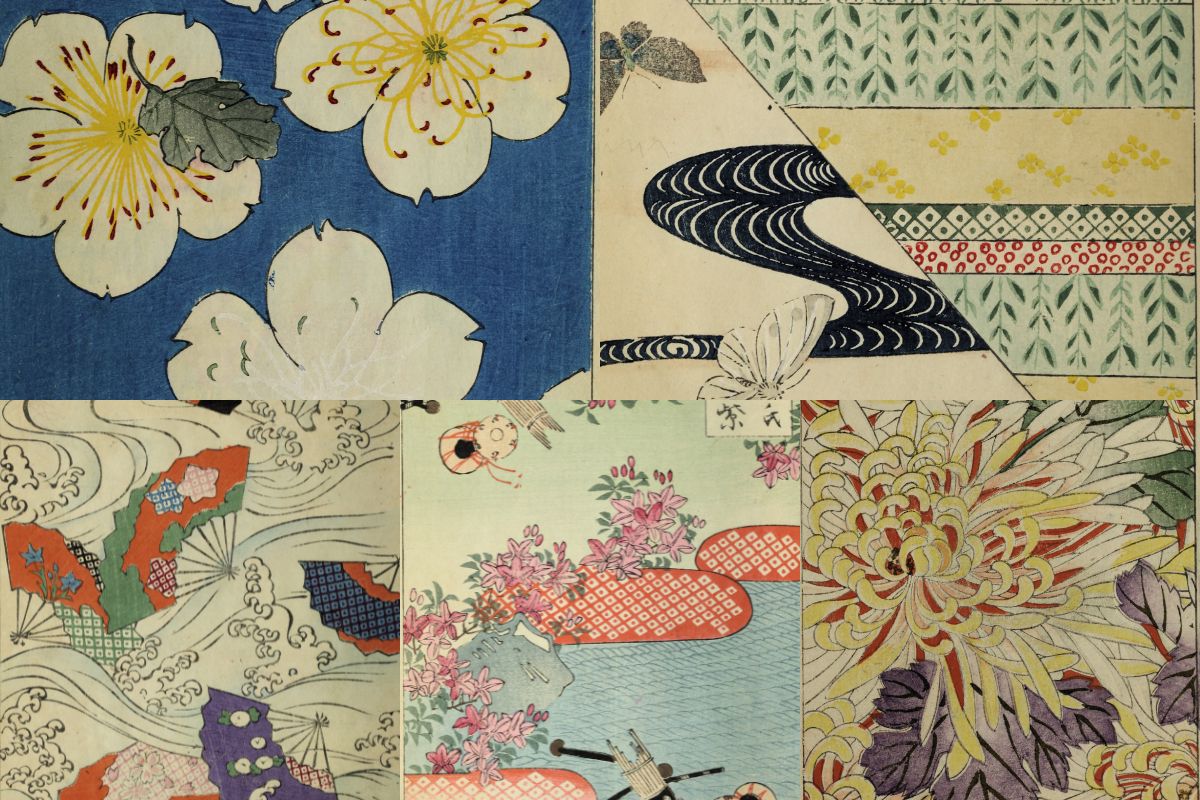
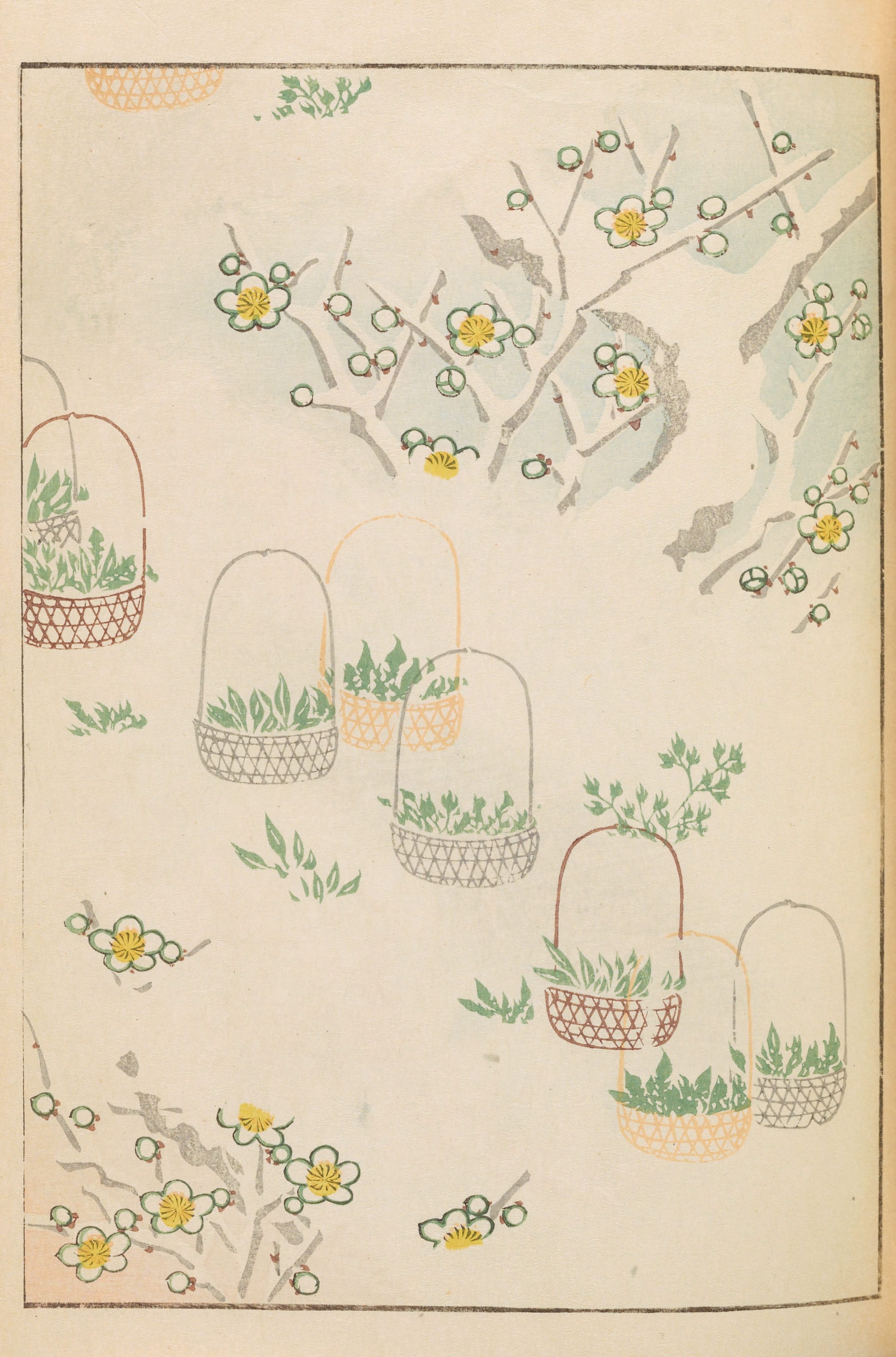
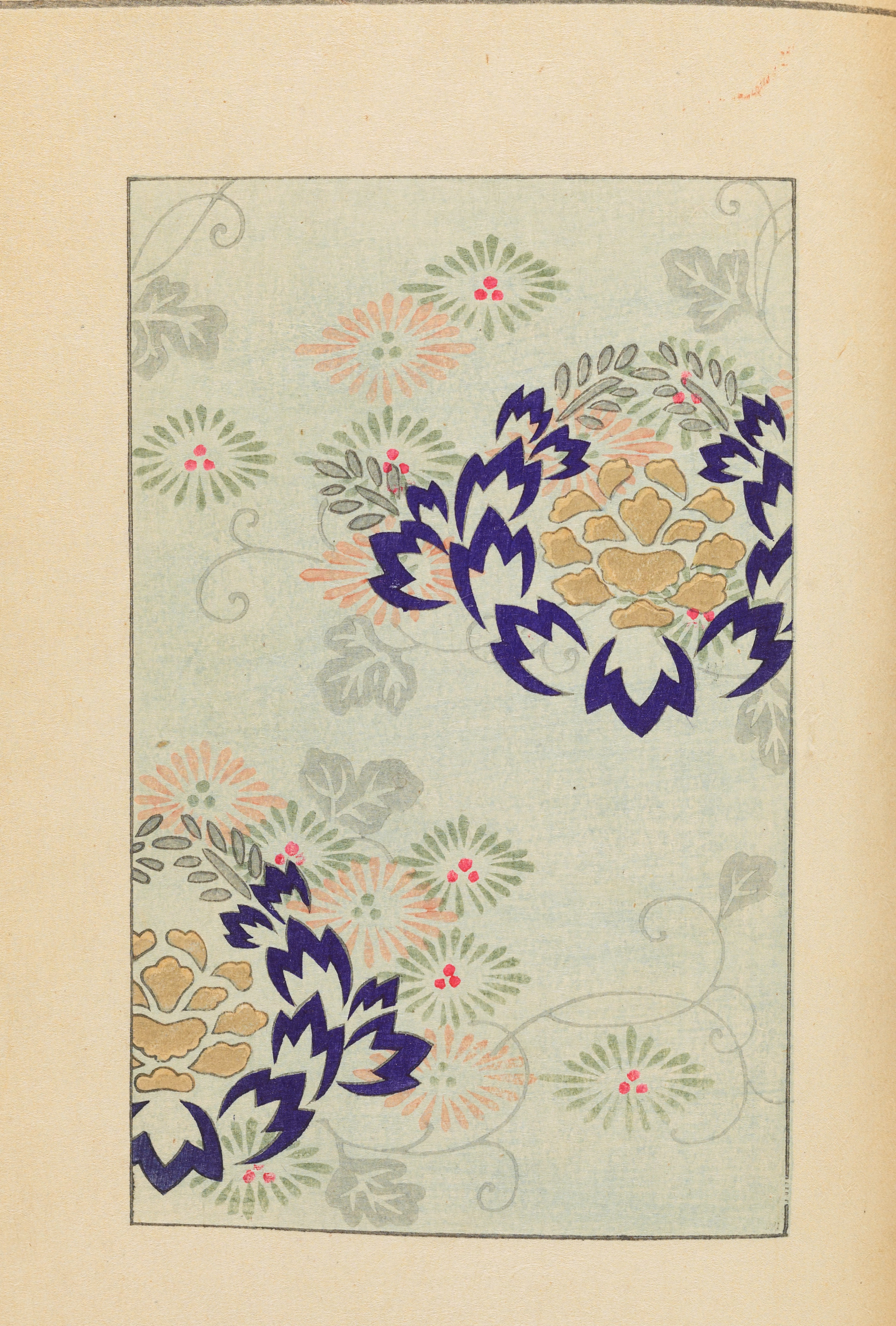
Following up on my popular post featuring early designs from Shin Bijutsukai, I’ve explored deeper into the archive and uncovered a new collection of bold, graphic prints from the 1901–1902 volumes. These designs mark a striking evolution, where traditional Japanese motifs were stylised with a modern sensibility, echoing the curves and decorative flair of Art Nouveau.
Discovering the Later Prints of Shin Bijutsukai
Shin Bijutsukai was more than just a pattern magazine; it was a showcase of Japan’s creative reinvention during the Meiji era (1868–1912), a time when the country was opening up to the West and rapidly modernising. Artists like Furuya Korin and Kamisaka Sekka used the pages of this publication to blend centuries-old aesthetic, floral, crane, wave, and butterfly motifs with fresh design languages.
For those curious about the patterns and symbols that underpin these works, I recommend reading my post on traditional Japanese patterns, a helpful guide to the motifs you'll see repeated across these prints.
A Resource for Artists, Designers, and Pattern Lovers
The pages of Shin Bijutsukai remain just as captivating today as they were over a century ago. Whether you're a designer looking for inspiration, a crafter seeking printable patterns, or someone who enjoys Japanese art, these bold prints from 1901–1902 are a visual treat.
To download the Japanese graphic print you want, click on the title above that print, and a higher resolution image will open in a new tab. You can then print or save that image.
Graphic Framed Prints 1-10
The following graphics from the Shin Bijutsukai all have a stitched border with a bow.
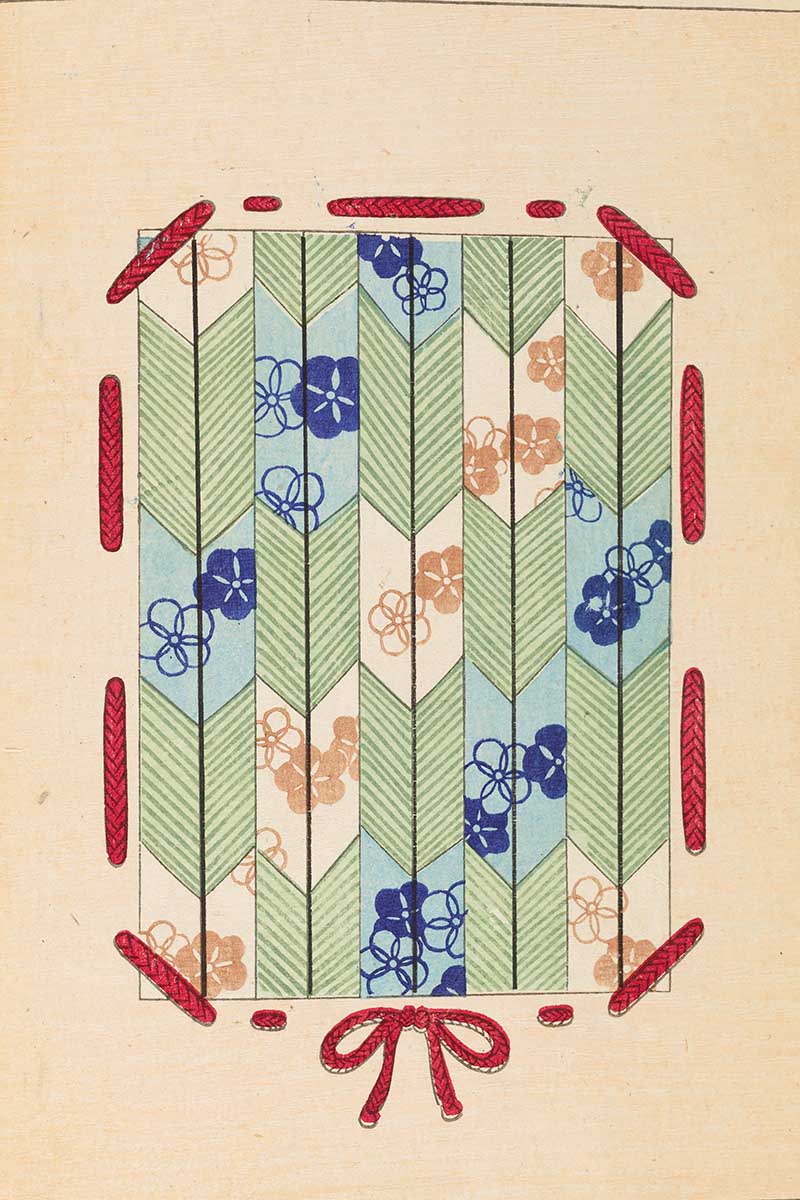
Print 1: Green Arrow Blue Flowers
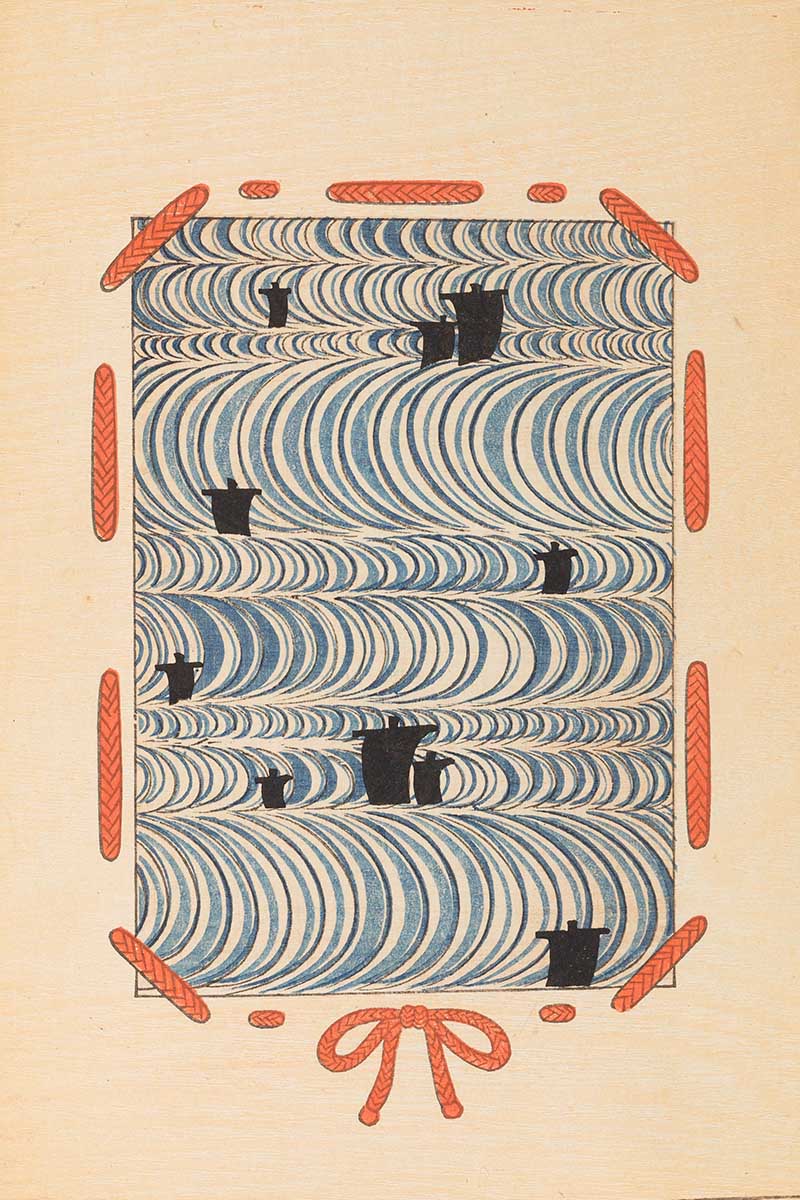
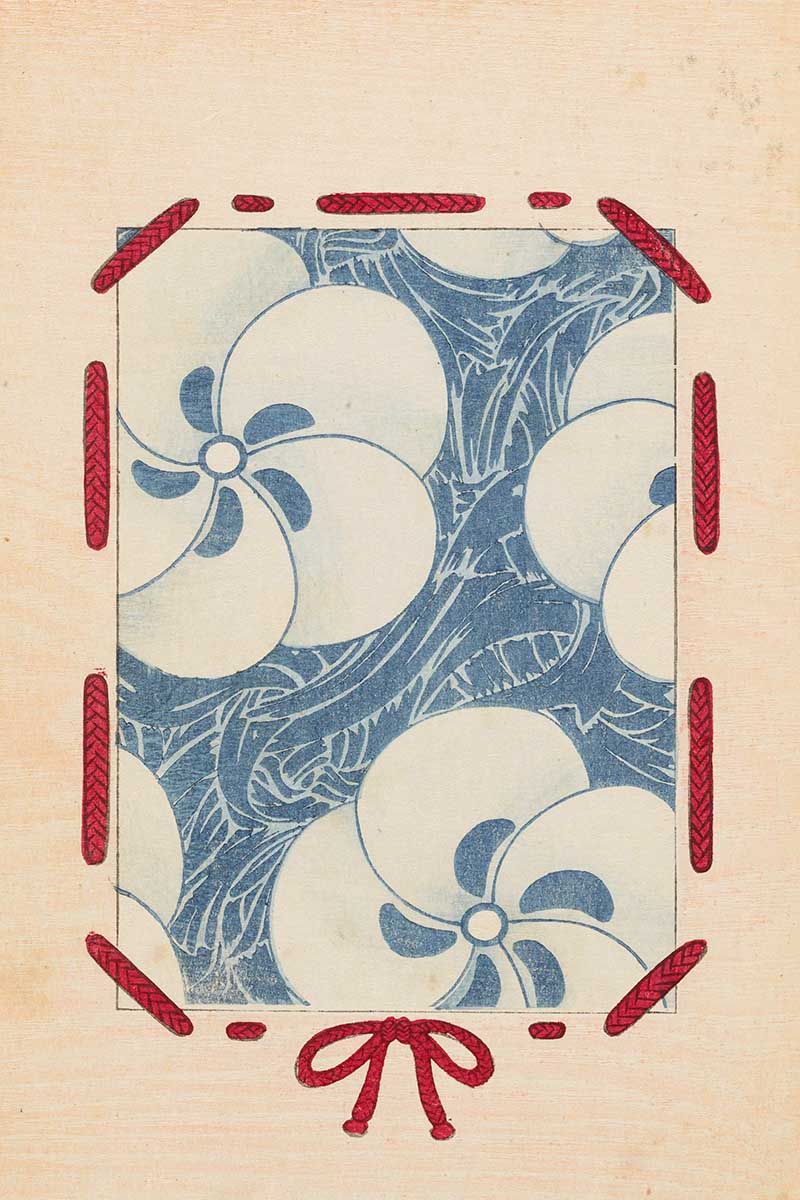
Waves, or seigaiha, are a classic element in Japanese pattern design, with layered, fan‑shaped curves that echo the rhythm of the sea. They represent resilience, harmony, and the timeless movement of water, appearing on everything from kimonos and ceramics to bold Meiji‑era woodblock prints.
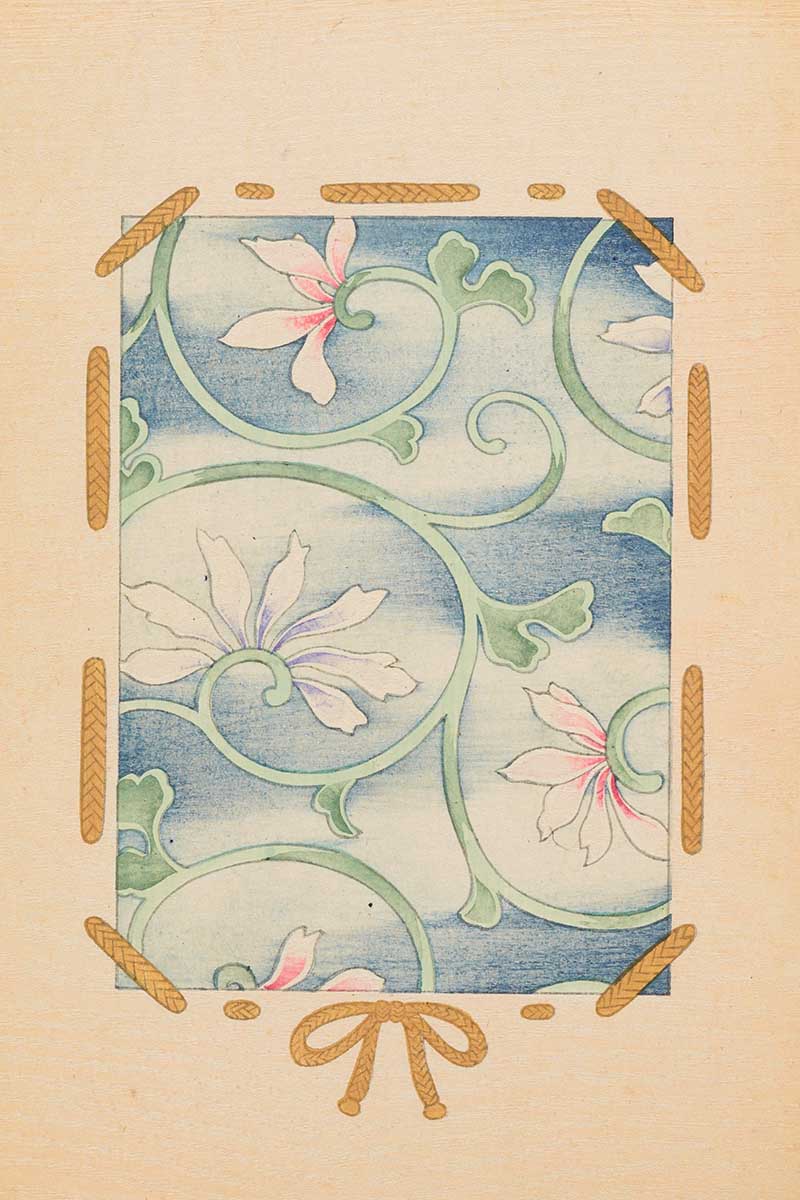
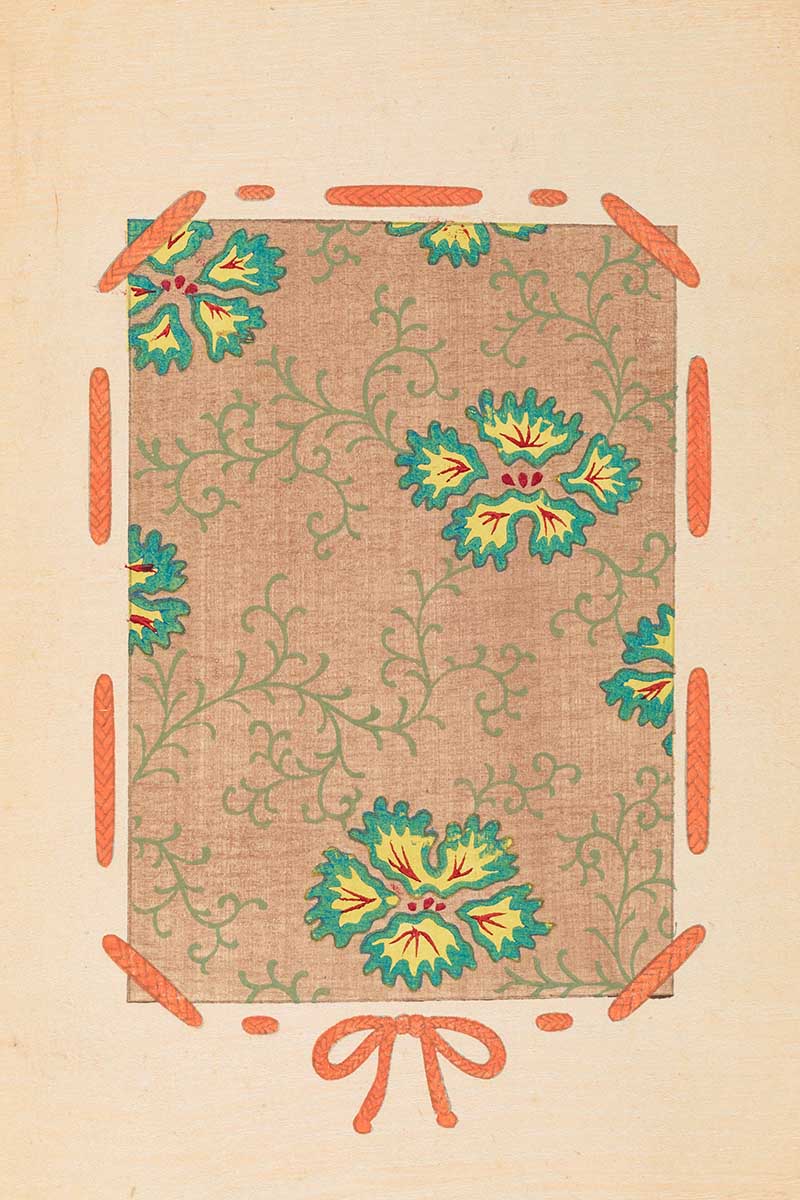
Print 4: Yellow Flowers on Orange
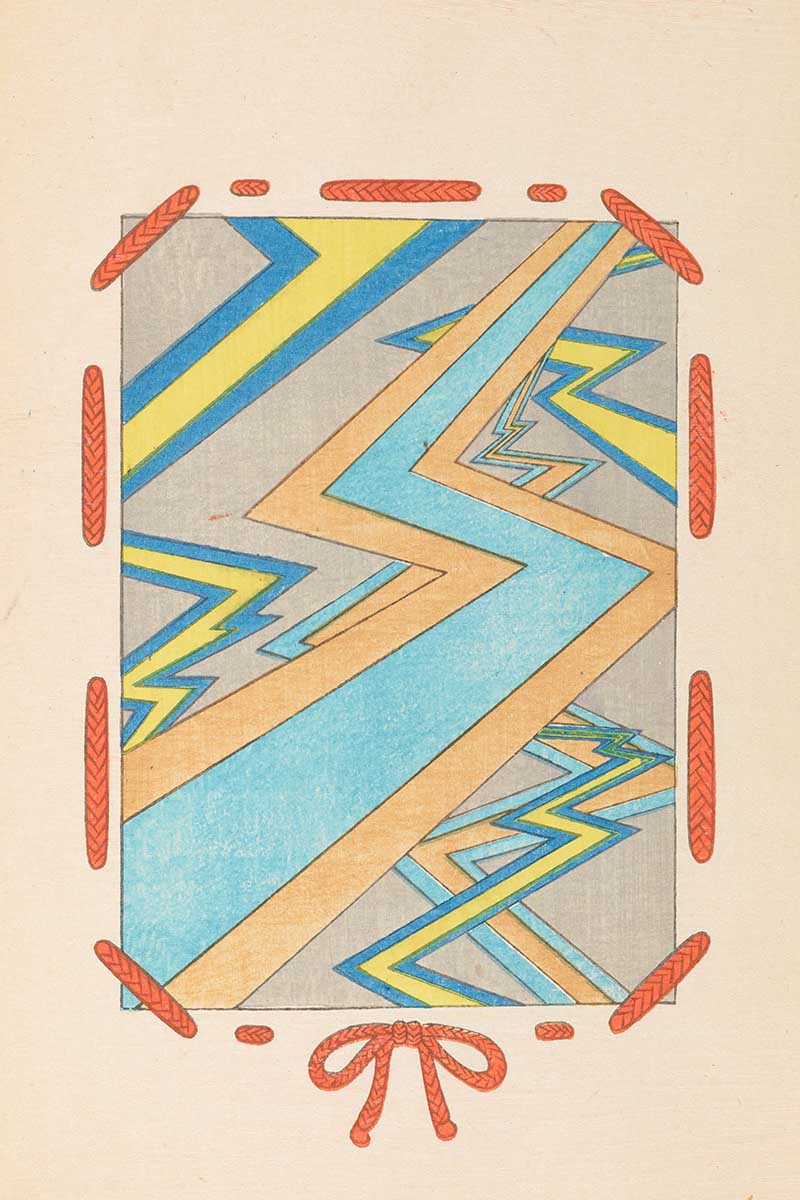
Sharp, geometric zigzags often appear in Japanese patterns as yagasuri or yabane, stylised arrow‑feather motifs. These repeating V‑shapes suggest speed, direction, and protection, while their bold, graphic lines add striking movement to textiles, prints, and Meiji‑era design.
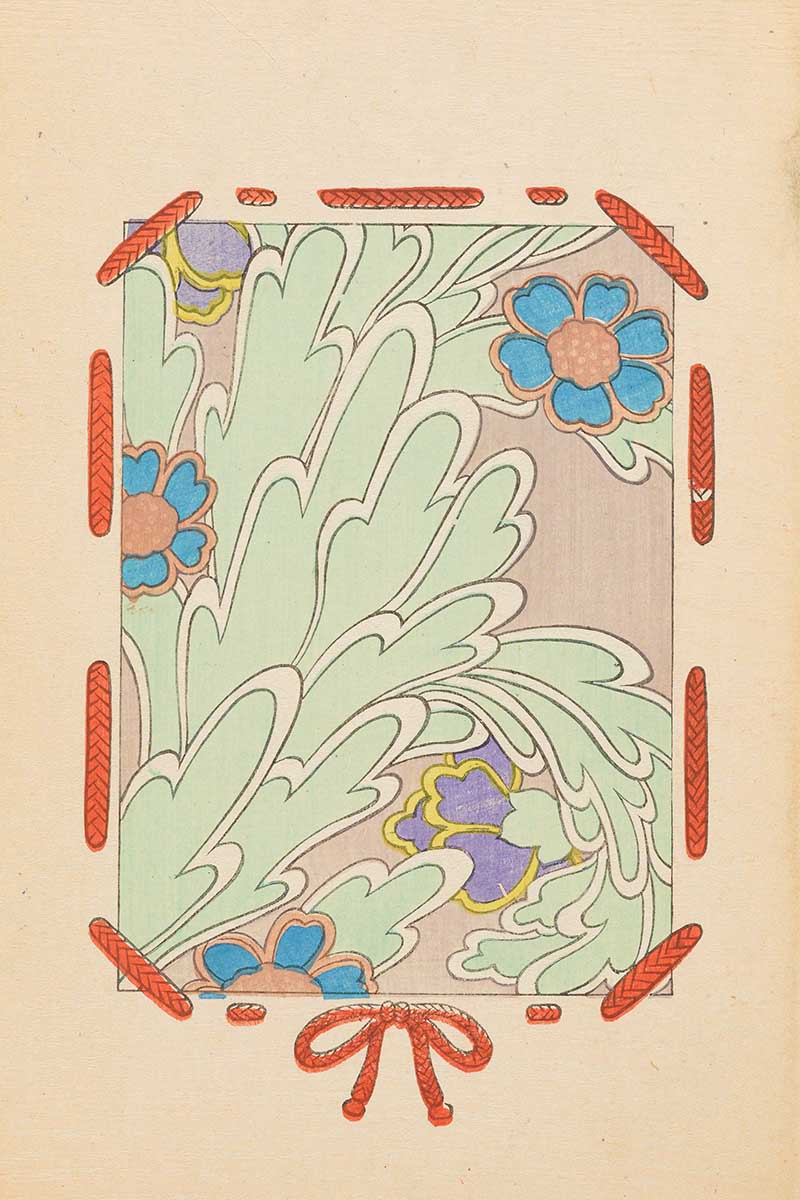
Print 6: Colourful Flowers and Leaves
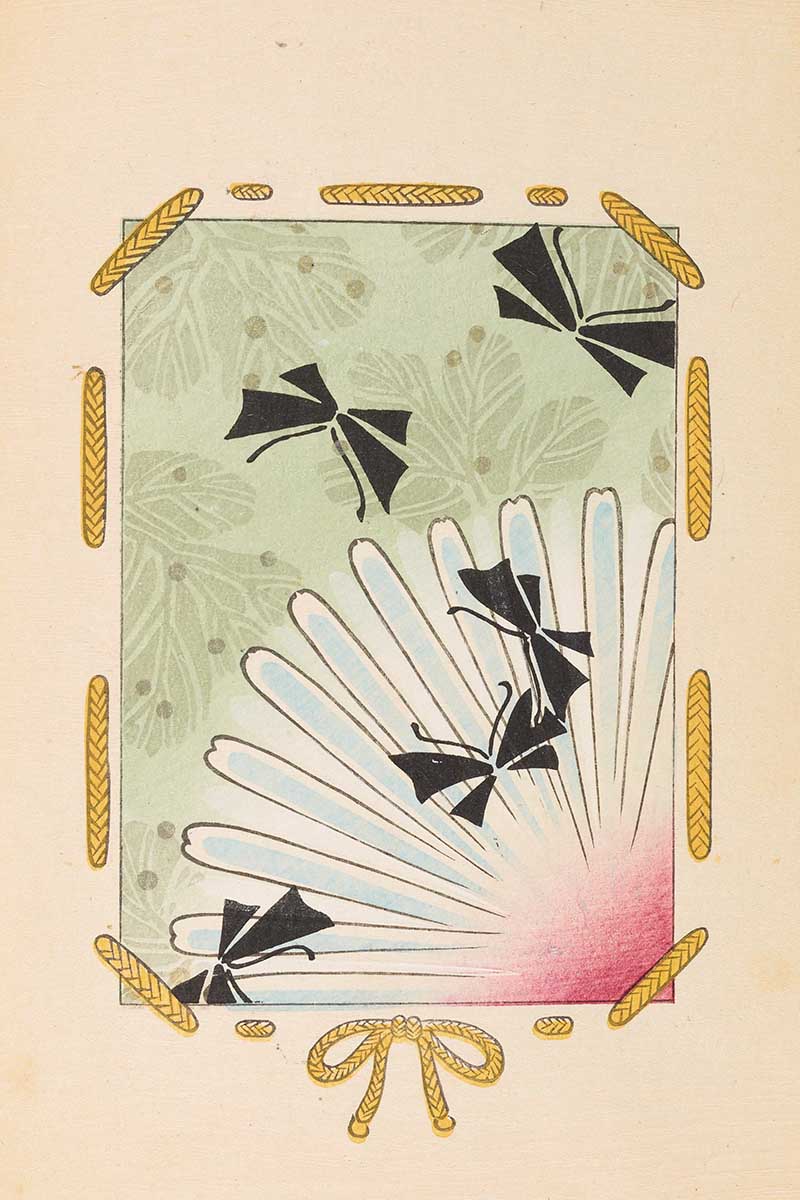
Butterflies, or chō, are a beloved motif in Japanese design, symbolising transformation, joy, and the fleeting beauty of life. Their delicate, symmetrical wings lend themselves perfectly to repeating patterns, from elegant kimono fabrics to the bold, decorative prints of the Meiji era.
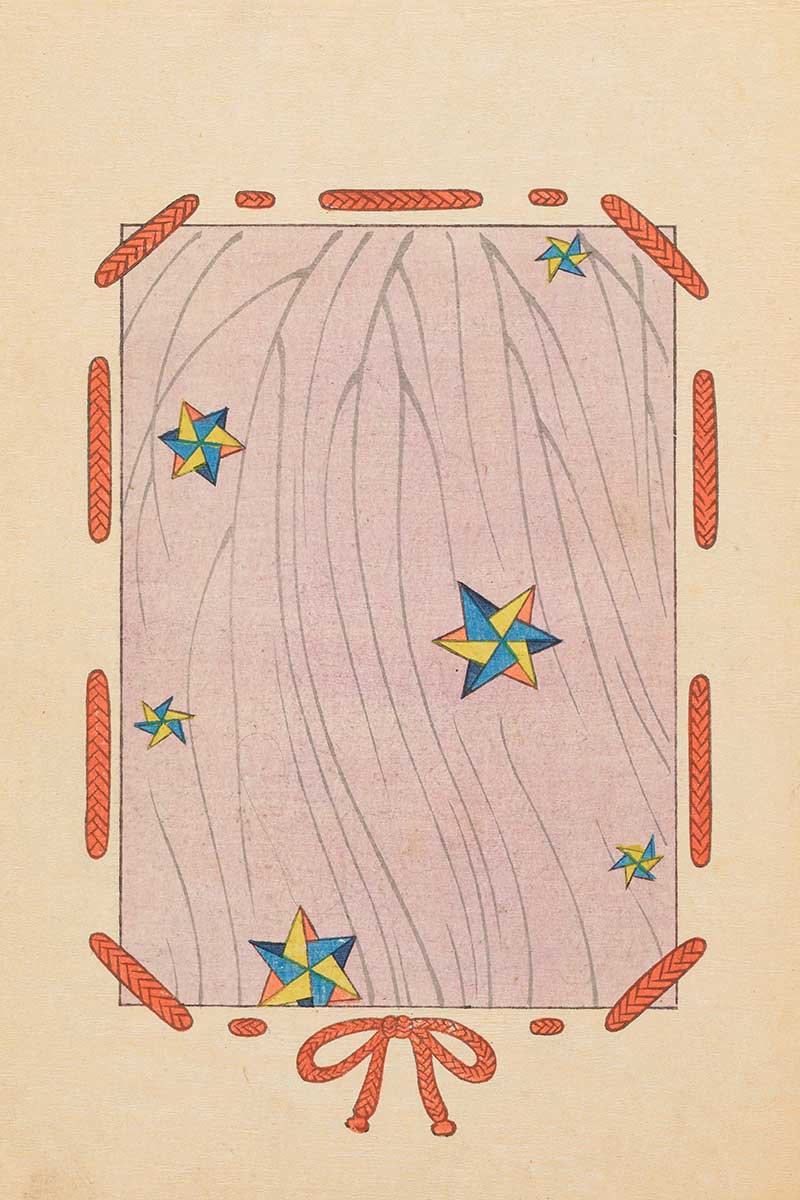
Origami star motifs in Japanese graphic design evoke precision, harmony, and celebration. Their crisp, folded geometry reflects the artistry of paper folding, while star patterns often appear in textiles and decorative prints as symbols of guidance, festivity, and celestial beauty.
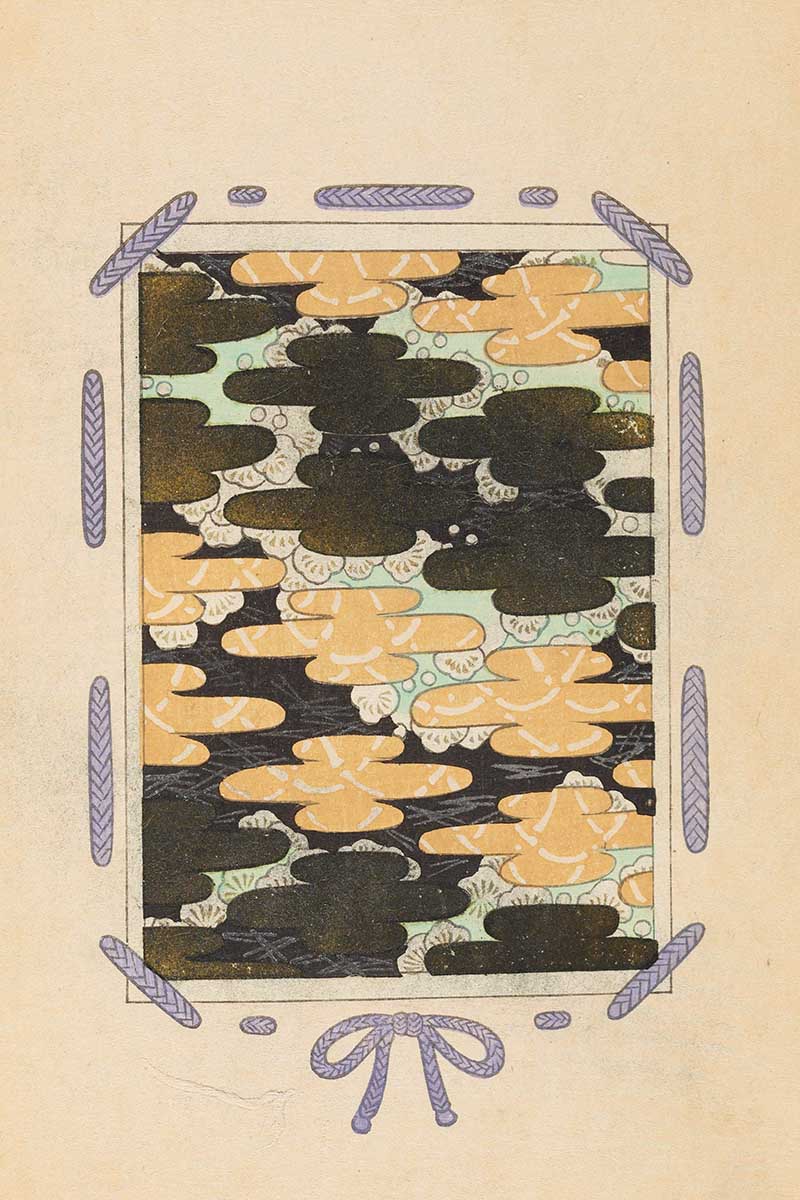
Print 10: Orange & Black Clouds
Woodblock Prints 11-20
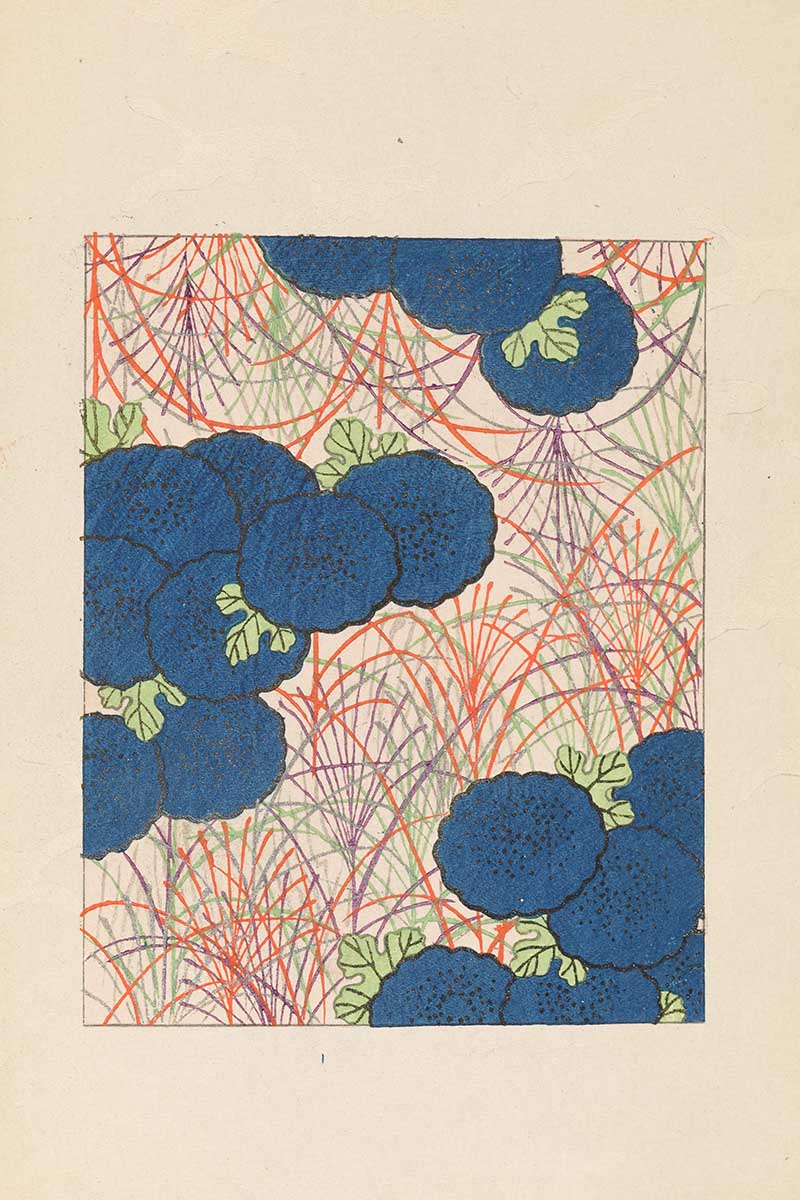
Print 12: Purple Green Check with Foliage
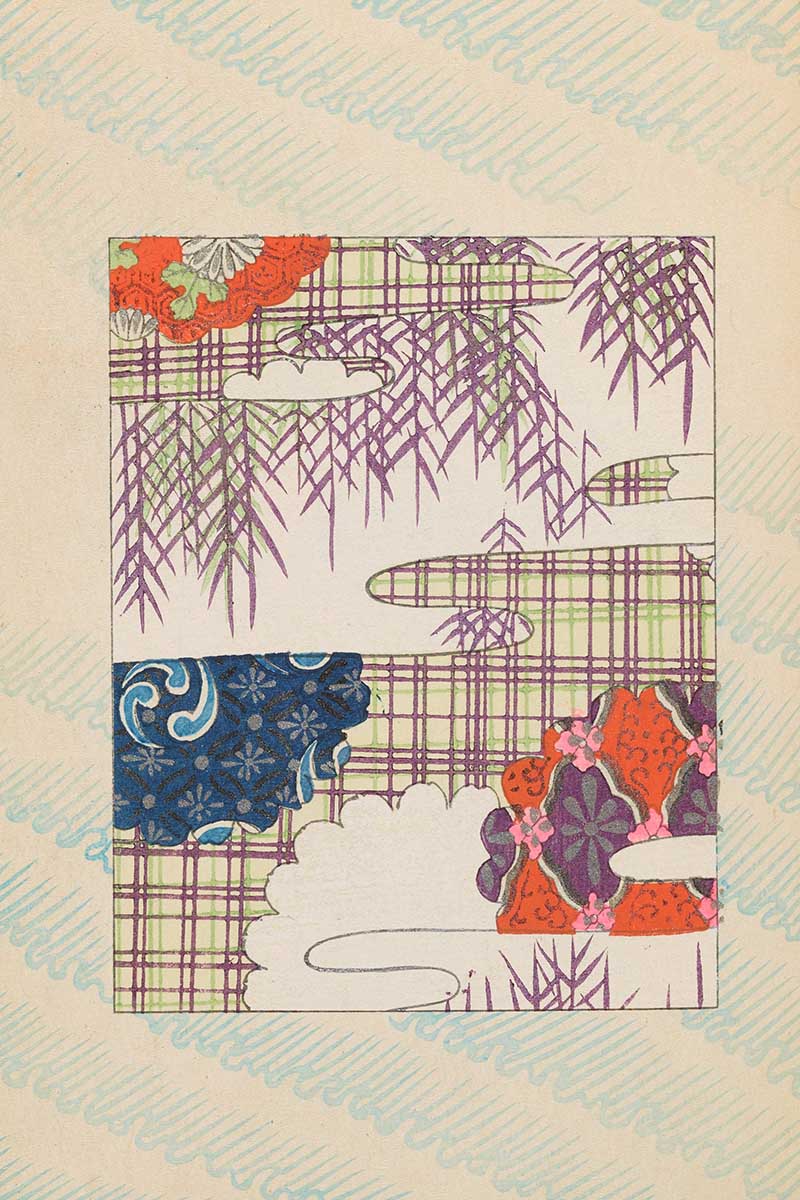
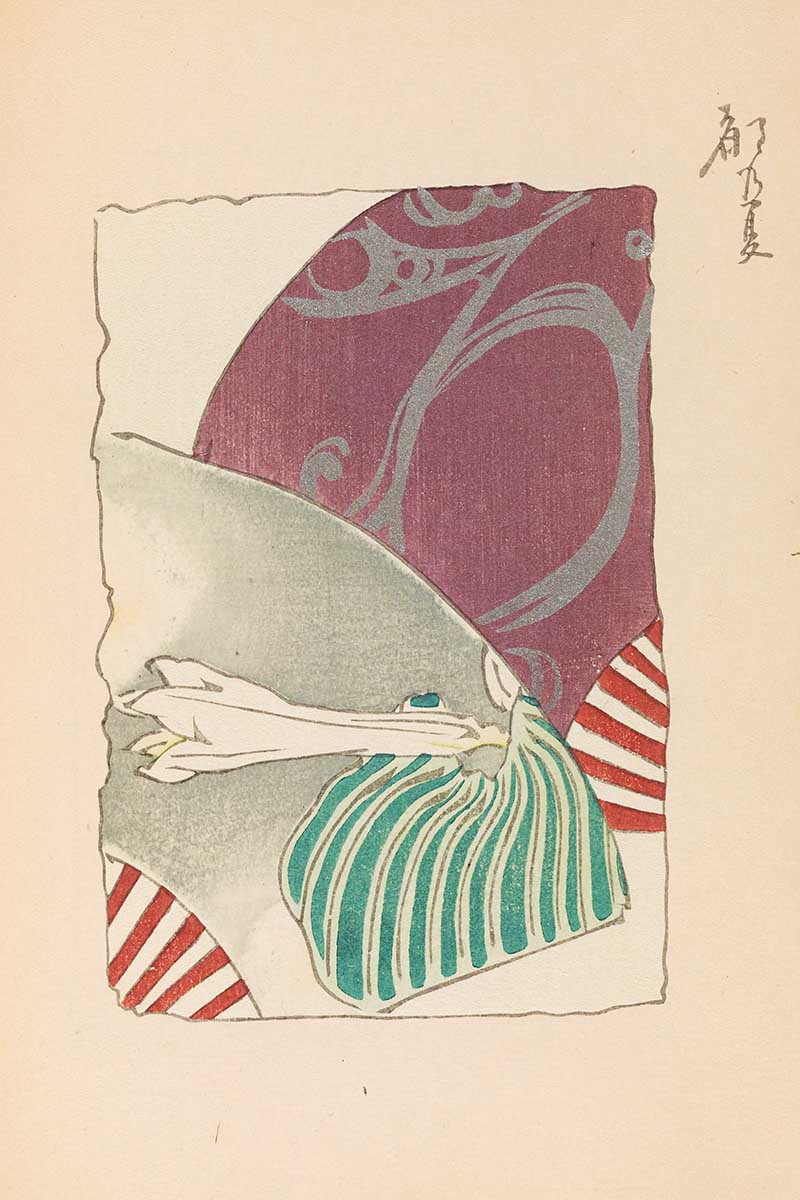
Plate 13: White Flowers & Colours
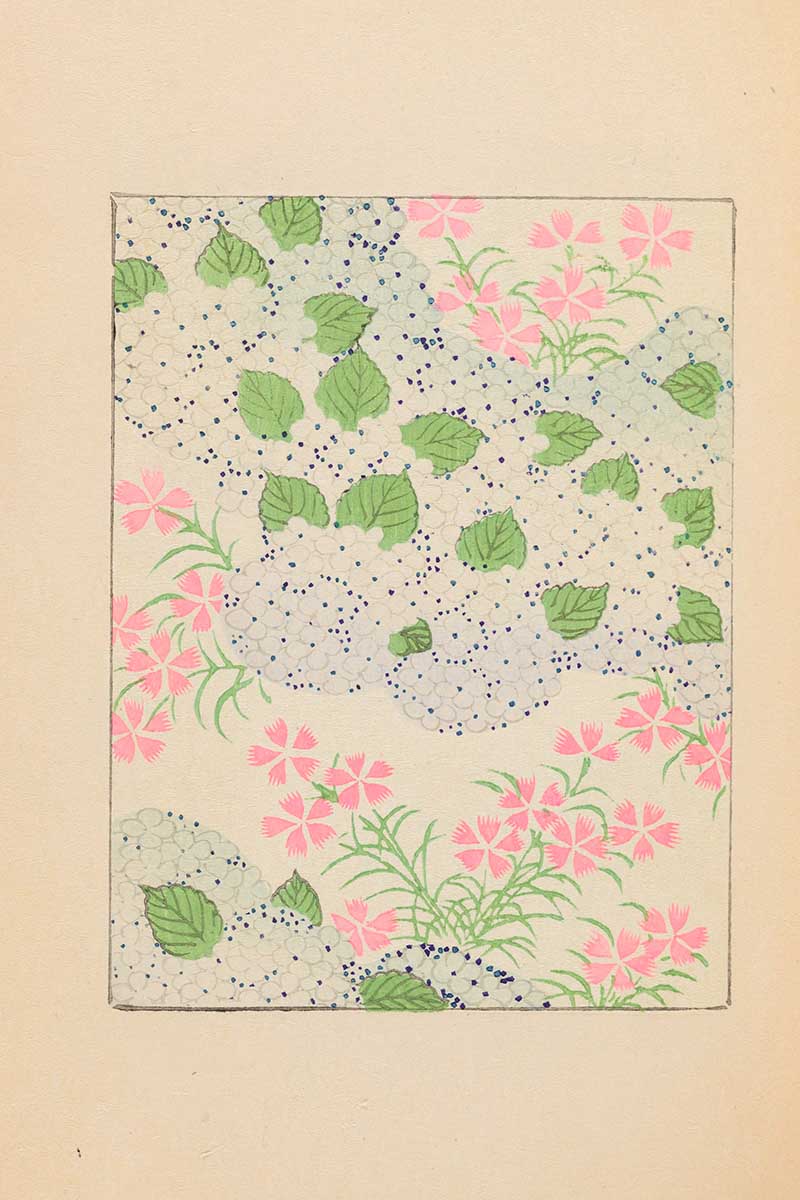
Print 14: Pink and White Flowers
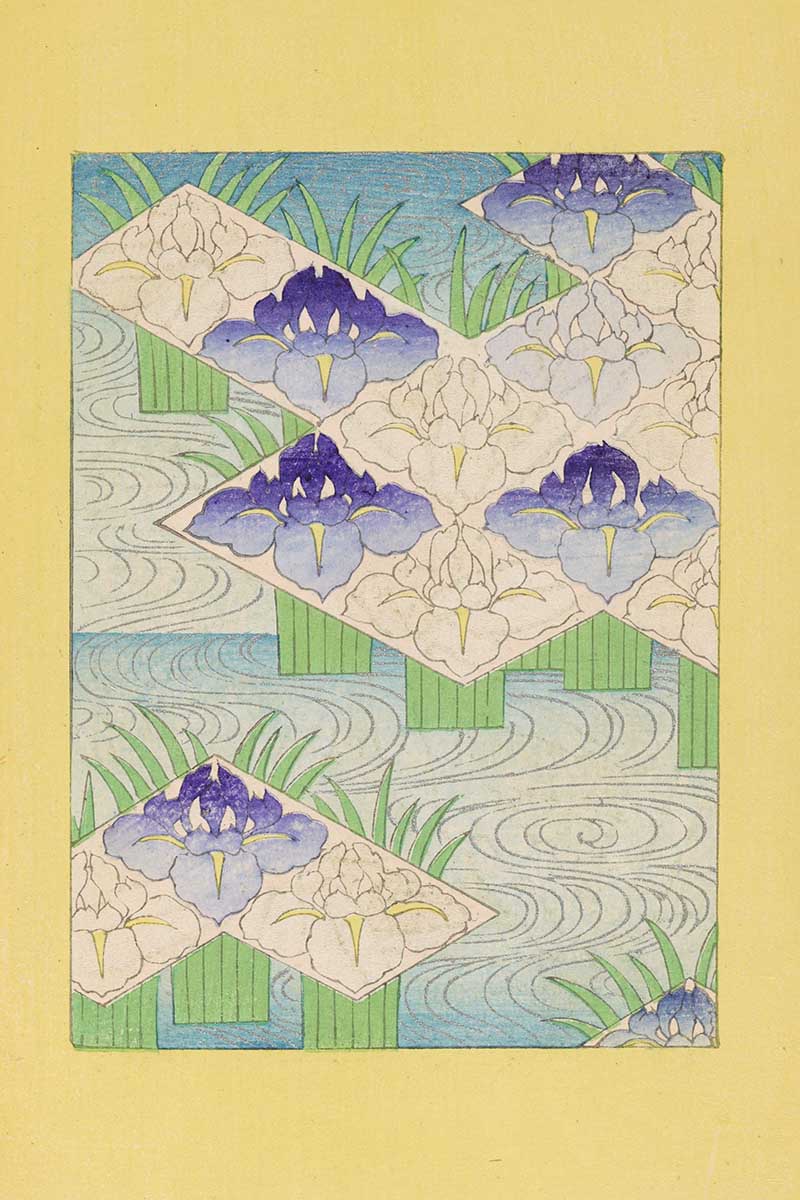
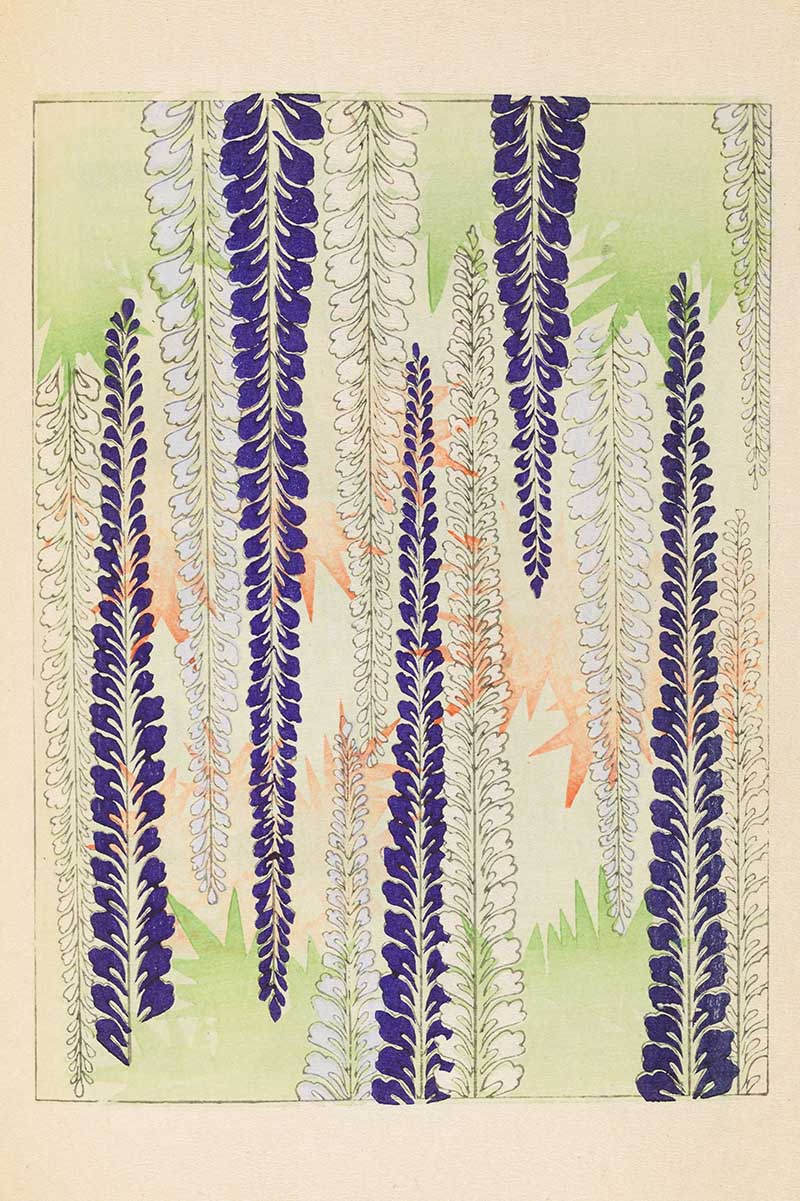
Irises, or ayame, are a favourite in Japanese design, often linked to protection and the start of summer. With their tall, blade-like leaves and bold blue/purple blooms, they bring a sense of drama and movement to patterns.
Check out this beautiful collection of Japanese Iris paintings.
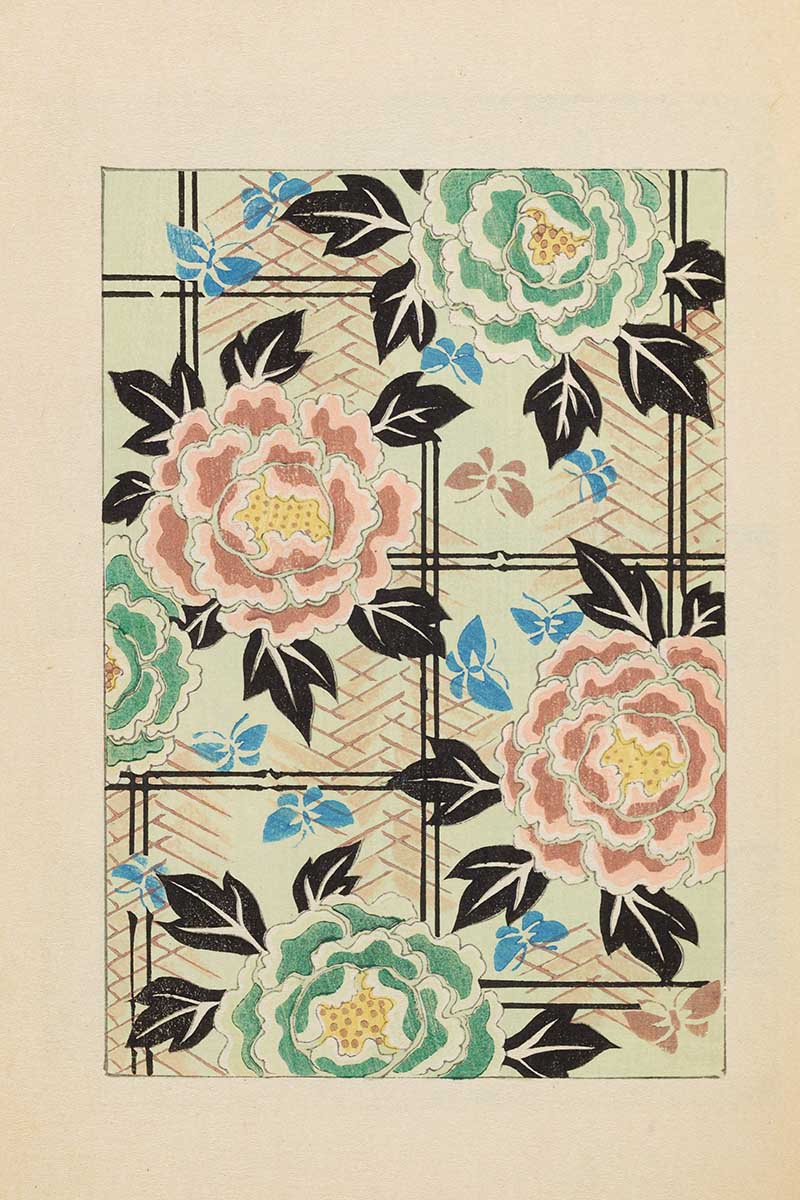
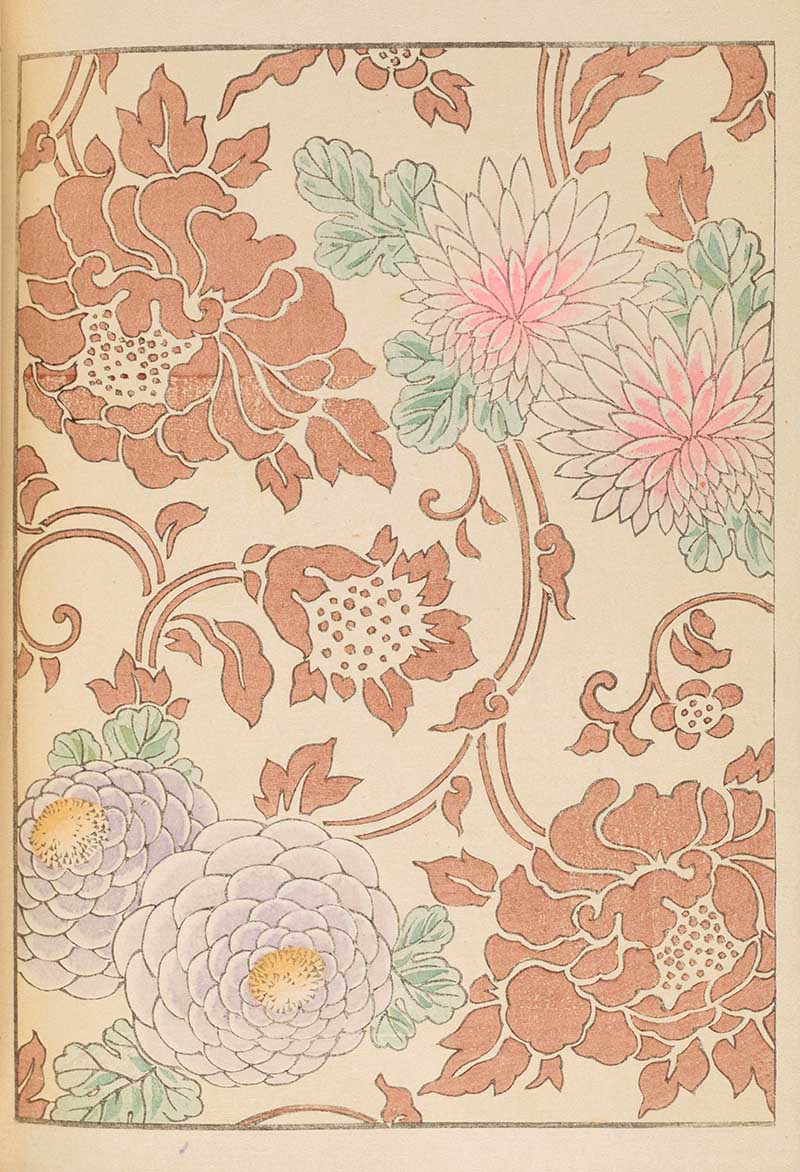
Roses, or bara, aren’t traditionally Japanese but became popular in the Meiji era as Western influences took hold. Their lush petals and romantic symbolism made them a perfect fit for modern Japanese prints, often paired with bold layouts or trellised patterns to blend Eastern design with a European twist.
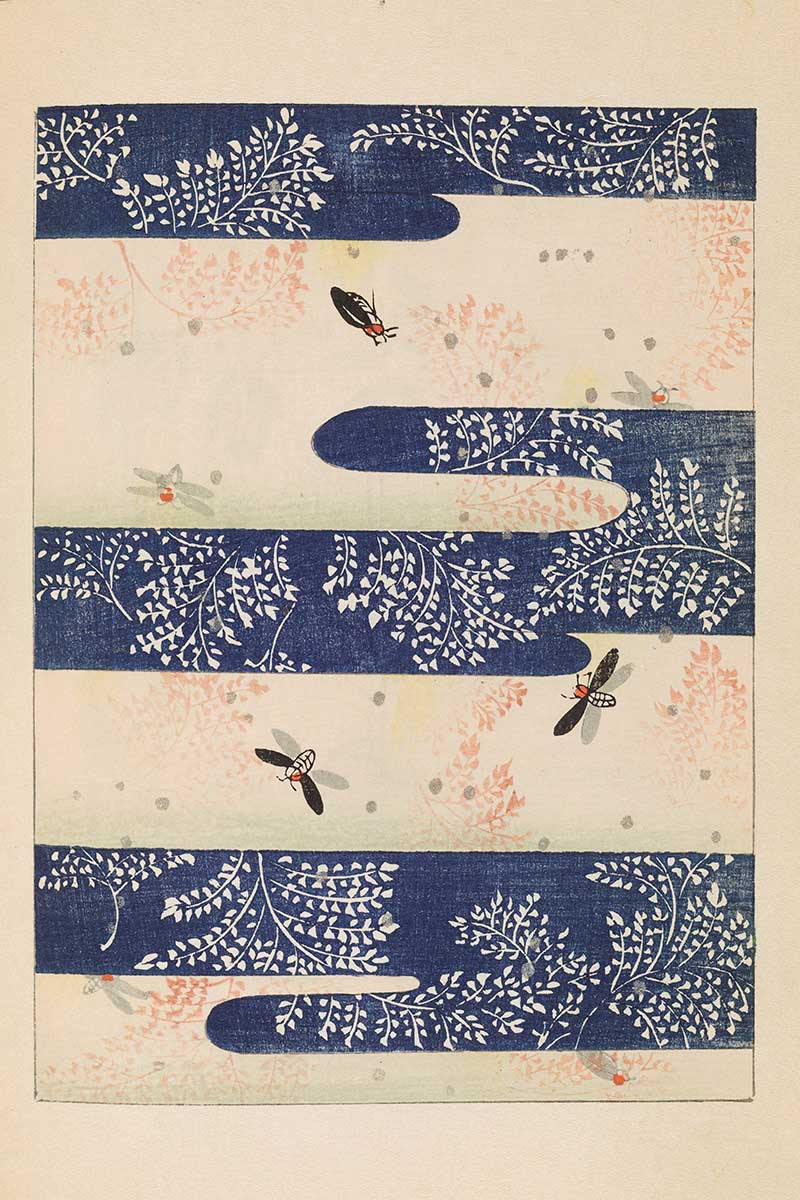
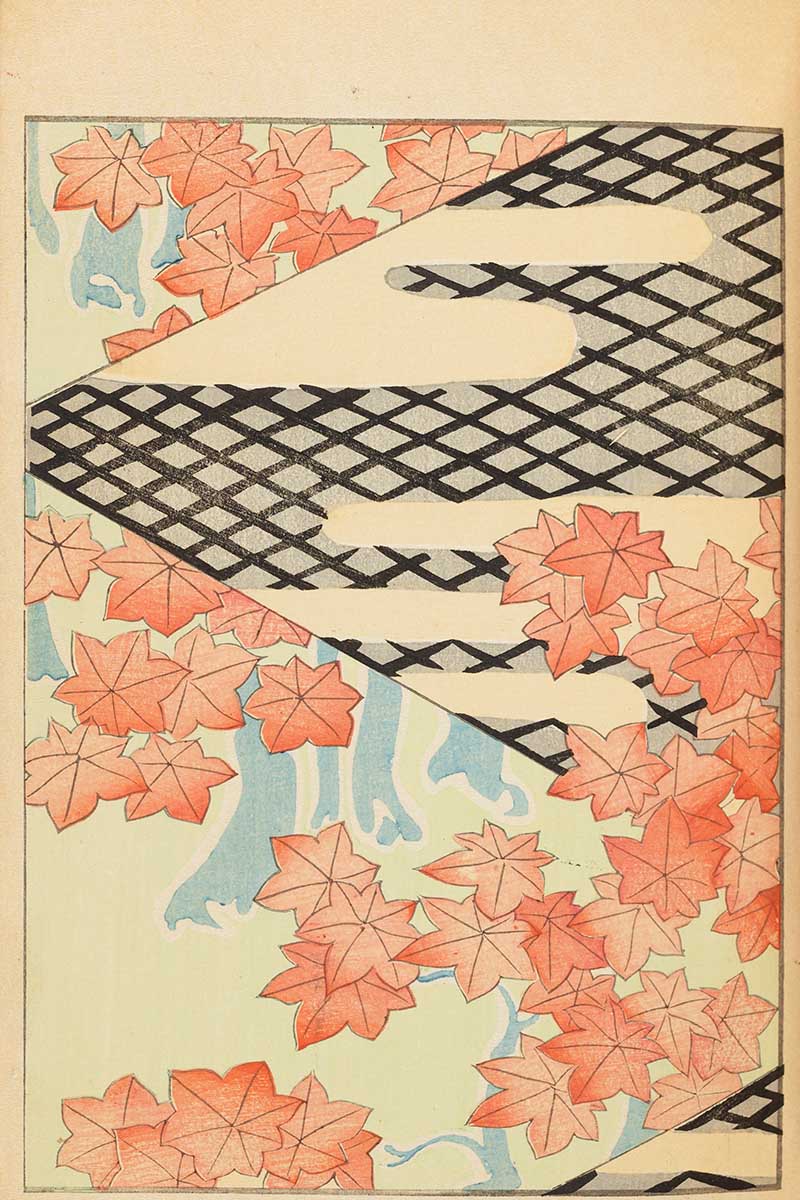
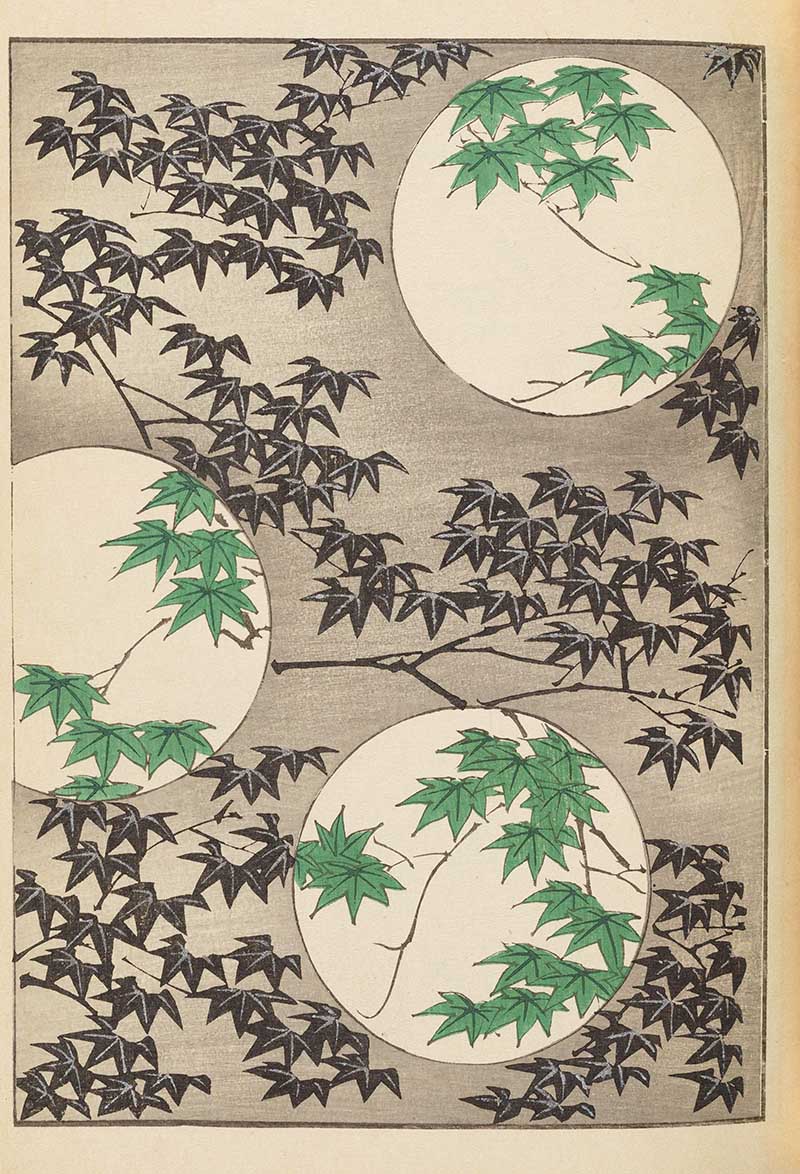
Autumn leaves, especially momiji (Japanese maple), symbolise change, beauty, and the passing of time. Their delicate, star-shaped forms and fiery colours make them a favourite in both traditional and Meiji-era patterns, often scattered across prints like falling leaves in a breeze.
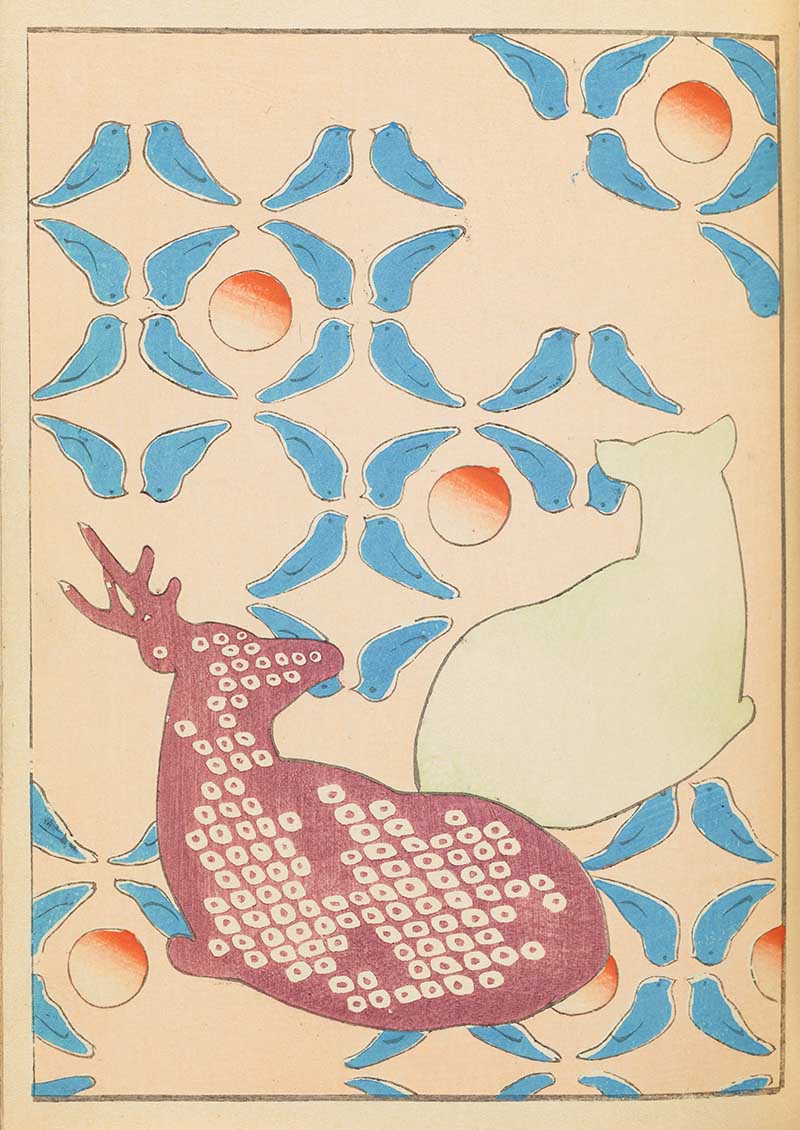
Shin Bijutsukai Prints 21-30
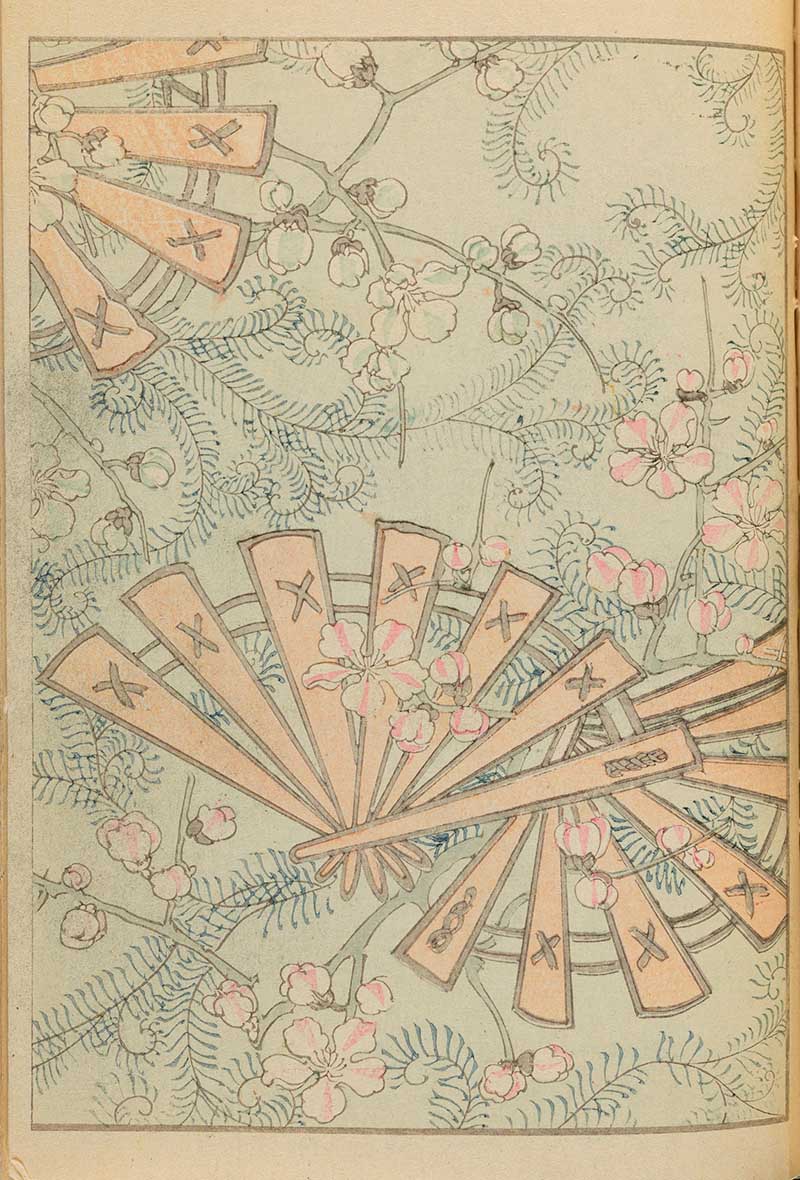
Fans, or ōgi, pop up a lot in Japanese patterns; they’re all about elegance and good fortune. With their sweeping, open shapes, they add a sense of flow and movement, making any design feel festive and full of life. You’ll often see them in Meiji-era prints mixed with florals or bold graphics.
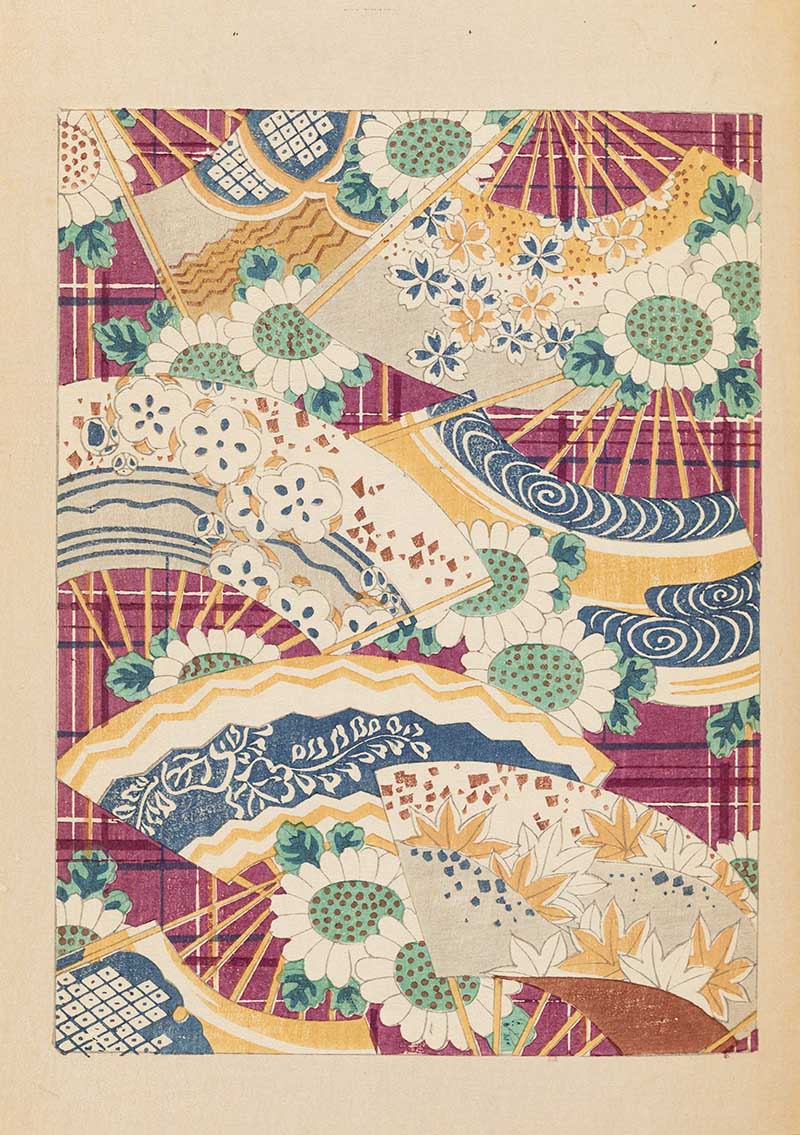
Print 22: Honeycomb, Cranes and Flowers
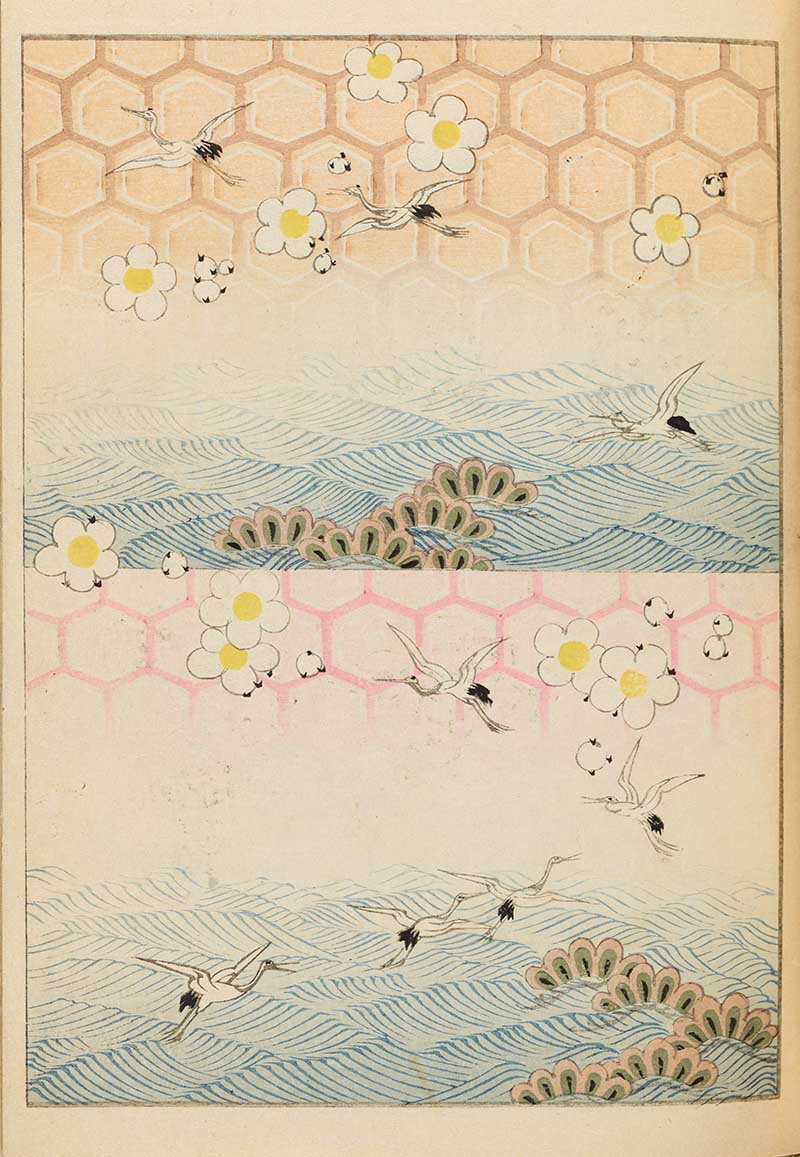
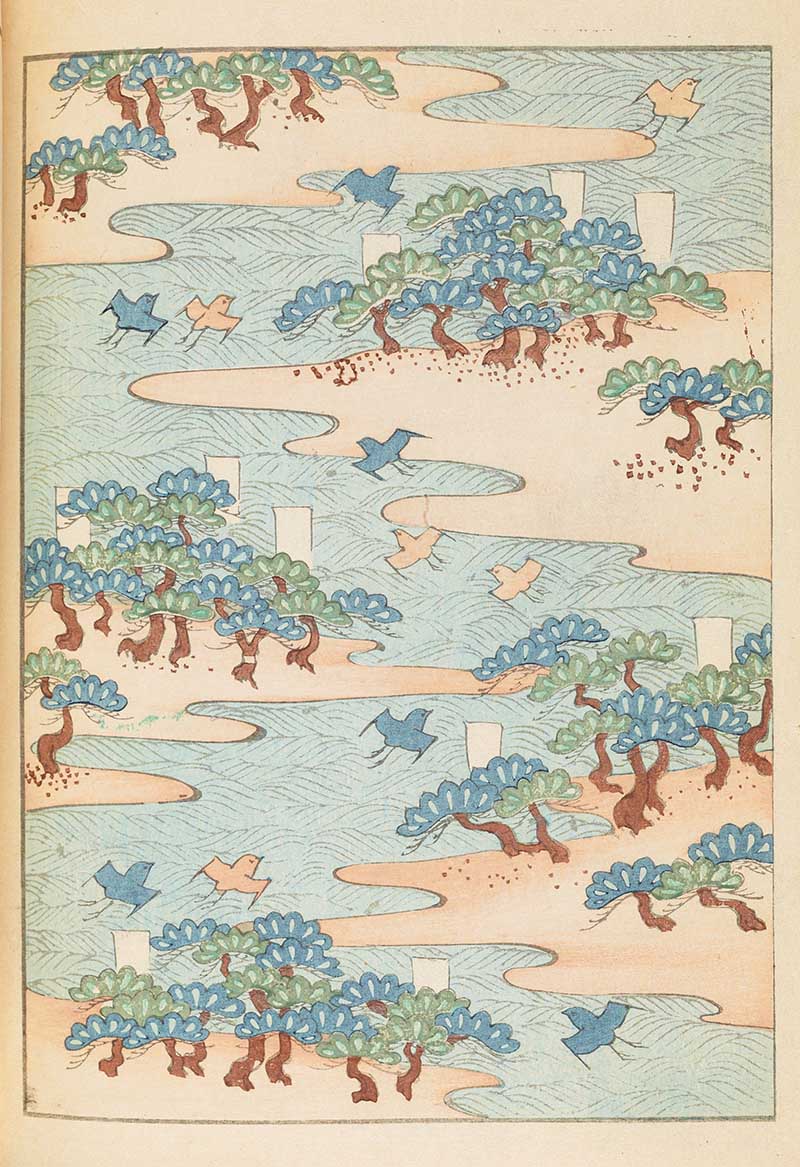
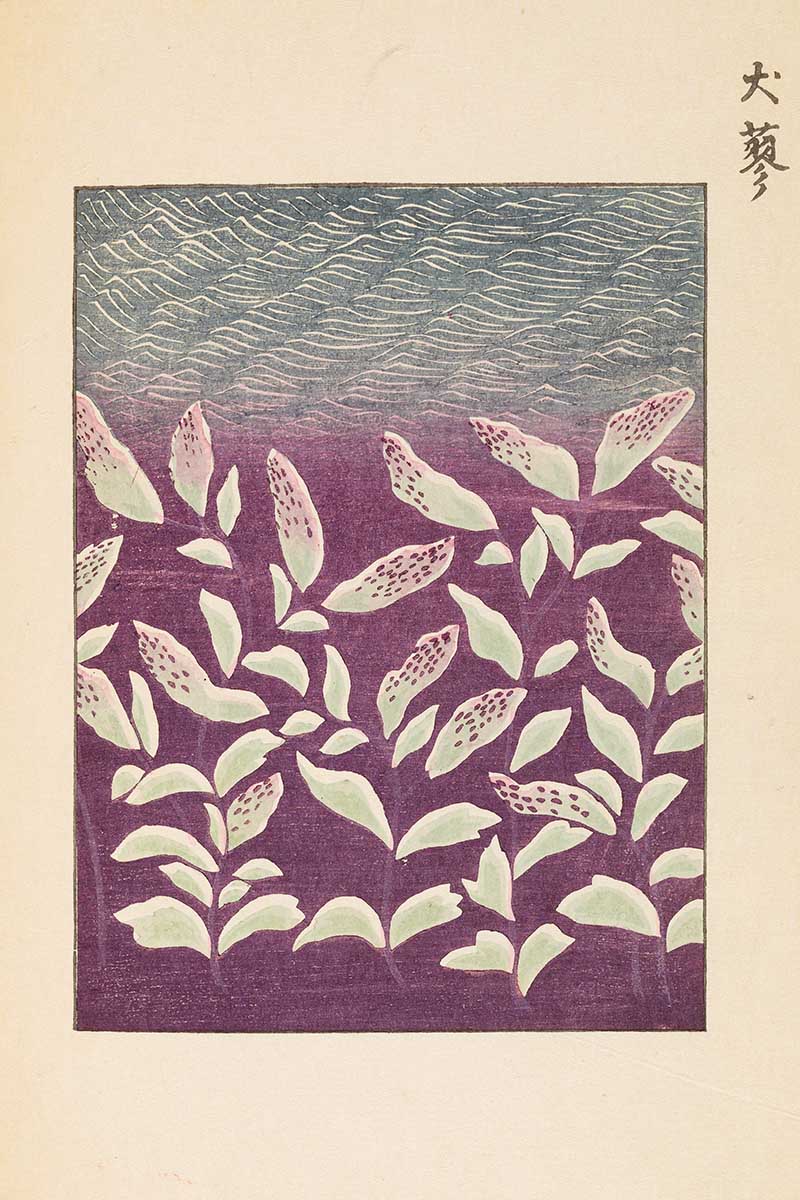
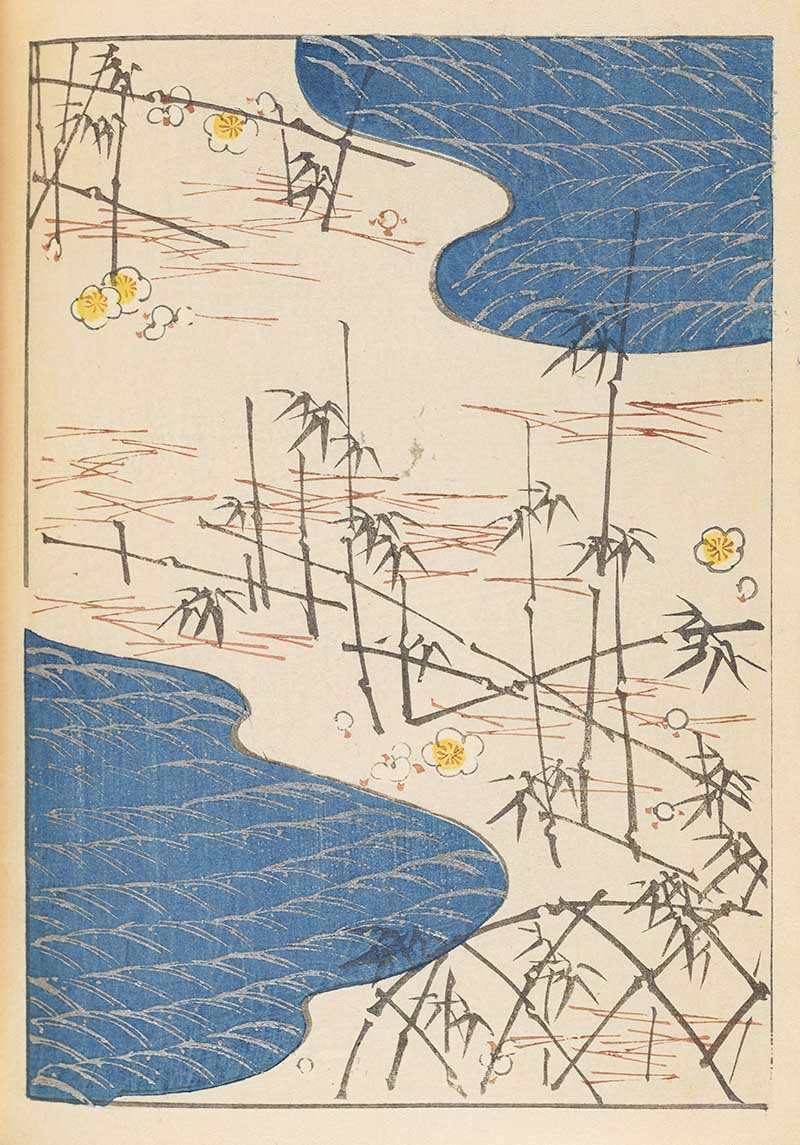
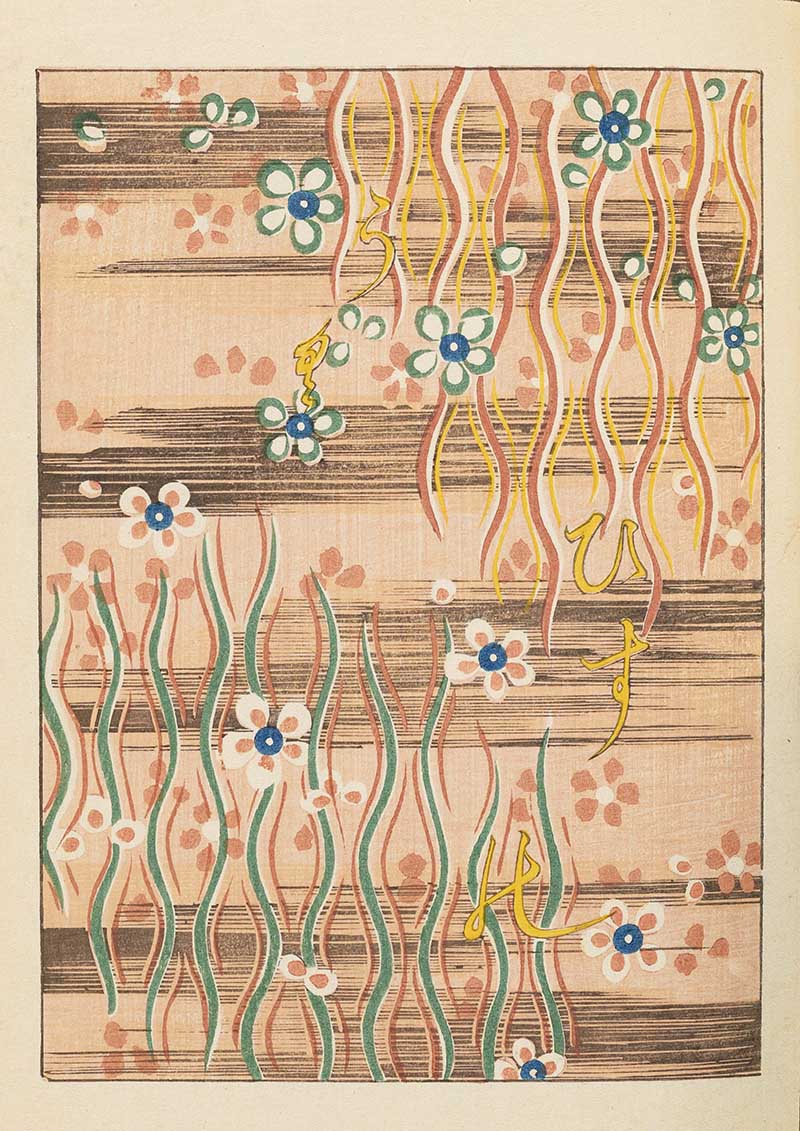
Plate 27: Multicoloured Flowers
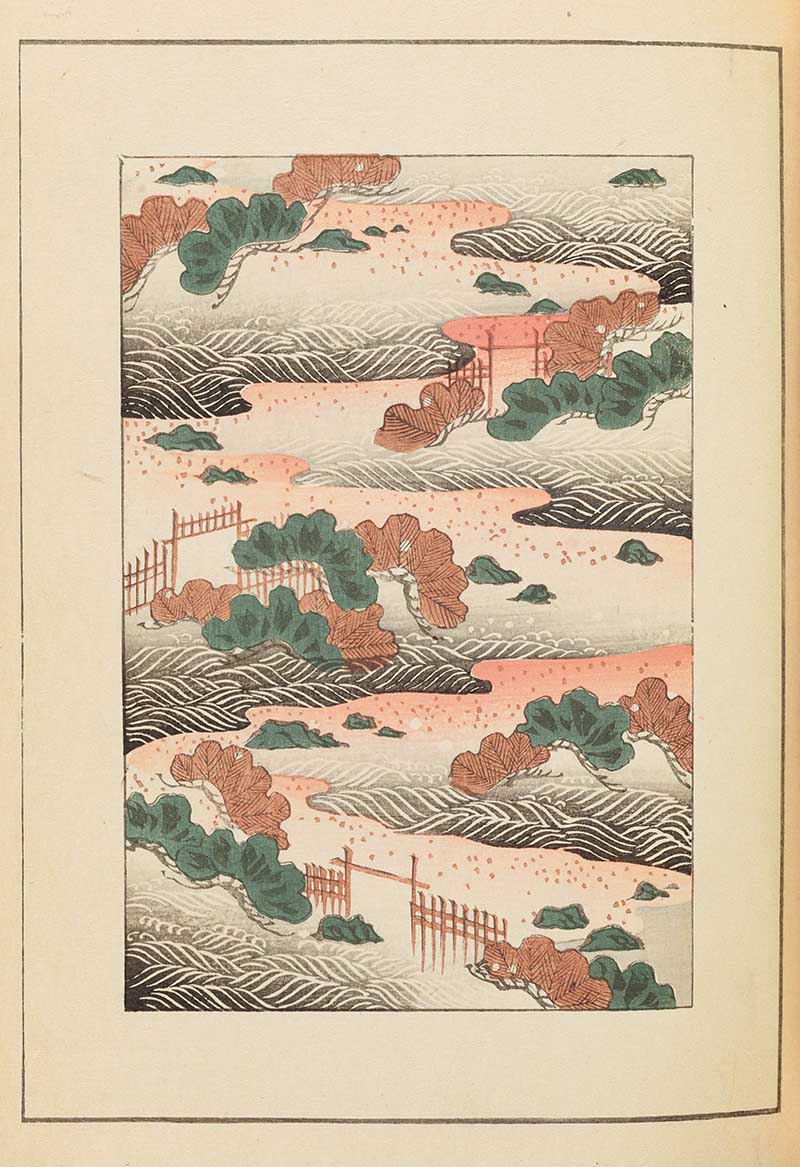
Landscapes are a staple of Japanese art, capturing everything from misty mountains to flowing rivers in beautifully stylised ways. In pattern design, they often appear as layered scenes or repeating vignettes, bringing a sense of depth and tranquillity.
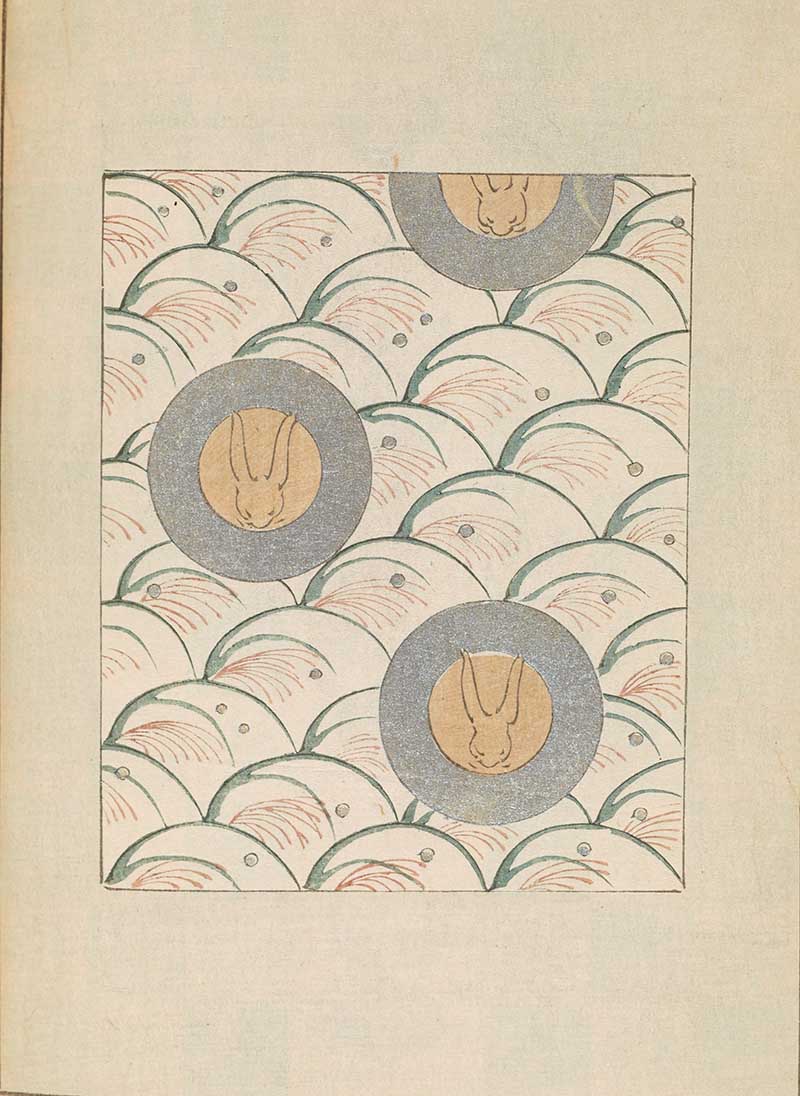
Print 30: Leaves in the Moonlight
Check out this collection of vintage autumn leaves on the site.
Japanese Prints 31-40
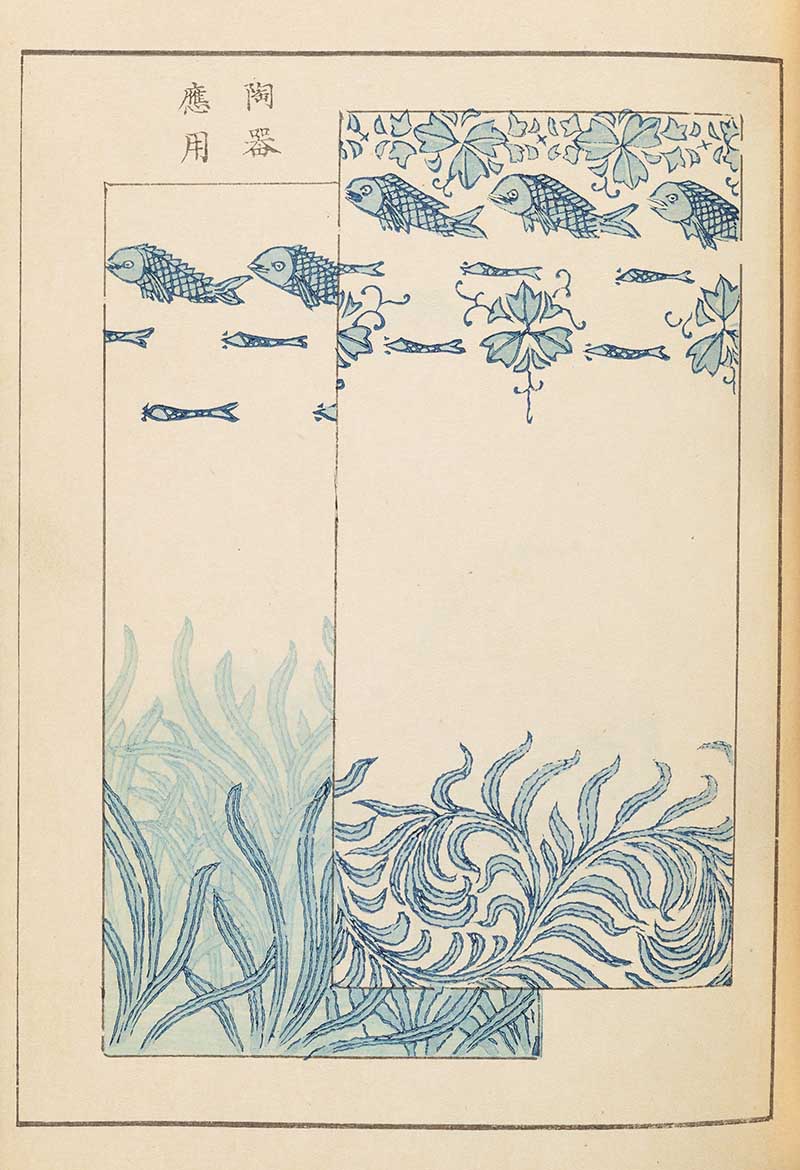
Print 31: Fish and Seaweed in Blue
Fish, especially koi, show up a lot in Japanese patterns; they’re all about strength, luck, and going with the flow. With their curvy shapes and patterned scales, they look great swimming through waves or scattered across a design. In Meiji-era prints, they often got a bold, graphic twist.
There is a whole collection of Japanese fish prints on the site.
Print 32: Maple Leaves on Blue
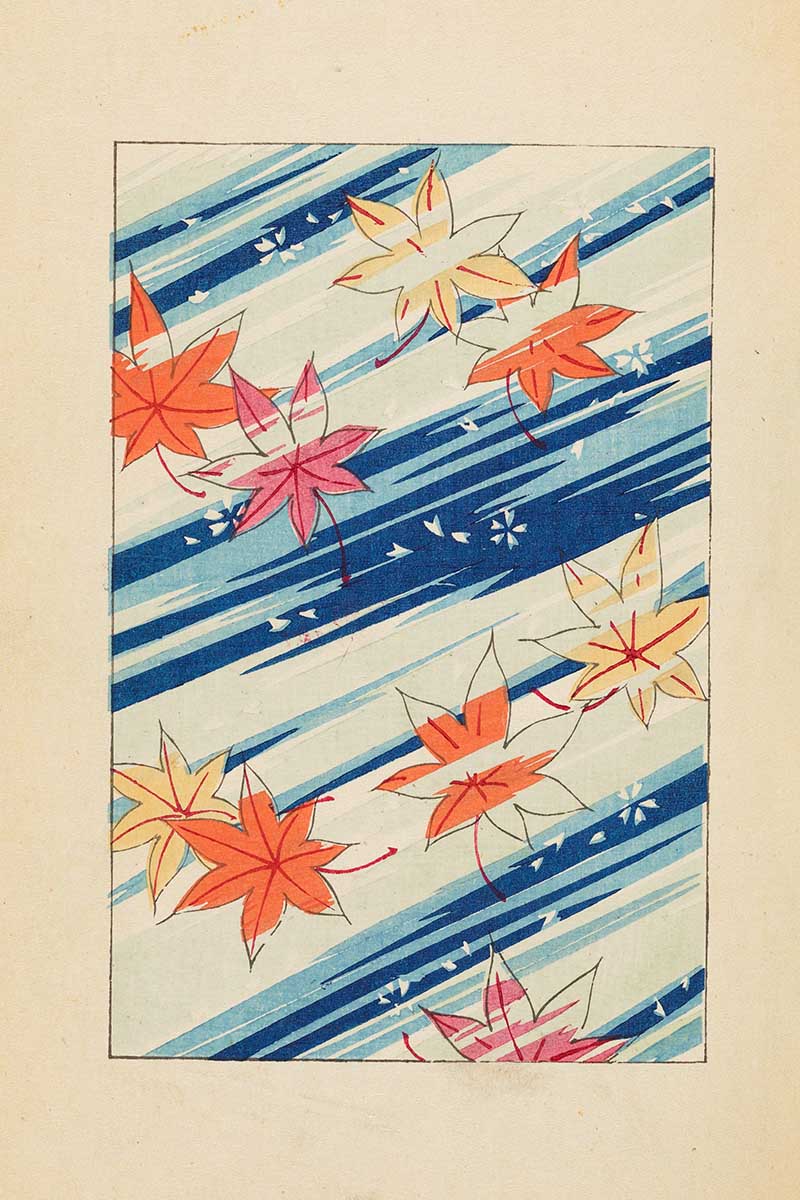
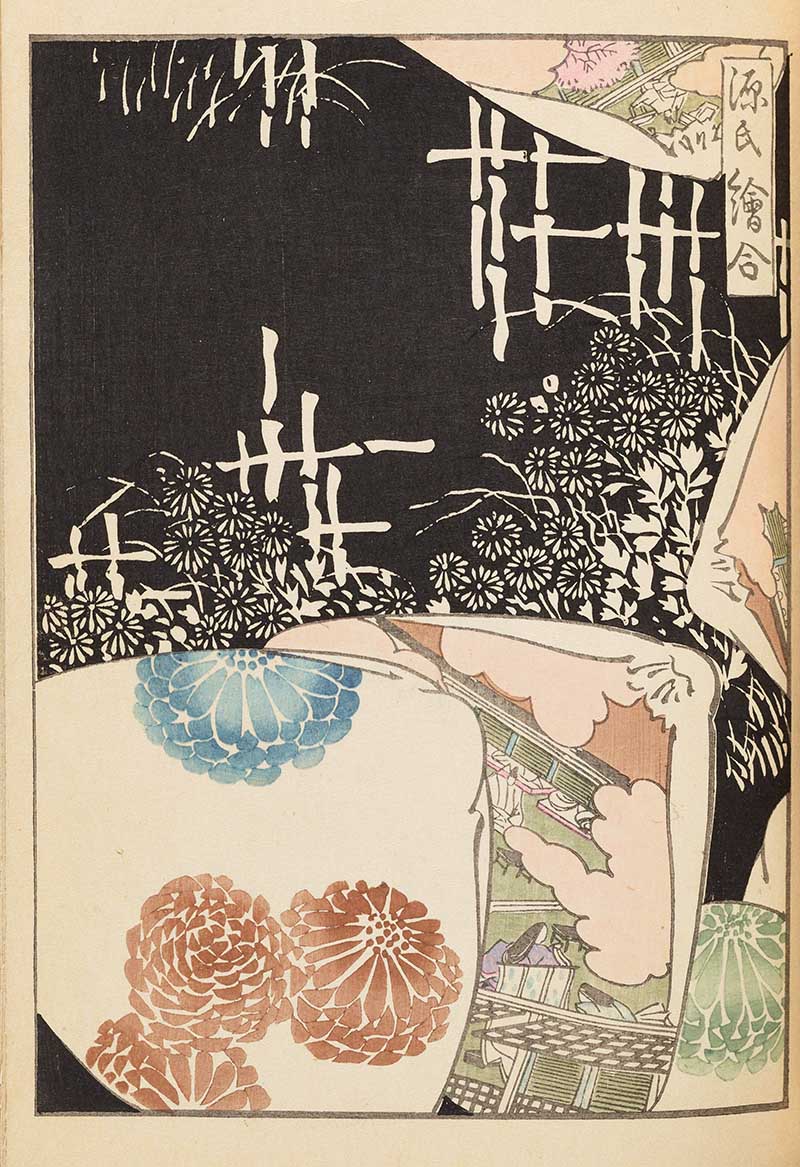
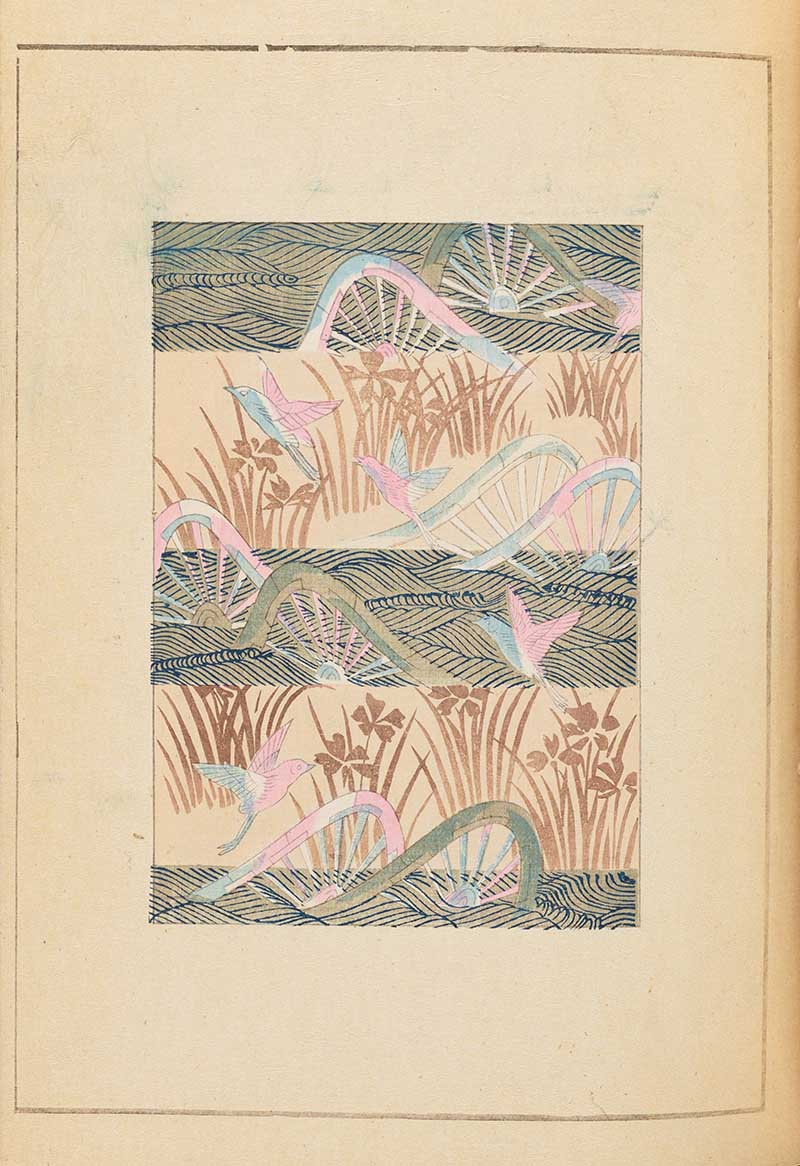
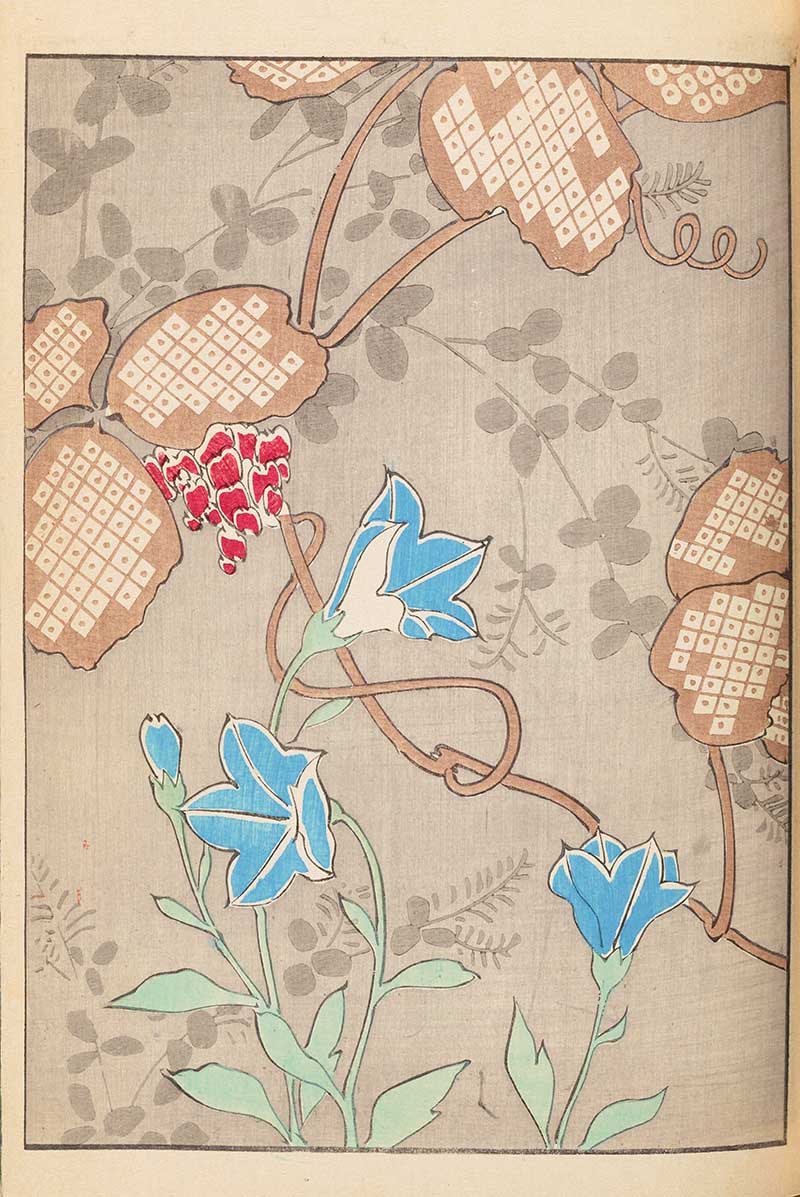
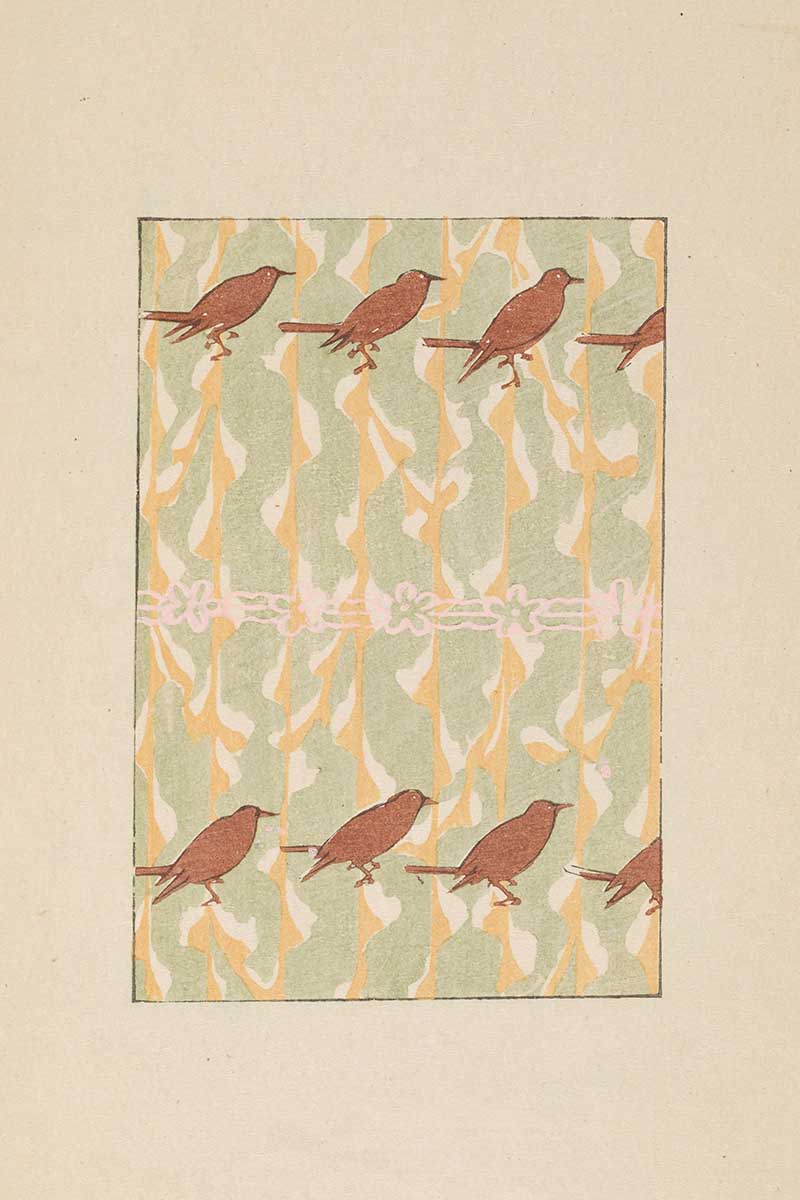
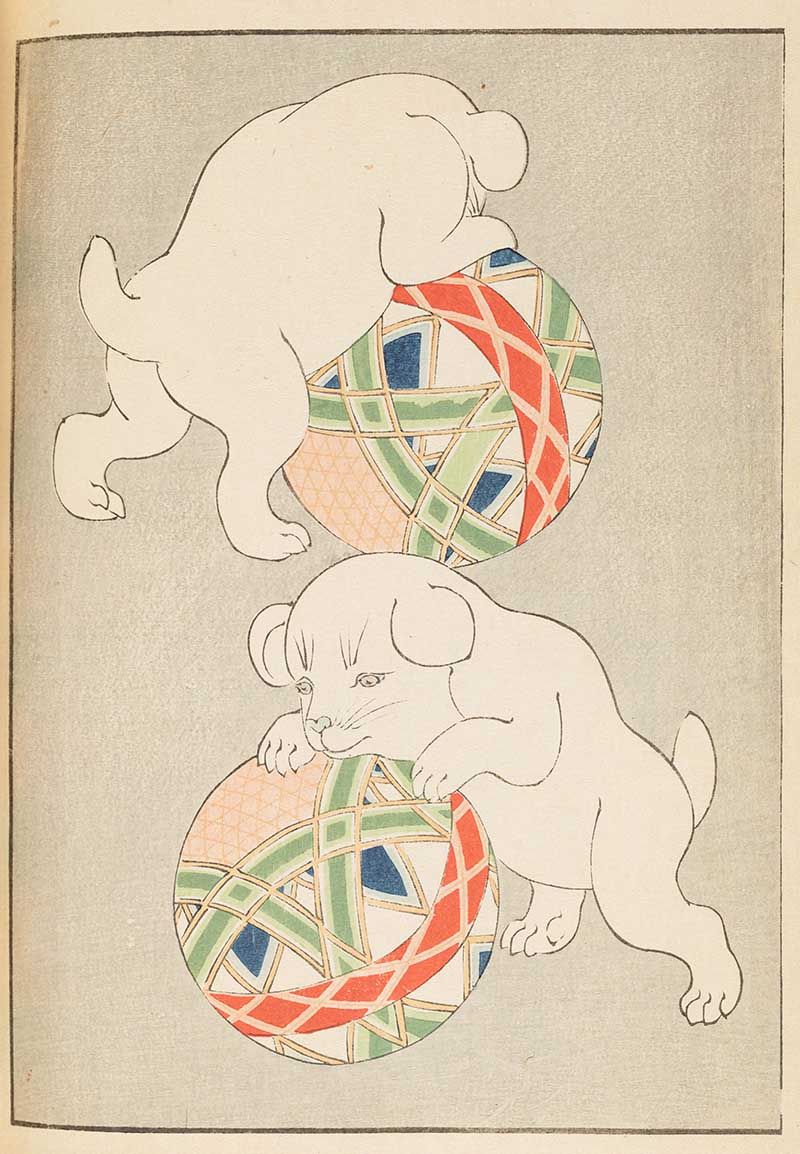
Plate 39: Puppies with Temari Balls
Temari balls are colourful, thread spheres that started as children’s toys in Japan but became a decorative art form. Their intricate geometric patterns and bright threads make them a joyful, eye-catching motif in Japanese design, symbolising friendship, happiness, and skilful craftsmanship.
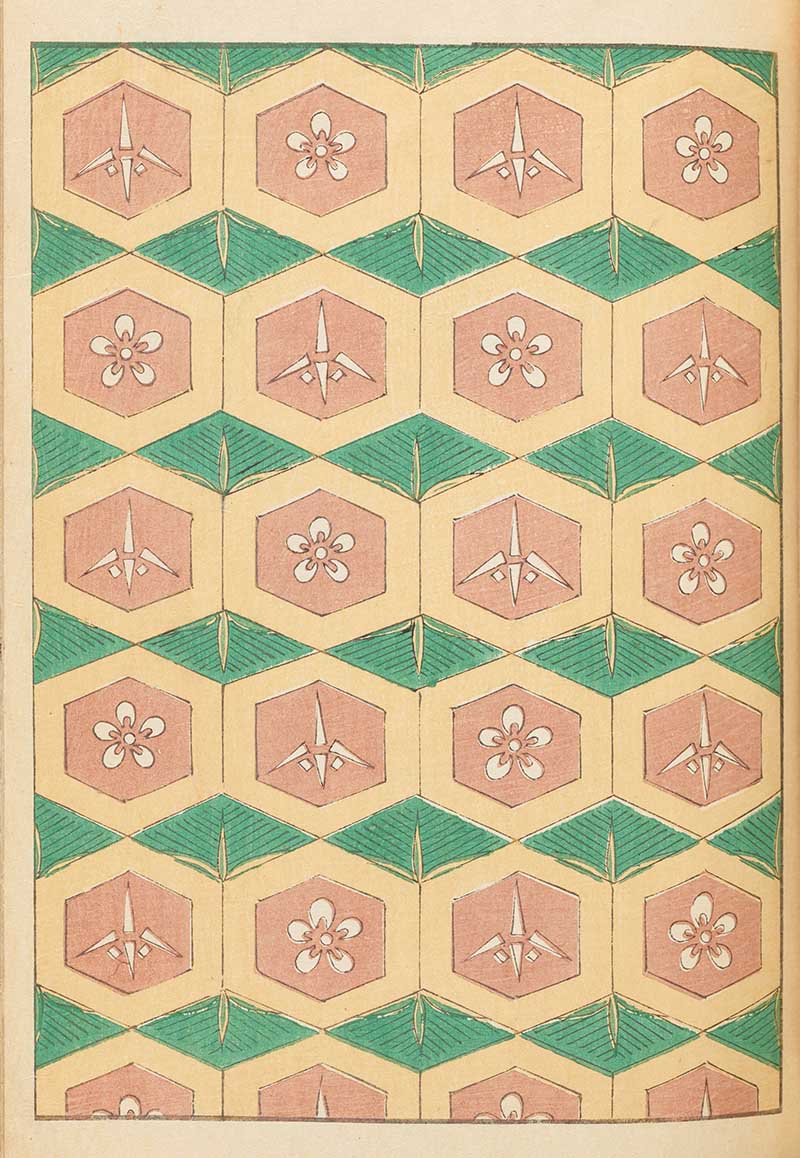
Hexagon patterns, known as kikkō, are inspired by a turtle’s shell and symbolise longevity and good fortune in Japanese design. Their clean, repeating geometry adds structure and balance, and in Meiji-era prints, they were often mixed with florals or bold graphics for a striking decorative effect.
Japanese Woodblock Graphics 41-50
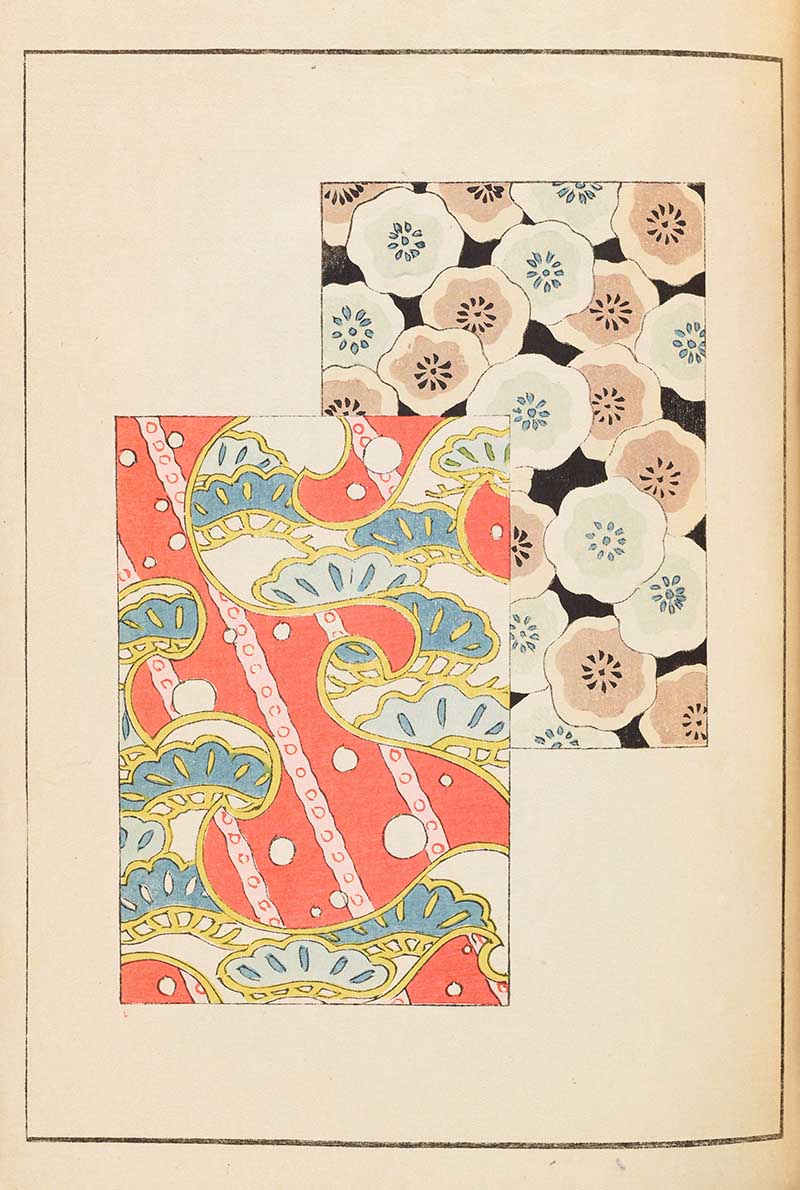
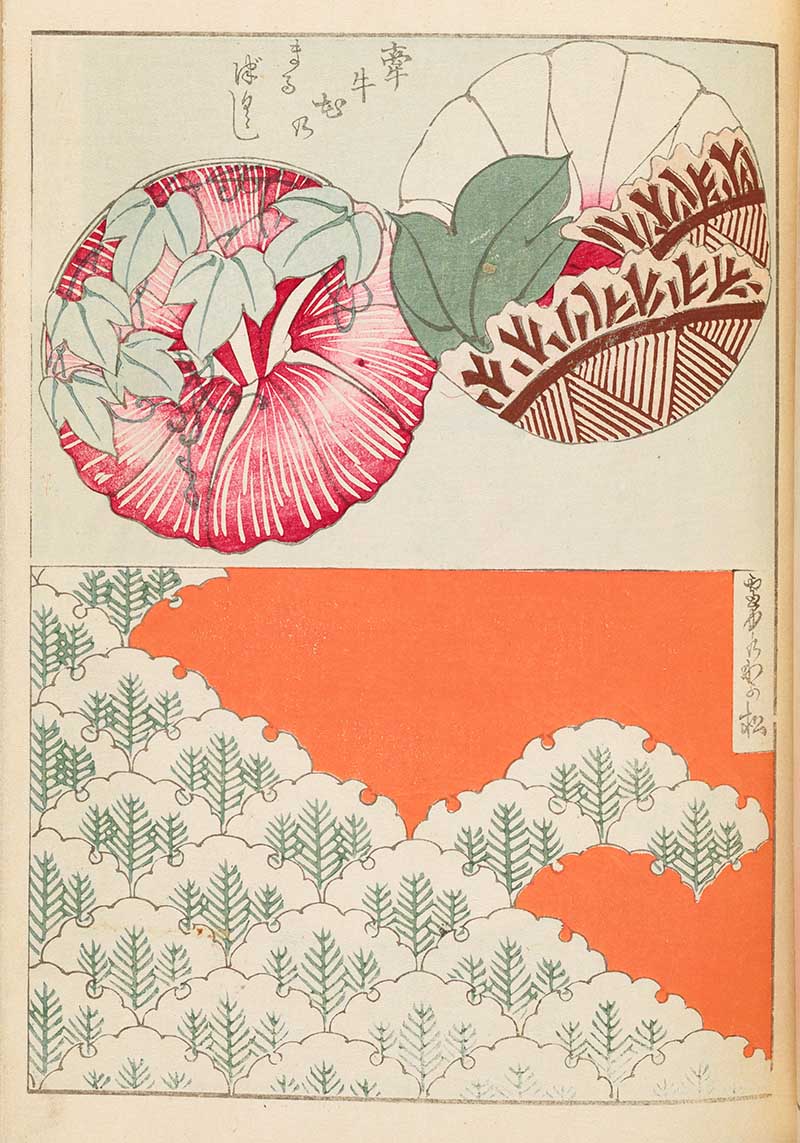
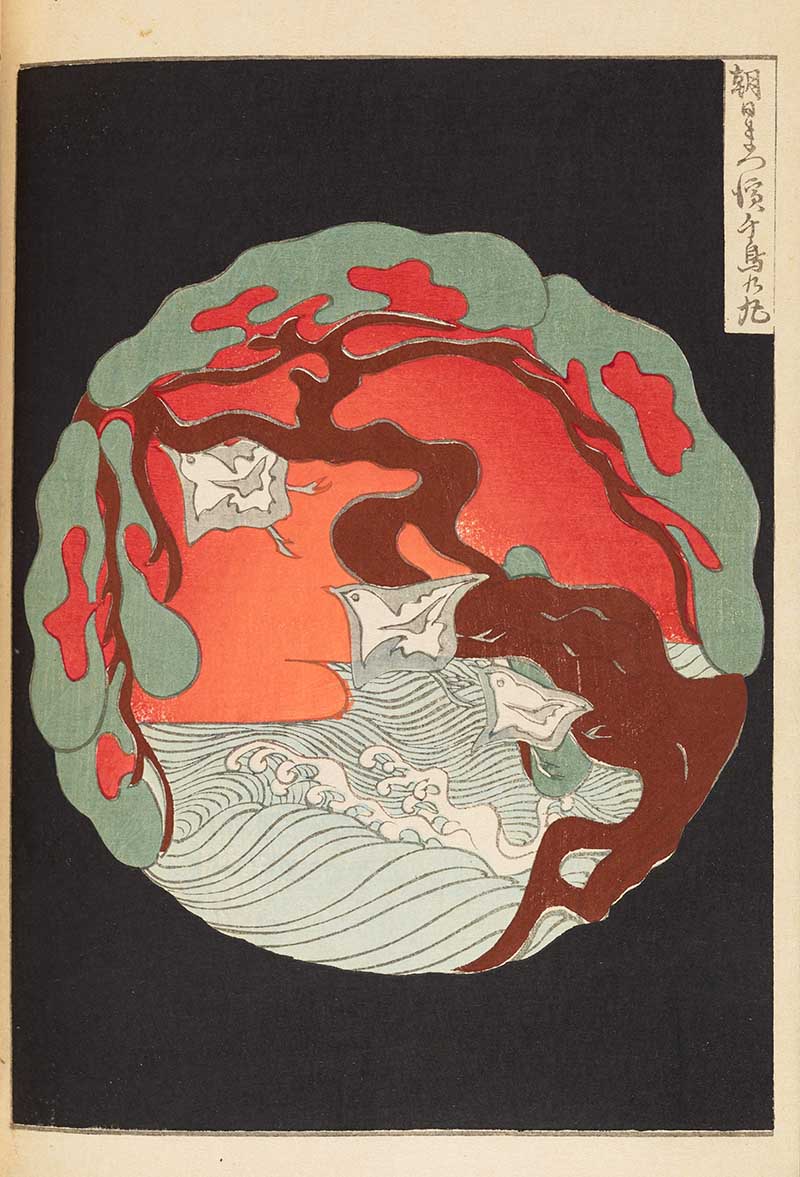
Print 42: 2 Patterns on Orange & Black
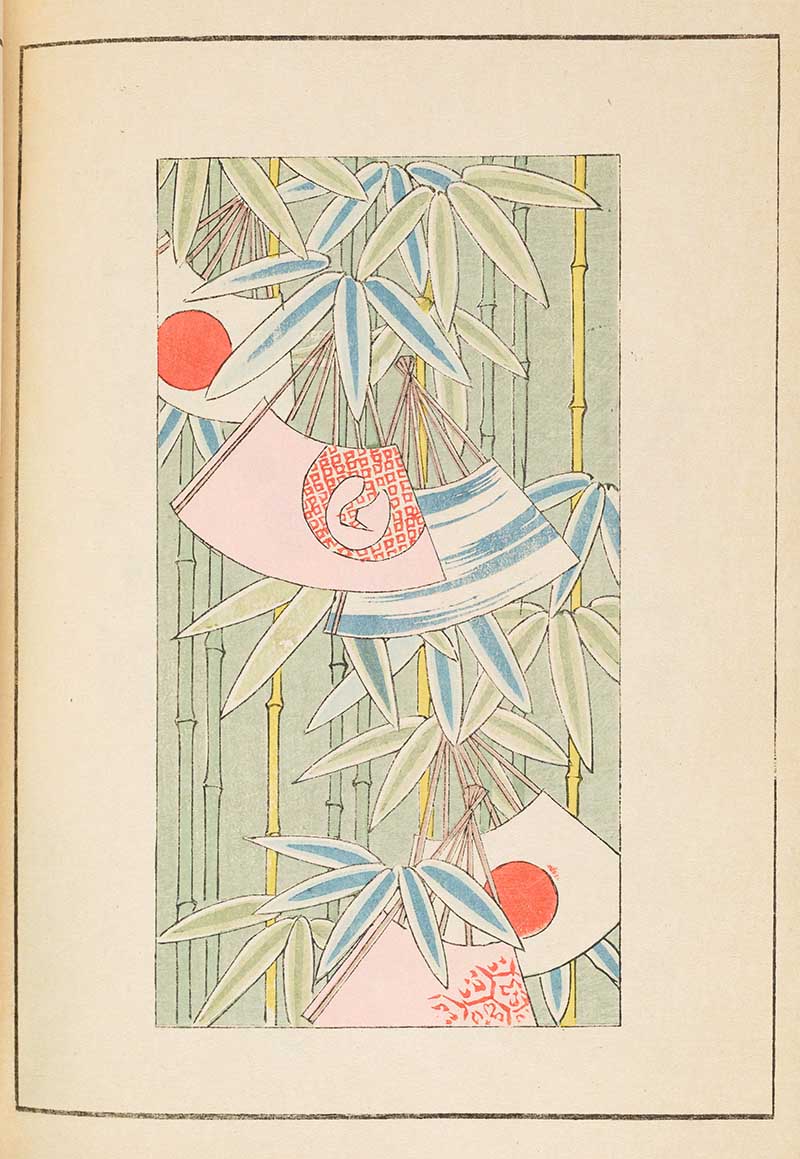
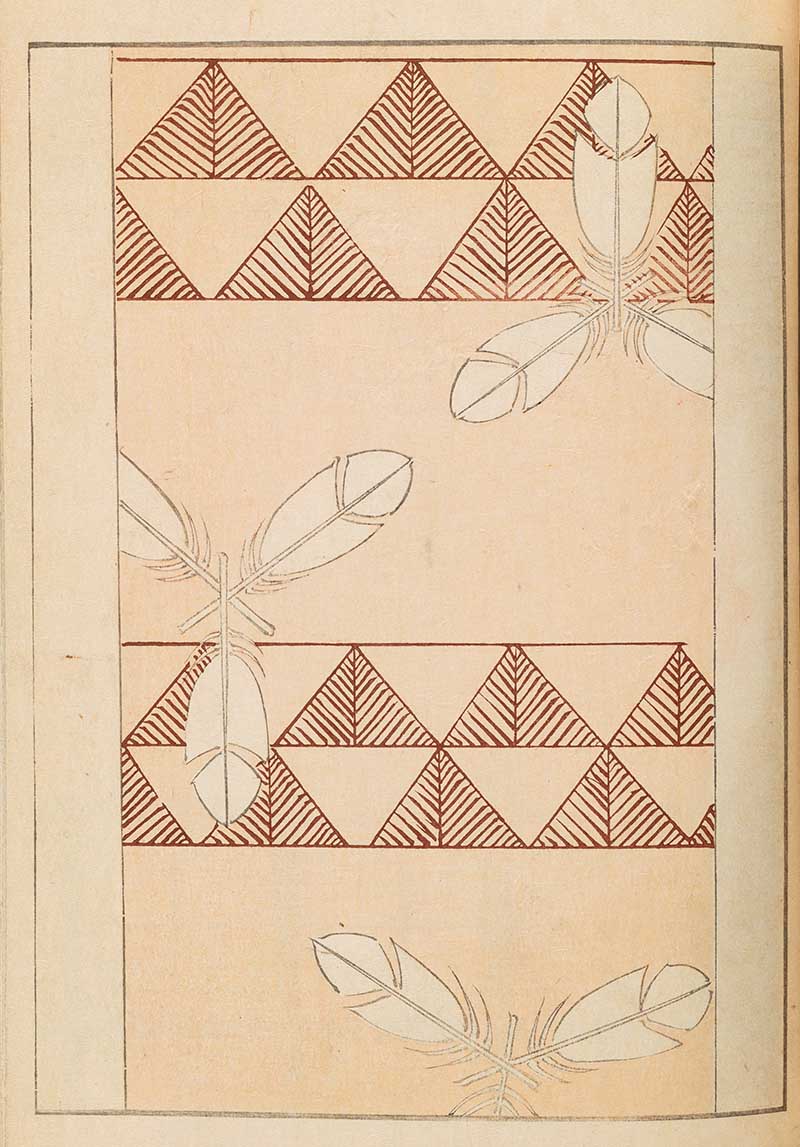
Feathers in Japanese design often symbolise protection, freedom, and spiritual connection. Their soft, flowing shapes work beautifully in repeating patterns. In Meiji-era prints, they were sometimes stylised into bold, graphic forms or combined with arrow-feather motifs like yagasuri for extra movement and energy.
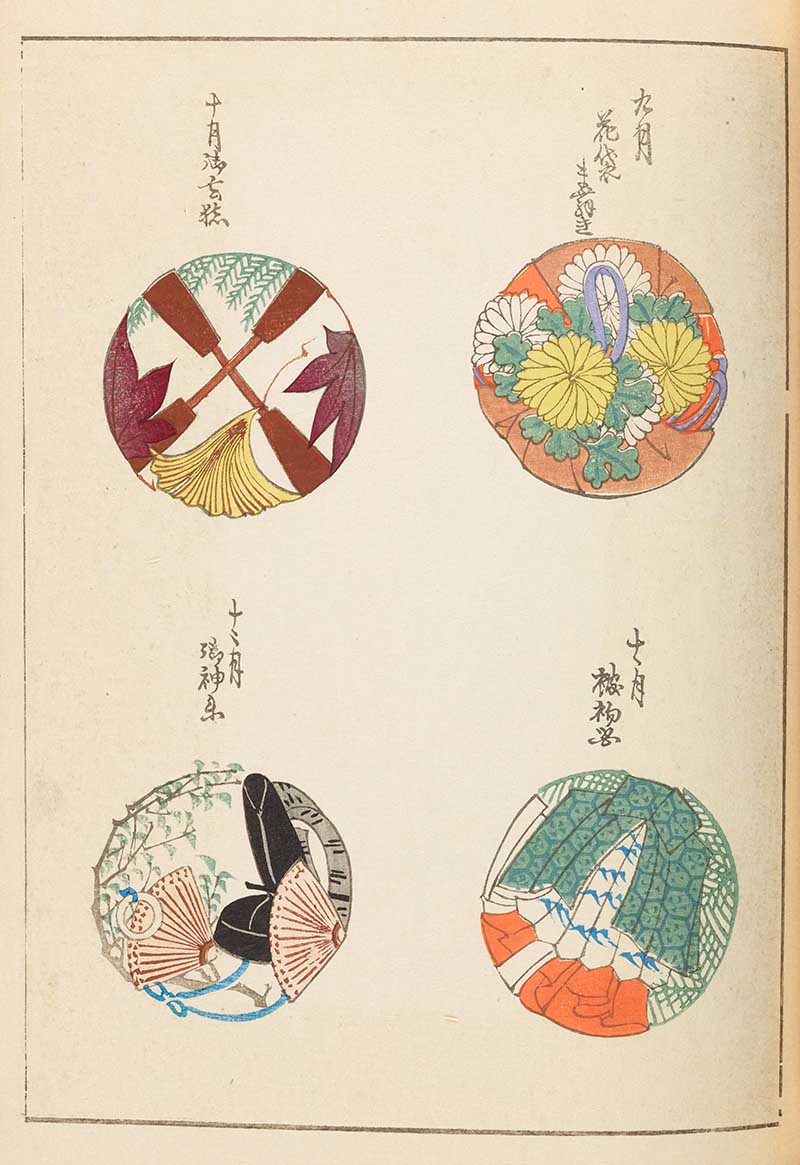
Print 47: Four Circle Patterns
Print 48: Geometric Leaf Pattern
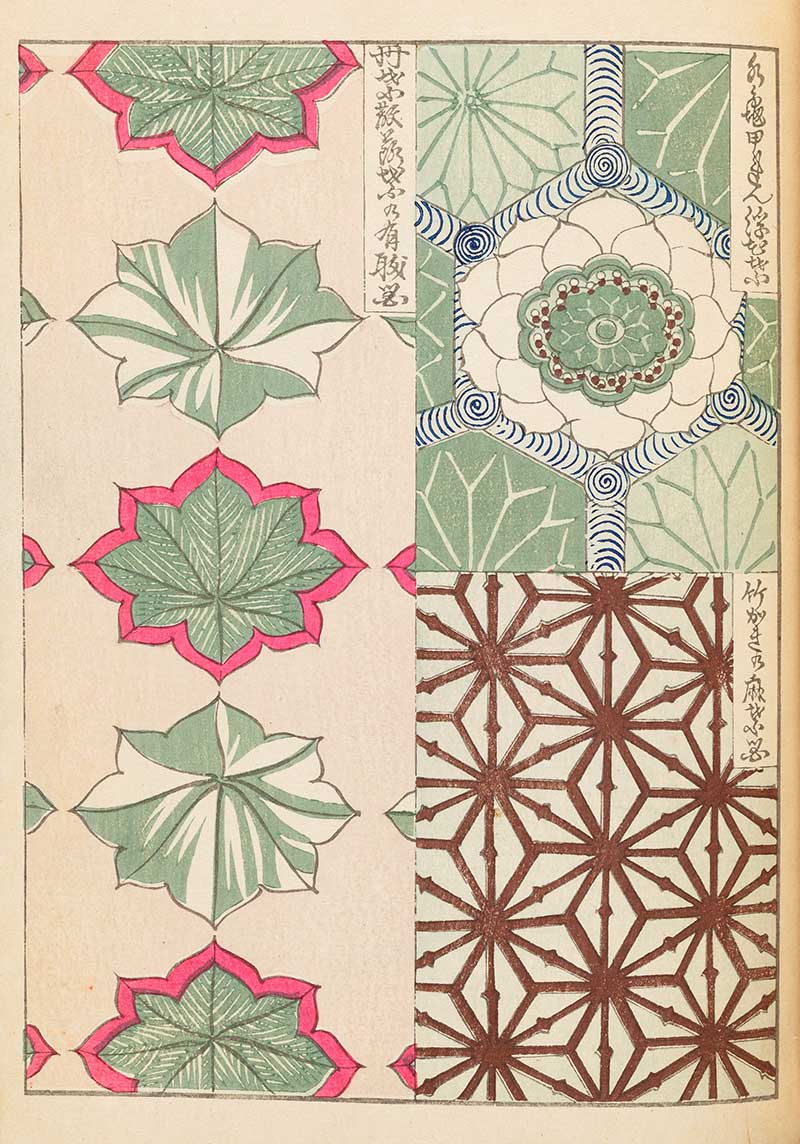
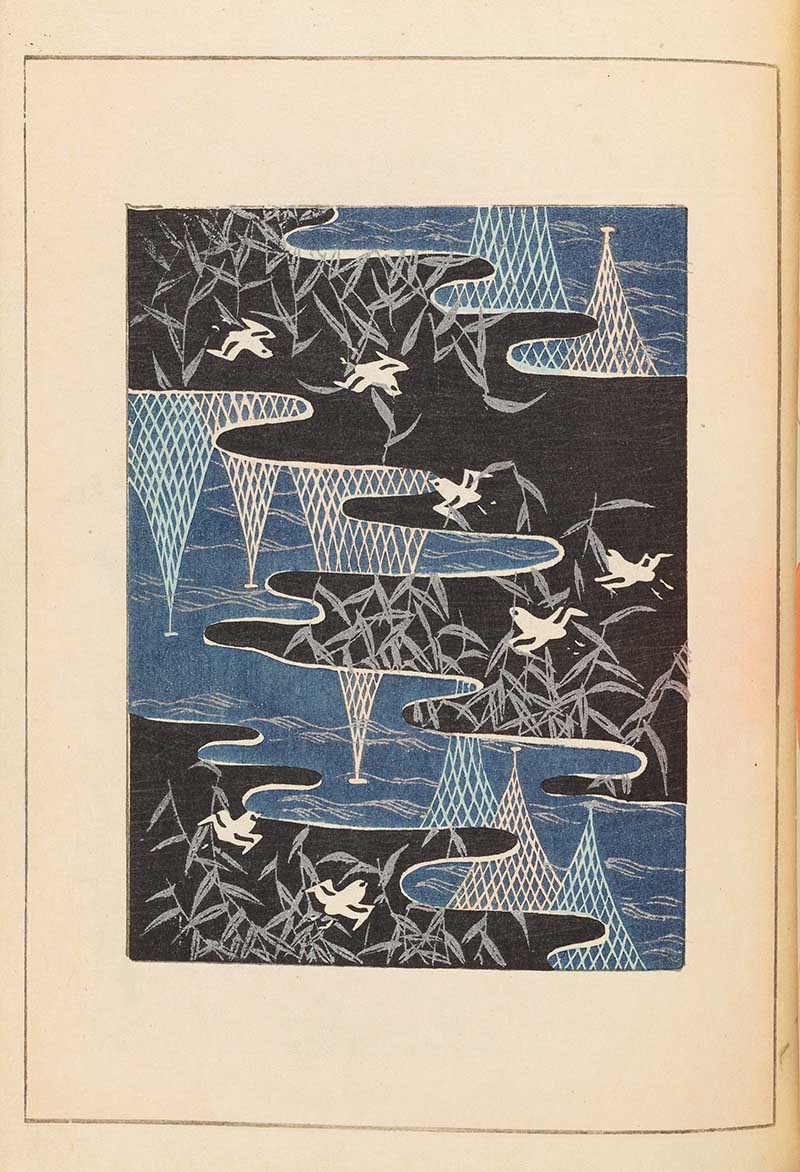
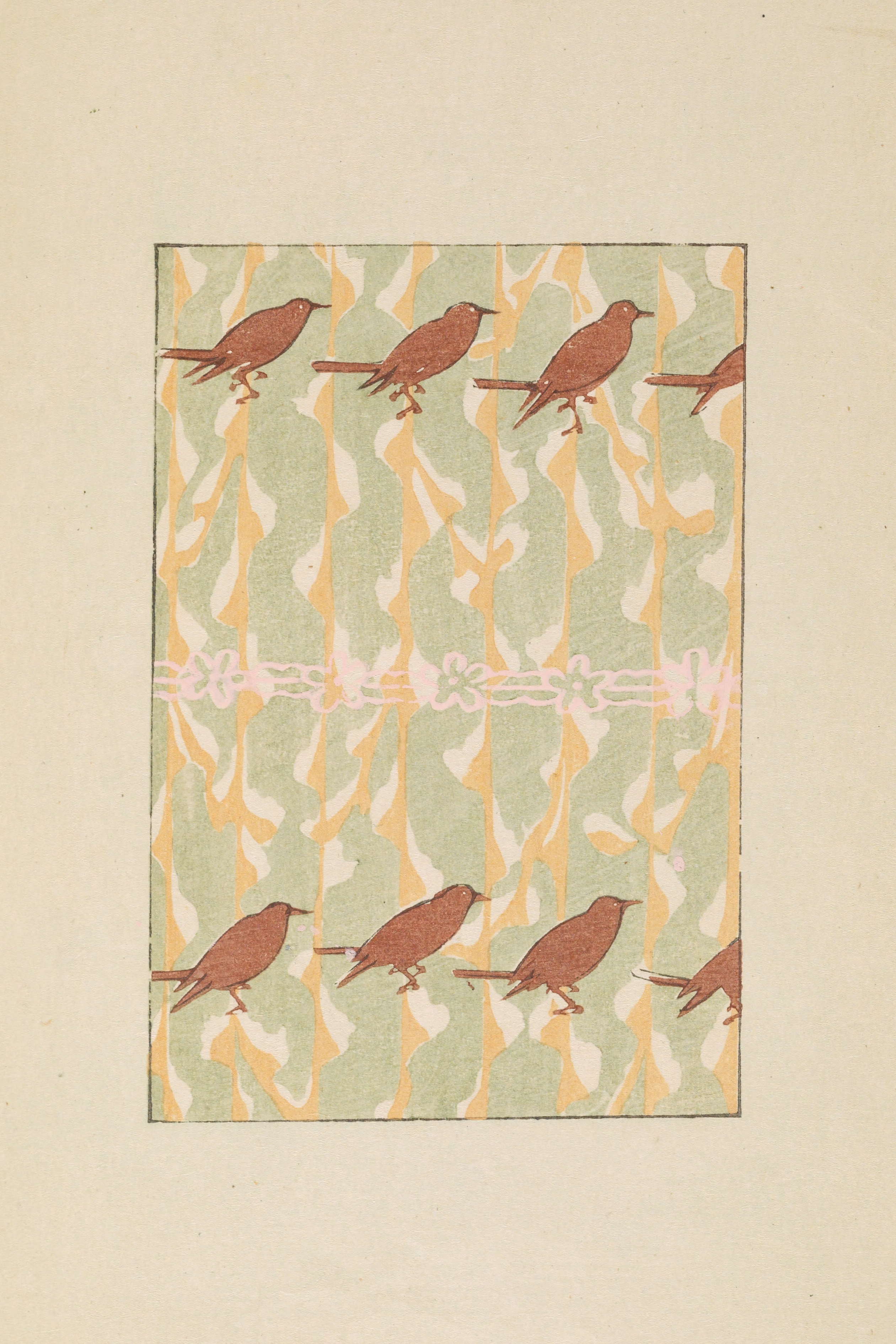
Birds are a favourite motif in Japanese design, symbolising everything from freedom and love to seasonal change, depending on the species. Whether it’s cranes for longevity, sparrows for joy, or swallows for good luck, their graceful shapes bring life and movement to patterns, and in Meiji-era prints, they often appear with bold, decorative backdrops.
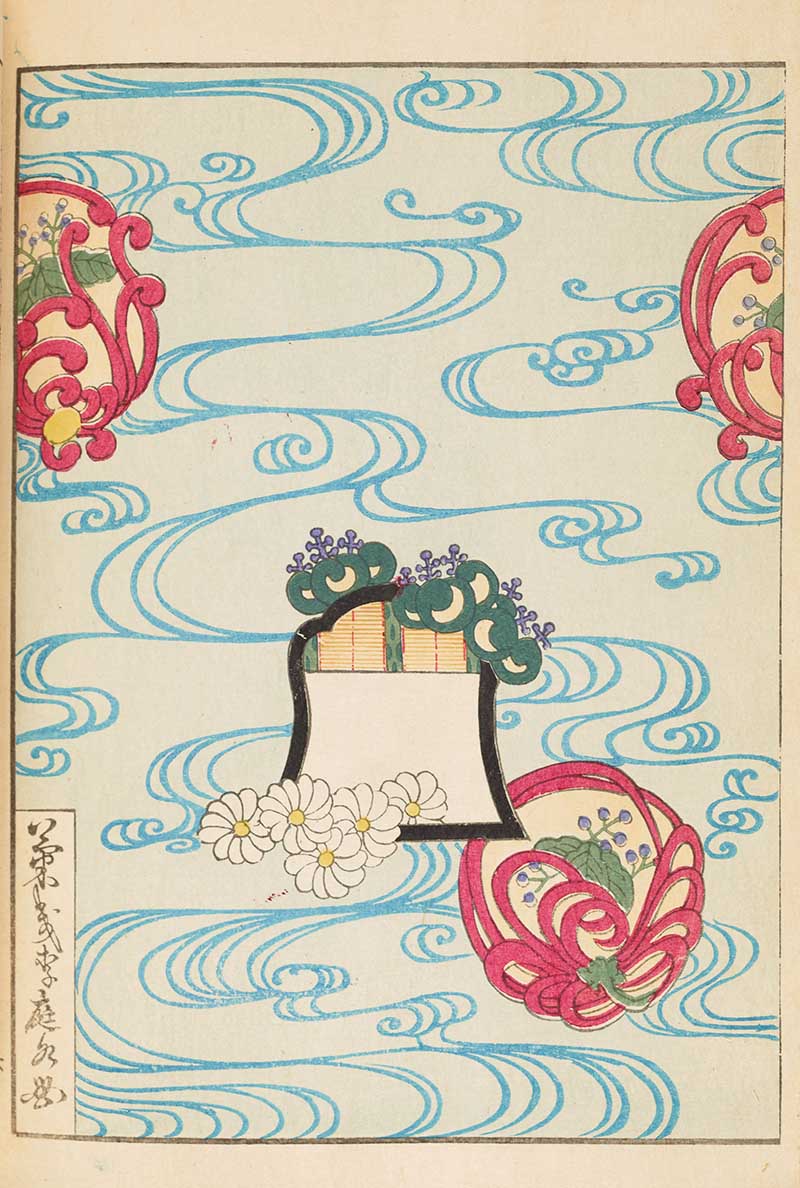
Shin-Bijutuskai Prints 51-60
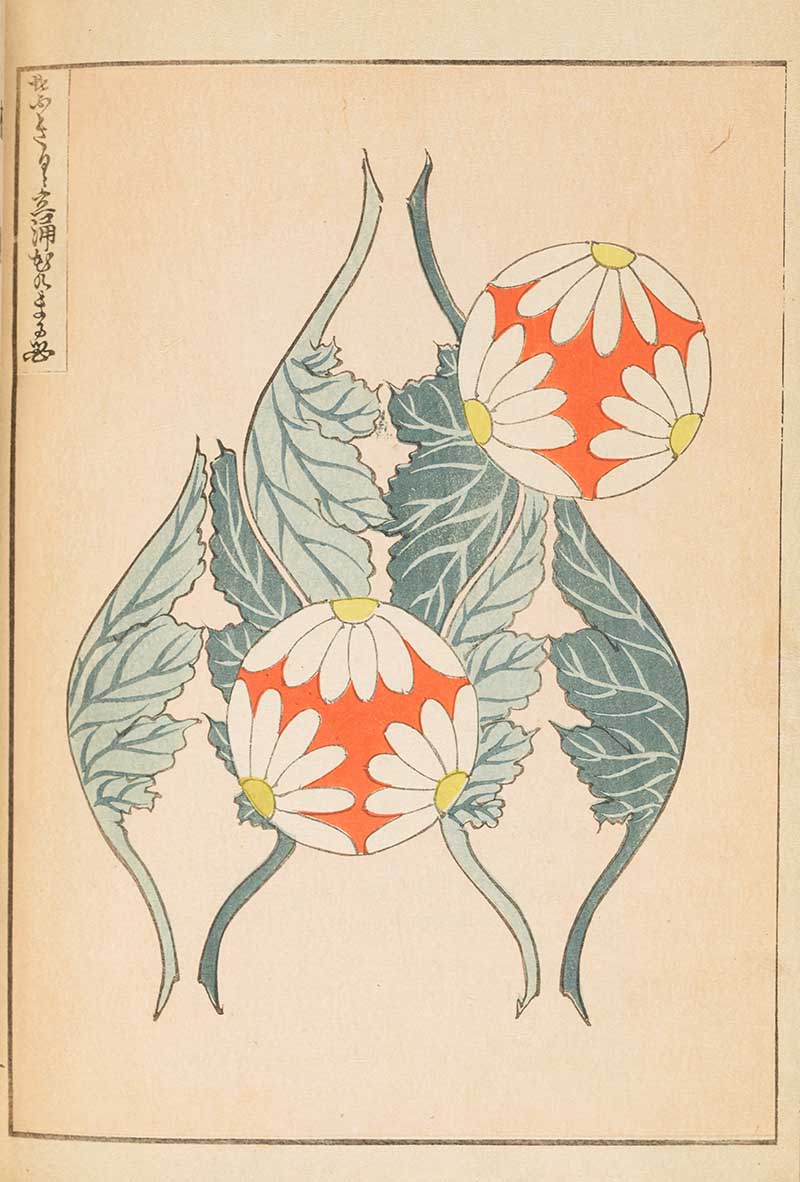
Print 51: Daisy Balls and Leaves
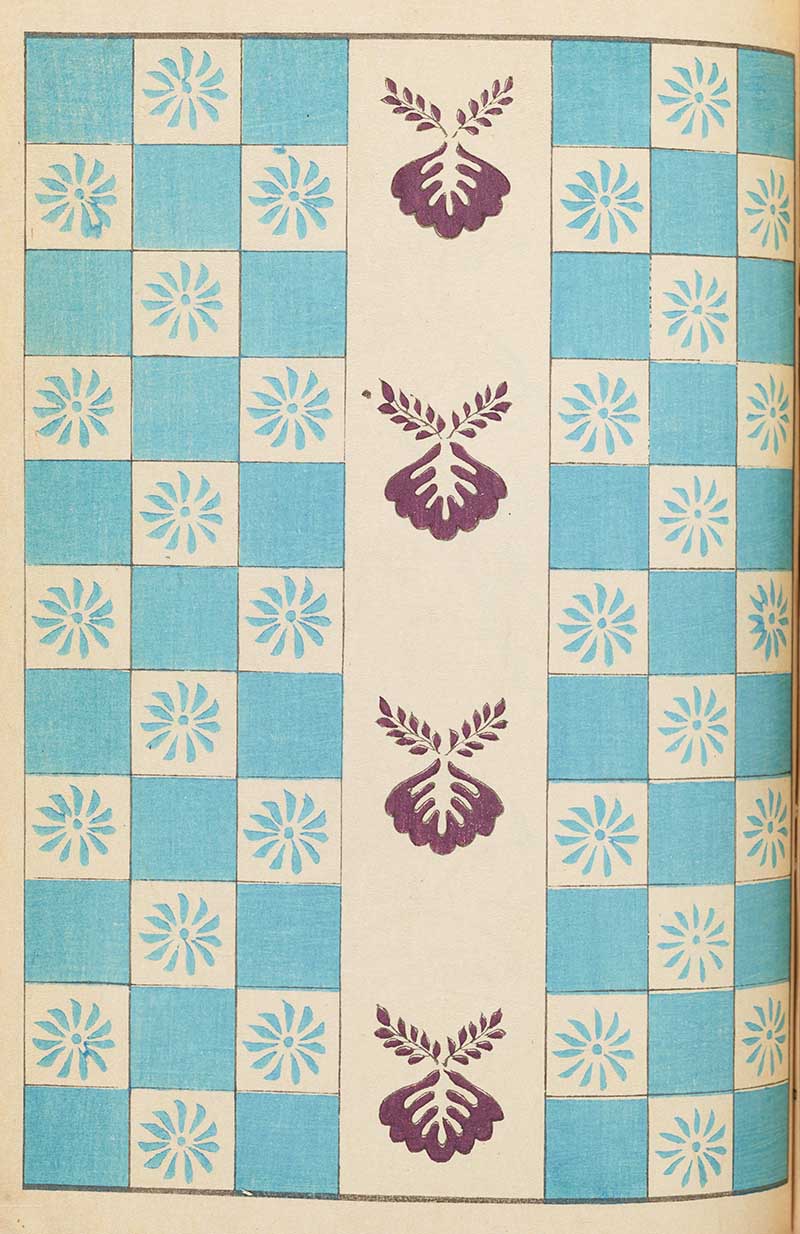
Print 52: Blue and White Check
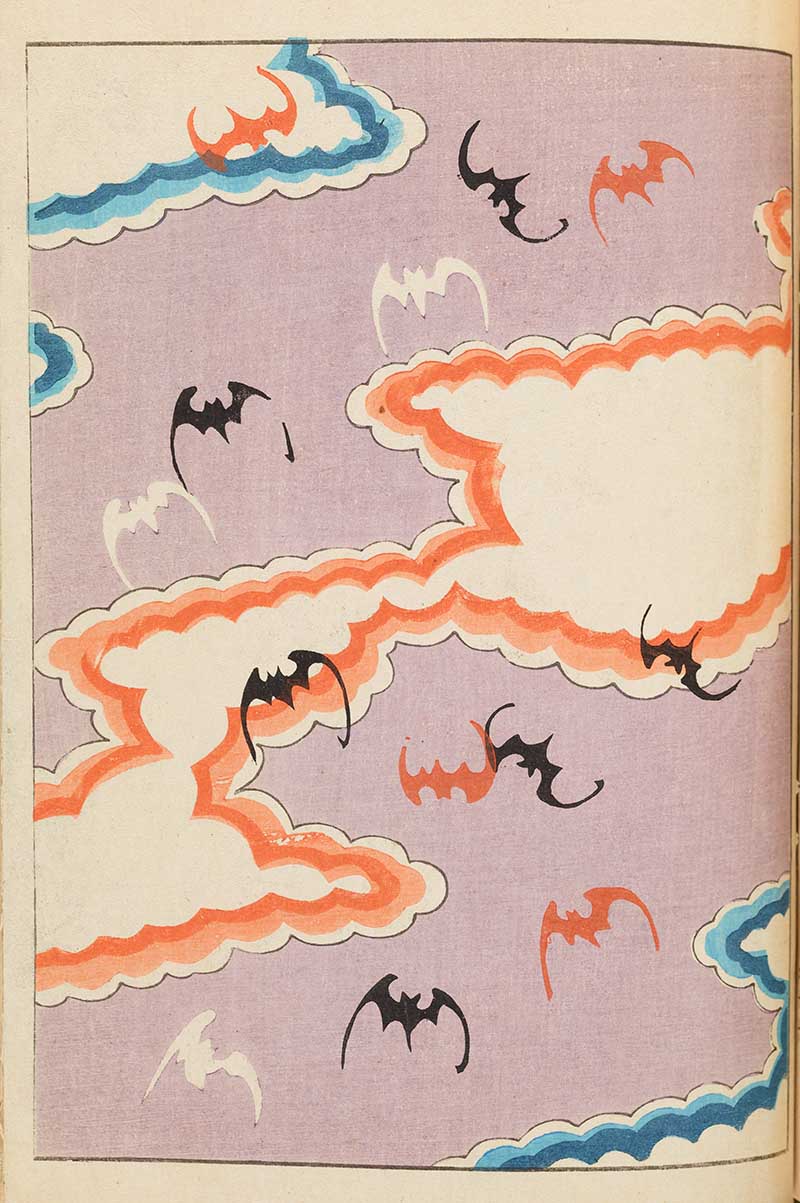
Bats in Japanese design are seen as symbols of good luck and happiness, a meaning borrowed from Chinese culture where the word for bat sounds like “blessing.” In Meiji-era prints, they were sometimes stylised into playful, decorative shapes, adding a quirky yet auspicious touch to patterns.
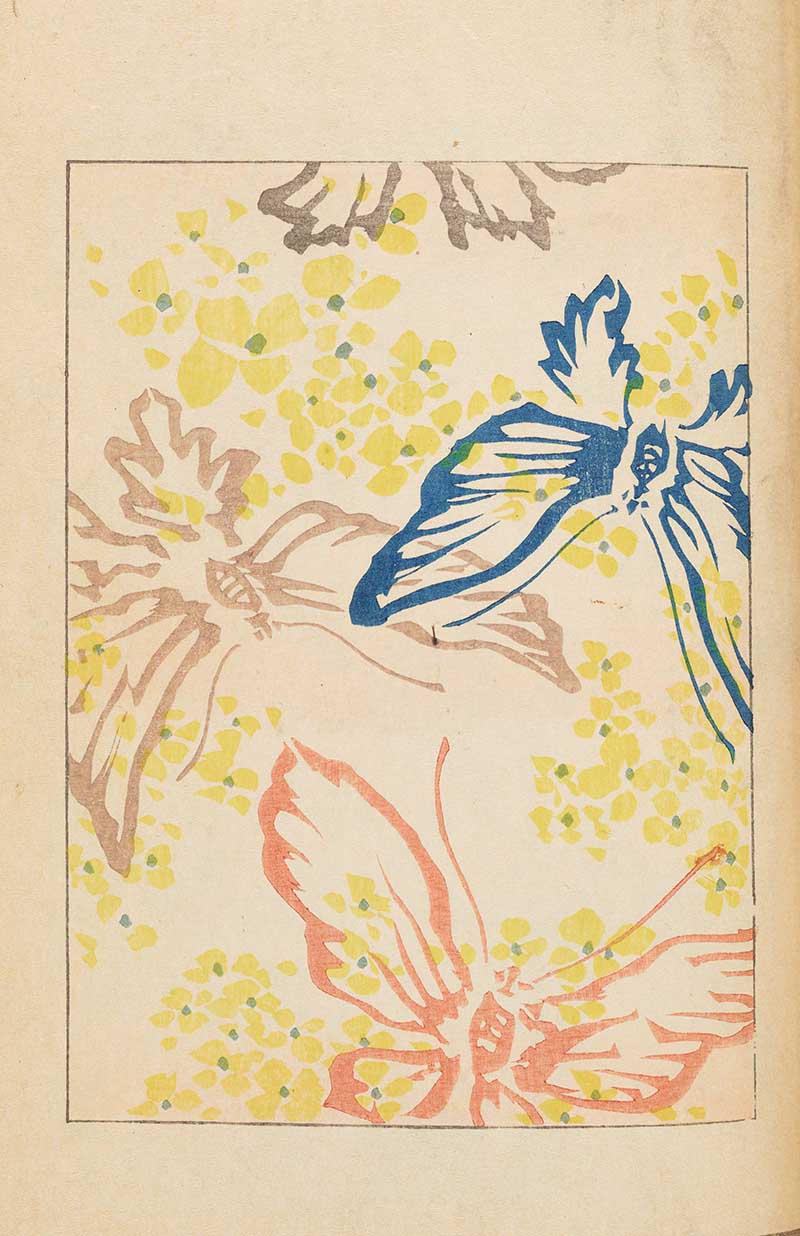
Print 55: Colourful Butterflies
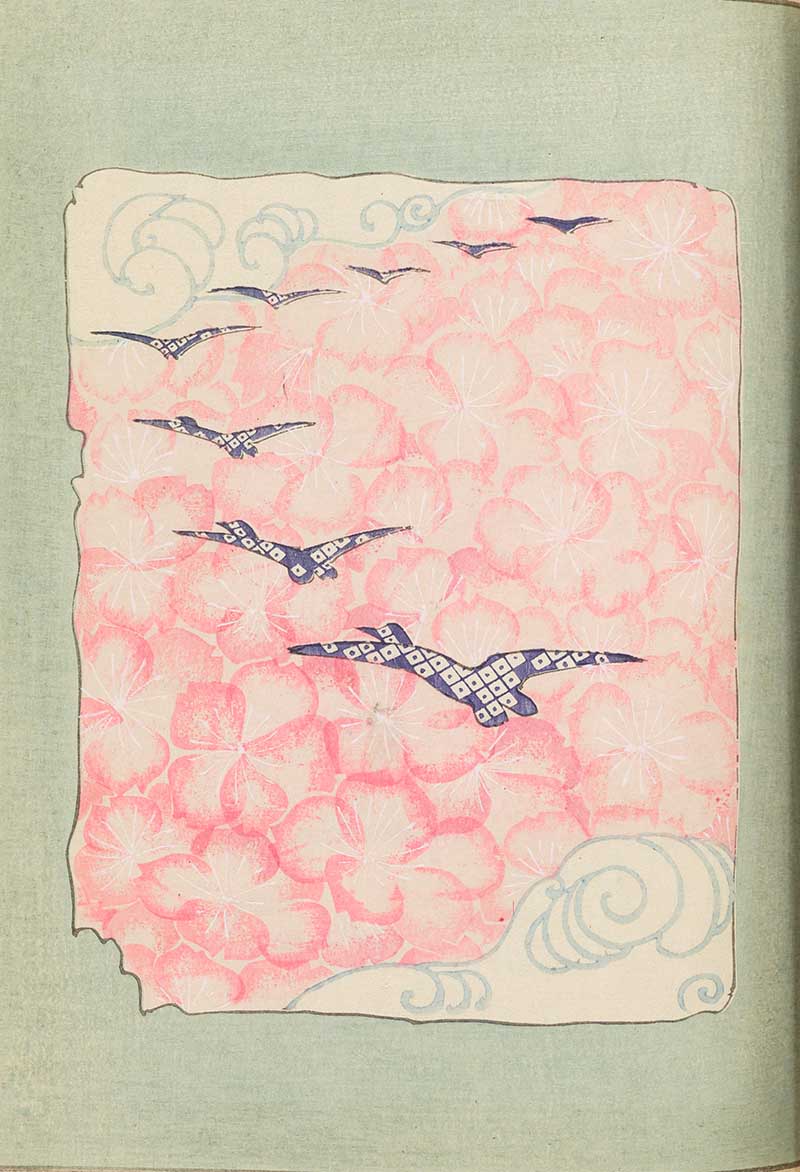
Blossoms, especially cherry blossoms or sakura, are a big deal in Japanese design; they stand for beauty, new beginnings, and how quickly life changes. Their soft petals look great scattered through patterns, and in Meiji-era prints, they often got a bold, colourful makeover.
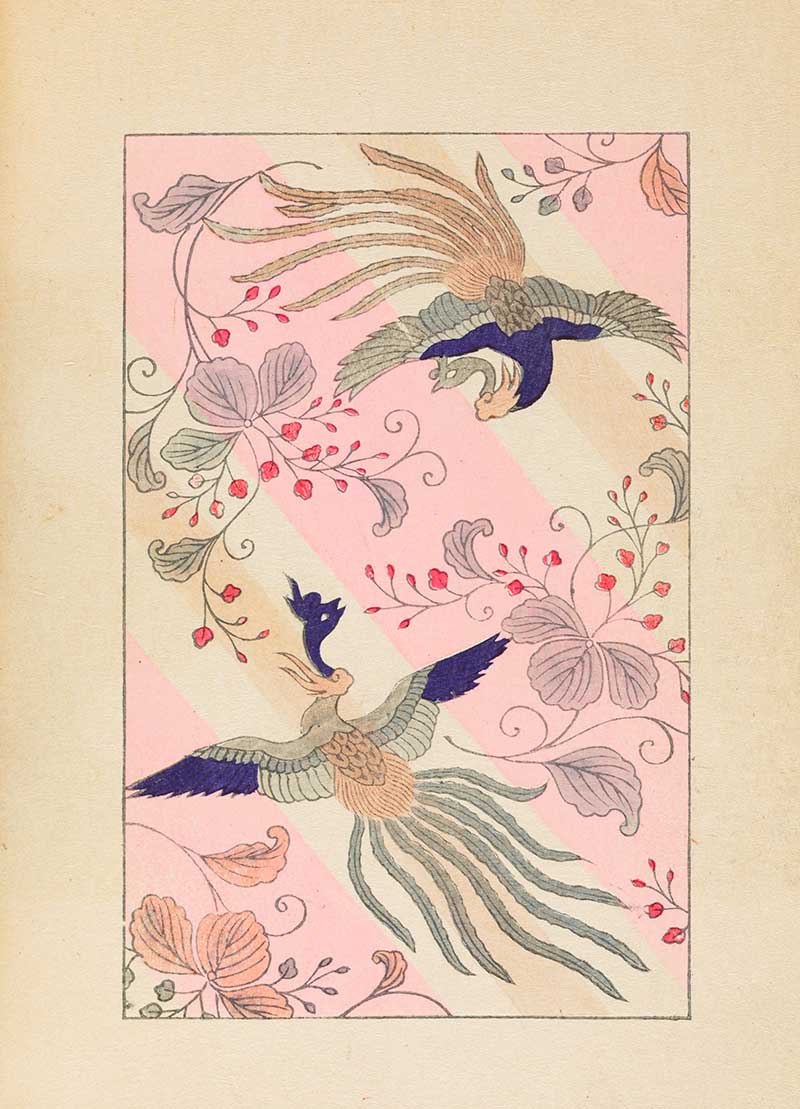
Print 57: Birds in Blossom Clouds
Japanese Prints 61-71
Cranes, or tsuru, are a classic in Japanese design, symbolising long life, happiness, and good fortune. Their tall, elegant shapes and sweeping wings add instant grace to any pattern; they were often paired with waves, clouds, or bold backdrops for extra drama.
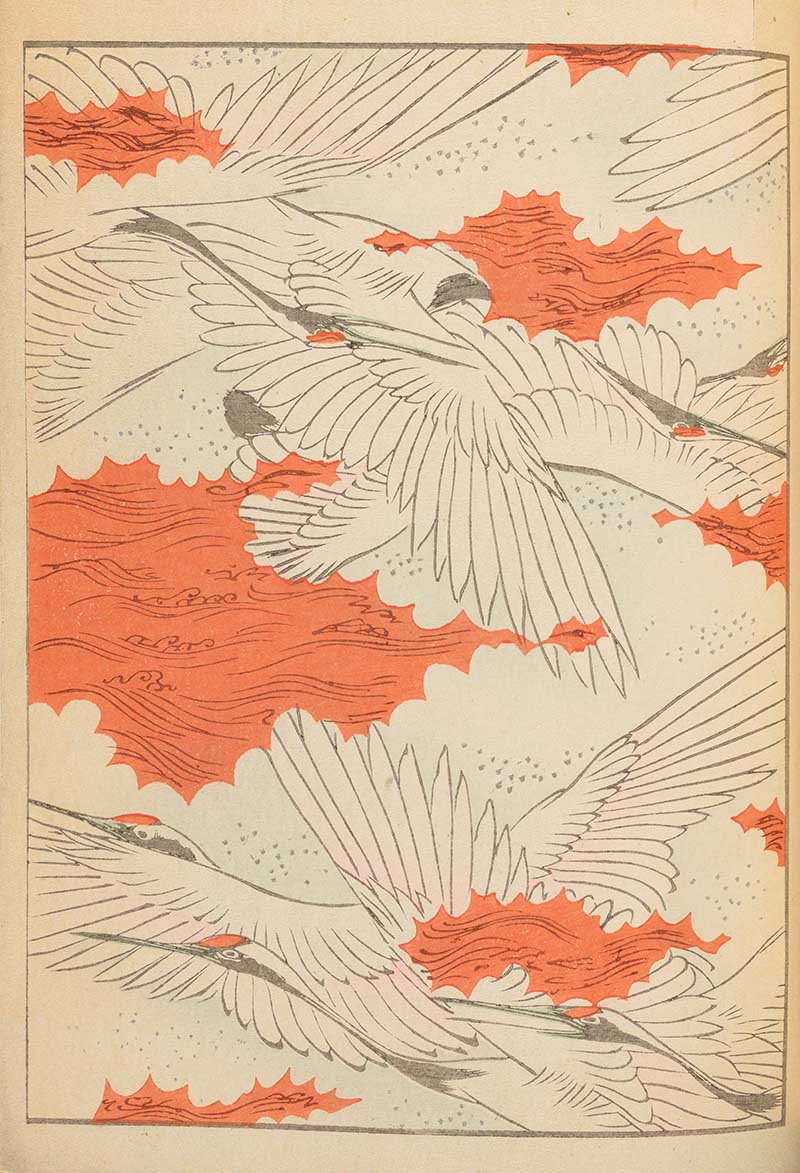
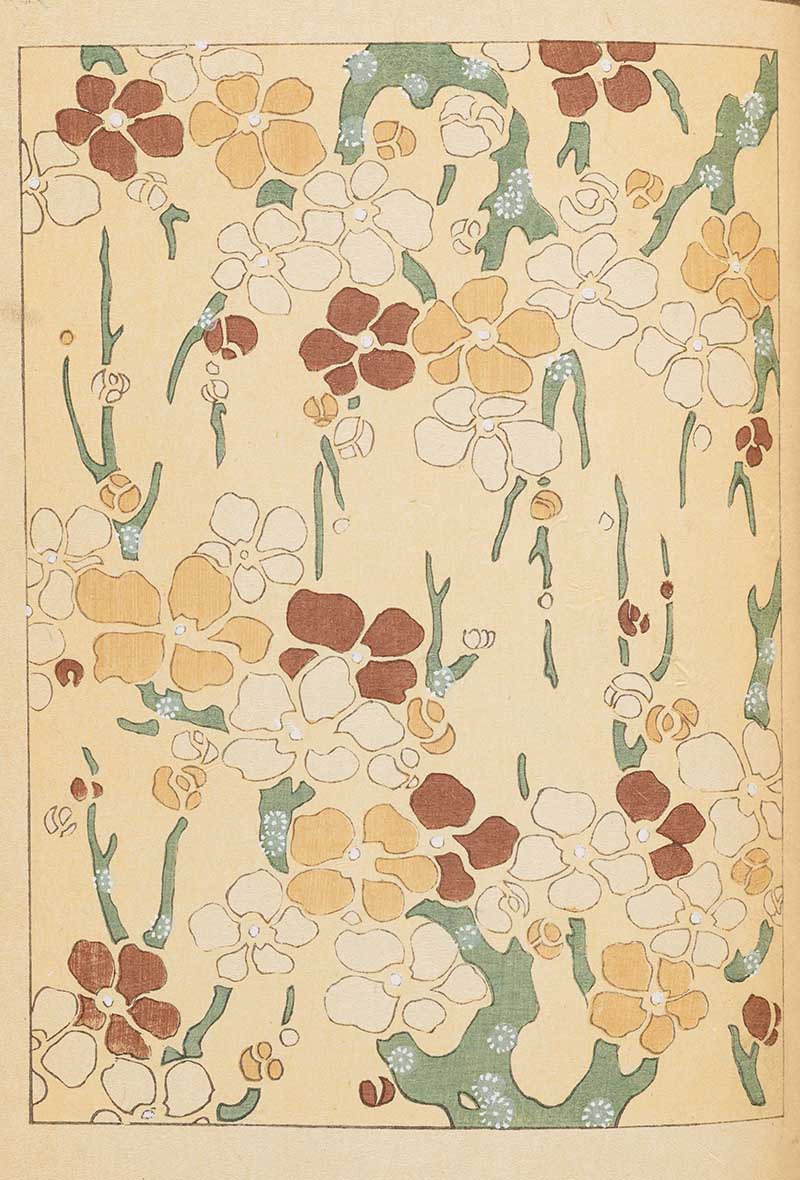
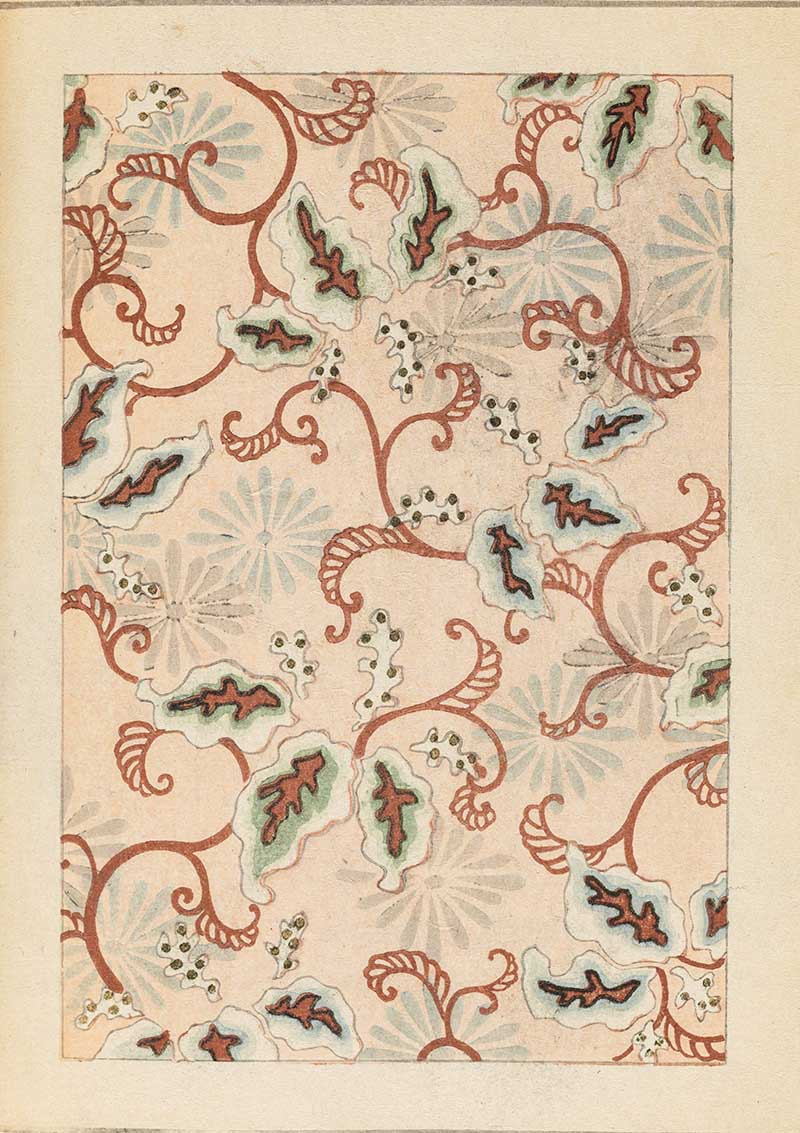
Print 65: Flower and Leaves on Orange
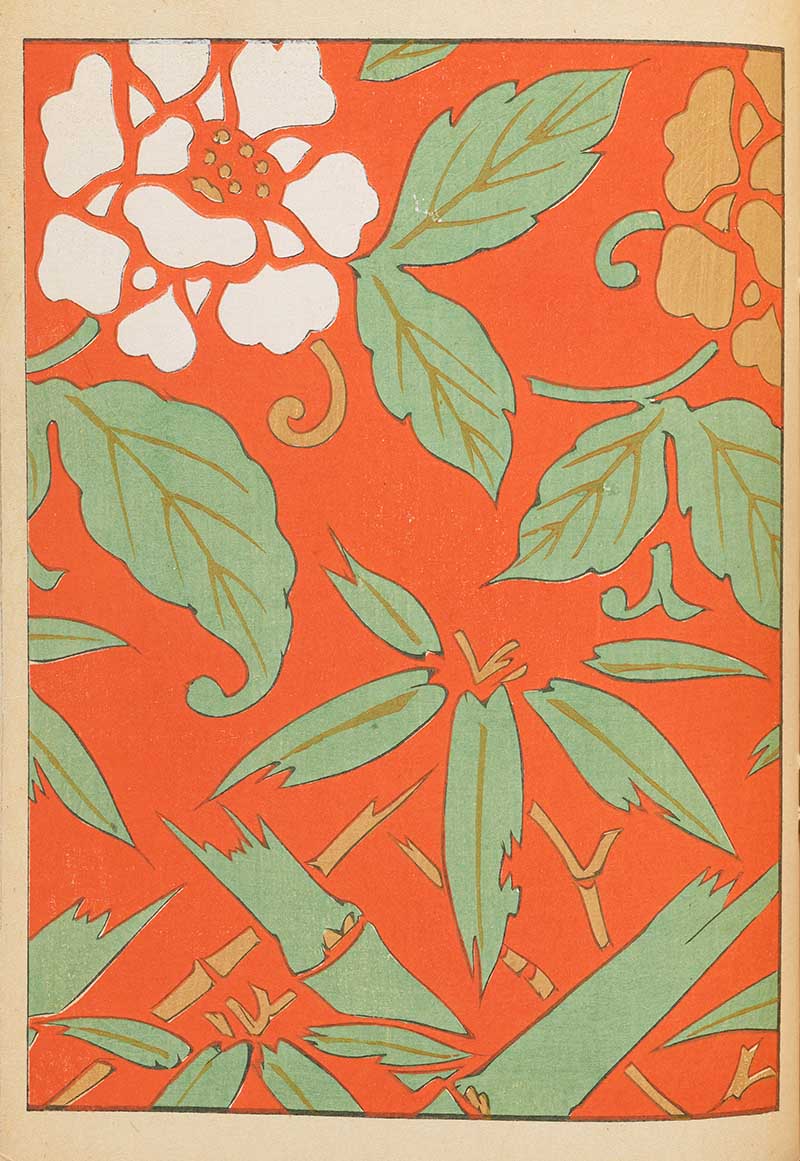
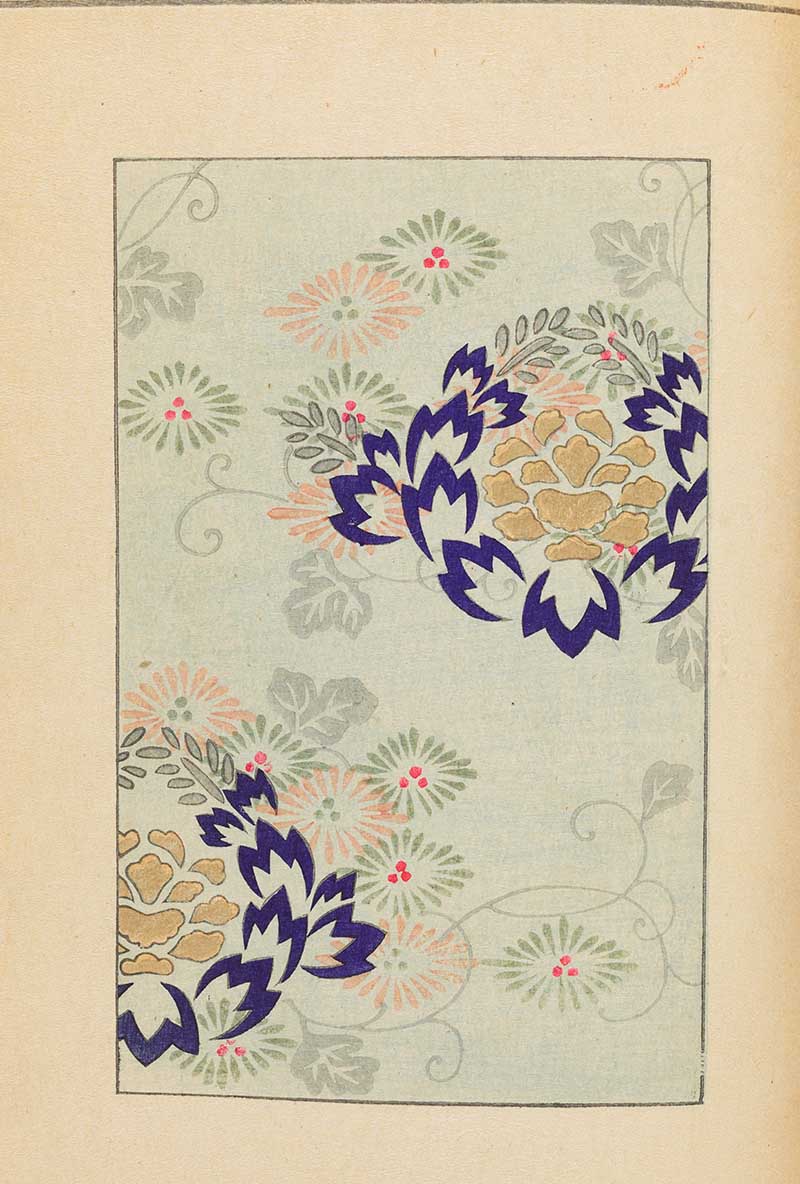
Print 66: Blue and White Flower
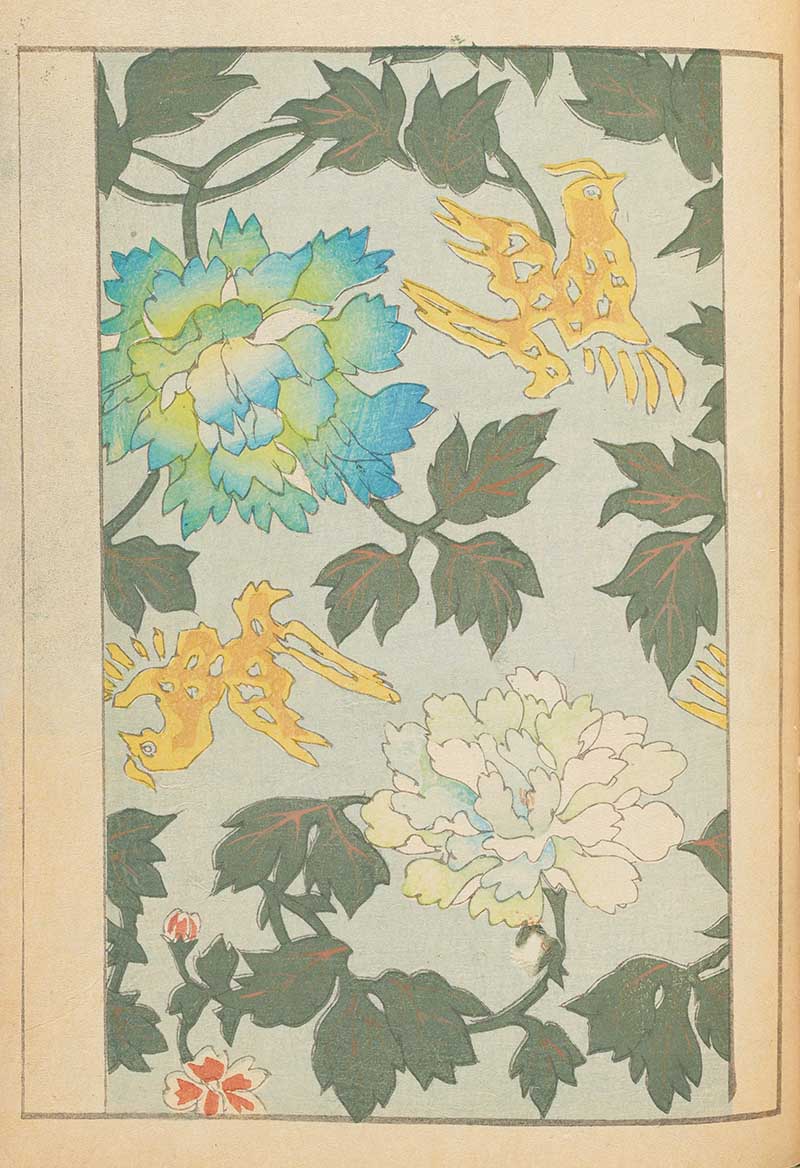
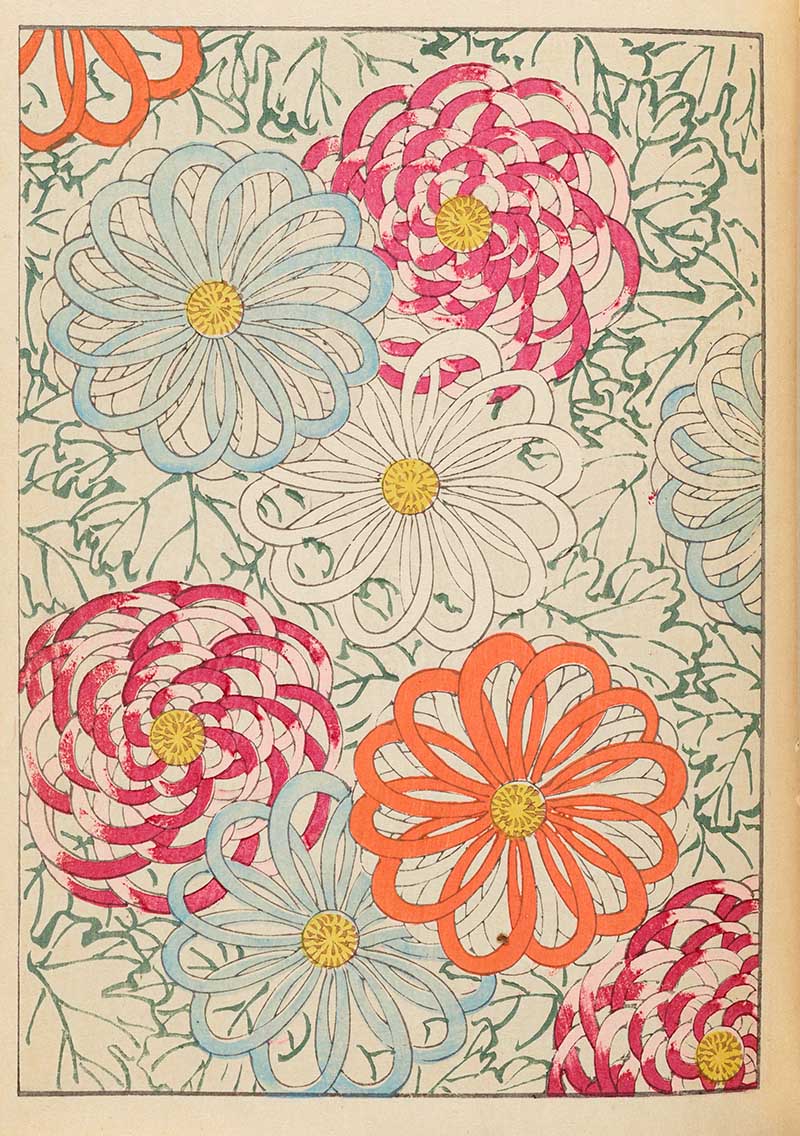
Plate 67: Various Large Flowers
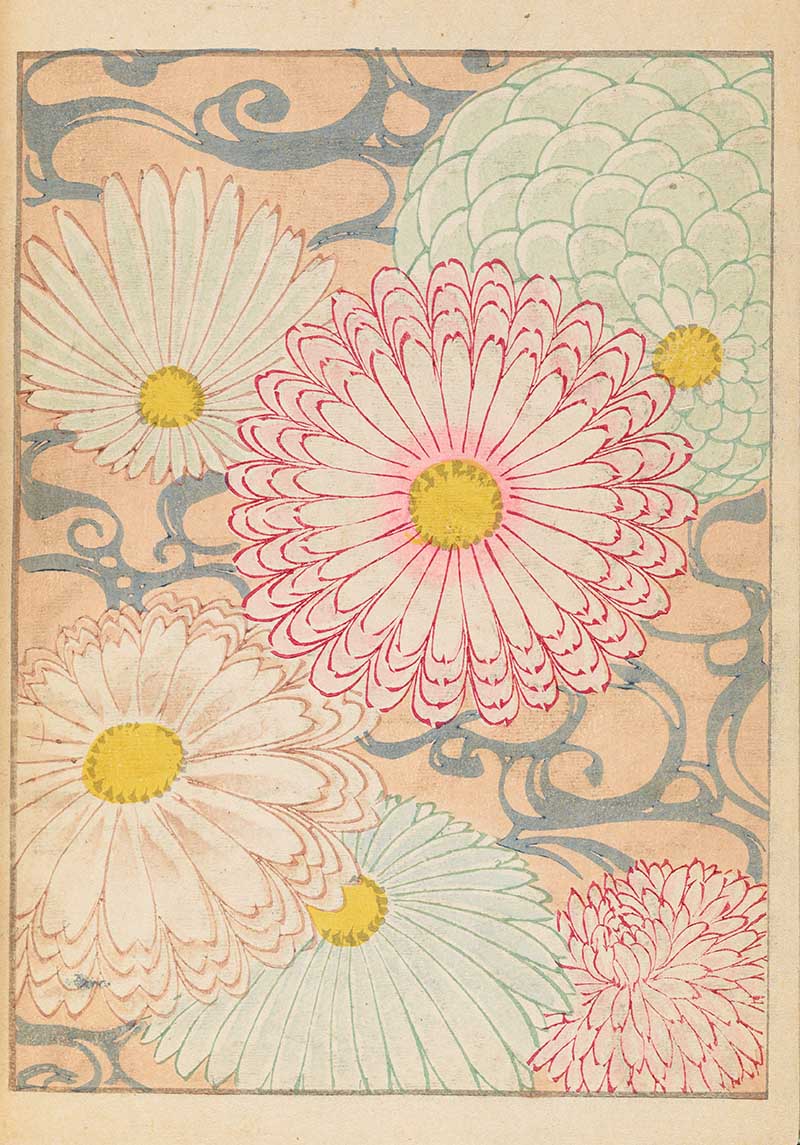
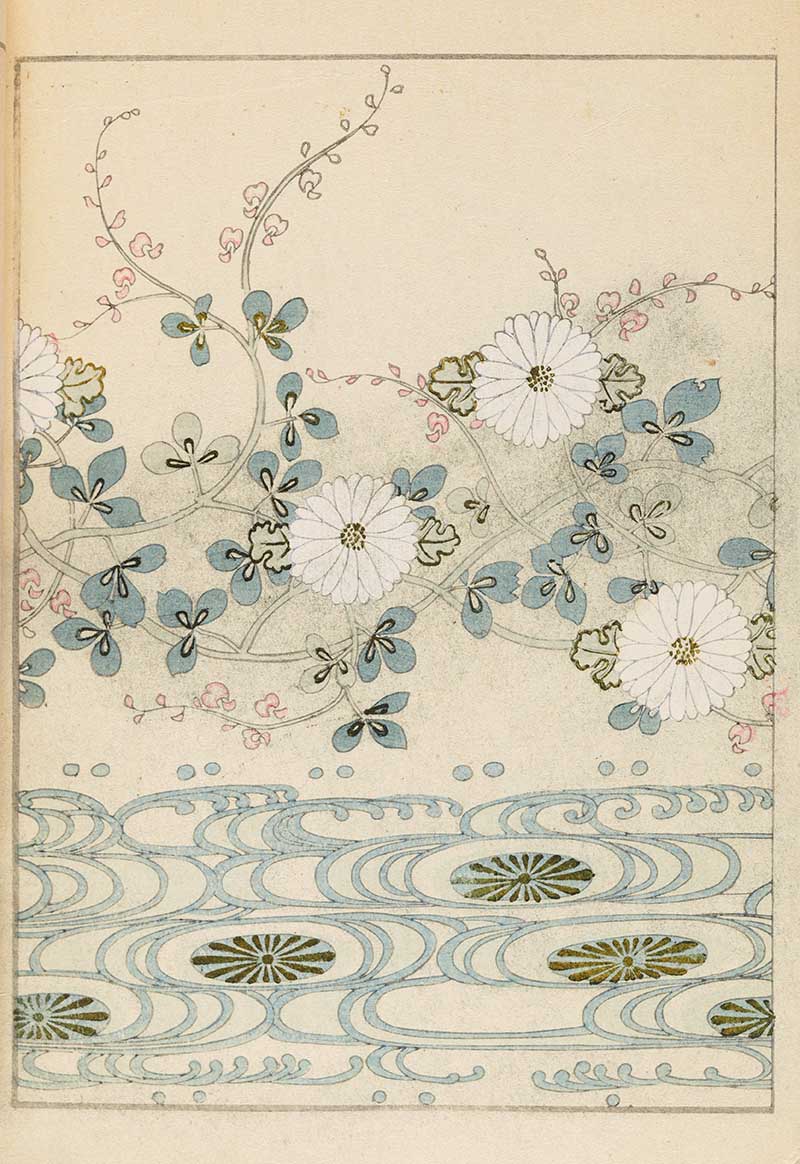
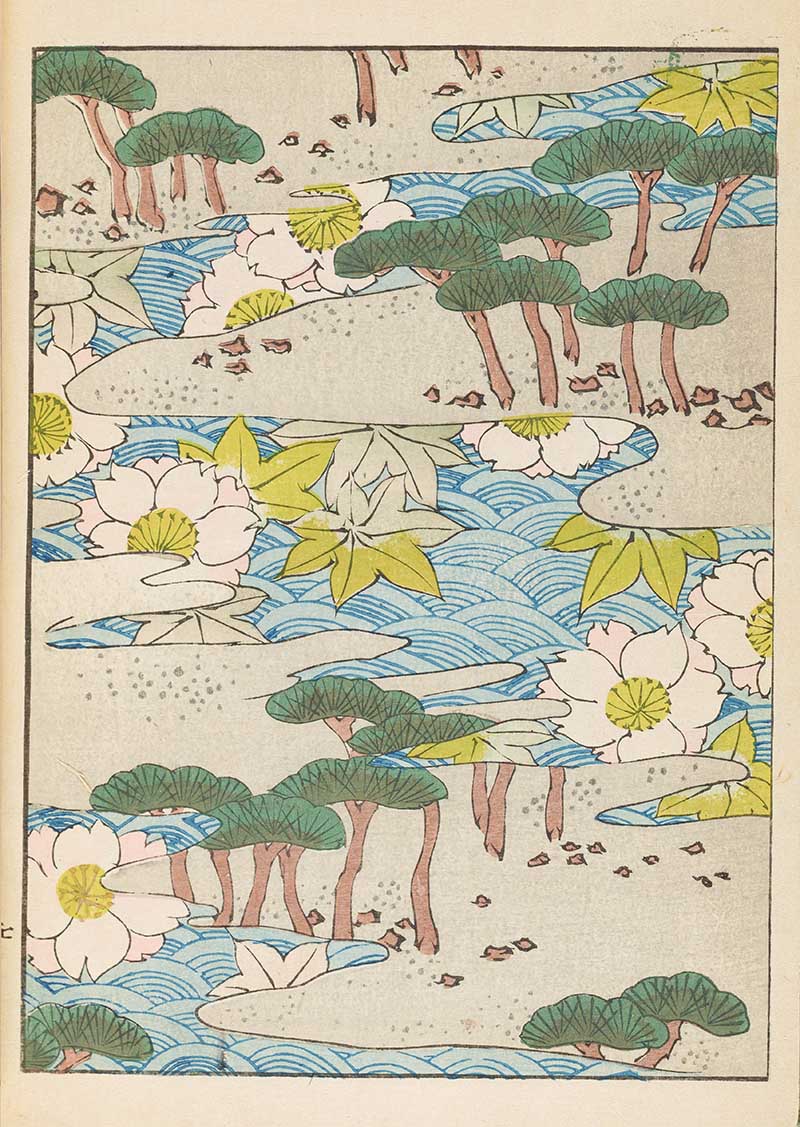
Print 69: River, Flowers and Trees
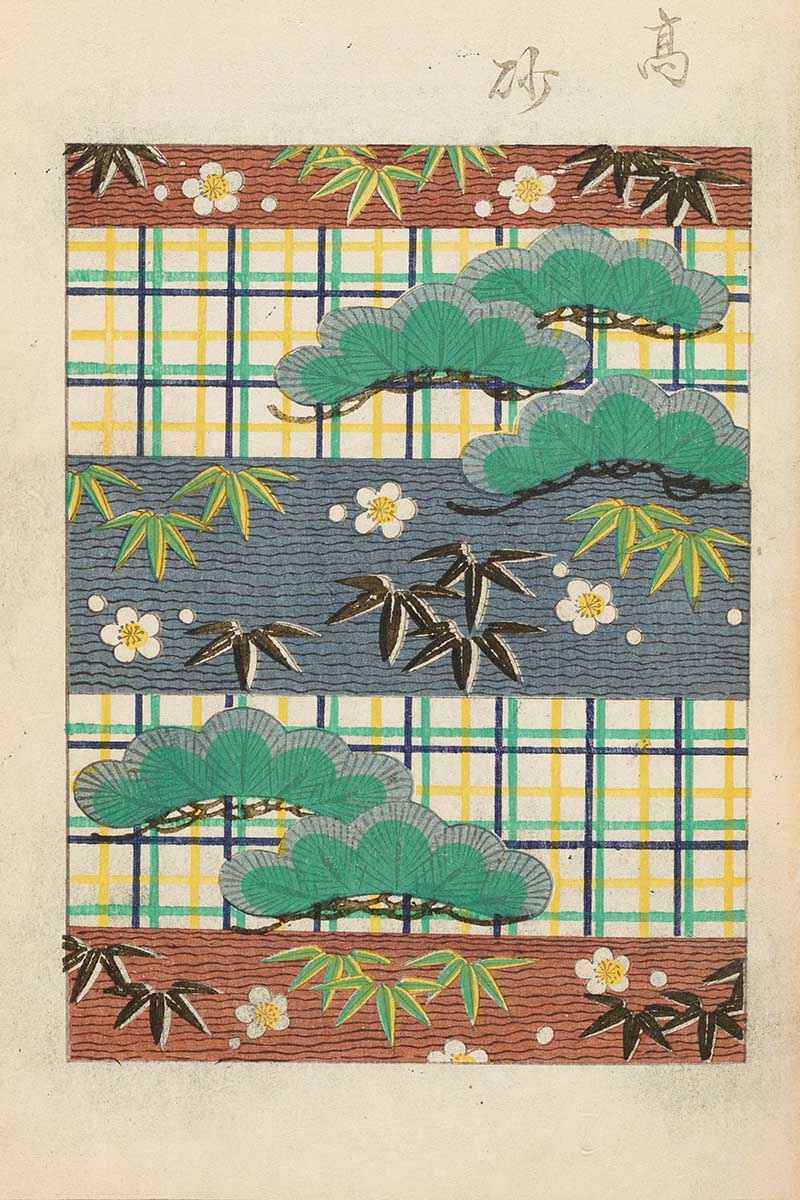
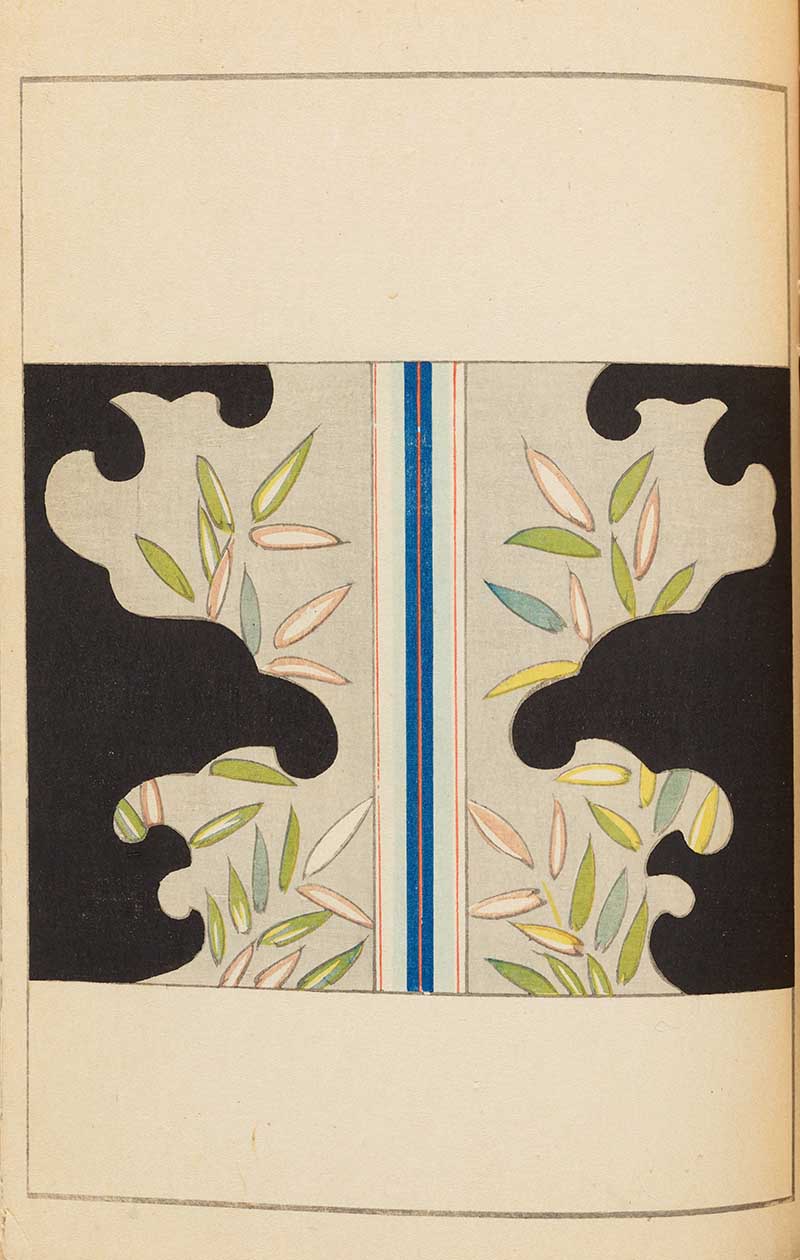
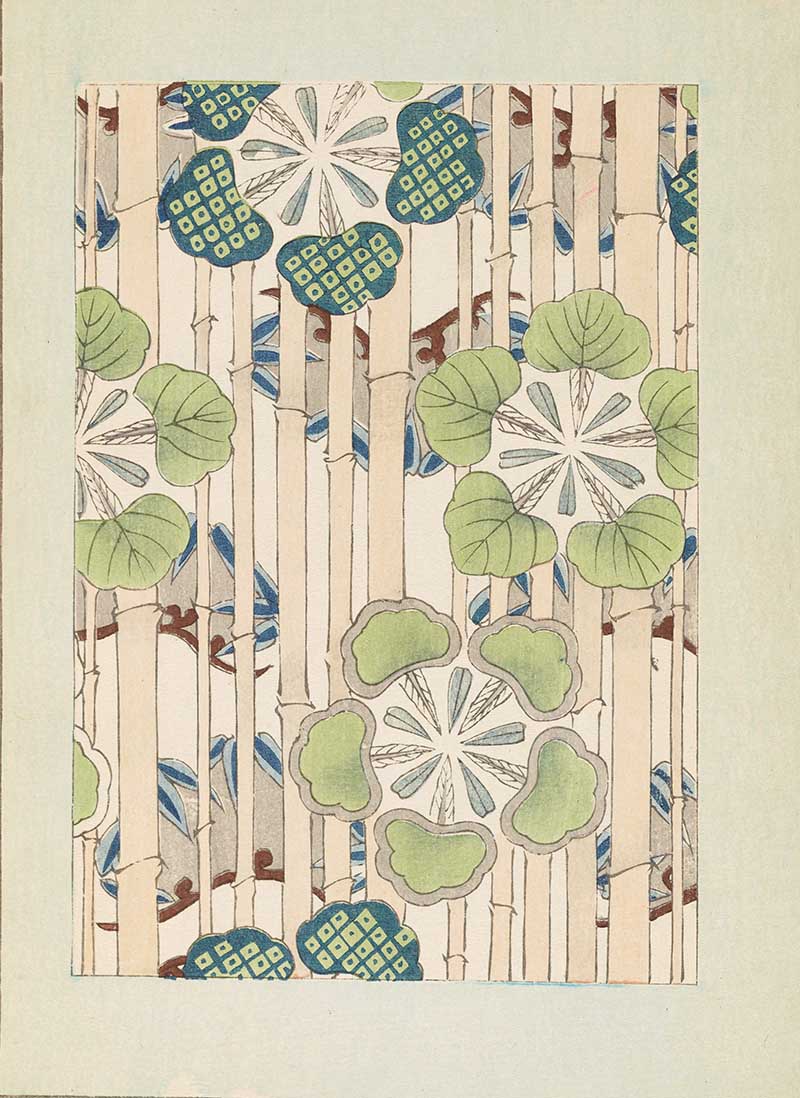
Bamboo, or take, is a staple in Japanese design, symbolising strength, resilience, and flexibility. Its tall, straight stalks and simple leaves make a clean, graphic pattern. It was often paired with seasonal flowers or birds to add balance and harmony.
Conclusion
The 1901–1902 Shin Bijutsukai prints are a wonderful mix of tradition and innovation, classic Japanese motifs given a fresh, graphic twist during the Meiji era. They’re proof of how timeless good design can be.
If you’d like to see more, have a look at the Watanabe Seitei prints for their delicate detail, the Japanese nature charts for scientific beauty, and the Utagawa Kuniyoshi prints for bold storytelling.
For a different take on decorative art, the William Morris designs and patterns are a perfect companion, two worlds of design united by a shared love of nature and craftsmanship.
If you fancy, you can Buy Me A Coffee Here.



Glorious!
I am apparently the recipient of a small unexpected bequest! I am going to buy myself an Epson EcoTank printer and can't wait to be able to print colour copies. The prints you find will probably empty my tank in a couple of weeks!
Thanks to you for your sleuthing and to my aunt for her generosity. I am sure she will be very happy with my purchase!
Thank you, there is plenty to choose from on the site with more to come! I'm sure you'll find much to print.