
A striking collection of vintage human skull drawings, where science and art intersect. These detailed illustrations, sourced from antique anatomy books and historical artworks, are available for free download and use in your own creative projects or as decorative elements.
The human skull has long fascinated artists and scientists alike. There’s something both haunting and beautiful about its structure. The foundation of every face, a symbol of mortality, and a recurring subject in art through the centuries.
This post brings together a collection of vintage skull drawings and studies from old anatomy books and classic art publications. Each image is in the public domain and is available for free high-resolution download. Whether you’re looking for anatomical accuracy, inspiration for an art project, or enjoy historical illustration, you’ll find something intriguing here.
Why Skull Imagery Endures
The skull is one of the most recognisable symbols in human culture. It represents death, knowledge, and the passage of time. Across centuries and cultures, it has been featured in scientific illustrations, religious art, and design, from Renaissance studies of anatomy to 19th-century medical diagrams and 20th-century fine art.
Part of the fascination lies in contrast. The skull is both universal and personal, clinical and emotional, a reminder of our shared humanity.
If you’re working on a themed project, you may also enjoy my vintage skeleton illustrations or spooky Halloween illustrations for more striking and unusual imagery.
I created an entertaining, illuminated, and spooky Halloween skull decoration using one of the skulls from this collection. There is also a skull in this Halloween patent print collection.
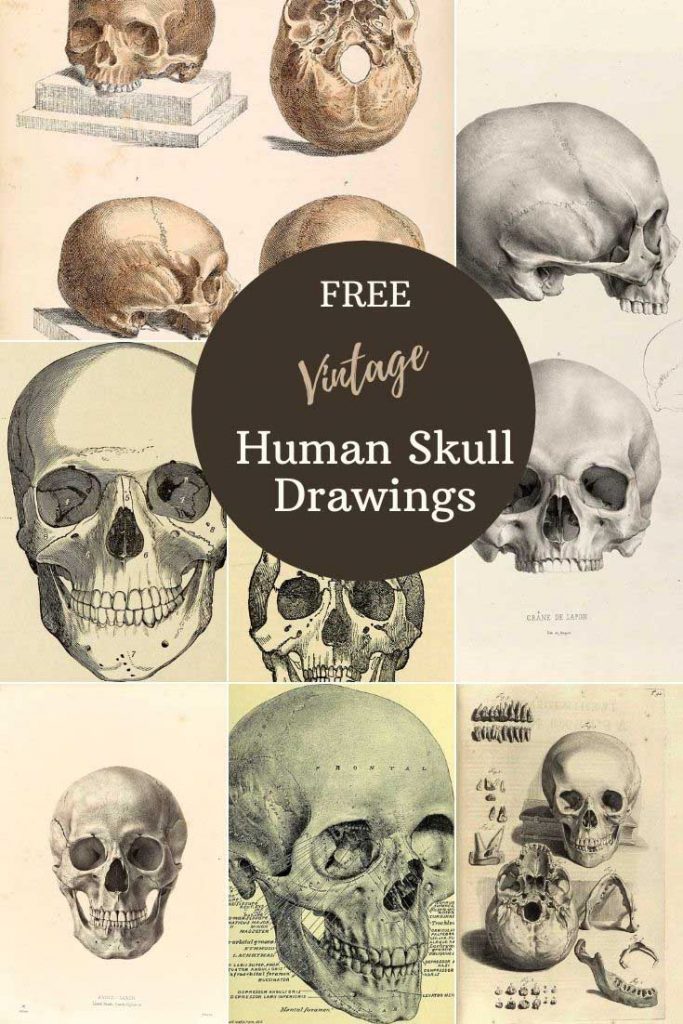
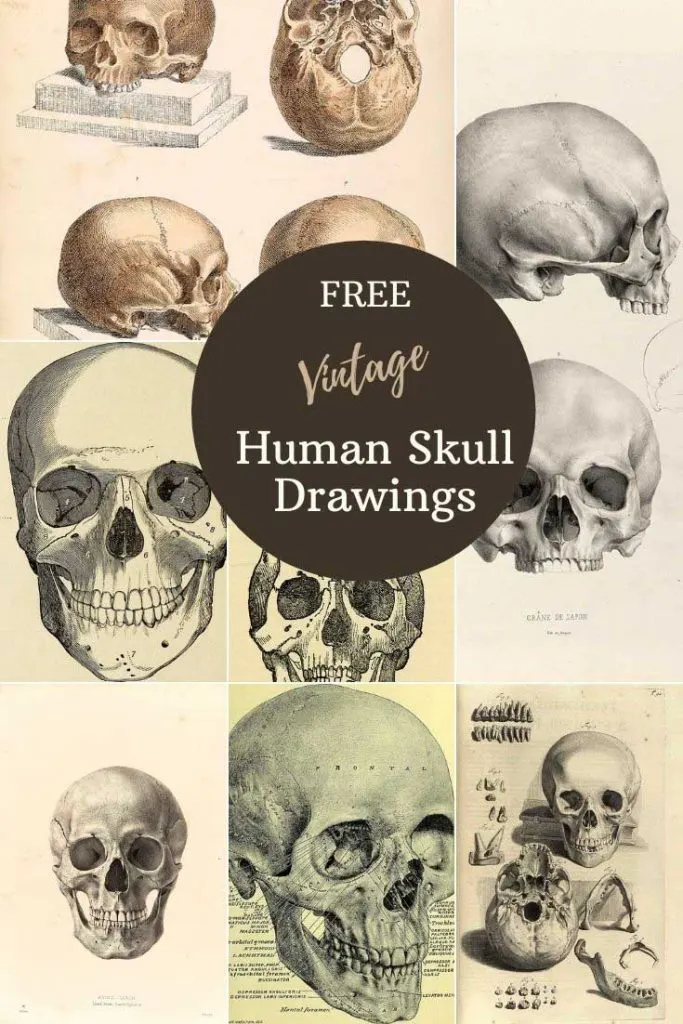
Fascinating Facts About the Human Skull
The human skull is the bone structure of the head, comprising the cranium and mandible. The skull’s primary purpose is to protect the brain.
Looking at the human skull drawings, it can also be seen that the skull also has the function of fixing the distance between the eyes and ears. This allows humans to have a stereoscopic vision and sound localisation, respectively.
- Even though it may look like one big bone, there are actually 22 bones in an adult human skull. Some of these bones are labelled in the vintage human skull drawings below.
- The skull is not only made up of bones, but also cartilage and ligaments.
- There is only one movable bone in the skull, which is the jawbone (mandible).
- Male skulls are heavier, larger, and thicker than female skulls.
- The skull of a female is rounded and has a less protruding mandible.
- The most enormous hole in the skull is found in the area of the vertebral column that joins the skull’s base.
- An average of 785 pounds is needed to crush a human skull.
- The shape and size of the skull vary significantly among different ethnic groups.
The Free Vintage Human Skull Drawings
Click on the title above the human skull drawing you want to download. A higher resolution image will open in a new tab in your browser. You can then print or save that image. All these drawings are in the Public Domain, so you are free to print and use them as you wish.
Human Skull Illustrations 1-10
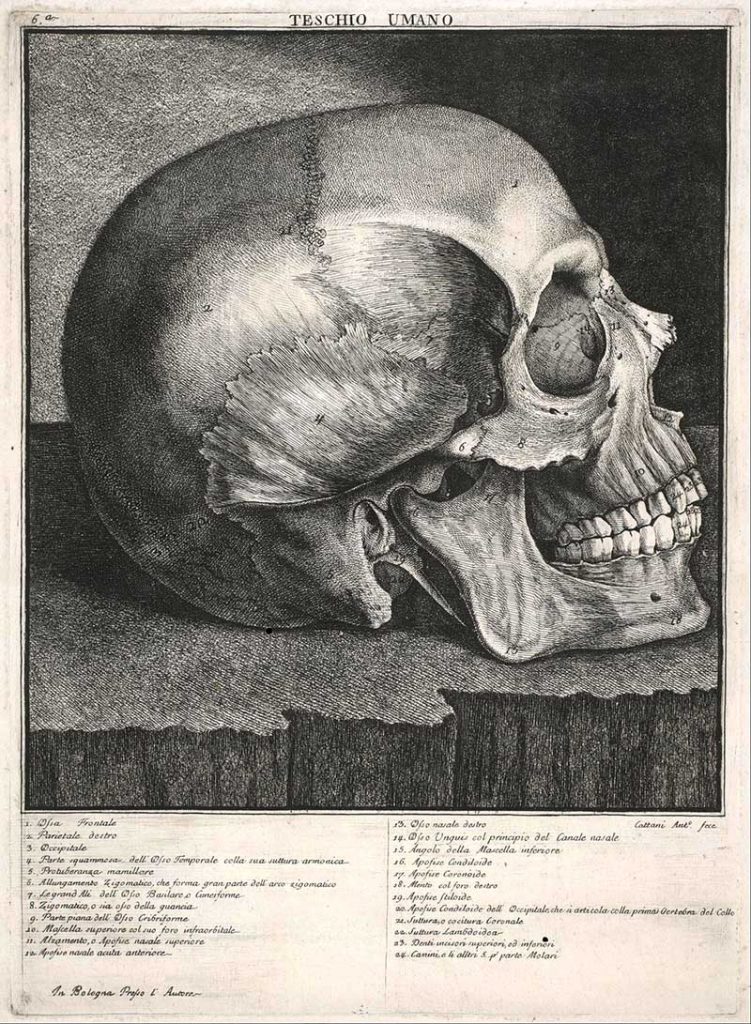
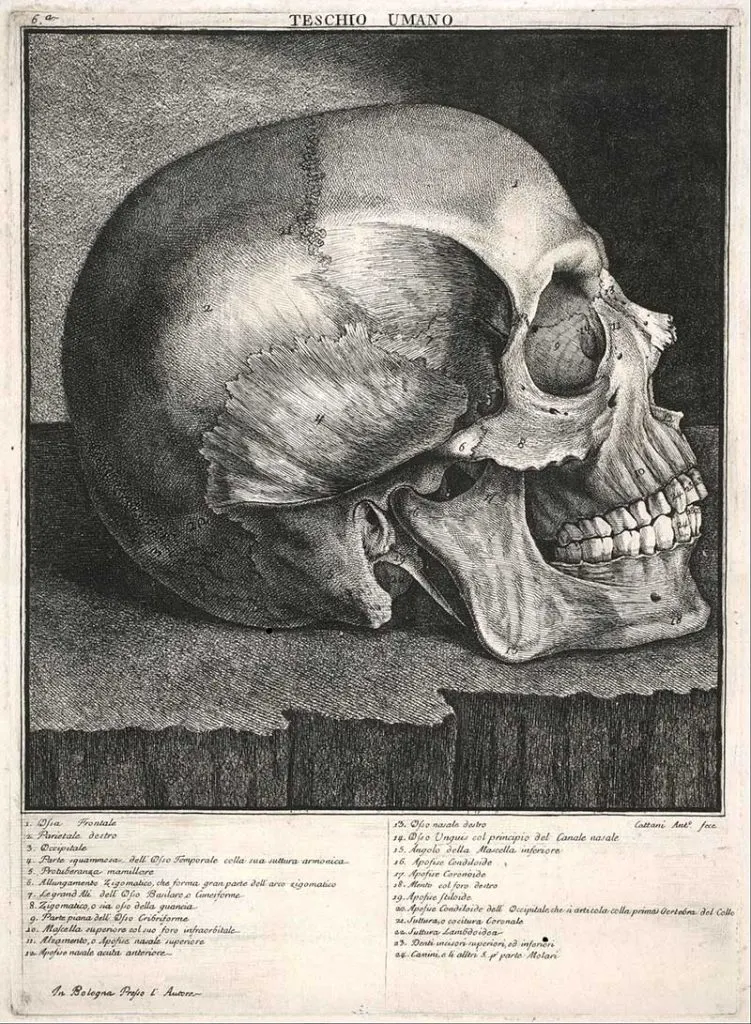
1. Teschio Umano _Antonio_Cattani
I know very little about this human skull drawing, except that it is dated 1780 and is part of the Museum of Fine Arts, Houston’s collection.
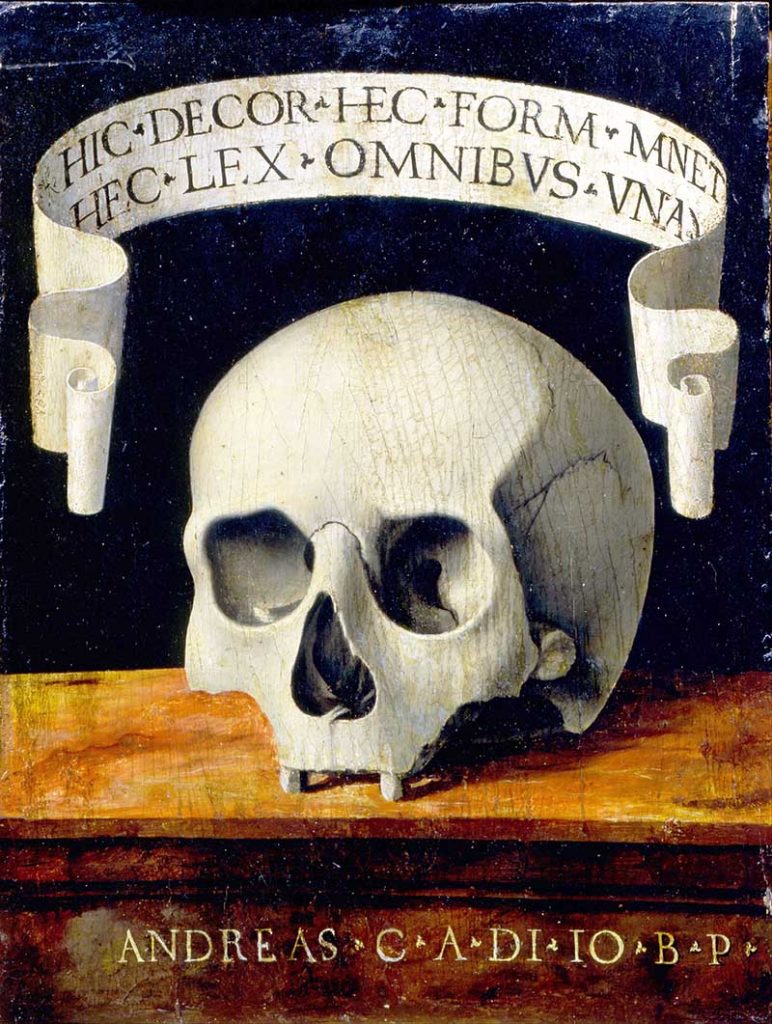
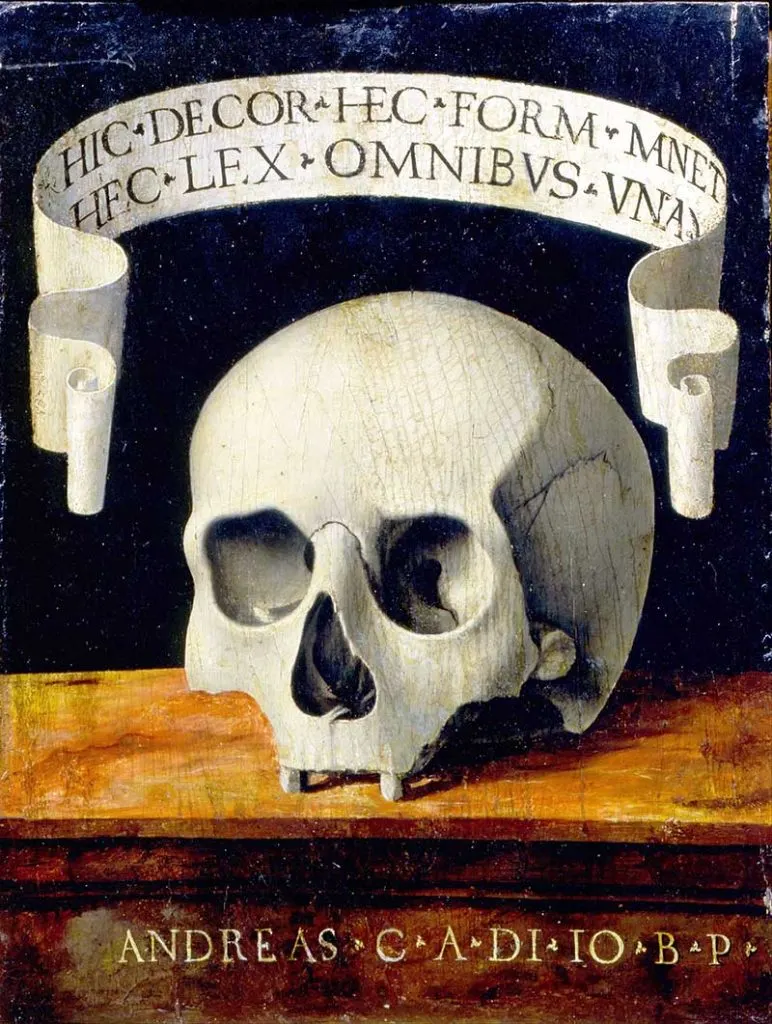
This human skull art was actually painted on the back of a painting called “A Portrait of a Man.” The painting was created by the Italian Renaissance painter Andrea Previtali, also known as Cordeliaghi (1510).
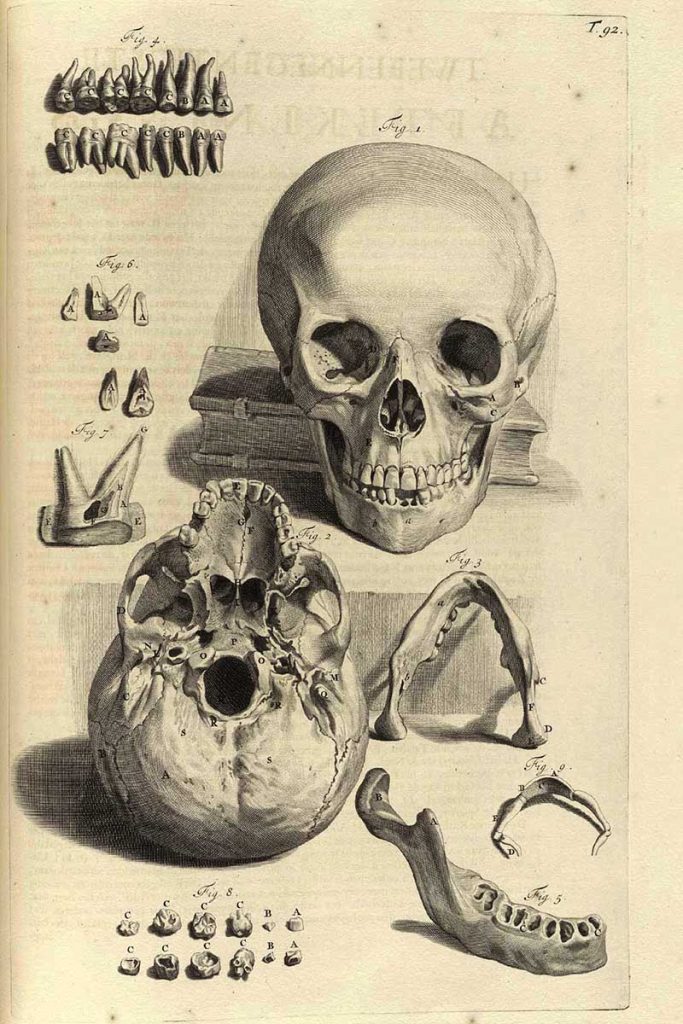
3. Bidloo Ontleding – Human Skull Drawing
This anatomical drawing of the human skull is from a Dutch-language edition of the Anatomy book, Anatomia humani corporis, published in 1685.
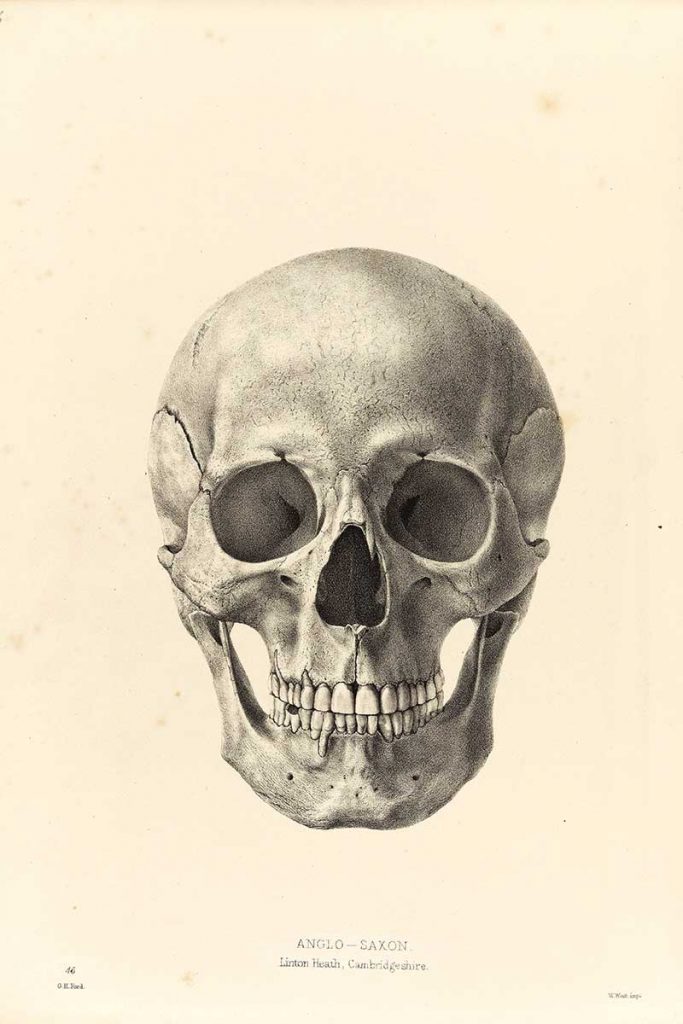
Drawing of a human skull, facing forwards from the Wellcome Library Collection.
The image depicts a drawing of a skull facing forward. Plate 46, Volume II
1865 Crania Britannica: with notices of their other remains by Joseph Barnard Davis.
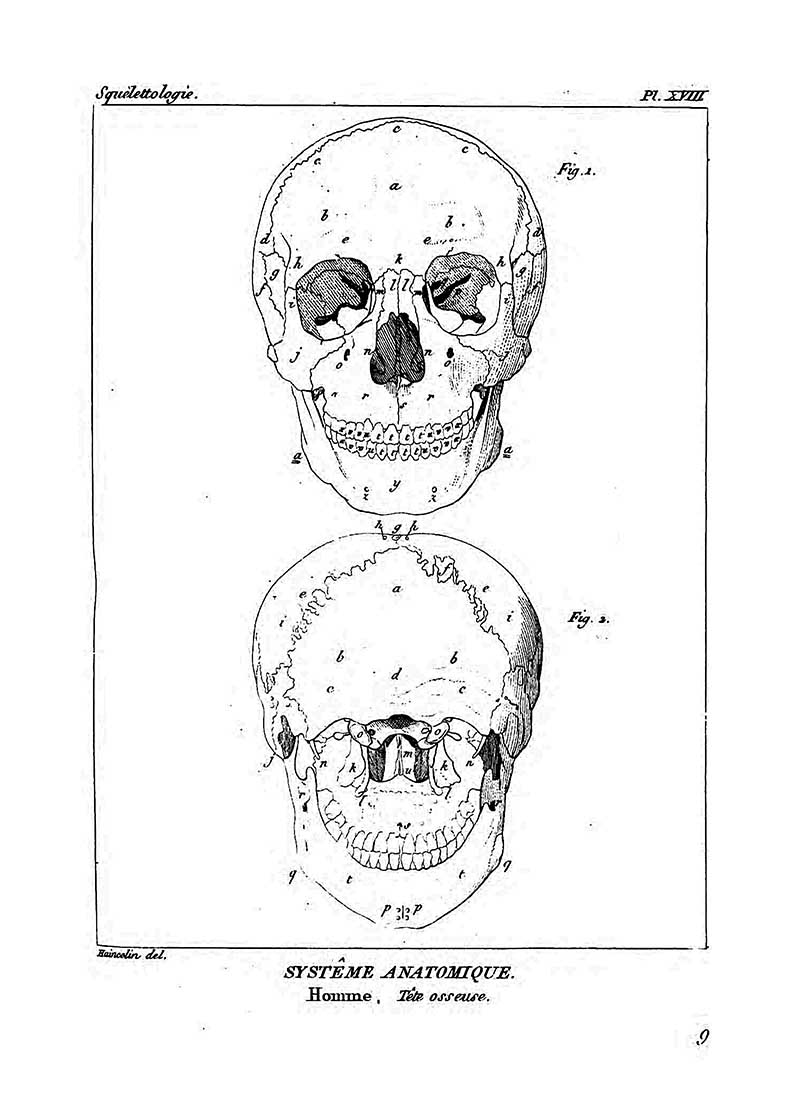
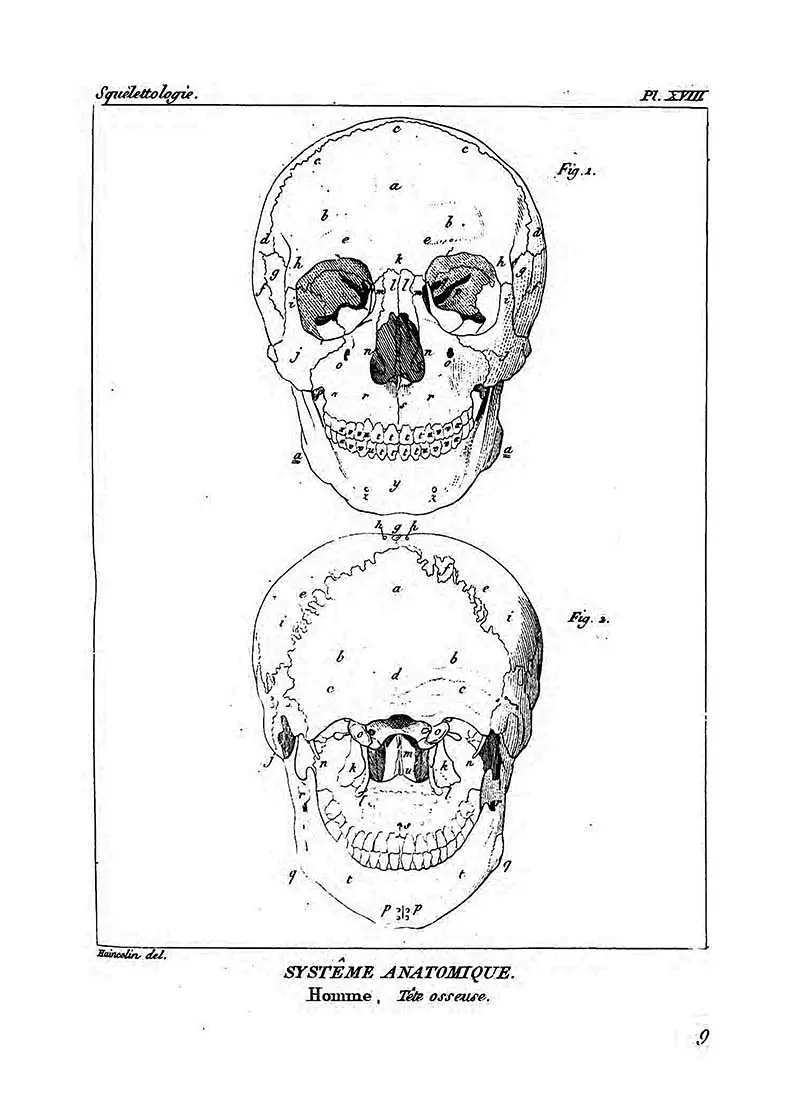
5. Front & Back Anatomical Skull
This anatomical drawing of the front and back of the human skull is from a French medical encyclopedia from 1792, “Encyclopédie Méthodique– Système Anatomique”.
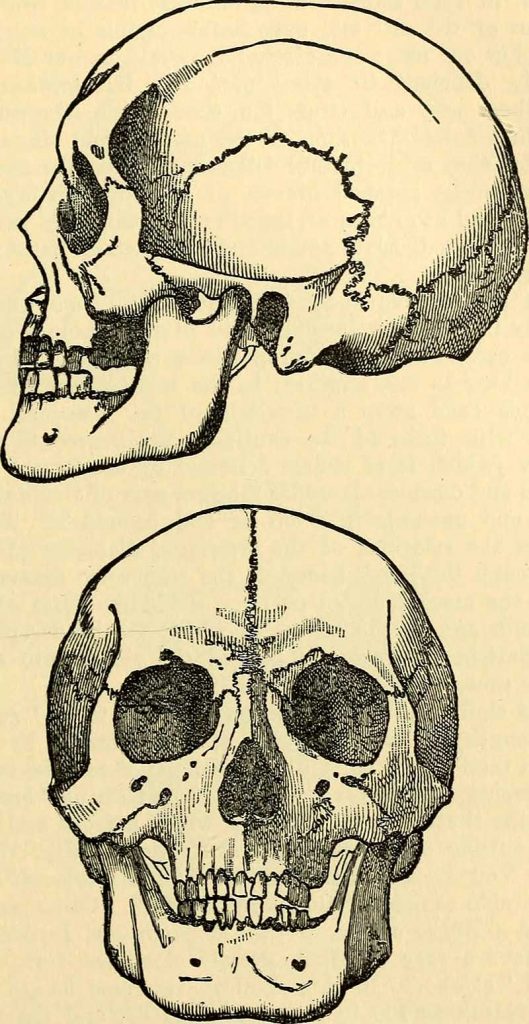
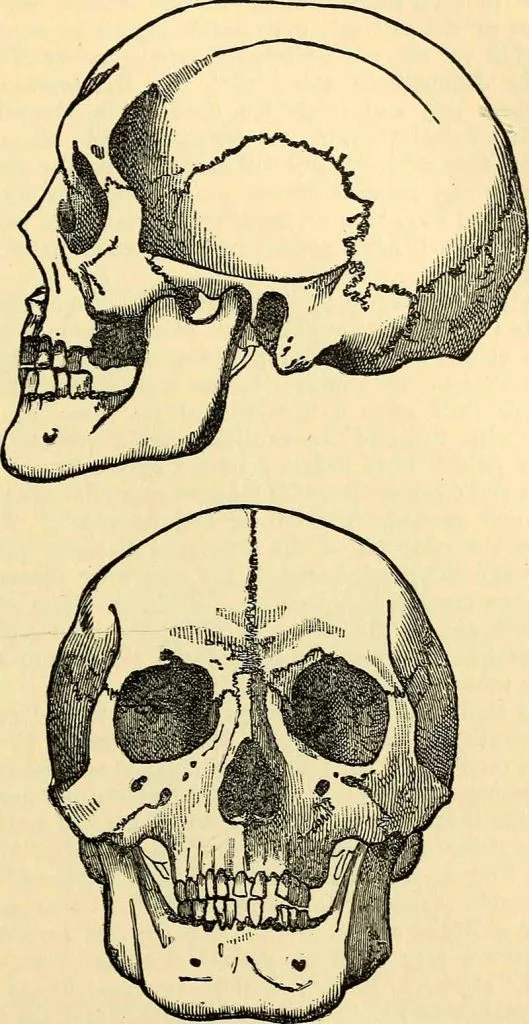
This anatomical illustration of the Human Skull is from “Man’s place in nature, and other anthropological essays” (1890) by Thomas Henry Huxley.
Huxley was an English anthropologist specialising in comparative anatomy. He is known as “Darwin’s Bulldog” for his advocacy of Charles Darwin‘s theory of evolution.
“Human skulls have been found to differ from one another, not merely in their absolute size and in the absolute capacity of the braincase, but in the proportion which the diameters of the latter bear to one another.”
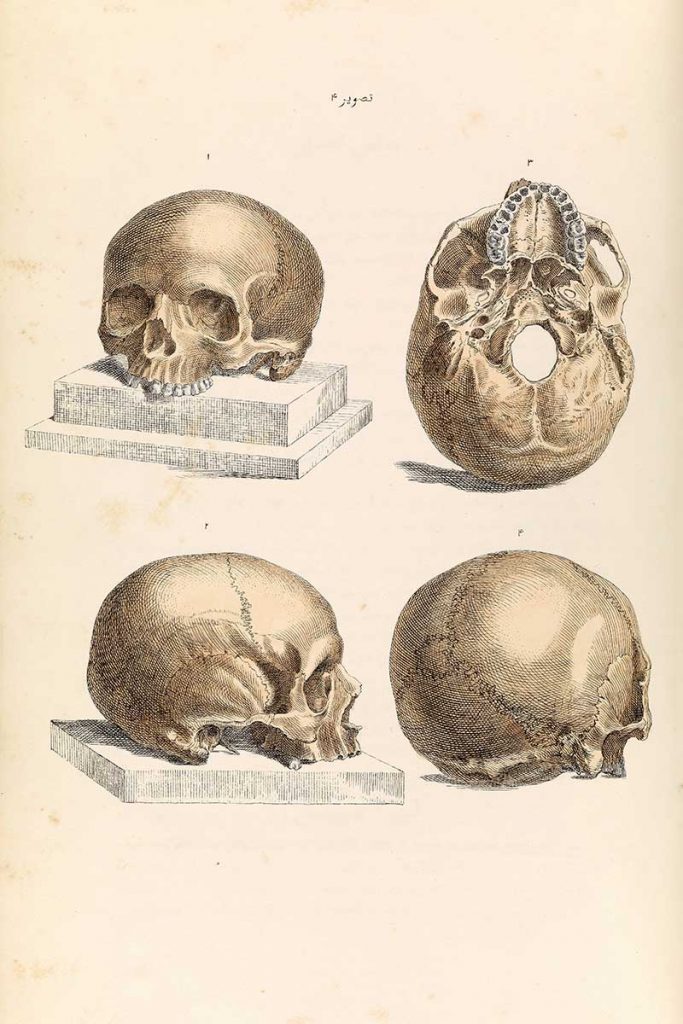
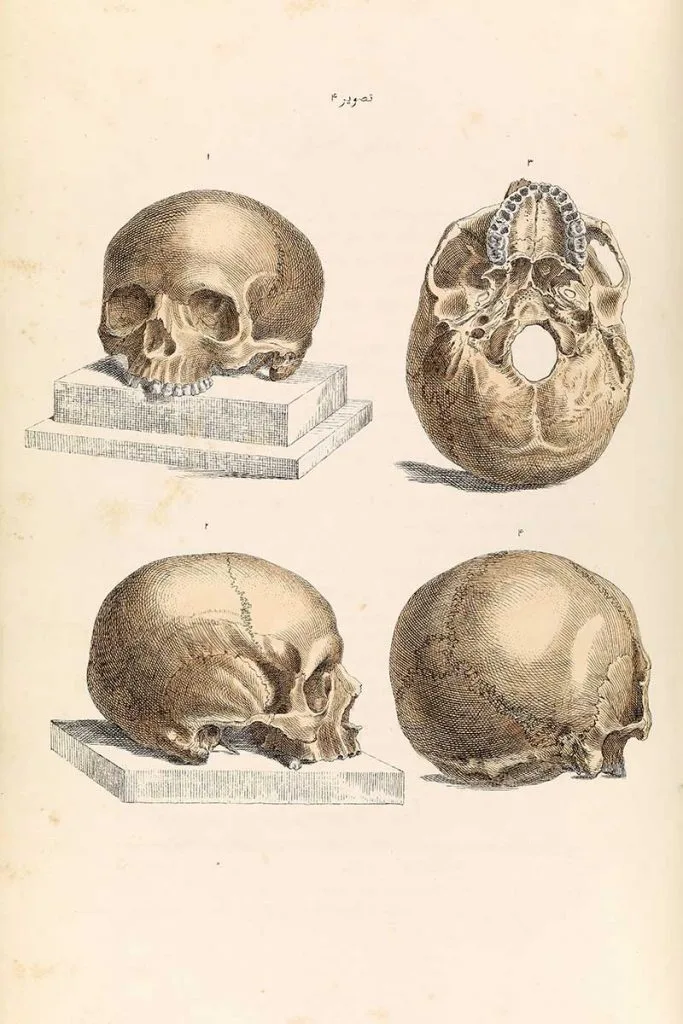
7. Cranium Drawing From Four Different Angles
This anatomical illustration of the human cranium, from four different perspectives, is also from the collection at the Wellcome Library in London.
The drawing is from “An atlas of anatomical plates of the human body” by Frederic J. Mouat (1849).
8. Skull Drawing from Practical Human Anatomy

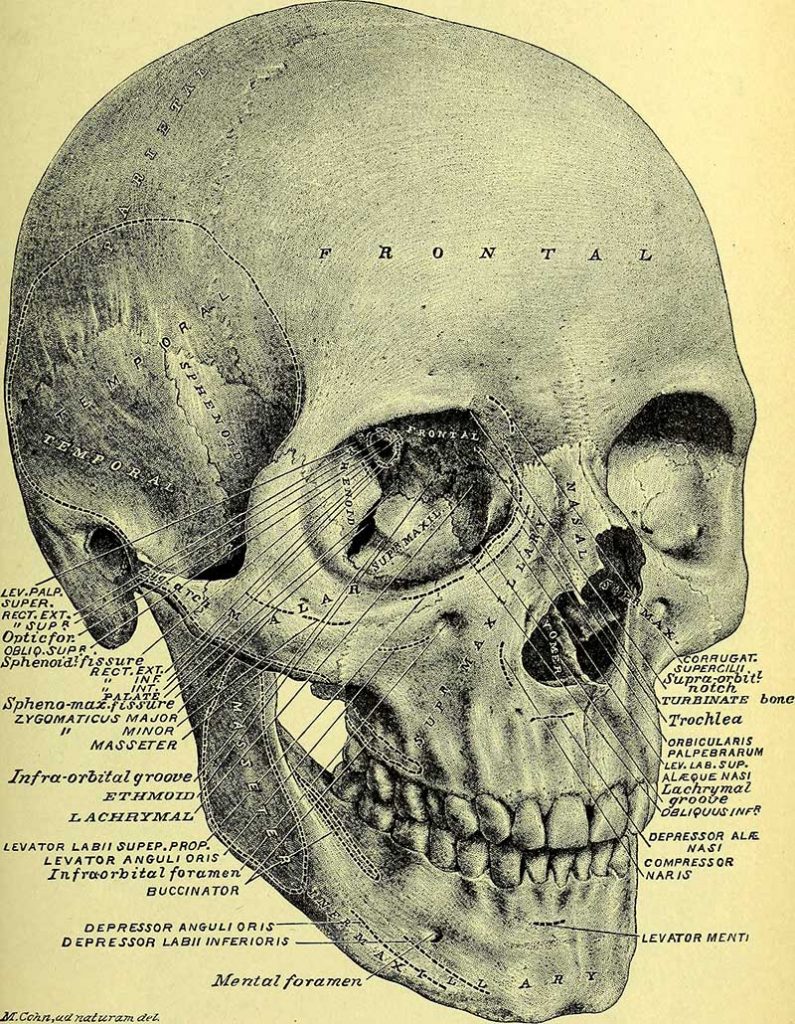
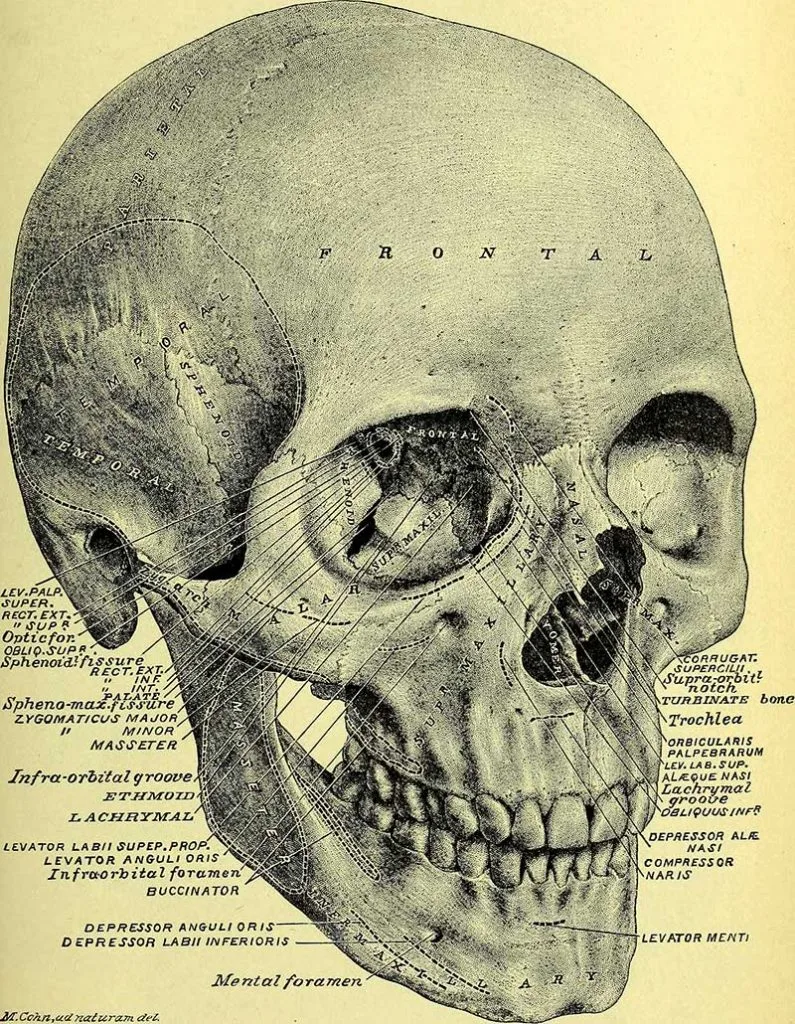
This labelled anatomical drawing is from “Practical Human Anatomy -(A working guide for students of medicine and a ready reference for surgeons and physicians” (1886).
9. Anterior view of Human Skull
Another anatomical human skull drawing from the Wellcome Library, London.
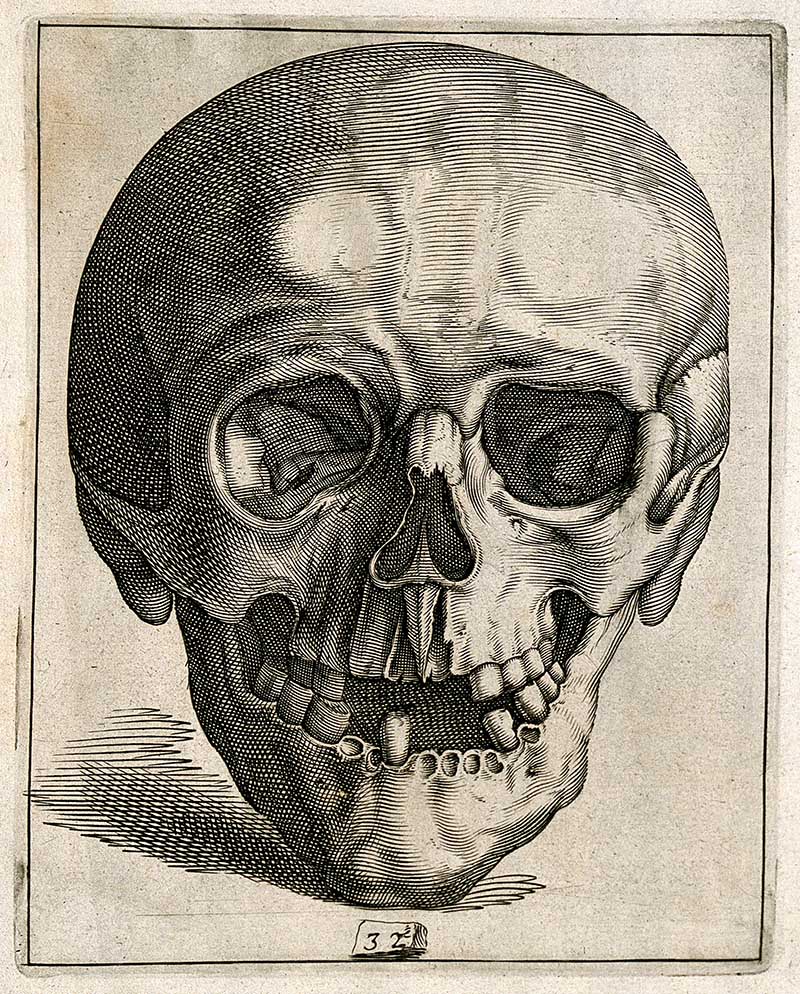
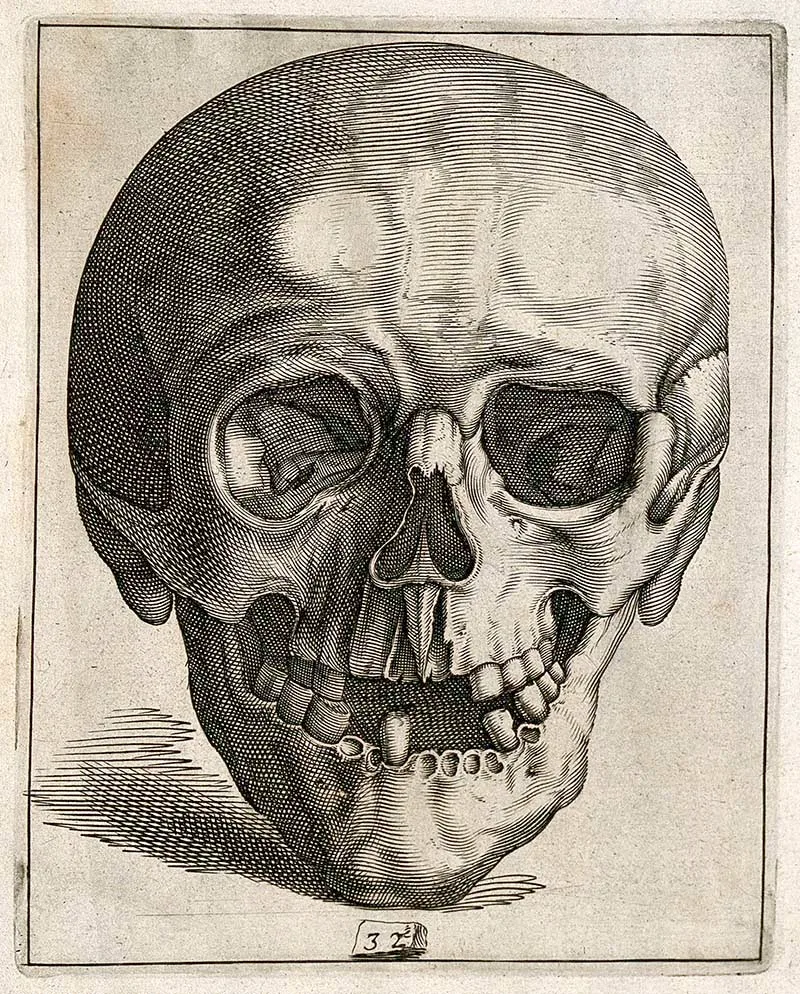
Etching by B. Bossi, 1760, from Wellcome Library, London. Wellcome Images
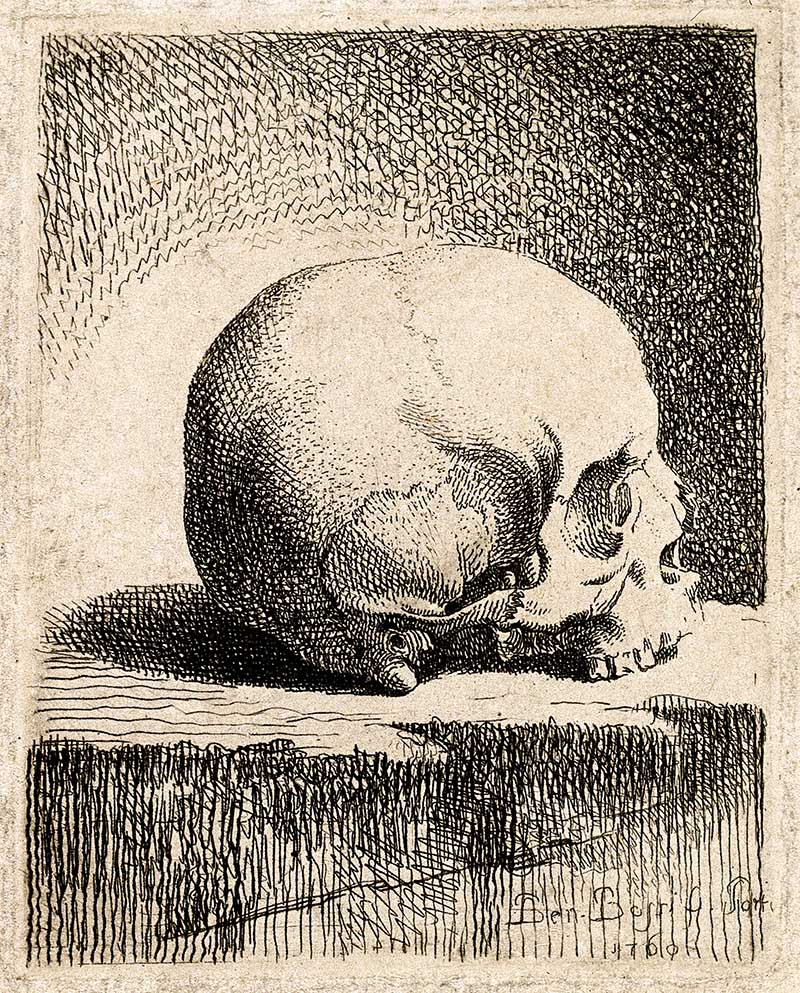
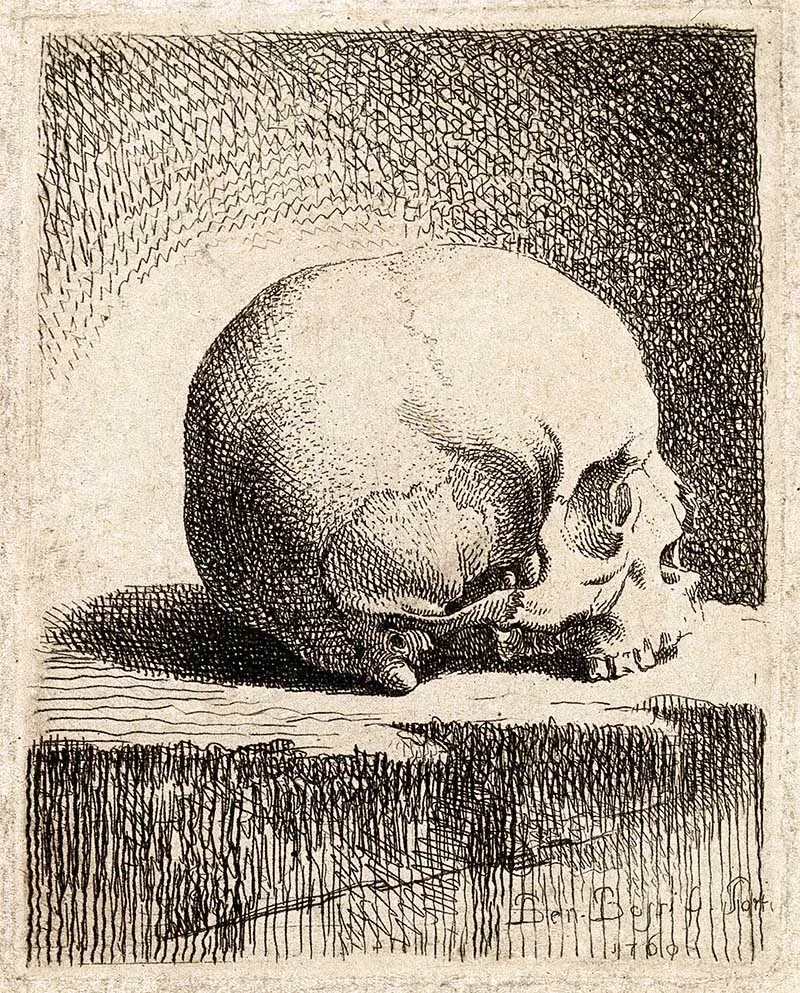
Human Skull Illustrations 11-21
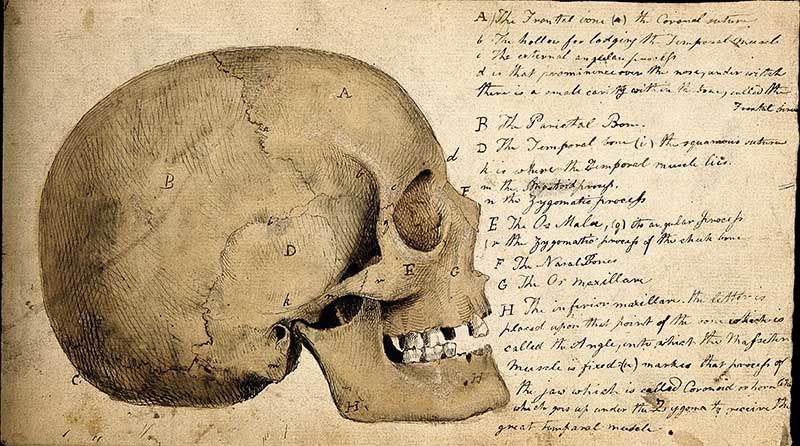
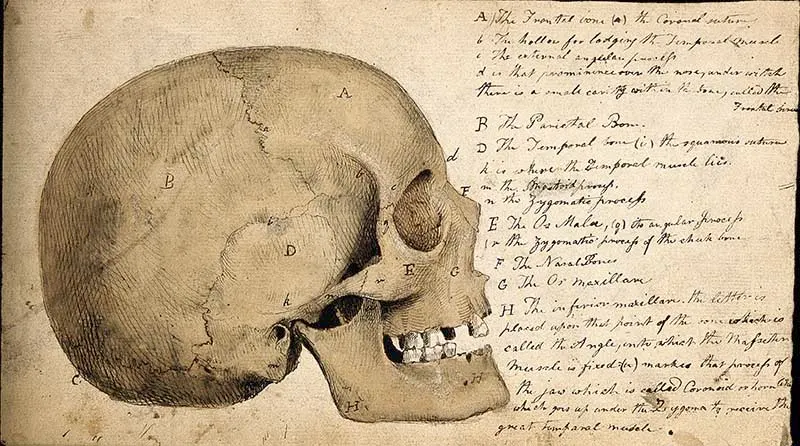
11. Side View Drawing of Skull
A pen and ink drawing of a skull with a sepia wash, by C. Landsee, 1815.
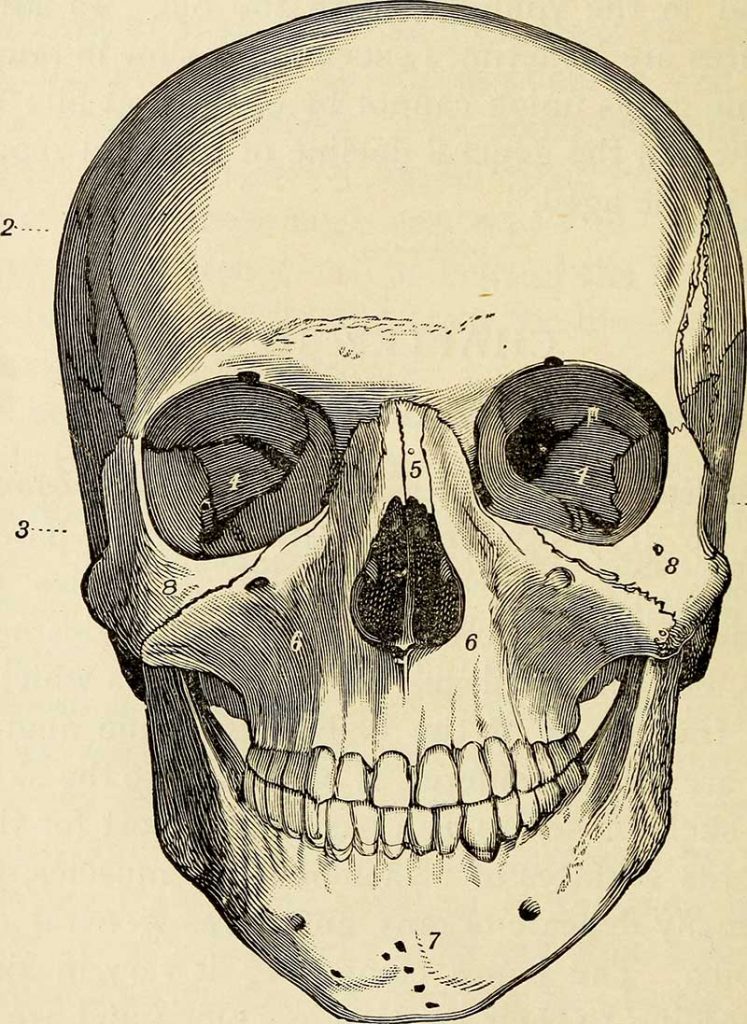
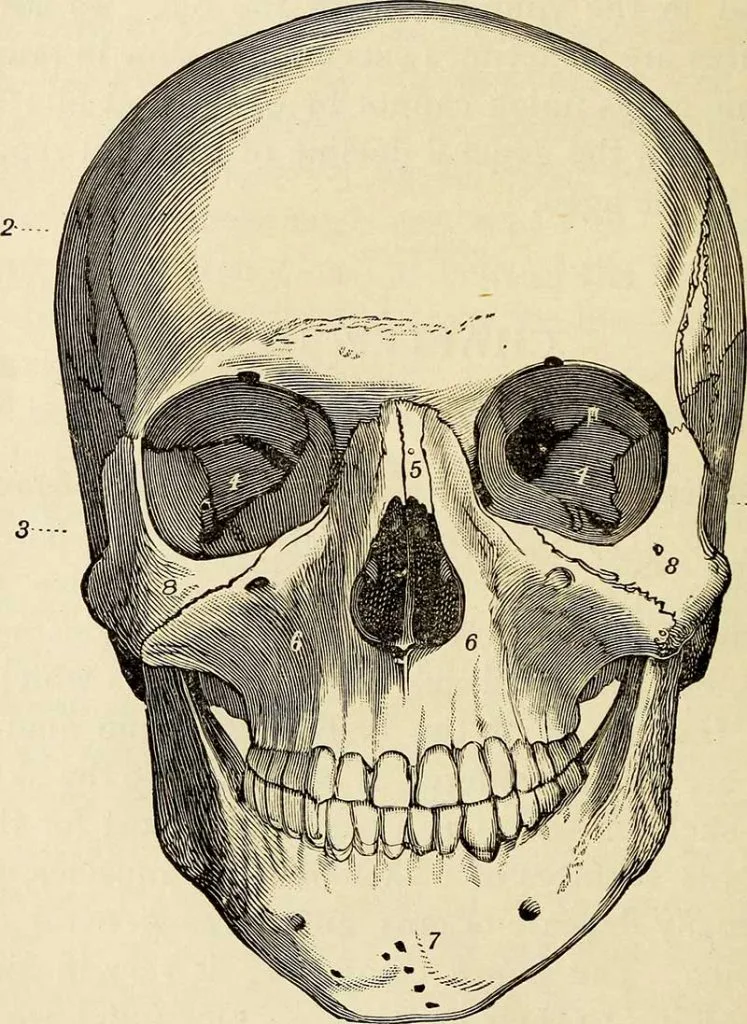
A front view illustration from “An Academic Physiology and Hygiene (1903).”
The labels on the skull bones are as follows: 1.
- frontal bone
- parietal bones
- temporal bones
- portions of the sphenoid bones, forming the backs of the orbits of the eyes;
- nasal bones
- superior maxillary bones
- inferior maxillary bone
- malar or cheekbones.
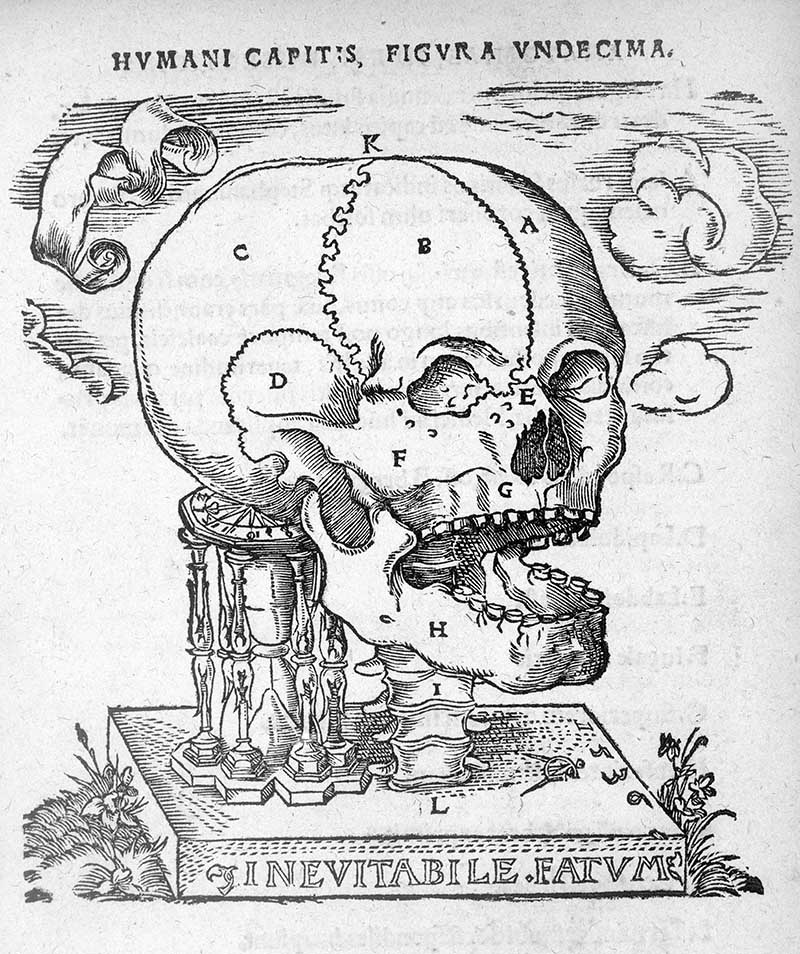
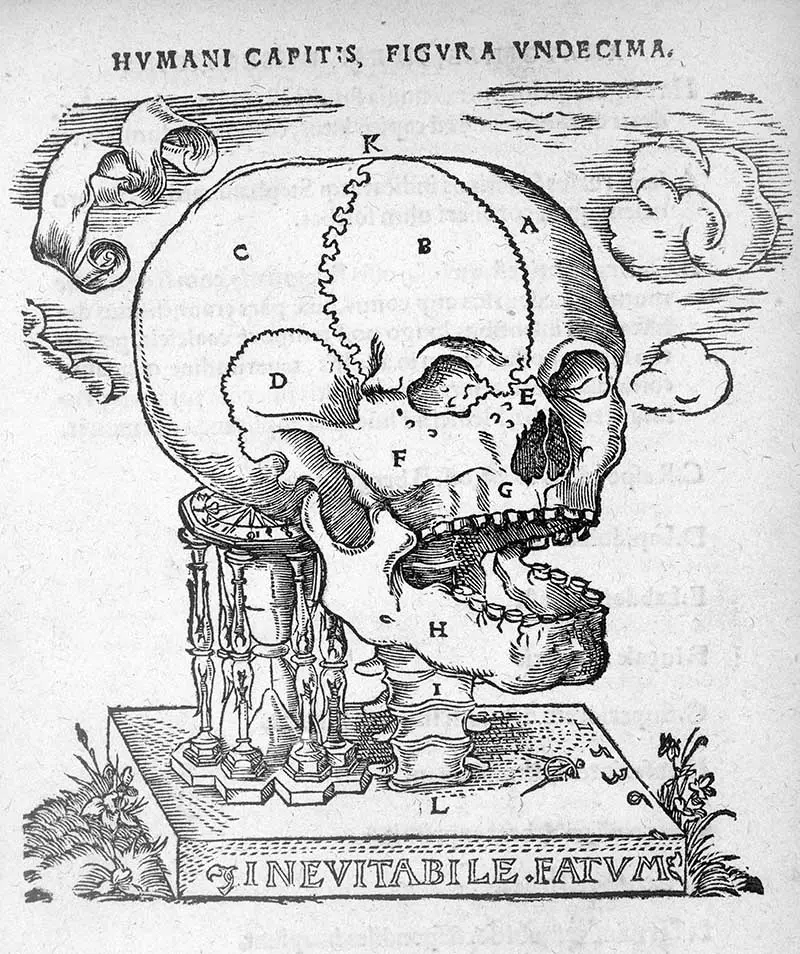
Skull and Hourglass (1537) from the Wellcome Collection, London.
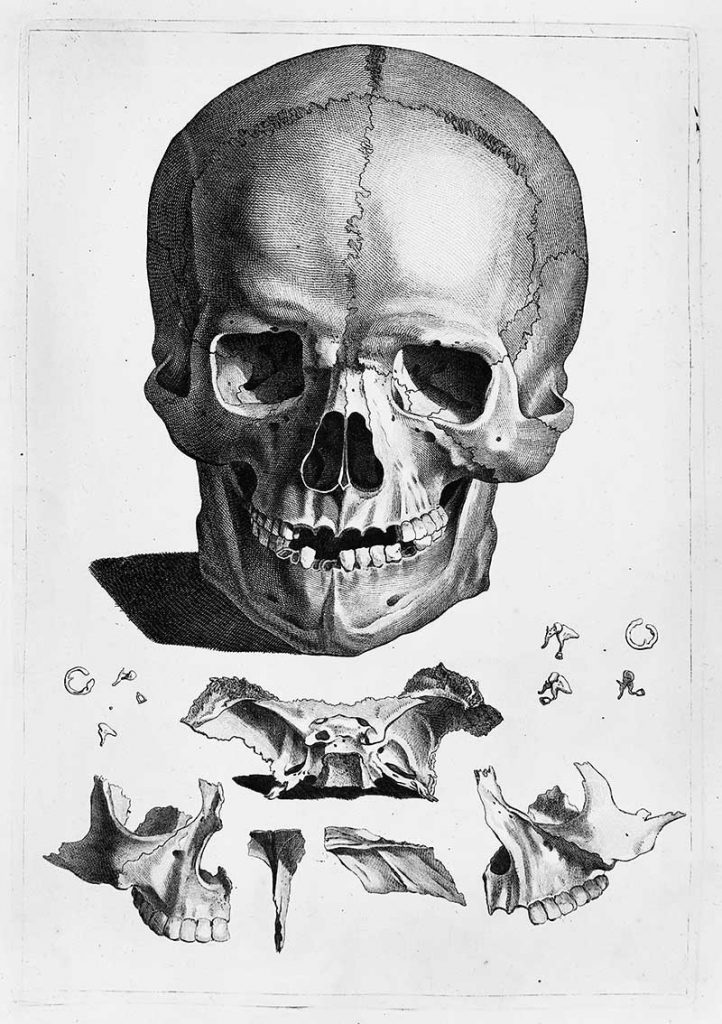
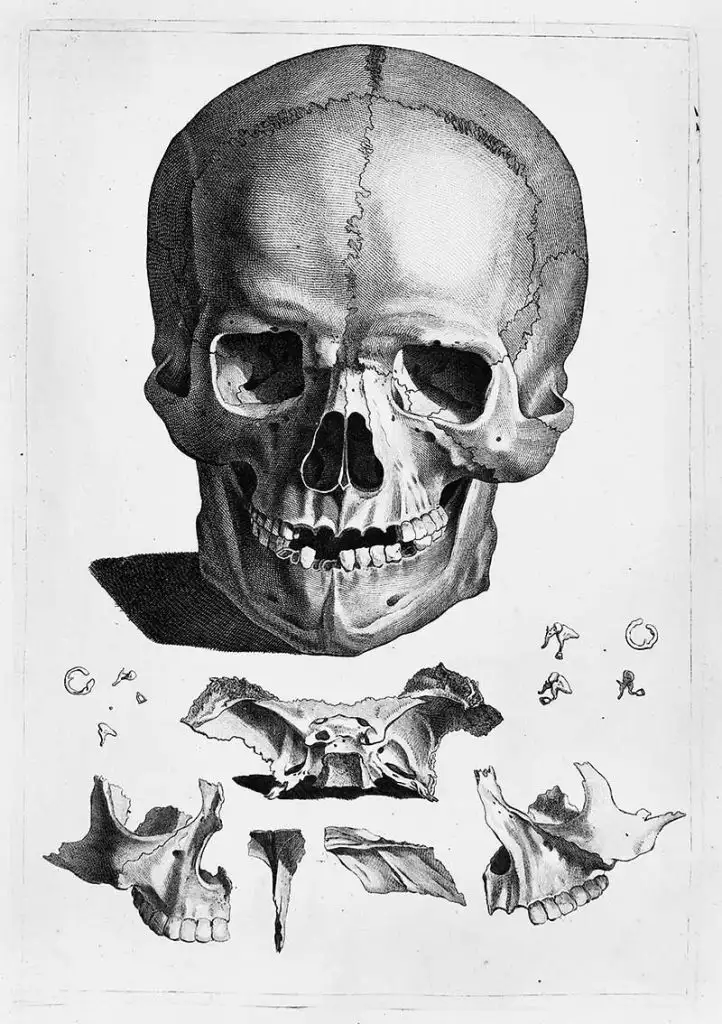
From “Nouveau recueil d’ostéologie et de myologie, dessiné d’après nature“
(New collection of osteology and myology, drawn from nature), by Gamelin, Jacques 1779.
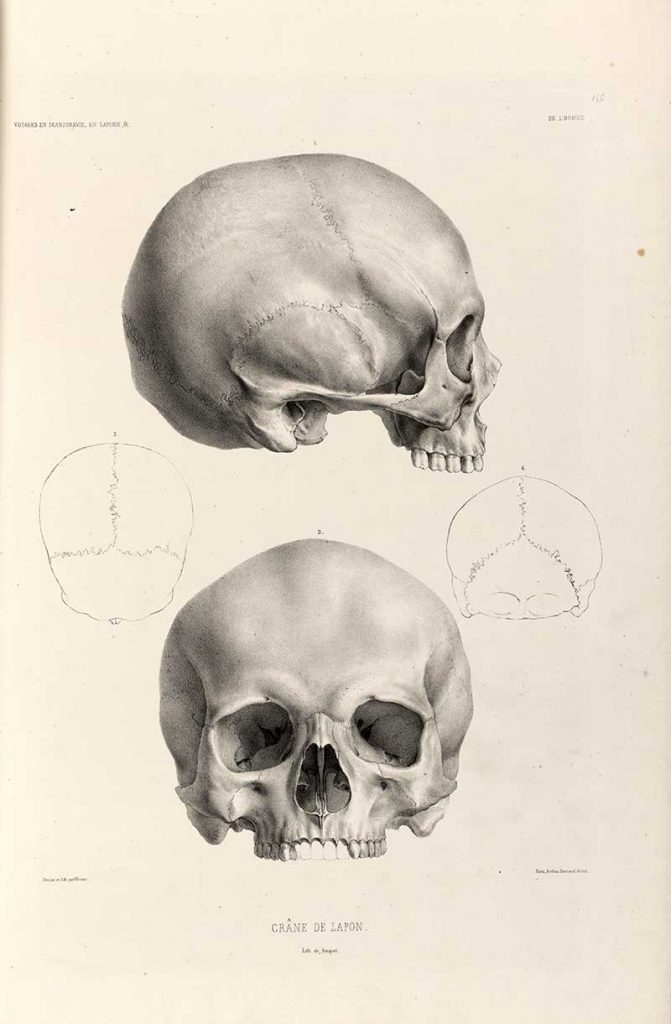
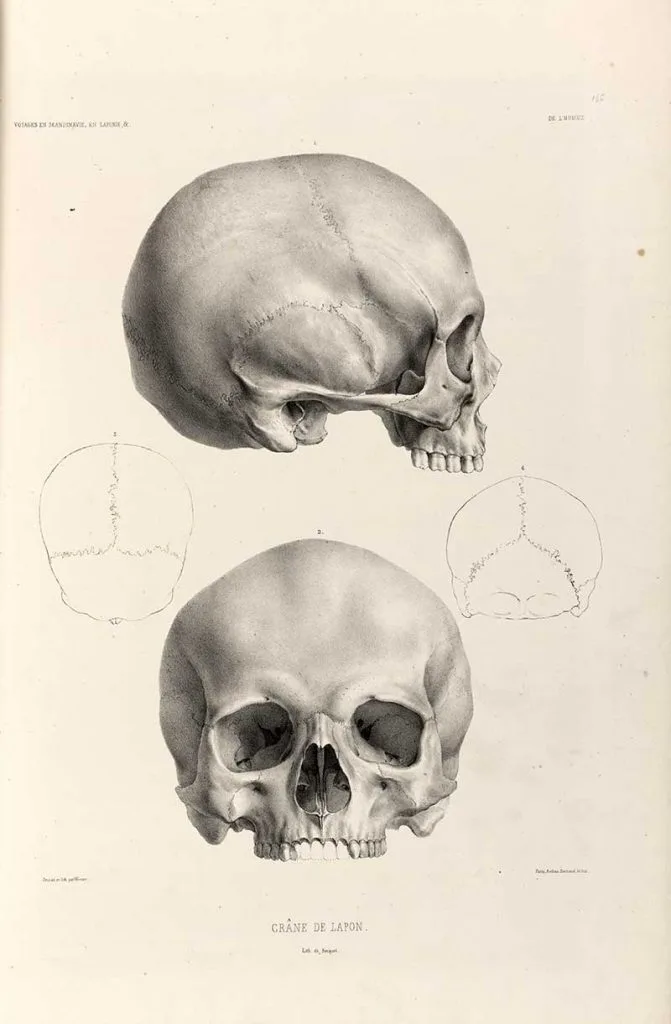
This illustration is from the Norwegian National Library and is in the 1852 publication “Voyages de la Commission Scientifique du Nord, en Scandinavie, en Laponie, au Spitzberg et aux Feröe“.
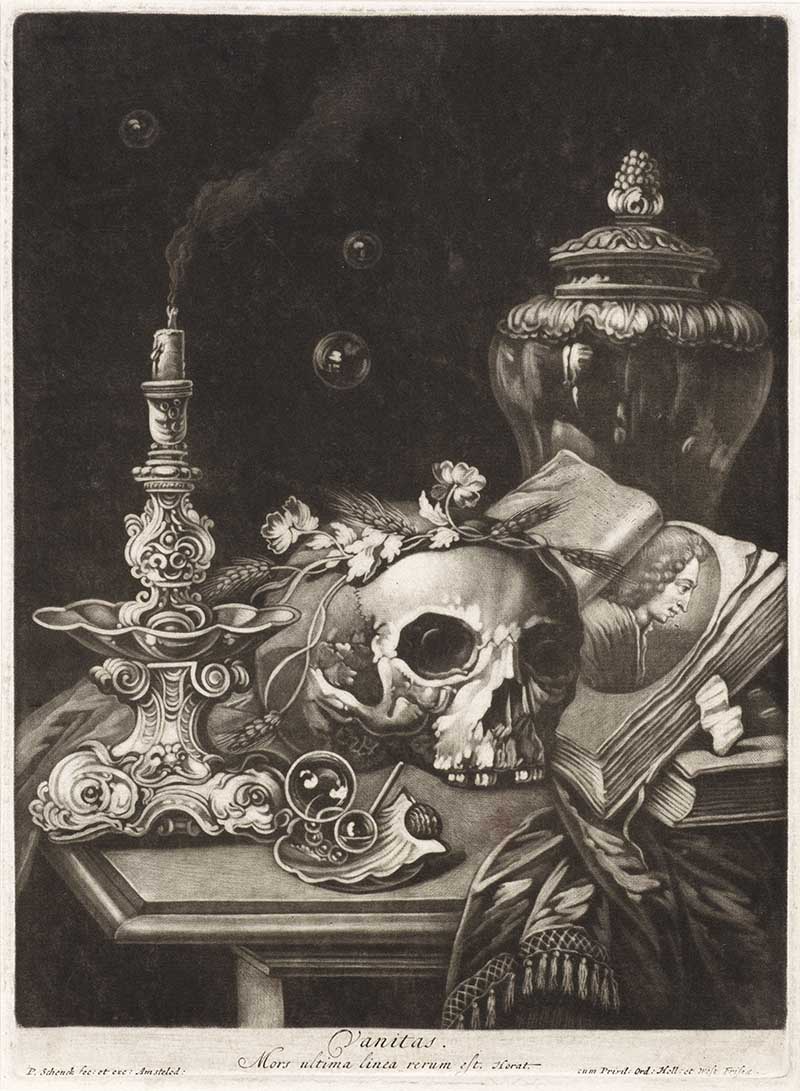
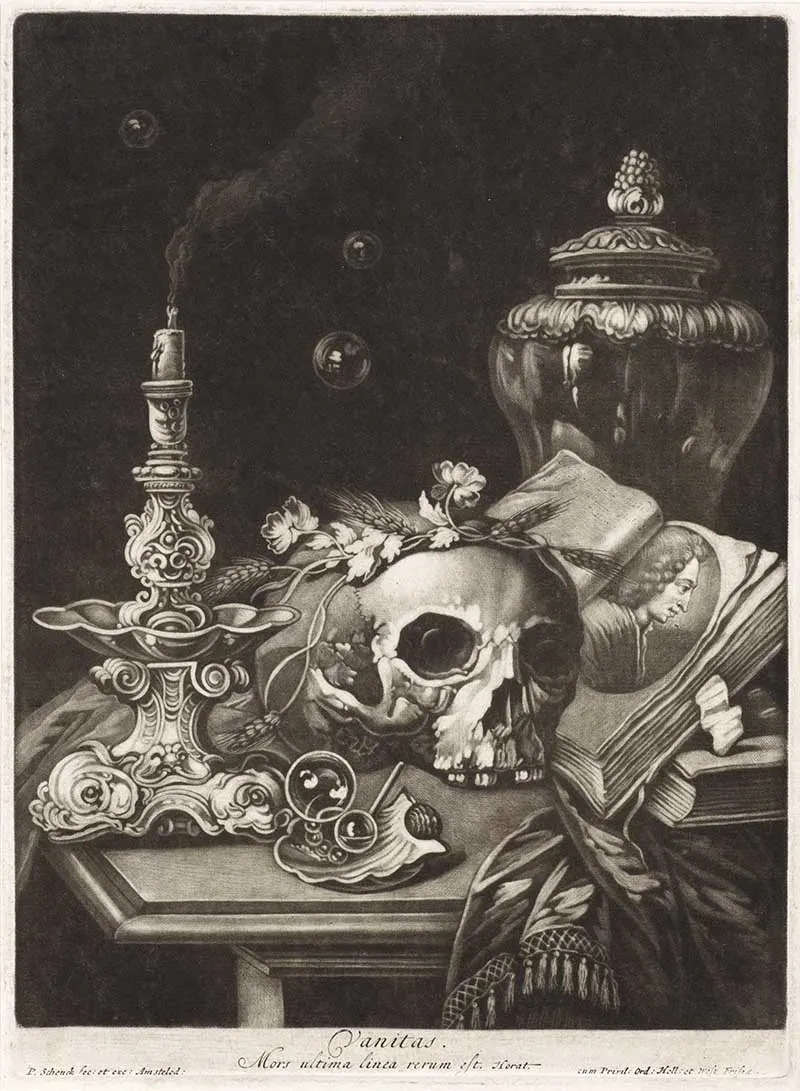
Flower-wreathed skull, Pieter Schenk 1670-1713.
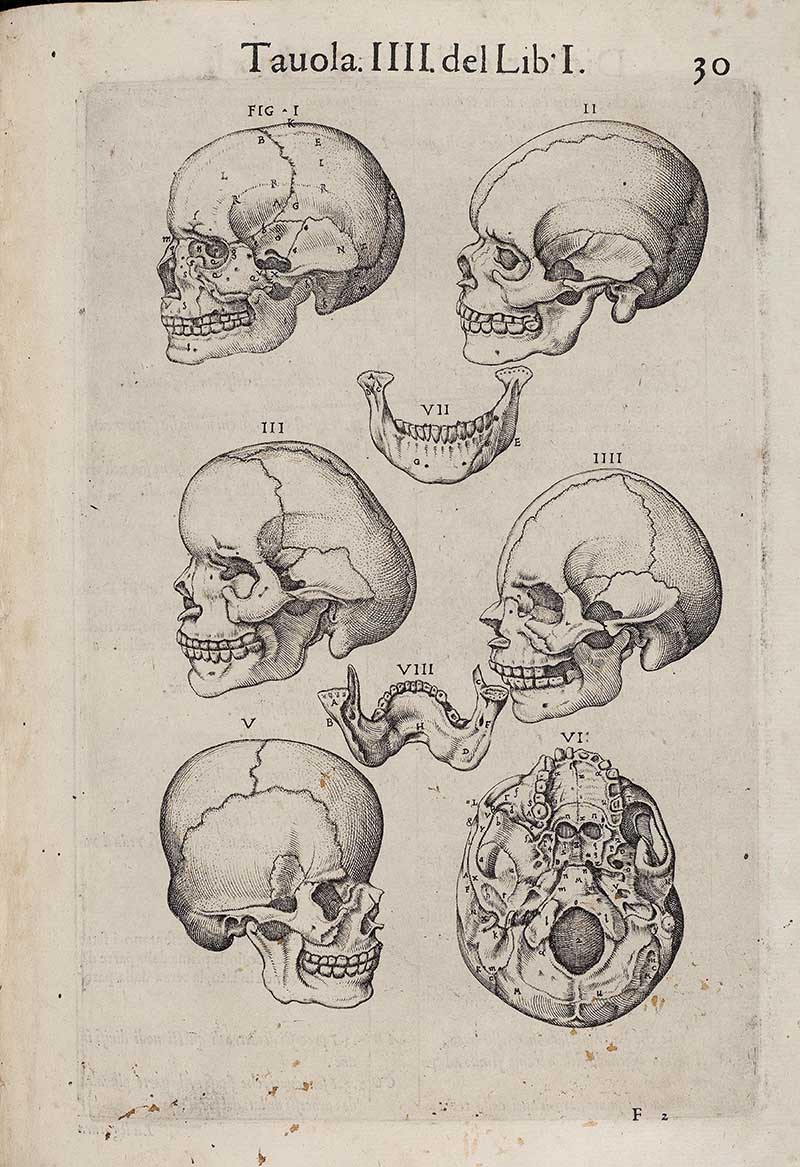
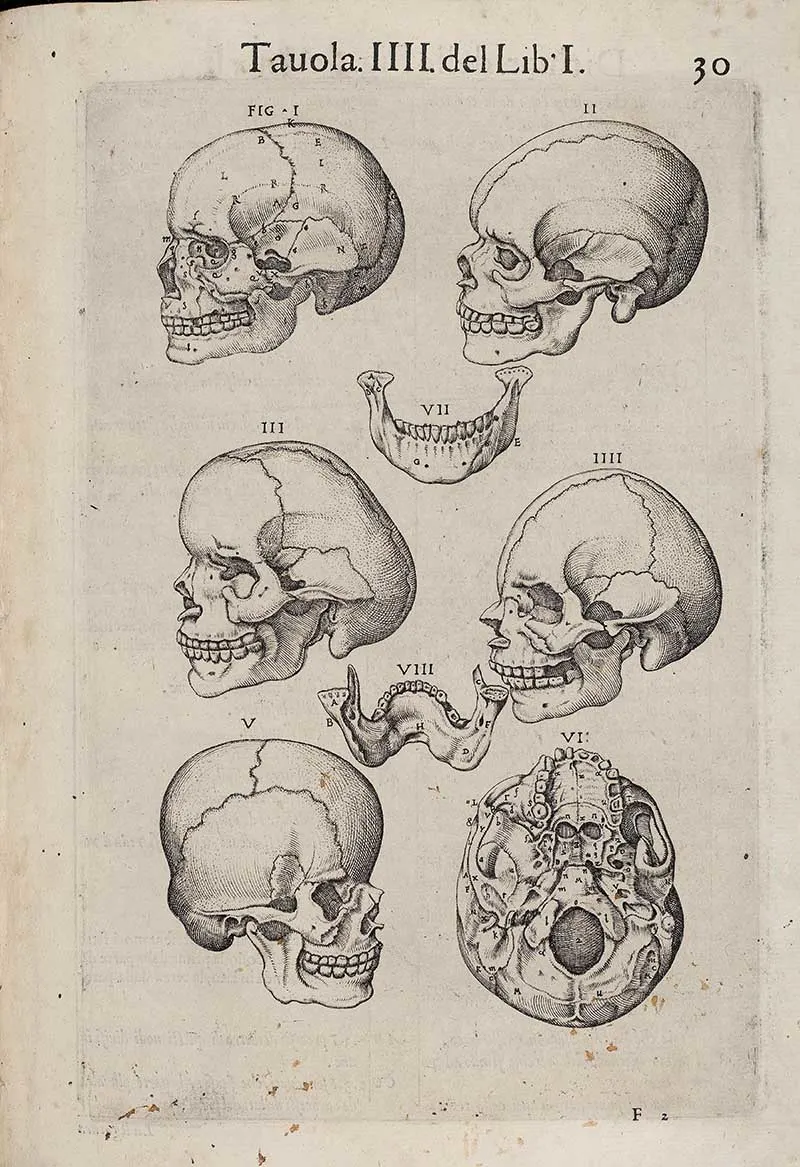
Skull illustrations are from “Anatomia del corpo humano” by Juan de Valverde, 1560.
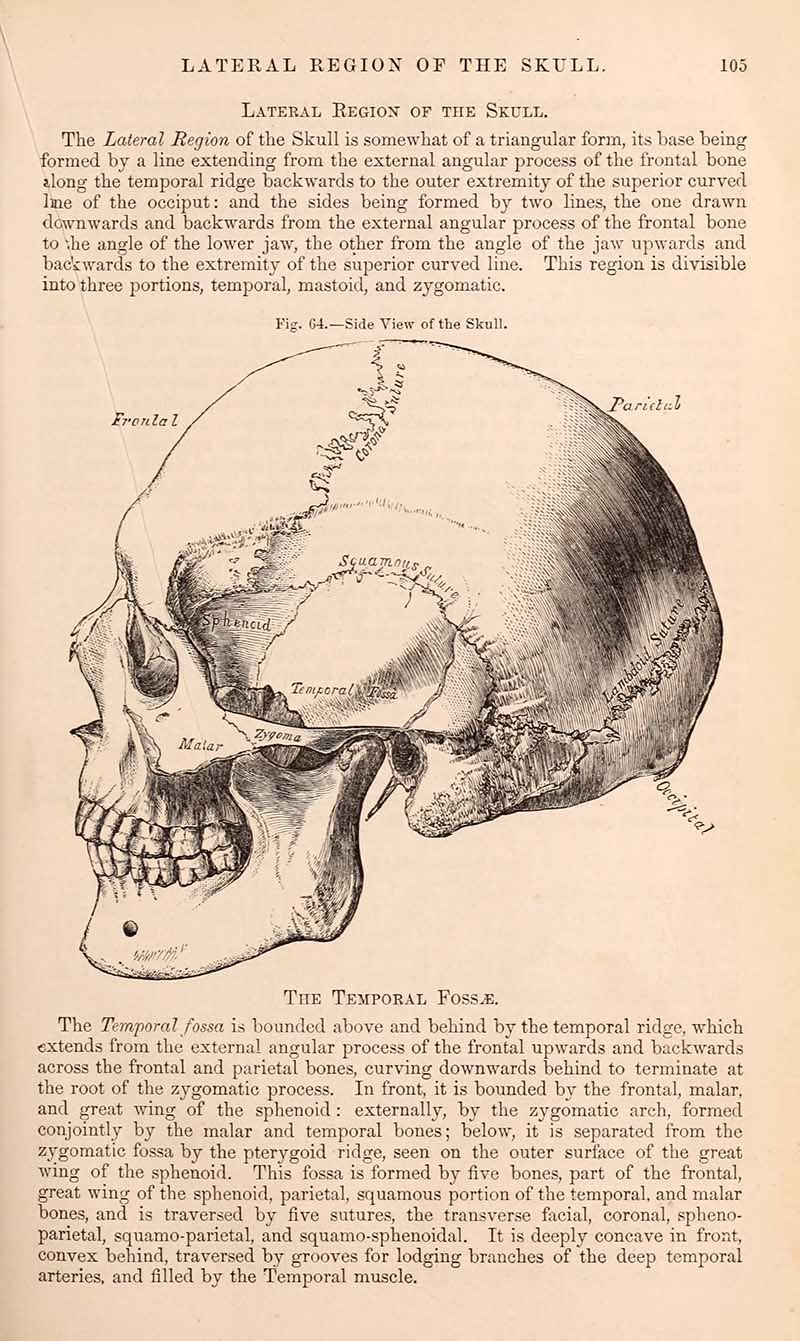
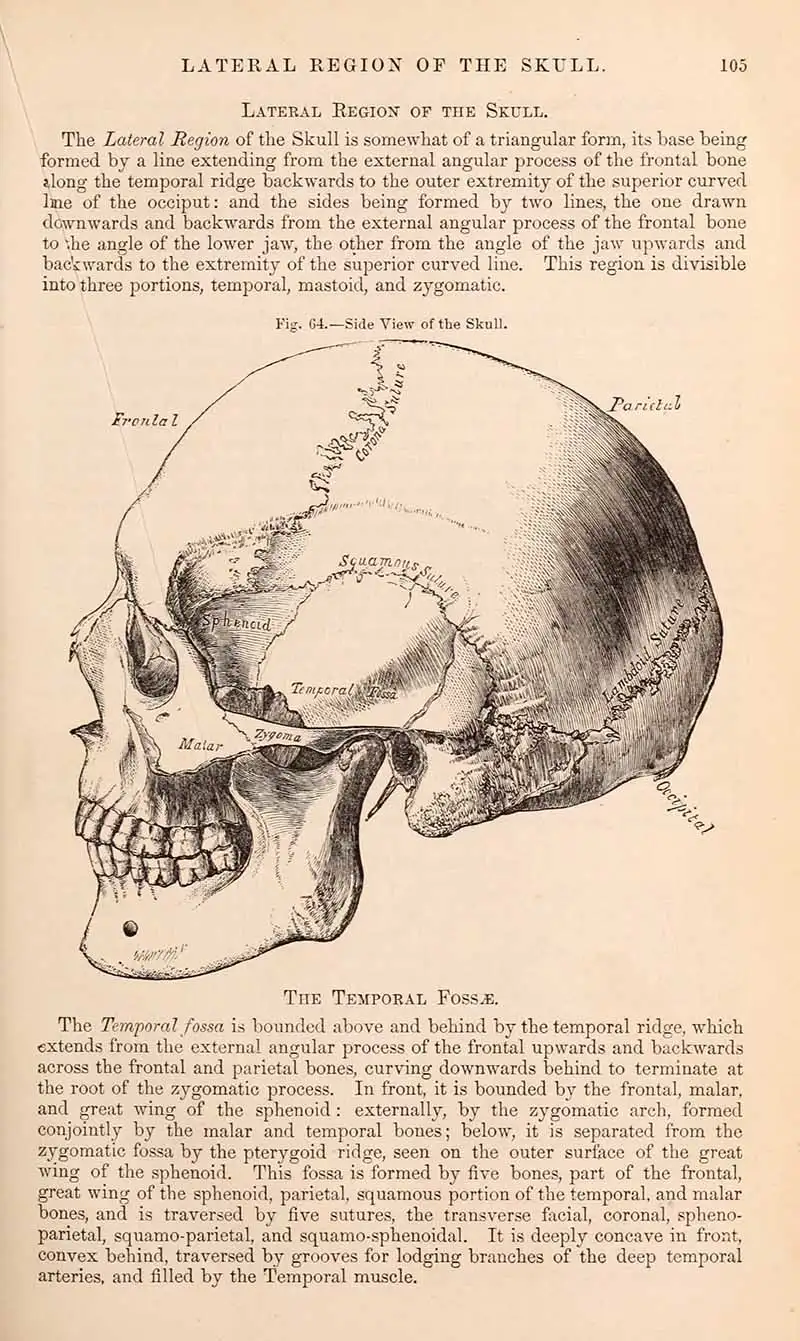
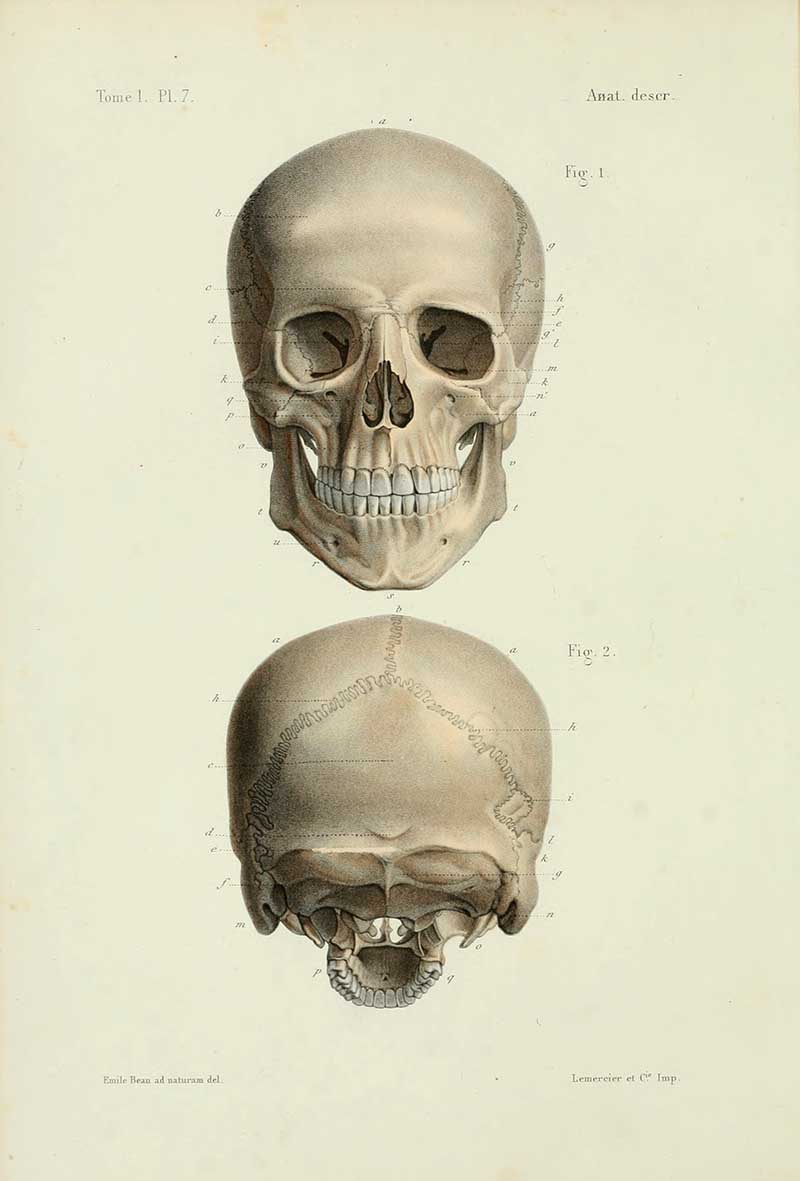
Print 18: Skull from Gray’s Anatomy
The first of two skull anatomy illustrations from “Atlas d’anatomie descriptive du corps humain” by Bonamy, Constantin Louis, 1844.
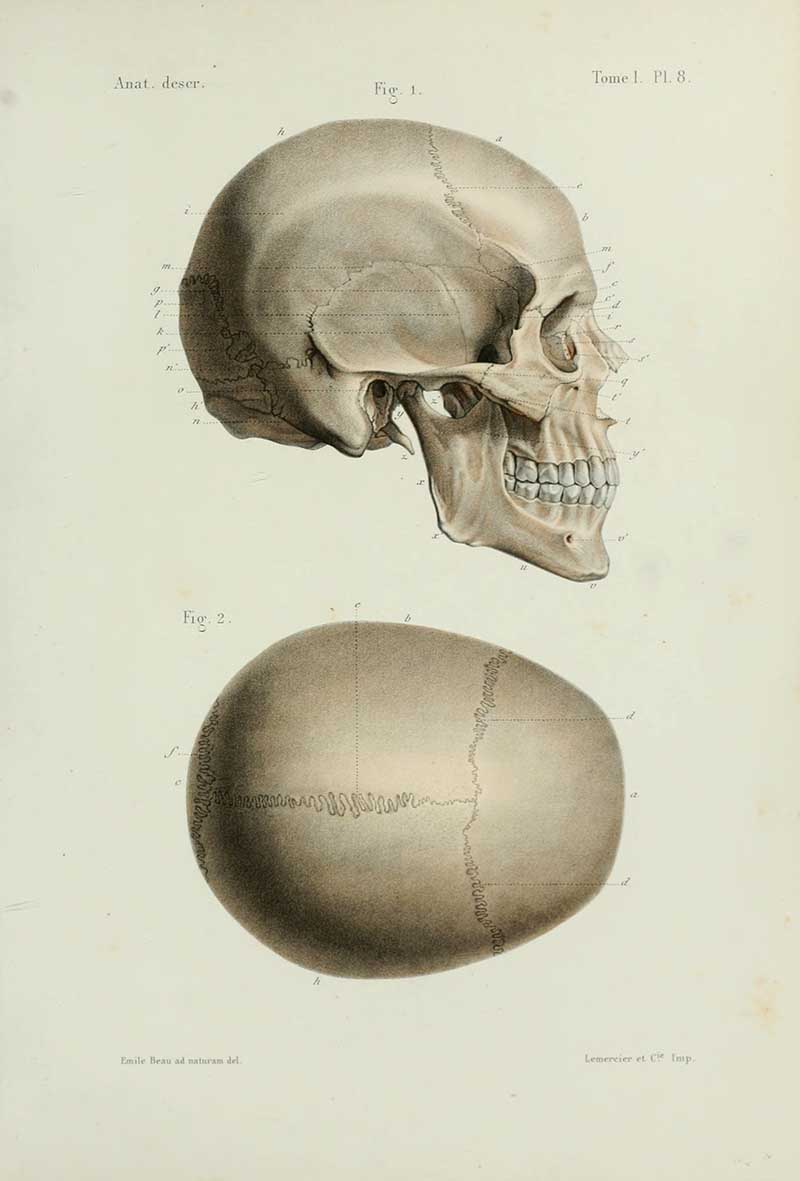
Print 20: Bonamy Skull Illustration 2
Side and top skull view.
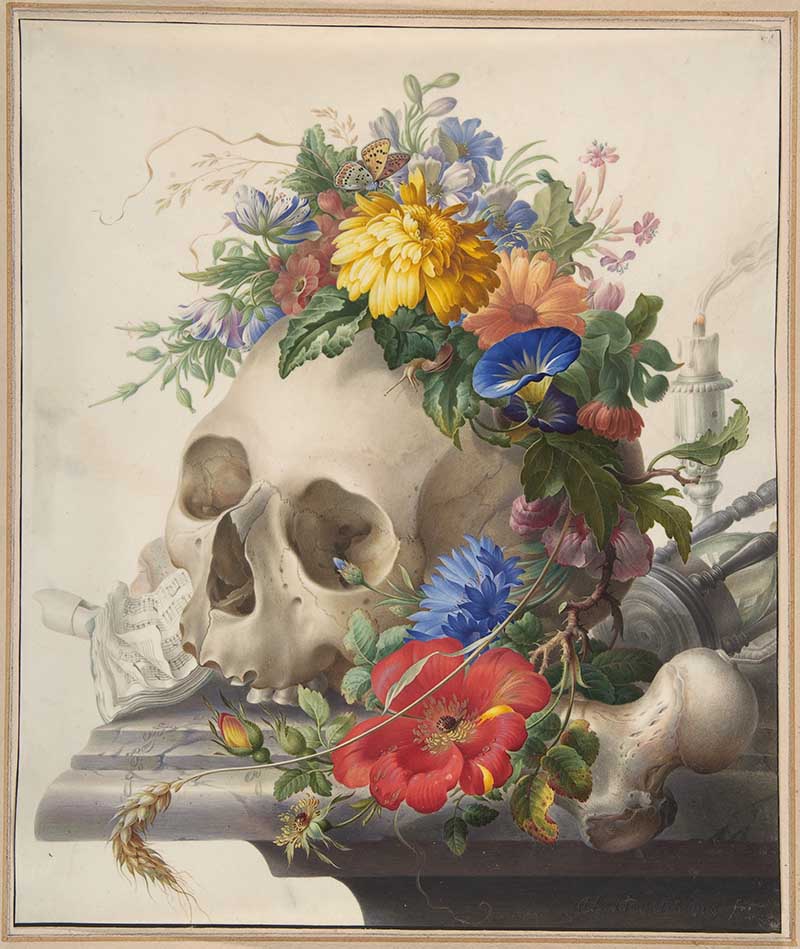
Vanitas Still Life by Herman Henstenburgh is a richly detailed 17th-century Dutch painting that captures the fleeting nature of life. Like many vanitas works of the period, it features symbolic objects, such as a skull, an hourglass, and wilting flowers, reminding viewers of mortality and the transience of earthly pleasures.
In Conclusion
These skull illustrations are more than just anatomical curiosities, they’re beautiful reminders of how art and science intersect, how the human form has long inspired wonder, study, and symbolism. I hope you’ve found some drawings here that spark your imagination, whether for design, study, decor, or simply fascination.
If you enjoy exploring the darker, more macabre side of vintage art, you might also like these curated collections:
- Vintage Halloween Art Prints – a rich gallery of ghostly, gothic, and spooky imagery
- Halloween Shadow Box DIY – creative ideas for displaying vintage spooky images
- Vintage Halloween Postcards -charming early 20th-century cards full of Halloween spirit
If you fancy, you can Buy Me A Coffee Here.
Suzy
Friday 30th of June 2023
Amazing. thanks for sharing. can you get any more anatomical / medical artwork? I saw the most amazing anatomical heart and other organs in the Royal Physicians college, Edinburgh.
claire
Sunday 2nd of July 2023
Thank you, I'll add it to my list of future posts.
nour eldin
Sunday 24th of October 2021
Can I use it as part of a design that will be printed?
claire
Monday 25th of October 2021
Yes, all the images are in the Public Domain so free to use.
Jen
Thursday 24th of December 2020
These are fantastic reference images. Thank you!
claire
Monday 28th of December 2020
Thank you, glad you can enjoy them.
Donna @ Modern on Monticello
Tuesday 15th of September 2020
These are something my husband would enjoy since he is in the medical field. The details on these are amazing. Thanks for sharing. #HomeMattersParty
claire
Wednesday 16th of September 2020
They are fascinating to look at, but also fun for Halloween.
Rachelle
Saturday 12th of September 2020
Perfectly chilling for Halloween!
claire
Tuesday 15th of September 2020
Thank you, that was the idea.