
Galerie des Modes: Vintage French Fashion Prints of Marie Antoinette
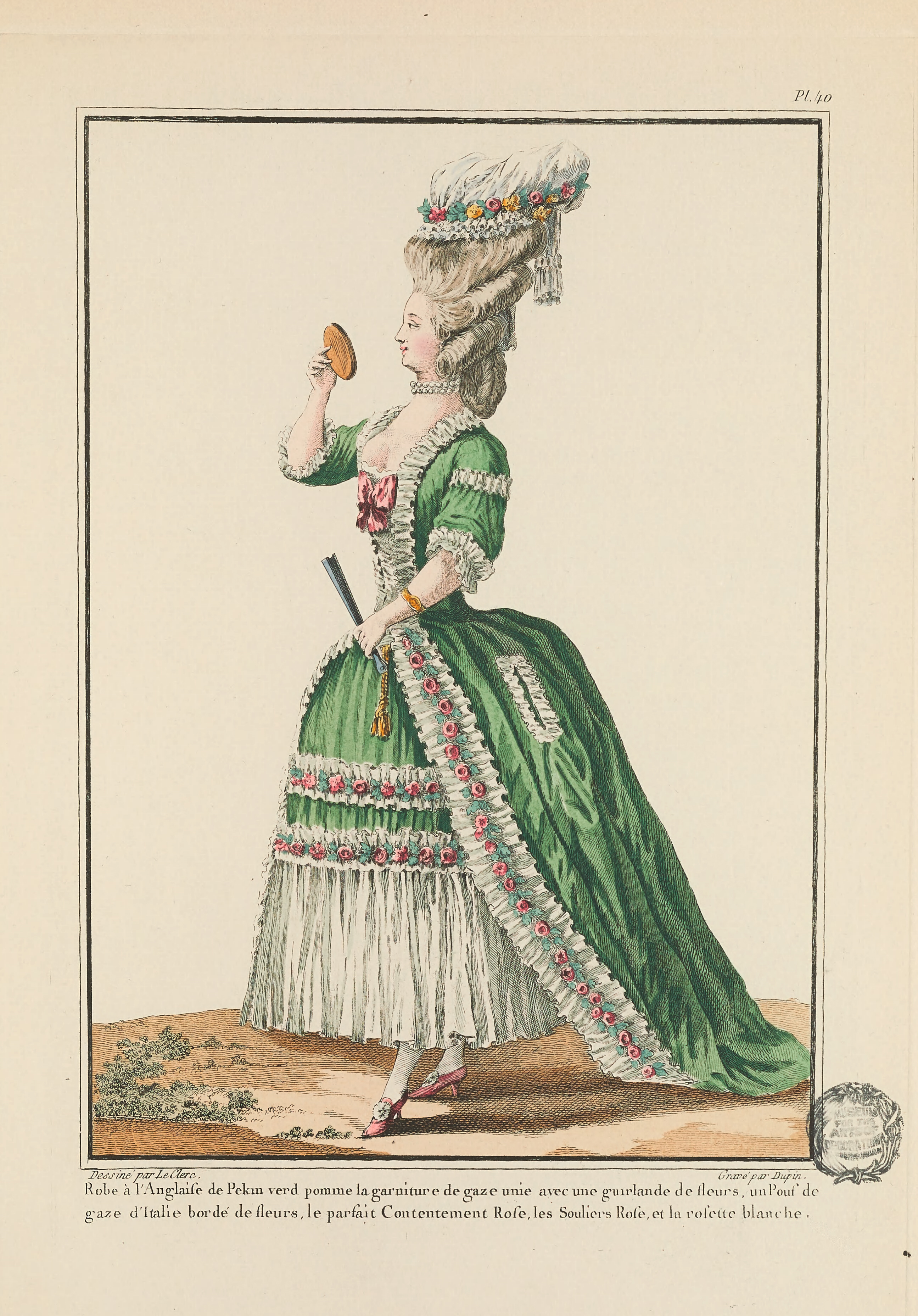
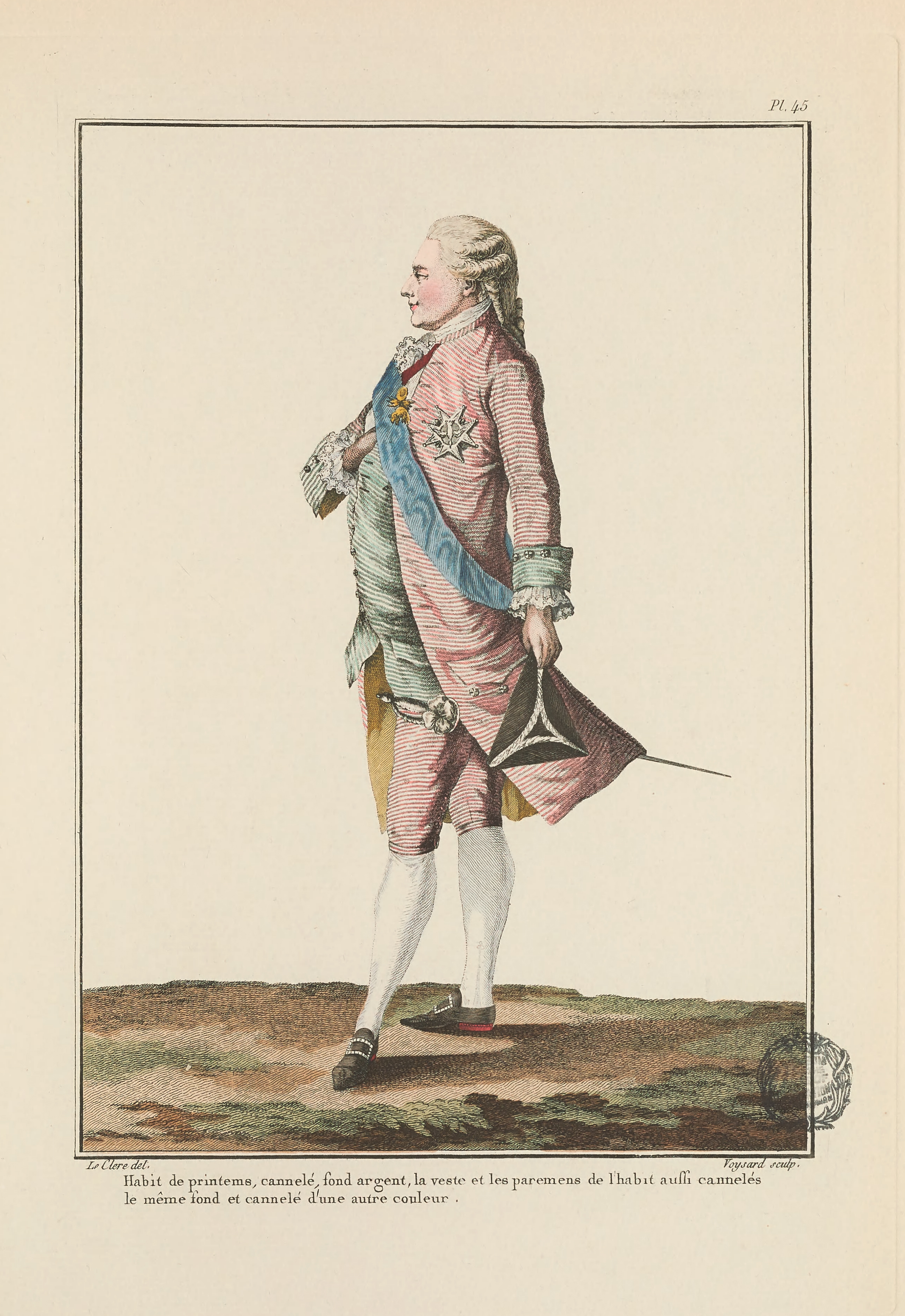
Step into fashionable Paris before the French Revolution with these stunning hand-coloured fashion plates from Galerie des Modes et Costumes Français. Published between 1778 and 1787, these elegant illustrations capture the extravagant dresses, elaborate hairstyles and stylish accessories that made French fashion the envy of Europe.
Long before fashion magazines, influencers, and online trends, fashionable Parisians kept up with the latest styles through beautifully illustrated fashion plates.
Published between 1778 and 1787, Galerie des Modes et Costumes Français is one of the most important fashion publications ever produced. The hand-coloured engravings capture French fashion during the final years of the reign of Louis XVI and Marie Antoinette, preserving everything from elegant silk gowns and embroidered coats to towering hairstyles and wonderfully extravagant hats.
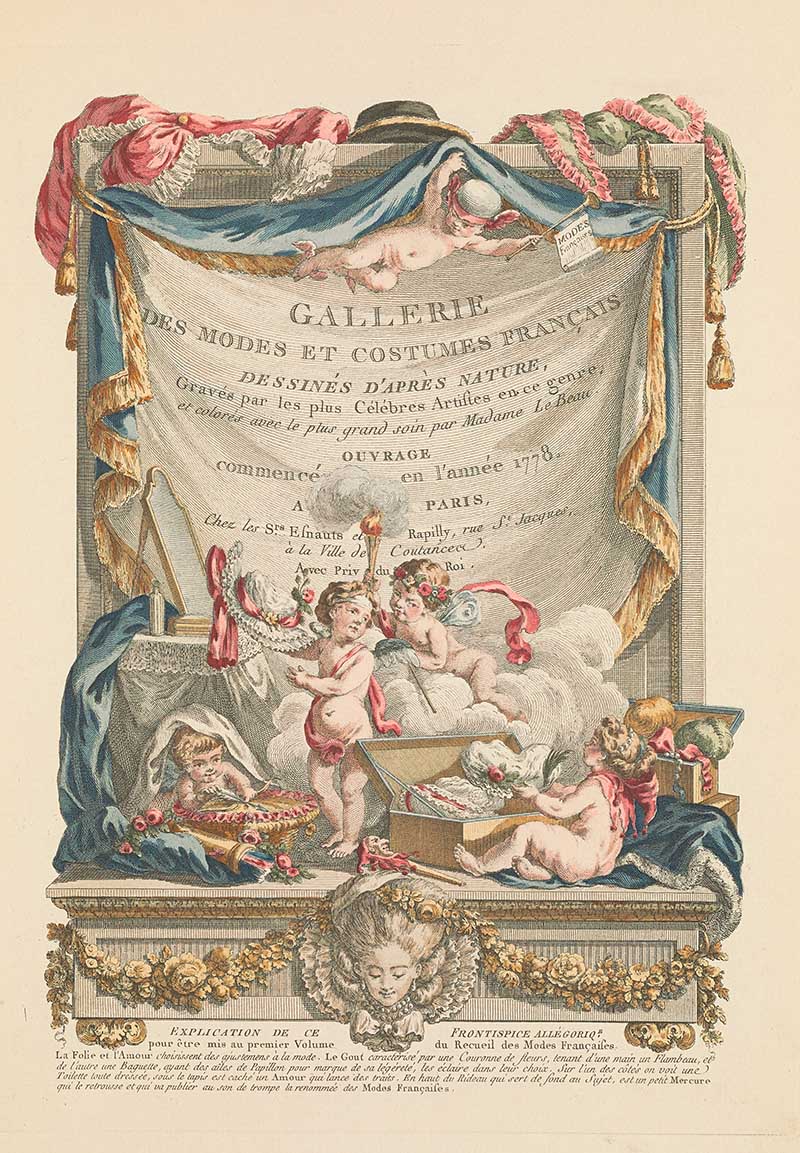
What Is Galerie des Modes?
The title translates roughly as Gallery of French Fashions and Costumes Drawn from Life. Unlike costume books that imagined historical dress, these illustrations aimed to record the fashions people were actually wearing in Paris at the time.
The result is a fascinating snapshot of everyday life in eighteenth-century France. Some outfits look surprisingly modern, while others are delightfully over-the-top.
Today, Galerie des Modes is regarded as one of the earliest and most influential fashion publications. The plates helped popularise the fashion illustration and inspired many of the fashion magazines that followed.
More than two centuries later, they remain just as captivating. Beyond the beautiful clothes, they offer a glimpse into a world of promenades, theatres, salons and social occasions just before the French Revolution changed France forever.
The Paul Cornu Edition
The images featured here come from the magnificent 1912 edition compiled by Paul Cornu. By tracking down and reproducing hundreds of the original fashion plates, Cornu helped preserve this remarkable record of French style for future generations.
How To Download The Fashion Prints
All of the illustrations below are in the public domain and free to download.
Click on the title above your chosen image to open the high-resolution version in a new tab. You can then save, print or use the artwork in your own creative projects.
Vintage French Fashion Prints 1774-1778
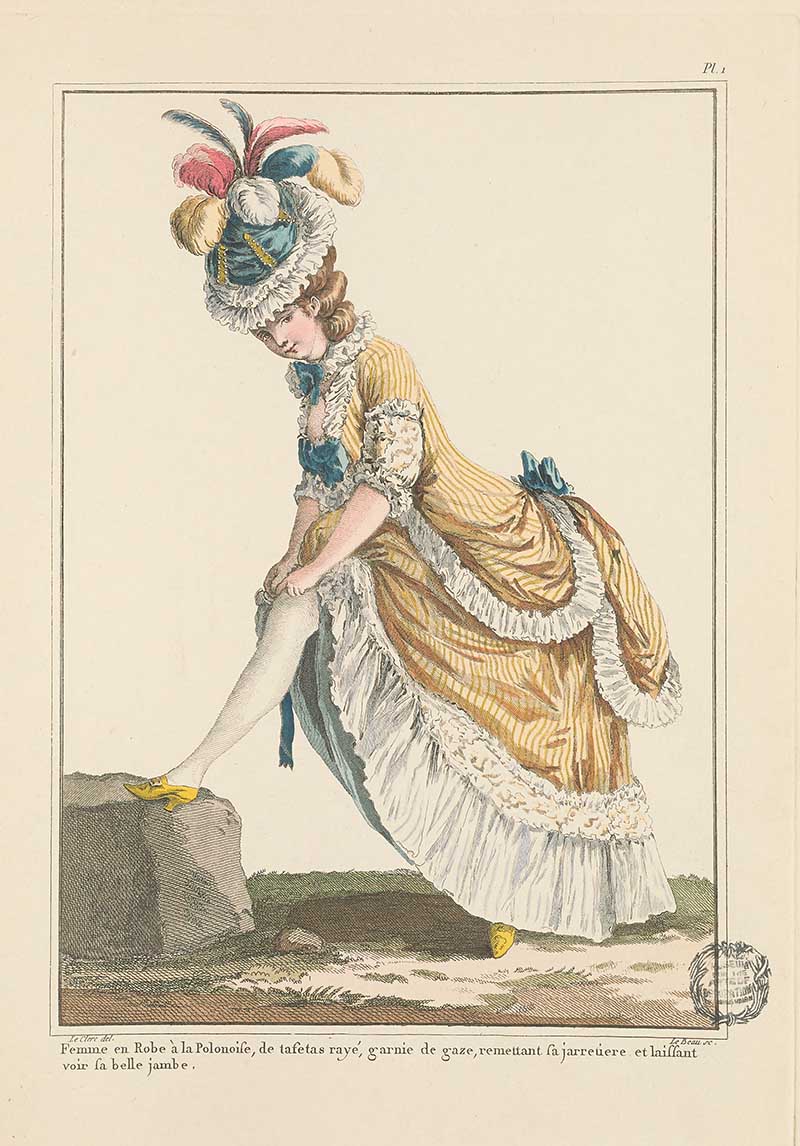
Print 1: Polish Style Yellow Dress
In the Polish style, of striped taffeta, gauze trim, putting on her stockings and showing off her beautiful leg.
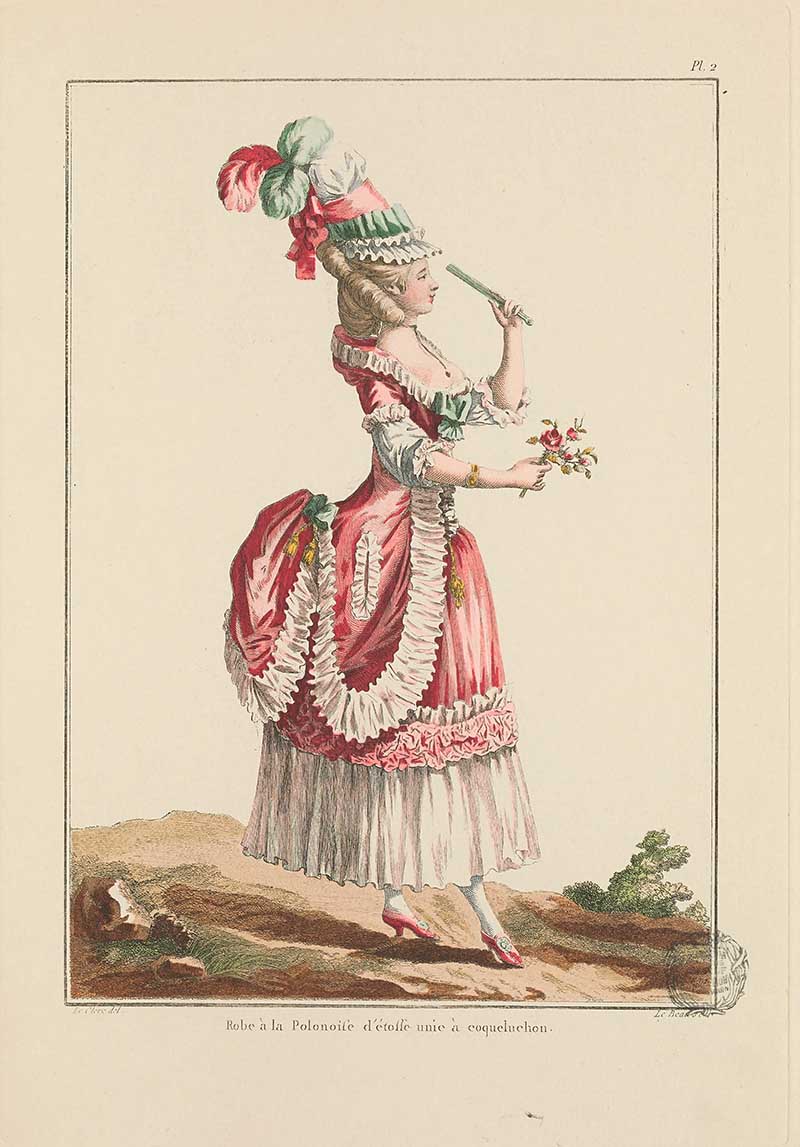
Polish, with pocket and tassel, or Winter Polish. These dresses are very narrow in front and leave the small jacket free, trimmed at its centre and crowned by a wide pleat.
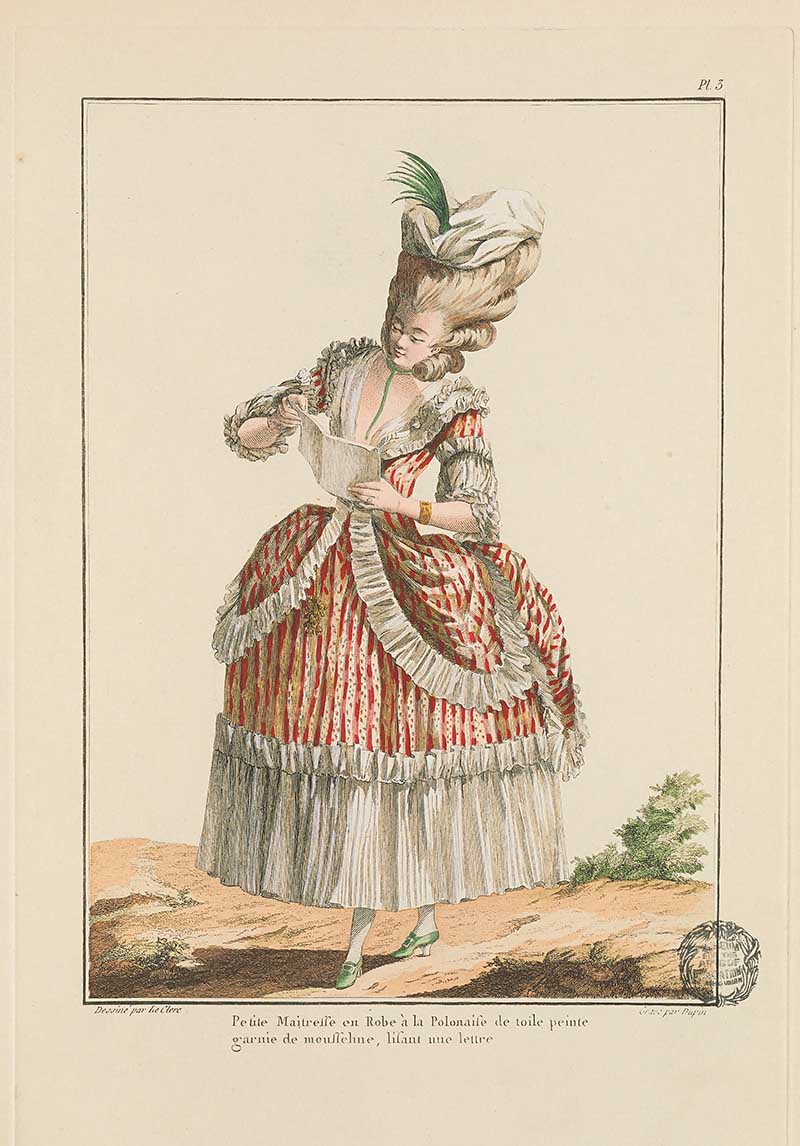
Polish woman with open breasts, stapled in the middle of the waist, with wings developed in front, and a tail that spreads out behind.
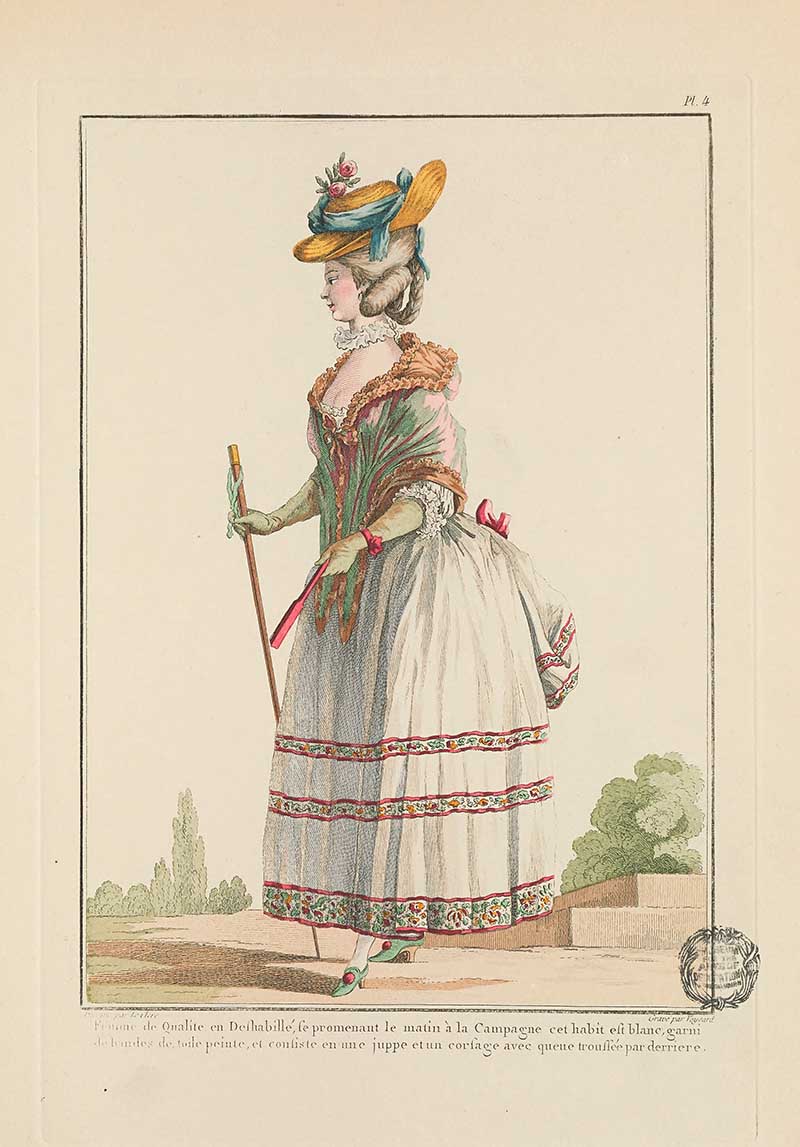
Demi-Polish. It is a kind of diminutive of those skirt bottoms which the Ladies of the Court, obliged by etiquette to appear in public in the morning, have long adopted and which have been applied quite successfully to new fashions.
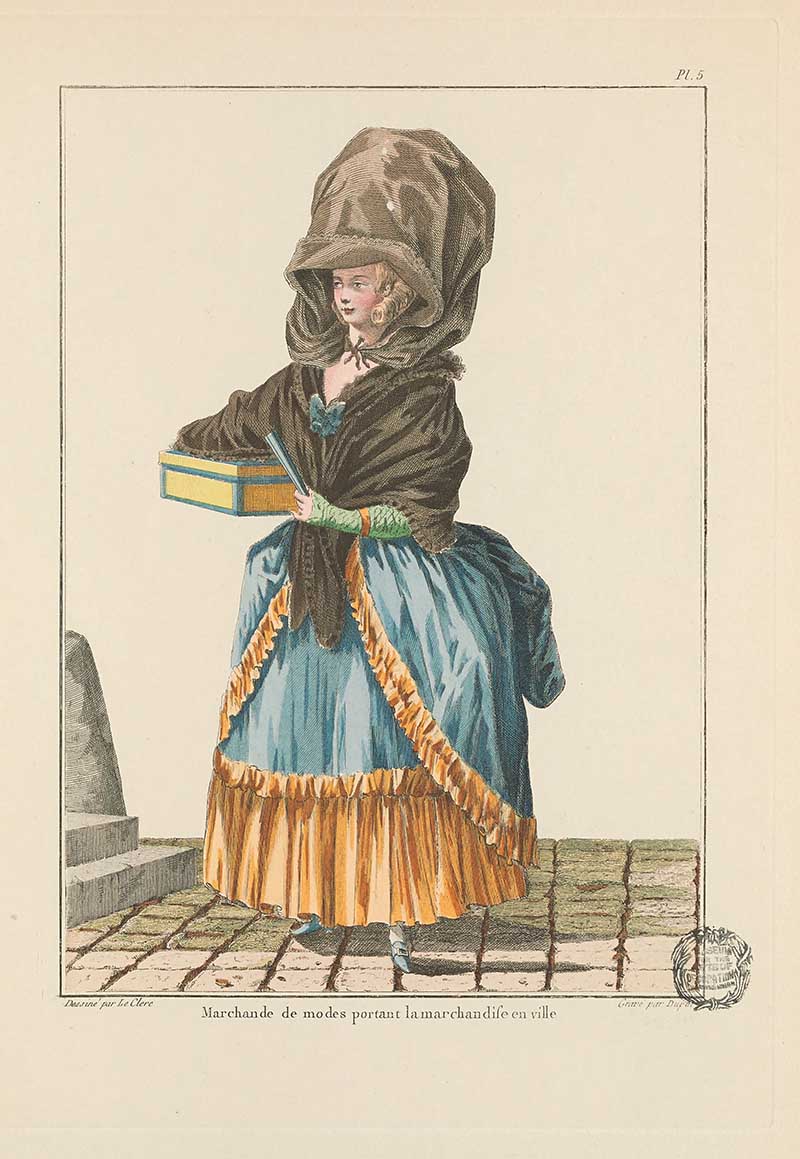
A character figure representing a milliner, carrying merchandise in the city. "A large black taffeta cape, with upturned edges trimmed in gauze, covers her head and conceals some of her charms from the eager glances of passersby; but her cape is tailored so as not to reveal any of the elegance of her figure."
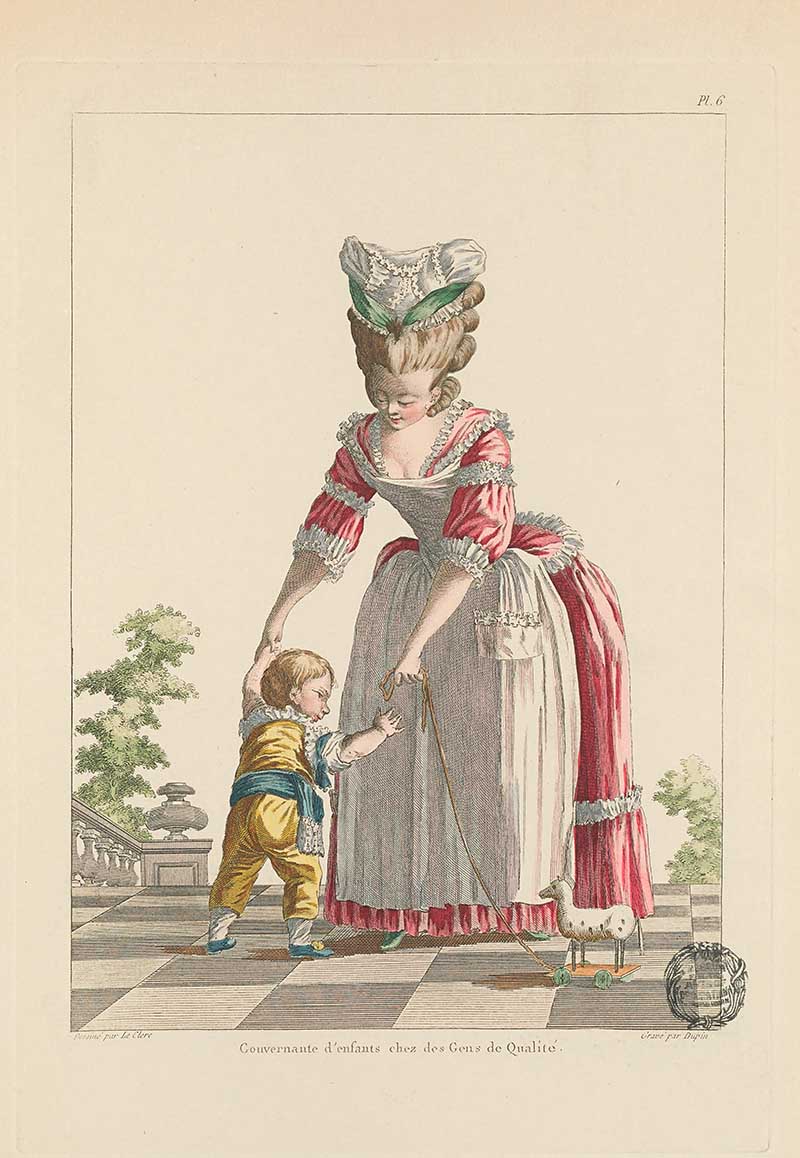
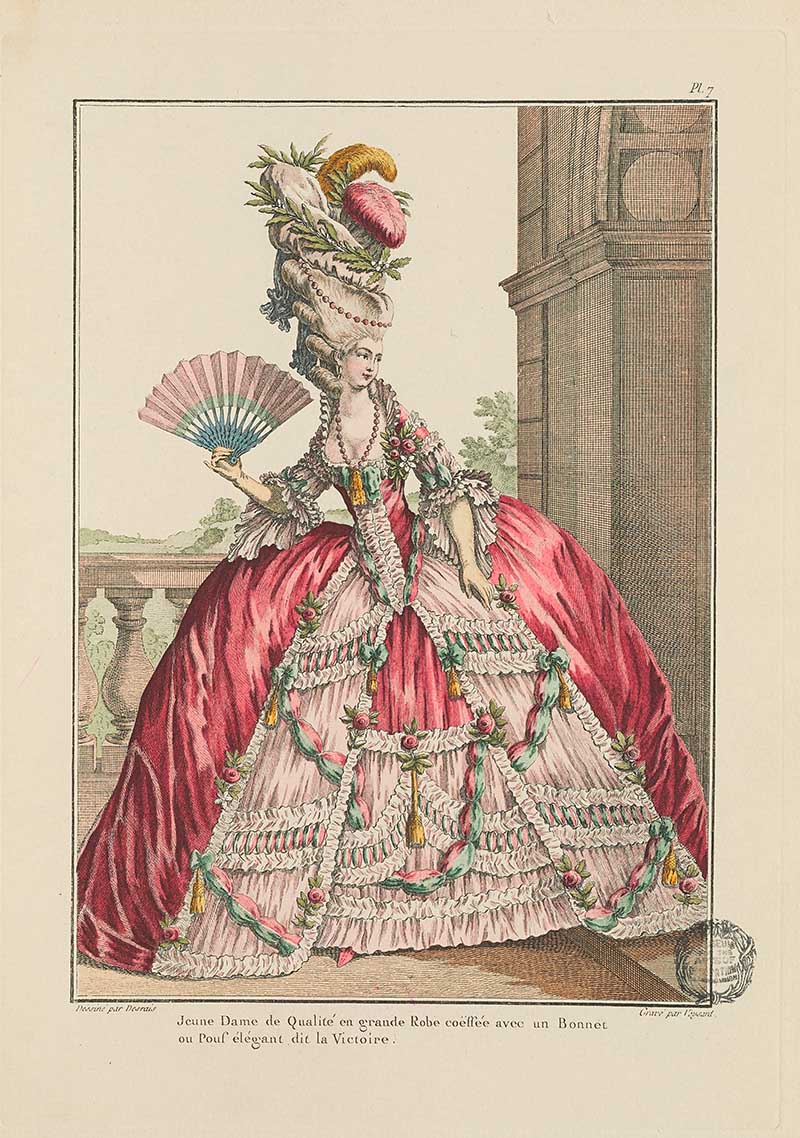
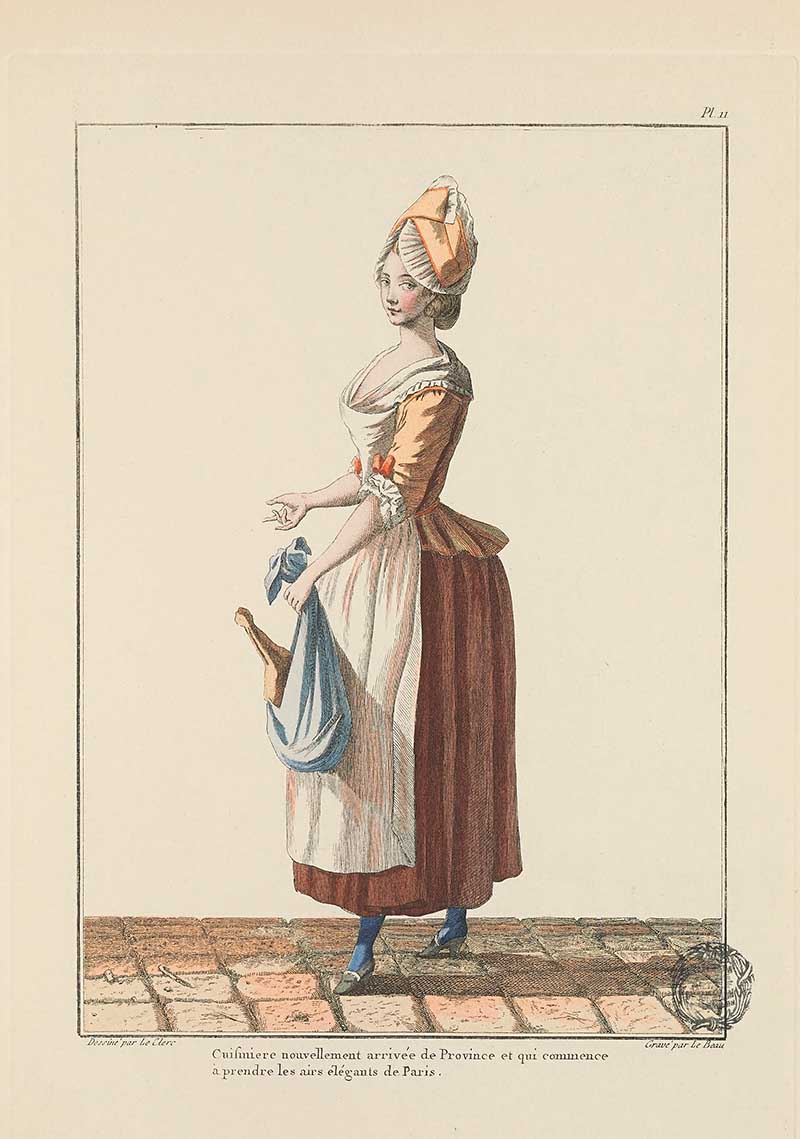
A cook newly arrived from the provinces, who is beginning to adopt the elegant manner of Paris.
French-style open dress.
A large, open-bodied gown, trimmed with a medium-sized facing, made of pink taffeta.
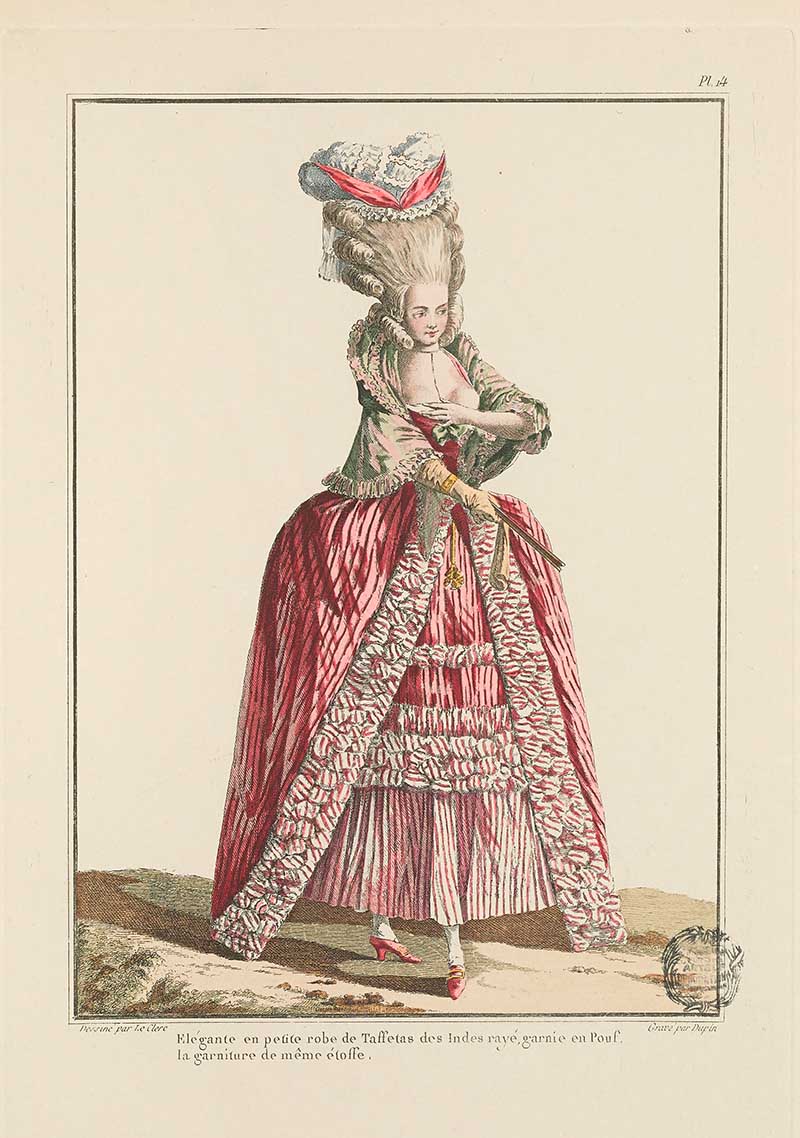
Little dress of striped Indian taffeta, trimmed in striped gauze pouffe; pagoda sleeves.
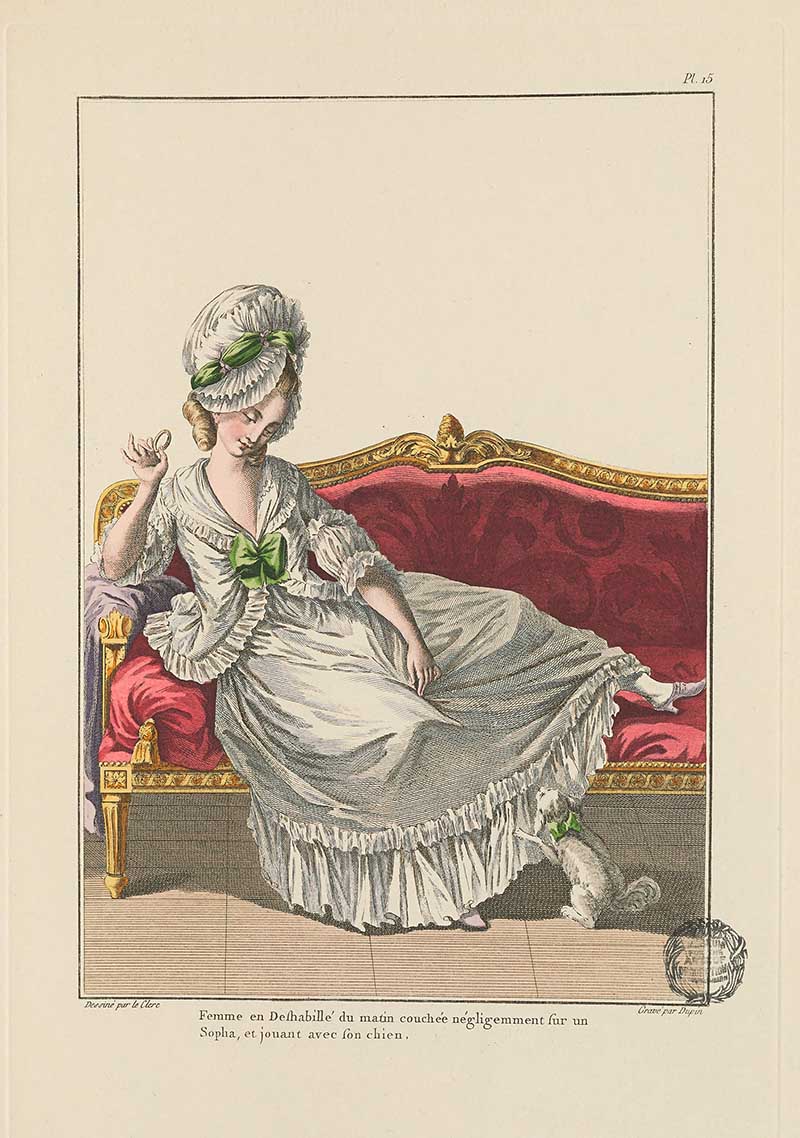
14. Nightwear Reclining on Sofa
In a taffeta gown with a jacket awaiting either a bath or a rendezvous.
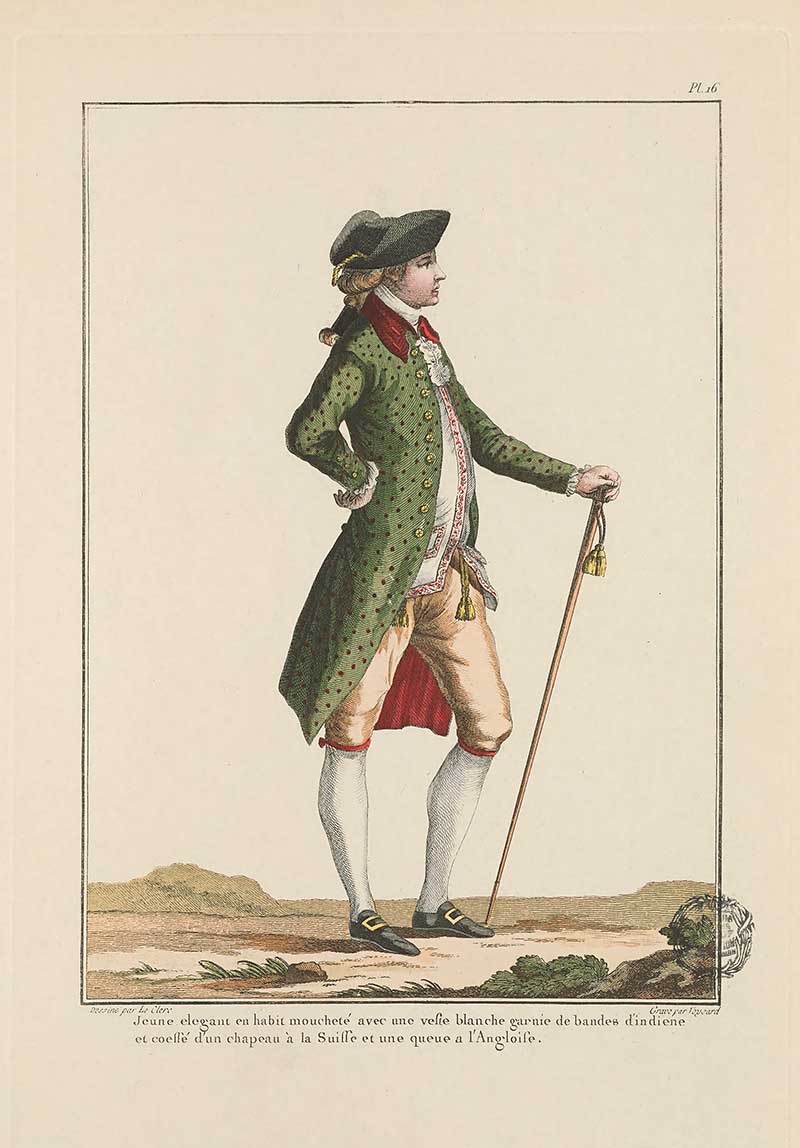
A dapper young man, in a tailcoat with small patches, a cut-off collar (1) with buttonholes; sheath sleeves with heart-shaped buttonholes.
Vintage French Fashion 1779
The mantlet is a kind of small cloak or light drapery, intended to cover the upper body; it is excluded from the grand attire, and yet it has gained so much favour that it has become customary to regard it as an essential part of the clothing of Ladies.
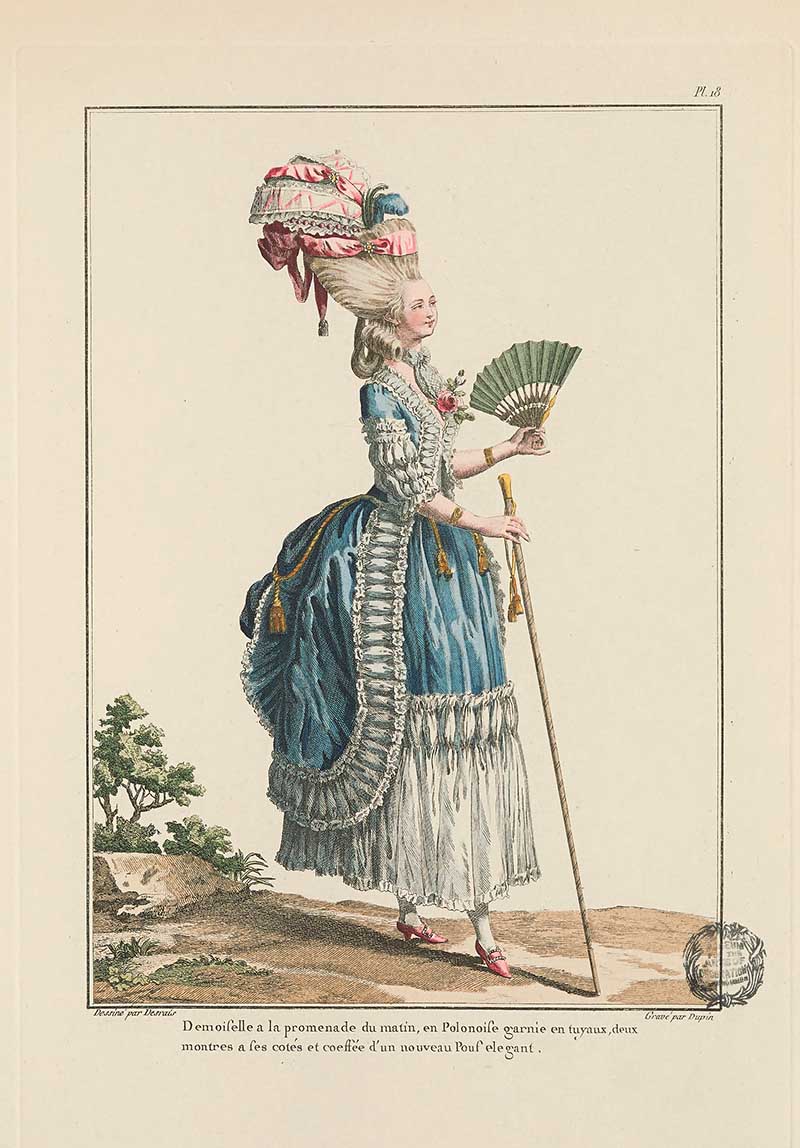
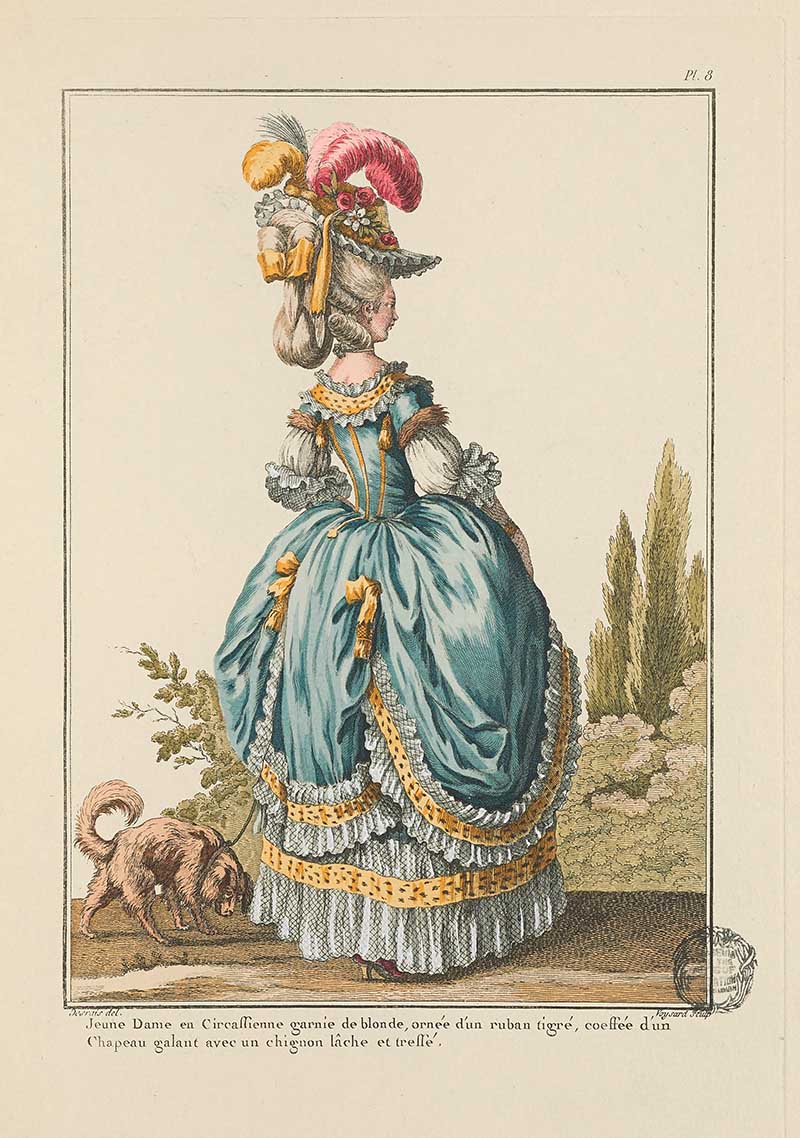
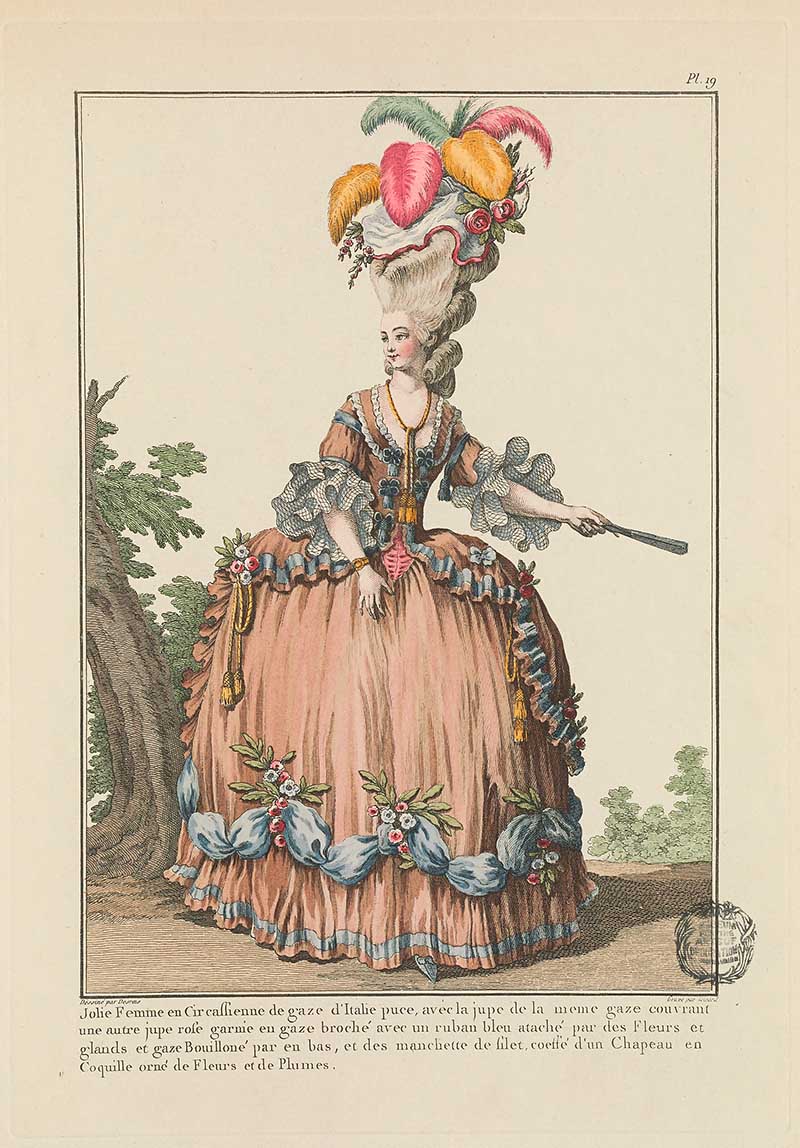
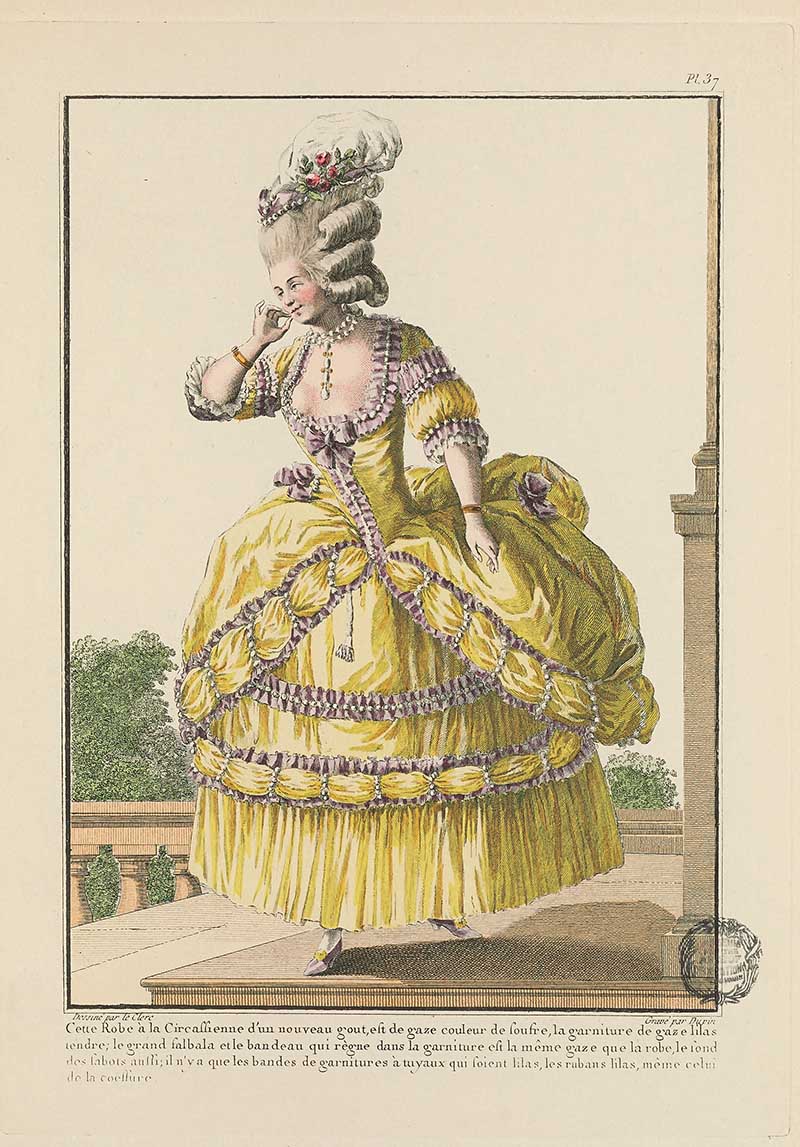
Woman in Circassian dress, seen from the front.
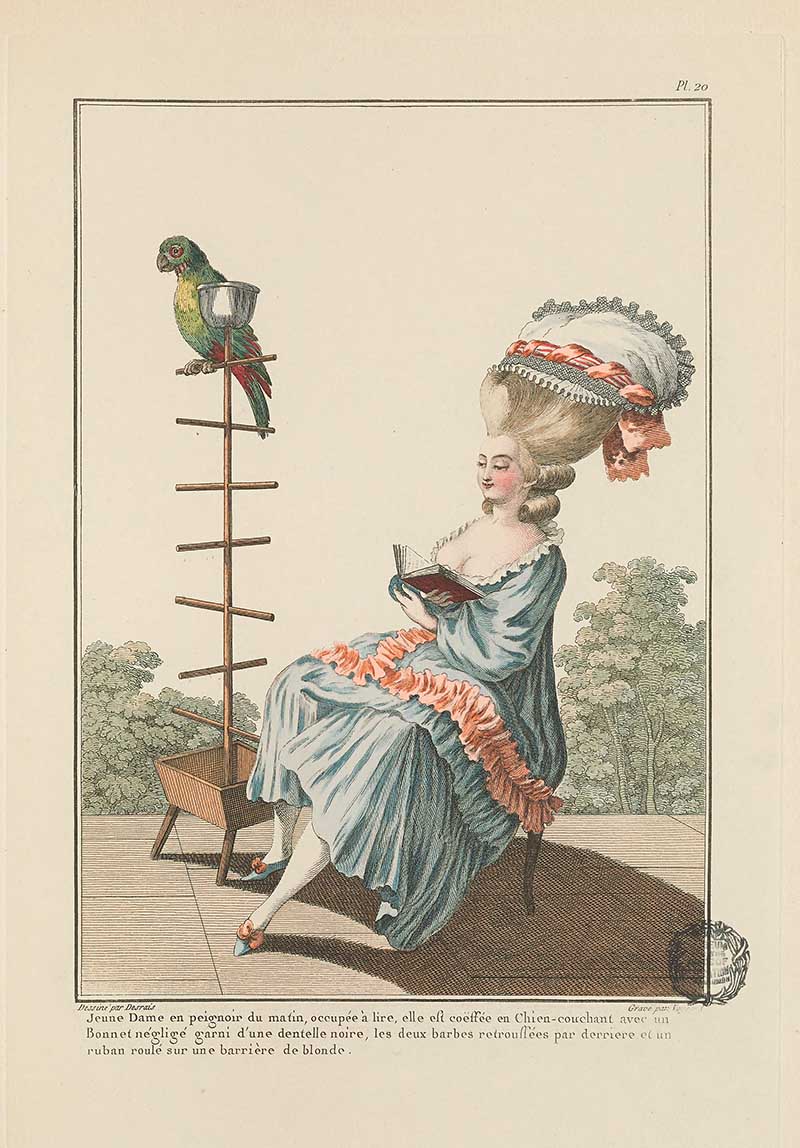
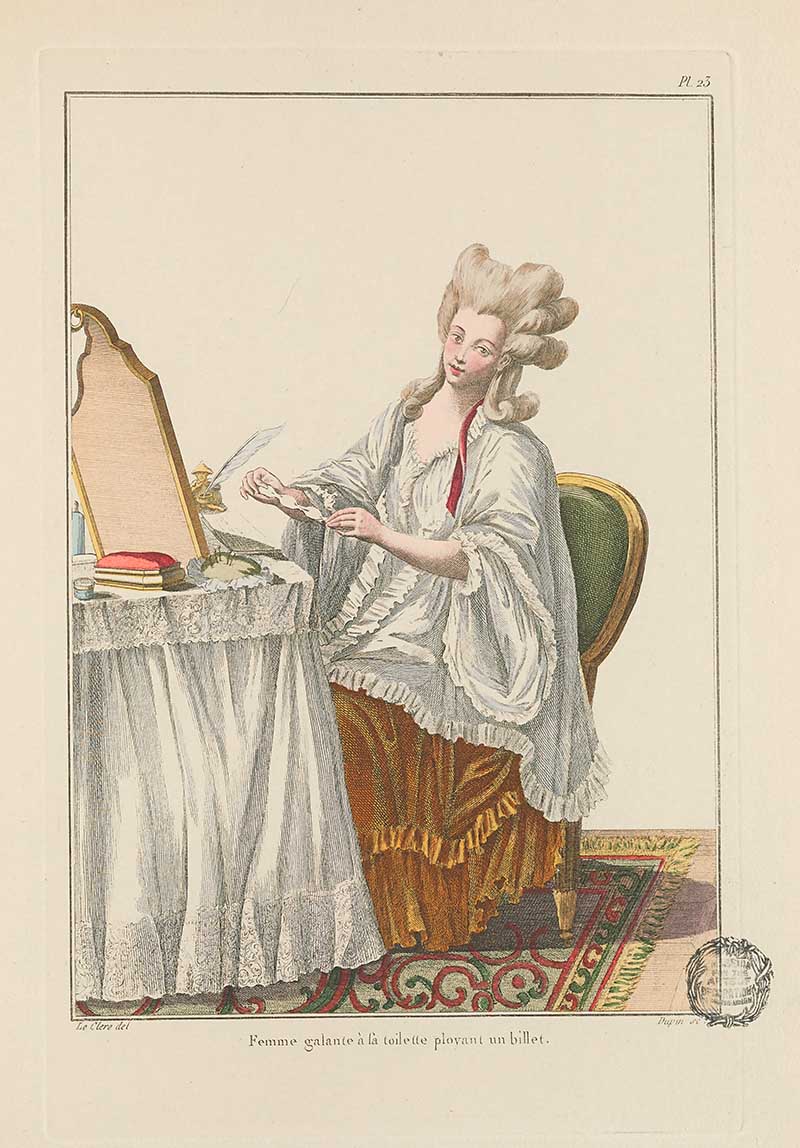
The illustration depicts a young lady in a dressing gown with a high collar and closed sleeves, trimmed with gathered Indian muslin; the collar is trimmed with a simple turned-up band. With a pet parrot.
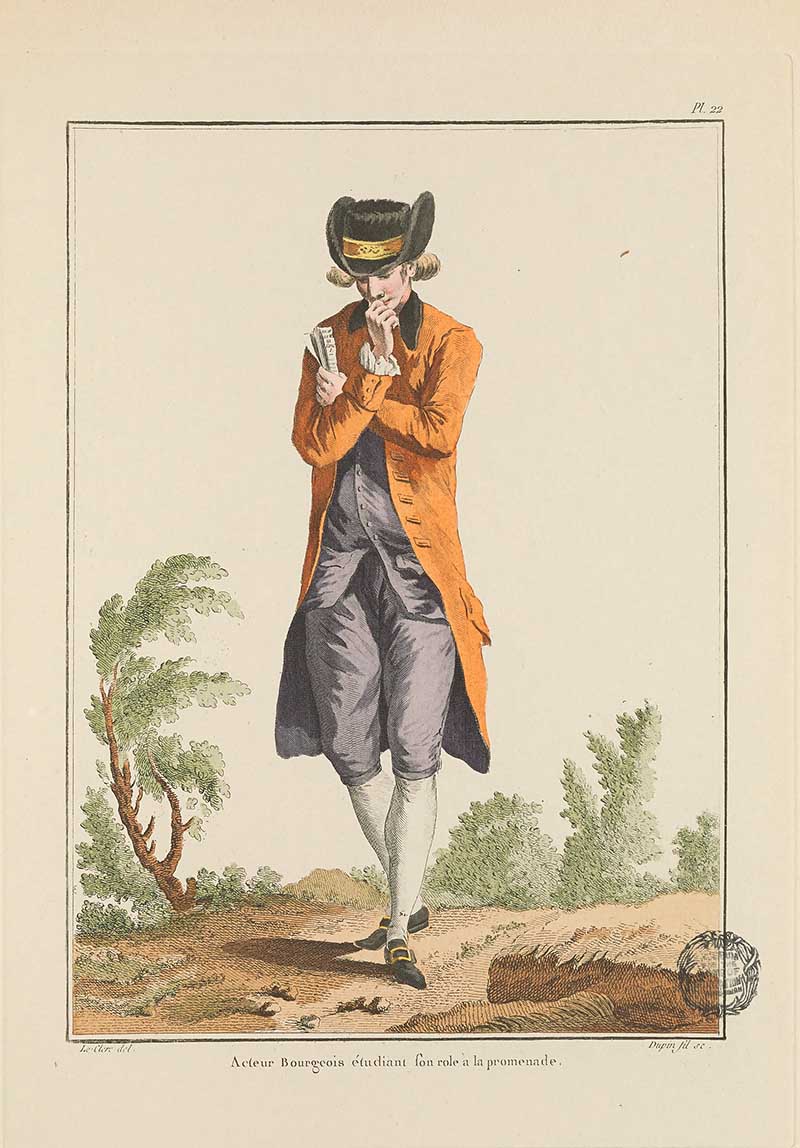
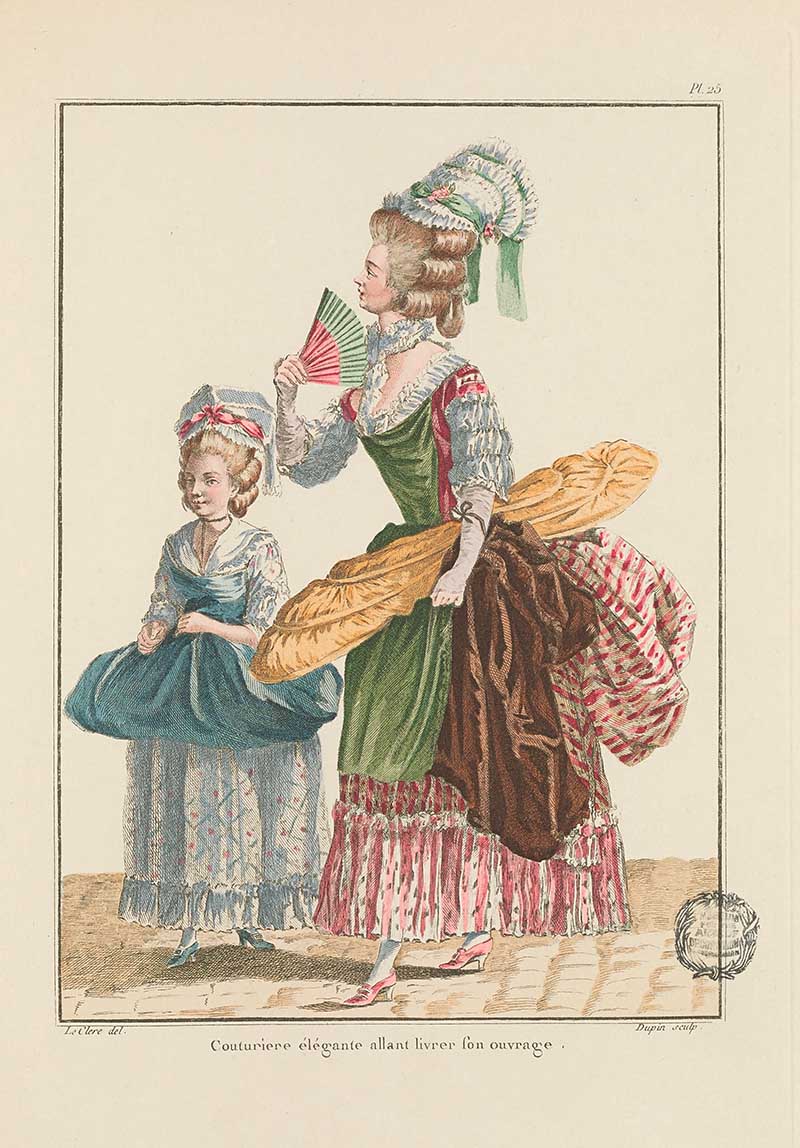
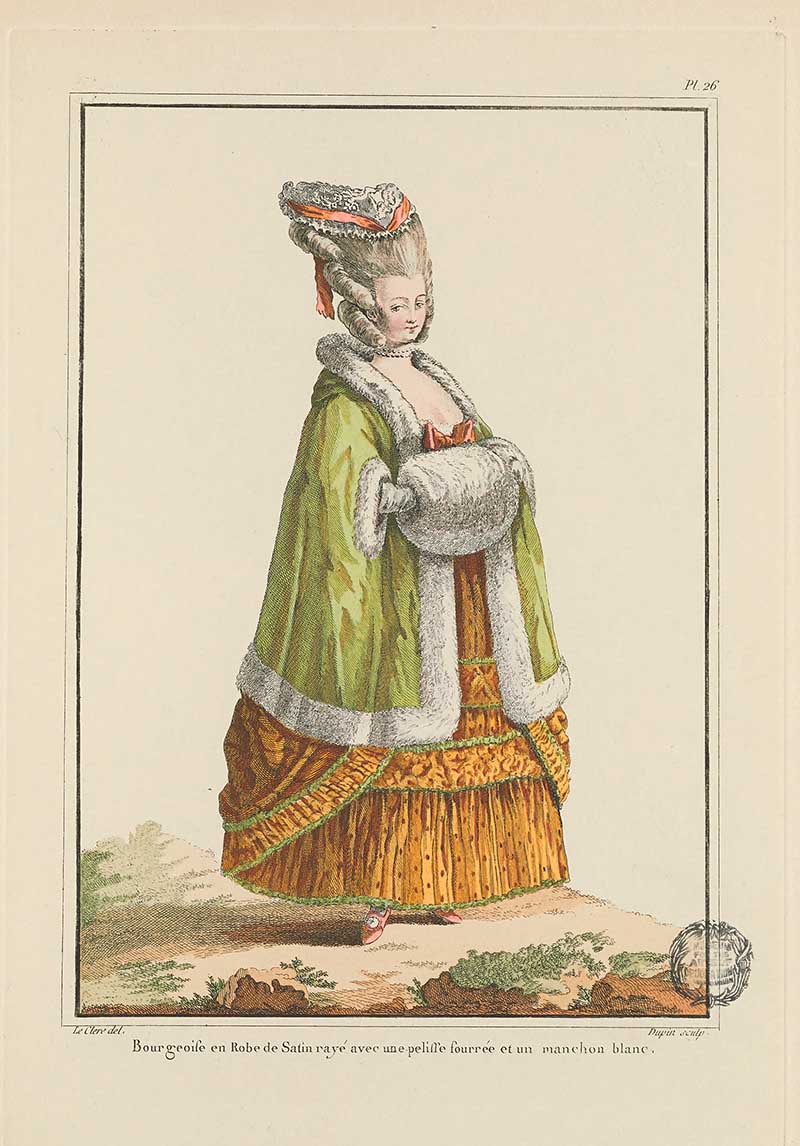
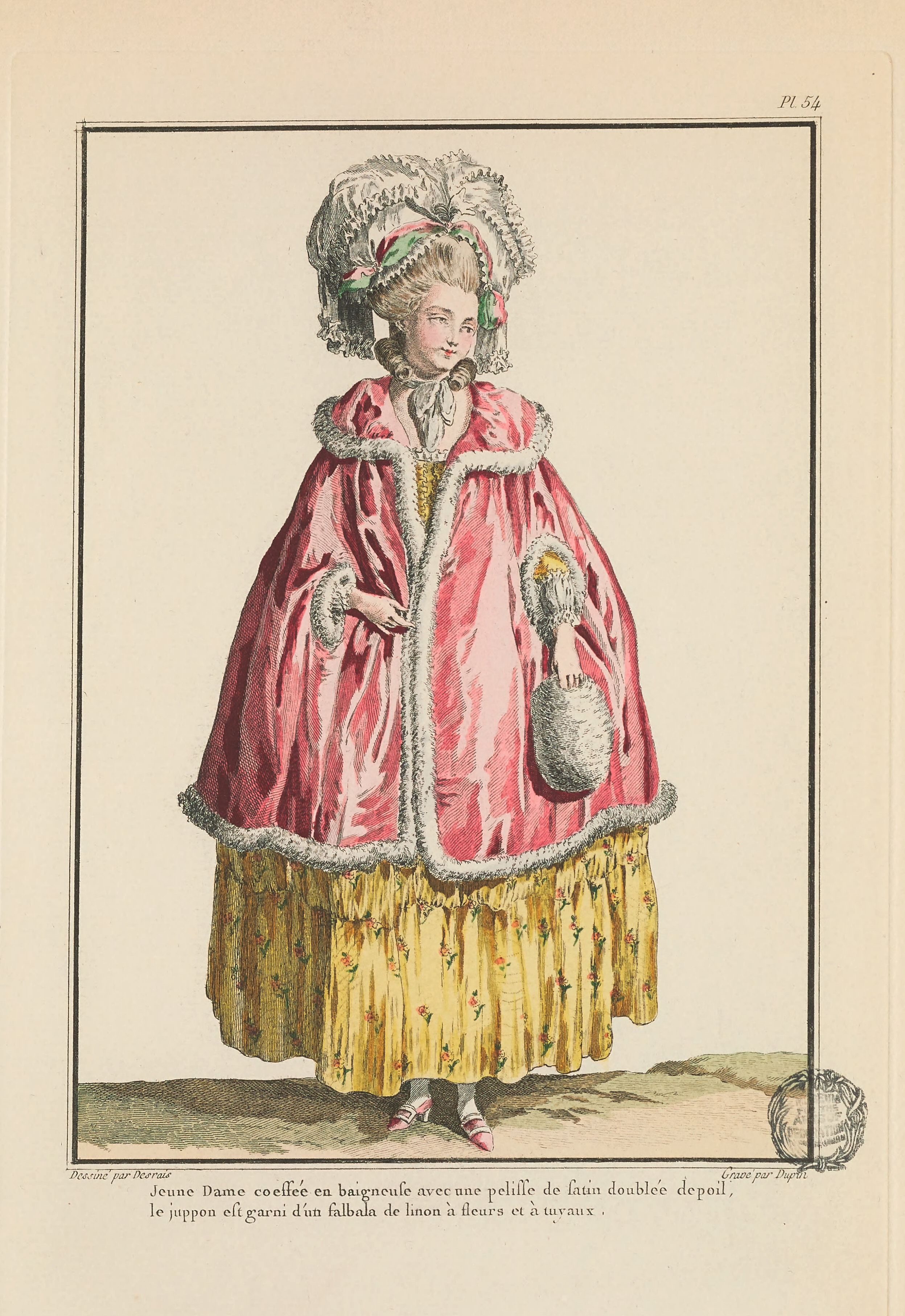
The pelisse is a type of winter coat that ladies throw over their shoulders to protect themselves from the harshness of the season. There are two kinds: plain and fur-lined.
24. Woman In Black Lace Mantilla
Vintage French Fashion 1780
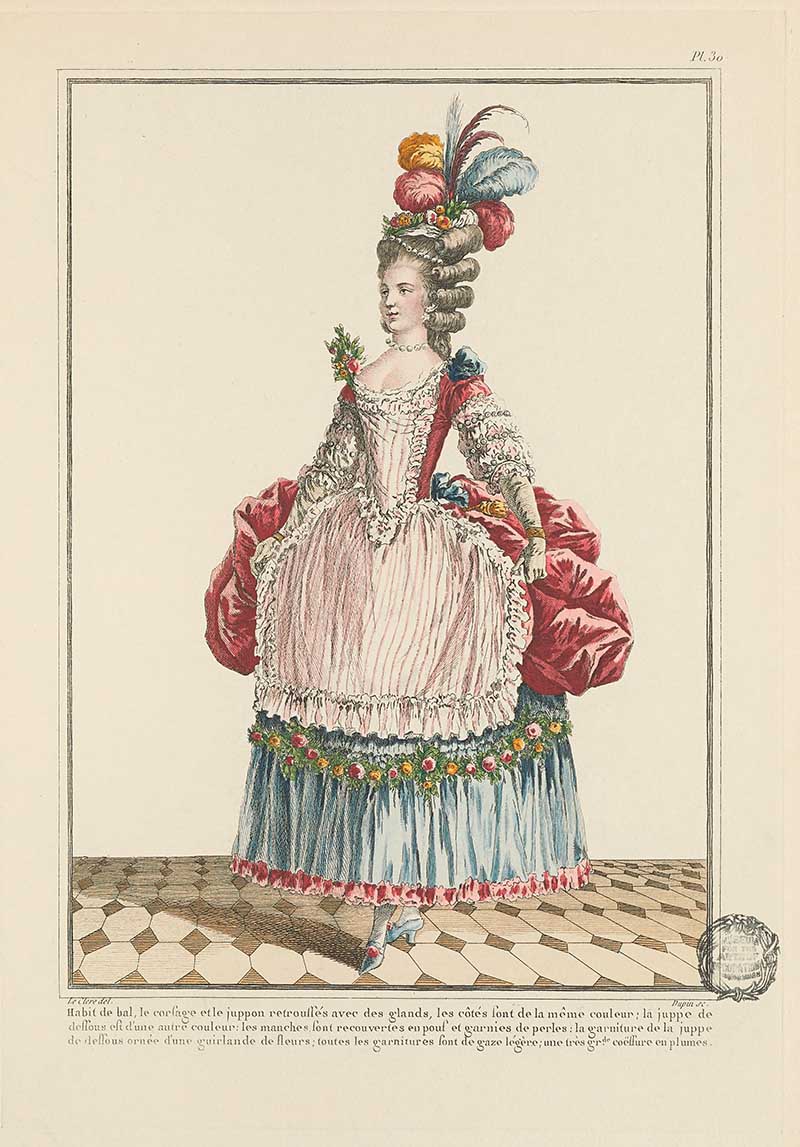
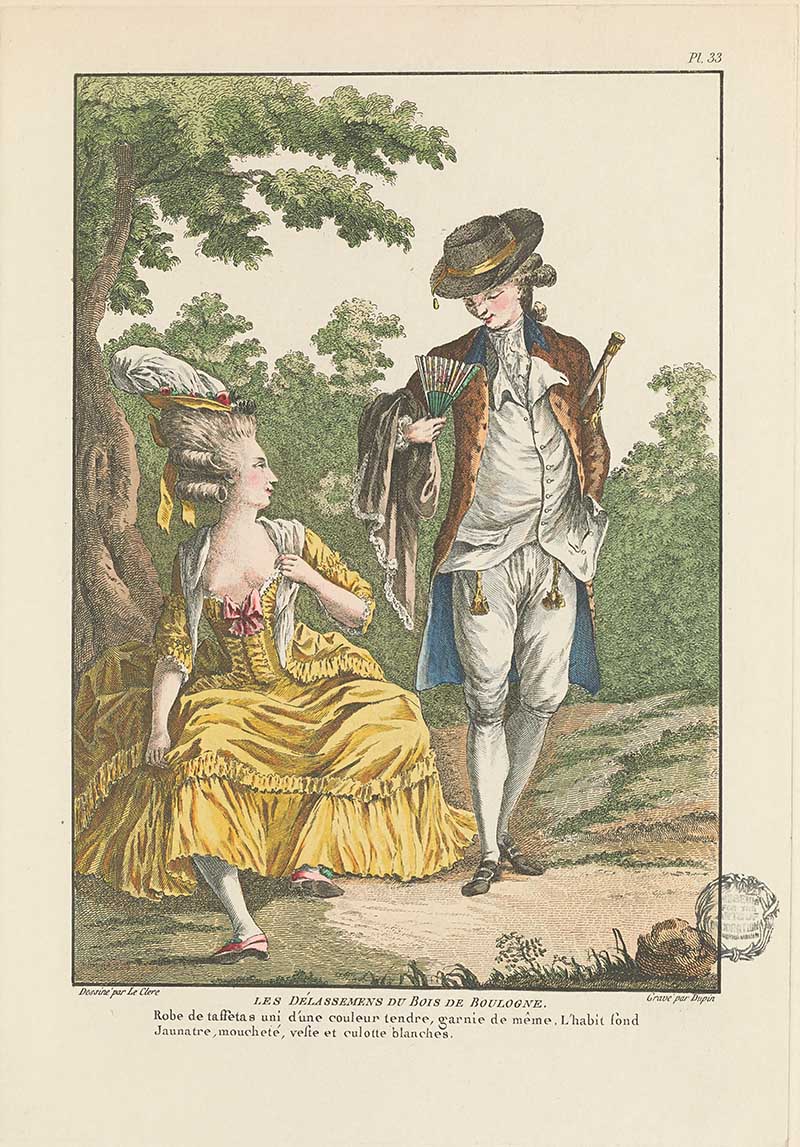
Ball gown. The bodice and skirt are of the same fabric and colour. This skirt is gathered up with tassels at the sides, slightly towards the back, and unevenly at the front near the pockets: this reveals a second skirt of a different colour, trimmed with a striped gauze flounce, adorned at the top with a garland of flowers, held up by bands of flowers and sequins.
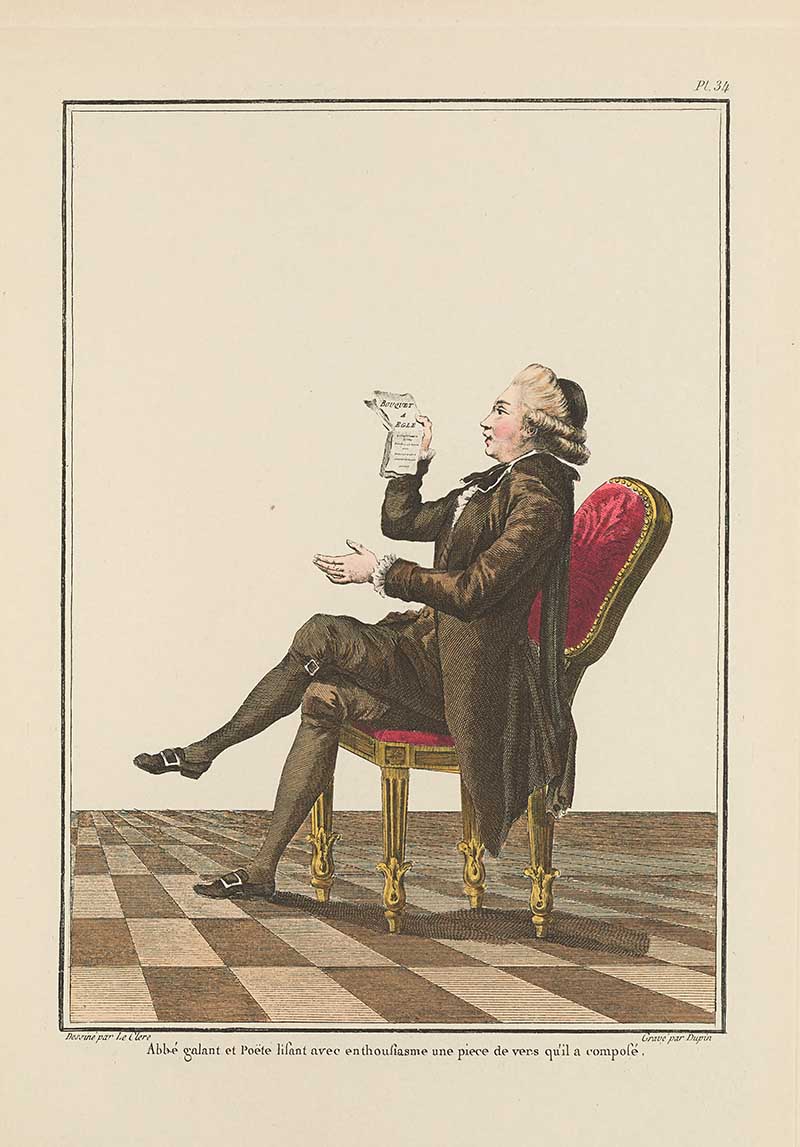
“The hairstyle of this young poet is a half-Greek style, with two circular curls, the sideburn tucked in front of the ear; the back of his head is adorned with a shiny, domed cap, called a lamppost cap; it is of a very beautiful black tortoiseshell, or at least coconut."
Vintage French Fashion 1781-1782
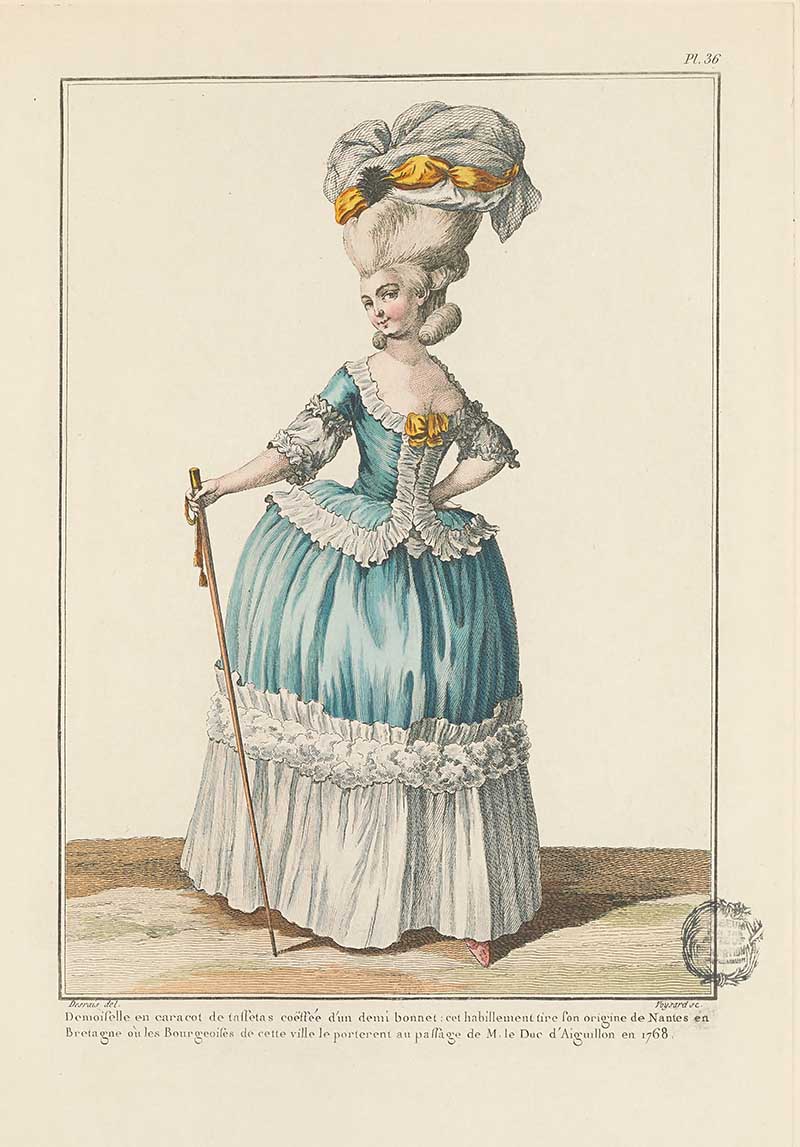
"One should not wear these dresses with too elegant a hairstyle; the one in the picture consists of a medium-sized bonnet with peasant-style curls, made of Italian gauze, pulled far back; the high, open top, with two loops falling very low, and on the bonnet, a wide, plain ribbon, but pinched."
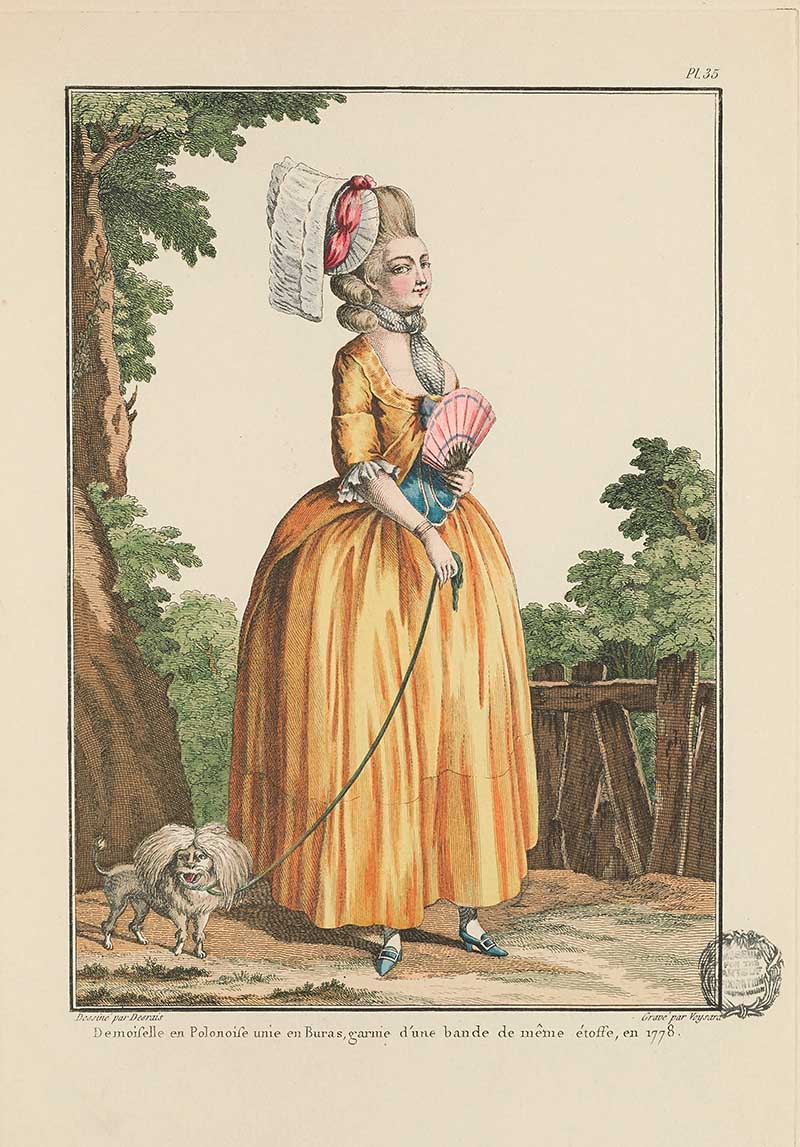
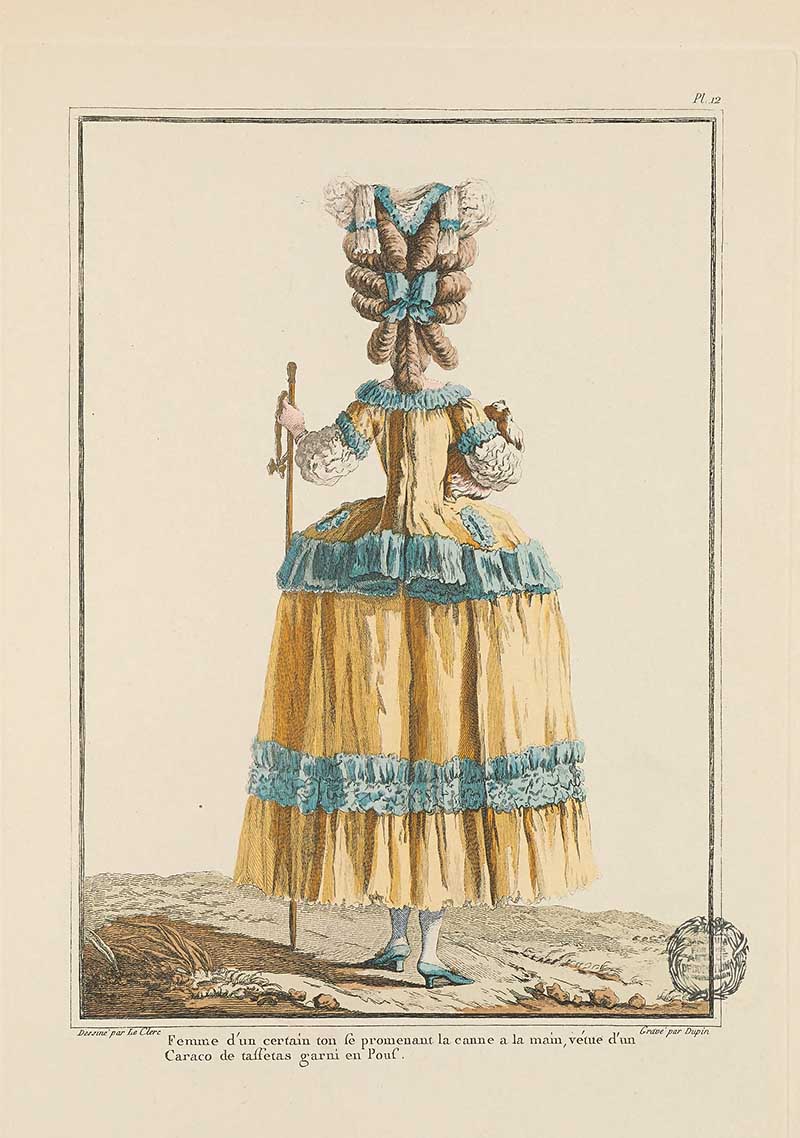
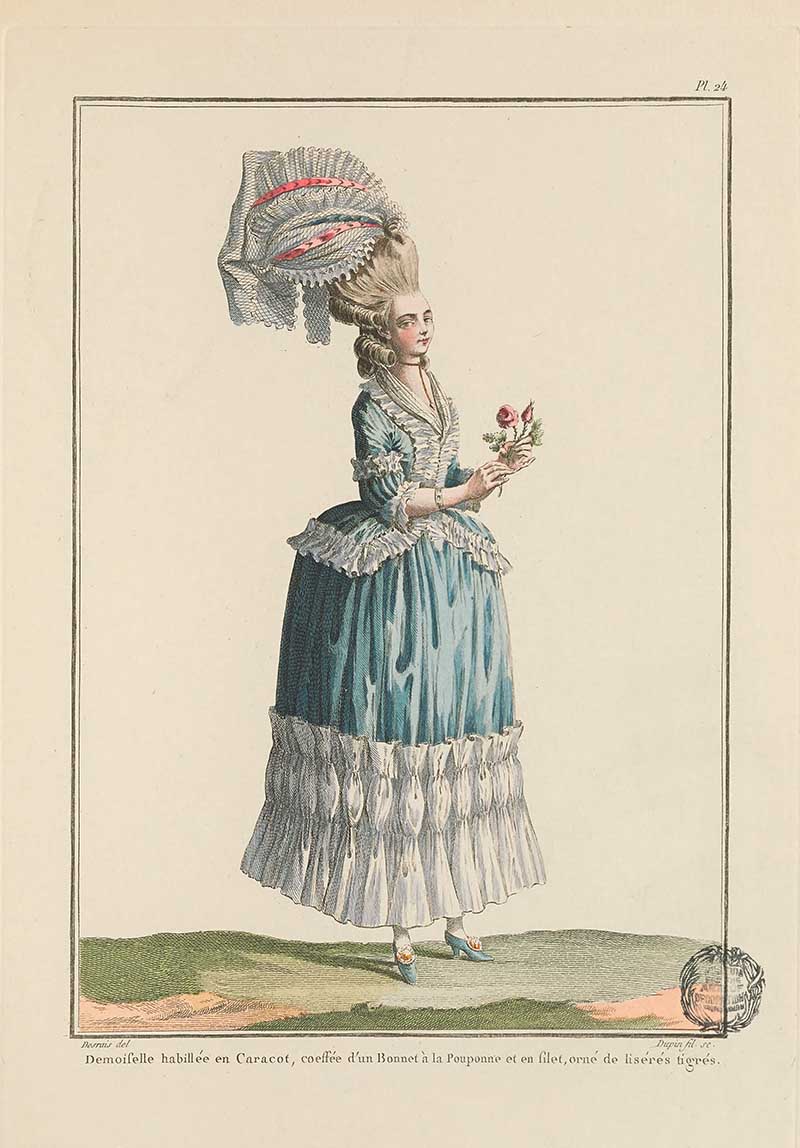
The caption at the bottom of this engraving states that the caraco originated in Nantes, Brittany, where bourgeois women wore it during the Duke of Aiguillon's visit in 1768.
35. Woman in Grey with Parasol
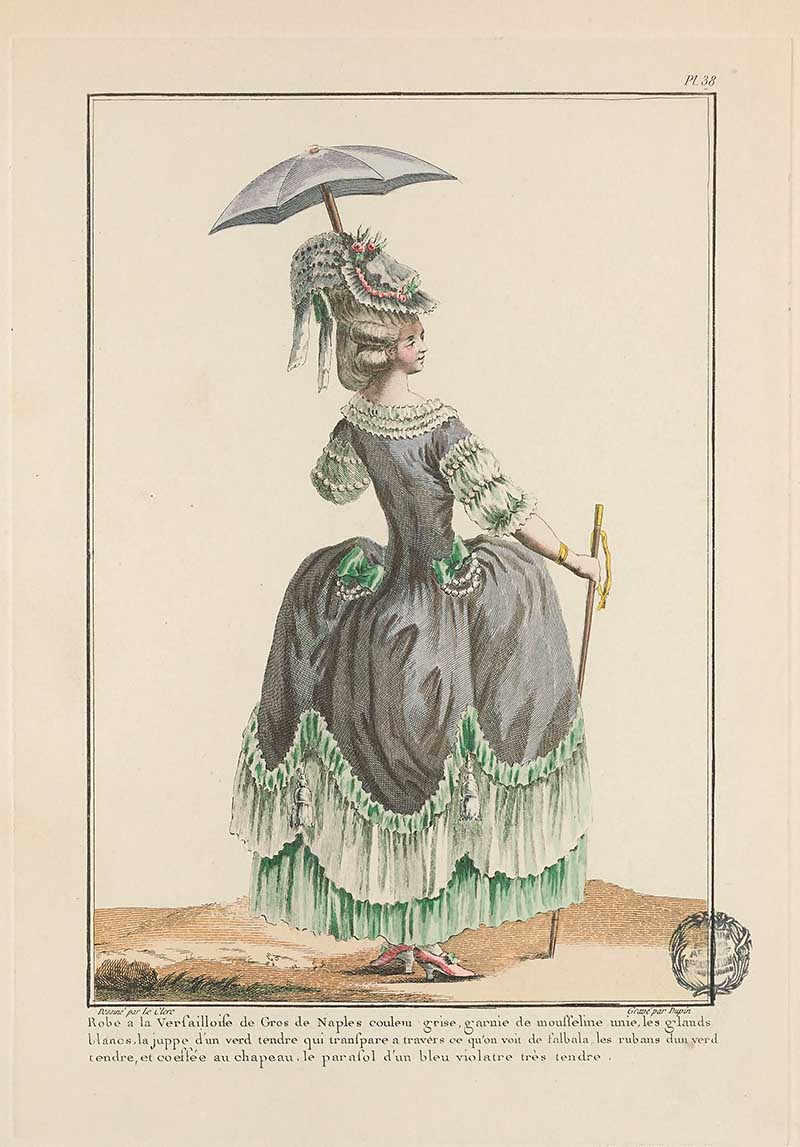
Versailles-style dress: it was in Versailles that these dresses first appeared. The name of the place where they originated became their name.
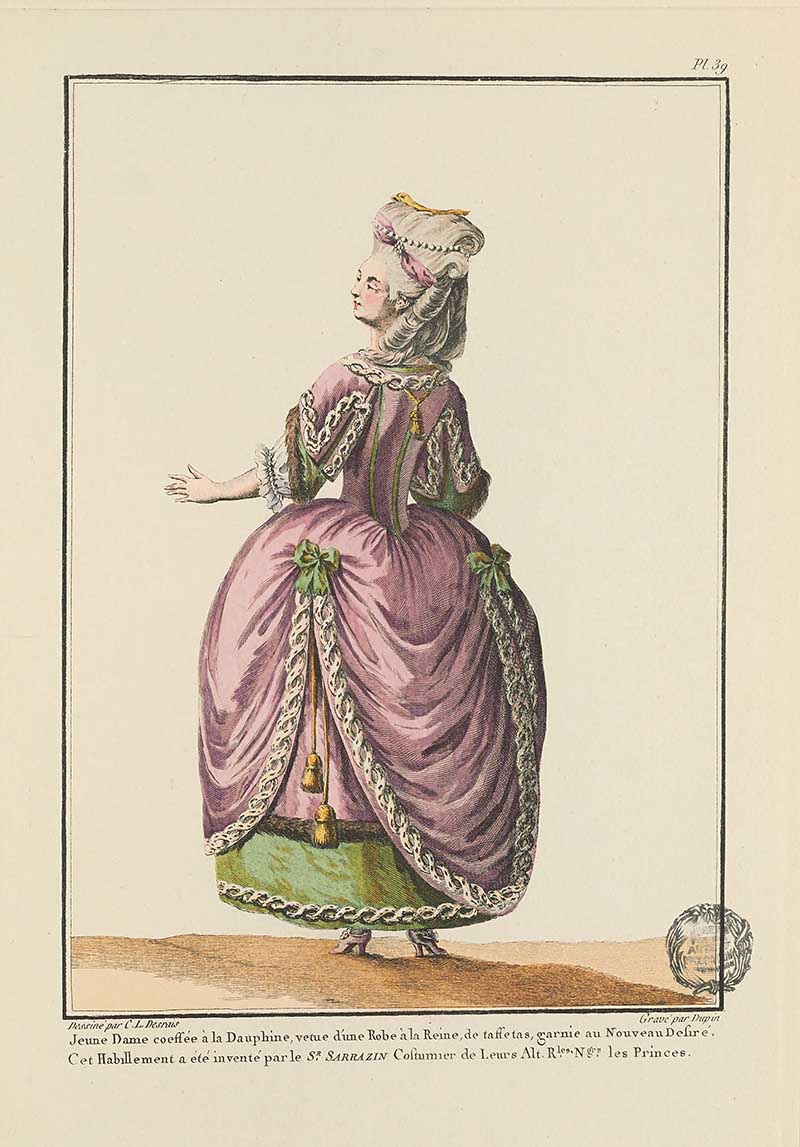
The Queen's Dress: This dress has the dual advantage of being able to be worn trailing or gathered up, at the will of the wearer and at the time they desire; two drawstrings on either side, indicated by two rosettes and adorned with two tassels, achieve this effect; by pulling one tassel, the dress rises, as it appears in the image; by pulling the other tassel, it lowers and becomes flowing; this change is made in an instant.
Vintage French Fashion 1783-1785
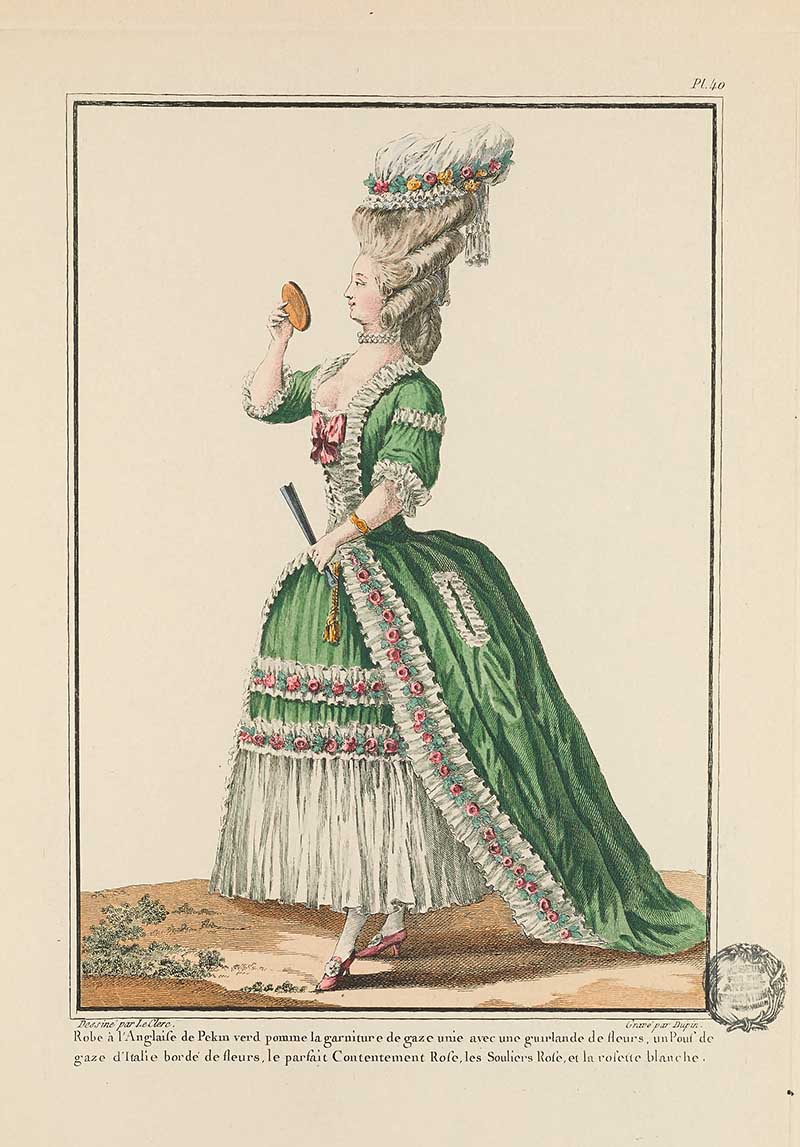
English-style dress: True English-style dresses have small, flat pleats at the back, stopped at the waist, and barely reach the ground: this is how ladies wear them in England.
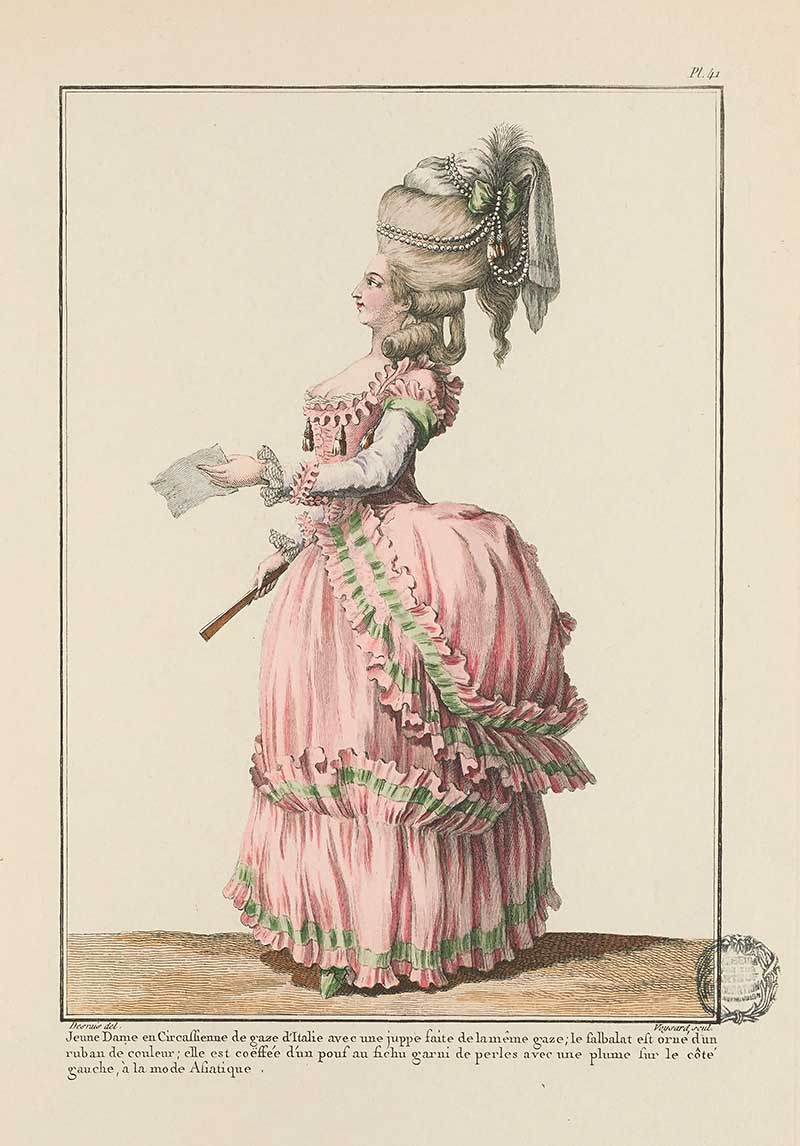
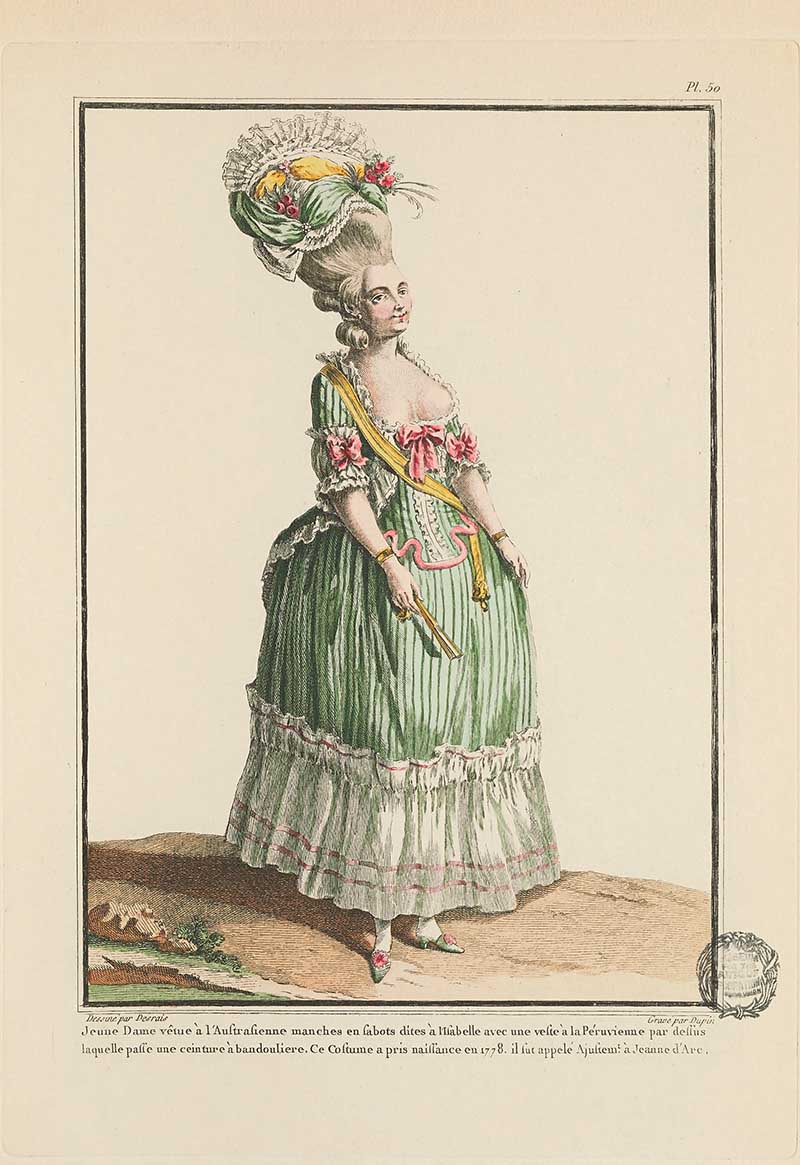
Circassian Amadis dress, very elegant: the bodice is closed with a trim all around, higher at the back than at the front, forming a turned-down Medici collar.
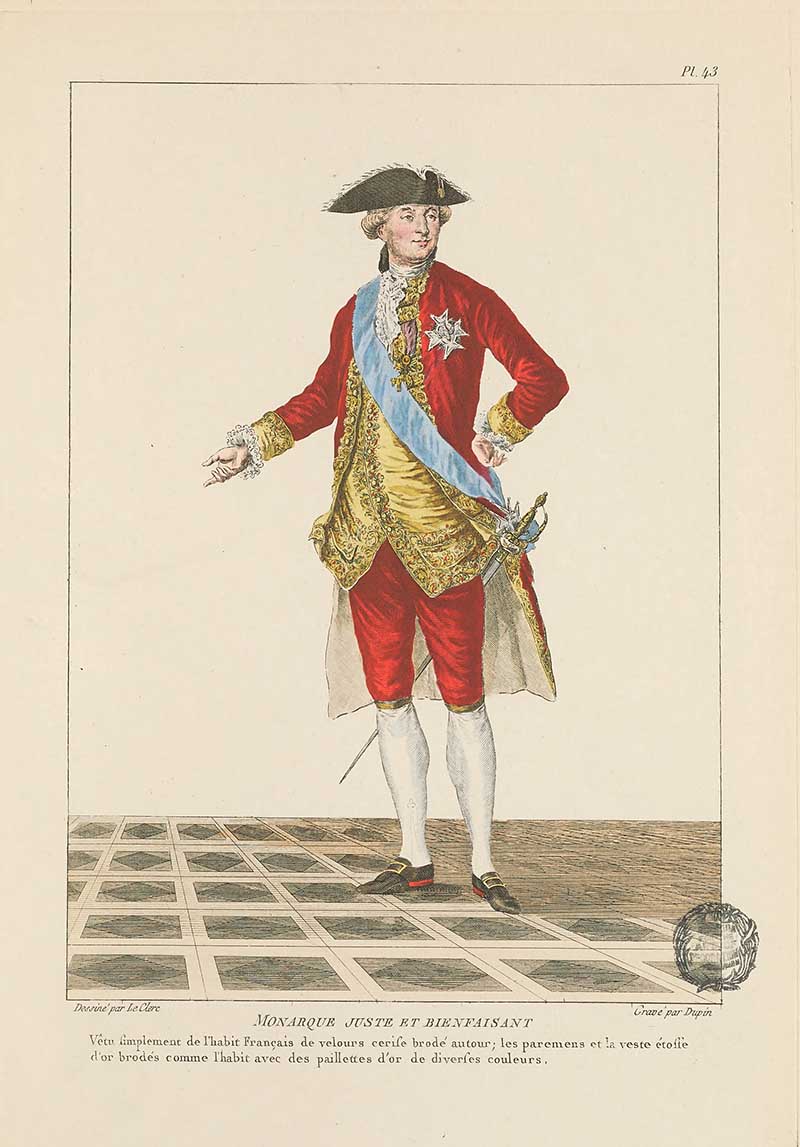
He is dressed in French-style ceremonial attire, with the blue ribbon of Saint Louis worn across his chest; the cross of the same order on his chest; and, around his neck, suspended from a dark red cord, the insignia of the Order of the Golden Fleece. Breeches and coat of cherry velvet embroidered with gold; jacket of gold fabric embroidered with the same metal; shoes with square gold buckles; French-style tricorn hat.
Vintage French Fashion 1785-1787
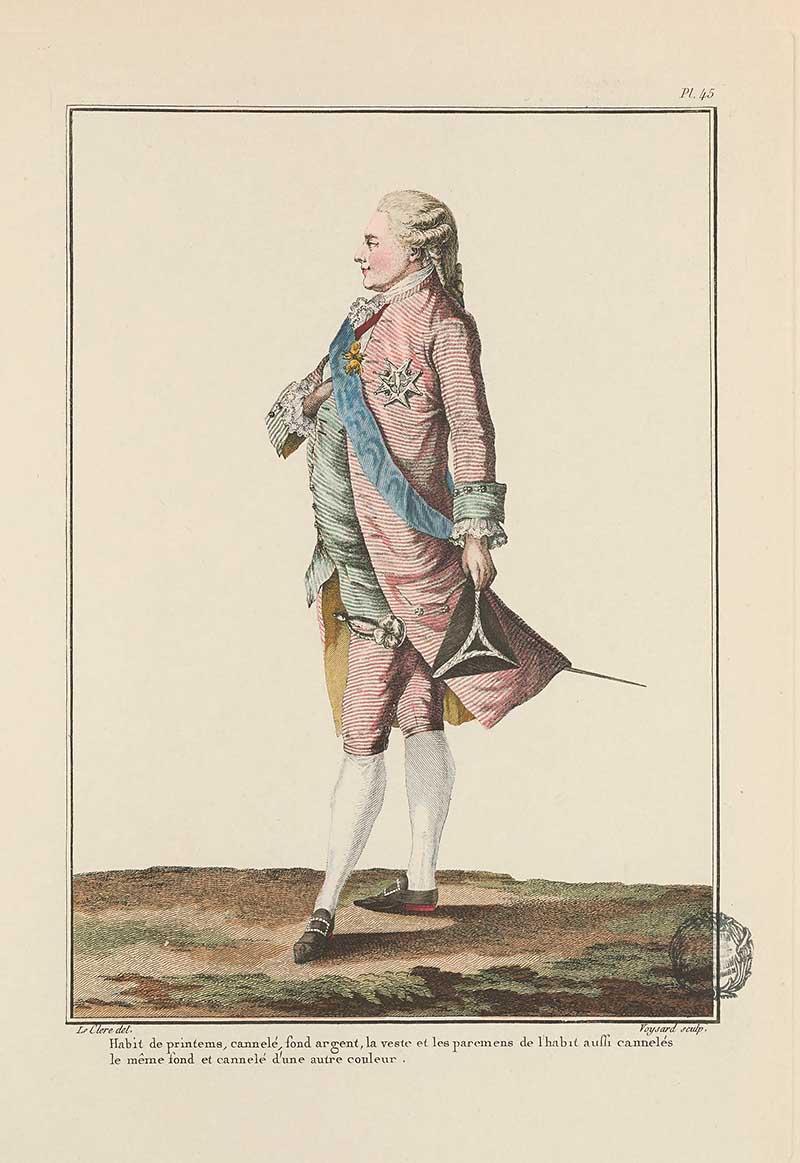
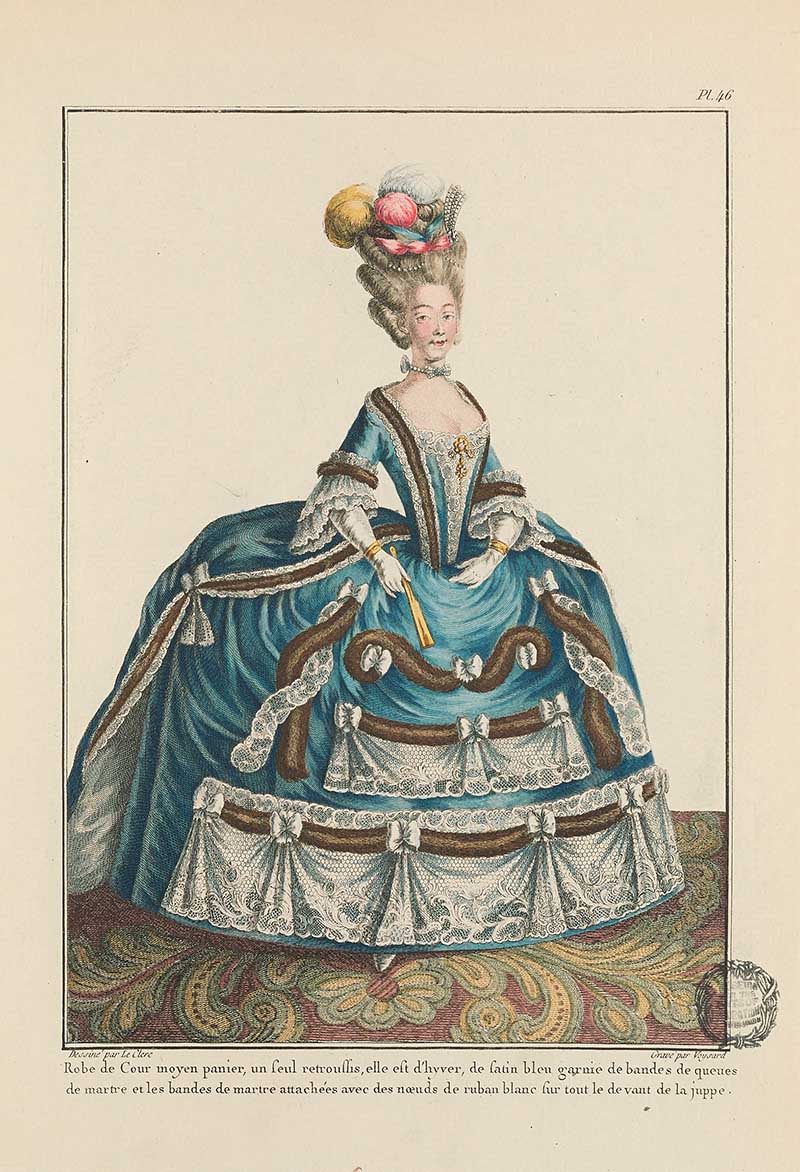
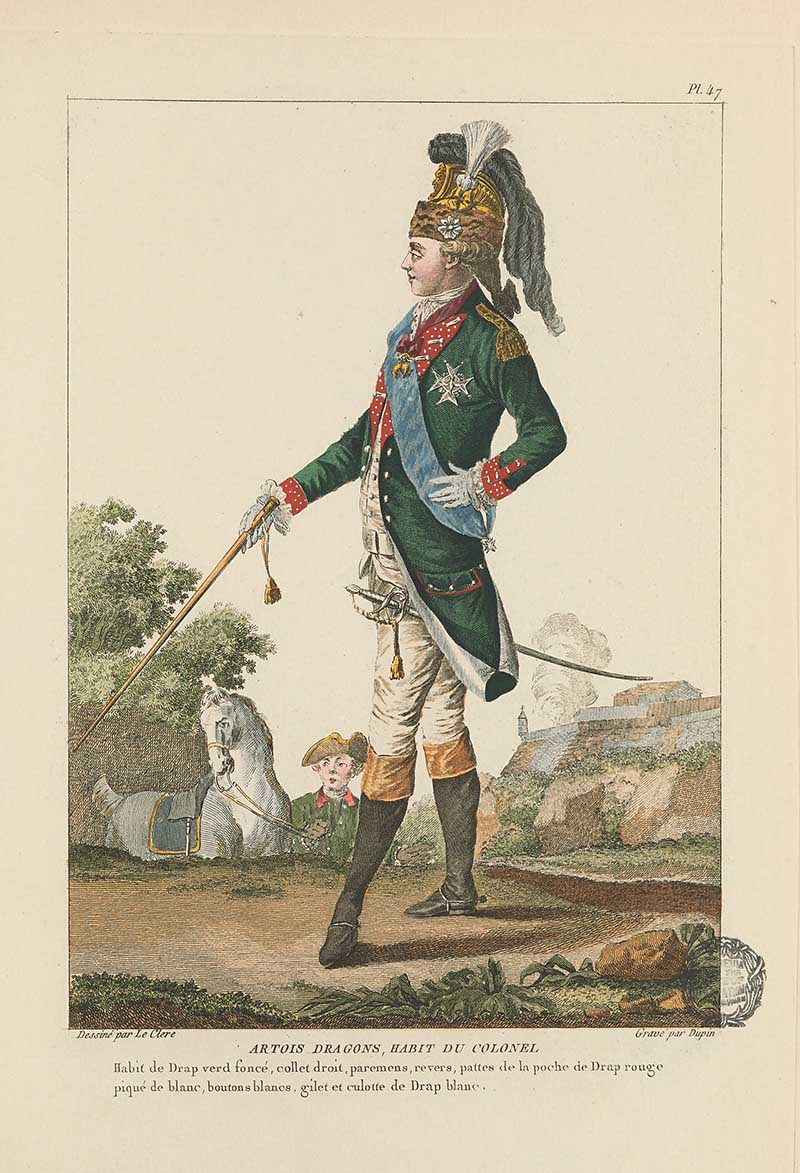
The Count of Artois, in his uniform as Colonel of the Artois Dragoons.
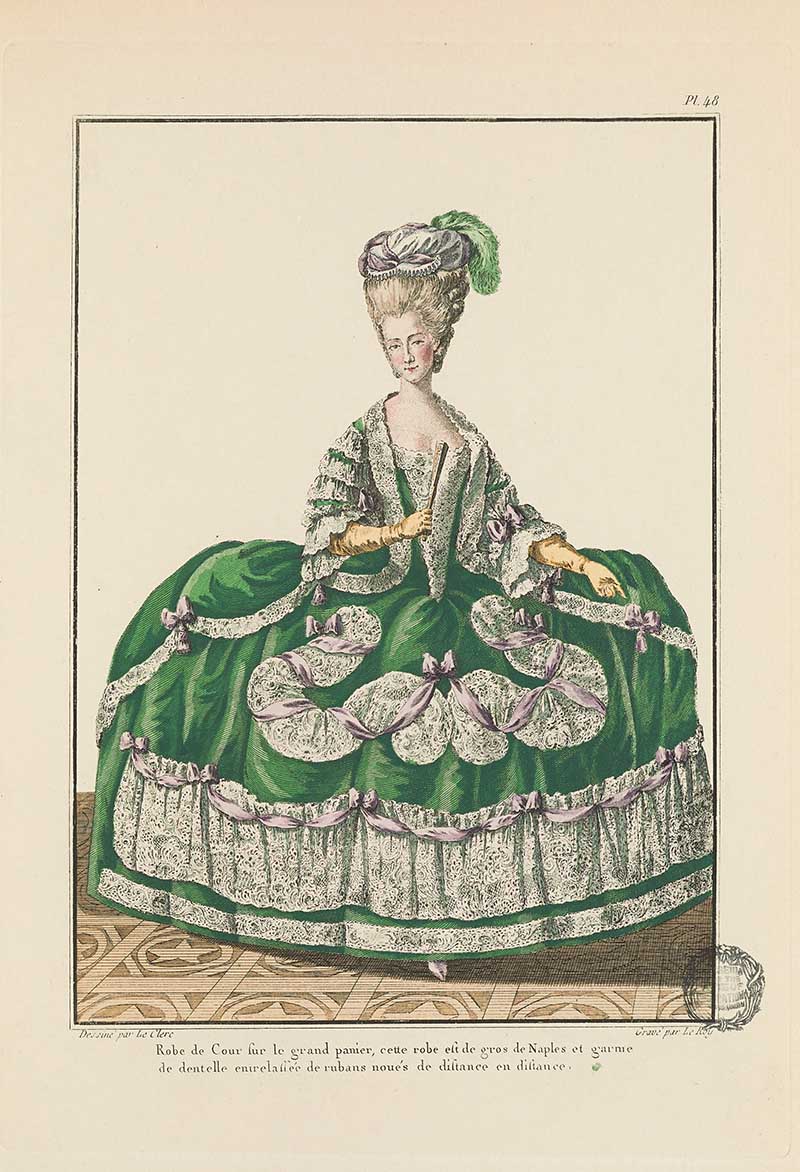
The Countess of Artois.
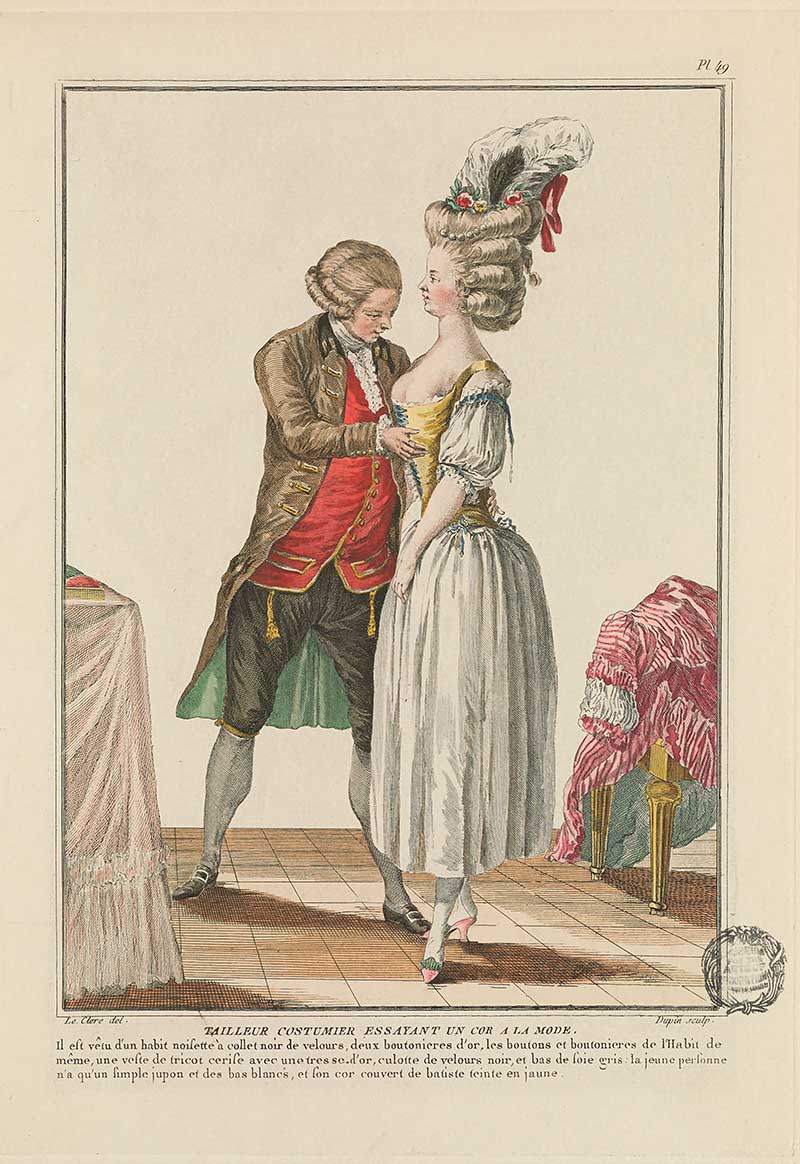
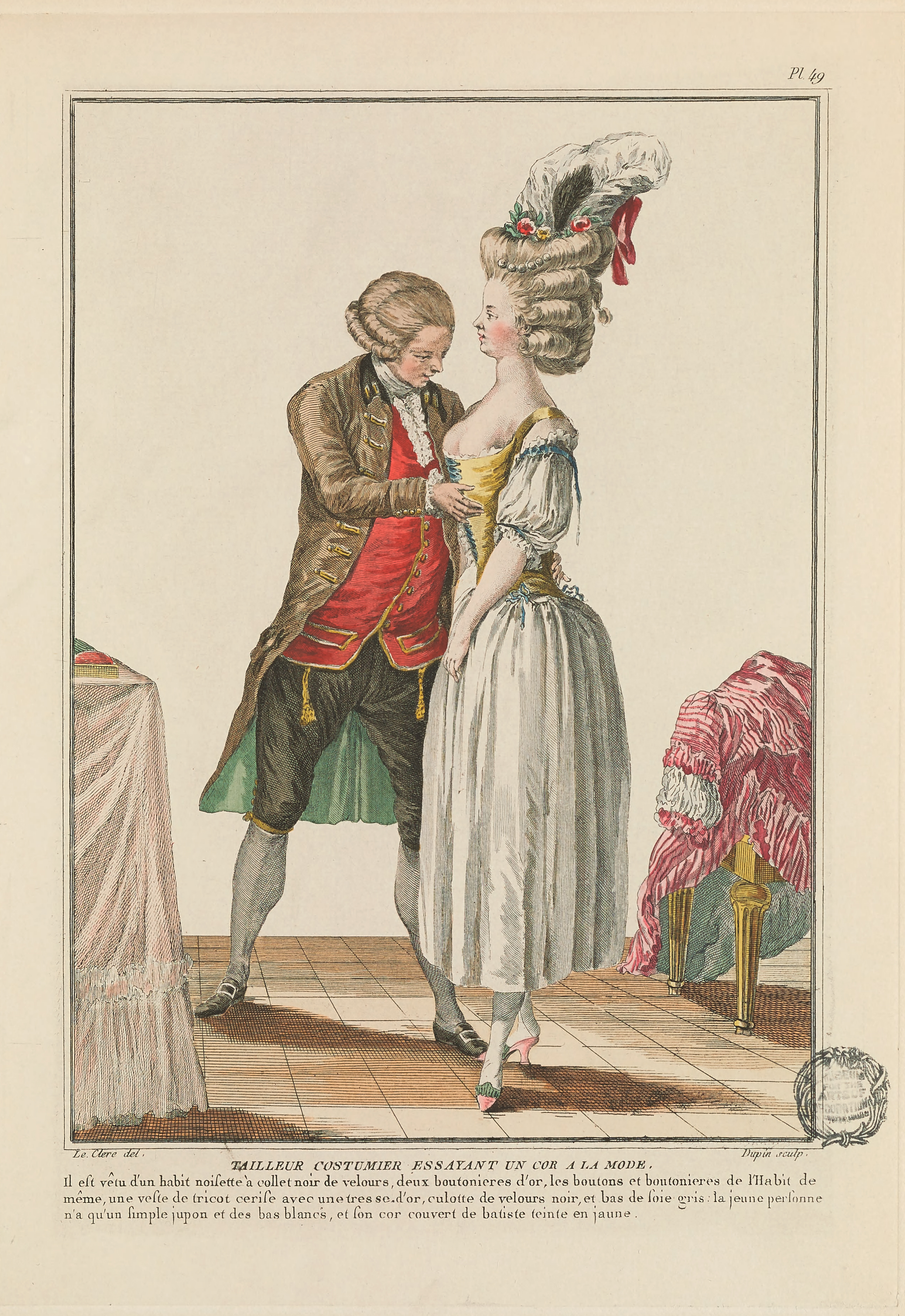
With a corset.
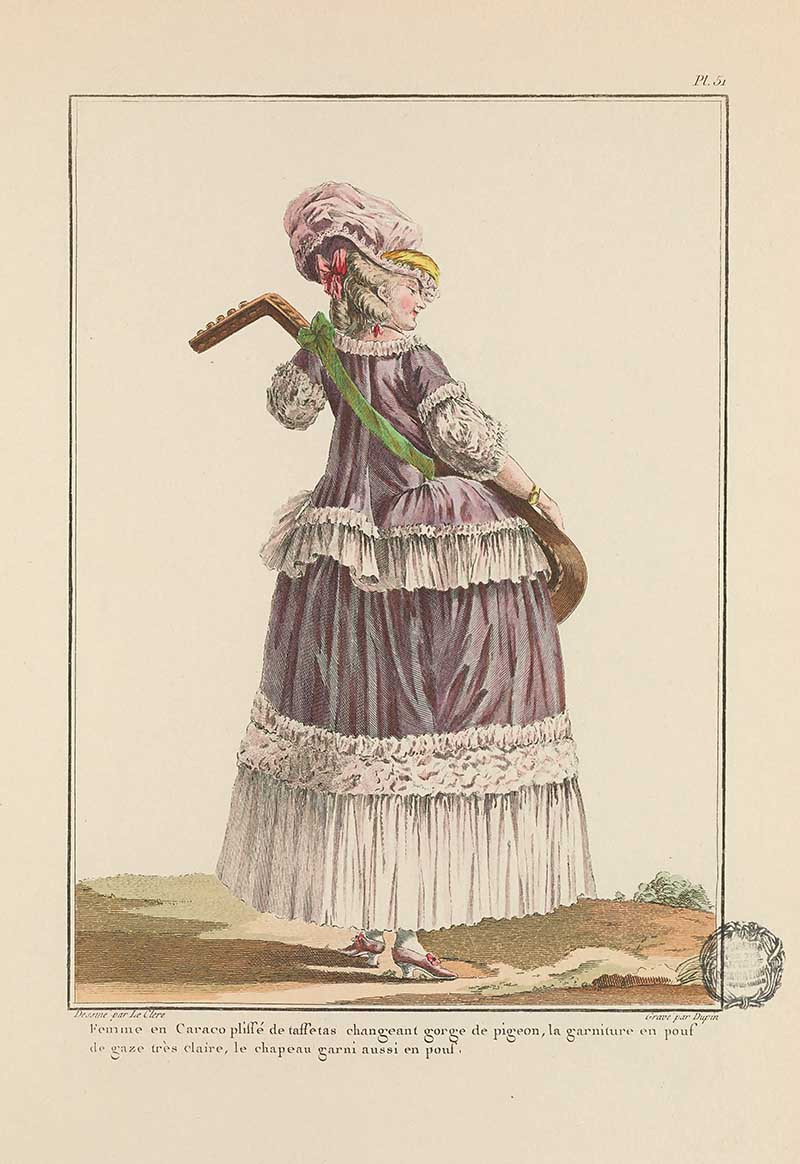
46. Blue Dress Towering Headwear
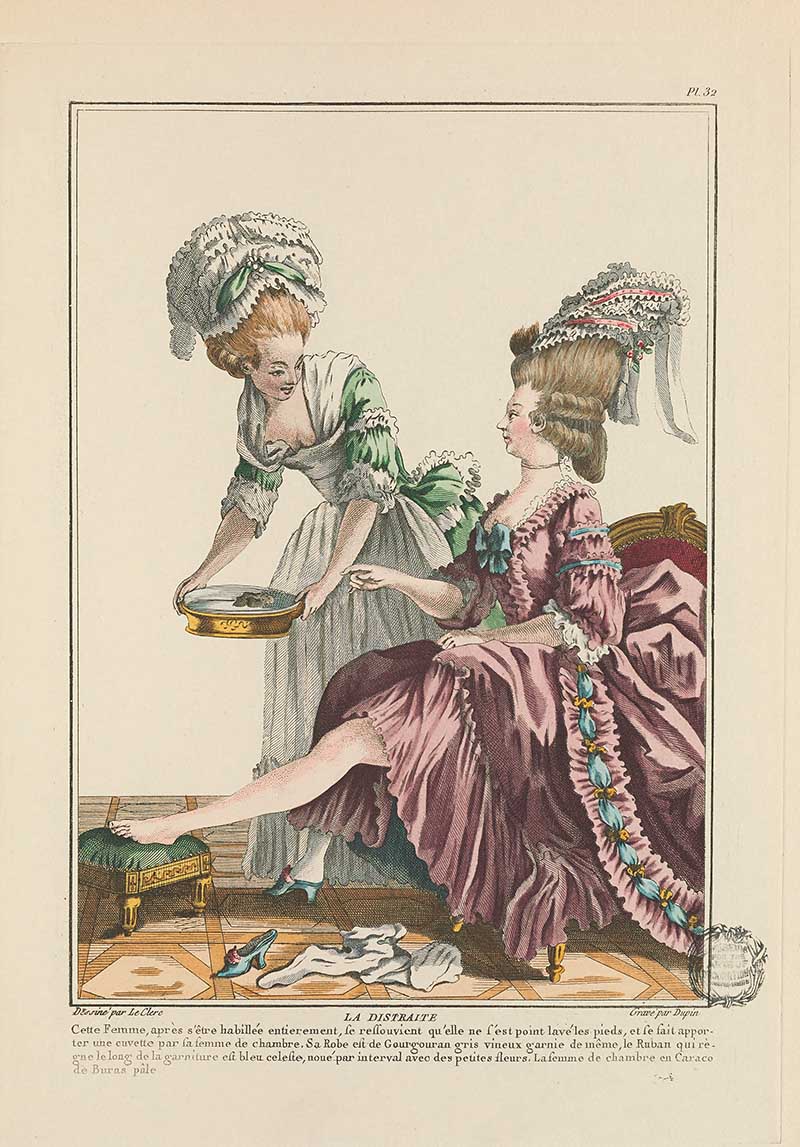
"This beautiful woman, abandoned by her husband, resorts to the healing flask, which her doctor gave her, to banish the vapours."
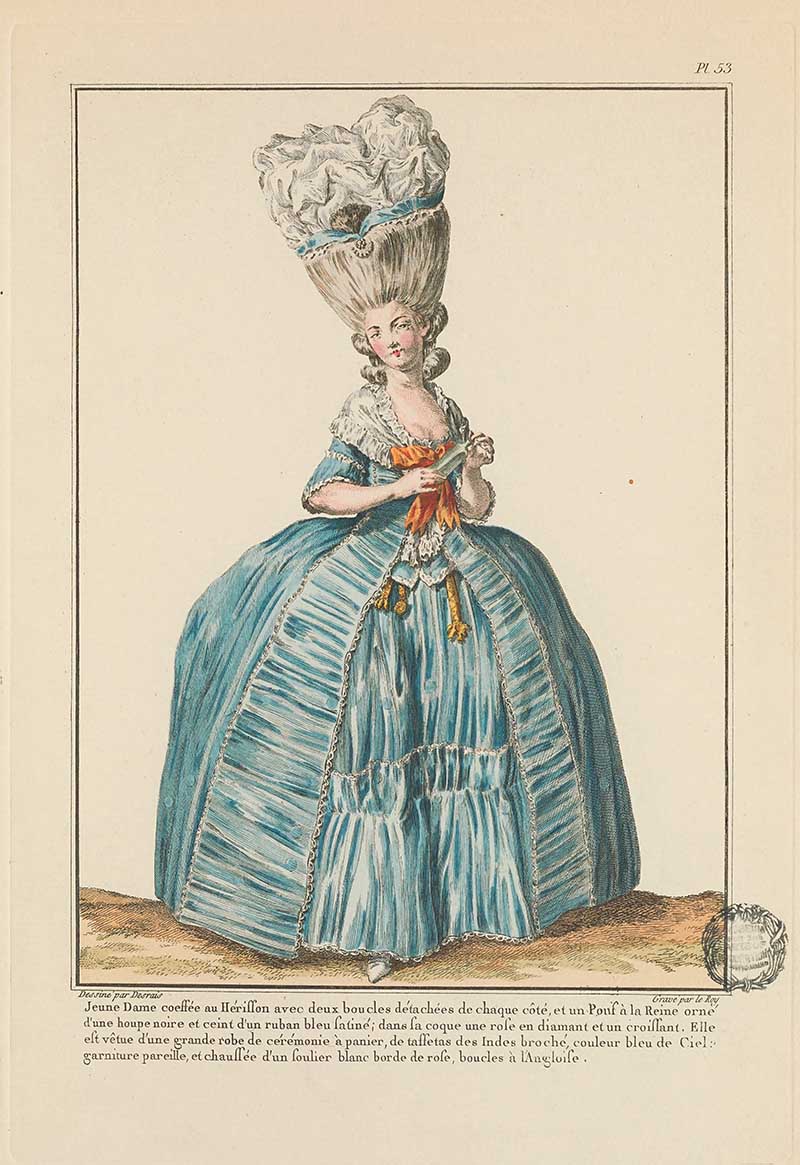
Demi-Parure, or winter negligee. This costume is highly sought after by ladies when they have to go out in the morning, whether to run errands or for some other reason. It consists of a fur coat casually draped over an elegant bedcoat.
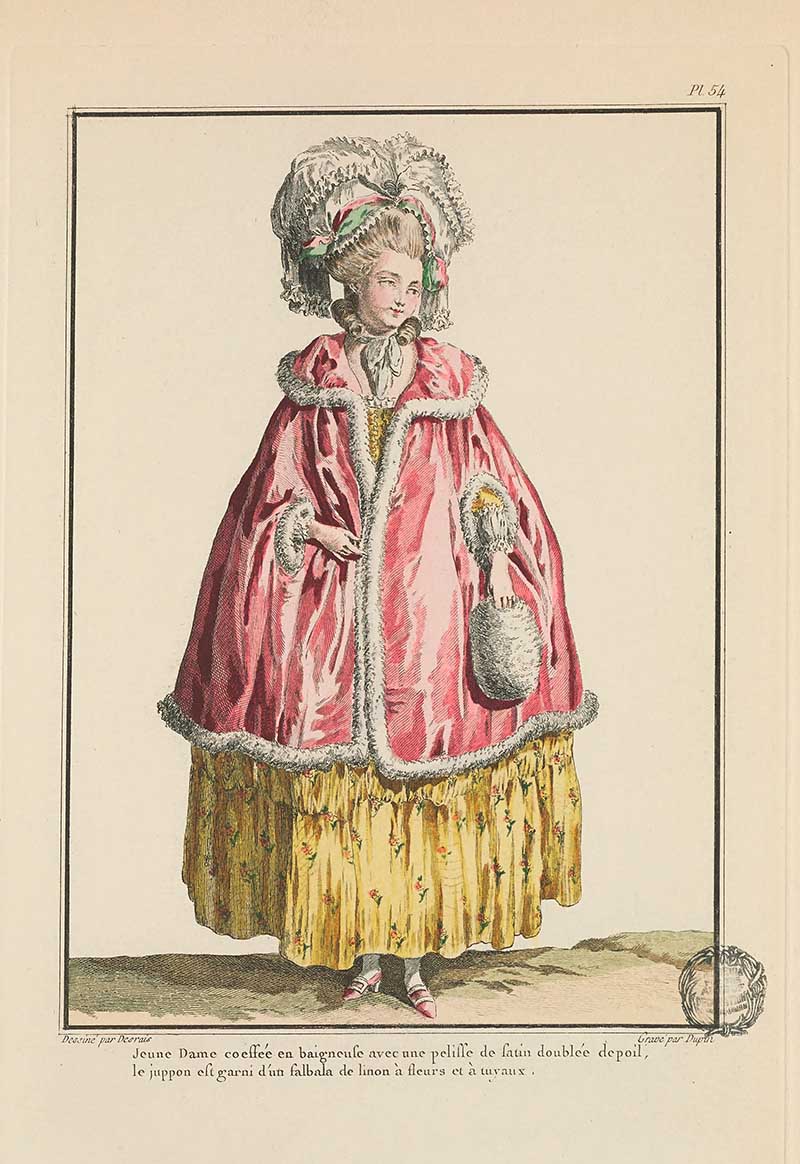
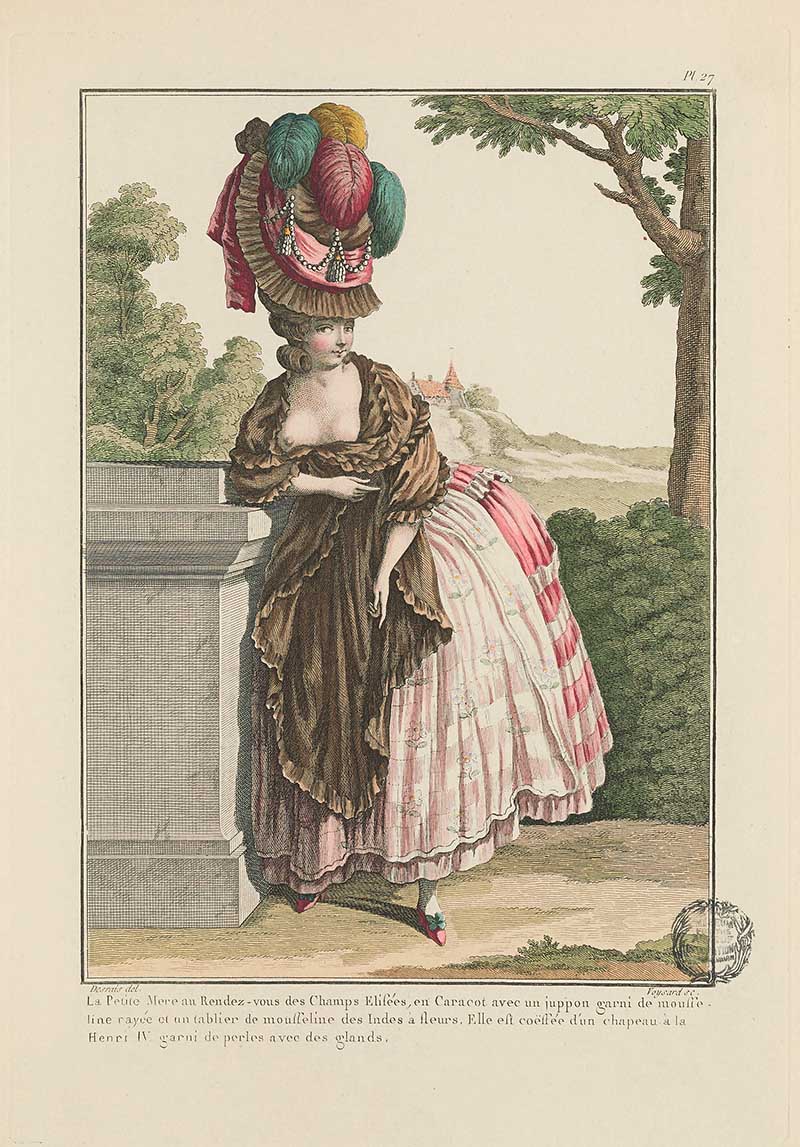
"A young, imprudent woman who has become a mother. It is called imprudent because she leaves one breast exposed, which a good muslin kerchief should protect from the elements. This costume can be classified as a morning negligee."
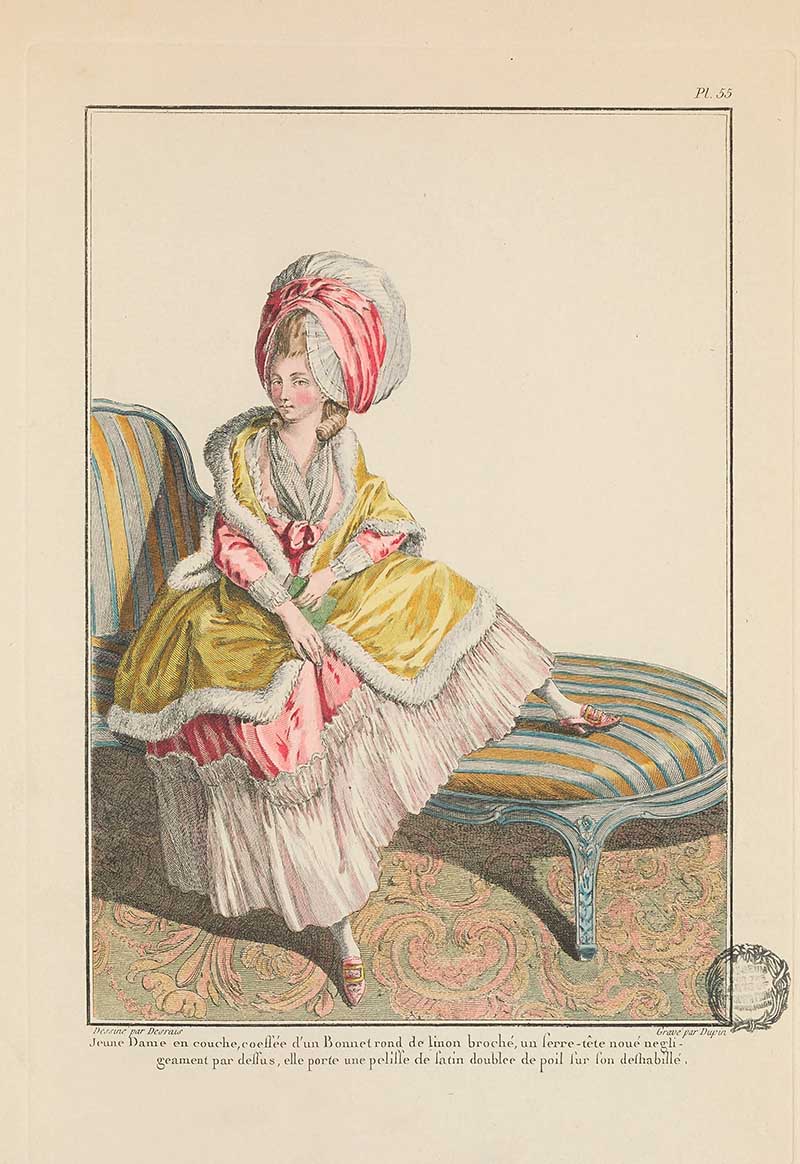
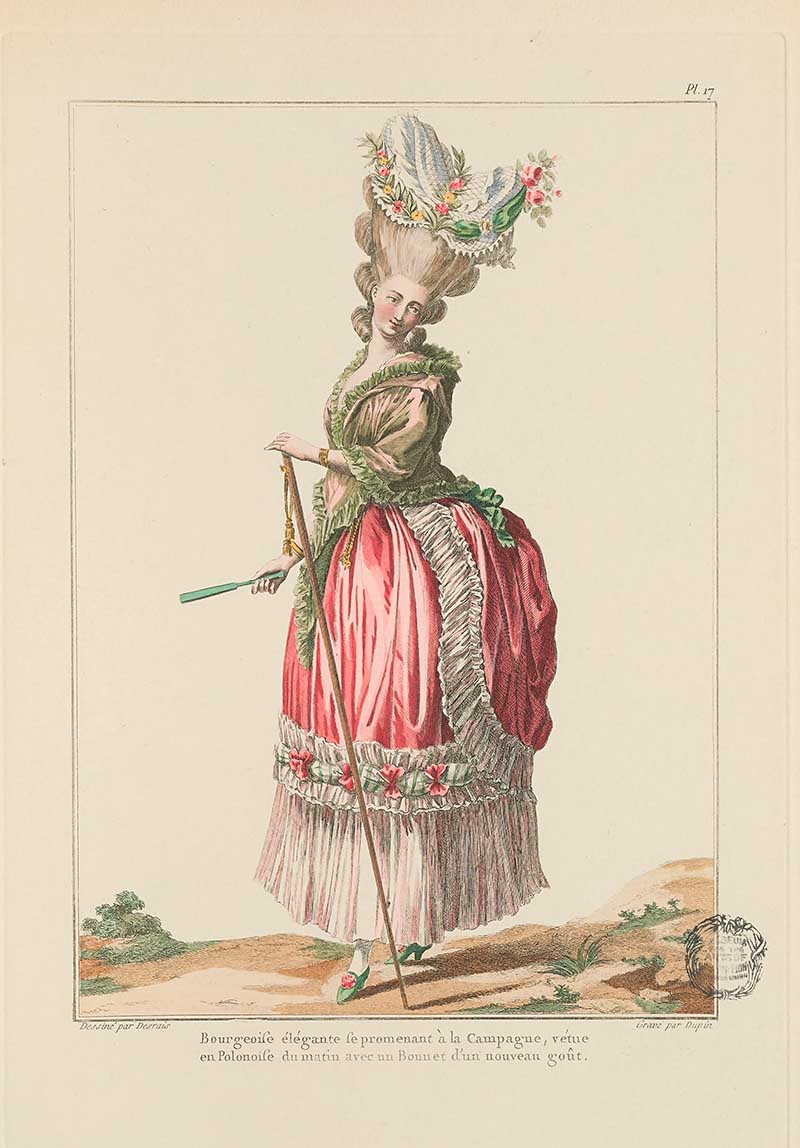
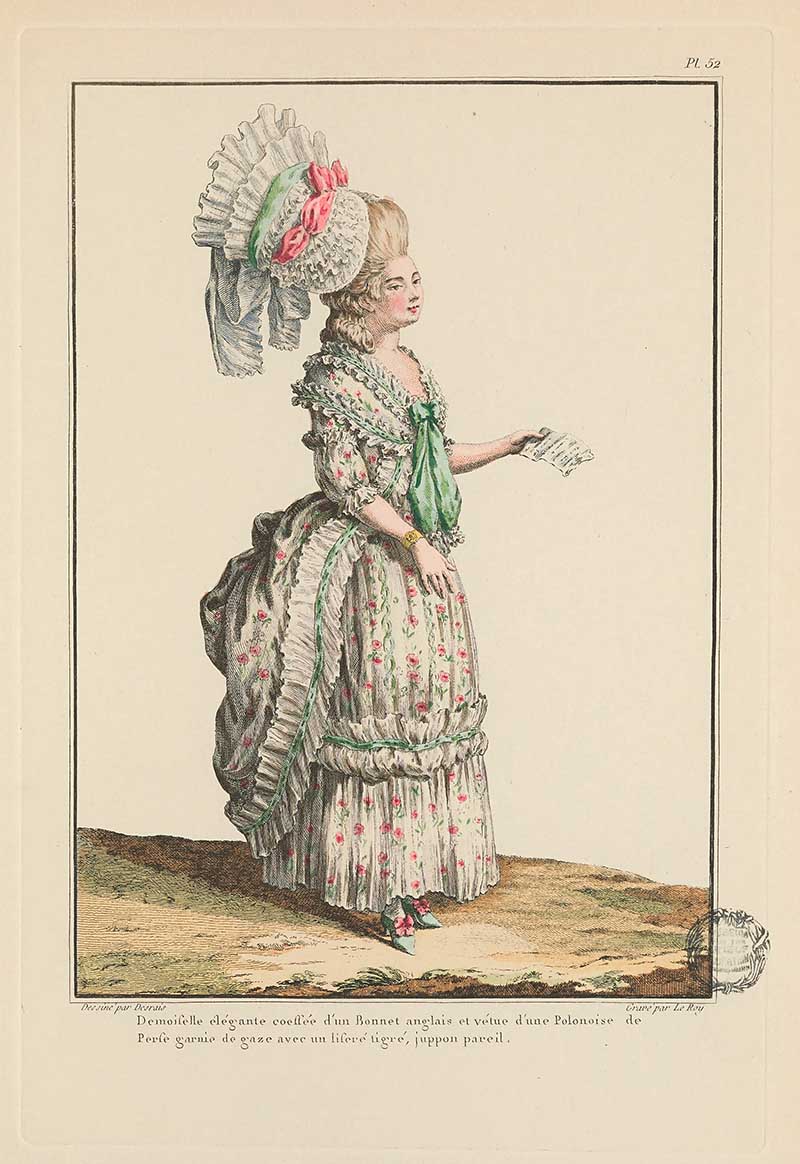
"A casual polonaise: these dresses are simply fastened at the bust like regular polonaises, are not gathered at the waist, have long wings, and a very short train."
More Vintage Fashion and Design Inspiration
I hope you've enjoyed this glimpse into the fashionable world of eighteenth-century Paris. These charming fashion plates may be over 240 years old, but the colours, details and sheer creativity still feel remarkably fresh.
If you love vintage fashion illustrations, you might also enjoy my collection of Paul Poiret fashion prints. Created more than a century after Galerie des Modes, Poiret's bold Art Nouveau and Art Deco-inspired designs show just how dramatically fashion changed while remaining every bit as stylish. Also, check out the wonderfully quirky vintage trade costumes of Martin Engelbrecht
For more historical costumes, take a look at my collection of vintage paper dolls, which includes beautiful outfits from different periods and countries, including several elegant French fashions.
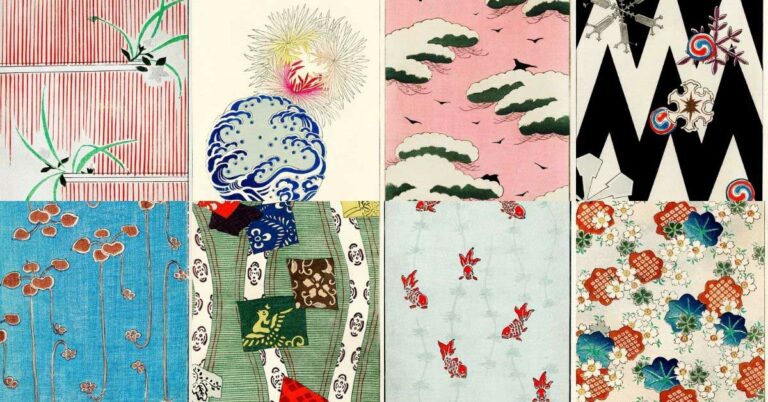
Fashion and textiles have always gone hand in hand, so you may also enjoy browsing these vintage kimono patterns from Japan. Their decorative motifs, colours and textile designs offer a fascinating contrast to the fashionable Parisian styles featured here.
And if it's the patterns rather than the clothing that catch your eye, don't miss my collection of vintage floral textile designs. Many of the prints would look just as at home on a dress fabric today as they did when they were first created.
If you fancy, you can Buy Me A Coffee Here.
Fabulous collection!
Thank you, the costumes are quite something!