Vintage Fish Prints From Bloch’s Natural History of Fishes
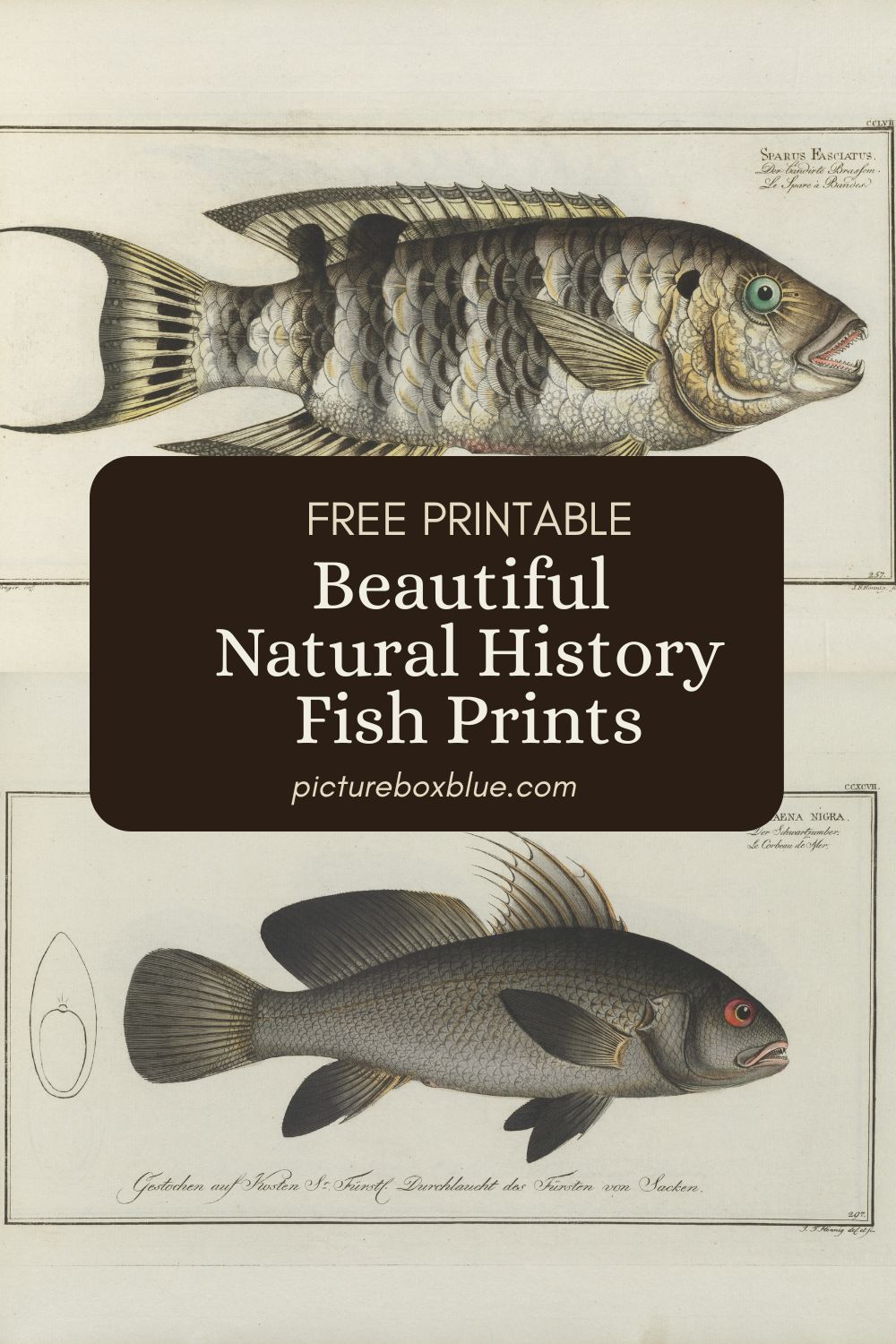
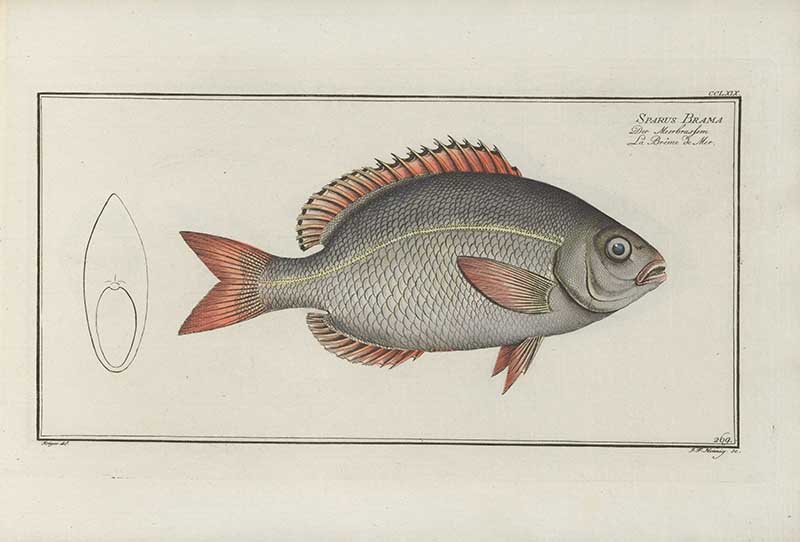
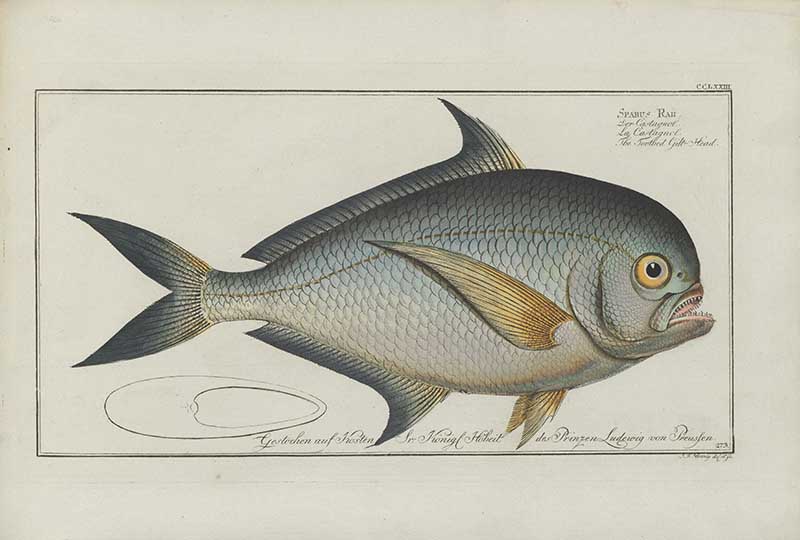
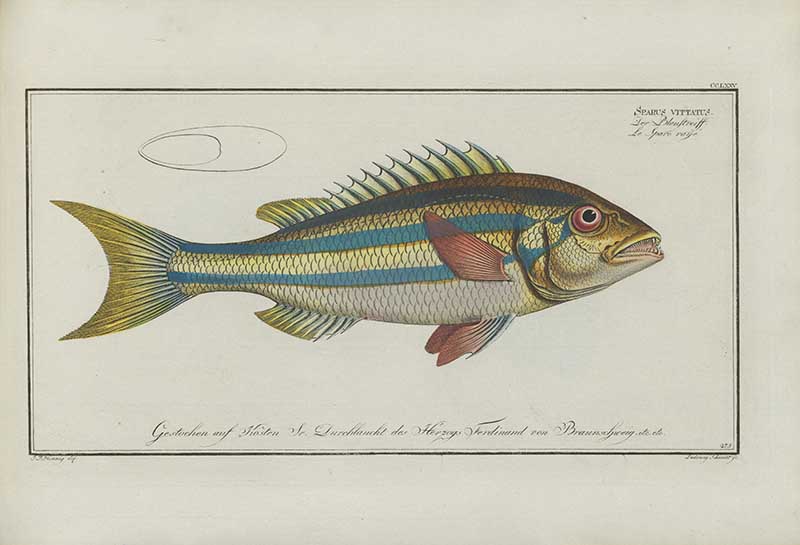
Over 50 wonderfully detailed vintage fish prints from Marcus Elieser Bloch’s famous 18th-century natural history albums. With beautifully hand-coloured scales, rich hues, and intricate scientific detail, these free public-domain fish illustrations are perfect for coastal decor, junk journals, decoupage, and quirky vintage wall art.
If you think vintage natural history prints are mostly flowers, butterflies and the occasional dramatic bird, these fish plates are here to prove otherwise.
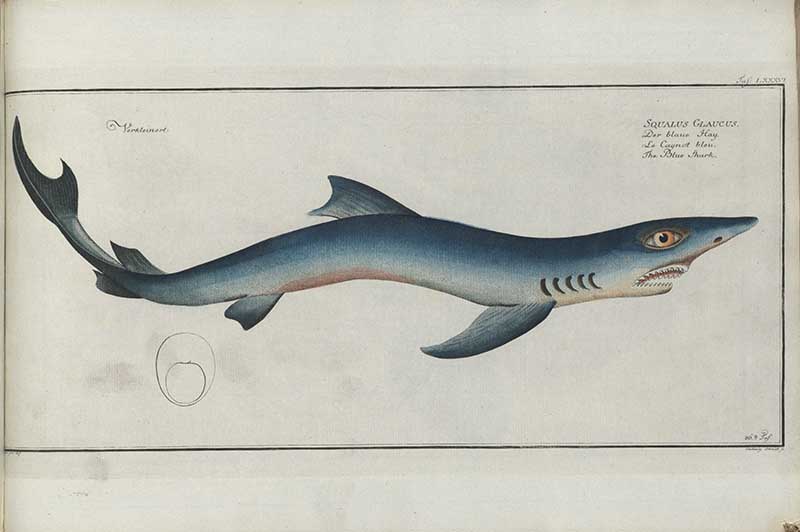
These wonderfully detailed illustrations come from three atlas volumes of Marcus Elieser Bloch’s Oeconomische Naturgeschichte der Fische Deutschlands and related fish albums, published in Berlin in the late 18th century.
Who Was Marcus Elieser Bloch?
Bloch (1723–1799) was a German physician and naturalist who became one of the pioneers of ichthyology, the study and classification of fish.
At a time when scientists were trying to document the natural world more carefully, Bloch’s books became some of the most important illustrated fish references of their era. Published between 1782 and 1795, his work focused on recording freshwater and marine species in extraordinary detail.
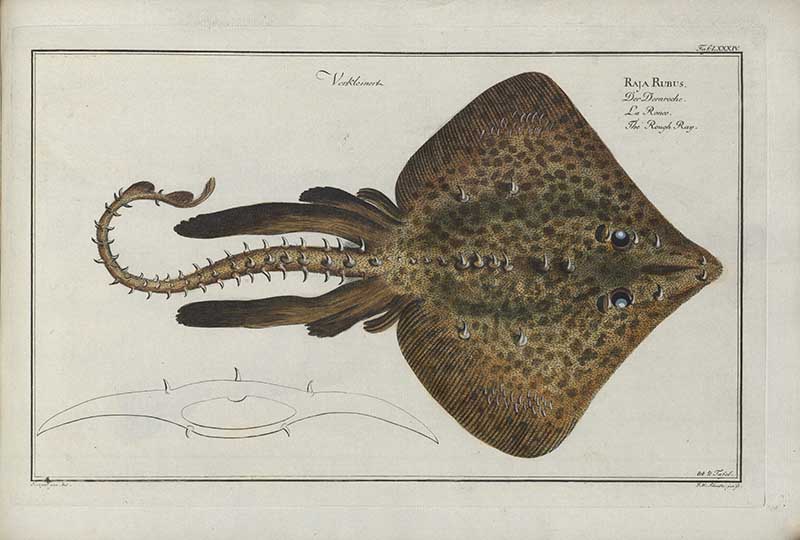
Each plate was hand-coloured and engraved, blending scientific observation with craftsmanship. That’s what makes these prints so interesting today. They sit somewhere between scientific study and decorative art.
Why These Vintage Fish Prints Stand Out
What I particularly like about Bloch’s fish illustrations is that they feel both precise and full of character. Some are quite restrained, while others have wonderfully unusual shapes, soft colouring and slightly theatrical poses.
If you enjoy vintage marine life illustrations, these prints sit nicely alongside my Jardine’s ichthyology fish prints, another beautiful collection of scientific fish studies. For something a little bolder, my Louis Renard fish paintings feel almost like the flamboyant cousin of Bloch’s careful engravings, full of rich colour and wonderfully exotic sea creatures.
Below I’ve picked a small selection of favourite fish prints from Bloch’s albums. They work beautifully as coastal wall art, decoupage papers, junk-journal pages, collages, or simply for anyone who appreciates quirky old scientific illustrations.
How To Download The Fish Prints
All of these Bloch fish illustrations are in the Public Domain, so they are free to download and use for all projects. To download a higher-resolution version of any print: Click the title above the fish image you want.
This will open the full-size image in a new tab, where you can save it, print it, or use it for crafts and creative projects.
Fish Prints 1-10
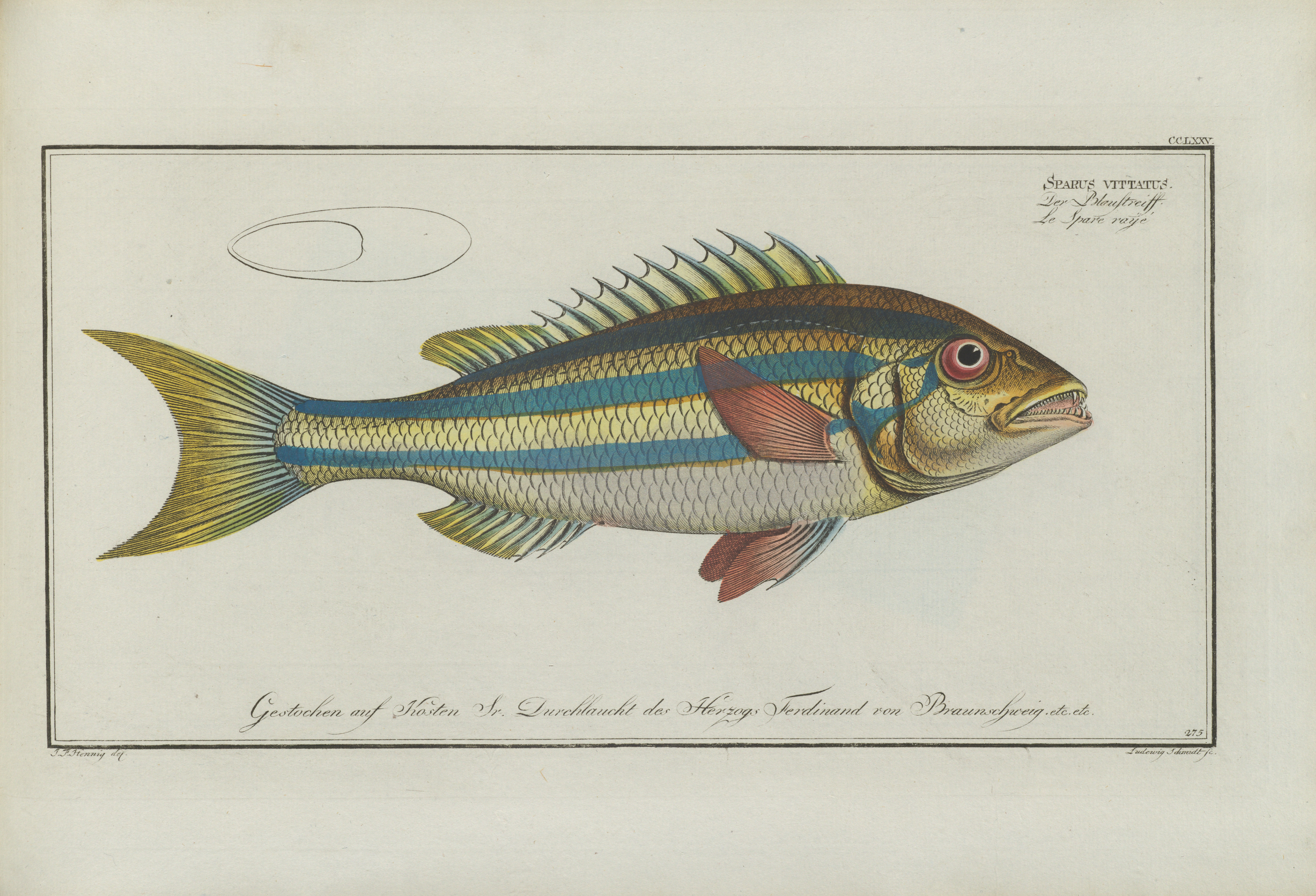
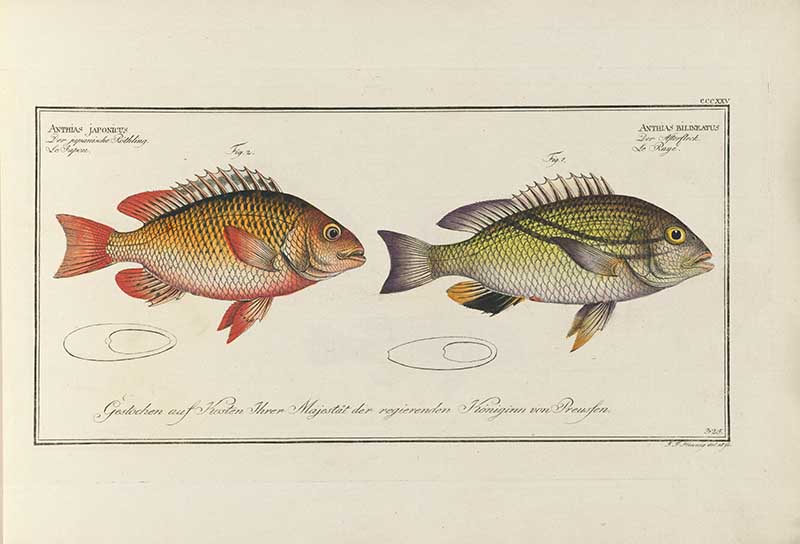
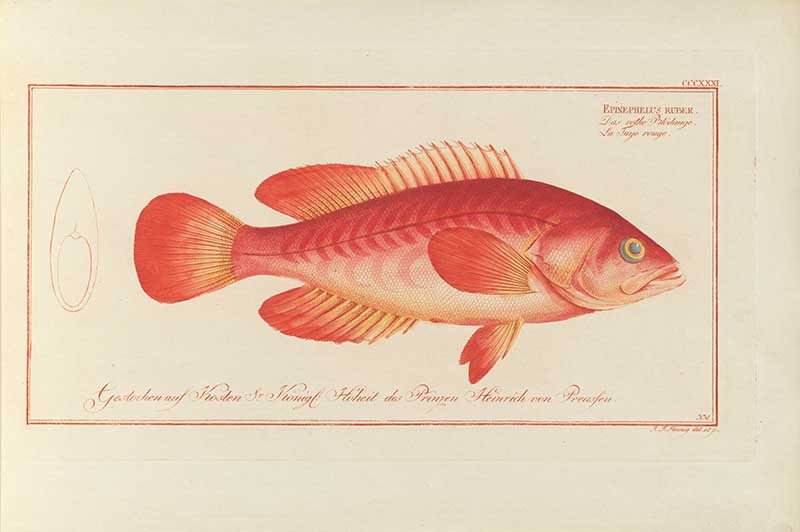
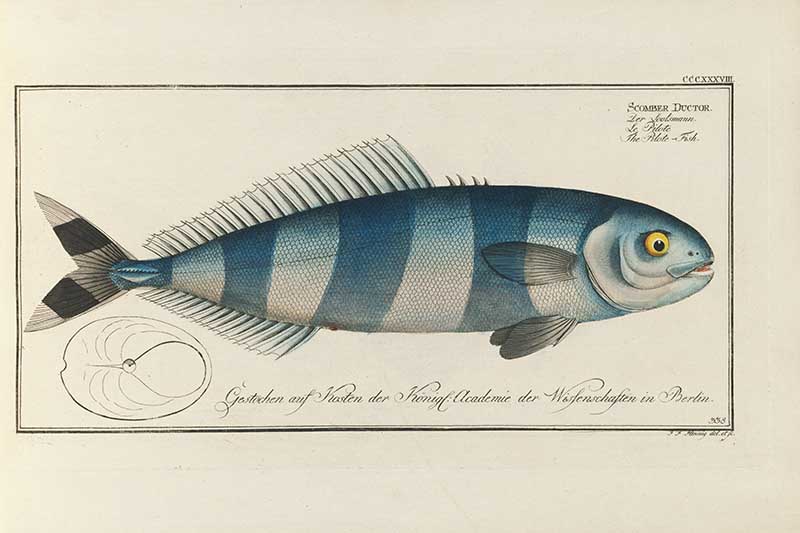
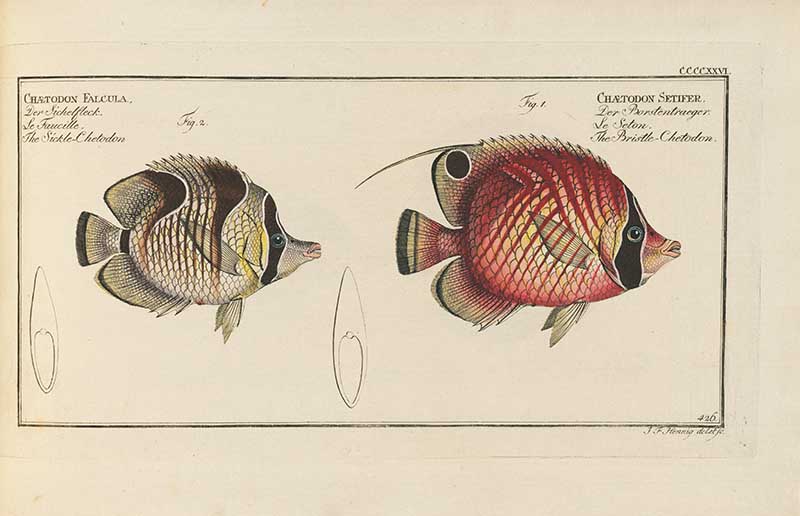
Both fish are monocle breams native to the coral reefs of the Indo-Pacific region.
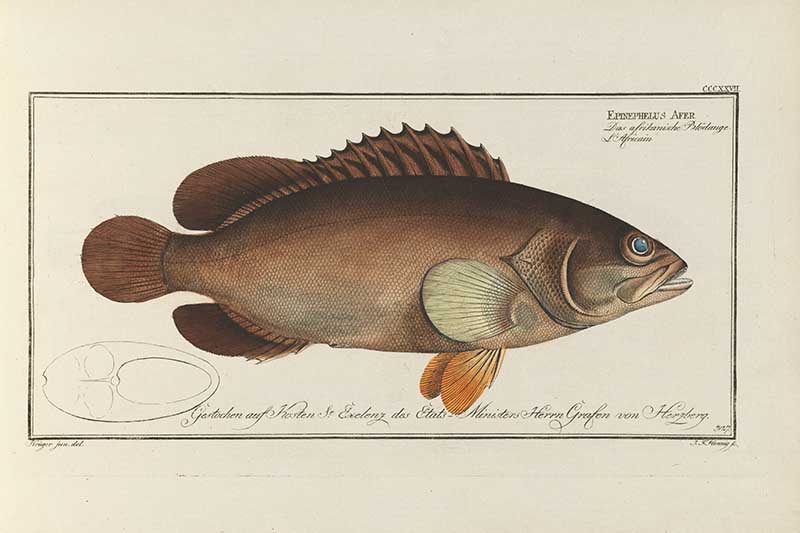
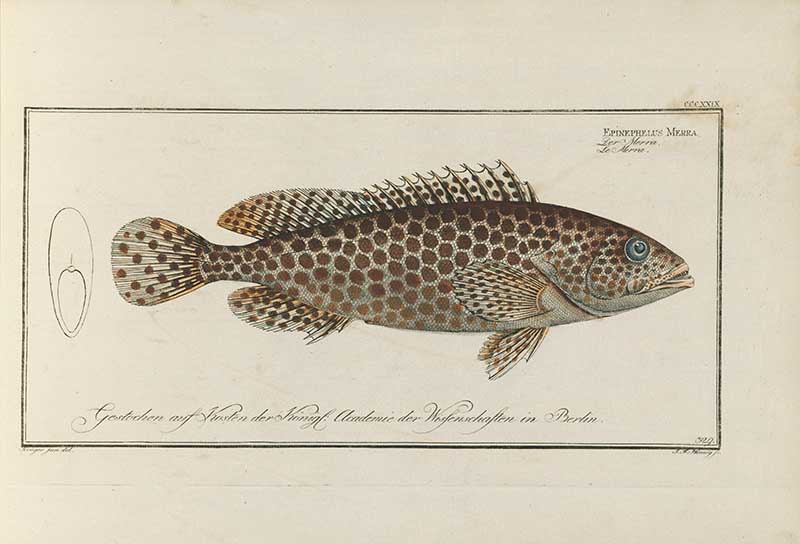
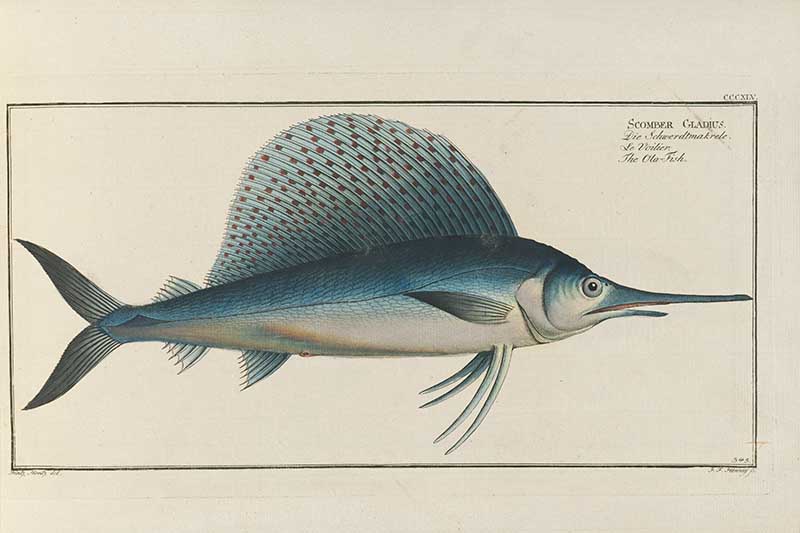
The sailfish is widely recognised as the fastest fish in the ocean, capable of reaching incredible swimming speeds up to 68 miles per hour. Its massive, sail-like dorsal fin is normally kept folded down to reduce drag, but the fish raises it suddenly to herd prey or startle predators during a hunt.
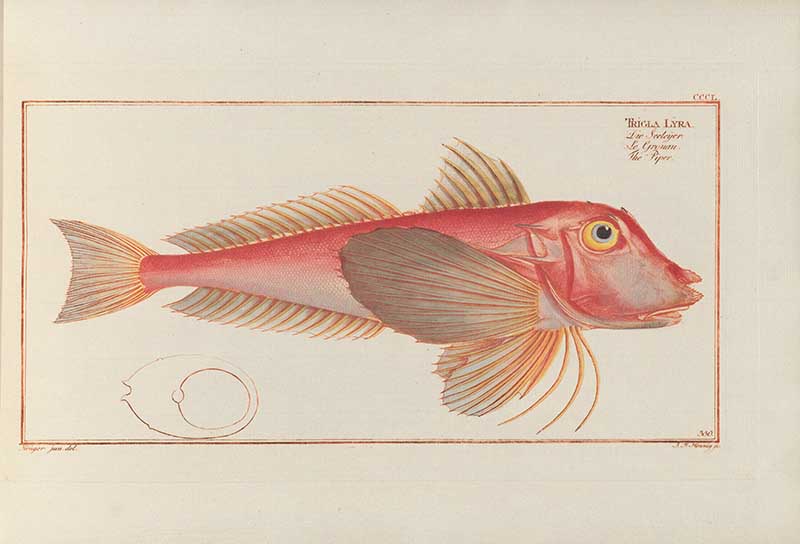
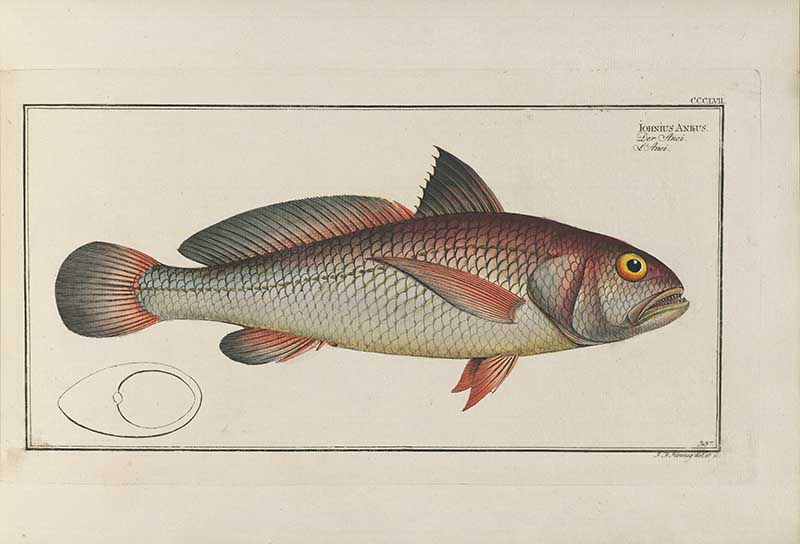
The Grey Fin Croaker belongs to a family of fish known for producing loud drumming or "croaking" sounds by vibrating their swim bladders with specialised muscles.
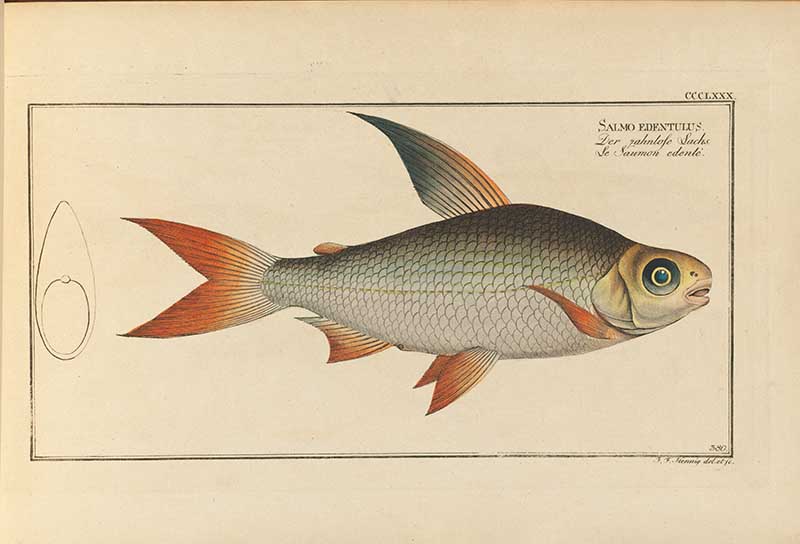
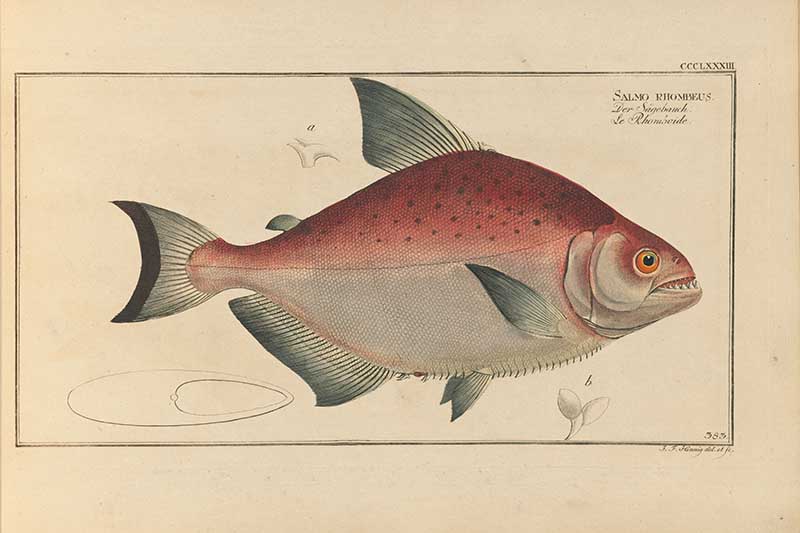
This fish is the Red-eye Piranha, the largest piranha species in the world. It lives in the rivers of South America and has a distinct diamond-shaped body. It is famous for its bright orange-red eyes and extremely powerful, sharp teeth.
Fish Prints 11-20
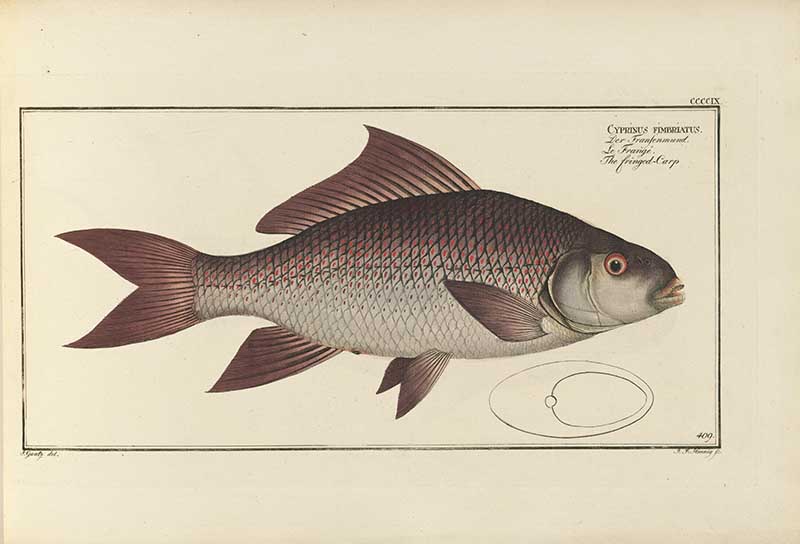
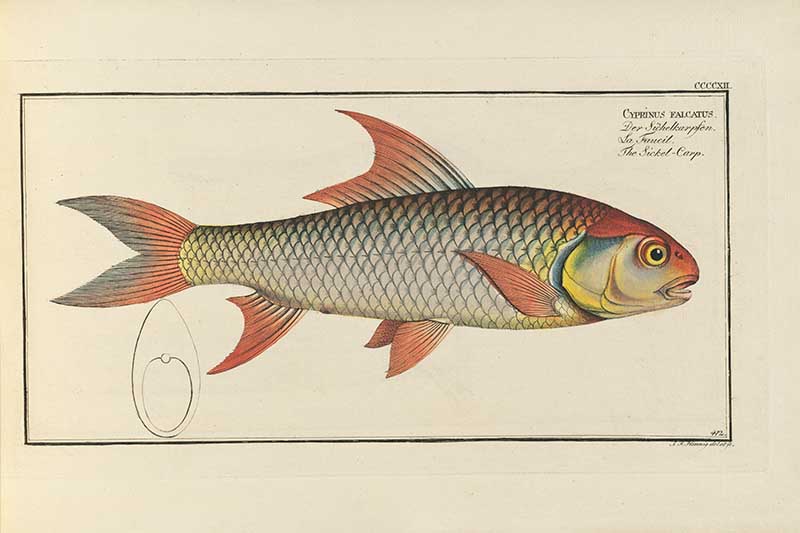
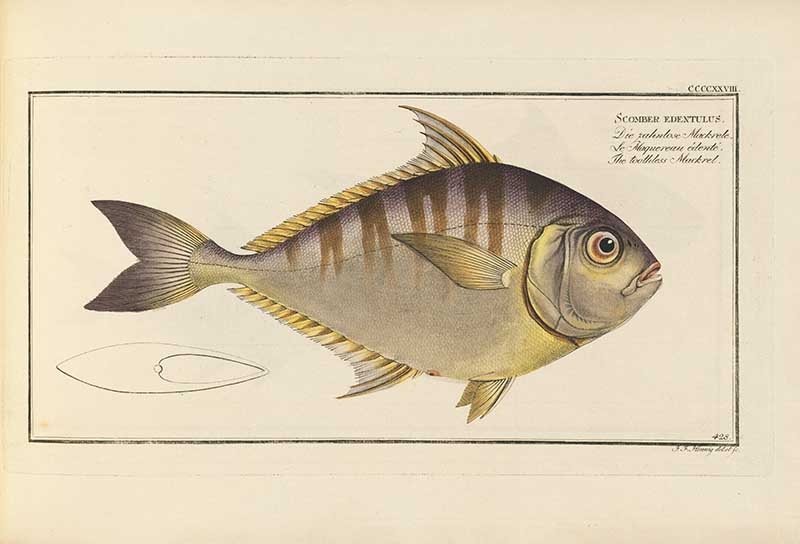
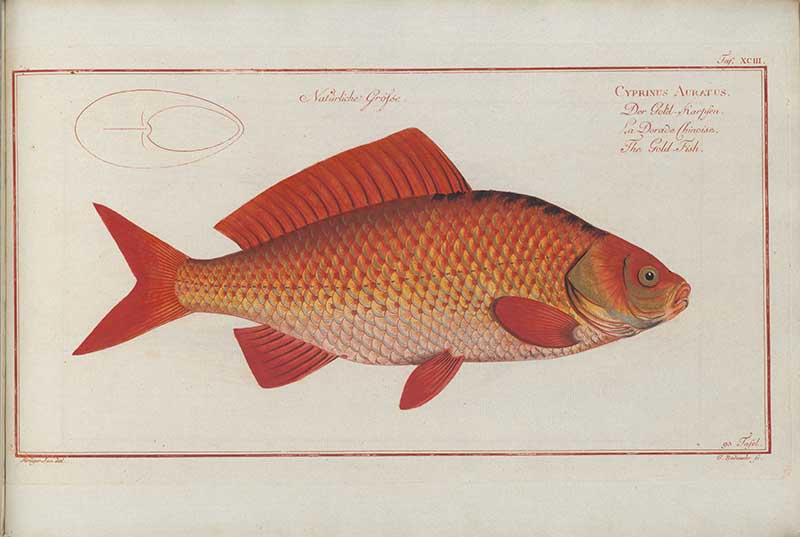
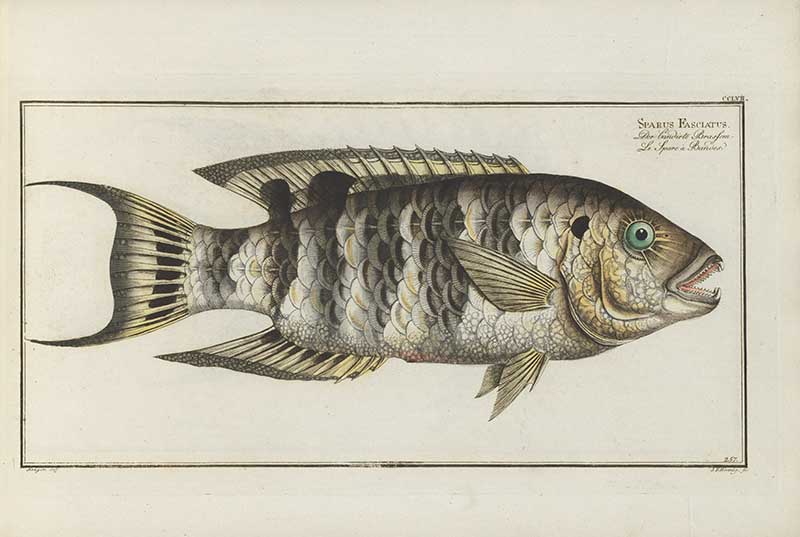
Some of the most impressive details in Bloch’s fish prints are the scales. On many of the plates, each scale has been carefully engraved and hand-coloured, giving the fish an almost textured, shimmering appearance. You can really see the amount of observation that went into these illustrations, especially in the larger species, where the overlapping scale patterns almost look decorative enough to belong on wallpaper or fabric design.
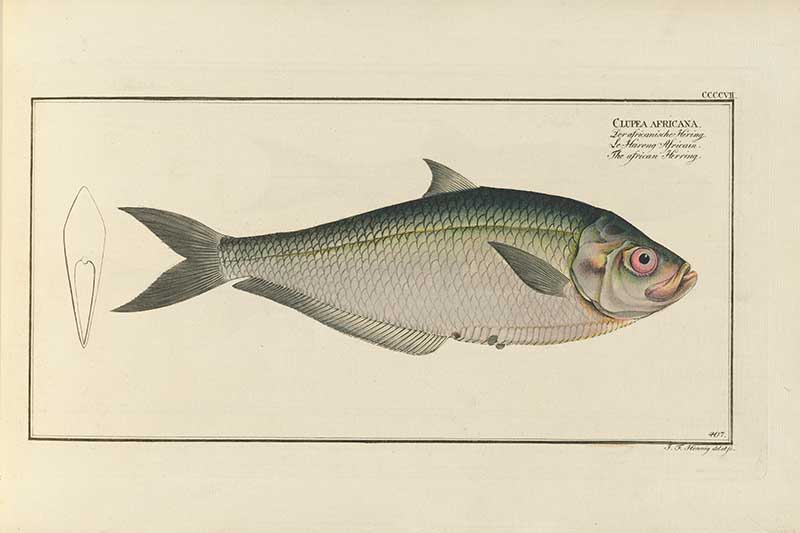
12. Fringed Lipped Peninsula Carp
Native to the freshwater rivers of South Asia
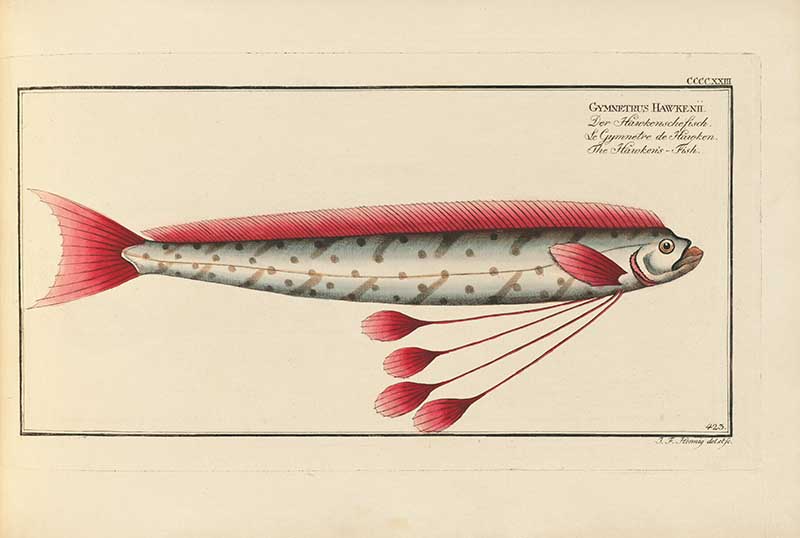
The legendary oarfish is a real-life sea serpent that can grow up to 36 feet long and glide silently through the ocean's twilight zone. Historically called "Hawken's Fish," this deep-sea marvel is famous for its striking crimson fins and a mythical reputation for predicting earthquakes when it rises to the surface.
Member of the carp family.
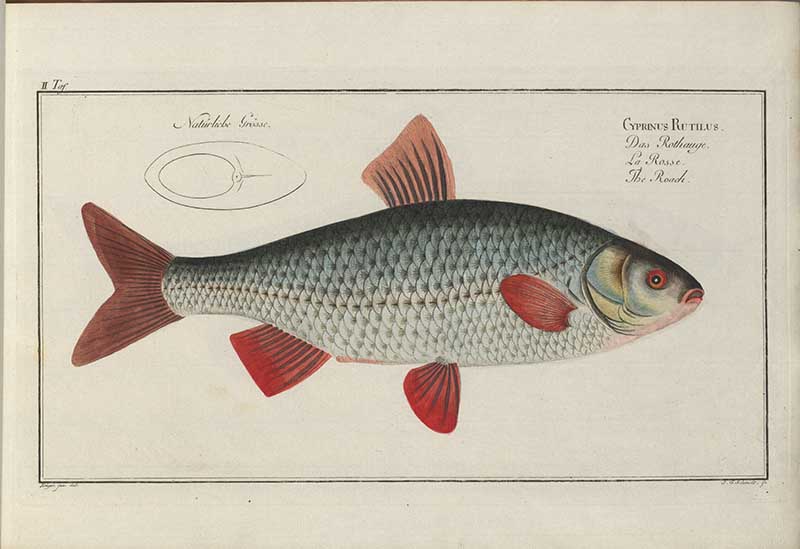
Another type of carp.
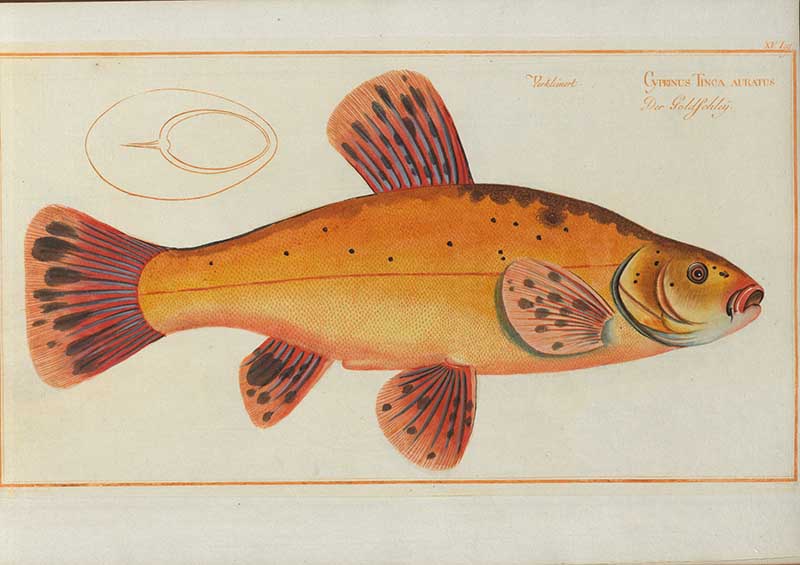
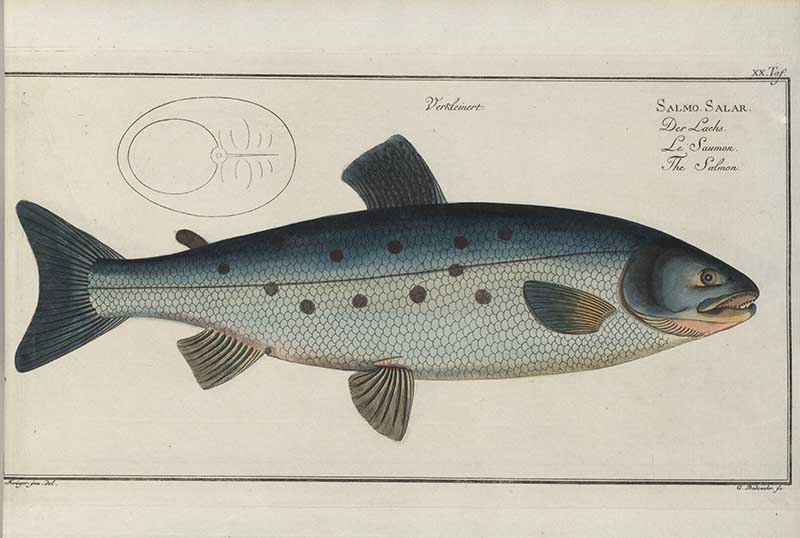
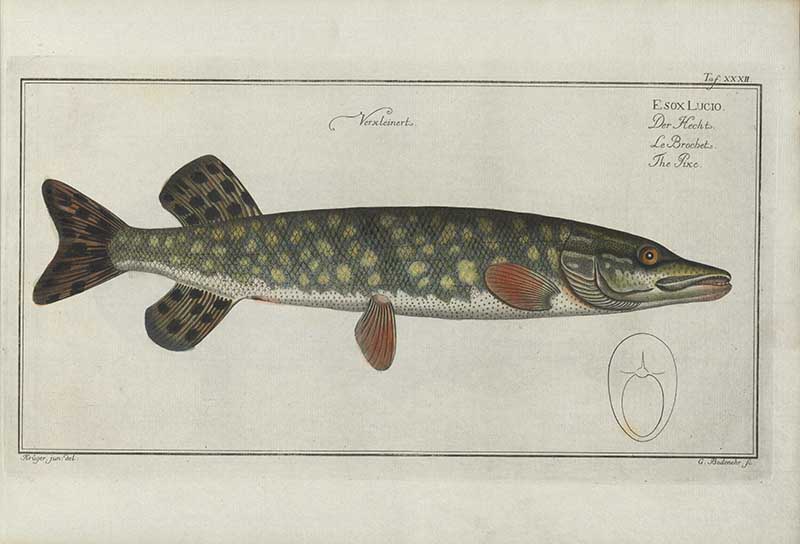
Fish Prints 21-30
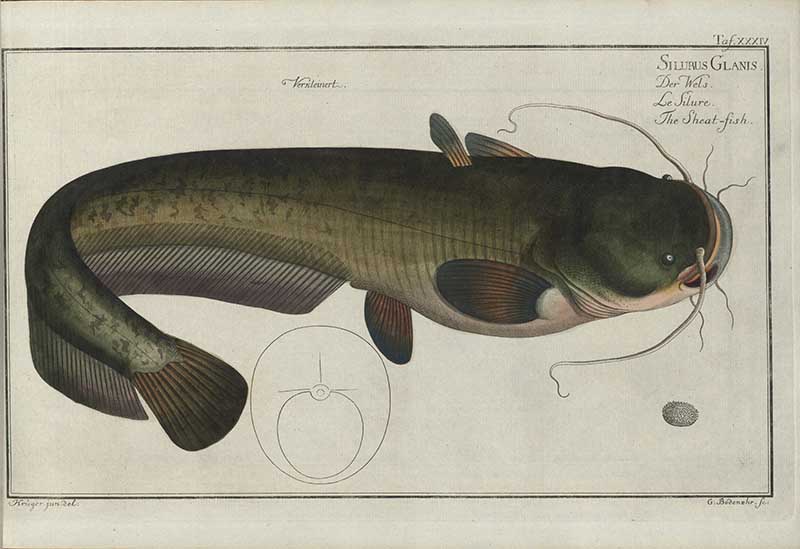
The Wels catfish can grow so incredibly massive that historical accounts and modern videos document them lunging out of the water to hunt land animals, specifically beaching themselves to ambush unsuspecting pigeons.
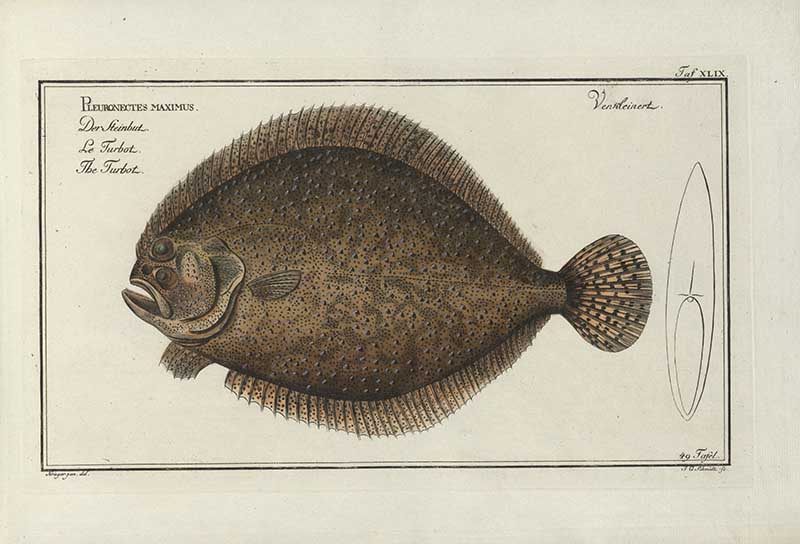
The turbot is a large, diamond-shaped flatfish prized globally for its delicate, firm white flesh and rich flavour. As a bottom-dweller native to European marine waters, both of its eyes are located on the left side of its head, and its scaleless skin is covered in hard, bony bumps that help it blend perfectly into sandy sea floors.
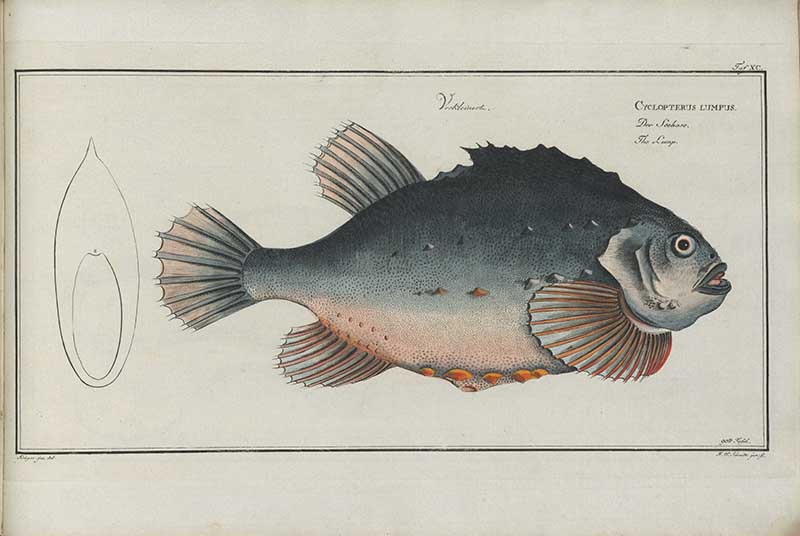
The lumpsucker is a round, thick-bodied fish that lives in cold northern oceans. It has specialised fins on its belly that act like suction cups, anchoring it to rocks. Instead of normal scales, its skin is covered in hard, bony bumps.
Fish Prints 31- 40
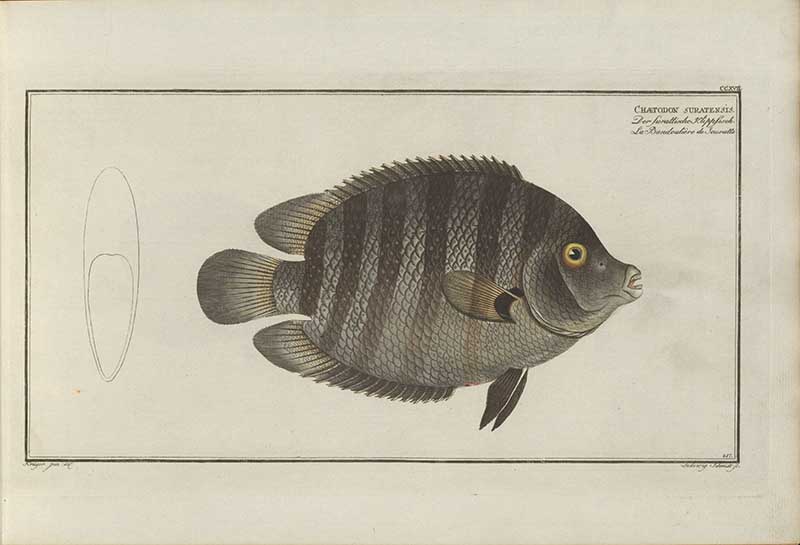
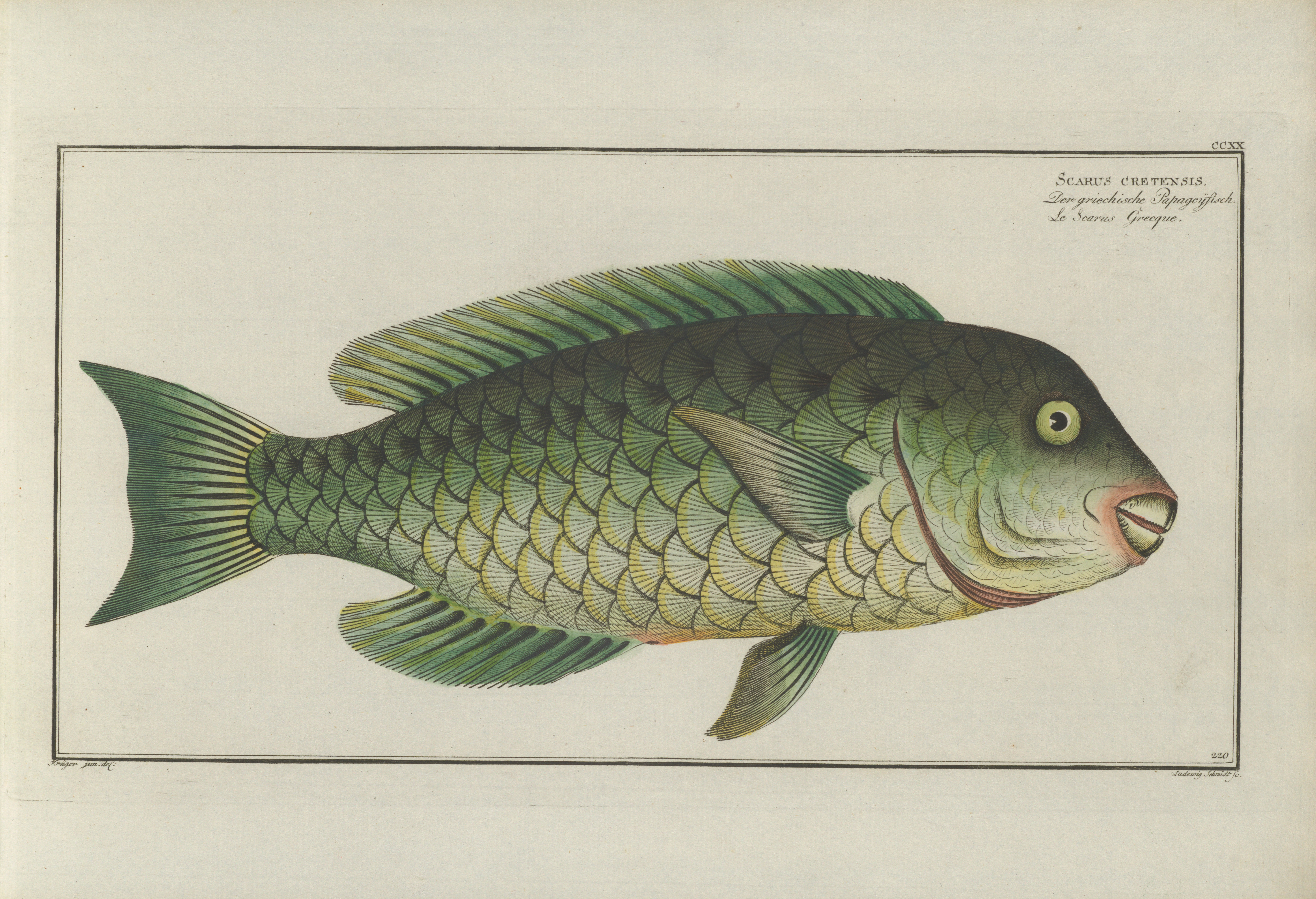
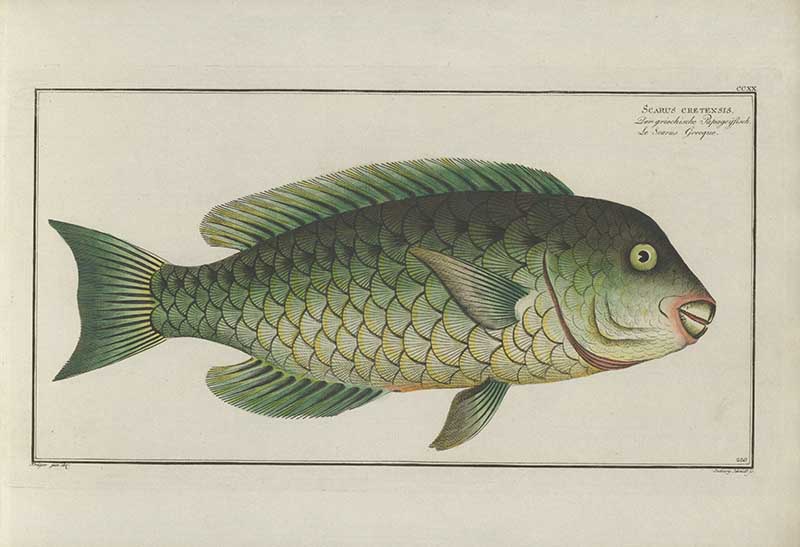
The Mediterranean parrotfish is unique because it can completely change its gender from female to male as it matures. It also plays a vital role in keeping coral reefs healthy by using its beak-like teeth to scrape and eat algae off rocks.
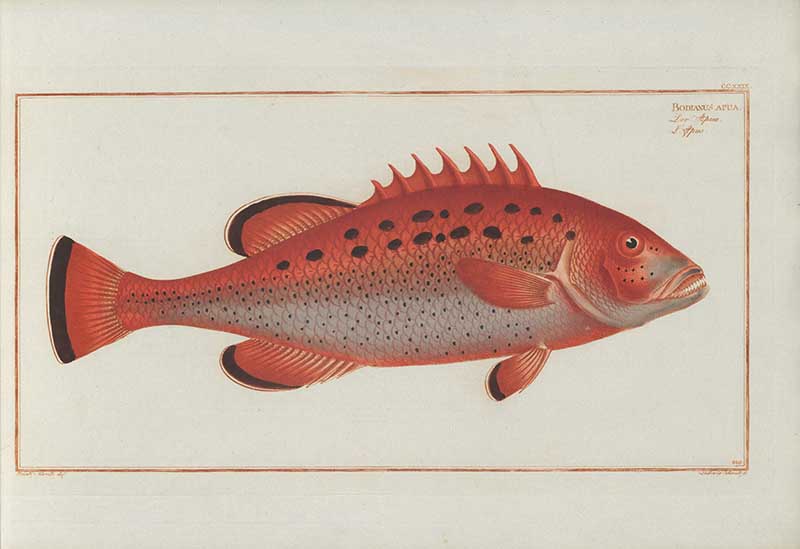
Despite being labelled as Bodianus apua in the 18th century, modern marine biologists recognise this vibrant red creature as the red hind (Epinephelus guttatus), a grouper species native to the Atlantic Ocean.
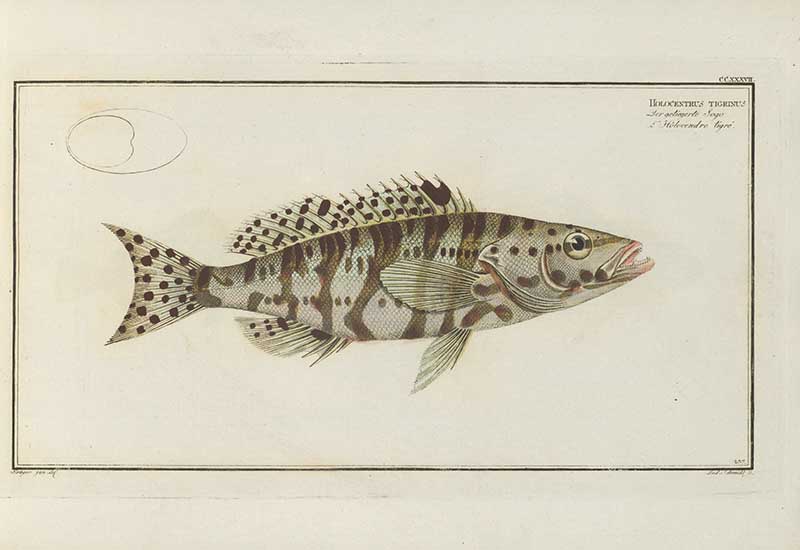
Like many 18th-century naturalists, Bloch often worked from preserved, dried, or pickled specimens sent to him in Berlin. Because preserving liquids drains a fish's natural fluids, the illustration features slightly exaggerated fins and a stiff, flattened posture that differs from the fish's natural swimming posture.
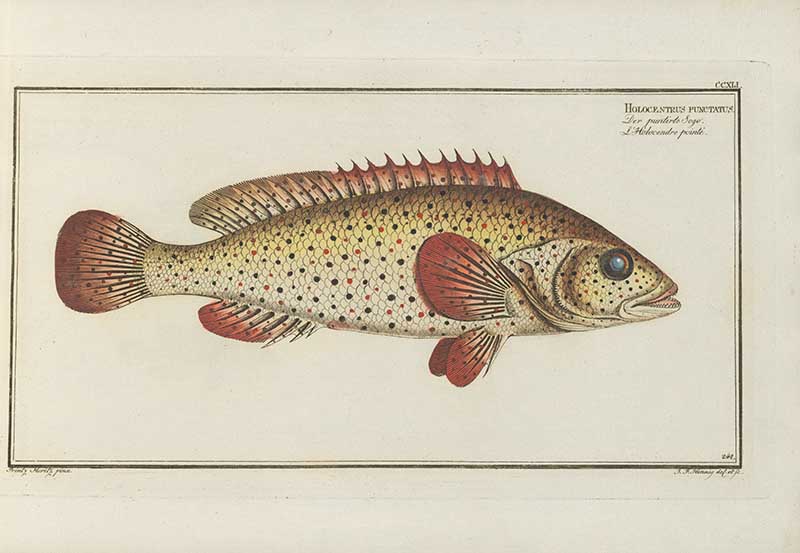
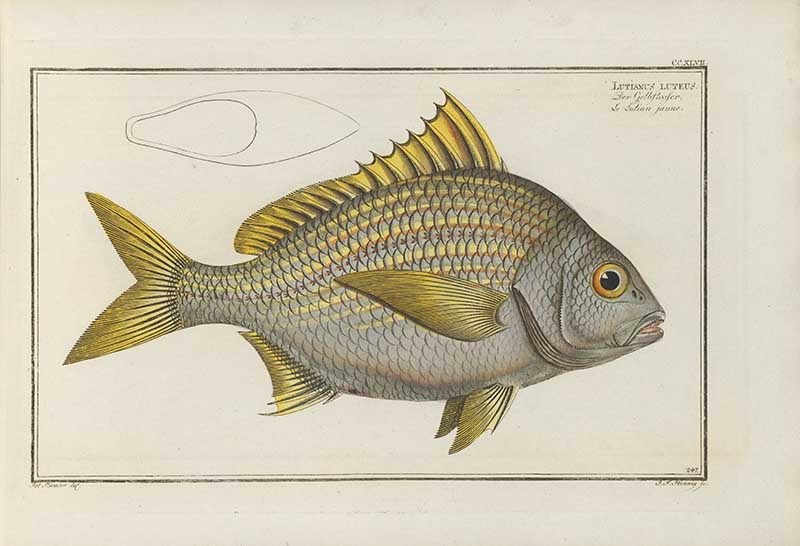
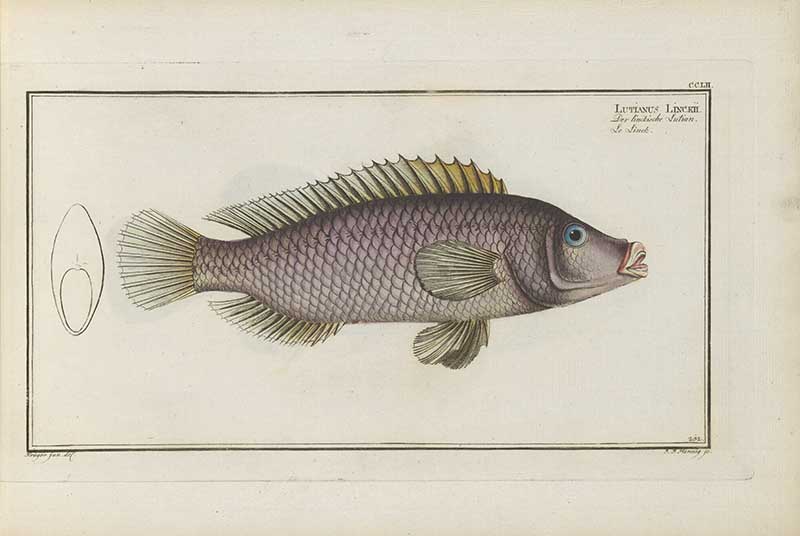
Marcus Elieser Bloch captured the fish scales by combining crisp copperplate engraving with layered hand-colouring. Each scale was first finely etched to create structural depth, then individually painted with watercolour gradients to establish realistic, three-dimensional shading. To recreate the natural, iridescent sheen of a living fish, Bloch pioneered the application of gold and silver leafing beneath translucent paint washes, allowing light to shimmer across the body realistically.
Fish Prints 41-55
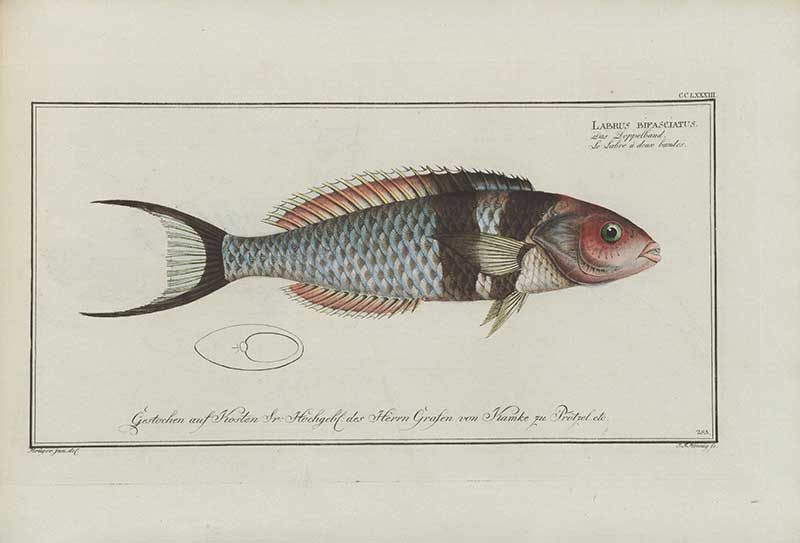
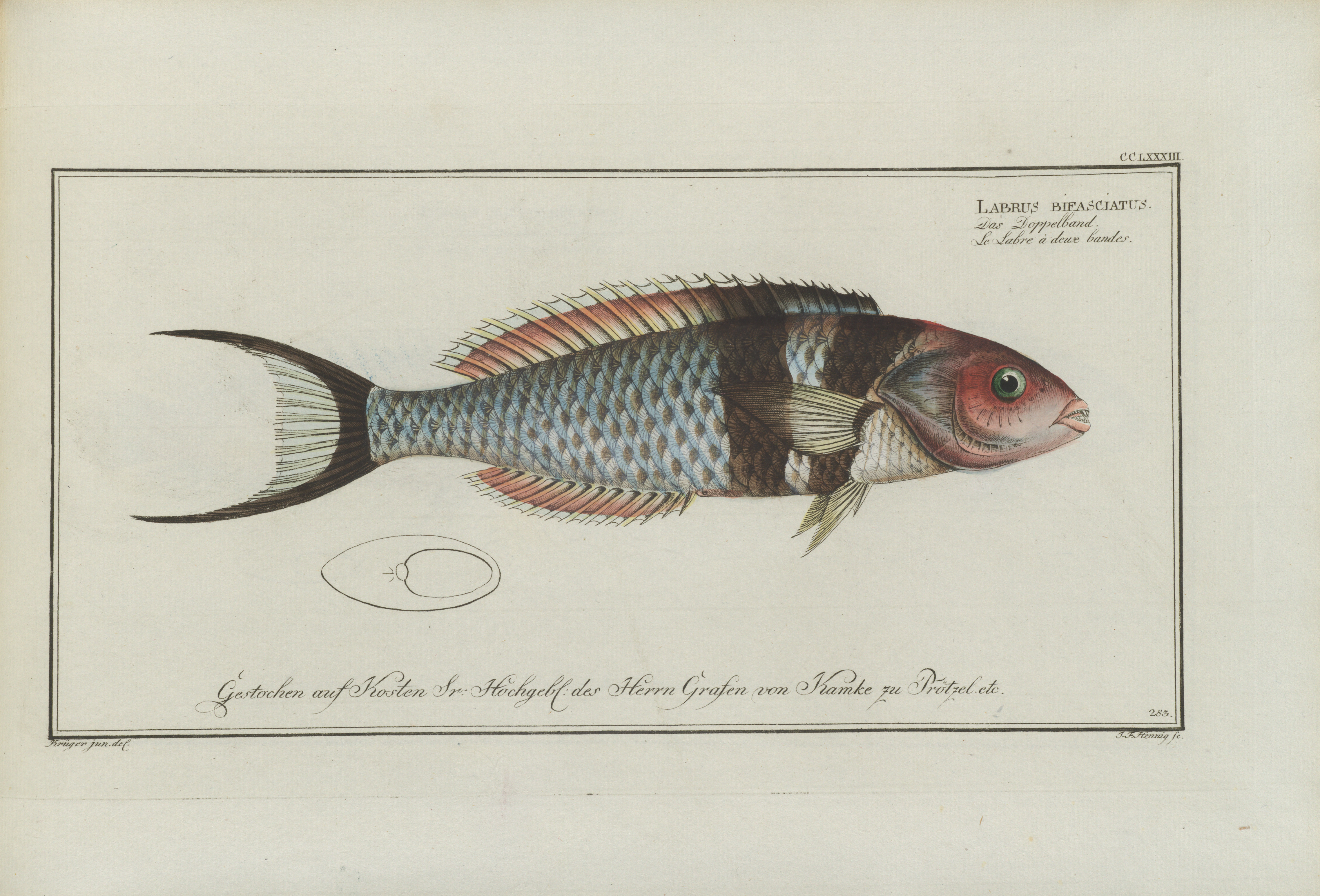
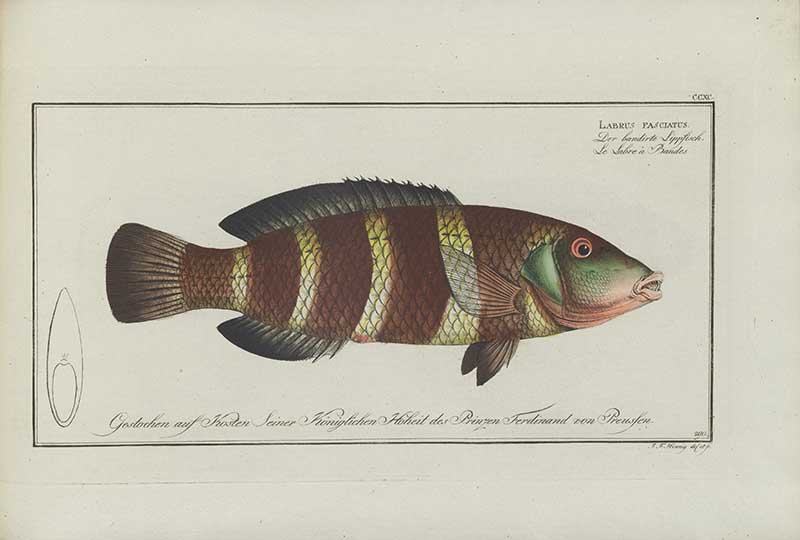
44. Barred Thick-Lipped Wrasse
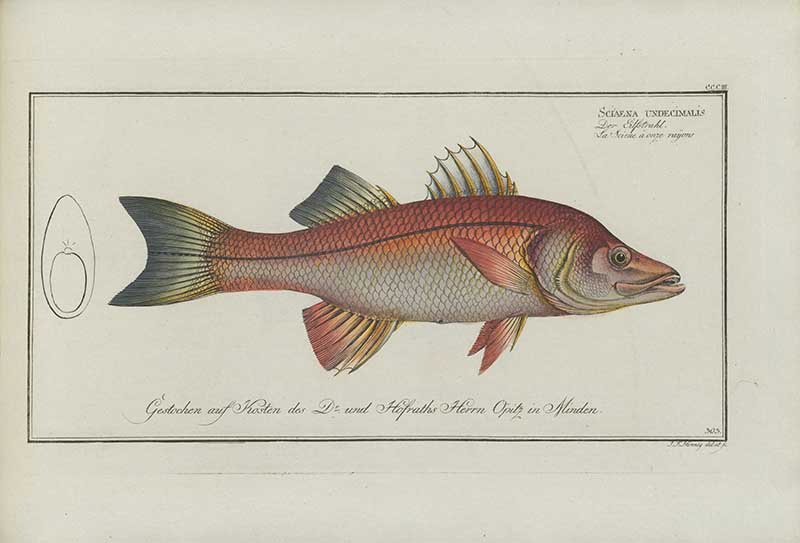
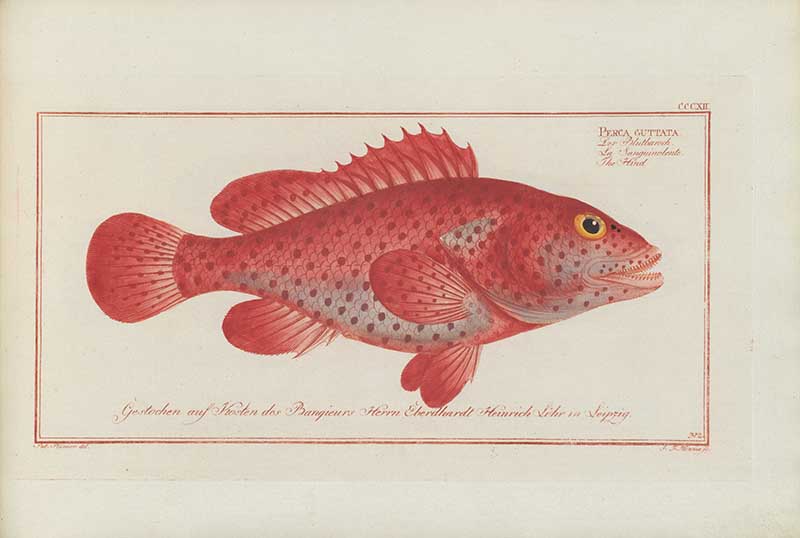
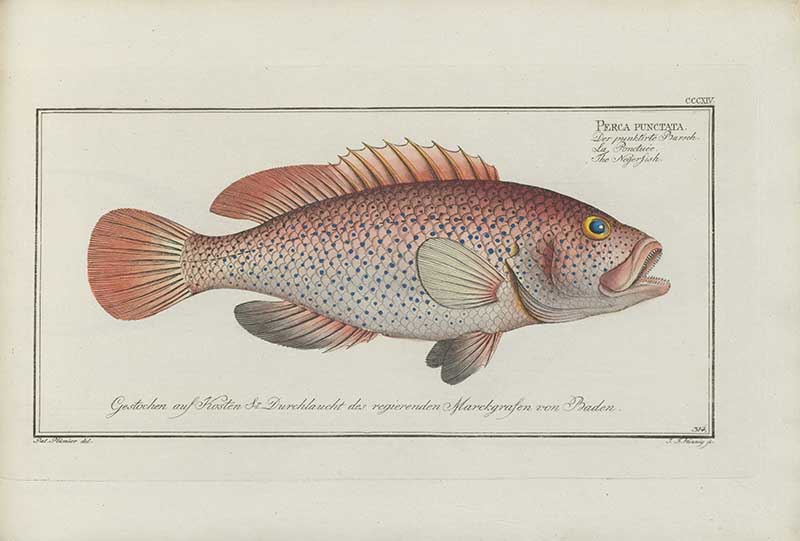
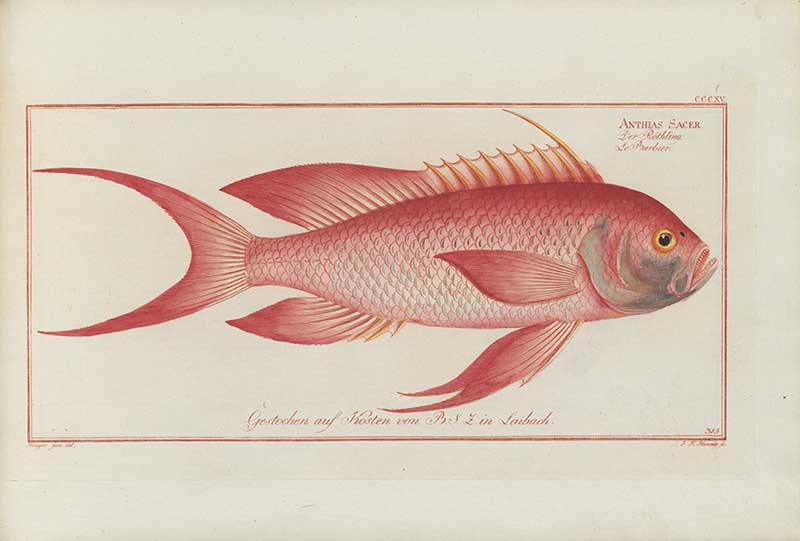
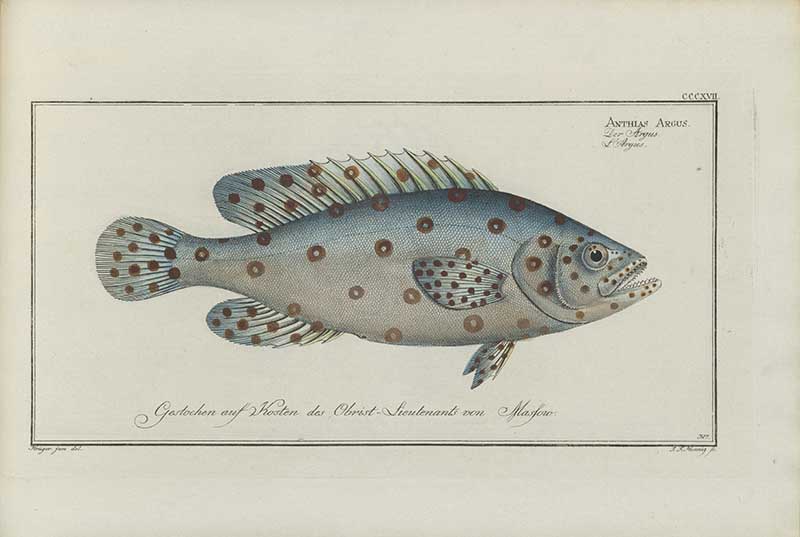
The Argus Fish (Peacock Grouper) is a coral reef predator named after the hundred-eyed giant of Greek mythology due to its striking blue spots. All individuals are born female, with the largest transforming into males to lead small harems. They can instantly shift their colour from dark brown to pale white to camouflage, hunt, or communicate.
Why Bloch’s Fish Prints Still Feel Fresh Today
What makes Bloch’s work so appealing is that it sits in that lovely middle ground between science and art. These were serious reference plates, but they still feel decorative more than two centuries later.
Unlike the clean chart style of my Adolphe Millot sea life posters, Bloch’s fish feel more intimate and observational. And if you prefer something softer and more artistic, my Japanese woodblock fish prints show fish from a very different decorative tradition.
Whether you love natural history illustrations, vintage marine art or simply fancy a particularly handsome 18th-century fish on your wall, I hope you find a few favourites in this collection. Old science books really did have a knack for making fish look surprisingly stylish. My rainbow fish posts show you how to print on watercolour paper and display fish prints in interesting ways.
If you're looking for even more marine-inspired posts, check out these:
If you fancy, you can Buy Me A Coffee Here.