Beautiful Japanese Mushroom Illustrations from Baien Kinpu
Step into the world of 19th-century Japan with these stunning mushroom paintings from Baien Kinpu. Free to download and perfect for art lovers, crafters, and nature fans.
I don’t know about you, but I never get tired of looking at mushroom art. There’s just something so quirky and magical about fungi. One day, they’re nowhere to be seen, and the next, they’ve popped up out of the ground like little umbrellas.
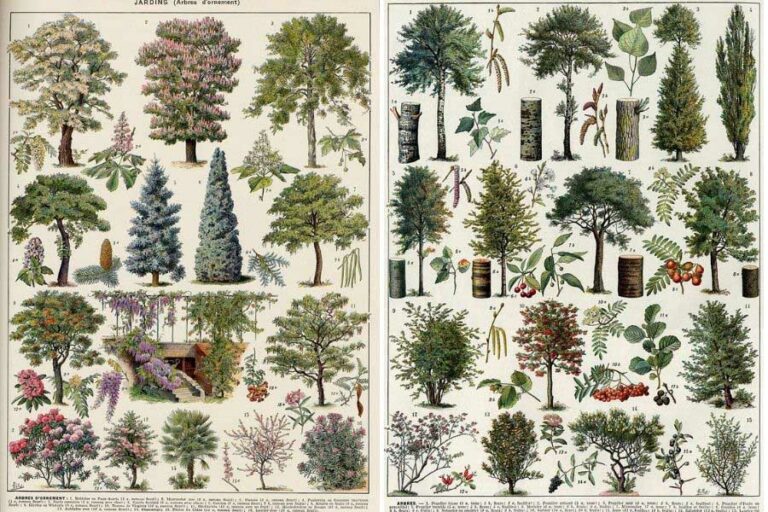
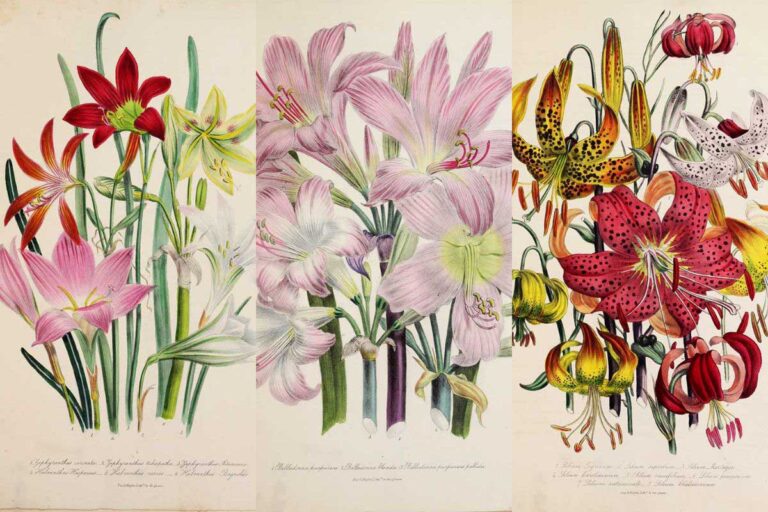
I’ve already shared quite a few fungi collections on Pictureboxblue, like the lovely James Sowerby fungi illustrations and Adolphe Millot mushroom charts. Those were mostly European, with that familiar natural history style.
But today, I’m excited to show you something a little different: a set of Japanese mushroom paintings from the early 1800s.
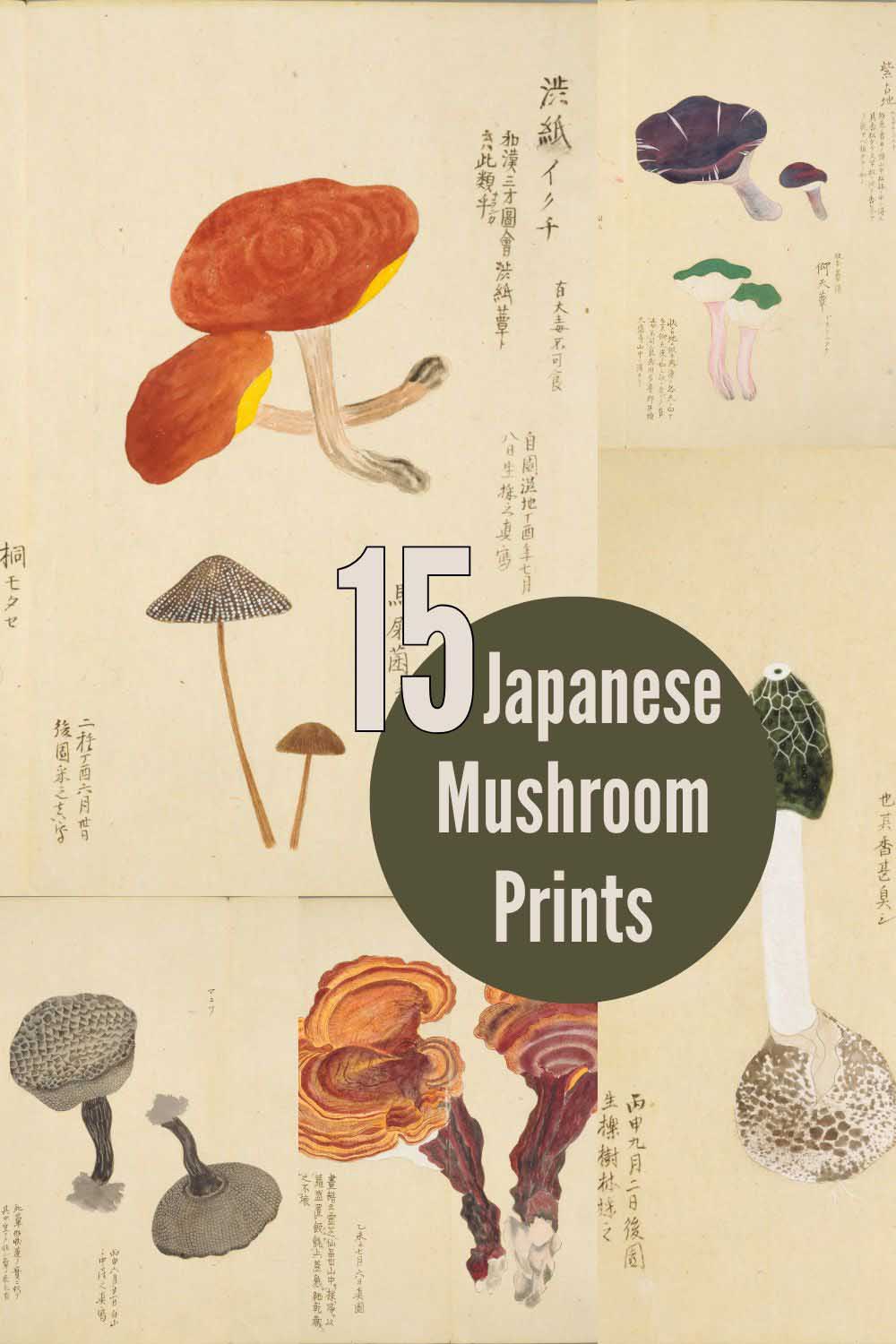
Meet Baien Kinpu
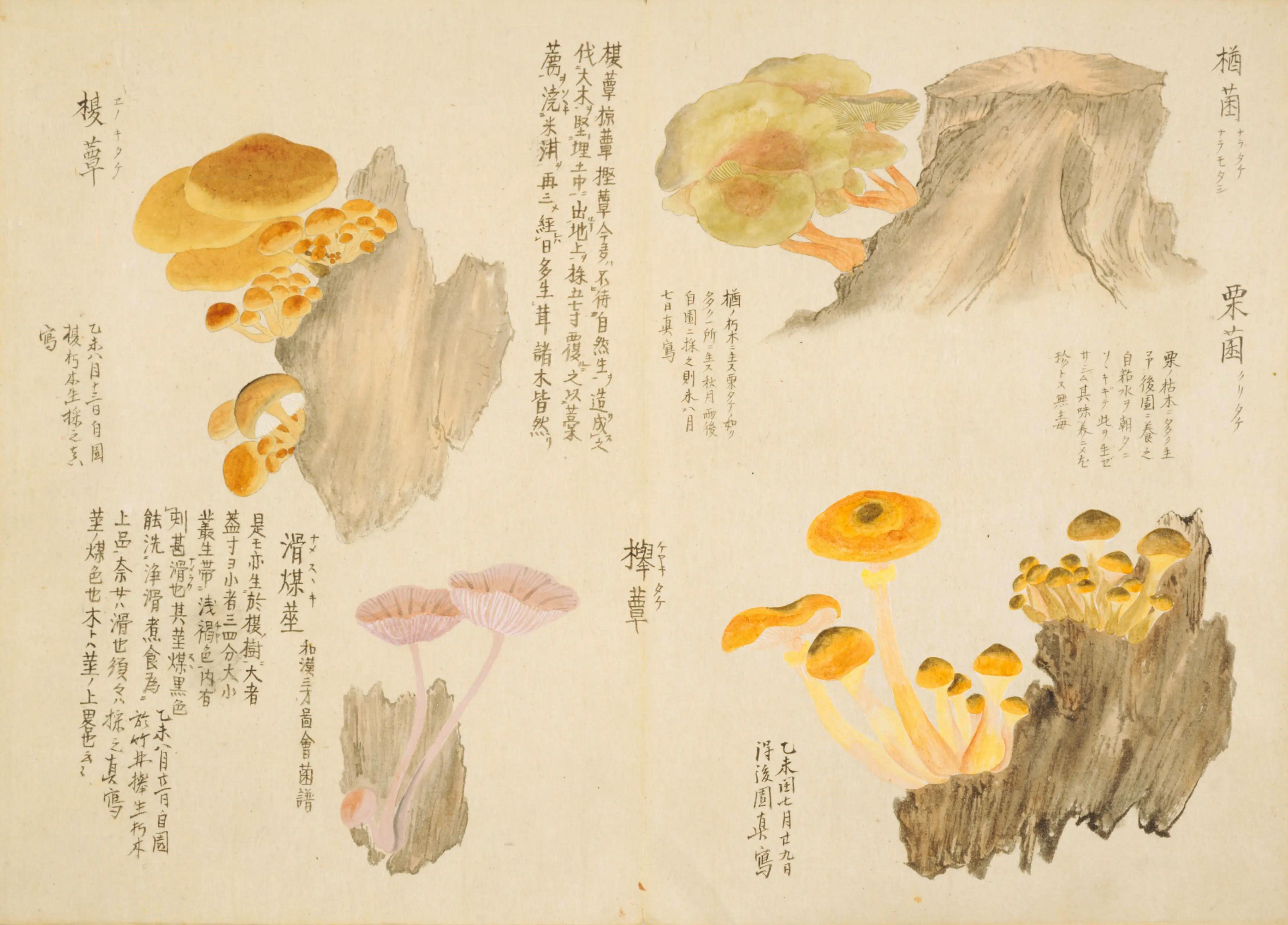
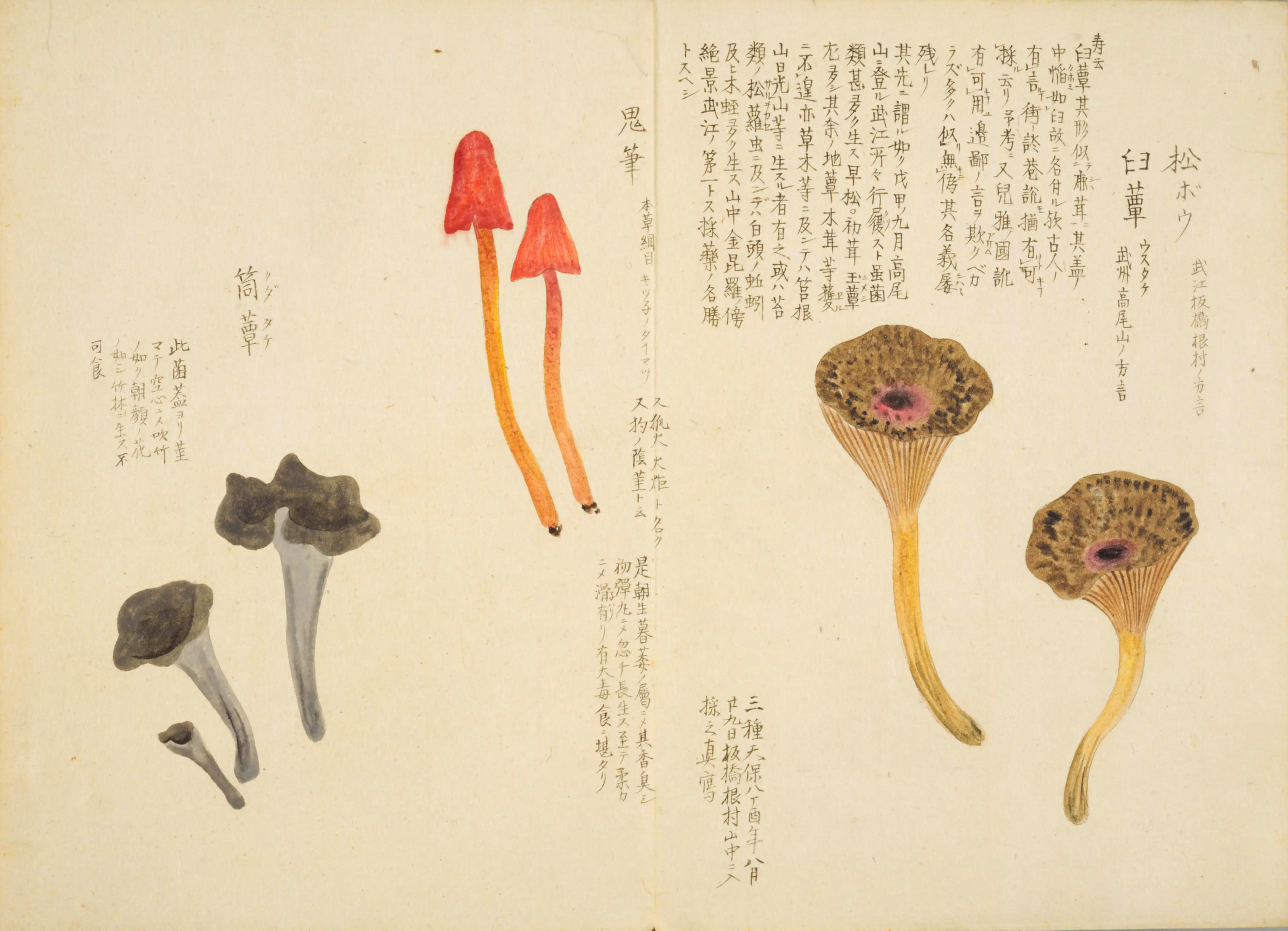
This collection is called Baien kinpu (梅園菌譜), which means “Baien’s Fungus Album.” It was painted around 1836 by Mōri Baien, a Japanese samurai and brilliant naturalist. Imagine being equally good with a sword and a paintbrush!
Baien created detailed albums of nature, and this one is all about fungi. He carefully painted edible, medicinal, and poisonous mushrooms—some we know well today, others you might never have seen before. The shiitake (香蕈), matsutake (松蕈), and reishi (黄芝) all make an appearance, but there are also delicate wood ear mushrooms, little chestnut fungi, and many others with old Edo-period names.
Why I Love These Prints
What makes them so special is how they blend art and science. European mushroom drawings of the same period can feel quite formal, like strict field guides. Baien’s paintings are accurate, too, but they have a softness and style that makes them feel alive. The colours are gentle, the brushwork is flowing, it’s almost like he was painting portraits of each mushroom.
The Free Fungi Downloads
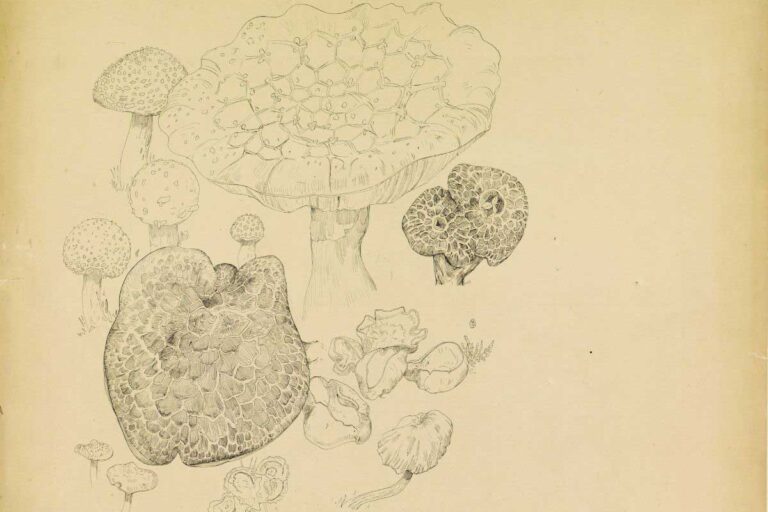
I’ve picked out some of my favourites from Baien kinpu for you to download and enjoy. They’re all in the public domain, so feel free to print them for wall art, use them in crafts, or save them to admire later.
Click on the title above the mushroom print you want to download, and a higher-resolution image will open in a new tab, which you can then print or save.
I’ve done my best to identify some of the fungi in these prints (without much success), but in many cases it’s really just an educated guess. If you spot something I’ve missed or have a better idea, I’d love to hear it. Drop a note in the comments. To aid with the naming, I’ve also included a chart at the end of the post that compares the old Edo-period names with their modern counterparts.
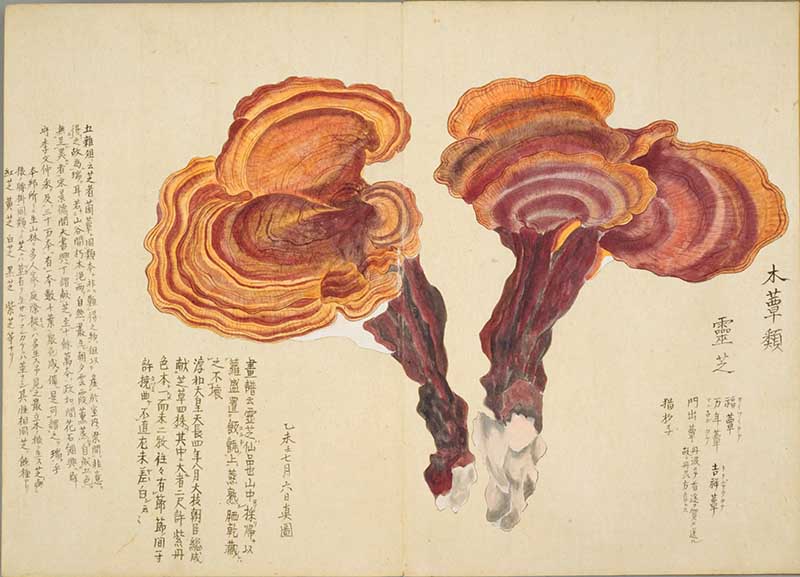
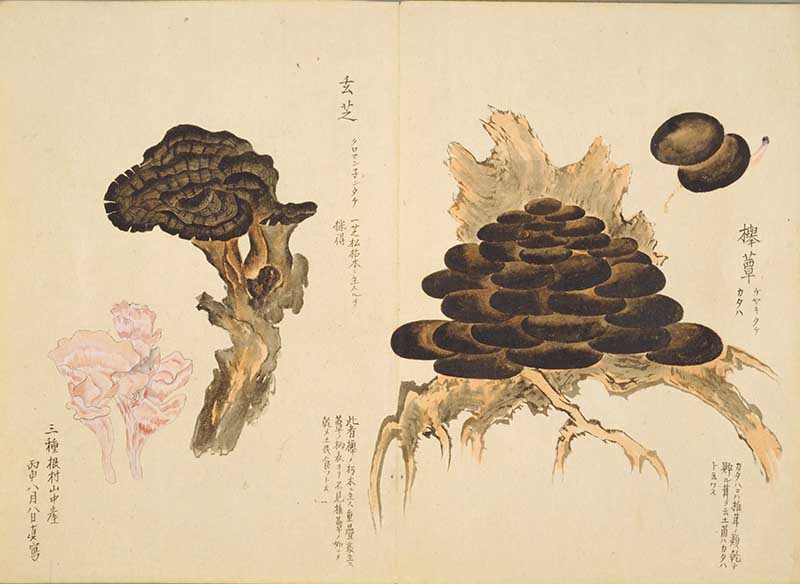
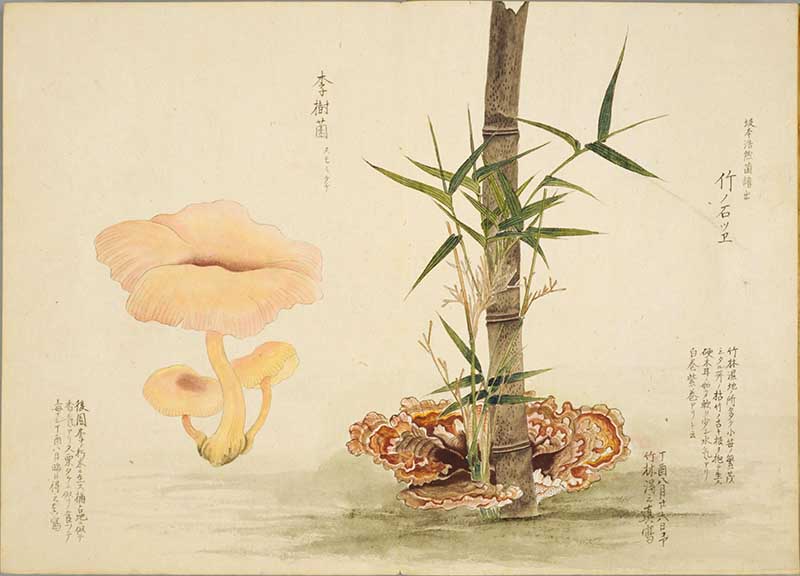
Print 4: Enoki and Other Mushrooms
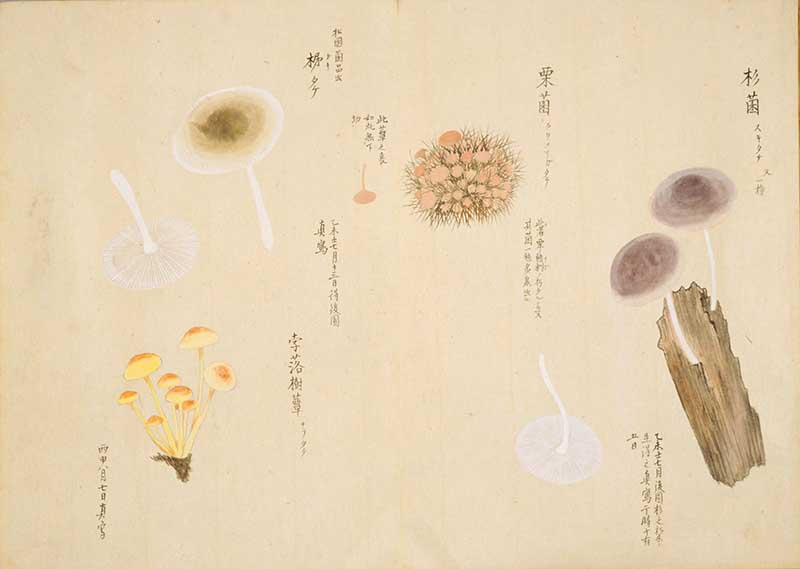
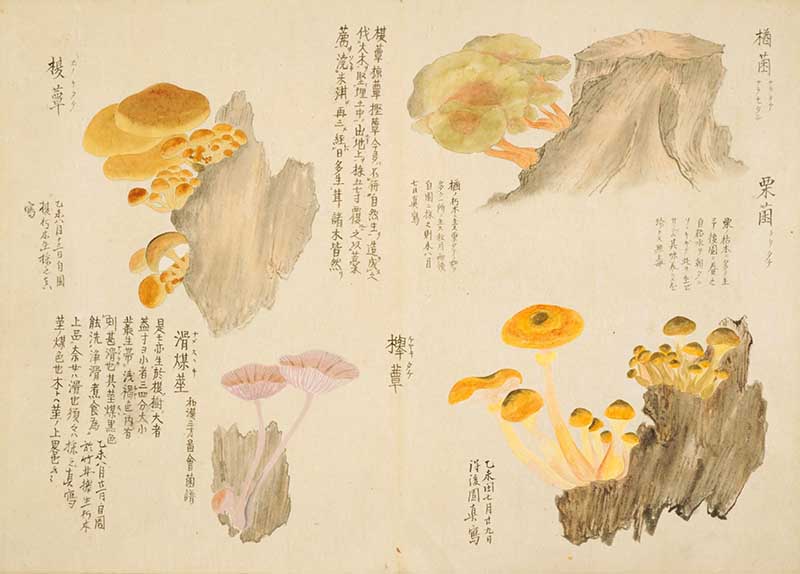
Plate 6: Three types of fungi (including Enoki)
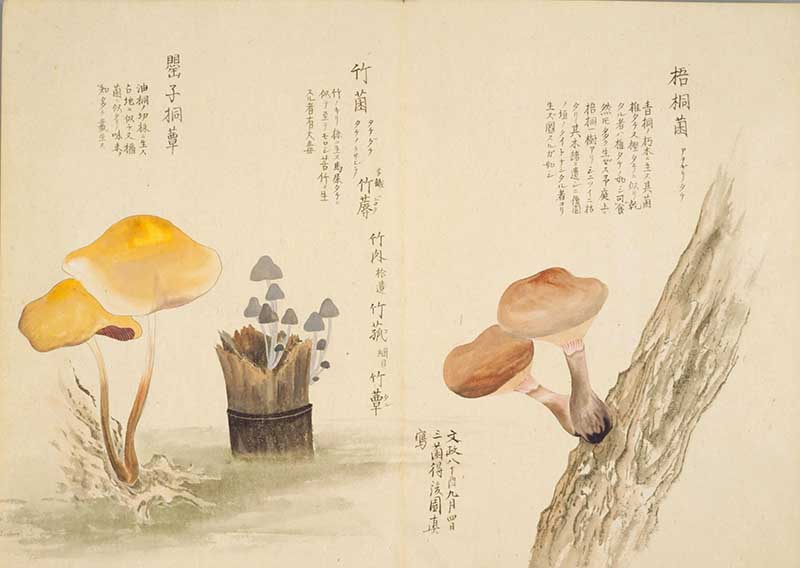
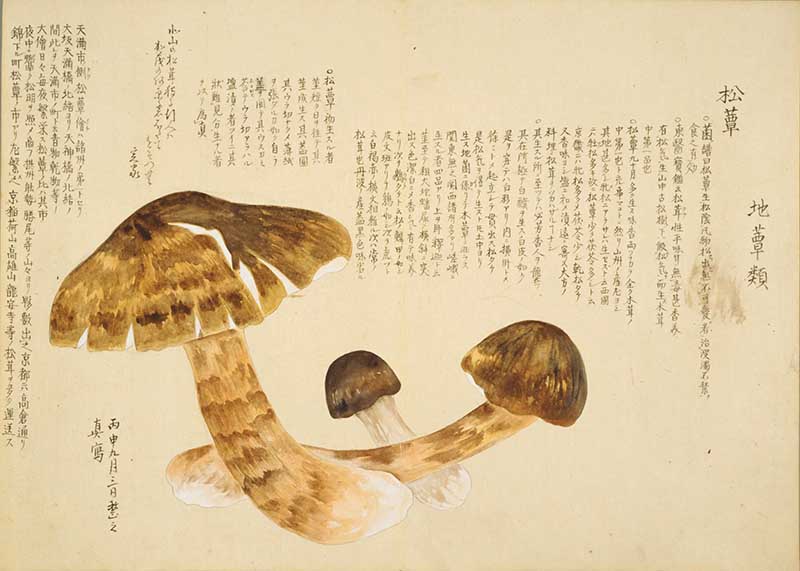
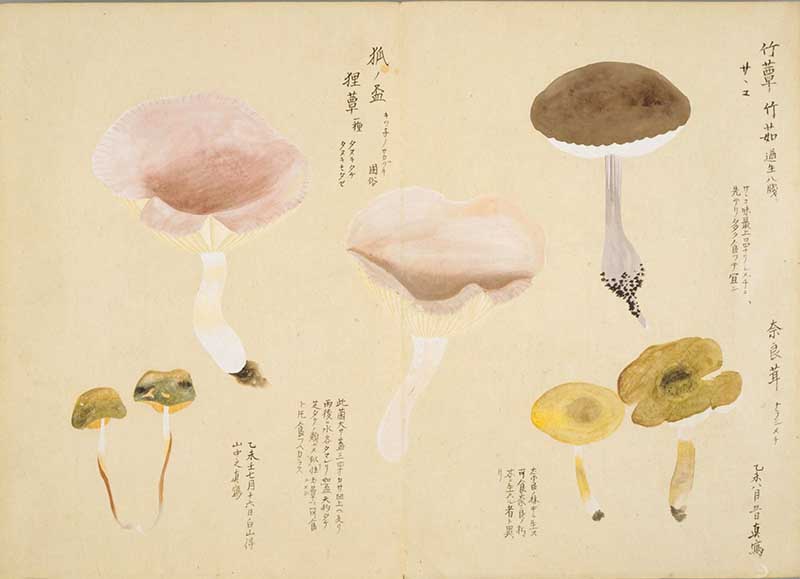
Print 9: Grey Mushrooms and Others
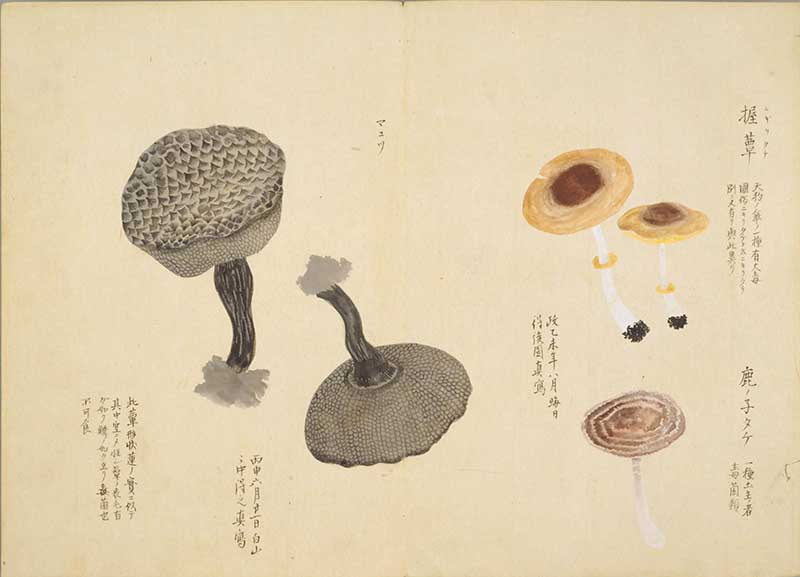
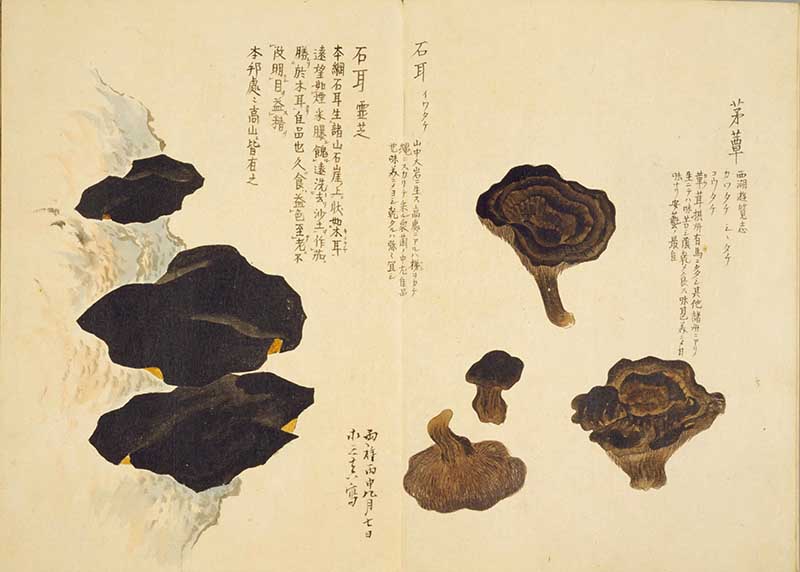
Plate 11: Green Morrell Mushroom
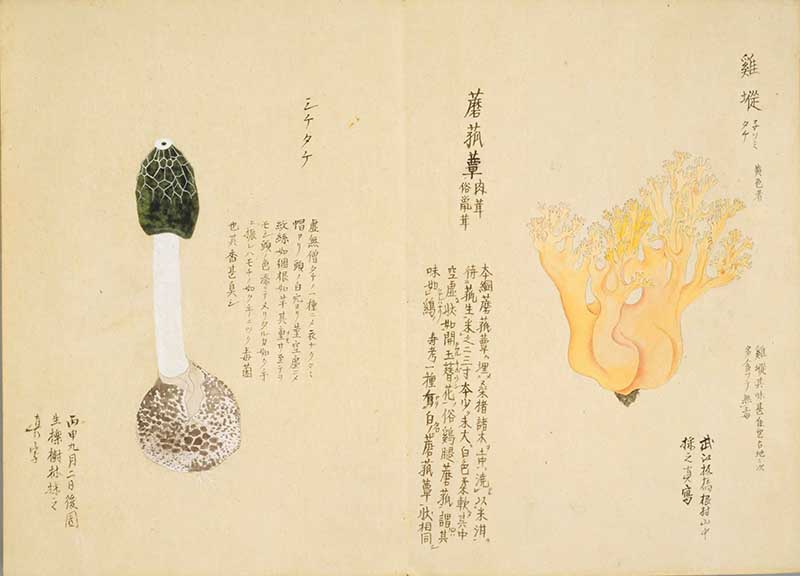
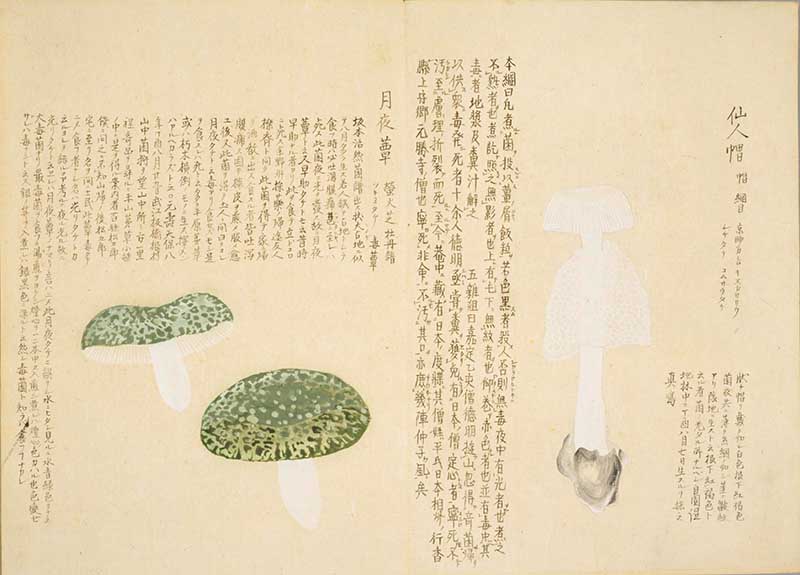
Print 13: Purple & Green Mushroom
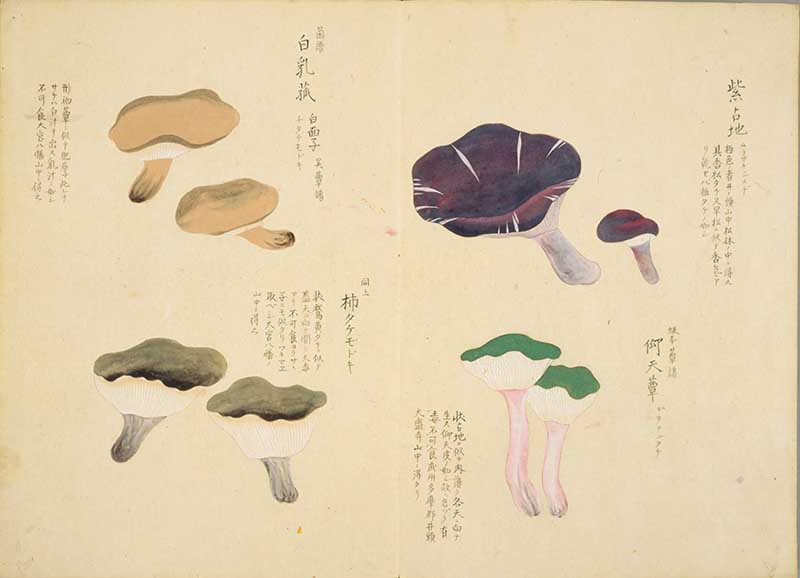
Plate 14: Four Colourful Fungi
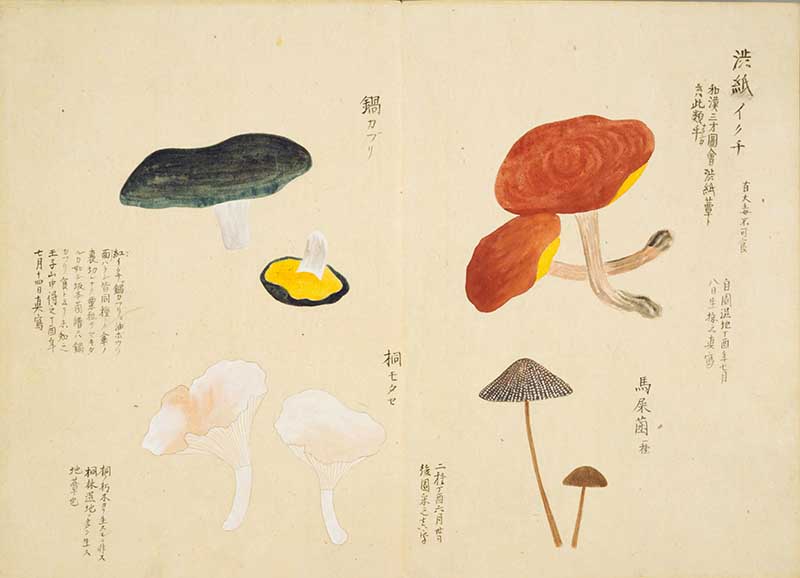
Print 15: Three Long Stem Fungi
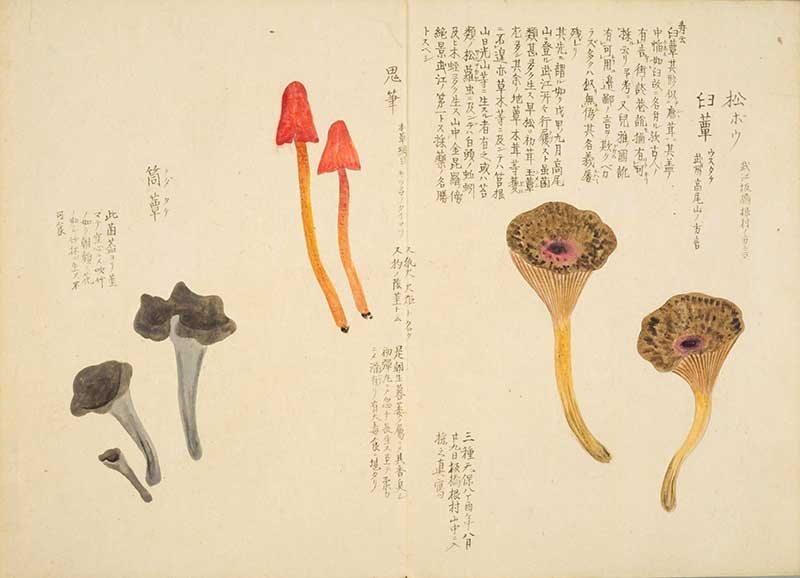
Edo Names vs. Modern Names
Here’s a quick little guide to help you match up the Edo-period mushroom names in the prints with the names we use today.
| Edo-period Name | Modern Equivalent | Notes |
|---|---|---|
| 香蕈 (Kōjun) | Shiitake (Lentinula edodes) | “Fragrant mushroom,” one of Japan’s favourites |
| 松蕈 (Matsutake) | Matsutake (Tricholoma matsutake) | Famous pine-loving mushroom |
| 黄芝 (Kōshi) | Reishi / Lingzhi (Ganoderma lucidum) | Used in traditional medicine |
| 木耳 (Kikurage) | Wood Ear (Auricularia auricula-judae) | Wobbly, jelly-like fungus on trees |
| 榎蕈 (Enokitake) | Enoki (Flammulina filiformis) | Long-stemmed, delicate mushroom |
| 栗菌 (Kuritake) | “Chestnut fungus” (Hypholoma sublateritium and similar) | Name refers to chestnut-coloured caps |
More Mushroom Inspiration
If these Japanese fungi have you hooked, don’t forget to check out the other mushroom posts here on Pictureboxblue:
You should also check out these Japanese Nature charts for more wonderful Japanese botanical illustrations.
If you fancy, you can Buy Me A Coffee Here.