35 More Wildflower Illustrations – Harriet Adams’ Beautiful Blooms
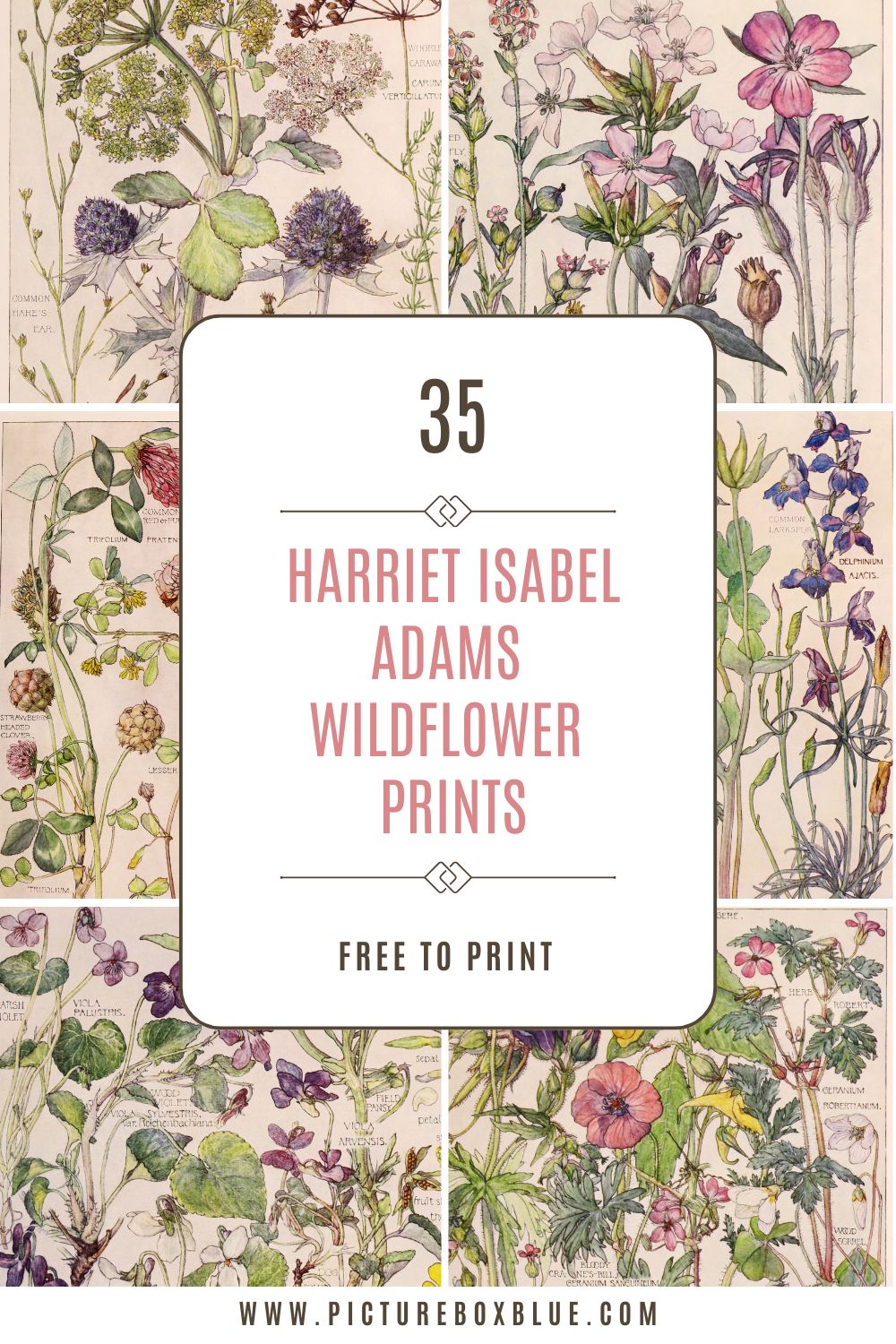
This collection features even more wildflower illustrations from the 1907 edition of Wild Flowers of the British Isles by Harriet Isabel Adams. Delicate, detailed, and beautifully observed, these public domain botanical prints are perfect for crafting, wall art, junk journals, and nature lovers alike.
If you’ve already seen my first collection of wildflower illustrations by Harriet Isabel Adams, you’ll know how quietly captivating her botanical art can be. That post has become one of the most popular wildflower features on the site. Which clearly means one thing: we’re not done wandering through her meadows just yet.
So this time, I’m diving back into the 1907 edition of Wild Flowers of the British Isles to share even more of her beautiful plates.
Harriet Adams Botanical Artist
Harriet Isabel Adams was part of a generation of early 20th-century botanical illustrators who combined scientific observation with genuine artistic sensitivity. Her work sits somewhere between field study and art print. Accurate enough for identification, but soft and characterful enough to frame on your wall. There’s a gentleness to her compositions: slender stems curve naturally, petals aren’t overly stiff, and the plants feel like they’re growing rather than posing.
Wildflowers themselves are wonderfully democratic things. They don’t need careful planting plans or labelled borders; they appear. Roadside verges, hedgerows, woodland edges… and suddenly there’s foxglove, stitchwort, or harebell quietly getting on with being beautiful. Adams captured that spirit in her illustrations. They feel observed rather than arranged.
In this follow-up post, I’ve gathered even more wildflower prints from the 1907 book. All are in the public domain and free to download. Whether you use them for crafts, gallery walls, junk journals, or to admire their delicate detail, there’s plenty here to forage through.
How to Download the Wildflower Prints
All of the wildflower illustrations featured in this post are in the public domain, which means they’re completely free for you to download and use.
To download a print:
- Click on the title above the wildflower image you’d like.
- This will open the full-size version in a new window.
- Right-click (or long-press on mobile) and choose “Save image as…”
- Save it to your device, and it’s ready to print or use digitally.
For the best results, I recommend:
- Printing on matte cardstock for wall art
- Using slightly textured paper for a more vintage feel
- Printing at high-quality settings for the crispest botanical detail
These illustrations are perfect for framing, decoupage, junk journals, handmade cards, and all sorts of nature-inspired crafts. If you’re resizing them, most editing software or even basic print settings will let you scale them up or down to suit your project.
Prints 1-5: The Buttercup Family, Poppies & Violets
Several of the wildflowers in Wild Flowers of the British Isles belong to the buttercup family, known botanically as Ranunculaceae. This lively group includes buttercups, anemones, and even the rather dramatic monkshood.
Buttercups may look simple, but they’re clever little plants. Their glossy yellow petals reflect light to attract pollinators, giving them that almost varnished shine in sunny meadows. Other family members prefer woodland floors or damp hedgerows, which explains the name Ranunculus, meaning “little frog,” as many thrive in moist places.
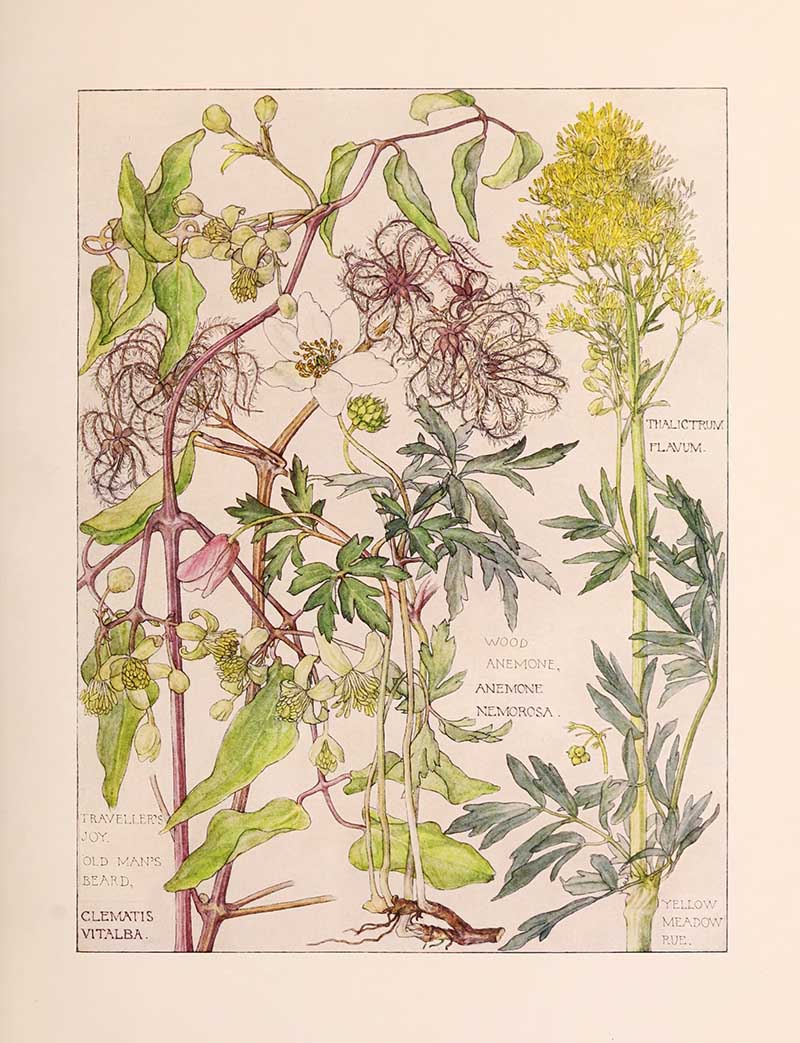
Clematis vitalba, wood anemone, and yellow meadow rue, Harriet Adams, wildflower botanical illustration.
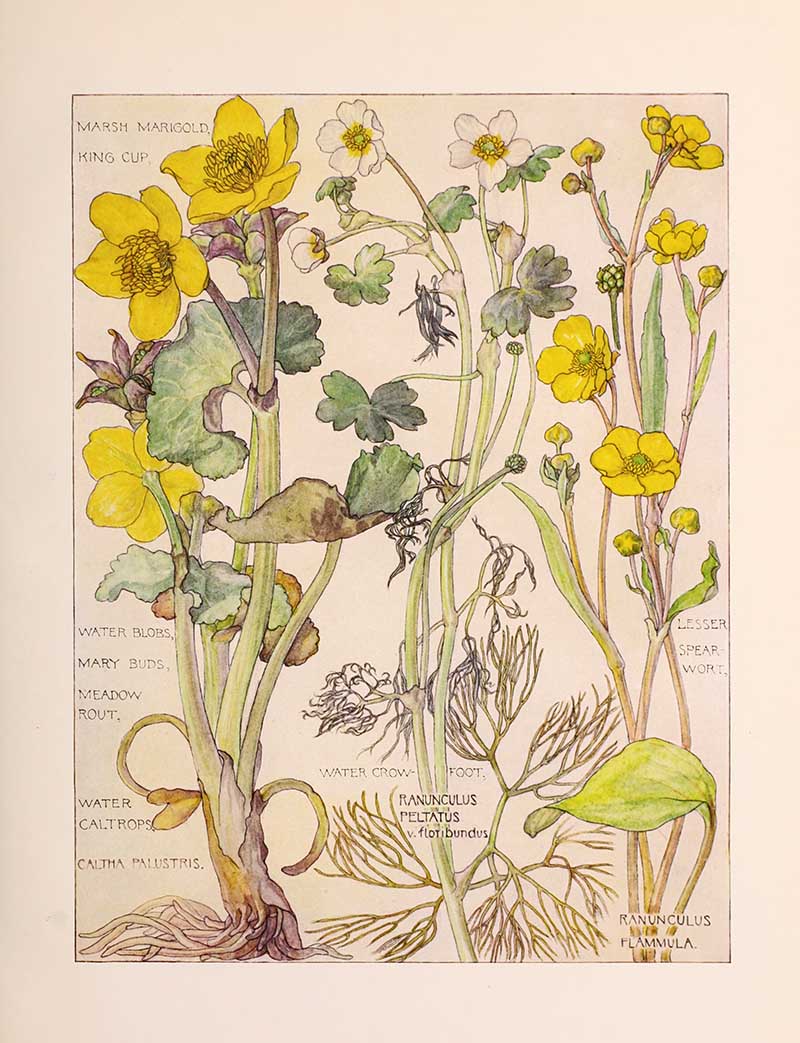
Marsh marigold, water crowfoot, and lesser spearwort with yellow and white flowers.
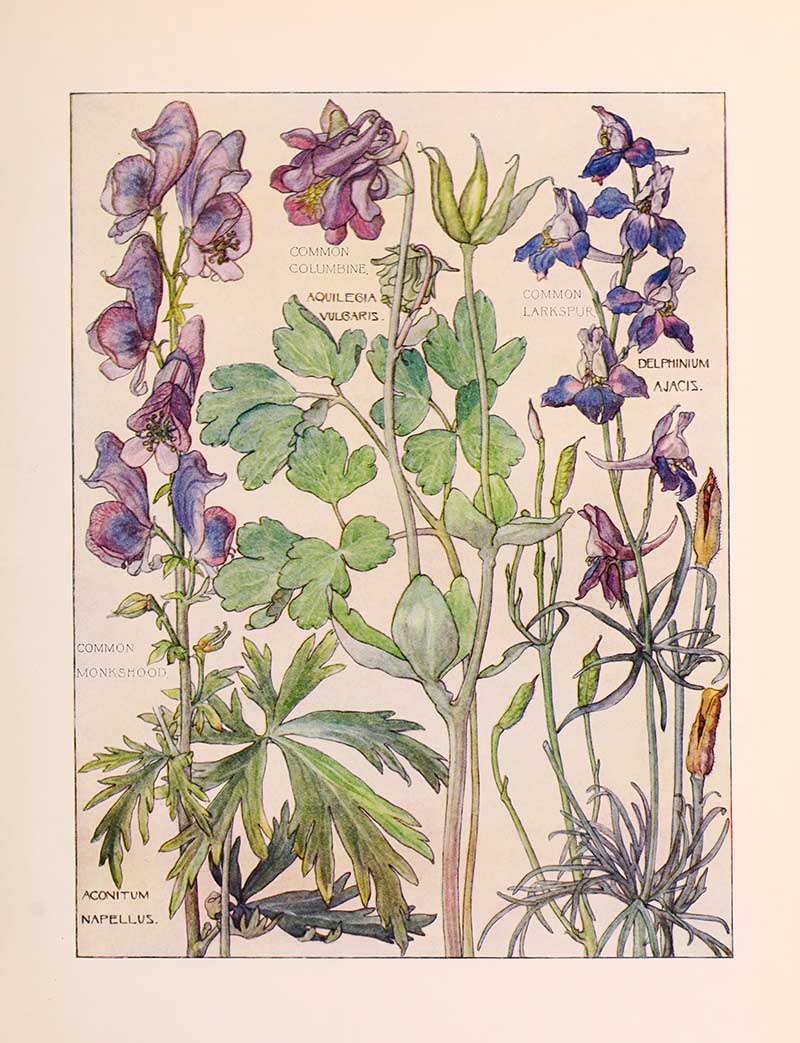
Vintage botanical watercolour showing monkshood, columbine, and larkspur in purple and blue.
Monkshood, with its deep violet hood-shaped flowers, may be strikingly beautiful in hedgerows and gardens, but it’s also one of Britain’s most poisonous wildflowers. A dramatic member of the buttercup family that definitely demands admiration from a safe distance.
Vintage botanical watercolour showing red poppy, greater celandine, yellow horned poppy, and Welsh poppy.
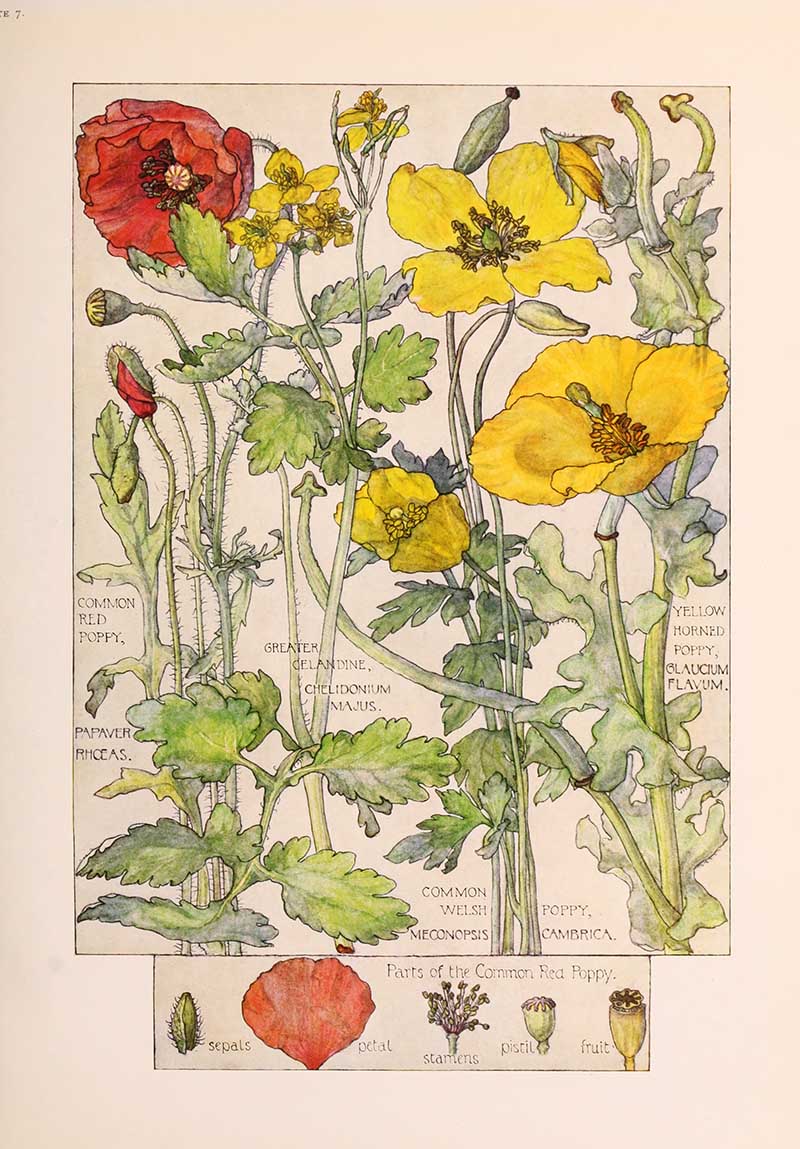
Wild violets, with their delicate purple petals and heart-shaped leaves, are among the sweetest signs of early spring, quietly carpeting woodland edges and grassy banks with understated charm.
Vintage botanical watercolour showing various violet and pansy species in purple, white, and yellow.
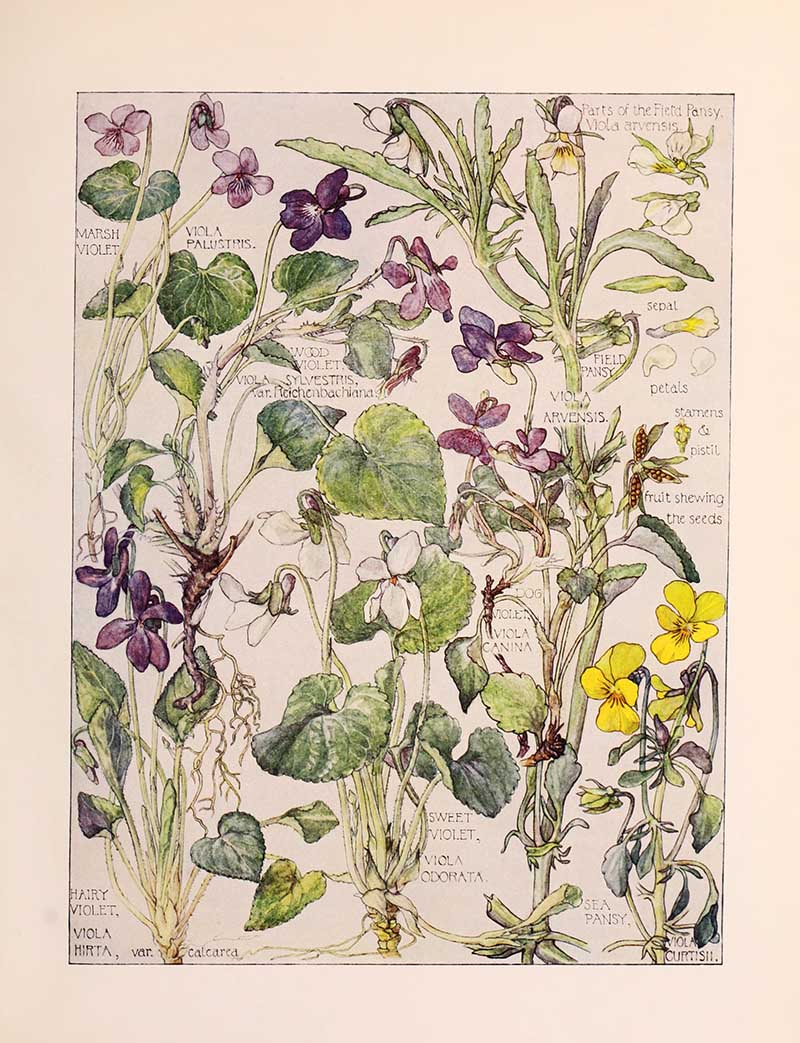
Prints 6 -9: Pink Family Wildflowers
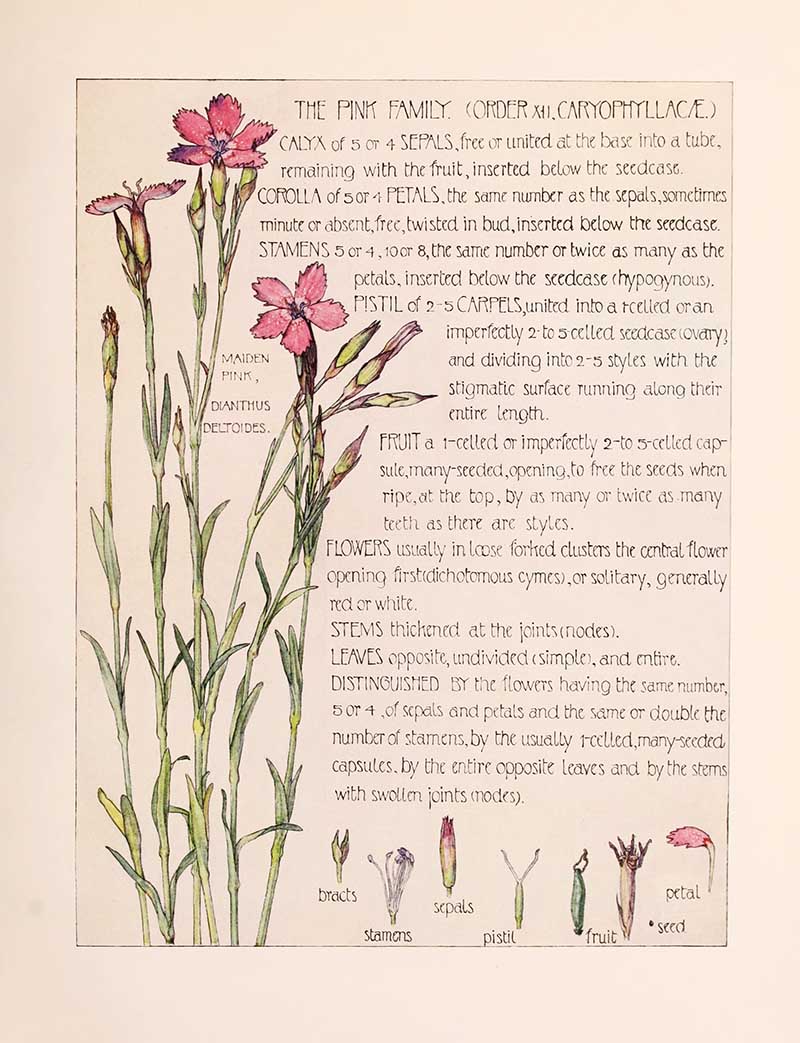
The book also includes several members of the Pink family (Caryophyllaceae), such as campion, stitchwort, and ragged robin. These wildflowers are often easy to spot thanks to their five petals, many of which are notched or slightly fringed.
Another nice detail in Wild Flowers of the British Isles is how she decorated some of the chapter title pages with small floral illustrations. Instead of plain text headings, she added simple botanical drawings around the titles, giving the book a cohesive and thoughtfully designed feel.
Print 7: More Pink Family Flowers
Pink family wildflowers, including Spotted Catchfly.
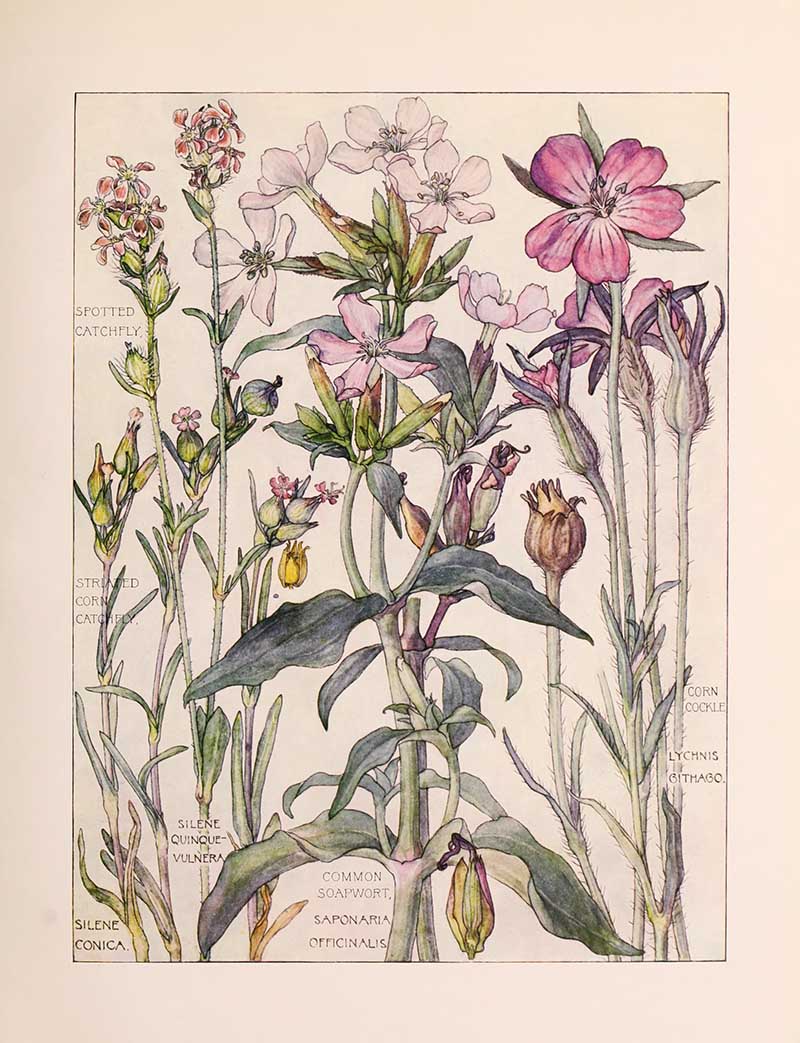
Print 8: Even More Pink Family
Pink family wildflowers, including Campions.
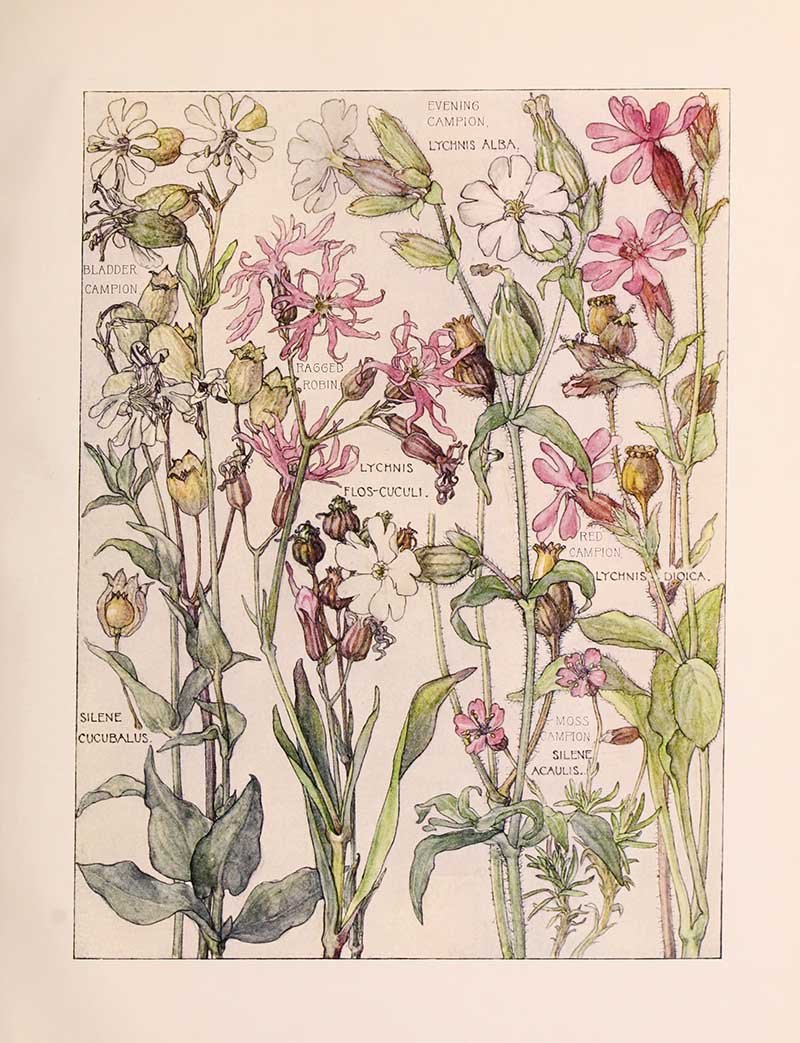
Print 9: Pink Family Stitchworts
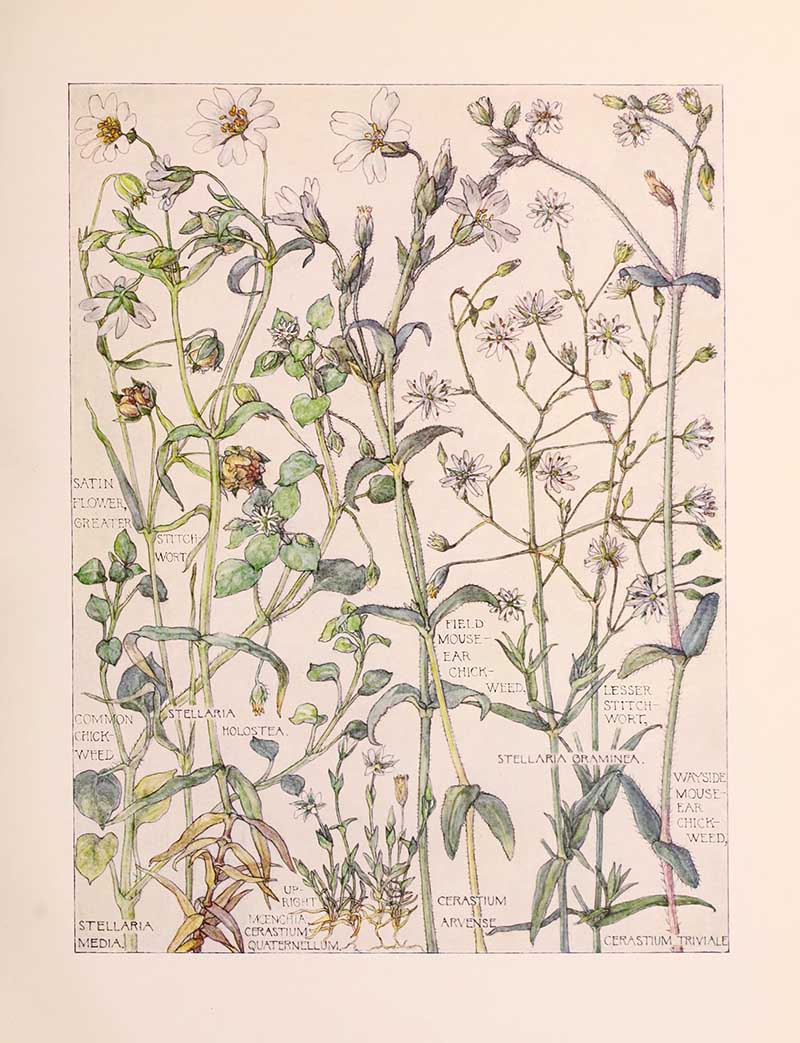
Prints 10-16: Mallow & Pea family
Mallow wildflowers, with their soft pink or mauve petals marked by darker veins, are common sights along roadsides and field edges, their open, saucer-shaped blooms making them easy to recognise.
Print 10: Mallow family wildflowers
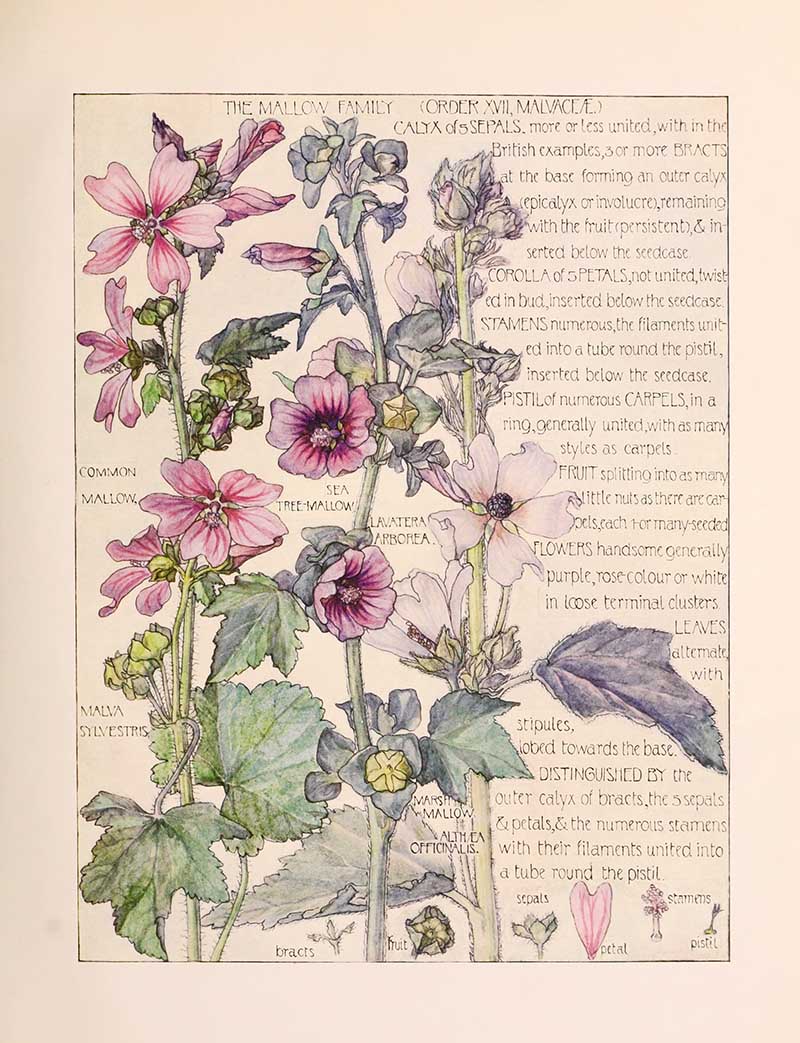
Print 11: Cranesbill Wildflowers
Vintage botanical watercolour showing cranesbill geranium family wildflowers, Harriet Adams wildflower botanical illustration.
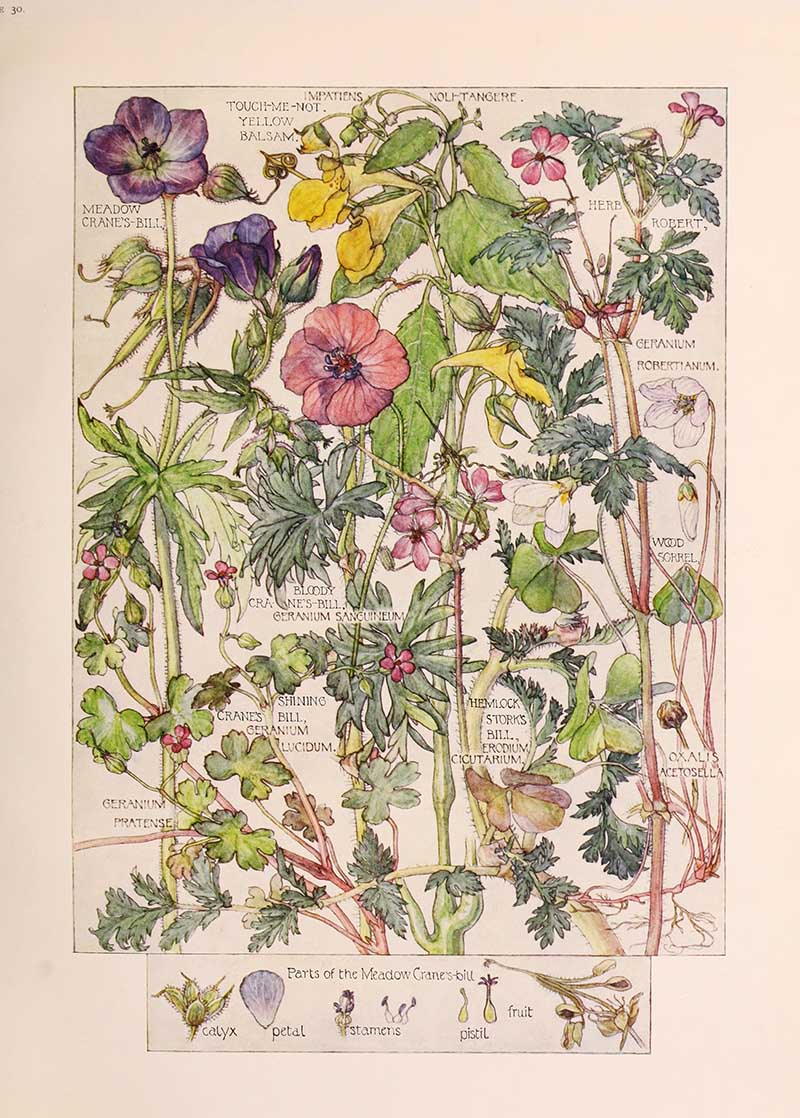
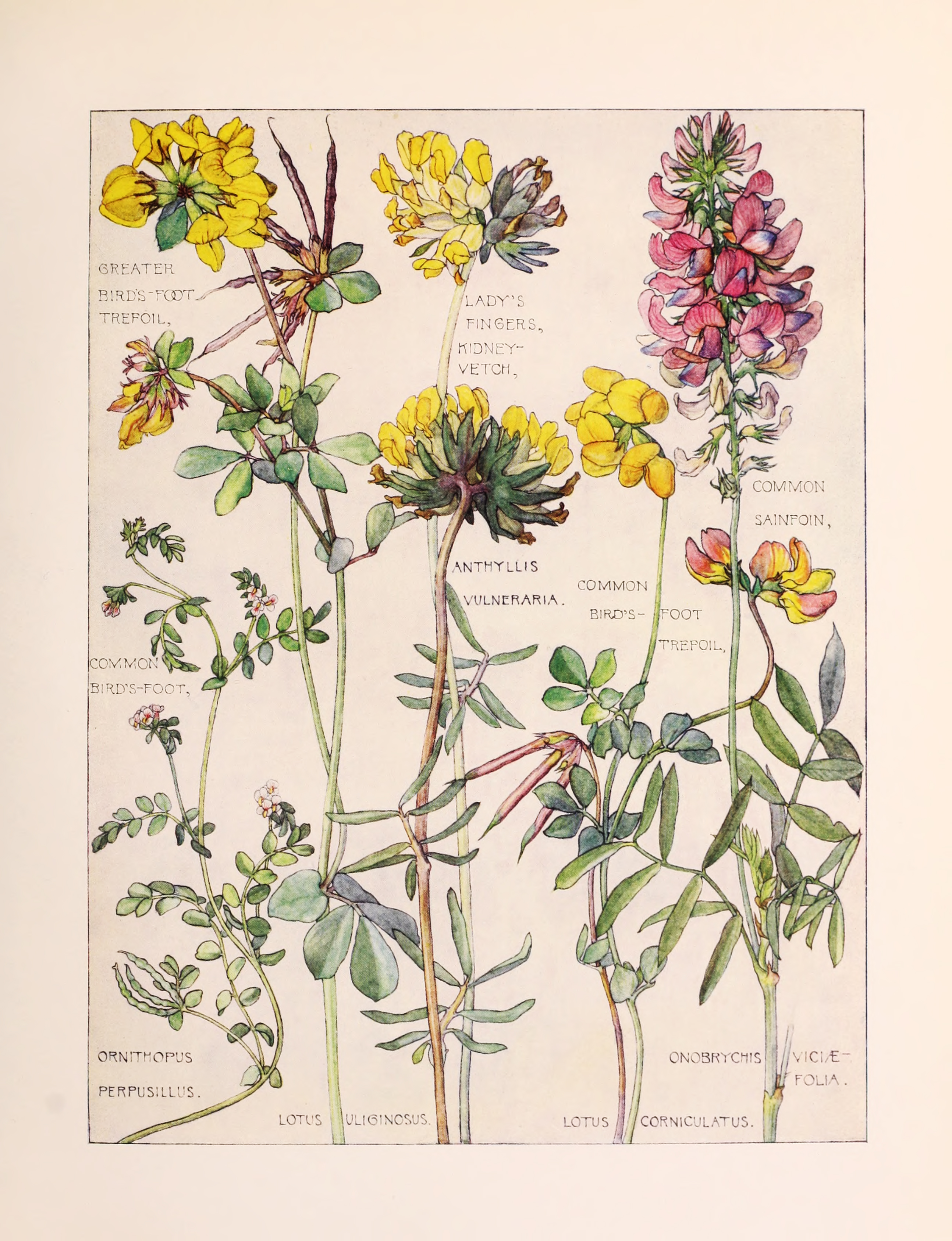
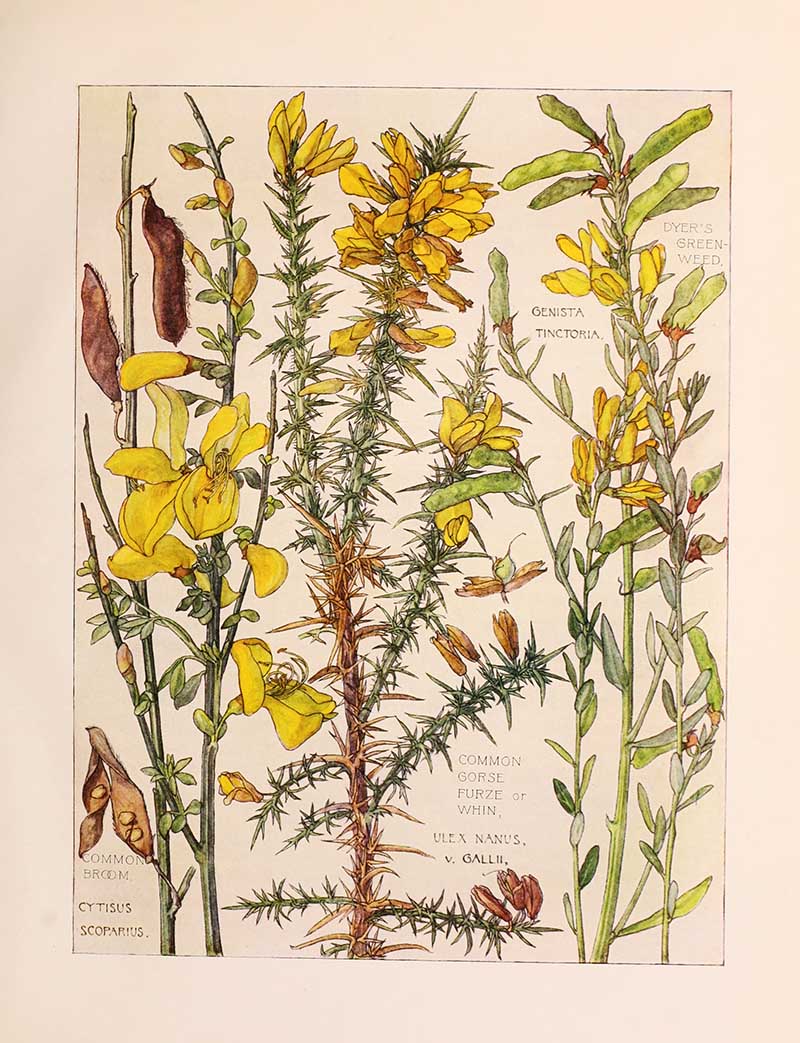
Print 12: Pea Family Wildflowers
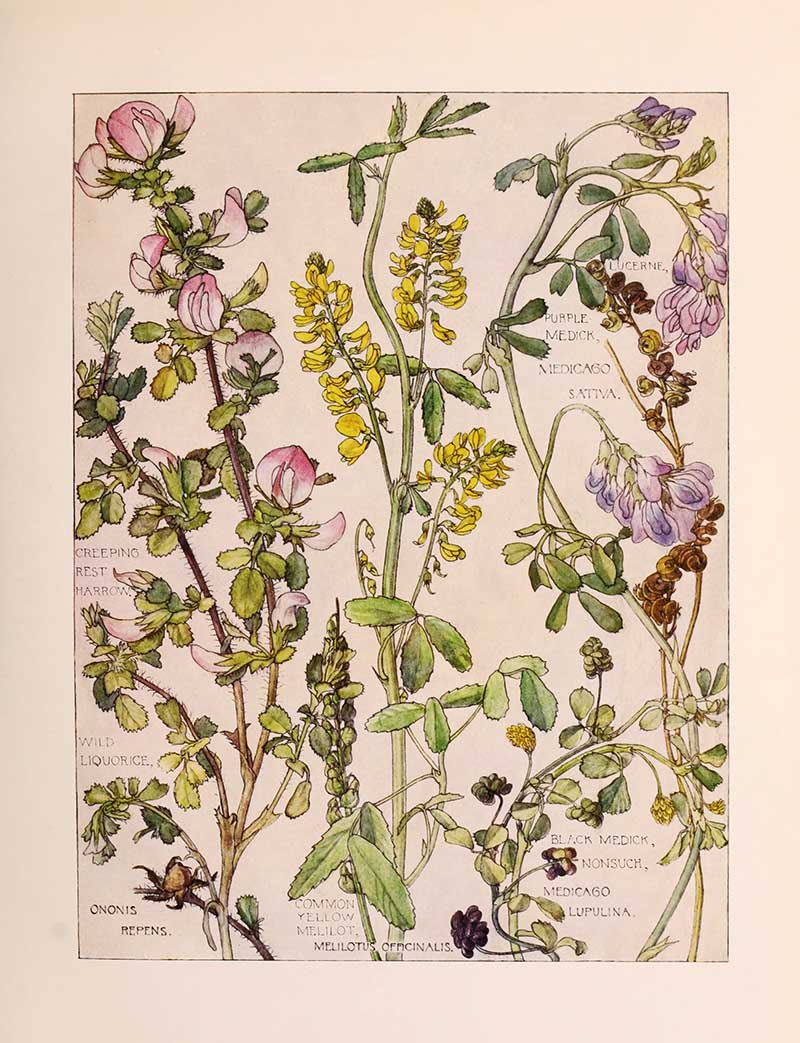
In Harriet Isabel Adams’ illustrations, members of the Pea family, such as vetches and clovers, are shown with their distinctive butterfly-shaped flowers and curling tendrils. She captures their delicate structure and slightly unruly, climbing habit beautifully.
Print 13: Pea Family, including Rest Marrow
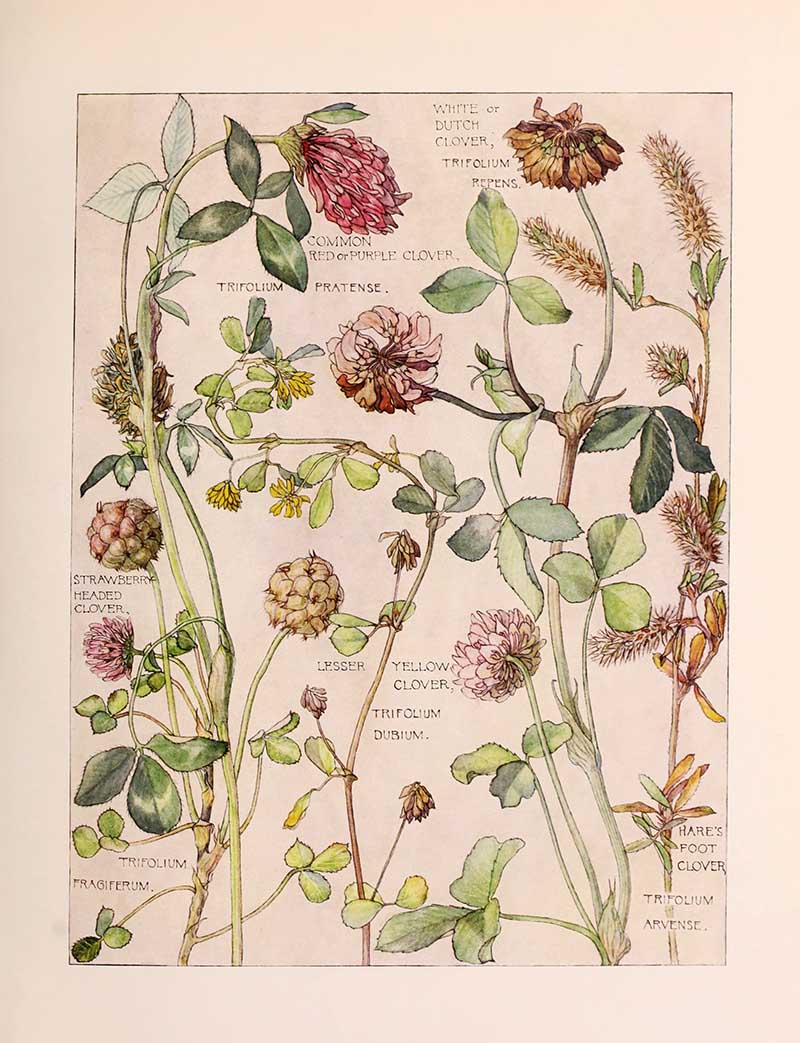
Clovers, part of the Pea family, are easy to recognise by their rounded flower heads made up of many tiny florets. In Harriet Isabel Adams’ illustrations, you can clearly see the clustered blooms and the familiar three-part leaves that make these meadow plants so distinctive.
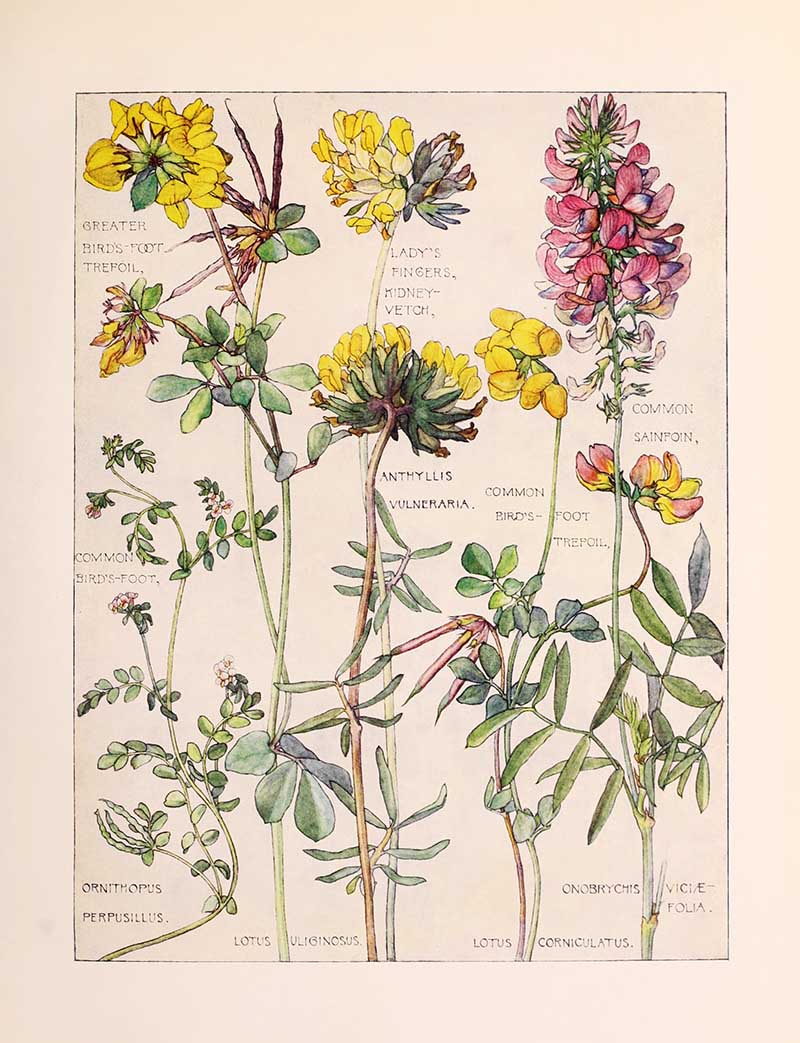
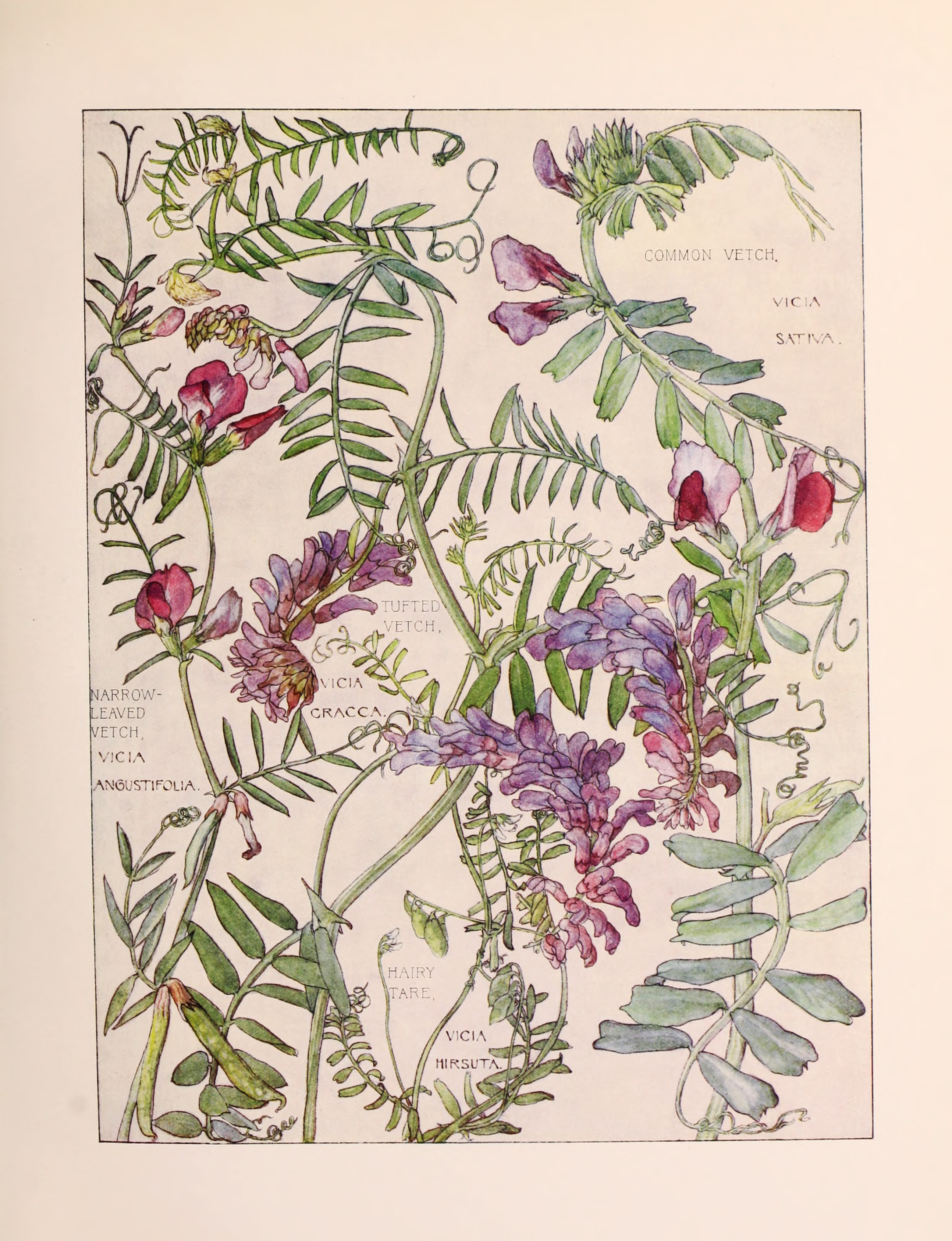
Vetch flowers, also members of the Pea family, have soft, pea-like blooms that grow in loose clusters along slender stems. In Harriet Isabel Adams’ illustrations, their curling tendrils and delicate hanging flowers give them a slightly wild, scrambling look.
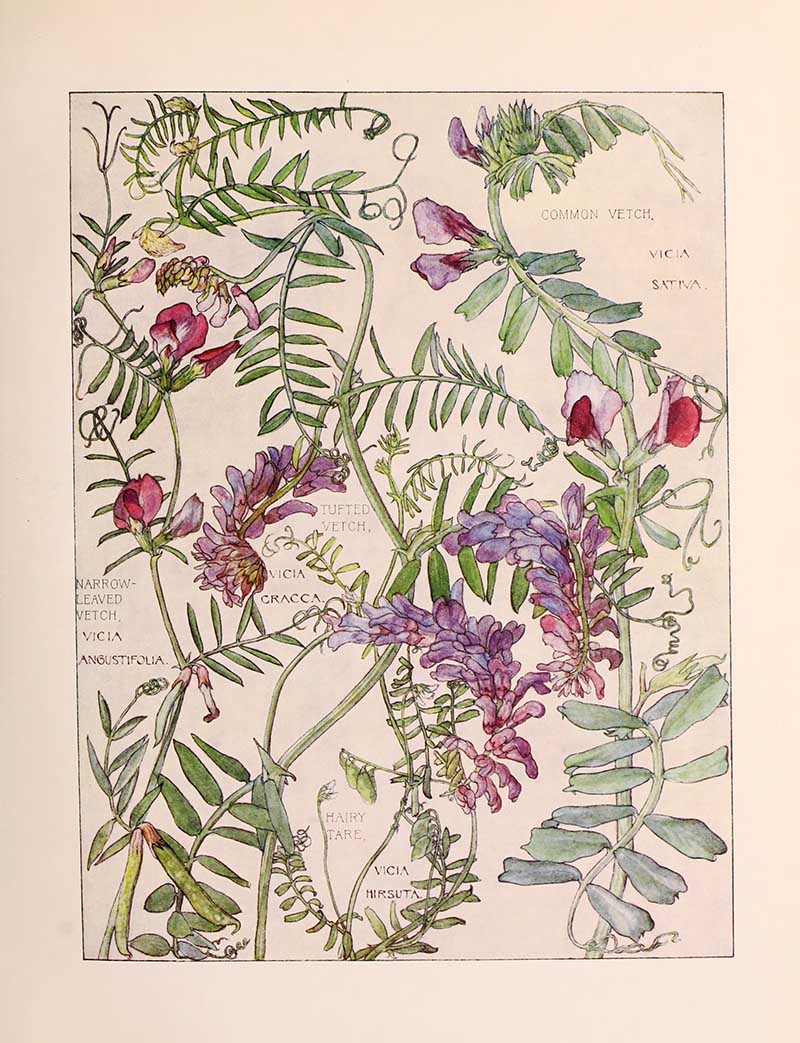
Prints 17-22: Rose, Saxifrage & Willow Herb Family
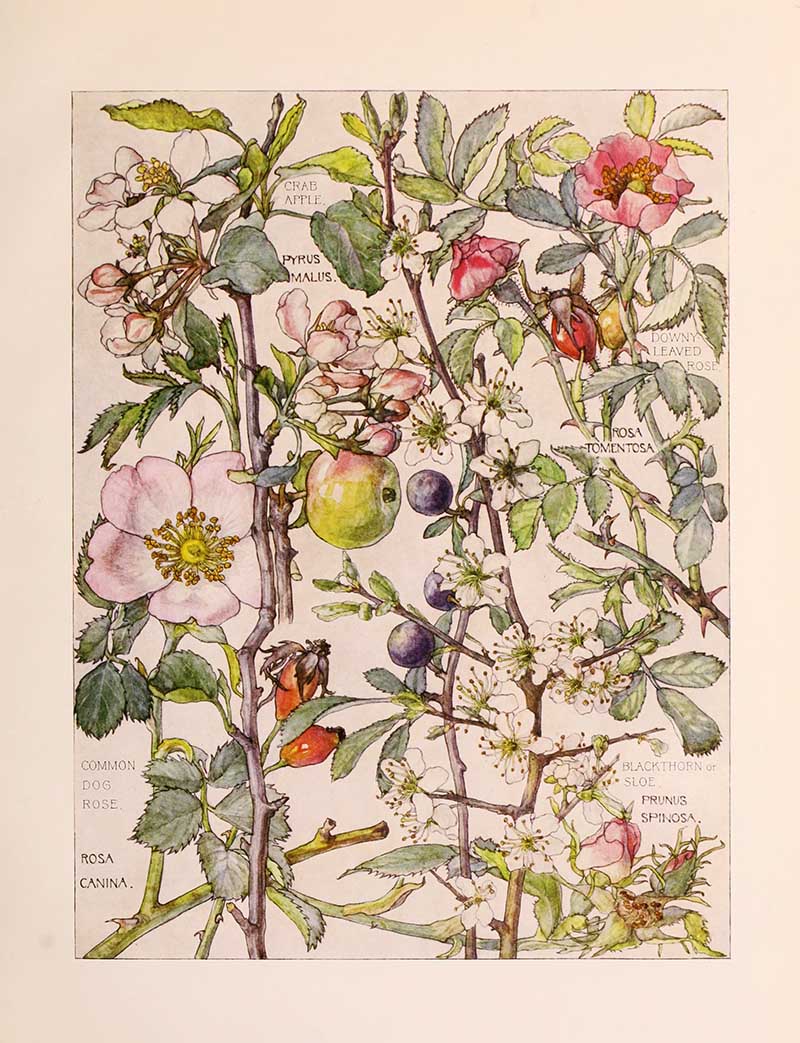
Print 18: Rose family Blackberries
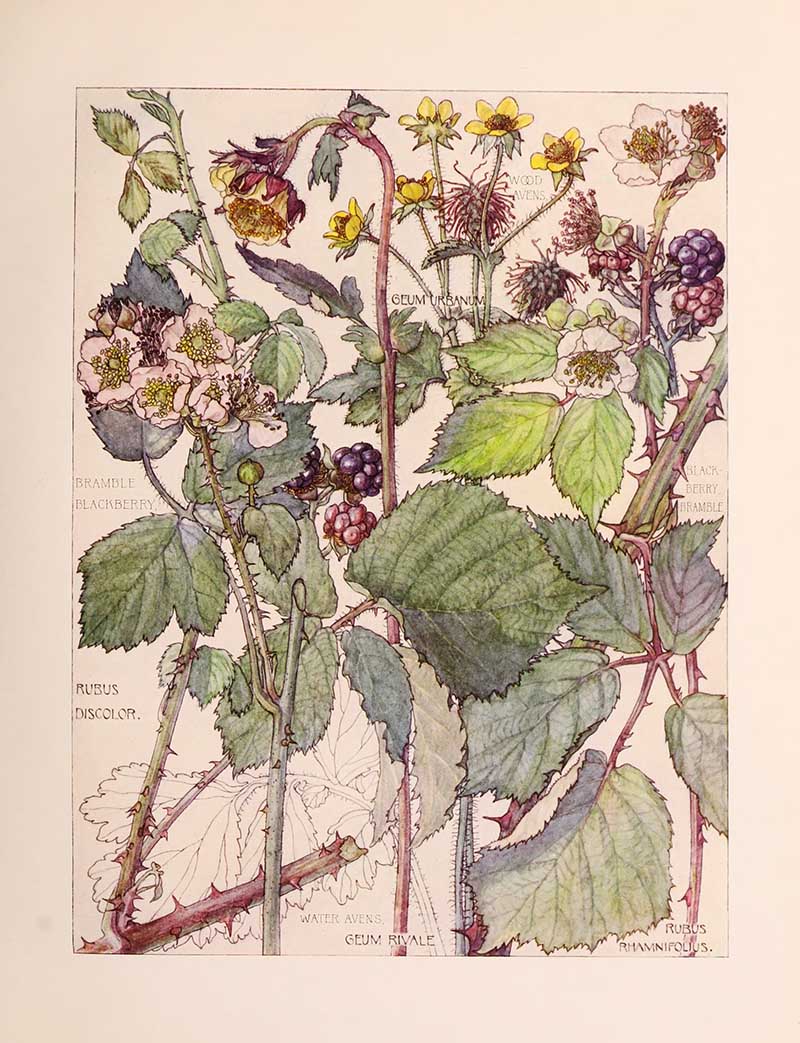
19. Rose Family, including strawberry
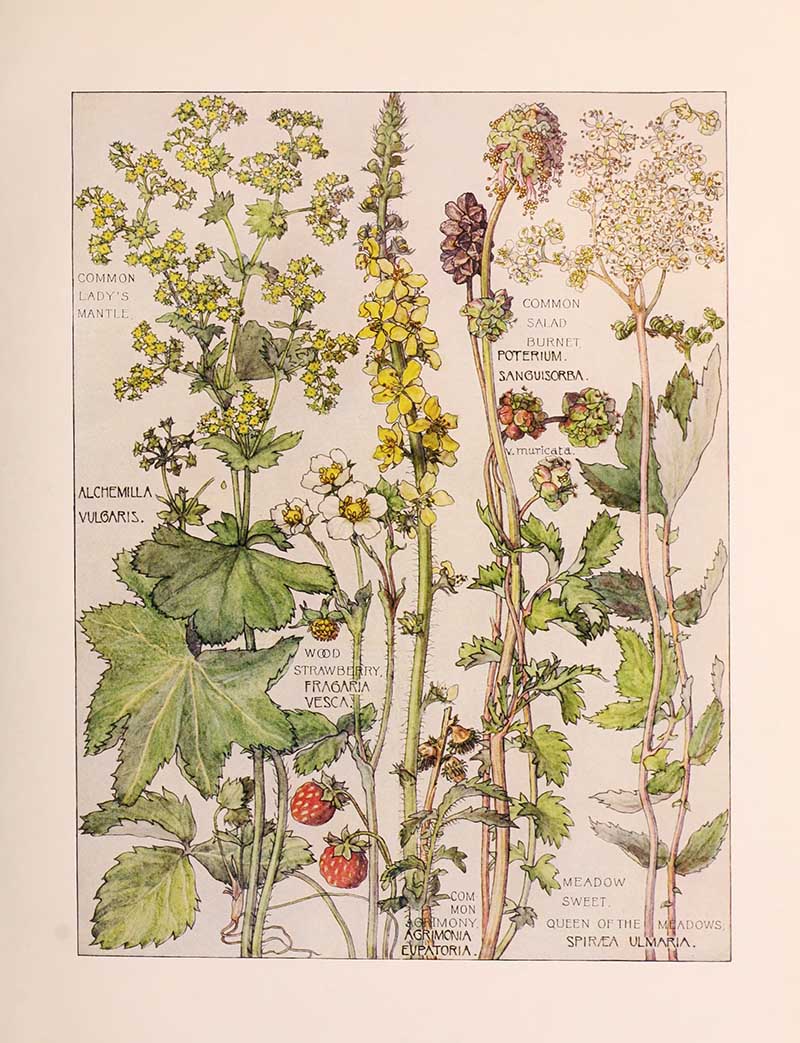
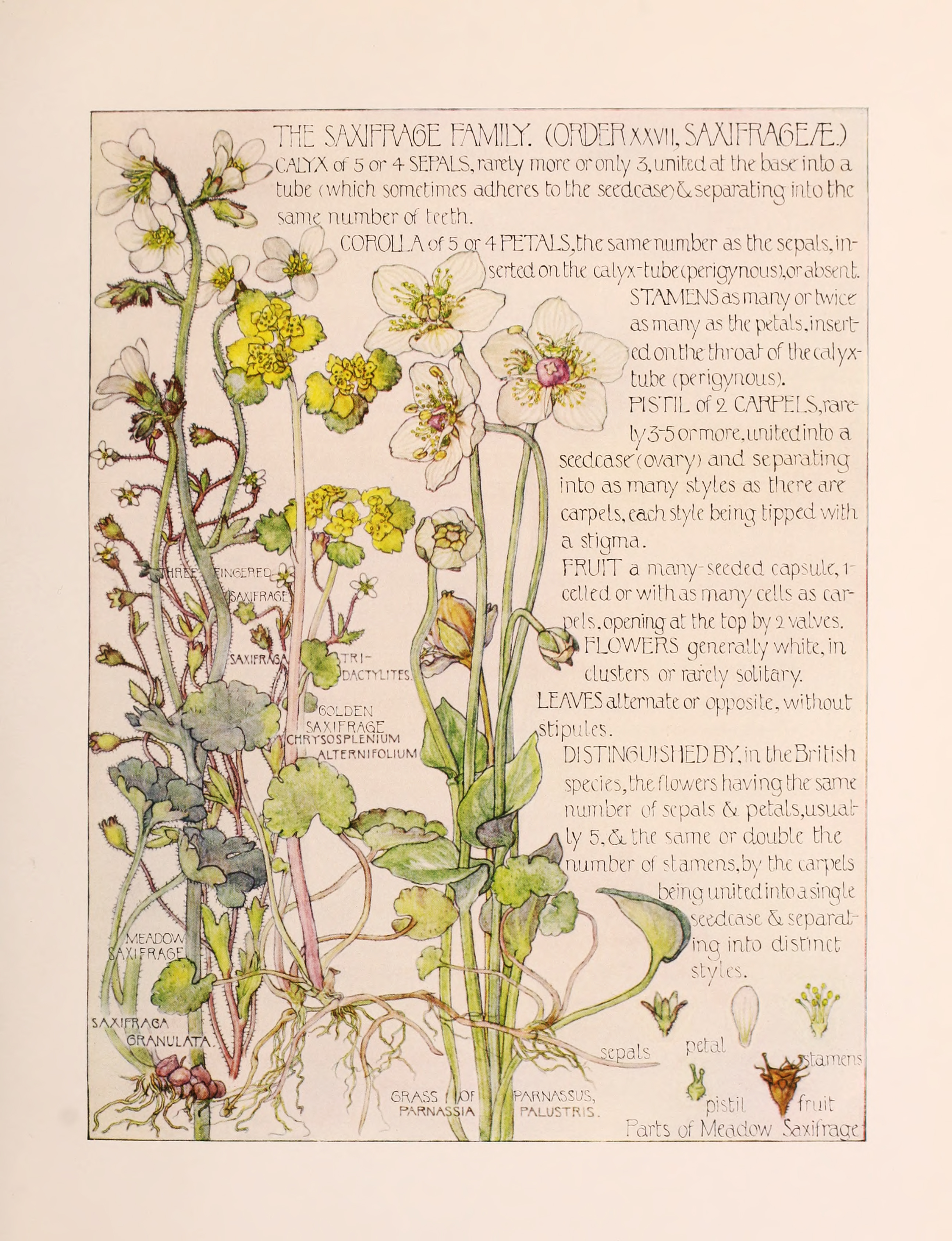
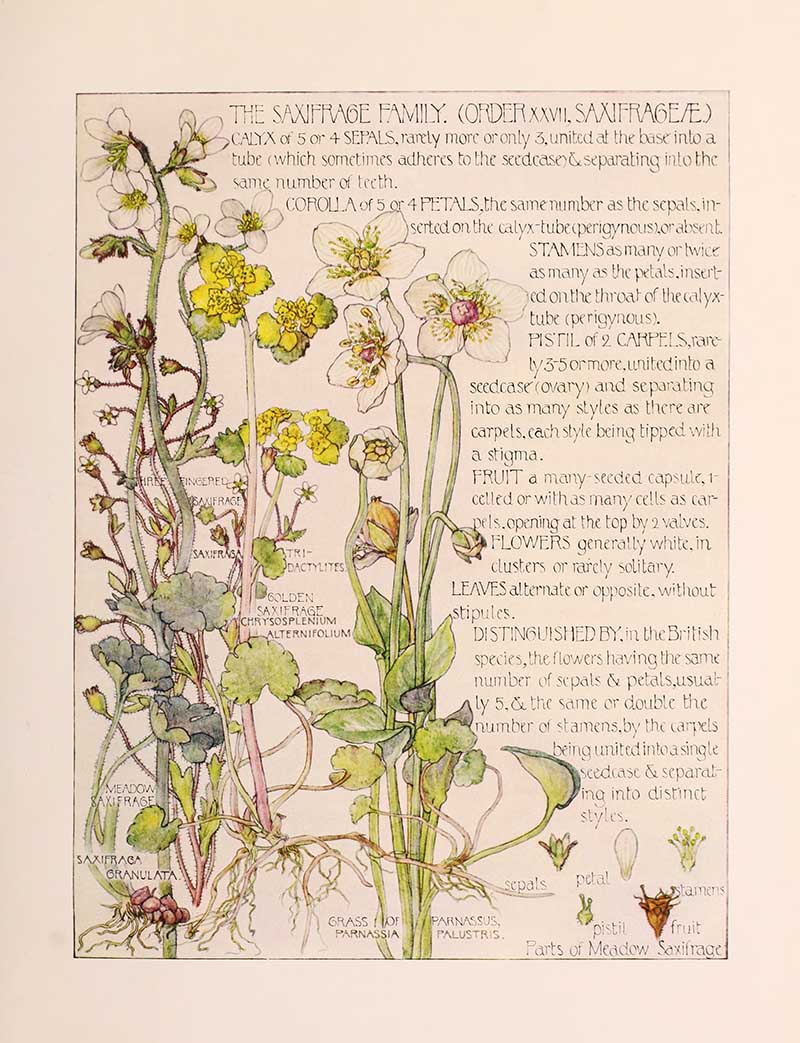
Print 20: Saxifrage family wildflowers
Wildflowers from the Saxifrage family (Saxifragaceae) are typically small but beautifully detailed, often growing in rocky or damp habitats. In Harriet Isabel Adams’ illustrations, their neat clusters of tiny star-like flowers and compact leaves are carefully drawn, highlighting the fine structure that makes these modest plants so distinctive.
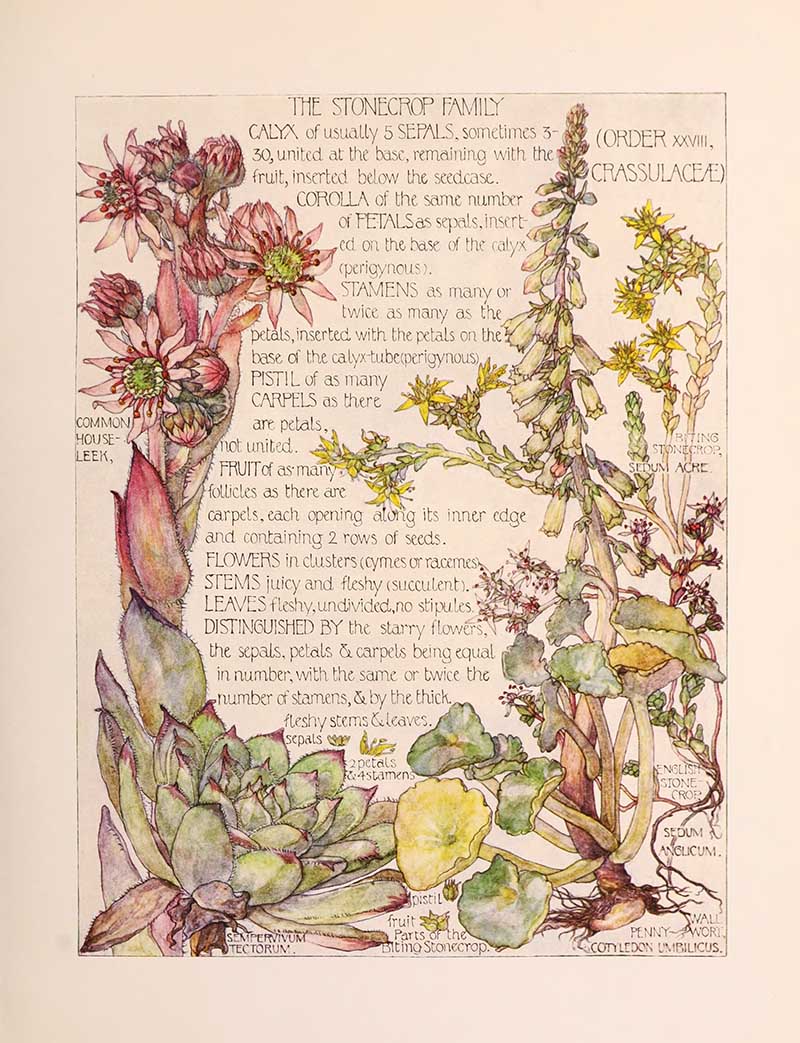
Members of the Stonecrop family (Crassulaceae), such as sedums, are succulent plants with fleshy leaves adapted to dry, rocky places. In Harriet Isabel Adams’ illustrations, their thick leaves and tight clusters of star-shaped flowers are clearly shown, giving these tough little plants a surprisingly decorative look.
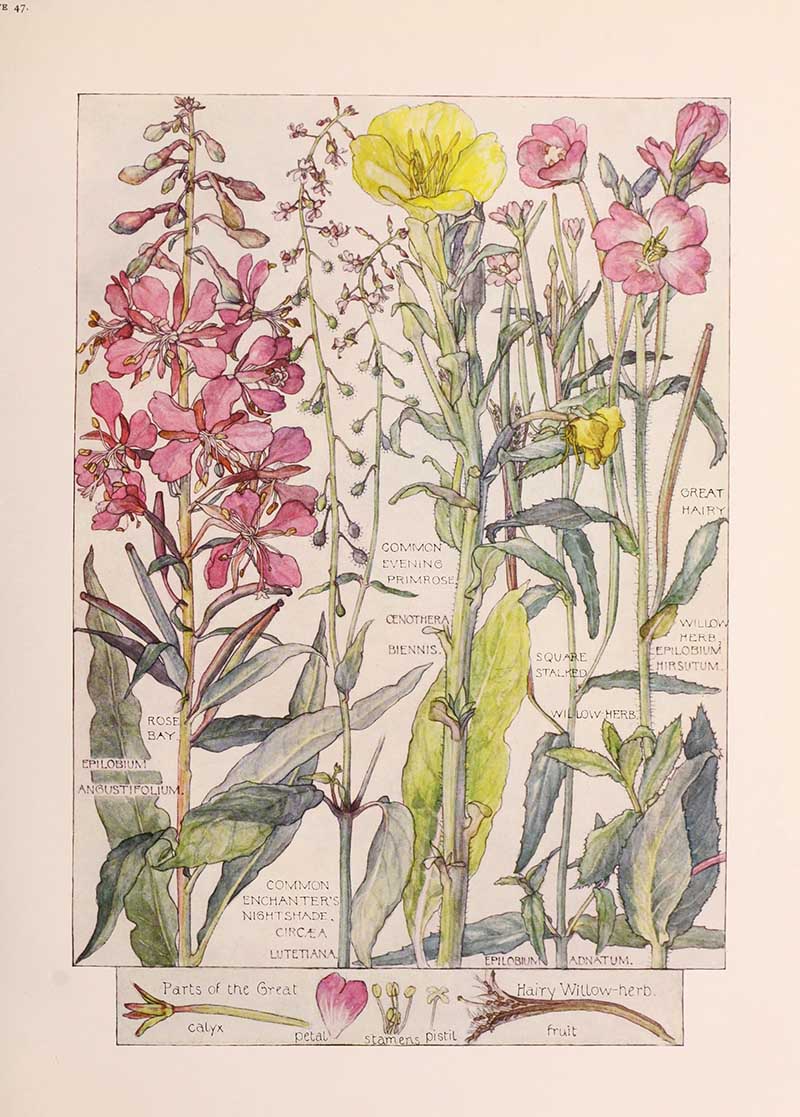
Vintage botanical watercolour showing willow-herb evening primrose family.
Prints 23-27: Parsley, Honeysuckle & Teasle family
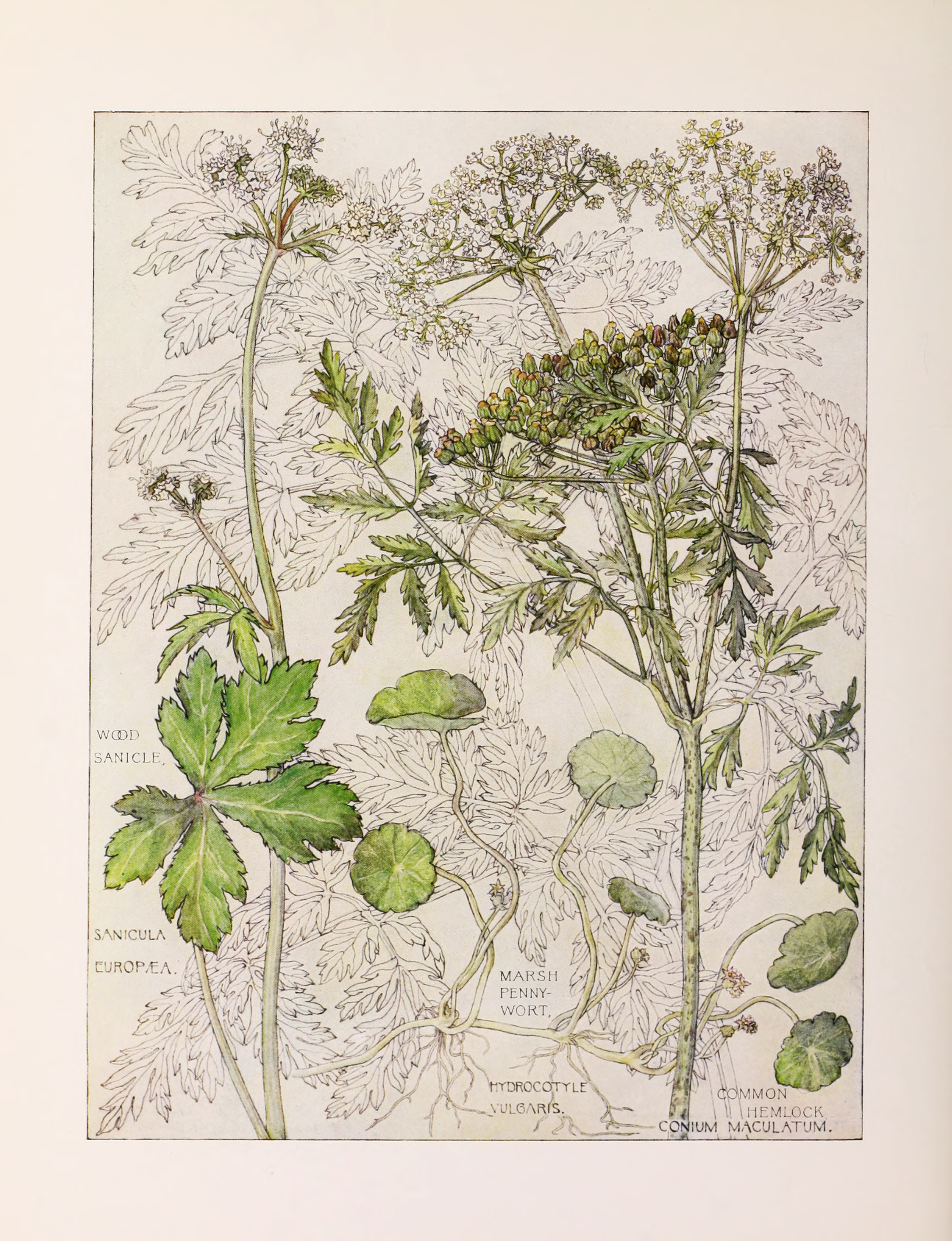
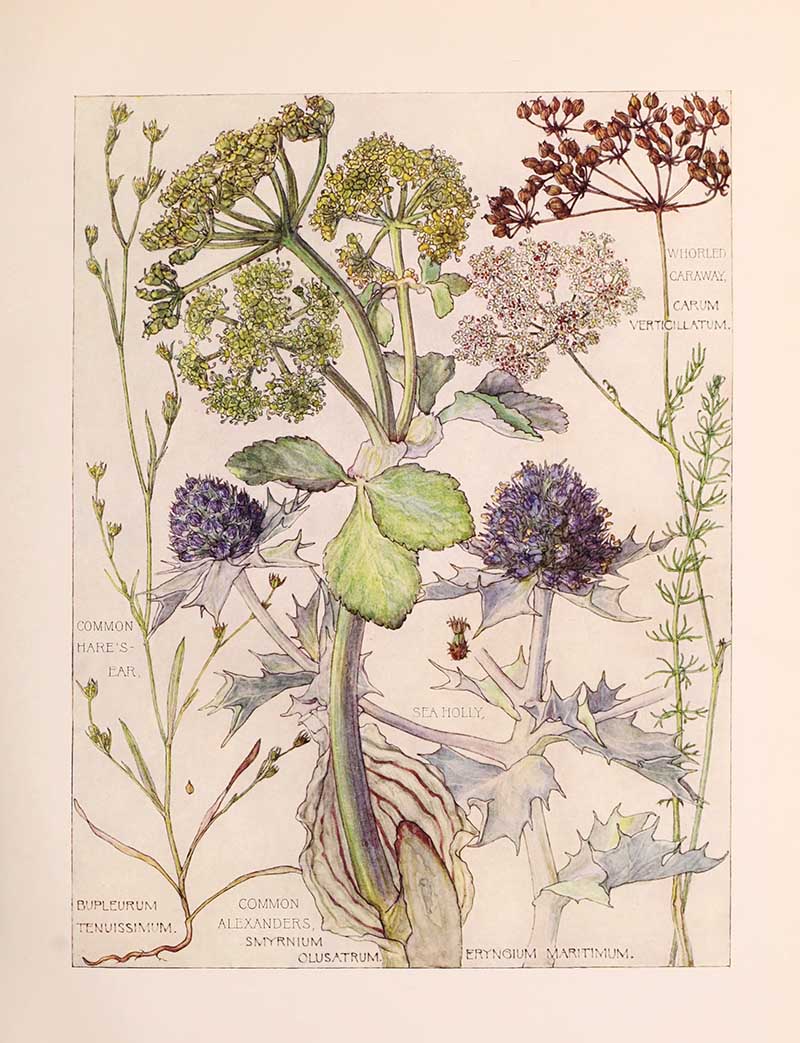
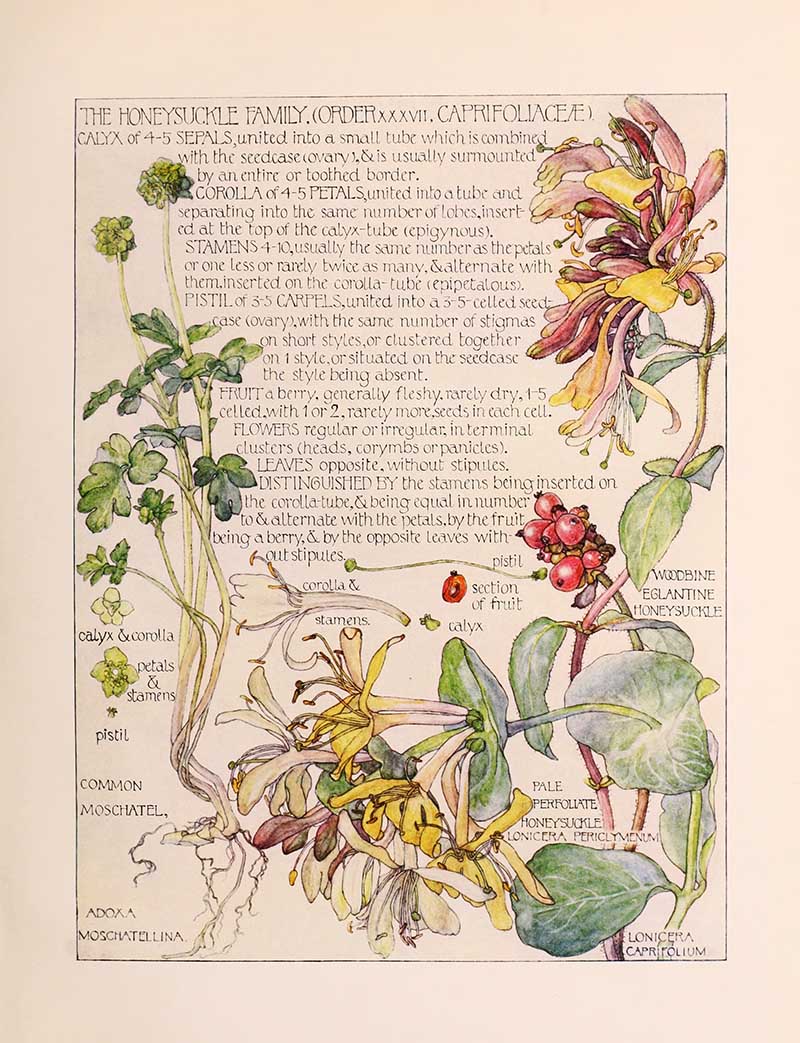
Wildflowers from the Parsley family (Apiaceae), such as cow parsley and wild carrot, are known for their flat, umbrella-shaped clusters of tiny flowers called umbels. In Harriet Isabel Adams’ illustrations, these delicate sprays are carefully detailed, showing the fine stems and lacy flower heads that make this family so recognisable in summer hedgerows.
Print 23: Parsley Family of Wildflowers
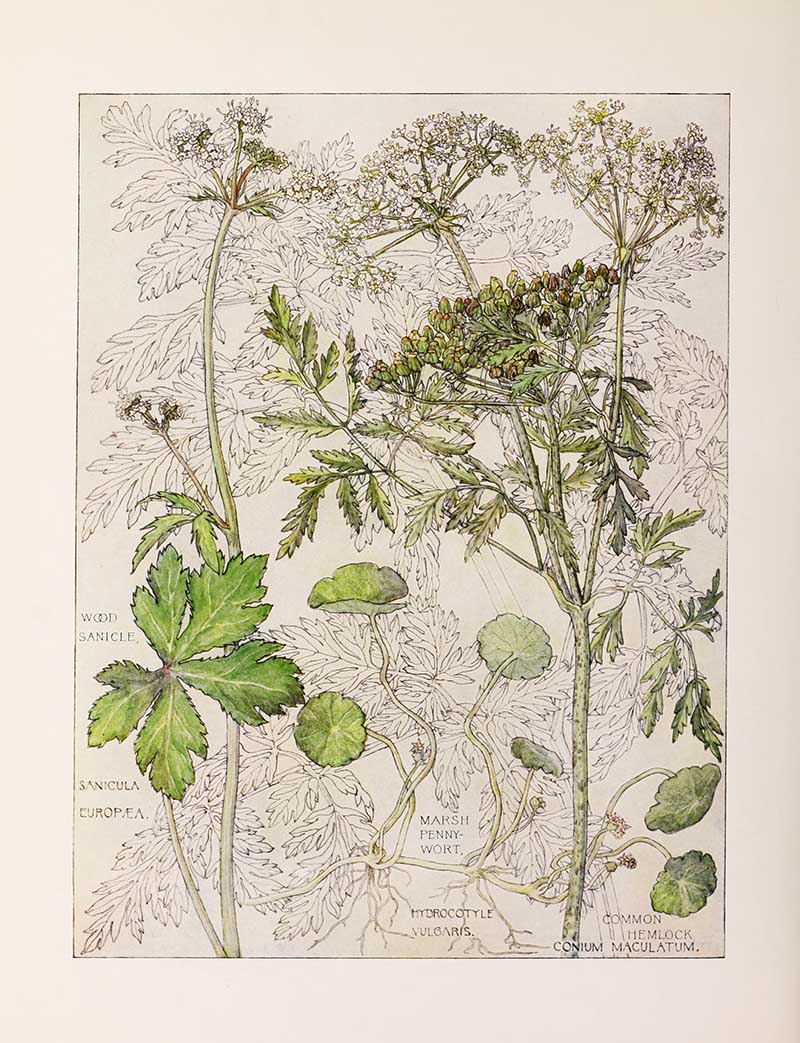
Print 24: Parsley umbelliferous family
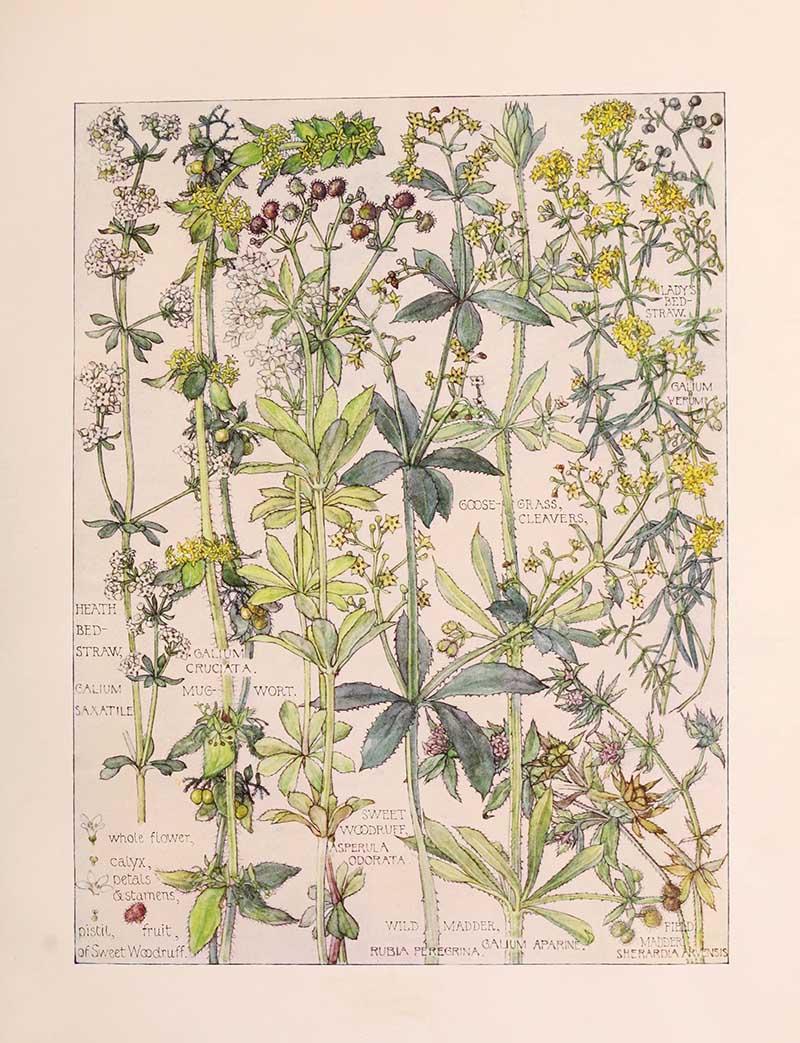
Wildflowers in the Bedstraw family (Rubiaceae), such as lady’s bedstraw, are recognised by their whorls of slender leaves and clouds of tiny star-shaped flowers. In Harriet Isabel Adams’ illustrations, these airy clusters are neatly drawn, showing how such small blooms can create a soft haze of colour across meadows and verges.
Prints 28-35: Daisy Family
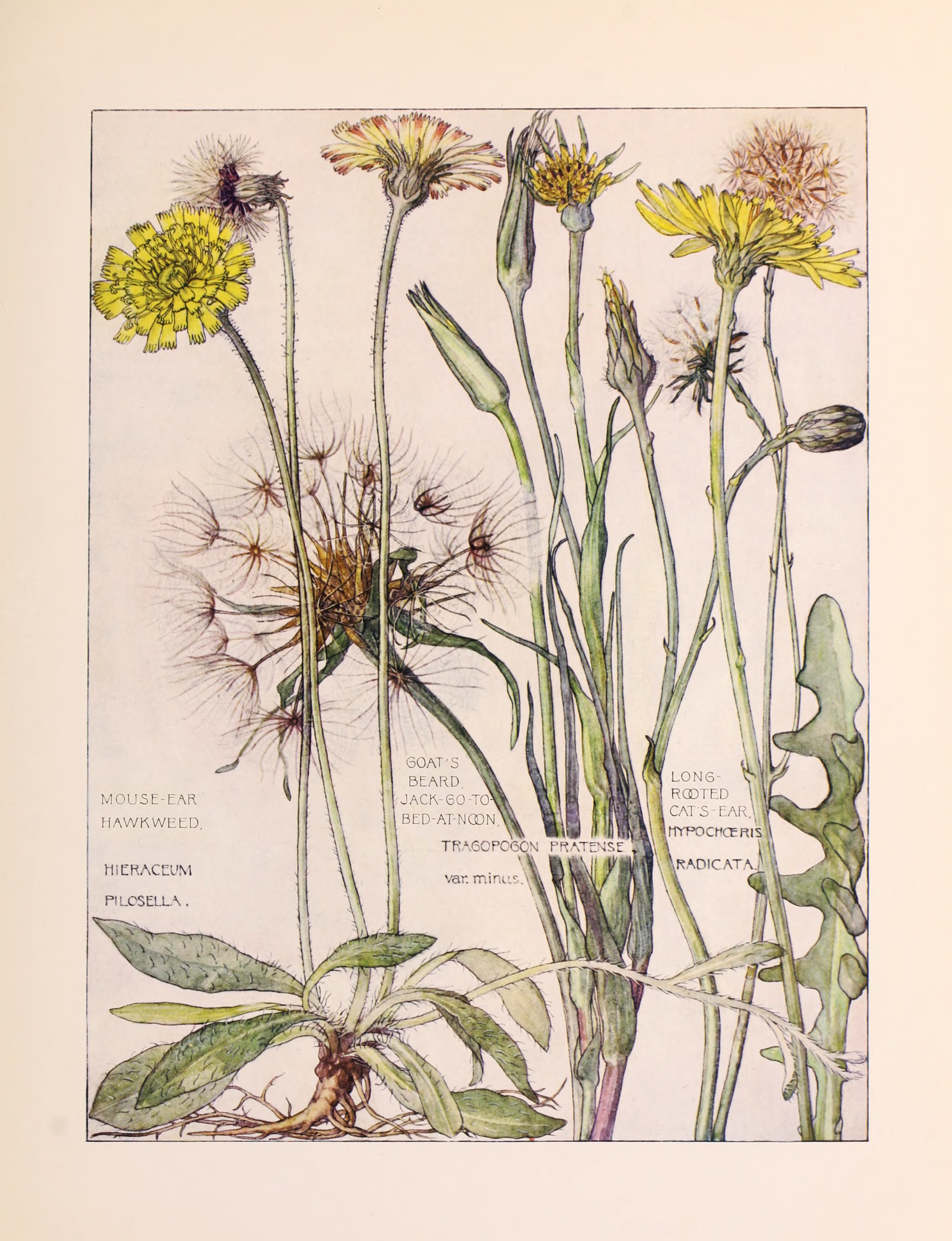
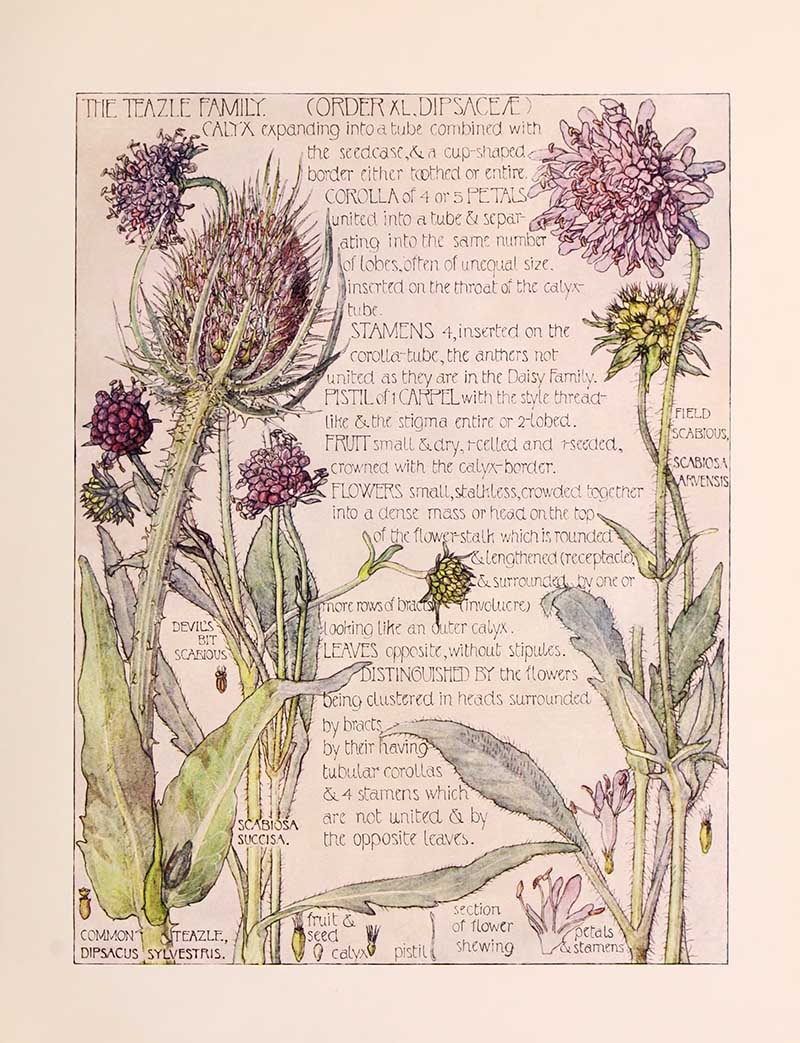
Wildflowers from the Daisy family (Asteraceae), such as oxeye daisy and knapweed, are known for their composite flower heads made up of many tiny florets. In Harriet Isabel Adams’ illustrations, you can clearly see this structure, with central disc florets surrounded by petal-like rays, giving these familiar meadow flowers their bold, open appearance.
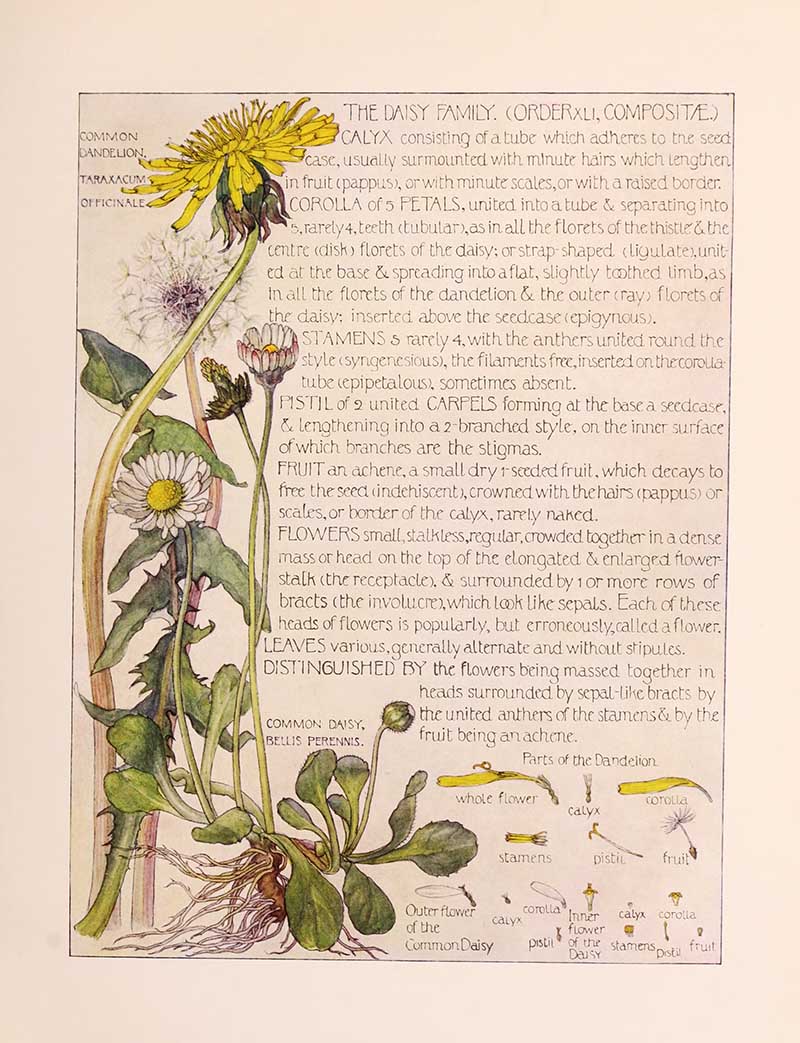
Print 29: More Daisy Family Wildflowers
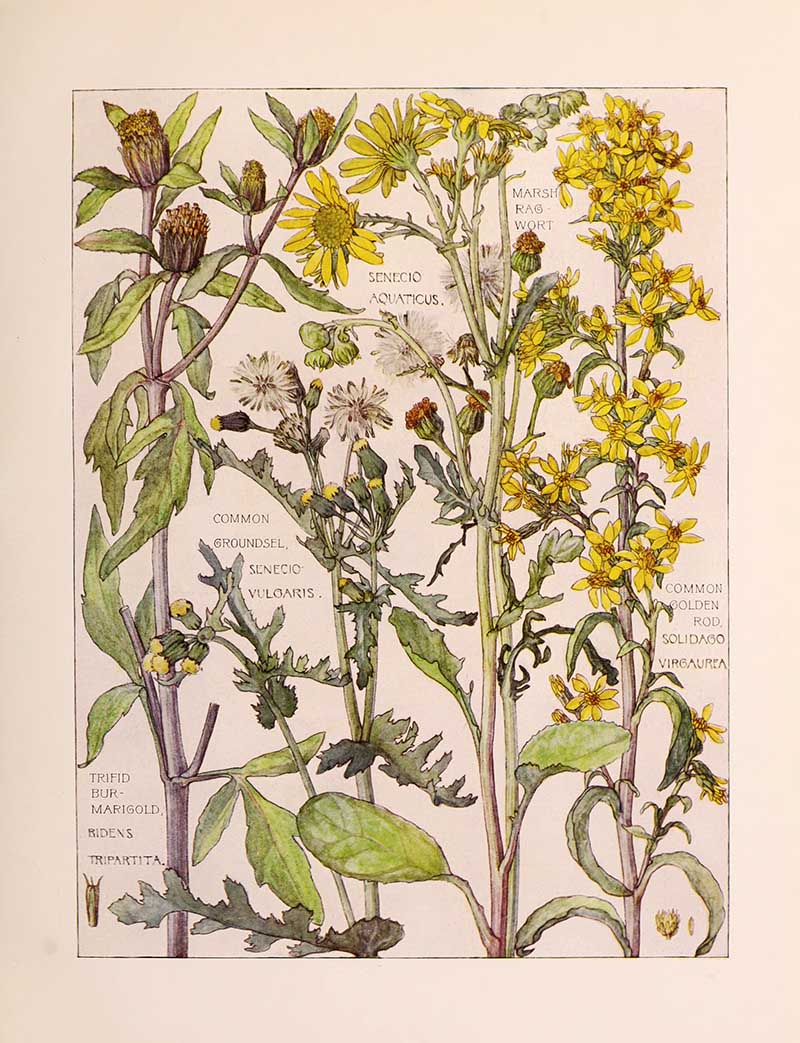
Print 30: Even More Daisy Family Wildflowers
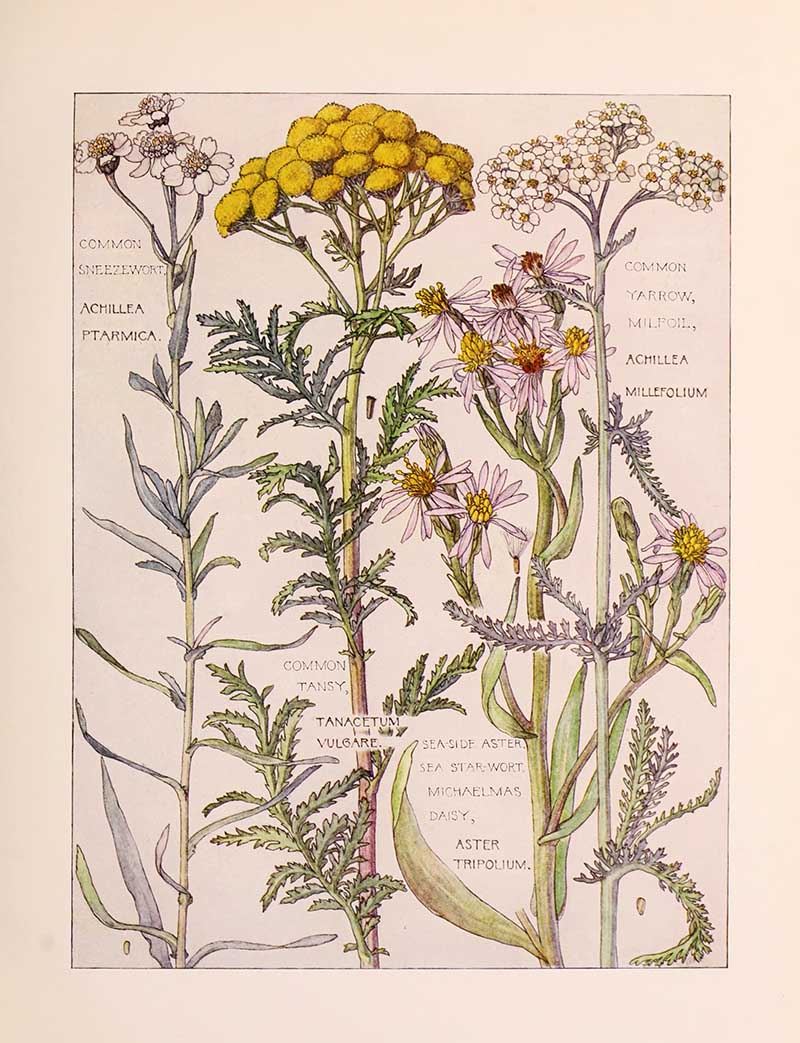
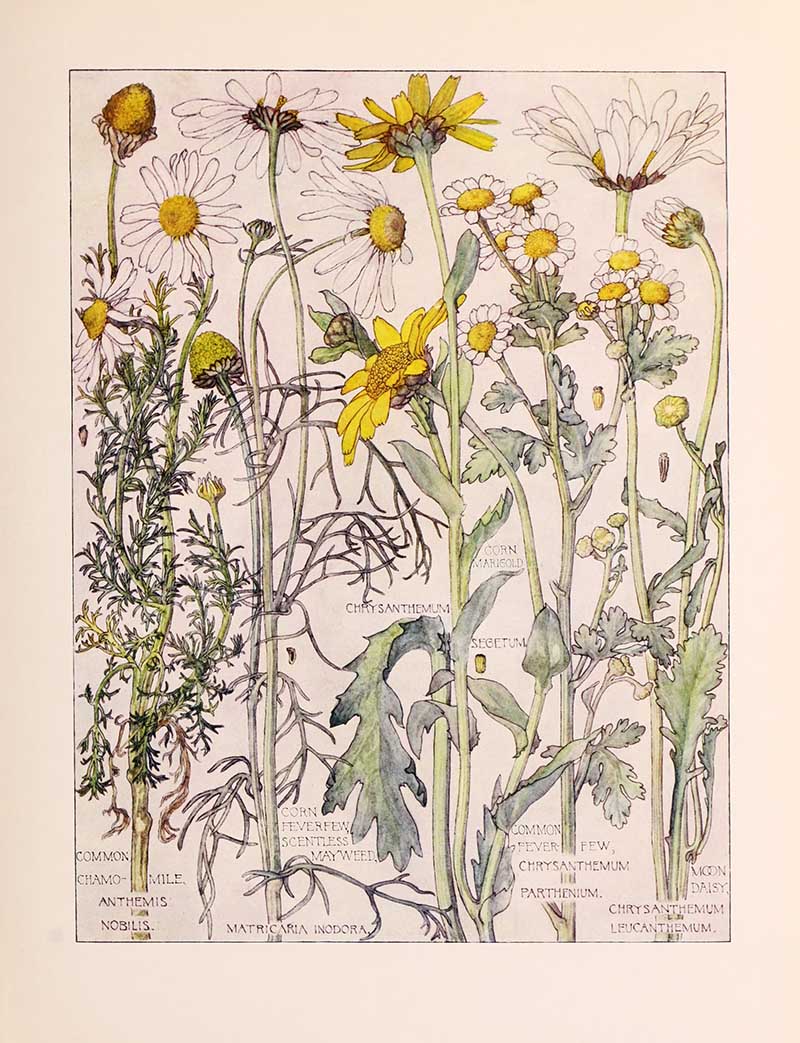
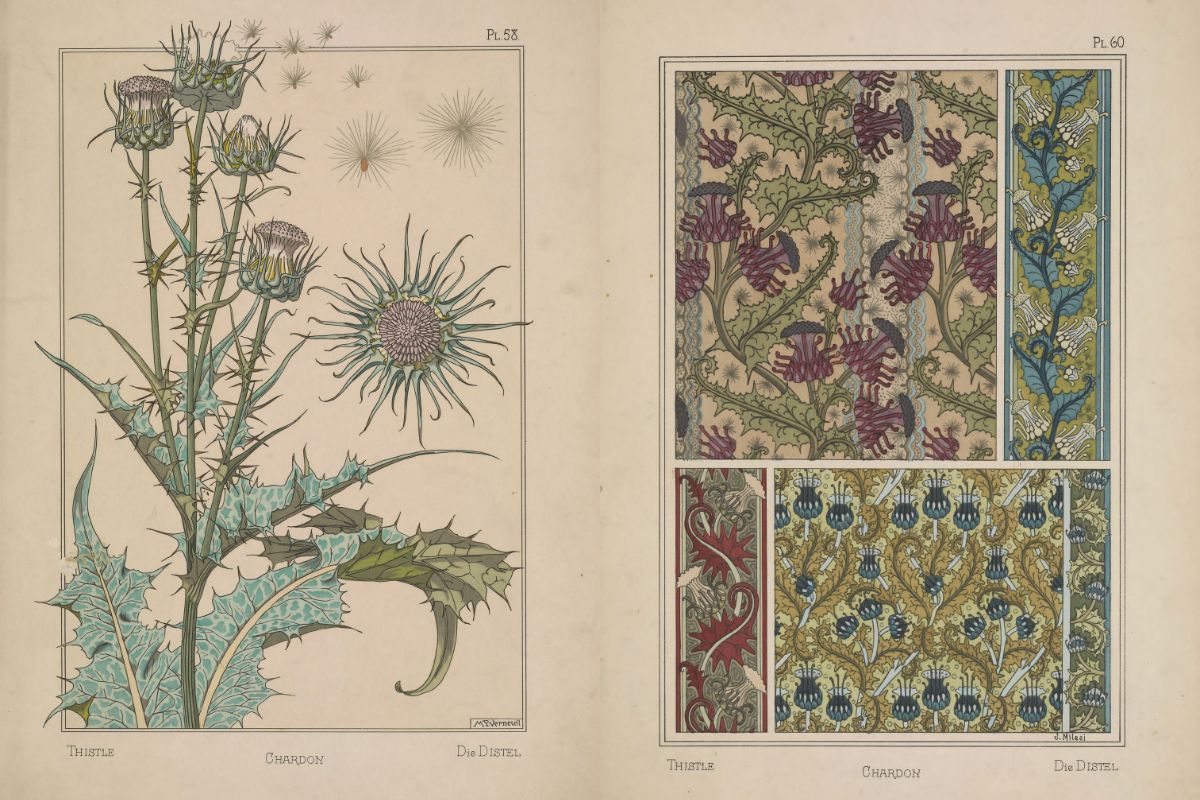
Thistles, which are part of the Daisy family (Asteraceae), are carefully illustrated in Harriet Isabel Adams’ book, with clear detail given to their spiny leaves and dense, tufted flower heads. She shows how, despite their prickly appearance, they share a composite flower structure with other daisies, with many tiny florets packed into each bold purple bloom.
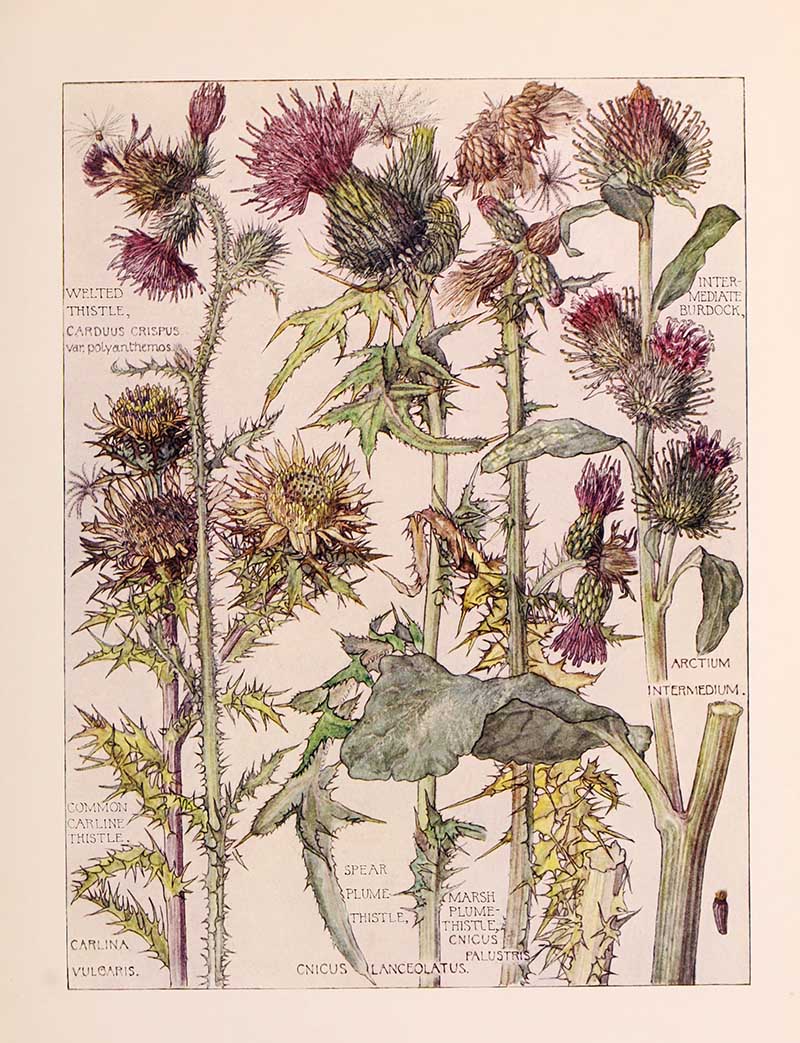
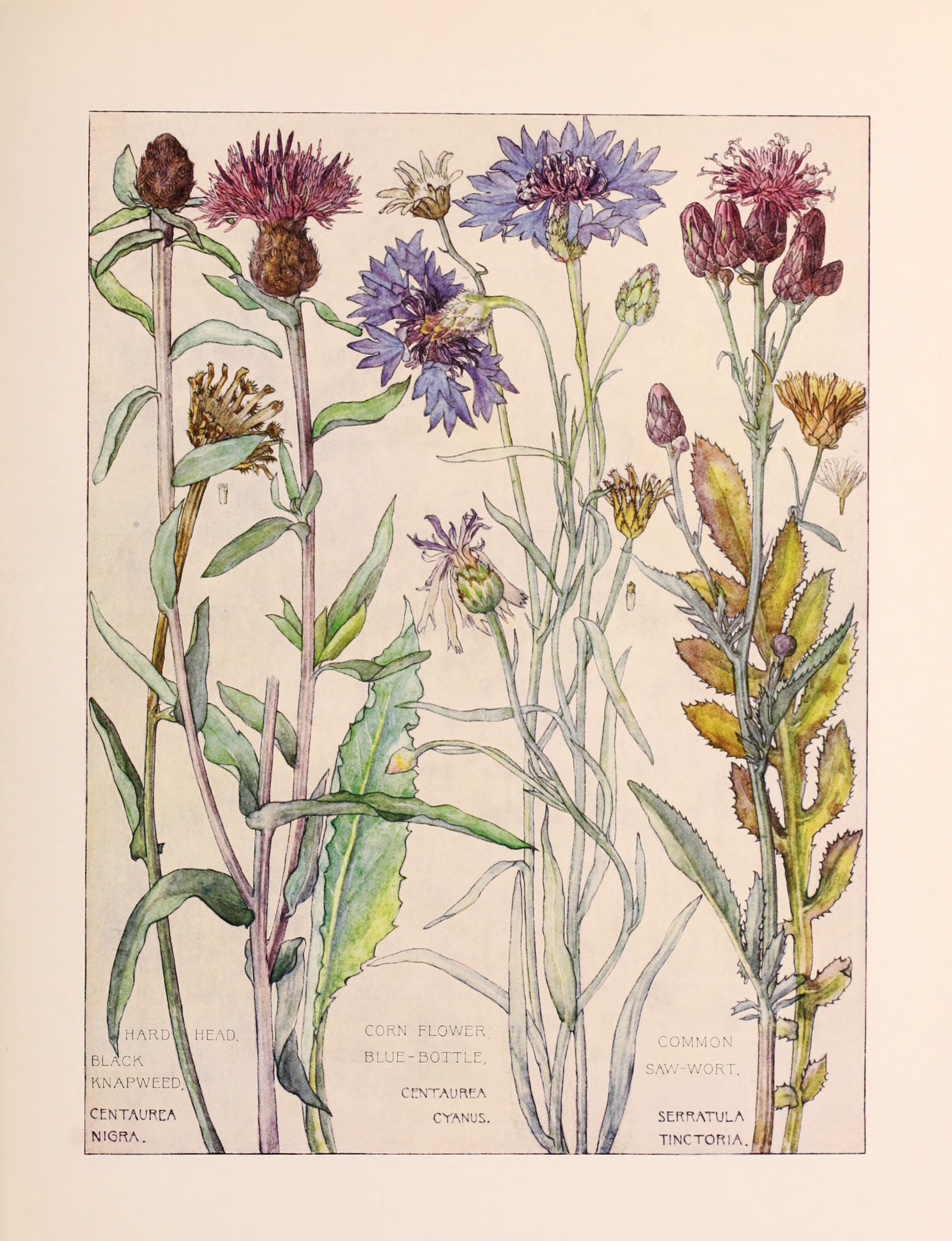
Print 33: Daisy flower family, including Cornflower
Cornflowers, also members of the Daisy family, are shown in Harriet Isabel Adams’ illustrations with their distinctive fringed blue flower heads, a once-common sight in cornfields that added vivid colour to the summer landscape.
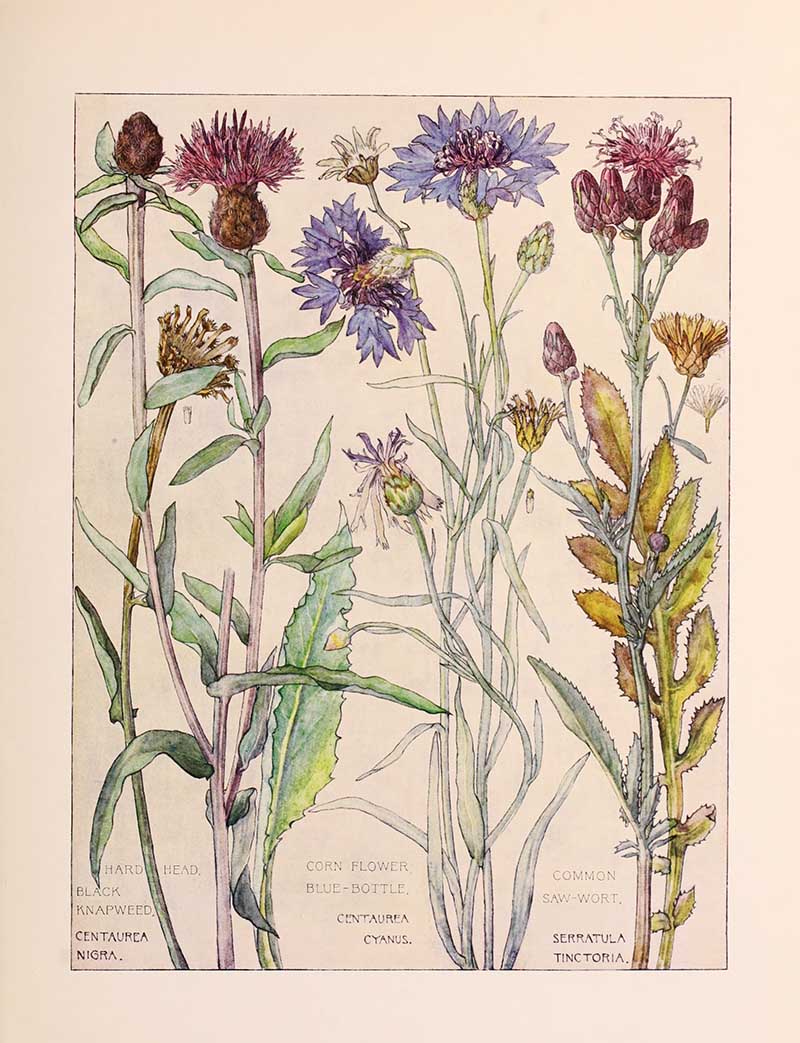
Print 34: Daisy Family, yellow flowers
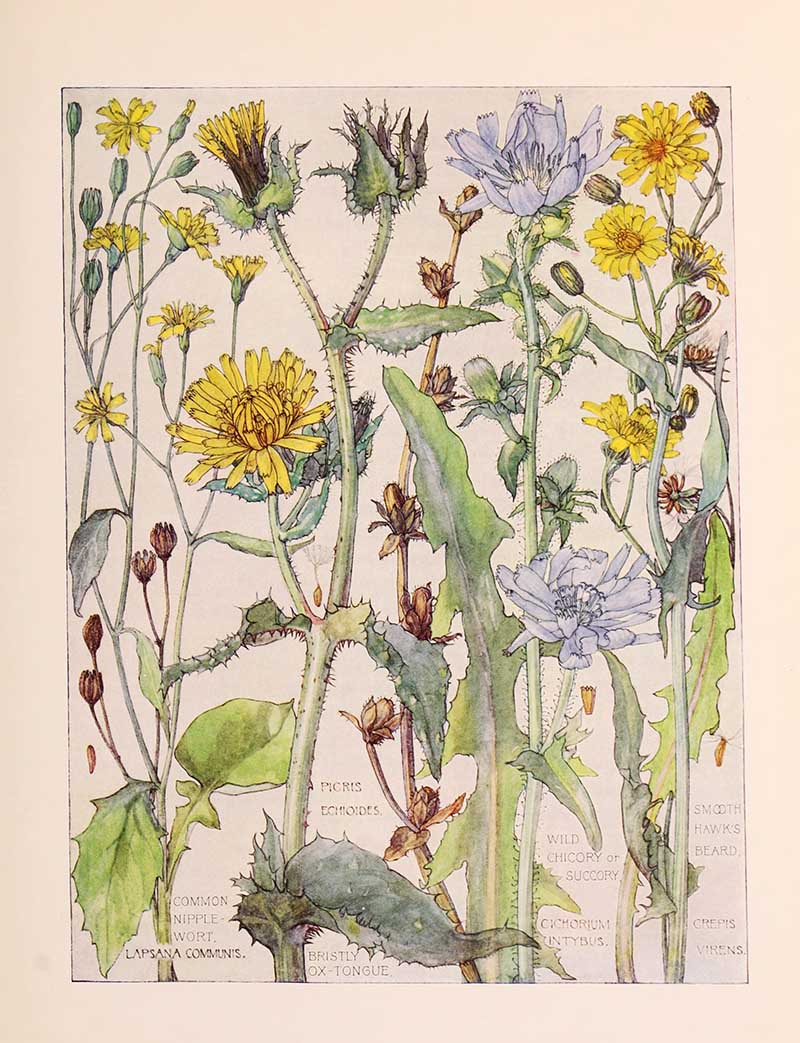
Print 35: Further Daisy Flowers
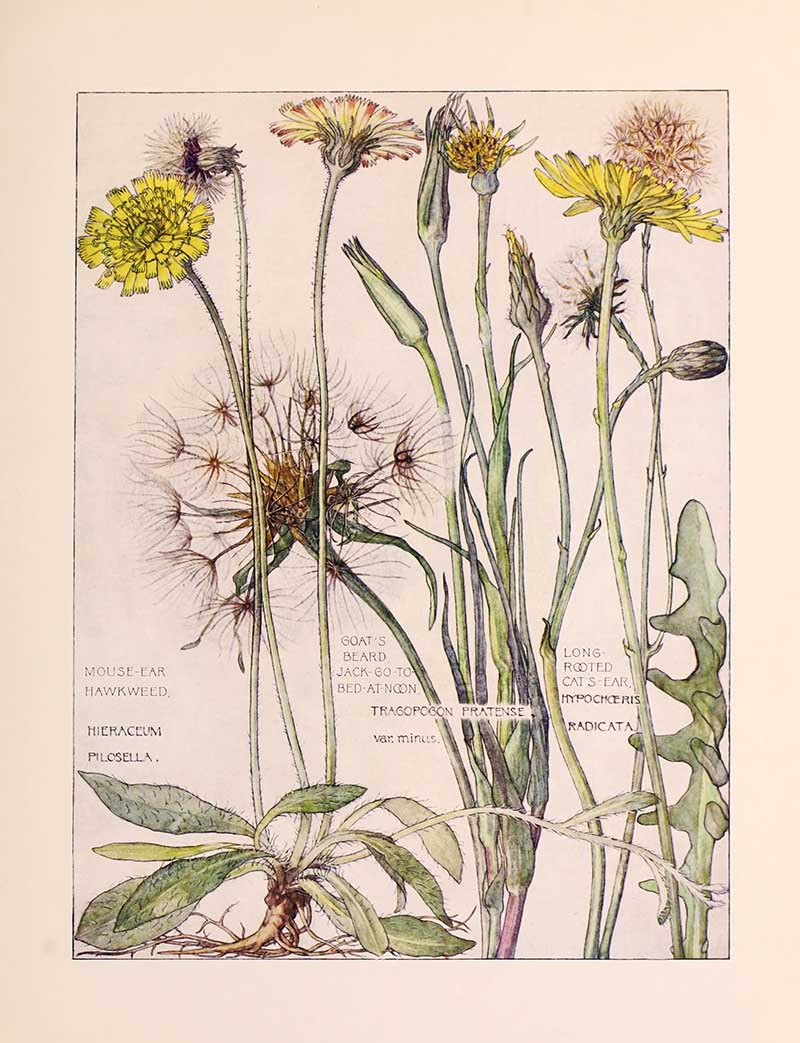
Explore More Vintage Botanical Prints
I hope you’ve enjoyed this second wander through the wildflowers of Harriet Isabel Adams. There’s something endlessly appealing about these early botanical illustrations. They’re scientific, yes, but also beautifully decorative.
If you’d like to keep exploring, there’s a vast collection of vintage flora prints waiting for you here on Pictureboxblue. From delicate meadow blooms to detailed natural history plates, it’s very easy to fall down the floral rabbit hole.
You might also enjoy:
- Vintage American Wildflowers – a wonderful collection of richly coloured native blooms
- Illustrations from Elizabeth Blackwell’s A Curious Herbal – detailed and historically fascinating medicinal plant studies.
- And if you love a little whimsy, many of the beautiful Flower Fairy prints are based on real wildflowers, blending botanical accuracy with storybook charm.
Whether you’re here for crafting, decorating, journaling, or simply admiring the quiet beauty of wild plants, there’s always another bloom to discover.
If you fancy, you can Buy Me A Coffee Here.